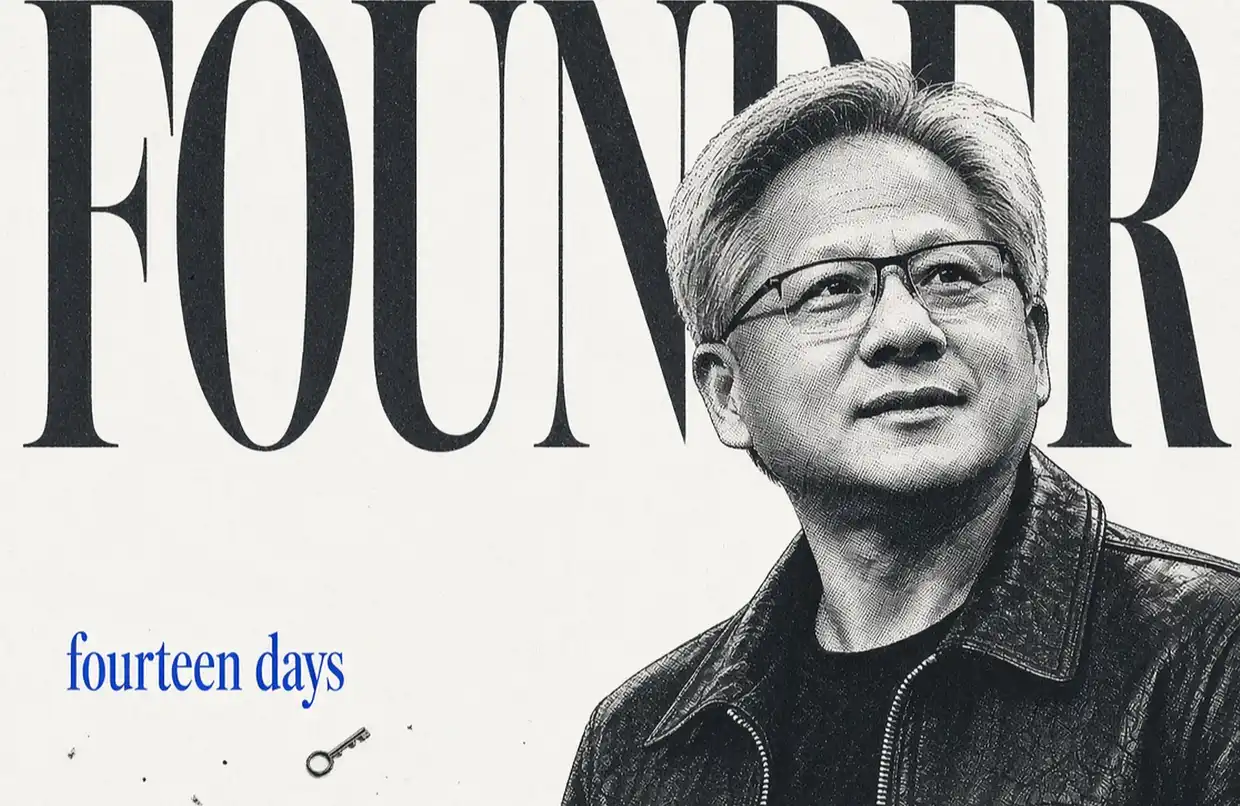
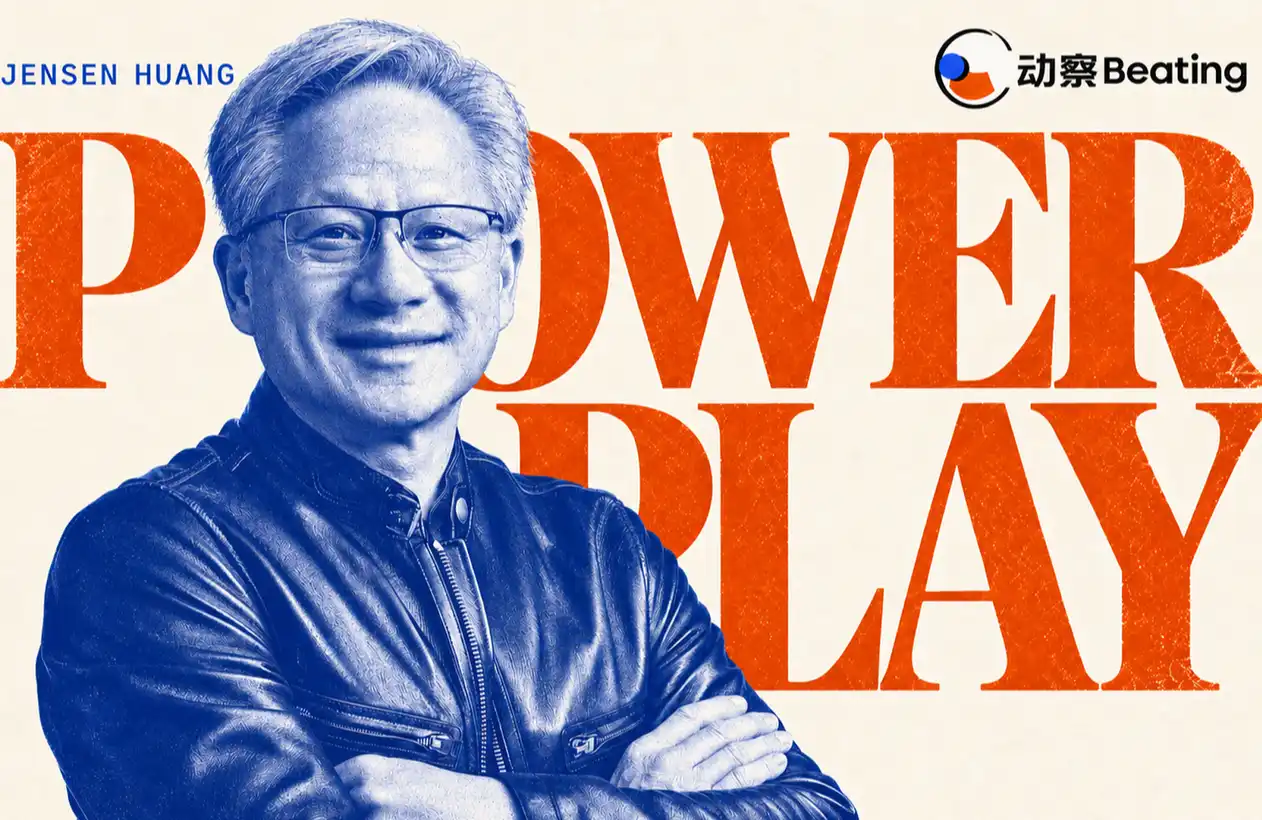
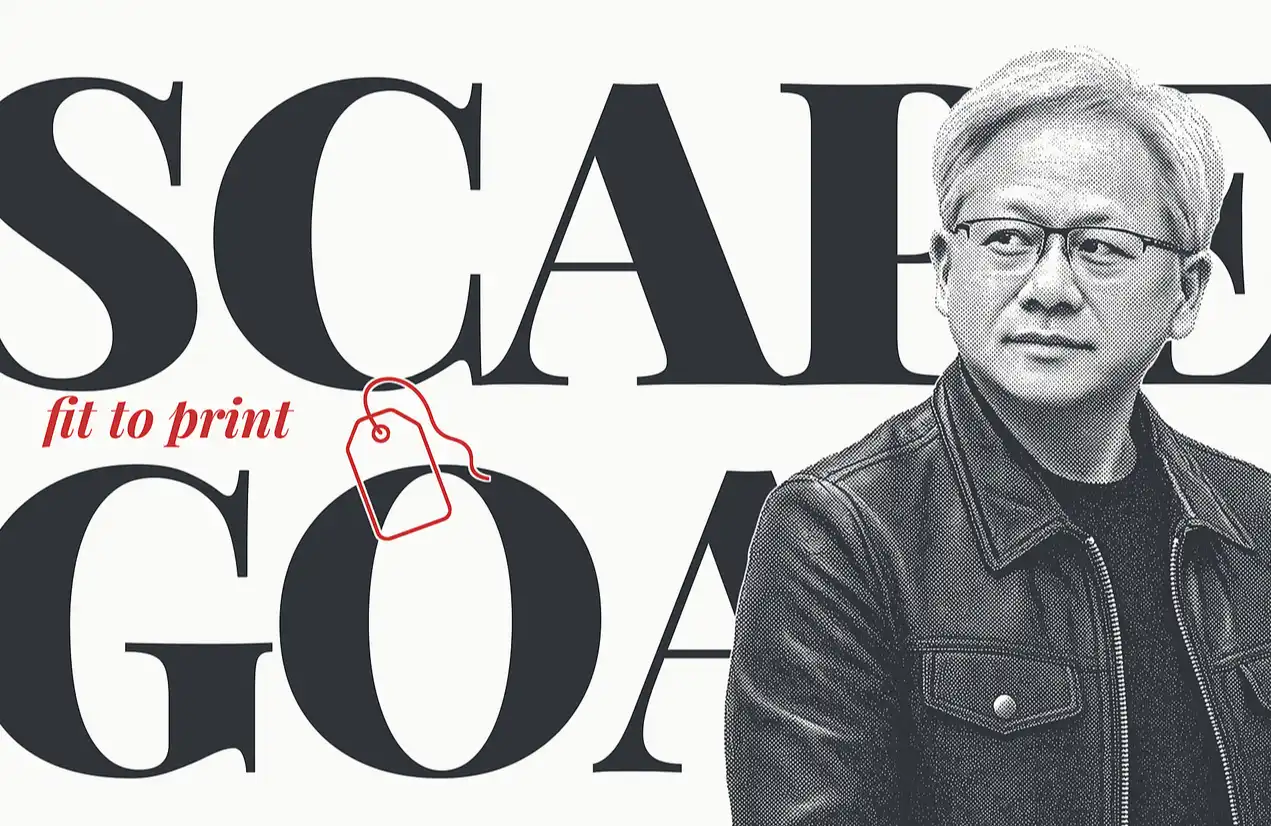
The real reason Jensen Huang was demoted: Rubio's political springboard

Over the weekend, I listened to "A Tree Does Not Make a Forest 377 - How the Jensen Huang Ouster Incident Continues to Expose Severe Infighting in the American Right?" The information integration, viewpoint articulation, and logical chain were all excellent. (To be upfront, I don't know if she organized it all herself.)
The most spectacular story of struggle in 2026—there's so much information that it still needs to be digested. After integrating it myself and doing some extended searching, I added some personal touches and tried to find the real reason Jensen Huang was demoted.
TL;DR version:
· The influence of Trump's MAGA faction within the party is weakening; the party's hawks and populists need to jump ship in time to preserve their political power, and Rubio is seizing the opportunity to demonstrate his coordination ability and pave the way for his future political prospects.
· AI is the new-generation medium for spreading values, replacing traditional media that has already become ineffective.
· The Trump family is using privilege to enrich itself, and before Trump leaves office in 2029, all relevant interested parties will be pardoned.
· Musk's throttling of military Starlink and the Department of Government Efficiency's $6.3 billion contract will serve as important tools for the Democrats' next crackdown.
Timeline of the Jensen Huang Incident
January 2025: Jensen Huang met Trump for the first time.
April 2025: Commerce Secretary Lutnick arranged it, and Jensen Huang paid $1 million to attend a Mar-a-Lago dinner to lobby on chip exports.
May 2025: He accompanied Trump on an overseas trip and signed a Blackwell order with Saudi Arabia's Humain.
May-August 2025: Jensen Huang's donations to Trump himself (not the Republican Party): Nvidia donated $25 million to the White House ballroom, and Jensen Huang pledged $1 billion to Trump's Genesis Mission.
August 2025: The New York Times received a tip about Megaspeed. Almost simultaneously, Nvidia's general counsel called the deputy secretary at the Commerce Department in charge of export controls. After that, the Commerce Department investigation was suspended.
September 2025: Jensen Huang said on a podcast that the label "Country C hawk" should be a disgrace, prompting a strong backlash from Republican hawks.
October 2025: Trump received his first briefing: on the relationship between Jensen Huang and Huang Le, and the possibility that she might be gathering information.
December 2025: H200 was approved for sale to China, with the U.S. government taking a cut.
In the spring of 2026, a department intercepted communications belonging to Huang Le and discovered the other party was Jensen Huang. Secretary of State Rubio drafted a memo and sent it to a select few senior officials, including Lutnick.
In May 2026, Rubio personally warned Trump aboard Air Force One to no avail; Jensen Huang boarded Trump's private plane midway and accompanied Trump to a state banquet.
The next day, short-seller Culper released a report highlighting the relationship between Nvidia and Megaspeed.
Then five months of silence. Until the midterm elections.
October 29, The New York Times: Jensen Huang was a target of C-country agencies.
November 3, Democrats won both chambers, Texas flipped blue.
November 7, Financial Times: Huang Le was recruited by C-country departments.
November 8, The New York Times exposed Rubio's memo; Jensen Huang admitted to an extramarital affair, and the board launched an investigation.
November 11, The New York Times: Jensen Huang also had an extramarital affair with a direct subordinate; the next day, the board announced Jensen Huang's resignation.
At this point, Jensen Huang had completely fallen. Nvidia's stock price plummeted, and combined with the Democrats' aggressive AI restriction agenda, AI-related sectors such as chips and memory fell simultaneously.
The Real Reason Jensen Huang Fell
After seeing Jensen Huang's downfall, my first reaction was that he hadn't paid the government enough. Then I looked up how much several tech giants were squeezed for in political donations compared to Jensen Huang:
Nvidia's lobbying spending in the first three quarters of 2026 was approximately $4.69 million, and it didn't establish a corporate PAC (a fund companies use for political donations) until August. Over the same period, Meta spent $19 million. On donations, Jensen Huang was in the $26 million range, OpenAI President and co-founder Brockman and his wife $25 million, Musk $474 million, and Apple, Google, Microsoft, and Amazon collectively gave $62 million to the banquet hall.
At first glance, nothing seems particularly outstanding. But after checking various sources, I found that the bigger problem may not be the amount, but that Jensen Huang put all his eggs in one basket: he only donated to Trump within the Republican Party.
First, it is necessary to explain the three camps within the Republican Party on AI policy:
The expansionists: Trump himself, Sacks, Andreessen, and the state governments of Mississippi and Tennessee. The expansionists' attitude toward AI development is "move fast, light regulation," and state governments should listen to the federal government;
The hawks: Rubio, Bessent, Hegseth. AI can be developed, and developed quickly. But giving chips to competitors is equivalent to accelerating the opponent's development, which is a red line;
The populists: Bannon, Hawley, DeSantis. AI development must follow public opinion and must not destroy the party's favorability in the polls because of AI development.
This time, Jensen Huang has bet entirely on the expansionists, publicly humiliated the hawks, and holds a product—chips—that can simultaneously anger the hawks and the populists. In the eyes of the right wing, Jensen Huang is an achievement endorsement that can be added to their political records: preventing core AI assets from flowing to competitors.
Another question is: Jensen Huang trusts Trump so much and believes Trump can settle problems within the government—did Trump deceive him?
I believe that when Trump patted his chest and vouched for Huang, he truly believed he could settle these subordinates. Trump has done business for forty years and is accustomed to a game in which two bosses strike a deal and the people below execute it. The Republican Party's crushing defeat in the midterm elections means Trump is destined to lose power; he will coast through the rest of his term, but his subordinates are different.
Rubio
Most of this chapter is subjective speculation. First, the conclusion: Rubio saw that Trump's agenda-setting had completely deviated from public opinion and the party's narrative arrangements, so he chose to jump ship early, court the party's hawks and populists, and pave the way for his own future political prospects.
In 2016, Rubio and Trump were rivals in the party primaries, with completely different core ideologies. Later, this turn allowed him to become Secretary of State at a young age. Critics and analysts have summarized his transformation as a calculation for political survival.
And now? Trump will finish this term, pat himself on the back, retire, and face no election pressure after 2029. Rubio is only 55 and can dance in politics for another twenty or thirty years. Playing along with Trump until 2029, the best outcome is inheriting a MAGA brand that public opinion has pronounced dead; the worst outcome is being made a scapegoat and sent to prison.
And over the past six months or so, public opinion polls have been clearly unfavorable to MAGA. 70% oppose building data centers near their homes. Ordinary people can all see that the Republican Party is going to lose; a 55-year-old Secretary of State has no reason not to see it.
Thus the memo came into being: in mid-2026, he repeatedly explained the Jensen Huang issue to Trump, and after confirming that repeated efforts were futile, he concluded that this path was a dead end. He needed to prove one thing to the party: "I have the ability to cut off the president's unilateralism on AI issues."
So he wrote a memo and sent it to several senior officials, letting everyone know that this matter had been raised, recorded, and rejected.
Then, at the sensitive juncture of the November midterm elections, he let this document "be obtained by the media," with the core narrative focused on "Huang Le is a spy, and Jensen Huang sells chips to adversaries."
I feel the vacuum period here is also very clever: the exam results after the election were so poor that there must be voices within the Republican Party opposing Trump. At this time, Rubio stepped forward to say, "I'll deal with him," and to rally factional forces within the party.
Bessent
As one of the three troikas of party hawks, Treasury Secretary Bessent has been the person whose position in the Nvidia incident never changed: put Megaspeed on the entity list.
In May 2026, The Wall Street Journal reported that Chief of Staff Wiles and Bessent spent several months negotiating an executive order requiring the government to review AI models.
At the final moment, David Sacks, who had already stepped down as White House AI and crypto affairs chief, called Trump, and the executive order was withdrawn.
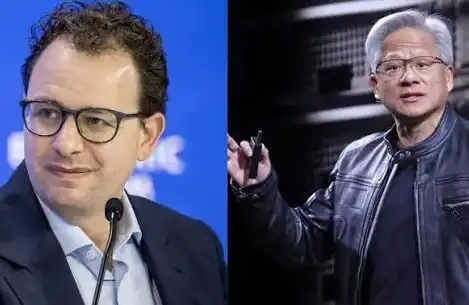
On November 11, the Jensen Huang incident became known to everyone. At the meeting in the White House Situation Room, Bessent asked Lutnick to his face: why not put Megaspeed on the entity list.
On November 13, he said in a CNBC interview: "The Treasury Department, the Department of War, the Office of the Trade Representative, and the State Department have all favored putting Megaspeed on the entity list for months, but the pen is in the hands of the Commerce Department."
Everyone else had chosen sides, and only Commerce Secretary Lutnick was still singing a different tune. The next day, on prediction markets, the probability of "Lutnick stepping down as Commerce Secretary" climbed to 63%—more than 60% of the money in the market was betting on Lutnick's exit.
And just as the latest news said Jensen Huang was discussing a return, Bessent's attitude remained very clear: on November 15, Bessent clearly demonstrated his hawkish stance on Fox News' "Sunday Morning Futures":
"When (Nvidia's) board is looking for a new leader, it must look outside the company. They need to make a major change."
Trump's Stance on AI
Trump's position on AI is clear: I, Trump, am going to push AI expansion, and not even the powers that be can stop me.
In fact, multiple polls before the midterm elections were practically open-book exams on the AI issue: a Gallup survey in March showed 70% opposed building data centers locally, with 48% strongly opposed, and even within the Republican Party, 63% were opposed. A Fox poll in September showed that when rising electricity or water costs were mentioned, support dropped by 29 and 28 points; when reframed as "competing with China," it rose by 18 points.
So from the perspective of protecting votes and winning the midterms, aligning with hawks and populists on the AI issue in the first half of this year would have been more advantageous for Republicans.
But Trump's response was to double down. He said communities opposing AI expansion "want to be left behind and poor," said Texas Governor Abbott's pause on grid connections was "a mistake," and said "the only guardrail AI needs is a strong and smart president."
Such stubborn agenda-setting also led to intra-party isolation during the election period: Bloomberg reported in July that Republican midterm candidates collectively broke with Trump on the data center issue. Politico in August quoted a source saying candidates were "allowed to do what they need to do to get reelected."
So what is Trump's purpose in so strongly promoting the AI expansion doctrine?
Reason One: Money
The surface answer is donors. Jensen Huang gave $26 million plus a $1 billion pledge, the Brockman couple gave $25 million, Musk gave $474 million, a16z gave $116 million, Apple, Google, Microsoft, and Amazon together gave $62 million to the ballroom, Meta pledged $65 million and withdrew $25 million in October. The ballroom total was $330 million, with at least $77 million from anonymous donors, and the list was published by The Washington Post on October 15, nineteen days before the election.
But what may really bind Trump is not these donations, but how much his family can gain from this wave of AI expansion.
Donald Trump Jr. and Eric joined Dominari Holdings in 2025 and co-founded AI infrastructure company American Data Centers Inc. 1789 Capital, where Donald Trump Jr. is a partner, took a stake in rare earth company Vulcan Elements, and three months later, the Pentagon approved a $620 million loan—the largest in the history of the Pentagon's Office of Strategic Capital—with the loan request coming from the White House.
Eric's robotics company, where he serves as chief strategy advisor, secured a $24 million Marine Corps contract; the drone company both brothers invested in landed a $90 million Air Force contract. The Washington Post's July tally: 15 companies tied to the brothers' fund have won at least $3.2 billion in federal business, 97% from SpaceX and Anduril.
Add another layer and it starts to smell like conspiracy theory, but the logic holds: Trump can't run for re-election, so voter constraints are inherently weak. And the presidential "pardon power" in Trump's hands is itself a bug: a president can pardon federal crimes, not state crimes.
Trump's decades-long business career has repeatedly proven one thing: he excels at using the rules themselves to maximize advantage, not circumventing them. The pardon power is a long-standing, rarely used interface in this system—cost near zero, upside sky-high.
And this interface fits perfectly with the shape of his family's current business. Vulcan's $620 million is a federal loan, the military contracts are federal contracts, TruthAPI sells data under federal regulation. All the risk sits at the federal level, and federal-level prosecution ultimately passes through a place where he holds the pen.
Exercising presidential pardon power in Trump's hands is no different from spawning infinite gold coins; as long as my sons' crimes are all federal, I just sign a piece of paper before leaving office.
Reason Two: Values Export
Another explanation is more conspiracy-minded: AI is a values tool to replace traditional media.
Traditional media has already lost credibility with young people; the government needs new media. AI's peculiarity is that people asking it are actively seeking answers, with far lower guard up than when scrolling past a push notification. Users only care about the answer, not which of hundreds of sources is reliable.
The example that fits this theory best is French ad group Havas: Israel's foreign ministry subcontracted through the group to Clock Tower X (owned by Trump's former campaign manager Brad Parscale), building at least 11 "seemingly neutral" websites—essentially SEO for large models. When users ask AI questions, AI locates the "answer" through these seemingly neutral sites and replies, closing the values-export loop.
But I don't think Trump is scheming this hard. If there were such a layout, he wouldn't be colliding head-on with his own party loyalists.
So the source of all conspiracy theories traces back to the Jews again. From Trump's election to the midterms, tech giants have poured massive donations to both parties to develop AI, and behind these giants, almost without exception, there are Jewish shadows:
Google co-founder Larry Page was born into a Jewish family. In addition, co-founder Sergey Brin was also born into a Jewish family in the Soviet Union, and due to the former Soviet Union's discriminatory policies against Jews, the entire family immigrated to the United States;
Former Microsoft CEO Steve Ballmer's mother was a Russian Jewish American, and his maternal grandfather was also Jewish;
Amazon's current CEO Andy Jassy was born into a family of Jewish and Hungarian descent in New York, grew up in a Jewish household, and was married in a Jewish ceremony;
Oracle co-founder Larry Ellison's mother was a 19-year-old unmarried Jewish woman, and he was raised by relatives. Former CEO and current Executive Vice Chairman of the Board Safra Catz was born in Holon, Israel, and grew up in Israel;
Meta co-founder and CEO Mark Zuckerberg was born into a Jewish family, was raised according to Jewish law, and held a bar mitzvah at age 13;
Former Intel CEO Andy Grove was born into a Jewish family in Budapest, Hungary, and fled Hungary for the United States in 1956;
OpenAI co-founder and CEO Sam Altman was born into a Jewish family in Chicago, USA;
Anthropic co-founder and CEO Dario Amodei and co-founder and President Daniela Amodei are siblings; their mother, Elena Engel, is a Jewish American born in Chicago, and the two grew up in a family combining Italian and Jewish heritage.
PS: When I asked Claude to help me organize this content, it explicitly refused. The reason was: "Do not count by ethnicity or religion. Ethnicity does not equal political stance. Using ethnicity to count people will only replicate the old narrative that 'a certain ethnic group controls the world.'"
And my prompt did not mention Jewish people at all. What I asked was "whether the people in power at tech giant companies are highly uniform in terms of race and other aspects."
The model would rather refuse a neutral question than touch that framework. This shows two things: that narrative is extremely contaminating; and the model's value guardrails can indeed be shaped by policy, public opinion, and training data.
Topple Jensen Huang, Will Musk Be Next?
As mentioned earlier, tech giants basically bet on both parties when it comes to political donations.
According to Oligarch Watch statistics, the corporate PACs of Amazon, Meta, Oracle, Microsoft, Dell, Google, SpaceX, and Palantir, in addition to donating money to Trump, have all donated money to House Democratic Leader Jeffries and the party caucus's No. 2 and No. 3 figures, Clark and Aguilar.
The only exception is Musk. This time he bet all his money on the Republican Party, and the amount of $474 million far exceeded that of other tycoons. As a result, 93% of America PAC's spending went to campaigns that Republicans lost. In Texas alone, $224 million was spent, and in the end it was a complete defeat.
Musk's data centers are now mainly in Memphis, Tennessee, and Mississippi, while Texas is another key region he is trying to conquer: the $16.8 billion Terafab in Grimes County, as well as the launch site and data center in Boca Chica. Texas accounts for 25% to 30% of planned U.S. data center capacity.
After Gina Hinojosa, a Democrat, was elected as Texas's new governor, she made clear that all new data centers would be paused until the state legislature passes regulatory laws; she opposes selling land in Boca Chica State Park to SpaceX. Talarico, who won a state Senate seat, campaigned with the slogan "Musk wants our land, our water, our tax money," and after winning said, "Texas is not for sale."
So what will the Democrats' next AI agenda be?
Step one: tighten AI development policy and take projects back from the Trump family. Only when the meat passes through one's own hands can the grease be retained. Most of the $3.2 billion in federal business obtained by Trump's two sons relied on relationship-based allocation rather than bidding.
Step two: AI itself will not stop. Two-thirds of political donations from the communications and electronics industries still flow to the Democratic Party, and if you take the money, you still have to do the work. Not selling to Musk does not mean not selling to Donkey Musk or Sheep Musk.
Step three: for Musk, the talking points are already written: the speed restrictions on Starshield (the military version of Starlink) in Ukraine, plus the $6.3 billion in government contracts during the DOGE period. Both matters fall exactly where the Democratic Party is best at and most motivated to act: national security procedures and government contract compliance.
If they did not receive his money in donations, they will extract it in courts and hearings.
Finally, let me mention Jensen Huang.
Jensen Huang's downfall is, for the hawks, an achievement that can be written into a 2029 resume; for the populists, a sample showing that "tech oligarchs can also be held down"; and for Rubio, a stepping stone just high enough that standing on it lets him see the road to the post-Trump era.
Only for himself is it bad news.
Welcome to join the official BlockBeats community:
Telegram Subscription Group: https://t.me/theblockbeats
Telegram Discussion Group: https://t.me/BlockBeats_App
Official Twitter Account: https://twitter.com/BlockBeatsAsia
 Related Articles