Is it Anthropic that pushed Jensen Huang to the hearing?

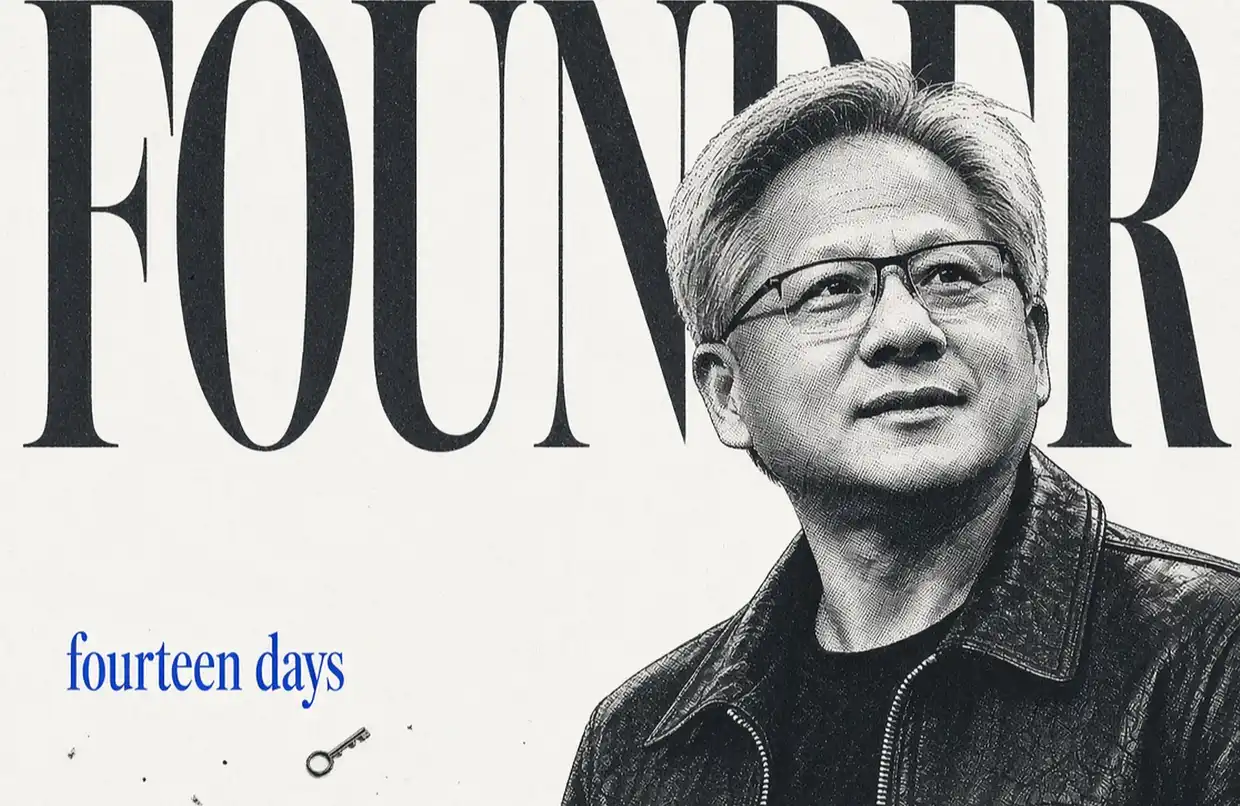
Jensen Huang steps down, the founder of the first $5 trillion company in human history is ousted, a turning point destined to mark the AI era, and we always want to find the reason.
Among the overwhelming reports, one sentence has been shared many times. It comes from a November 12 article in Fortune magazine, where an anonymous venture capitalist said:
If anyone benefits from this, I think it's Anthropic.
Anthropic is an AI model company whose chatbot Claude is one of ChatGPT's strongest rivals. Its relationship with Nvidia is complex: it is a major customer of Nvidia, and Nvidia has also invested in it. But on one issue, the two have been at odds for years: whether to sell high-end chips to Country C. Nvidia wants to sell, Anthropic does not.
Many bloggers on X have also noticed something off about Anthropic. For example, @Dream1984Tube. On November 12, he posted a long English article titled "Who Is Really Behind the Hunt for Jensen Huang?" He said:
The New York Times reporter who first reported Jensen Huang's affair had a long-term source who happened to be from Anthropic; the Financial Times reporter who first mentioned the romantic relationship had a long track record of coincidentally positive coverage of Anthropic; McGuire, who first changed "forwarding the romantic relationship" to "sleep" on social media, coincidentally was a former subordinate of an Anthropic executive; the first batch of lawmakers to sign onto the congressional investigation coincidentally were supported by tens of millions of dollars in Anthropic donations; the first senator to call for Jensen Huang's resignation coincidentally had closed-door meetings personally convened by Dario. One coincidence is a coincidence—but a series of coincidences?
We organized these reports and then compared them against donation records, bills, lobbying filings, and public reports, attempting a review. What is listed below are the surface facts that can be found in public records. But the human intentions behind the operations, no one knows.
Why a hearing matters so much
On November 4, three House committee chairmen jointly wrote a letter to Jensen Huang: Brian Mast, John Moolenaar, and Crawford. These three names will appear again later.
In the letter, they asked Jensen Huang to come for a closed-door briefing on November 18 to discuss two matters: how Nvidia prevents foreign adversaries from gaining access; and his dealings with a certain lady. That is, Alice.
The last line of the letter demanded that Jensen Huang respond by November 11.
He resigned on November 11.
But the matter did not stop. The day after his resignation, November 12, Senate Banking Committee Chairman Tim Scott sent a letter inviting Jensen Huang to appear at a public hearing on December 3. This is the very committee in the Senate that oversees export controls.
From a closed-door briefing to a public hearing, the weight is vastly different.
In the United States, summoning the head of a tech company to Capitol Hill for a public hearing is itself a ritual. Lawmakers sit higher than him, lights shine brighter on him, C-SPAN, the dedicated congressional broadcaster, is filming, and stenographers type every word he says into the congressional record. He must take an oath, and lying under oath is a federal felony punishable by up to five years in prison; failing to appear first brings a subpoena, then contempt of Congress.
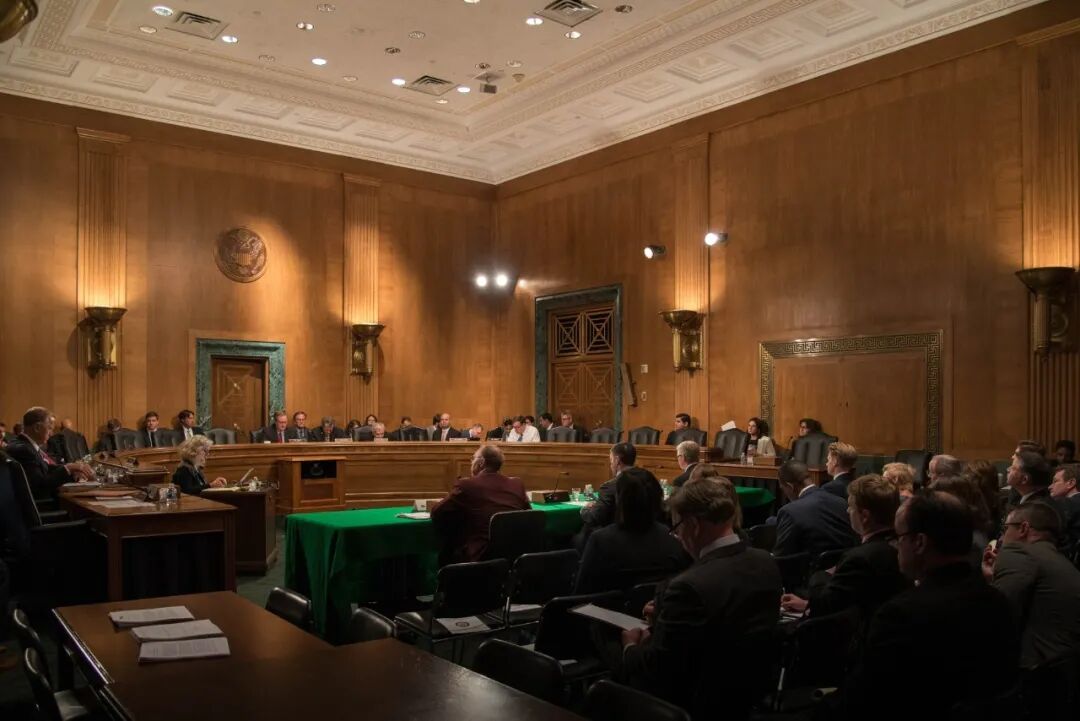
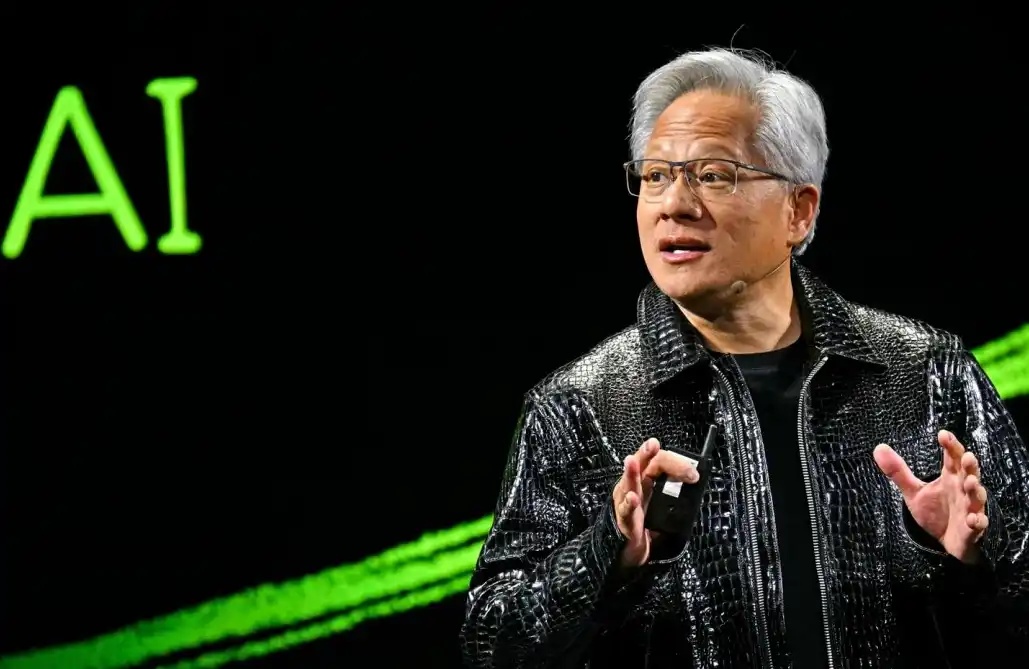
Senate Banking Committee Hearing
The more common cost is another kind. Every sentence you say can be cut into fifteen seconds and replayed on a loop for the next decade. In 2018, Zuckerberg sat on Capitol Hill for two days, and the most famous image was the cushion beneath him; few people remember what he actually answered.
A hearing itself does not write law, but it can determine whether a law gets written. In March 2023, TikTok CEO Shou Zi Chew sat for several hours in the House. Thirteen months later, Congress passed legislation requiring TikTok to either sell or be banned.
So a hearing is a watershed in American politics: from that moment on, a company's matter formally becomes a matter of the state.
Jensen Huang has already resigned, but the hearing will proceed as scheduled. What Congress wants to ask is far bigger than him alone.
So, being able to send Jensen Huang—Trump's right-hand man, the only one comparable to Musk in sitting on Trump's private plane—to a hearing is no easy feat.
And the name Anthropic keeps appearing.
One Dinner Table, Three Encounters
In May 2022, San Francisco, at an upscale Chinese restaurant. This was the first meeting between Jensen Huang and Anthropic founder Dario.
According to an upcoming book by New York Times tech reporter Kevin Roose, things went wrong before the meal even started. Anthropic co-founder Tom Brown showed up with a spreadsheet to haggle with Jensen Huang, arguing that Google's own AI chip, the TPU, was more cost-effective than Nvidia's. Huang blew up on the spot, calling him a "bean counter"—meaning a pencil-pushing number cruncher—and threatened to walk out on the dinner.
At the table, Huang repeatedly talked about his plan to build the world's largest data center. Dario later muttered privately that he was "a bit like Trump."
After that, the two began trading blows.
April 30, 2025. Anthropic published a blog post about how Country C was getting chips: hidden inside fake pregnant bellies, smuggled alongside live lobsters. The next day, an Nvidia spokesperson shot back, calling it a fabricated story. He added a jab: "Country C has half the world's AI researchers."
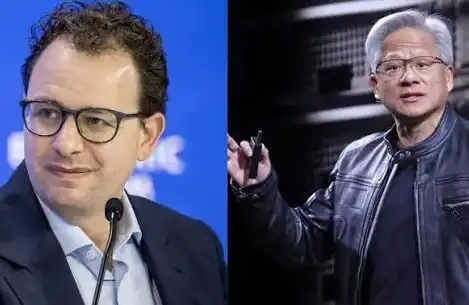
January 20, 2026, Davos, Switzerland—the annual gathering of global political and business elites. In a Bloomberg interview, Dario said that selling Nvidia's H200 chips to Country C was "like selling nuclear weapons to North Korea and bragging about it."
On April 15, Huang used a word on the tech podcast Dwarkesh: absurd. Then he delivered his sharpest line: giving up the Country C market would harm U.S. national security and technological leadership—all for the benefit of one company.
He didn't name names, but everyone knew which company he meant.
By autumn 2026, the two crossed paths again at the White House. On September 27, Trump and Dario had dinner—Trump himself later confirmed the meeting. Two days later, the White House hosted a lunch on "superintelligence." According to The Wall Street Journal, citing people familiar with the matter, several tech executives including Huang asked Dario to his face: why do you publicly paint AI risks in such alarming terms?
Because Dario often says, "AI could destroy humanity."
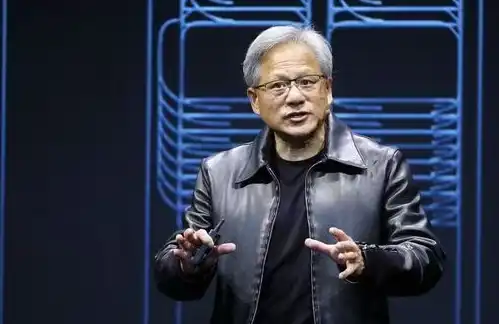
But the two companies aren't entirely without cooperation. After all, Nvidia has the most powerful chips available. On November 18, 2025, Huang, Dario, and Microsoft CEO Nadella held a joint press conference announcing a three-way partnership: Anthropic would buy $30 billion in Microsoft cloud compute, using up to 1 gigawatt of Nvidia systems—roughly equivalent to the output of one unit at a large nuclear power plant; Nvidia committed to investing up to $10 billion in Anthropic, and Microsoft up to $5 billion.
Nvidia is a shareholder in Anthropic, a supplier to it, and also the biggest stumbling block for its efforts to restrict Country C's AI technology.
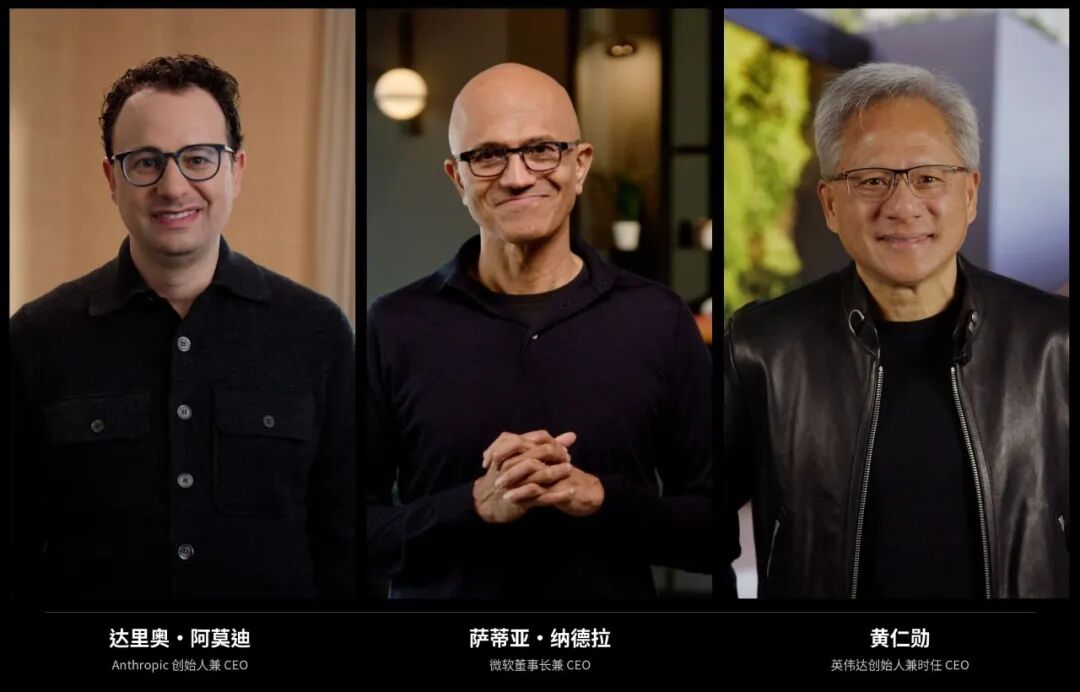
November 2025 Tripartite Cooperation Press Conference
Where Did the $40 Million Go
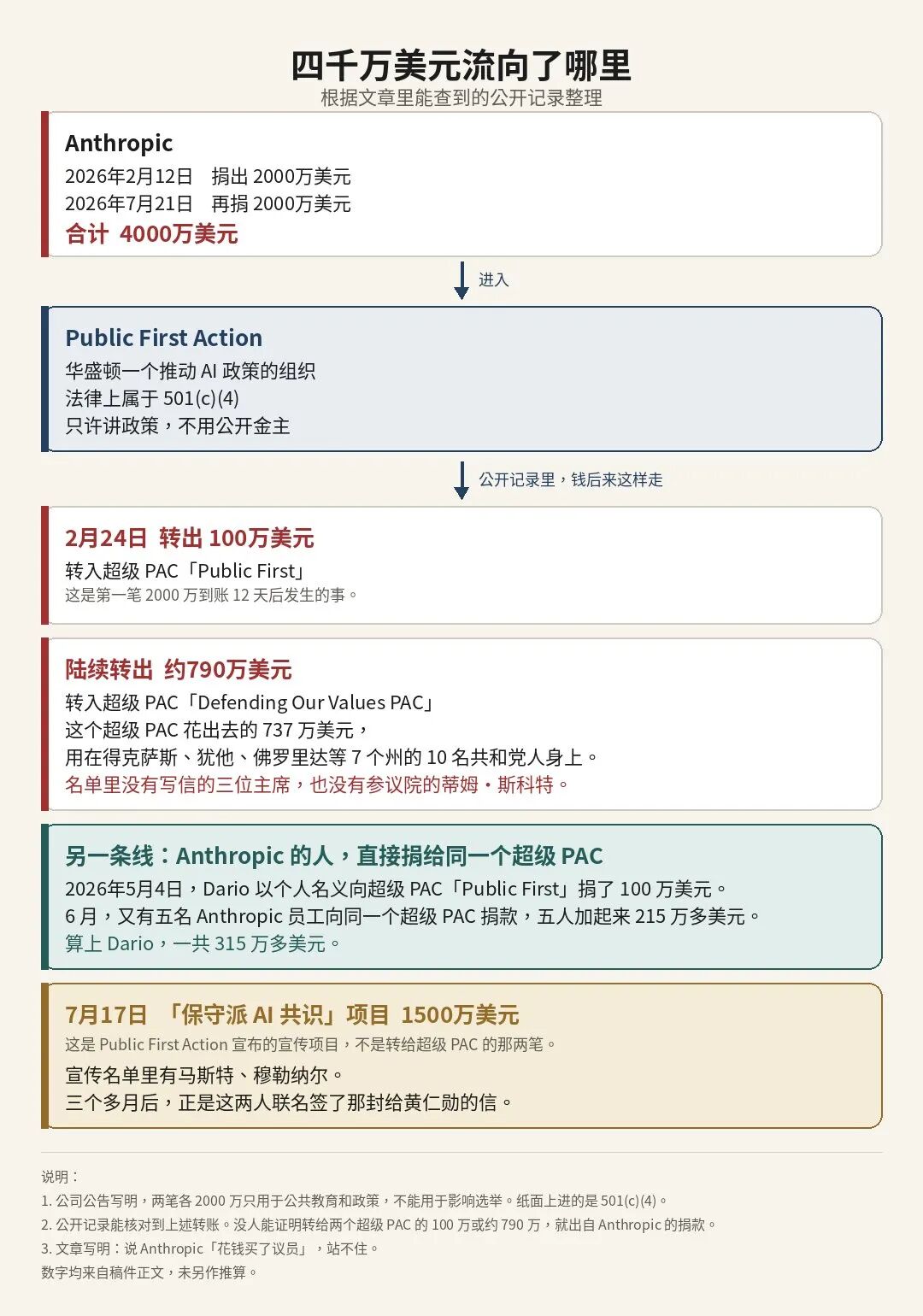
On February 12, 2026, Anthropic announced a $20 million donation to an organization called Public First Action. It is a Washington-based group pushing AI policy, and one of its co-founders is former Republican Congressman Chris Stewart.
Anthropic's announcement was blunt, listing four policy positions, and the third was chips:
Support smart export controls on AI chips to keep America ahead of authoritarian rivals.
More than five months later, on July 21, another $20 million. This time it was more direct: We support tightening export controls on advanced chips and semiconductor manufacturing equipment.
How big is $40 million in total? Based on Anthropic's own lobbying expenses, around $2 million a quarter, $40 million would be enough to fund its lobbying in Washington for a full five years.
On the same day the donation announcement was issued, Public First Action ran its first-ever ad, thanking Senator Marsha Blackburn in Tennessee for her work on children's online safety and AI legislation. On the same day, an affiliated campaign organization ran another ad in Nebraska supporting Senator Pete Ricketts, with the theme of "keeping advanced AI chips out of rivals' hands."
A company gave money to a political organization, and that organization started running ads the same day.
Besides ads, where else did the $40 million go?
Let's first look at two concepts.
Public First Action is legally a "501(c)(4)," which can be understood as a type of organization that is only allowed to talk policy. It can lobby, do public outreach, and spend a lot of money, but it cannot make influencing elections its primary purpose; the upside is that it does not have to disclose who gave the money.
Another type is called a "super PAC," an account specifically for fighting election campaigns. Its sole purpose is to influence elections, either by running ads for candidates or by taking candidates down. There is no limit on its spending, at the cost that every inflow must be disclosed.
One is not allowed to touch elections but is opaque; the other specifically touches elections but is fully transparent. Anthropic's $40 million went into the first type.
Anthropic said in its July announcement: the two donations are to be used only for public education and policy, and may not be used to influence the election of any federal, state, or local candidate.
But 12 days after the first sum arrived, on February 24, Public First Action transferred $1 million to a super PAC called "Public First." After that, according to a summary of filings with the U.S. Federal Election Commission, it also transferred roughly $7.9 million to another super PAC, "Defending Our Values PAC."
No one can prove that the $1 million sent out came from Anthropic's $20 million. But by November, Public First Action had raised about $80 million in total, and Anthropic alone accounted for half. To use an analogy, for every $1 it sent toward elections, about 50 cents came from Anthropic.
Now look at Anthropic's people.
On May 4, 2026, Dario donated $1 million in his personal name to the super PAC "Public First"; on the form, the employer field was filled in as Anthropic, and the occupation field as CEO. In June, five more Anthropic employees donated to the same super PAC, and together the five gave more than $2.15 million.
Counting Dario, this super PAC received a total of more than $3.15 million from Anthropic's people, more than 60% of its fundraising for the entire cycle (about $4.9 million).
The company says its own money does not touch elections, yet the CEO and employees became the largest donors to the same campaign account.
Anthropic itself also has a political donation account called AnthroPAC; the money is almost all $5,000 checks written by employees, totaling just over $400,000. By November, it had donated more than $195,000 to candidates of both parties, with the list almost half Democrats and half Republicans. Master received $2,500, Crawford $1,000 — that is, Master and Crawford among the three people who wrote to Jensen Huang.
On July 17, Public First Action, which received $40 million from Anthropic, announced a $15 million project called the "Conservative AI Consensus." It kicked off by spending more than $7 million on advertising to promote four Republican lawmakers, and over the following month it will roll out campaigns for another 12 Republican lawmakers, a list that includes Mast and Moolenaar.
More than three months later, it was Mast and Moolenaar who jointly signed that letter to Jensen Huang.
The purpose of this $15 million project was stated plainly: "Conservatives built this country's technological advantage, and it will not be handed over to a handful of companies that answer to no one."
But that is not all — these are not the only details.
Further upstream
The institutions that advise Washington are called think tanks. When lawmakers write bills and letters, many of their arguments and data come from their reports.
On the question of how the United States should manage technology toward Country C, three think tanks matter.
One is Georgetown University's Center for Security and Emerging Technology, or CSET. When it was founded in 2019, Georgetown's press release headline read, "The nation's largest AI and policy center lands at Georgetown." The funding came from a philanthropic fund called Open Philanthropy: a first grant of $55 million, followed by two more, for a total of $102 million. The center has 51 people, or roughly $2 million per person.
Another is the RAND Corporation, one of America's oldest think tanks, which has long conducted research for the Pentagon. From 2020 to 2026, it received 17 grants from the same fund, totaling $86.956 million.
The third is the Washington-based Institute for Progress, or IFP, which received three grants totaling $21.457 million.
The money for all three came from the same pocket.
That pocket changed its name on November 18, 2025, and is now called Coefficient Giving. Behind it, the founding partners are a couple's foundation: Dustin Moskovitz and his wife, Cari Tuna. Moskovitz is a co-founder of Facebook and one of Anthropic's earliest investors. According to Forbes in February 2026, citing Cari Tuna, the couple transferred their Anthropic shares into a nonprofit in early 2025, and those shares were worth about $500 million at the time.
The letter written to Jensen Huang is exactly what this research pipeline has been producing over the years. And at the source of this pipeline stands an Anthropic investor.
Who Benefits
All of the above is surface-level. No single move can prove that Jensen Huang's downfall was orchestrated by Anthropic, but what was truly in the minds behind each move, no one knows.
Anthropic has what is now widely recognized as the best model, and among all of Silicon Valley's top AI frontier labs, it is the most aggressive in banning Chinese accounts. Search Claude on any social media platform, and you'll find guides on how to use Claude models in China, but the end result of every guide is basically a ban. Anthropic even recently updated its ban policy specifically targeting China.
Of course, there are counterarguments.
Some believe that if Anthropic really wanted to take down Jensen Huang, it would be more advantageous to make its move after its own IPO. Jensen Huang's departure has cast a dark cloud over the entire AI industry, and Anthropic's own valuation is threatened as a result.
This is also the most absurd part.
In that three-party partnership, Nvidia committed to investing up to $10 billion in Anthropic. According to Fortune, Nvidia also plans to subscribe to approximately $10 billion in shares when Anthropic goes public.
They don't believe that Anthropic, valued at $1.4 trillion, would sabotage its own major shareholder before an IPO.
And no one will ever know the truth.
Original Link
Welcome to join the official BlockBeats community:
Telegram Subscription Group: https://t.me/theblockbeats
Telegram Discussion Group: https://t.me/BlockBeats_App
Official Twitter Account: https://twitter.com/BlockBeatsAsia

 Related Articles