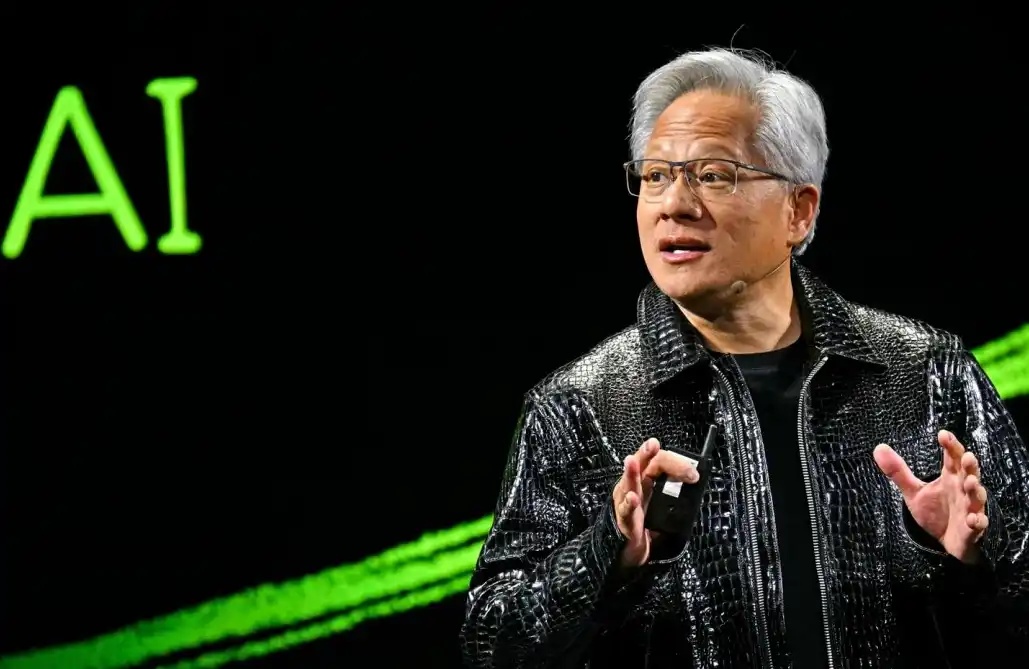
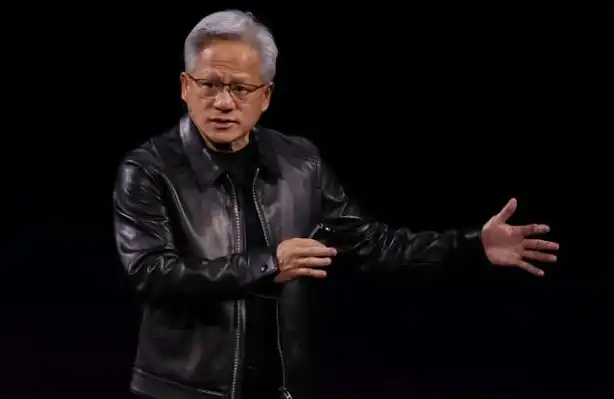
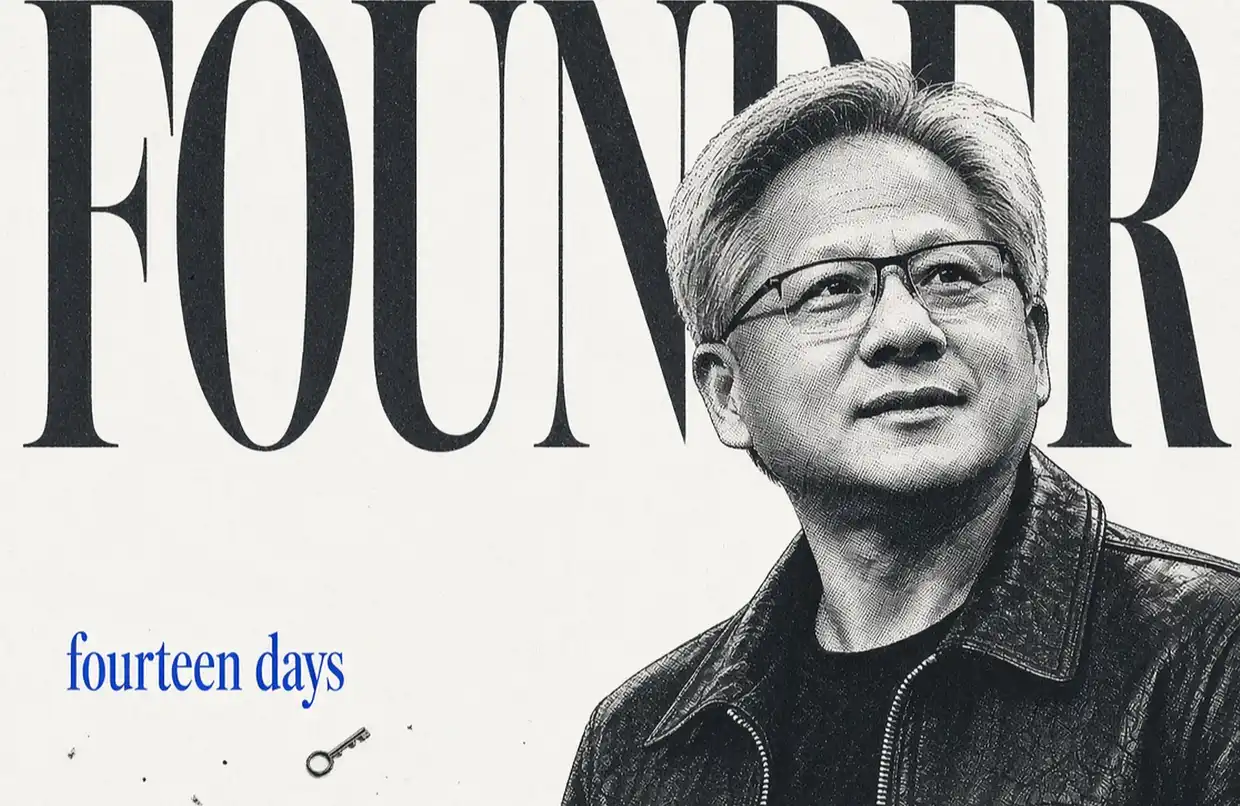
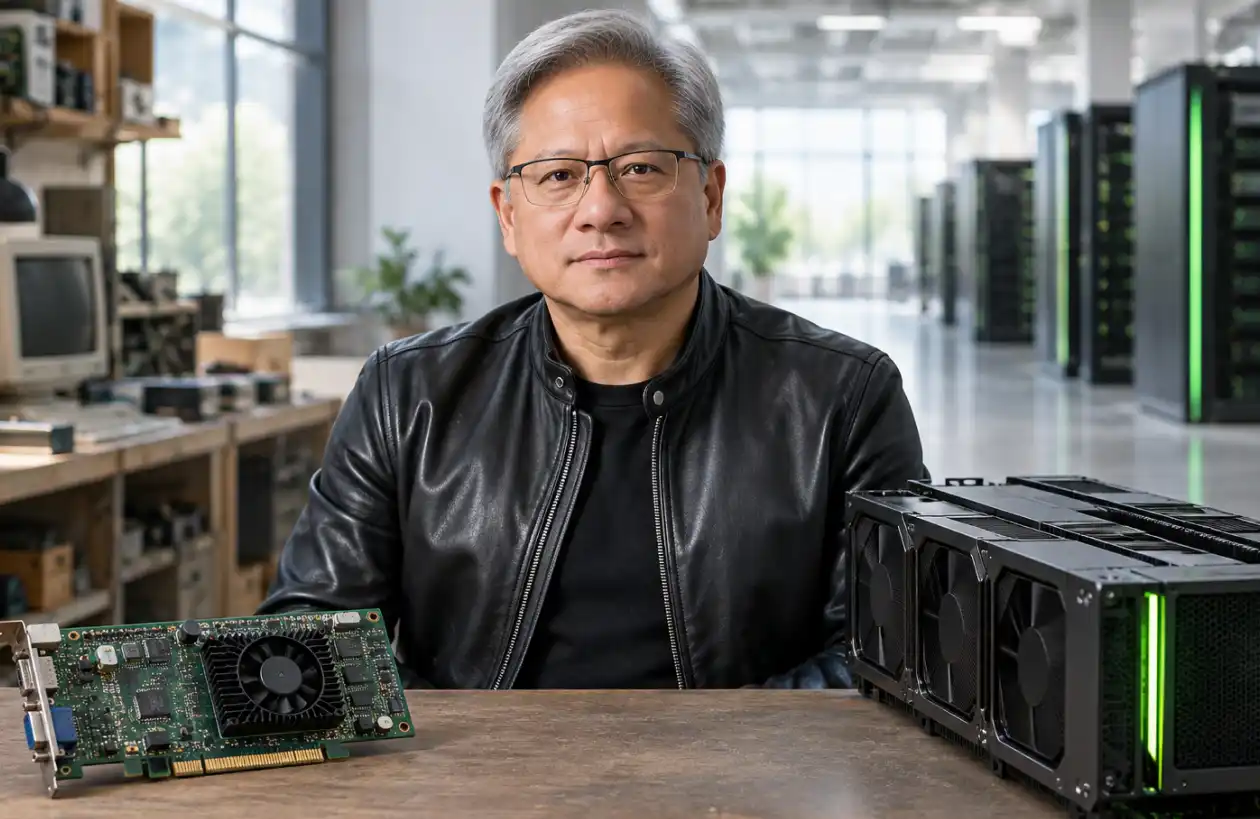
From near bankruptcy to $5 trillion: Jensen Huang and Nvidia's 33-year journey

On the morning of November 12, at 2788 San Tomas Expressway in Santa Clara. A press release of less than two pages was sent out from this building, with a headline of five English words: NVIDIA Announces CEO Transition.
First, Jensen Huang resigns as President, CEO, and Director, effective immediately. Second, Colette Kress, who has served as Chief Financial Officer for thirteen years, takes over as interim CEO. Third, Harvey Jones becomes the company's first Board Chairman in thirty-three years. He is the former CEO of chip design software company Synopsys.
The press release included one line of comment: "Jensen Huang's contributions to NVIDIA are profound." The original English uses the present perfect tense—a past event with an impact on the present.
As for the reason, not a single word.
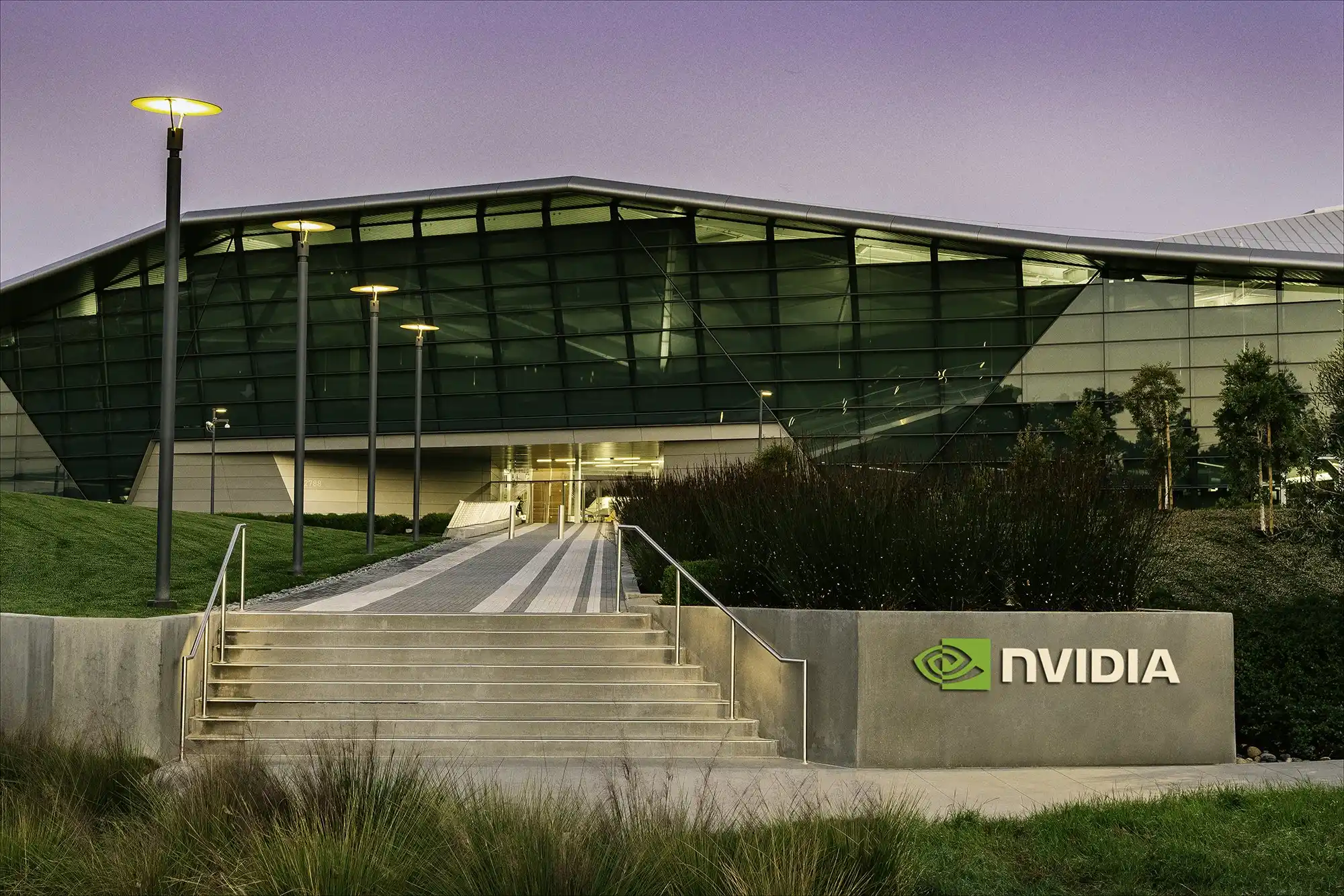
NVIDIA headquarters building
Four days earlier, he had sent an email to all employees titled "A Message to Our Company." The letter said: "I was unfaithful to my wife. My actions hurt her and our children. There is no excuse for this." The letter ended with one word: Jensen. On the same day, the board announced the launch of an independent investigation. Today, media reported another extramarital affair between Jensen Huang and an NVIDIA executive.
November in Silicon Valley has not yet reached its coldest. The company had become the first company in human history to reach a $5 trillion market cap just over a year ago. Today, its founder has only one identity left: a shareholder holding approximately 3%.
He no longer participates in any of the company's operational decisions. Apart from that 3%, he has almost no connection to this company anymore.
Thirty-three years ago, ten kilometers from this building, he started this company with $40,000.
One table, $40,000
April 1993, San Jose, a Denny's under the Berryessa overpass.
That restaurant was in East San Jose, and East San Jose back then was not a good area. The restaurant facade had bullet holes, left by someone who had fired at a parked police car. Three electrical engineers in their thirties sat at a table toward the back, papers spread out on the table. One of them, Chris Malachowsky, was eating a sausage omelet and drinking a cup of burnt coffee.
The other two are Curtis Priem and Jensen Huang. All three had previously worked in the chip industry—Malachowsky and Priem at Sun Microsystems, and Huang at LSI Logic.
They decided to do one thing: build a dedicated graphics chip for personal computers.
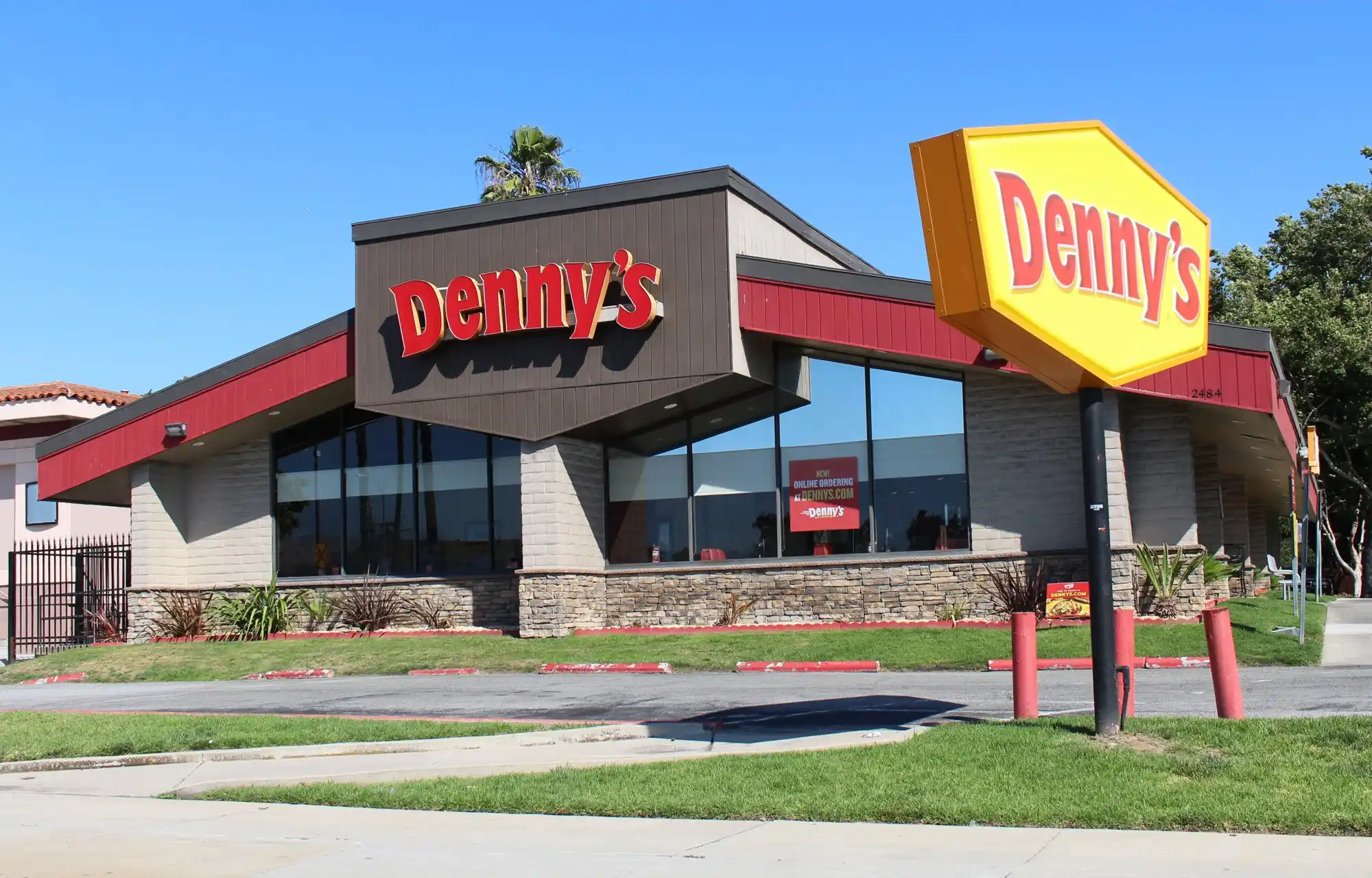
The Denny's in East San Jose
It is said that the three of them each pitched in $200 just to register the company that day. The company's starting capital was rumored to be only $40,000.
Back then, the word "GPU" didn't exist—it wouldn't be coined until 1999. Personal computers at the time had CPUs that both computed logic and drew images pixel by pixel. If you wanted to play games, you had to install an additional card; that card was bulky, expensive, and the graphics were still rough.
What Huang and his partners were betting on was that graphics would never be good enough.
"There was no market at all in 1993," Malachowsky later said, "but we saw a wave coming." He used California surfing competitions as an analogy: when you see a storm in Japan, you notify all the surfers to come to California two days later because the waves are coming. "We were at the starting point."
That statement later proved to be half right. The wave did come, but the first wave knocked them flat onto the beach.
Three $60 textbooks
In May 1995, Nvidia's first chip, the NV1, hit the market.
The chip's ambitions were absurdly grand: it wanted to cram graphics interface acceleration, wavetable synthesis, full-motion video, 3D rendering, and a precision game port all into a single chip. Development cost $10 million, funded by Sequoia Capital and another venture firm, Sutter Hill.
It didn't sell.
A single chip trying to do five things meant all five were done poorly; worse still, it chose a technical path opposite to everyone else's. Others used triangles to build objects—it used curved surfaces; others used "inverse texture mapping"—it used "forward texture mapping"; other chips had a component called a Z-buffer that automatically determined which surface was in front and which was behind—it didn't, and let the game sort it out itself.
Three choices, all wrong.
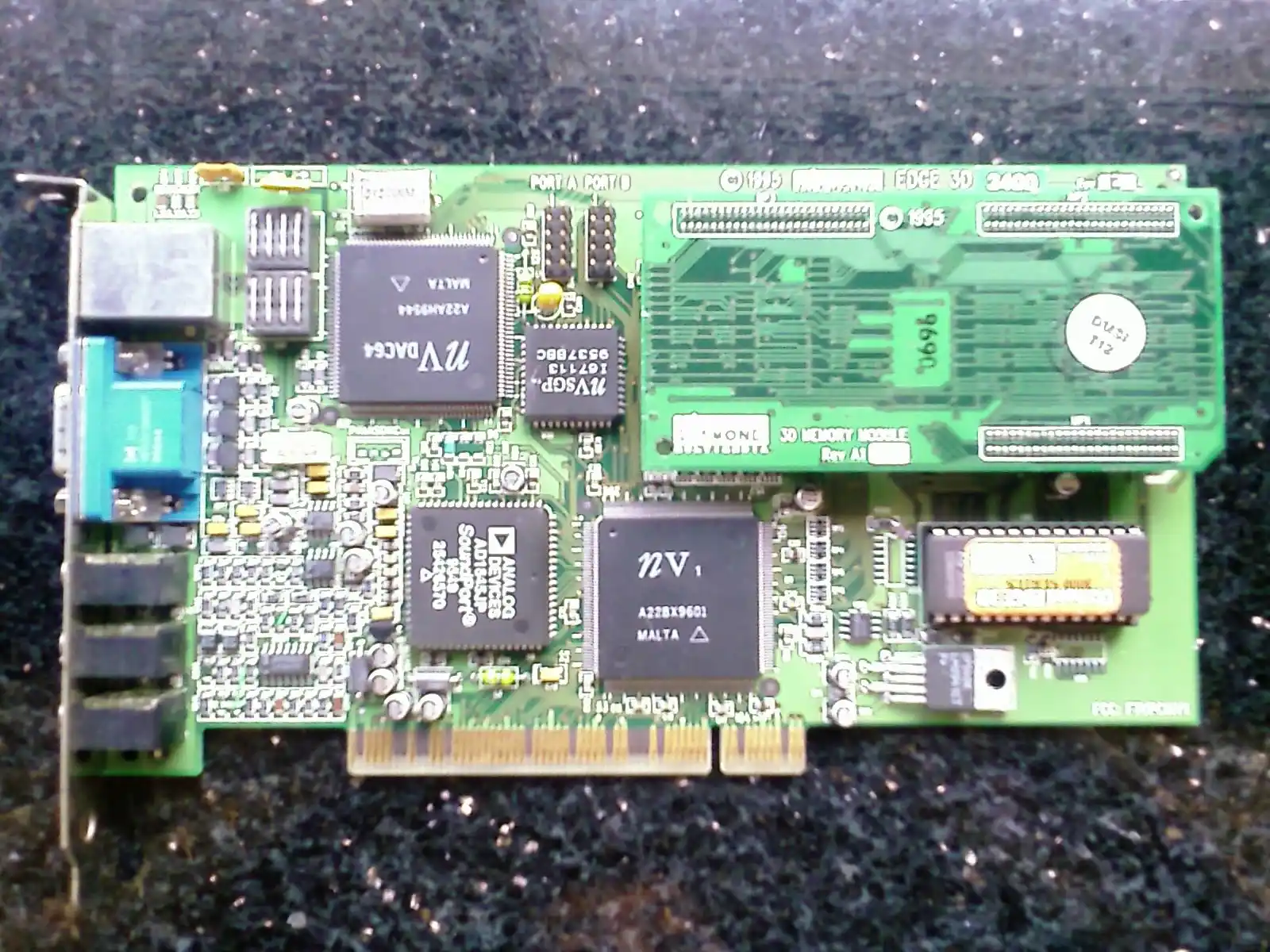
NV1 Graphics Card
In mid-1995, they realized this. At that time, Microsoft was preparing to release Windows 95 and launch Direct3D—a graphics interface based on triangles and inverse texture mapping. Game developers worldwide would write games according to it.
In other words, even if they followed this technical route to the end, no games would be able to run.
Worse still, they were stuck with an unfinished contract. The major client was the Japanese game company Sega, and the contract was clear: Nvidia would follow the same route to make a second chip for Sega's next-generation console, internally called NV2; Sega would port games from its Saturn console to PC, running on Nvidia's chip.
Jensen Huang later recalled that year in a graduation speech at National Taiwan University with just one sentence: "Either finish it or don't do it. Both paths lead to death."
Finishing meant death. Not doing it meant breach of contract, also death.
He bought a plane ticket to Japan.
In Sega's meeting room, he met Shoichiro Irimajiri. This man had been CEO of Honda's U.S. operations and later returned to Japan to head Sega. Huang was 33 that year, and he described himself: "I still had acne then, skinny, a Chinese kid." Huang was born in Taiwan, sent by his family at age 9 to a boarding school in Kentucky, and had grown up in the U.S. ever since.
He told Shoichiro Irimajiri three things.
First, the technology we promised doesn't hold up; it can't be built. Second, I suggest you don't let us finish this contract—it's a waste of your money, and you'd better find another partner. Third, although I'm asking you to let me go, I still need this money. If you don't give it to me, our company will disappear tonight.
Then he asked Irimajiri to convert the final $5 million of the contract into an investment in Nvidia.
Shoichiro Irimajiri thought about it for two days.
He later told Huang that with this money invested, your company will very likely still go bankrupt. Huang replied that he knew, but if Sega didn't invest, Nvidia wouldn't even have a chance.
In the end, Irimajiri decided to invest.
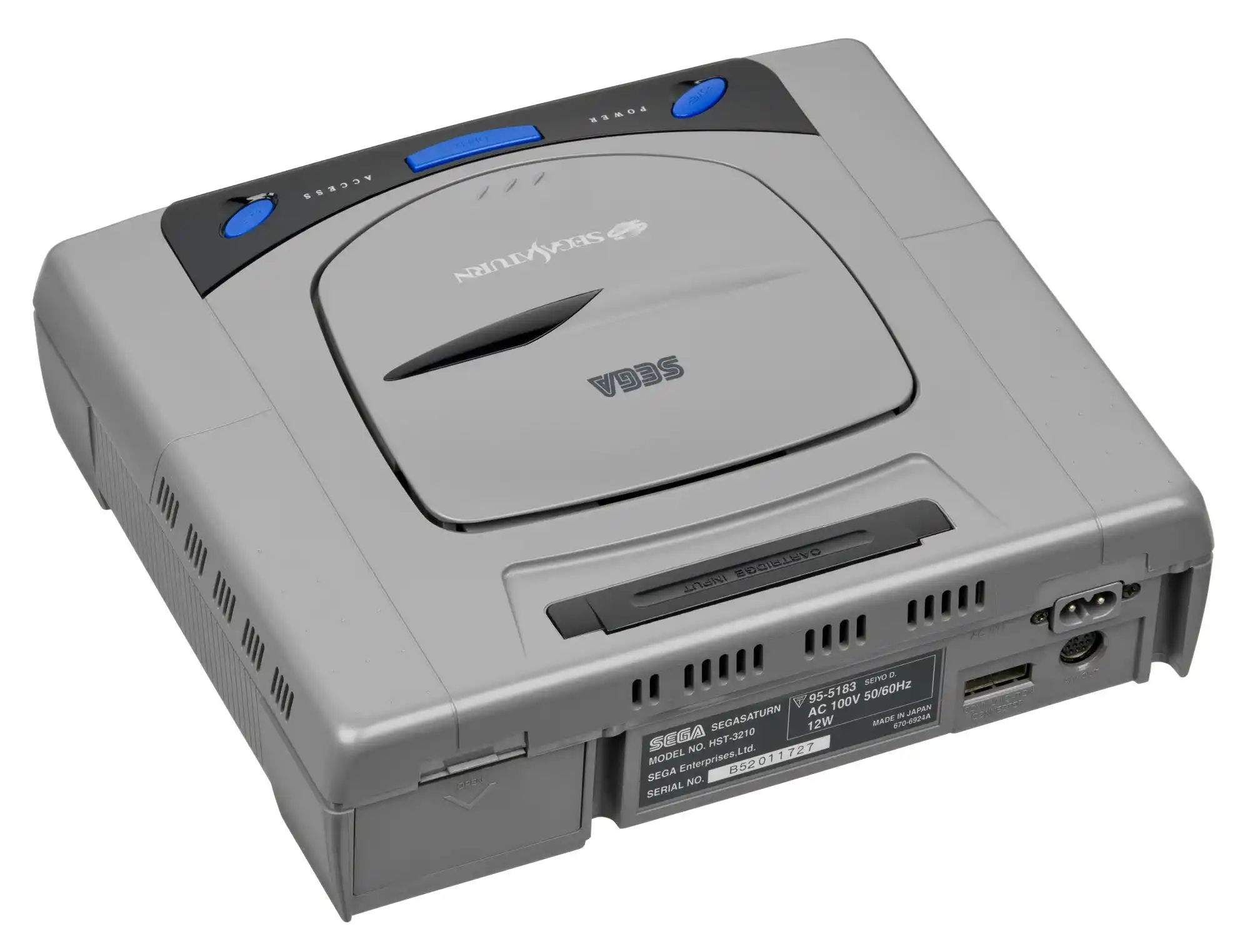
Sega Saturn
Jensen Huang later said that if Sega had held onto that stake, it would be worth about $1 trillion today. But on the day Nvidia went public, Sega sold it, "because they thought it was a miracle." At the time of the sale, Nvidia was valued at $300 million.
After the $5 million arrived, the first thing Jensen Huang did was lay people off. The company went from over a hundred people to just thirty or forty. Everyone working on game consoles was cut.
Then he discovered an even bigger problem: no one at the company knew how to build the "right" kind of graphics chip. Everyone only knew how to build the wrong kind.
He went to a bookstore. With $200 in his pocket, he bought three textbooks published by Silicon Graphics, $60 each. Back at the company, he gave the three books to three architects and said: When you're done reading, we go save the company.
In April 1997, the third-generation chip RIVA 128 was released.
How rushed was this chip? It supported only 8 of DirectX's 32 blend modes. They had no sample chips, no second chance at tape-out—the money in the bank was only enough for one tape-out. Tape-out means handing the finished chip design to the factory to be physically manufactured for the first time. So they put the entire chip into a simulator to run, and rendering a single frame took an hour; the software team just sat in the lab watching the screen refresh frame by frame.
On tape-out day, Jensen Huang told everyone: This chip will be perfect.
Someone asked him: How do you know?
He said: Because if it isn't perfect, we're done.
He did something even crazier: skipping sample testing and placing a mass-production order directly. The normal approach is to first make a small batch of sample chips, and once testing shows no problems, then go to mass production. He called TSMC and said we have a lot of customers, huge demand, we know this chip works, please start production directly. The people at TSMC said no one had ever done that before.
TSMC founder Morris Chang later flew to the US specifically to meet him. Whether to open a production line for this small company was his call alone. The old gentleman didn't directly ask "Do you still have money"—he circled around with many questions, trying to tease out the answer. Jensen Huang's account: We确实 didn't have all the money, but we had a very solid customer order in hand.
Within four months of launch, RIVA 128 sold one million units.
The company survived.
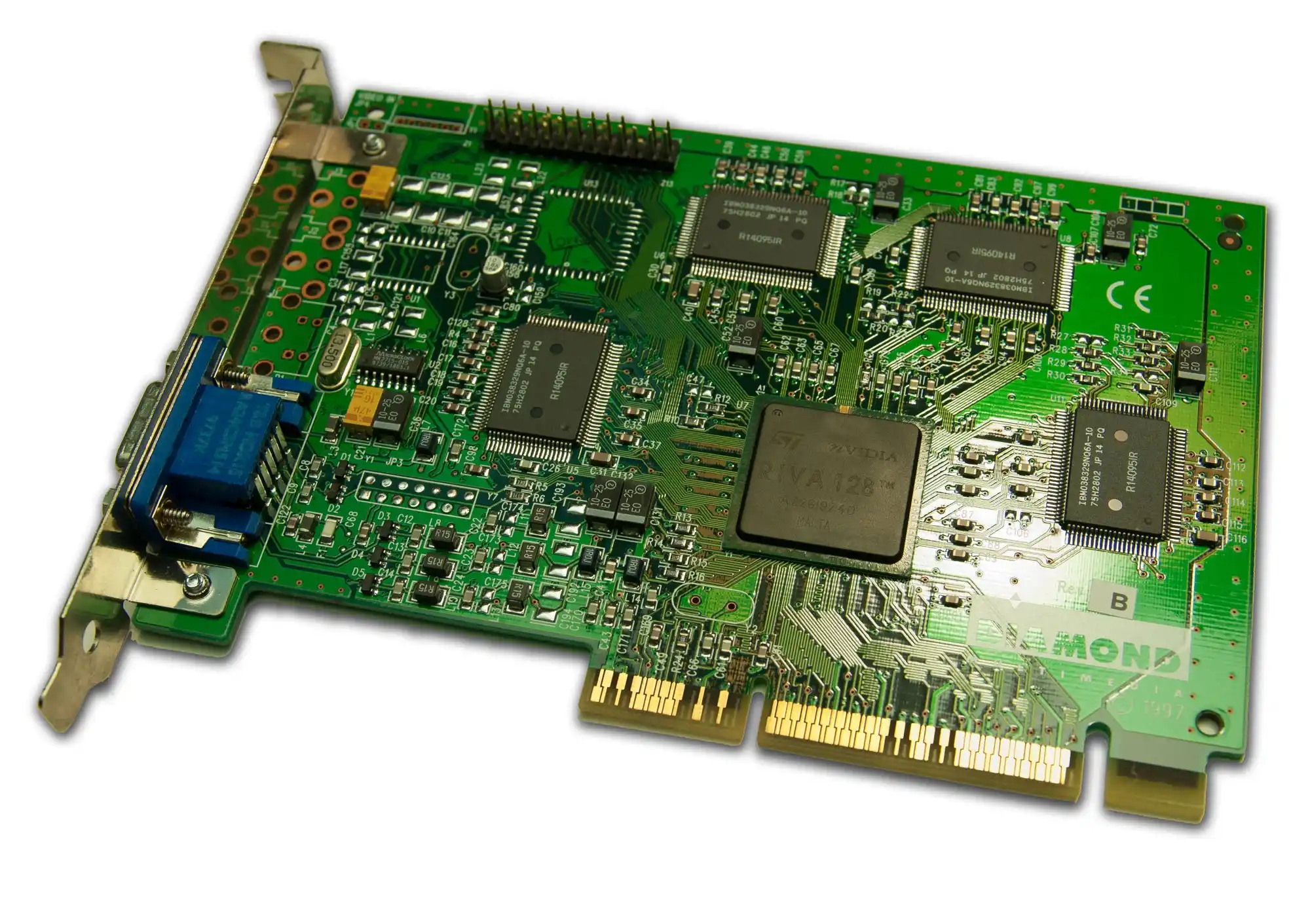
RIVA 128 graphics card
Thirty Days
Survival came at a price. Jensen Huang had a catchphrase he used most often during those years.
"I wake up every day thinking the company is thirty days from going out of business."
By his own account, he had been saying this since the day he founded the company. In 2025, sitting in front of Joe Rogan, America's most popular podcast host, he was still saying it: "I've used that line for 33 years. Every morning, every moment, before bed."
On January 22, 1999, Nvidia went public on Nasdaq.
On the day of the bell-ringing, the company was valued at $300 million. For a company that four years earlier had been worrying about making payroll, this was an astronomical figure. For Jensen Huang, it merely pushed the "thirty days" a little further out.
In 2001, Nvidia replaced Enron—which had just gone bankrupt due to financial fraud—in the S&P 500, the list of the 500 most representative publicly traded companies in the US. A year before that, Microsoft had awarded them the graphics chip order for the first-generation Xbox, with a $200 million advance payment.
Then came 2002. Microsoft came back to squeeze pricing, the first batch of nForce chipsets sat unsold in warehouses, and the company lost $48.6 million in a single quarter.
Then came July 2008. A batch of graphics chips used in laptops was found to be defective, and the company took a one-time charge of $196 million—setting aside that amount from profits to cover customer replacement and compensation. That same year, the financial crisis hit.
During those years, the industry's roster was shrinking fast. In the late 1990s, there were 70 companies making discrete graphics chips. By 2008, only two remained: Nvidia and AMD.
He rarely spoke later about the setbacks of those years. Instead, he told a story that had nothing to do with chips.
One summer, he was in Kyoto. The moss garden at Ginkaku-ji was vast, and there was only one gardener in the entire garden, crouching on the ground, using a bamboo tweezer to pick up dead moss bit by bit and place it into a bamboo basket. He walked over and asked: Your garden is so large—how do you ever finish?
The gardener answered in English: I have been tending this garden for twenty-five years. I have plenty of time.

Ginkaku-ji Moss Garden, Kyoto
He later told this story at a Caltech commencement ceremony. He said it was one of the deepest realizations of his life: as long as a person finds one thing and keeps doing it, there will be enough time.
Later, Rogan asked him what sustained him through thirty-three years. He did not mention vision, nor did he mention mission.
"I'm not an ambitious person," he said. "I just want to survive."
Then he added: "My greater motivation comes from not wanting to fail, rather than wanting to succeed."
No sound from the audience
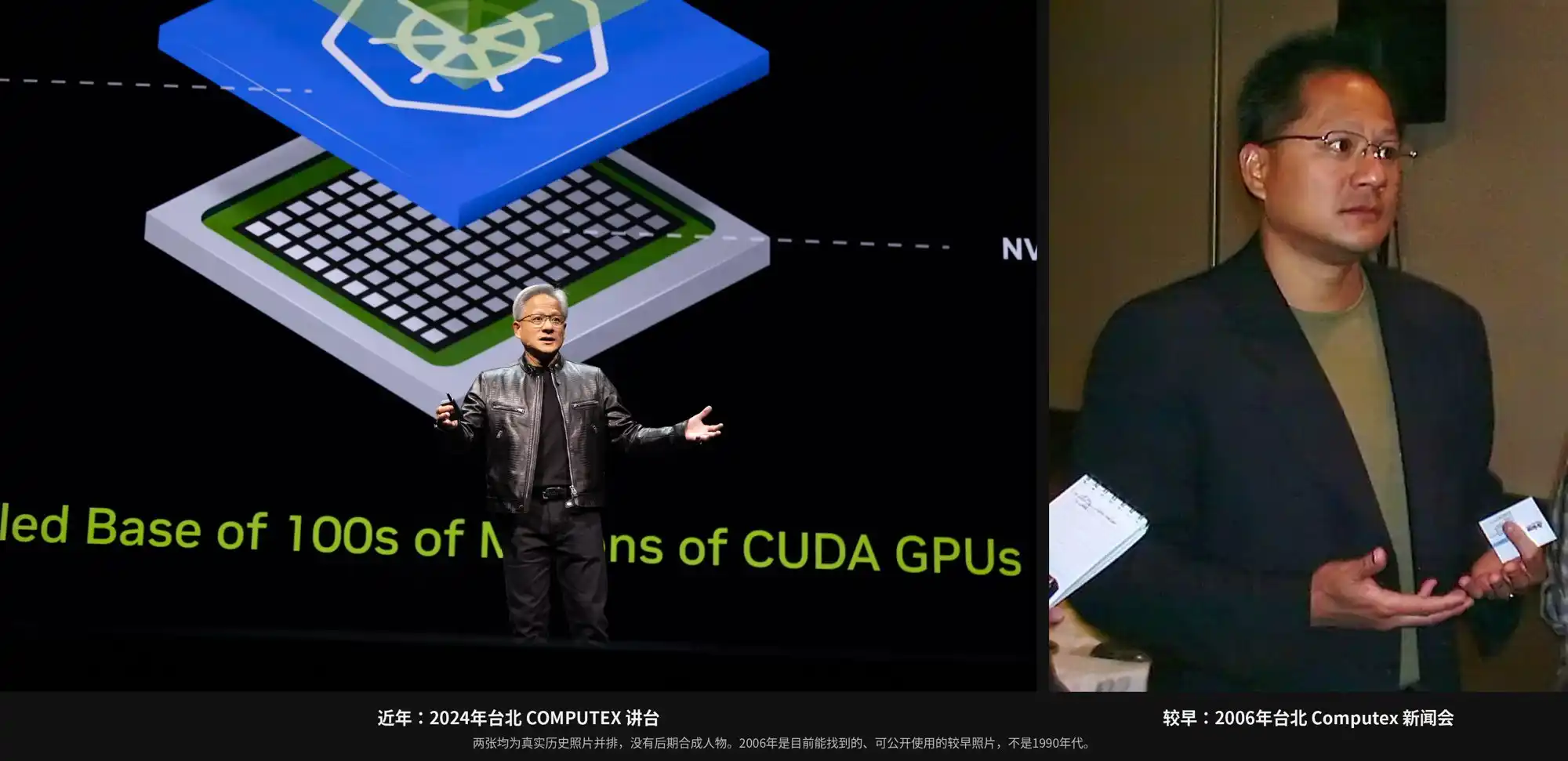
In 2006, Jensen Huang made a decision that no one could understand.
He wanted to put CUDA into all of the company's graphics cards.
A graphics chip contains hundreds to thousands of tiny computing units that can only do the simplest addition, subtraction, multiplication, and division, but do them simultaneously. A CPU is like a doctoral student who knows a little of everything, handling one complex task at a time; a GPU is like hundreds to thousands of elementary school students who only know arithmetic, but work together.
CUDA was like handing these hundreds to thousands of elementary school students a universal workbook: besides drawing pixels, you can also calculate other things—calculate proteins, calculate weather, calculate seismic waves.
The problem was that this workbook was expensive. It pushed up the cost of every chip by a notch, and the people buying graphics cards were gamers—no one would pay a single cent more for "calculating proteins."
"When I launched CUDA, there was not a sound from the audience," he later said. "No customer wanted it, no one had asked about it, no one understood it."
The company's market value fell by more than half. He later brought this up in speeches and interviews, saying: Wall Street thought he was crazy.
Shareholders demanded that he go back and focus on profit margins. Every year he held a conference called GTC, where he took the stage to talk about general-purpose computing, with a skeptical audience sitting below. After the conference ended, he would fly to various universities to find researchers using graphics cards for scientific computing.
The first to be convinced were the scientific community. Seismic data processing, CT reconstruction, molecular dynamics, particle physics, fluid mechanics—one field after another, CUDA was taken up as a calculating tool.
In 2012, Alex Krizhevsky, a doctoral student at the University of Toronto, in his own bedroom, used two GeForce GTX 580 gaming graphics cards to feed 1.2 million images into a neural network. In that year's ImageNet image recognition competition, his error rate was 15%, while the second place was 26%. The neural network he trained later had a resounding name: AlexNet.
From this moment on, everyone began to believe that deep learning was a viable path.
After Jensen Huang saw that paper, he made a decision: bet the entire company on it. He later said that their way of judging this was very simple—if something can become stronger by being "bigger," then it has no ceiling. What they needed to do was first build that "bigger."
In August 2016, he personally delivered a machine to San Francisco. That machine was called DGX-1, priced at $130,000, with 8 Tesla P100s, 170 teraflops—that is, 170 trillion calculations per second, equivalent to 250 ordinary servers. The person receiving the machine was Elon Musk, who was then a board member of OpenAI.
At that time, OpenAI was still a nonprofit in Silicon Valley that no one could figure out.
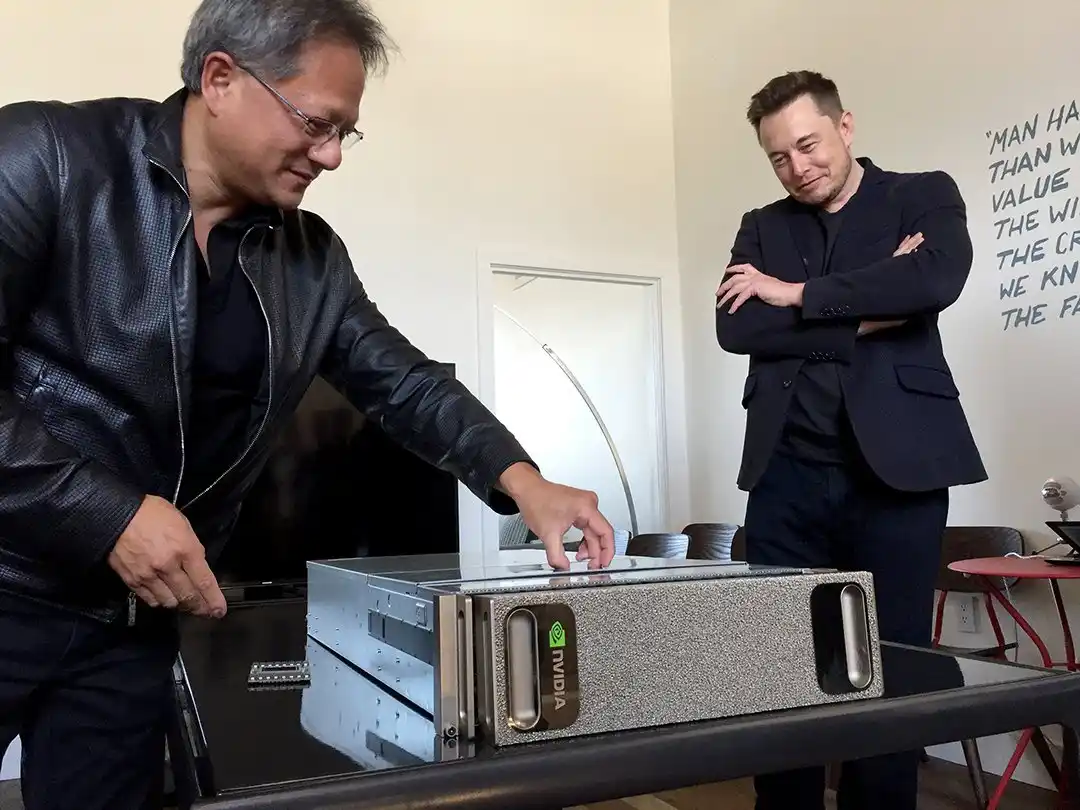
In 2016, Jensen Huang handed the DGX-1 to Musk
The zero-billion-dollar market
During those years when CUDA got no applause on stage, he was simultaneously fighting another battle: mobile phones.
In 2010, Google wanted to turn Android into a mobile computer with strong graphics capabilities, and Nvidia was the most suitable partner. But before that, they had already been kicked out of several markets.
They made chipsets—the set of chips on the motherboard responsible for connecting various components. After AMD acquired the graphics card company ATI, it no longer needed them.
They turned to Intel for a license and made a chipset for Apple's MacBook Air. Not long after, Intel terminated the agreement.
They then turned to ARM licensing to make mobile phone chips, which Google used for Android devices. This time, Qualcomm blocked them—Qualcomm refused to connect its modem to them. The modem is the baseband chip that connects a phone to the mobile network.
Without a modem, you can't make a phone.
"It was roughly one rhythm per year," he later said at Caltech's commencement ceremony. "We made something, it was very successful, caused a huge sensation, and a year later we were kicked out of that market."
"There were no markets left to go to," he said. "So we decided to go after a market where we were certain there were no customers. Because you can be sure of one thing: where there are no customers, there are certainly no competitors, and no one cares about you."
They chose robots. At that time, the market size was zero dollars. Today, Nvidia's automotive and robotics businesses combined generate $2.3 billion a year.
Then in 2021, Nvidia also rode a crypto boom, thanks to Ethereum's surge. At the time, Ethereum mining still relied on graphics cards. Miners bought GPUs by the truckload, making Nvidia's financial reports look exceptionally good, and the stock price soared alongside crypto prices. But a year later, the crypto market crashed, Nvidia's financials looked bad, and the stock price crashed with it. The U.S. Securities and Exchange Commission even fined it $5.5 million over this.
Jensen Huang surely didn't know at the time that this would be his last hurdle at Nvidia.
The Last Letter
On November 30, 2022, ChatGPT launched.
Humanity entered the AI era.
The next three years were one of the fastest climbs in business history. In May 2023, market cap broke $1 trillion. In June 2024, it broke $3 trillion. On October 29, 2025, it broke $5 trillion — the first company in human history to do so.
In fiscal year 2026, Nvidia's revenue was $215.9 billion, up 65% year over year. Of that, data centers accounted for $193.7 billion and gaming $16 billion.
The machine was built, it was running, and it was running faster than anyone had predicted.
As the Earth prepared to welcome the terrifying AI era, the man who built the machine wrote a letter on the evening of November 8.
"I was unfaithful to my wife."
"My actions hurt her and our children. There is no excuse for this. I am deeply sorry."
His wife's name is Lori. They met while studying at Oregon State University, where they were lab partners, and they had been married for over forty years.
"Regarding the national security concerns raised in news reports, the board has launched an independent investigation. I support this investigation and will cooperate fully."
Two days later, the board brought in outside counsel: Joon H. Kim, former acting U.S. Attorney for the Southern District of New York, and the law firm Wachtell, Lipton, Rosen & Katz. The U.S. Attorney's Office for the Southern District of New York is the most famous office in the country for prosecuting financial crimes.
Two days after that, another of his extramarital affairs was exposed.
A dozen or so hours later, the press release went out. Resignation, effective immediately.
He did not appear at any press conference. The company said the quarterly earnings call on November 17 would proceed as usual, only the person on stage would be different.
Thirty-three years, he went through Sega's $5 million, CUDA's six years of being misunderstood, countless roller-coaster rides, a 69% plunge, a failed acquisition, and round after round of export controls. All of that has passed. He did not leave in any of those past moments.
Beyond chips, this time he left.
Epilogue
In the spring of 2024, he brought a CBS camera back to that Denny's.
At 15, he washed dishes and waited tables at a Denny's in Oregon.
Standing in the restaurant, he pointed to a spot toward the back and said: We sat right there, three people, deciding to start a company.
"Honestly, I didn't know how," he said. "They didn't either. None of us did."
That table is still there, with a commemorative plaque Denny's put up beside it. The restaurant has been renovated, and the bullet holes on the facade were patched up long ago. Of the three people who sat at that table, one is still with the company, one left in 2003, and the last one left today.
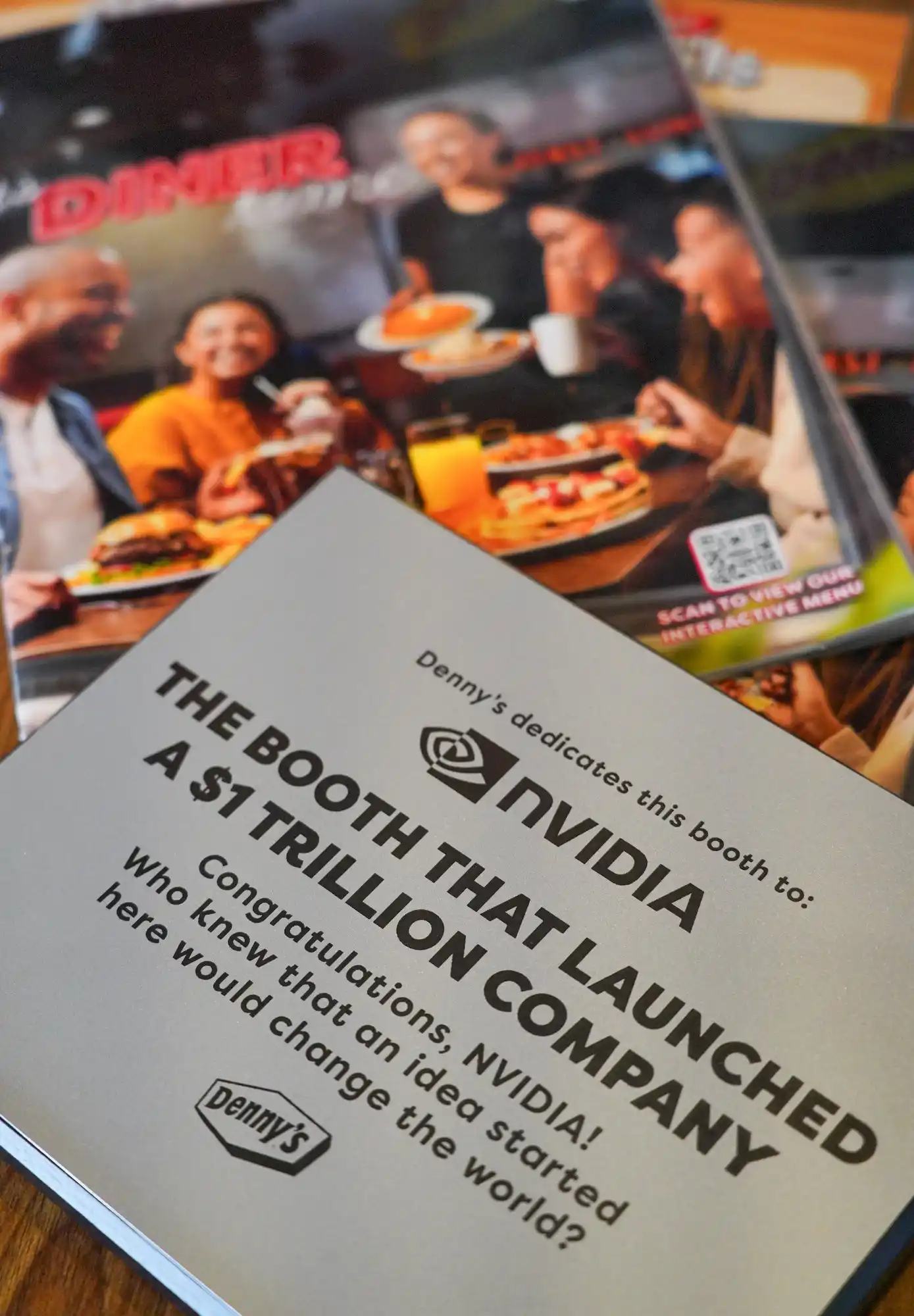
Denny's commemorative plaque
For thirty-three years, he woke up every day feeling he was thirty days away from going out of business.
This time, he was the one who counted to the thirtieth day.
Welcome to join the official BlockBeats community:
Telegram Subscription Group: https://t.me/theblockbeats
Telegram Discussion Group: https://t.me/BlockBeats_App
Official Twitter Account: https://twitter.com/BlockBeatsAsia

 Related Articles