Who wants to take down Jensen Huang?

By Sleepy
At around 5:30 PM Eastern Time on November 11, The Wall Street Journal published an exclusive report that Nvidia's board of directors was preparing to oust Jensen Huang.
Just over twenty minutes earlier, The New York Times had just exposed his second extramarital affair, with Kimberly Powell, Nvidia's vice president of healthcare business who had reported directly to him for 9 years. That evening, Bloomberg followed up reporting that the board had already been in contact with external headhunters. In after-hours trading, Nvidia fell about 9%.
As the first company in history to surpass a $5 trillion market cap, Jensen Huang had run Nvidia for 33 years.
Interestingly, none of the materials that were密集 released over the past two weeks in an attempt to bring down Jensen Huang involved anything new.
The photos from the first extramarital affair were taken in June 2024; the U.S. Commerce Department's investigation began in September 2024; intelligence surveillance had confirmed Jensen Huang's identity by summer 2025; short-seller firms had written the relationship between the two into a 40-page public report half a year ago; and as for the San Jose hotel video from the second relationship, it was filmed in March of this year.
These materials sat quietly for six months to two years in Washington's secure cabinets, law firm file bags, short-seller hard drives, and former employees' phones—then suddenly, over the 14 days from October 29 to November 11, they were released one after another every few days, as if on a scheduled timetable.
In Silicon Valley, which champions Founder Mode, a founder's private morals have always been the most easily exempted flaw. But this time, that rule failed for Jensen Huang.
We want to figure out why, and why these 14 days in particular. In this crisis that appears to have been triggered by sex scandal news, who exactly needs Jensen Huang out?
The Suppressed Memo
Regarding Singaporean company Megaspeed and its managing director Huang Le, the outside world has now pieced together the full story: how a shell company spun off from a Chinese gaming company, with only $5.7 million in cash on its books, obtained Nvidia's official cloud partner license in four days, and how it bought at least $4.8 billion worth of Nvidia chips through a data center in Malaysia.
In electronic surveillance of Huang Le, U.S. intelligence agencies followed the trail and discovered her intimate relationship with Jensen Huang, and assessed that she had been recruited with the mission of getting close to Jensen Huang and influencing Nvidia to continue lobbying Washington to relax chip restrictions on China.
For over a year, this investigation could not be pushed forward.
The reason lay with the White House. Over the past year, Jensen Huang had become almost a regular guest at Mar-a-Lago and the White House.
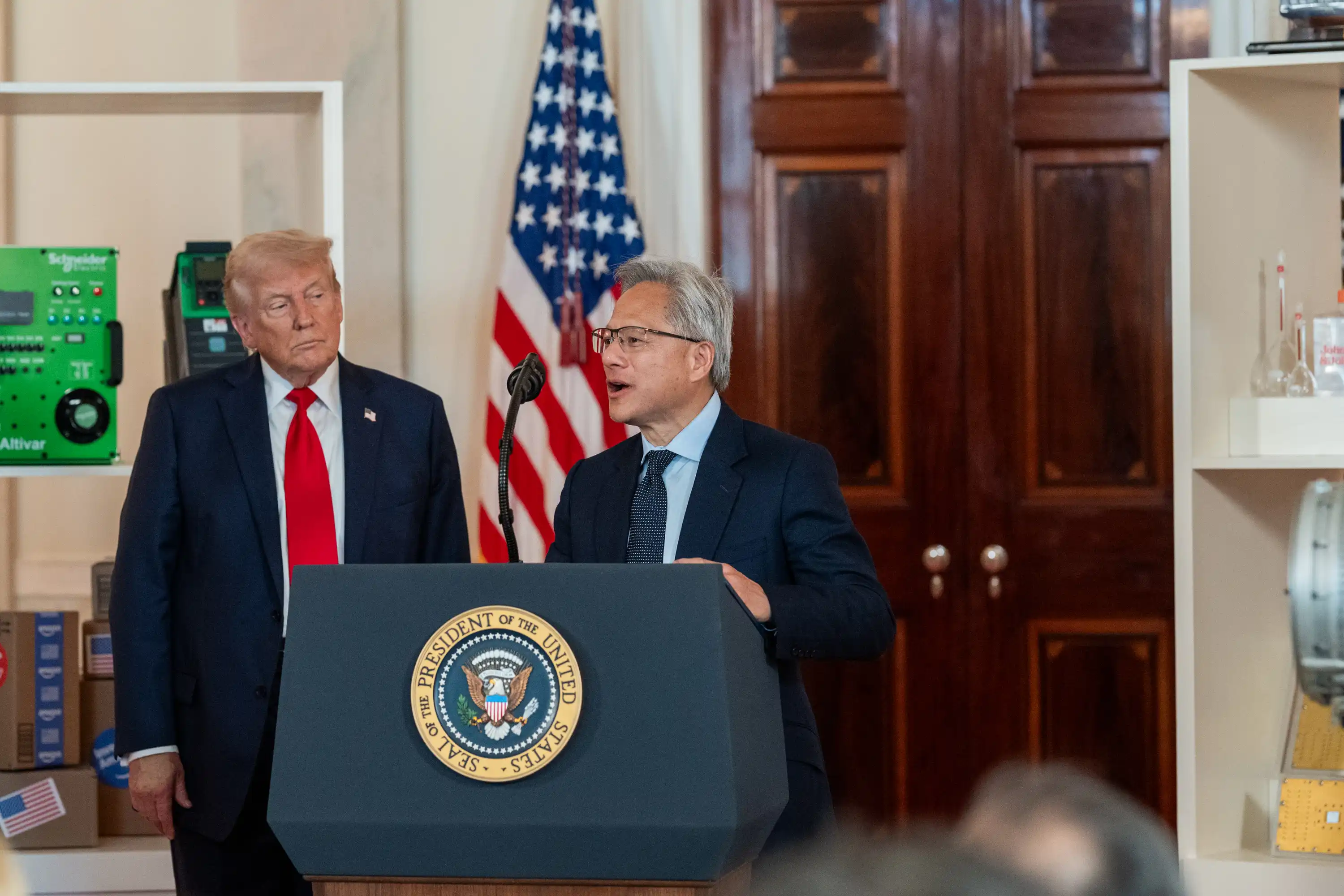
When Trump was inaugurated in January 2025, he was not among the first batch of tech company founders invited, but he quickly secured his ticket.
In April, he attended a Mar-a-Lago dinner with tickets at $1 million each, and Nvidia subsequently anonymously donated $25 million to the White House State Dining Room renovation project. According to documents obtained by The Washington Post, this figure tied with Apple for first place among all corporations. By this year, Nvidia had even established the first political action committee in the company's history, with two vice presidents overseeing software and hardware each donating $443,000 to the Republican National Committee on the same day.
The returns were immediate. In May 2025, the White House rescinded the Biden-era AI Diffusion Rule; in July, H20 chips resumed shipments to China; in December, Trump announced that Nvidia would be allowed to sell the more powerful H200 to approved Chinese customers, with the only condition being a 25% cut of sales revenue for the U.S. government.
In Joe Rogan's podcast late last year, Jensen Huang proudly recounted Commerce Secretary Howard Lutnick's opening words when he first called: "Jensen Huang, this is Secretary Lutnick. I just want you to know, you are a national treasure, and Nvidia is a national treasure. Whenever you need to reach the President or the government, just call us directly — we're always available."
When a company's CEO is called a "national treasure" by the Commerce Secretary, the常规 enforcement machinery becomes very difficult to operate.
In August 2025, after Huang Le was interviewed by police in Singapore, Nvidia's General Counsel Tim Teter called Deputy Commerce Secretary Kessler, who oversees export controls, directly, questioning whether the U.S. side was pushing from behind. Weeks later, frontline investigators received internal instructions that all inquiries involving Nvidia must thereafter be approved by the Deputy Secretary personally, and the name Megaspeed must no longer be mentioned externally.
According to The New York Times and Axios, in the 13 months that followed, the Commerce Department's Entity List did not add a single company, and the list of over 100 companies approved by the interagency committee — including Megaspeed, which had been specifically requested for inclusion — was entirely blocked at the Commerce Department.
Even after intelligence officials briefed Trump in person in October 2025 on surveillance findings regarding Jensen Huang, Trump decided to do nothing.
After administrative channels were completely blocked, the China hawks in Washington advocating tighter chip controls had only one other path to take.
In the spring of 2026, Secretary of State and National Security Advisor Rubio personally oversaw the drafting of a top-secret memorandum that packaged surveillance records, the romantic relationship between the two individuals, and national security risks together, circulating it among cabinet officials holding high-level security clearances. On the eve of Trump's visit to China in May, Rubio even reminded Trump face-to-face aboard Air Force One en route to Beijing.
But Trump still did not change the arrangement. He later said lightly that the matter "had no impact on me," and went ahead bringing Jensen Huang to Beijing, seating him at the head table at the White House state dinner in September.
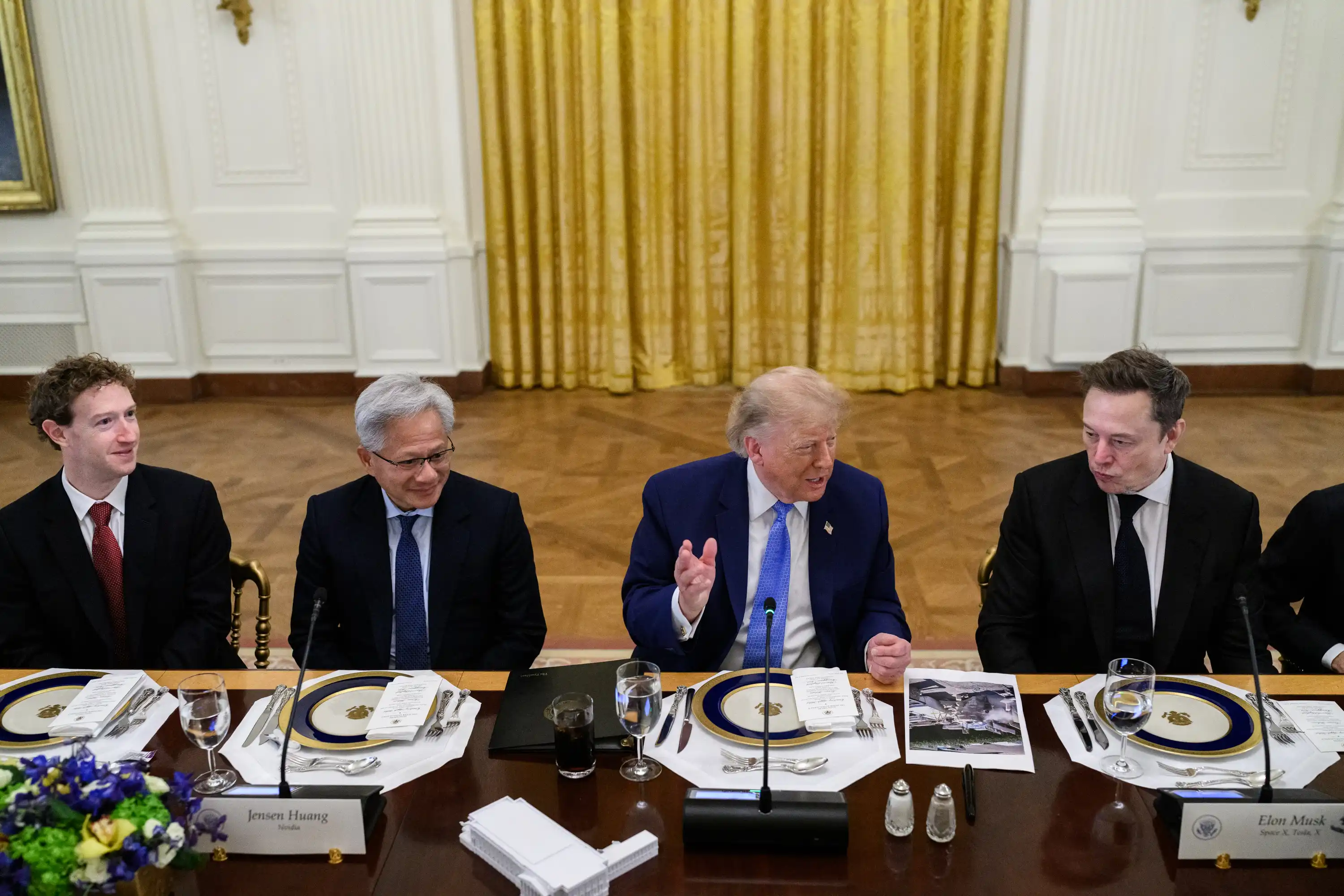
For five full months, that top-secret memorandum went nowhere. It wasn't until late October that someone decided to flip the table.
14 Days and the Final Strike
If you lay out the reports since October 29 in chronological order, you'll see this was not a sporadic media leak but a hunt precisely timed to political and commercial inflection points.
The first shot was fired on Thursday, October 29. The New York Times published its first investigation, "Nvidia Chief Said to Be Target of Chinese Spy Plot."
The piece unusually carried six bylines—reporters covering the White House, trade export controls, Asian geopolitics, Silicon Valley, and the intelligence beat were all on it. At The New York Times, that specification means cross-departmental verification had been underway for months, with sources feeding the story spanning multiple levels of the White House, the intelligence community, and the Commerce Department.
Why choose that day to publish? Because five days later was the November 3 U.S. midterm elections, and three weeks after that Trump was heading to Shenzhen for the APEC summit. Blowing this open before the summit was equivalent to preemptively closing off any possibility of Trump trading away relaxed chip controls.
Even more calculated was the calibration of the leak—the first report only said the two were close, not a word about an extramarital affair.
This was clearly a hook with a follow-up in reserve. Sure enough, Nvidia fell into the trap that same day, with a spokesperson loudly denying it, calling meeting clients the CEO's core job and saying Huang's interactions with Huang Le were "not abnormal, nor surprising."
After the midterms landed and the Democrats took both the Senate and the House, the net suddenly closed faster.
On November 5, three Republican House committee chairmen sent a joint letter demanding Jensen Huang appear at a closed-door congressional briefing; the same day, in the White House Situation Room, Treasury Secretary Bessent, in front of the Defense Secretary and Secretary of State, demanded to know why Commerce Secretary Lutnick still hadn't added Megaspeed to the Entity List. The next day, Friday—the last trading day before the weekend—The New York Times and the Financial Times simultaneously dropped a second wave of reports, directly characterizing it as a "romantic relationship."
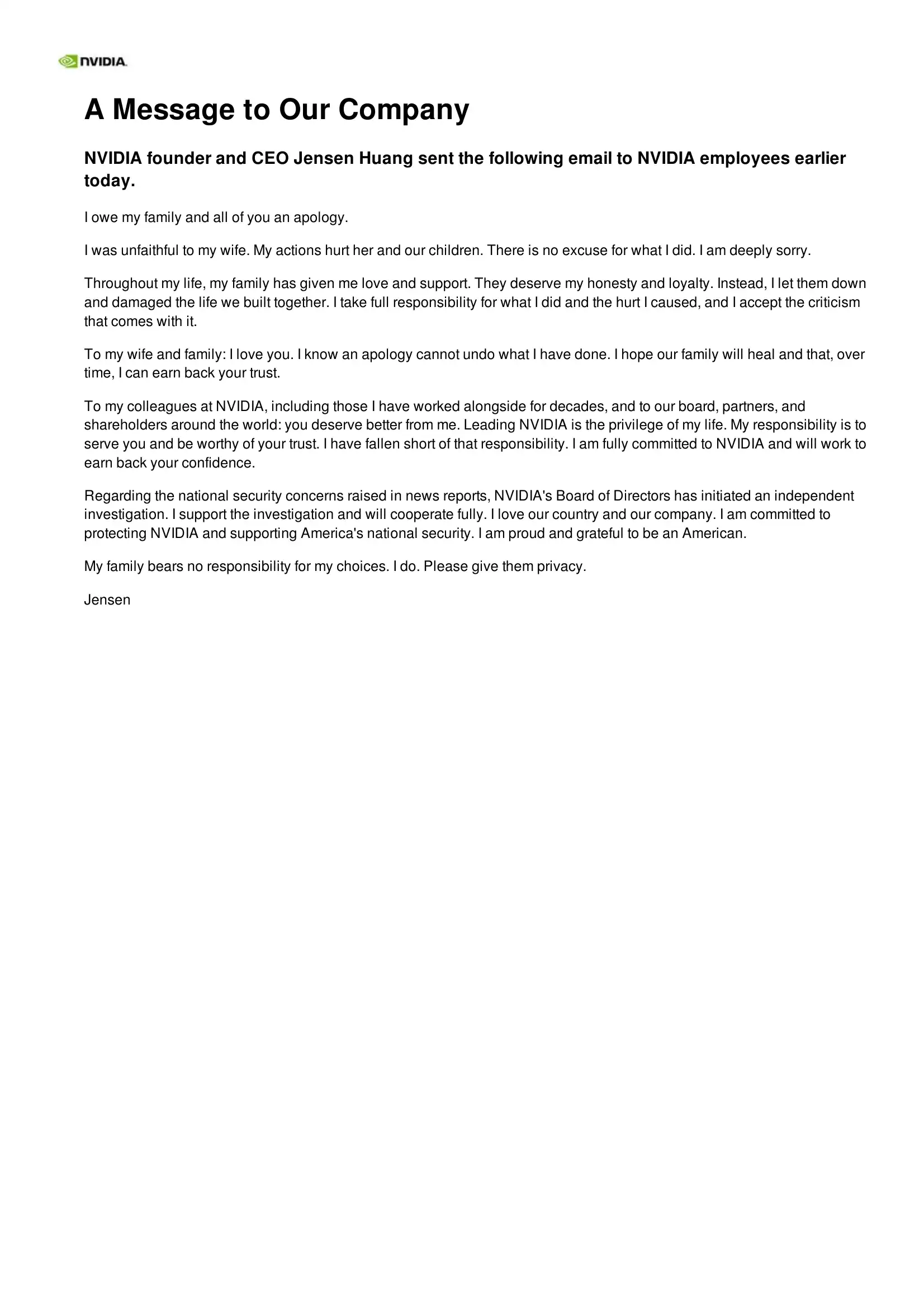
Just days after saying it was "not unusual," on Sunday, November 8, Jensen Huang was forced to send an apology letter to all 40,000+ employees, writing the line "I was unfaithful to my wife."
Then on Monday and Tuesday, the focus of revelations rapidly shifted from personal life to criminal compliance. Media disclosed that General Counsel Tate intervened last year in a Commerce Department investigation, and the case has been transferred to the Department of Justice as a criminal probe. Bloomberg and The Information dropped trade data alleging that Nvidia under-reported approximately 50,000 chips, helping a network spanning China and Singapore funnel at least $7.5 billion—roughly 240,000 restricted GPUs—into China.
But even by Tuesday night, many in Silicon Valley and on Wall Street still believed Jensen Huang could weather the storm.
The reason was simple: the so-called trade secret theft allegations were built on a memo that was never made public. Beijing-based observer Fred Gao pointed out the logical flaw on Substack—Beijing has been restricting domestic tech giants from purchasing H200 chips this year, requiring inference computing power to prioritize domestic chips, even causing 600,000 chips to pile up in Hong Kong. Why would a government that is restricting purchases of Nvidia chips send someone to lobby Jensen Huang to sell more chips?
He said: "Unpublished means unfalsifiable."
As long as the Justice Department has not produced an indictment, the allegations from above remain at the level of rhetoric, and Nvidia's board has every reason to protect its founder. To make the board abandon Jensen Huang, what's needed is something that doesn't depend on intelligence agencies—something that would be an ironclad violation at any U.S. publicly traded company.
Then, at 5:31 PM on Wednesday, November 11, the final blow came.
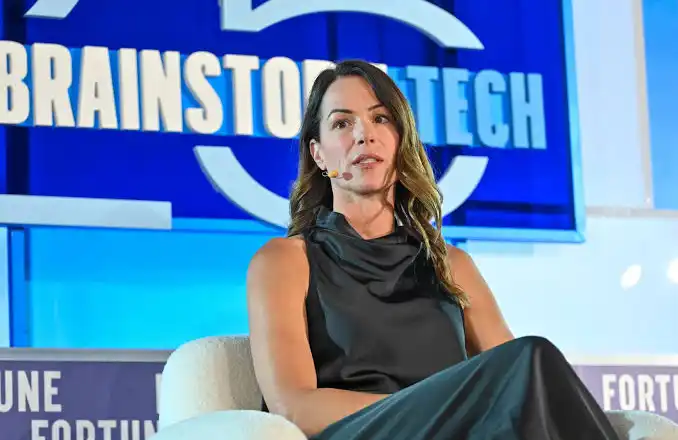
The New York Times published its fourth report. This time the sources were five former Nvidia employees, and the female lead was Kimberly Powell, a direct subordinate who had followed Jensen Huang for 9 years and served as Vice President of Healthcare. The most damning detail in the report: during the GTC conference in San Jose this March, the two were photographed by passersby behaving intimately at a hotel, and Jensen Huang's security team intervened on the spot, requiring the photographer to sign a non-disclosure agreement.
At that point, the nature of the situation changed completely.
Entanglement with an external client is at most a personal moral failing; but concealing a years-long conflict of interest with a direct subordinate and using company security resources to cover it up—at a U.S.-listed company, that's called breach of fiduciary duty. McDonald's Steve Easterbrook, Intel's Brian Krzanich, and HP's Mark Hurd all fell on the same red line.
Twenty-odd minutes later, The Wall Street Journal published an exclusive report that the board was preparing to replace its leader.
Can a blockbuster exclusive be written in just over twenty minutes? Perhaps before The New York Times even ran its story, people inside the board or close to it had already handed the decision to cut ties with Jensen Huang to the media.
Why did no one save him?
Washington hawks handed over the knife, but getting to the point where the board was preparing to replace him would not have been possible without the tacit consent of another group of people: Jensen Huang's biggest customers, the startups he invested in, and his peers in Silicon Valley.
For the past three years, no one in Silicon Valley dared to offend Jensen Huang. That was the era when Larry Ellison and Musk, at Nobu in Palo Alto, spent entire meals begging him, "Please take our money, just give us more GPUs." Cards were not enough to go around; whoever got cards first could train their models three months earlier, and the power of life and death was entirely in Jensen Huang's hands.
But the Silicon Valley giants that had long suffered under Jensen Huang had already begun quietly looking for a way out.
One way out was in Washington. According to The Wall Street Journal, Microsoft and Amazon AWS began lobbying Capitol Hill for the GAIN AI Act at the end of 2025, with one core demand: before AI chip manufacturers ship overseas, they must first satisfy orders from U.S. domestic buyers.
The reason Jensen Huang lobbied the White House so hard to relax exports to China, and even supported Southeast Asian cloud providers like Megaspeed, was not just to sell more cards. The more core business consideration was that he had to retain enough buyers outside the four major U.S. cloud providers and not let pricing power fall into the hands of a few giants. For Microsoft and Amazon, supporting export controls under the banner of "national security" had the most direct benefit of legitimately keeping for themselves the production capacity Nvidia had originally intended for overseas markets.
The other way out was at the technology layer.
In the very week Nvidia's market value evaporated by $400 billion in two days, Anthropic, a company Nvidia had once invested in, launched the largest IPO roadshow in history, with a valuation of about $1.4 trillion. Its CEO, Dario Amodei, had always been the most vocal opponent in Silicon Valley of Nvidia's exports to China, once comparing the sale of H200s at Davos to "selling nuclear weapons to North Korea," while Jensen Huang called the remark "stupid."
Anthropic co-founder and chief compute officer Tom Brown revealed that the company used its own frontier model Claude Mythos to automatically rewrite and port nearly 100% of its underlying compute kernels in only about three days, getting Claude running on AMD chips with almost no engineer intervention, while the same work previously required dozens of systems engineers working for more than half a year.
Over the past two decades, Nvidia's gross margin has reached as high as 75%, and its true moat is not chip hardware but the extremely high migration costs brought by the CUDA ecosystem. But now, AI itself has torn down this wall. Anthropic said in its prospectus that it has already mixed Amazon Trainium, Google TPU, Nvidia GPU, and AMD GPU as the same computing pool. At the same time, self-developed chips from Google, Amazon, and Meta are fully ramping up this year.
If it were in 2023 or 2024, shaking Jensen Huang would have been enough to crash the entire U.S. stock market, but by November 2026, Blackwell and Rubin schedules are already booked out 18 months ahead, big companies' self-developed chips have entered mass production, and even CUDA's migration costs are being flattened by large models.
The capital market's vote is more honest than any statement. On Monday, November 9, Nvidia plunged nearly 9% intraday, but on the same day, the Philadelphia Semiconductor Index surged nearly 7%, AMD soared 13.26%, and Broadcom, TSMC, and SK Hynix all closed higher.
The money has not left AI; the money just feels it does not necessarily have to bet on Nvidia anymore.
As for Musk, after the White House Situation Room meeting on November 5, before Trump approved a crackdown on transshipment chip companies, he specifically called Musk to ask for his opinion, and Musk expressed support.
Six days later, when the financial account ZeroHedge egged Musk on X to recruit Jensen Huang, Musk replied an hour and a half later: "That would be an honor."
Wife Guy and 6 Votes
Even so, this matter still seems very strange in Silicon Valley.
After all, Silicon Valley has always shown astonishing tolerance for the private morals of top founders. Musk had twins with a female executive at his company Neuralink and was reported to have scandals with multiple subordinates, yet he not only did not lose any position, but Tesla's shareholder meeting also passed his compensation plan worth up to $1 trillion last year with more than 75% approval. Paul Graham wrote "Founder Mode," and Marc Andreessen sharply criticized "tech ethics" and "risk management" in his manifesto. In essence, they are all endorsing one thing: as long as the founder can lead everyone to win, the rules can make way for him.
By the standards of "Founder Mode," Jensen Huang, who has no COO, has 60 executives report directly to him, and even works on Thanksgiving, should have been Silicon Valley's most admired example. When the first scandal first came out, Sequoia partner Shaun Maguire and Bill Ackman did indeed speak up for him on X, saying he is "irreplaceable for America's AI leadership."
Why did this immunity suddenly fail when it came to the second scandal?
One reason is the public image Jensen Huang spent thirty years building.
Musk can smoke marijuana on a podcast, Andreessen can publicly attack moral scrutiny, but a Tainan-born Chinese immigrant who was sent to a Kentucky boarding school at age 9, scrubbed men's restrooms, and waited tables at Denny's has no capital for caprice if he wants to be accepted by the power centers of Silicon Valley and Washington.
For the past thirty years, no matter how high the market cap climbed, Jensen Huang has always told the outside world the same nearly flawless story: he met his first love and wife Lori at 17 and promised to become a CEO before 30; his wife and daughter pick his clothes; apart from work, he goes home to his wife and kids; even when California's billionaires collectively protested the wealth tax, he dutifully stated, "It is my honor to pay $8 billion in taxes."
As the American magazine Slate wrote in its November 11 commentary, Jensen Huang fell into the "Wife Guy" trap. Zuckerberg and Musk never relied on family virtue to win trust; only Jensen Huang made "family man" the foundation of his personal credibility. Amid geopolitical suspicion and latent anti-Chinese sentiment, this harmless model-minority image was his way of reassuring the American public and politicians.
And when you make moral flawlessness your talisman, the backlash from moral bankruptcy is doubled.
But more fatal than the collapse of a persona is institutional fragility. Musk and Zuckerberg cannot be replaced by their boards; Jensen Huang can. The most fundamental difference lies in the cap table.
When Nvidia went public in 1999, dual-class share structures had not yet become popular in Silicon Valley. After more than two decades of dilution and share sales, Jensen Huang holds only about 3.56% of Nvidia, most of it held jointly with his wife in a family trust—one share, one vote, with no super-voting rights. By contrast, Zuckerberg controls 60.6% of Meta's voting power, and Musk retained 85.1% of voting power at SpaceX.
On Nvidia's 11-member board, if just 6 independent directors nod, Jensen Huang could be fired that very night.
The reason those 6 votes have never been cast against him in the past 33 years is that the board is filled entirely with his own people. The 10 independent directors have an average tenure of nearly 15 years; Tench Coxe, Mark Stevens, and Harvey Jones have been there since the company's founding in 1993; and lead independent director Stephen Neal is the former head of Cooley, the outside law firm that has served Nvidia for 33 years. In 2006, when Jensen Huang pushed CUDA through despite Wall Street's jeers and the stock price stagnated for years, it was precisely this group of old directors who had become billionaires alongside him who shielded him from activist investors.
Inside the company, Jensen Huang's authority is equally unchecked. Nvidia is the only company in the S&P 100 without a chairman, without a president, without a COO, and even without a chief compliance officer; over the past few years he has blocked all succession plans while gradually placing his own daughter, son, and son-in-law into core business units.
This dynastic structure is called efficiency in fair winds, but in headwinds it becomes a minefield.
This week, as a shareholder class action was filed in the federal court for the Northern District of California, Congress threatened to issue subpoenas, and legal chief Tate was reported to have allegedly interfered with a federal investigation, the situation of the veteran directors changed completely.
If it were purely a matter of personal conduct, old friends could shoulder it for him; but if it involves concealing conflicts of interest from the board, using company resources to sign nondisclosure agreements, or even the legal department interfering with the judiciary, the directors themselves would face real personal legal liability.
It was 77-year-old lead independent director Neal who decided to bring in law firm Wachtell Lipton and former Acting U.S. Attorney for the Southern District of New York Kim Jun-hyun to lead the internal investigation. Neal himself comes from the ranks of top white-collar criminal defense lawyers and once represented Theranos founder Elizabeth Holmes; when Holmes could not afford legal fees in 2019, it was also he who applied to the court to withdraw from representation. He knows better than anyone when to protect the client and when to protect himself.
From this perspective, those five former employees who suddenly spoke to The New York Times have instead handed the board, caught between a rock and a hard place, the most dignified way out: a top-secret national security memorandum cannot serve as the basis for a board resolution, but "concealing conflicts of interest with direct subordinates and violating the code of business conduct," once verified, can directly trigger the termination clause.
Stay, with less
There are still five days until the third-quarter earnings call on November 17; there are still six days until the closed-door congressional briefing on November 18.
Three years ago, on November 17, when OpenAI's board fired Sam Altman, more than 700 employees signed a petition to pressure the board, and a few days later he was welcomed back. In the past two days, on the workplace community Blind, 88% of verified Nvidia employees also supported Jensen Huang staying on. But a listed company with a $5 trillion market capitalization is ultimately not a lab in the startup phase.
Georgetown University professor Jason Schloetzer speculates that the final outcome may not necessarily be Huang's complete exit, but rather "stay, with less"—remaining in office while handing over a considerable portion of power, accepting a strong number two, and reorganizing the board that has accompanied him for 33 years.
If this is truly the outcome, then whether it's the hundreds of billions of dollars in computing power guarantees he made externally or the sales channels navigating the crevices of geopolitics, none of it will be decided by him alone anymore. And for the hawks in Washington, cloud providers struggling with computing power allocation, Wall Street institutions, and board members eager to avoid liability, a "Jensen Huang who hands over power" might be more cost-effective than simply replacing him—Nvidia keeps making money as usual, just no longer dictated by one person.
Three years ago, when Nvidia's market value crossed $1 trillion, Jensen Huang returned to the Denny's restaurant in San Jose where he started the company and nailed a plaque to the wall of the booth where they used to sit.
A month later, the host of the podcast "Acquired" asked him: if you could go back to age 30, sitting in that Denny's booth, would you be willing to start Nvidia from scratch again?
Jensen Huang's answer at the time was: "I wouldn't do it."
Welcome to join the official BlockBeats community:
Telegram Subscription Group: https://t.me/theblockbeats
Telegram Discussion Group: https://t.me/BlockBeats_App
Official Twitter Account: https://twitter.com/BlockBeatsAsia

 Related Articles