SemiAnalysis Research Report: Nvidia's Post-Jensen Huang Era
Original Title: "Nvidia and the World Without Jensen"
Original Source: SemiAnalysis
The helmsman of Nvidia, the core company of the AI era, Jensen Huang, has departed黯然 due to scandals, regulatory suspicions, and geopolitical maneuvering, leaving the global tech world with the biggest question: without its soul figure, is Nvidia still that unique company? As one of the world's top semiconductor and AI research institutions, SemiAnalysis, leveraging its deep industry tracking capabilities, has provided an extremely in-depth exclusive analysis. The research report not only uncovers the hidden threads behind Jensen Huang's resignation involving the RASA Act, chip bans, and intelligence community maneuvering, but also dissects, from dimensions such as organizational structure, supply chain control, financial backstop systems, and open-source ecosystems, what systemic-level crises "Nvidia without Jensen Huang" will face. The following is the original text of the report:
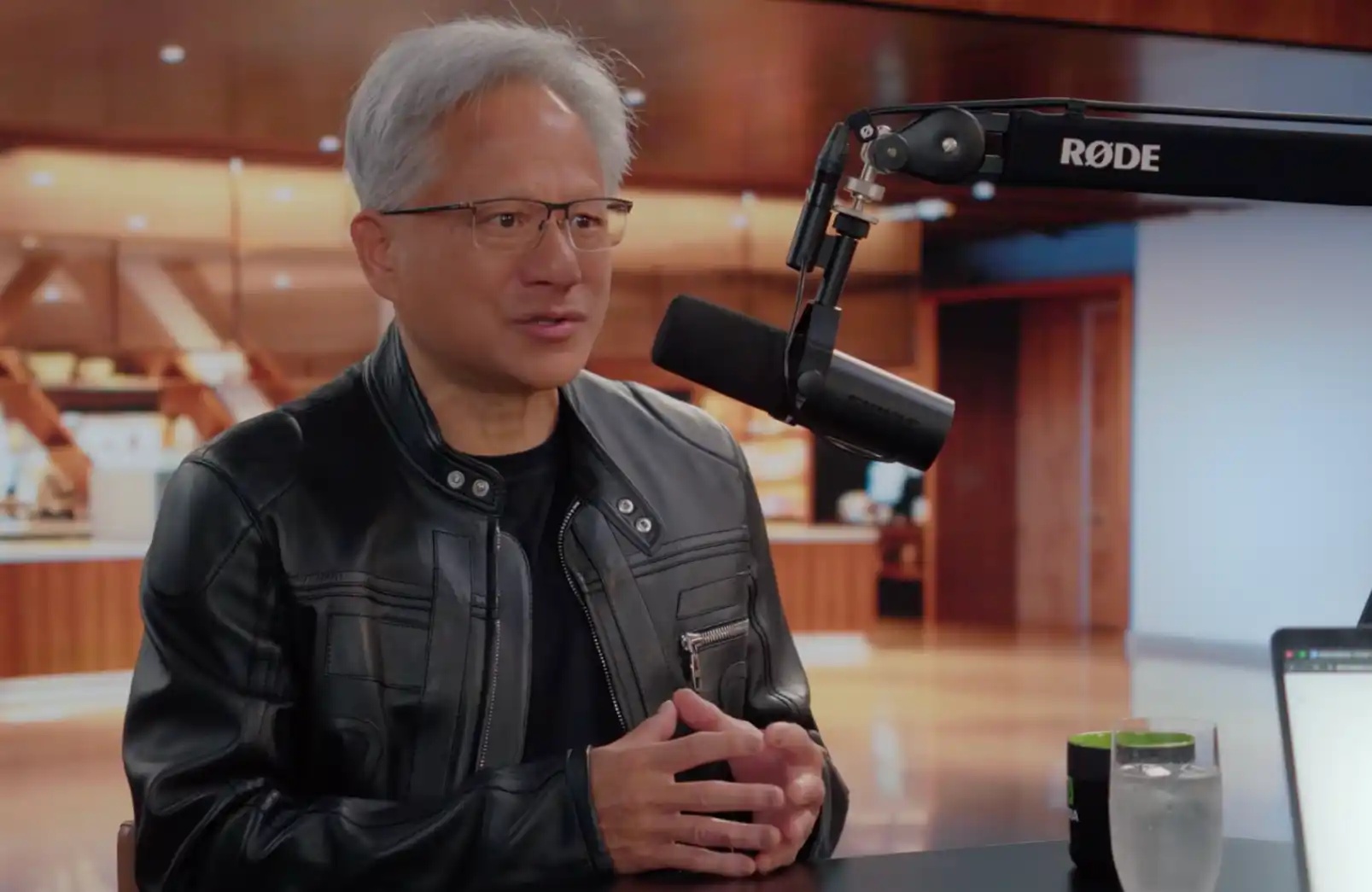
Jensen Huang is no longer Nvidia's CEO. Nvidia's board has been investigating Jensen Huang's conduct and weighing his future at the company he founded; clearly, the conduct issues are real—having relationships with a Chinese client and multiple subordinates is ethically problematic.
Furthermore, we believe there are deeper reasons behind his resignation just four days later. We believe this is directly related to large-scale GPU shipments evading customs supervision. Our accelerator model tracks the production and destination of every AI chip; data shows that over 1.5GW of regulated Nvidia chips ultimately flowed into China. This figure does not even include chips Nvidia specifically designed to circumvent U.S. regulations—a story we first disclosed.
We believe the U.S. intelligence community is a significant force driving Jensen Huang's departure from Nvidia. Specifically, we believe RASA (the Remote Access Security Act) or similar legislation will likely continue to advance; RASA has already passed the House. With the departure of Jensen Huang, who has consistently supported China, AI and chip restrictions on China will accelerate and escalate. We firmly support certain restrictive measures, but poorly designed restrictions harm U.S. interests.
Such legislation will have consequences, and we do not believe politicians have fully considered them. Under the current regime where Chinese labs can remotely use GPUs, there are clear benefits as follows:
· Profits flow to U.S. companies;
· The U.S. can know what Chinese labs are doing;
· The U.S. can, if willing, cut off GPU access almost immediately through political or coercive means;
· U.S. companies such as Nvidia, AMD, Broadcom, Google, Amazon, Microsoft, Meta, Supermicro, and Dell all depend on Chinese companies in their supply chains;
· Nvidia and AMD employ Chinese engineers living in China to develop hardware and low-level software for their GPU systems. Without these engineers, the user experience of these GPUs would undoubtedly be far worse than it is now;
· U.S. companies, especially the entire startup ecosystem, benefit from open-source research results published by Chinese companies, students, and independent researchers using these GPUs;
· China's incentive to use domestic accelerators will be somewhat weaker;
· Innovation from China flows to the world through open innovation approaches such as extensive expert parallelism and open-source kernel libraries, for example MSA, DeepEP, DeepGEMM, and others.
That said, we do support certain AI restrictions on China, but these restrictions should be closer to the MATCH Act rather than RASA.
Perhaps the most important point is: open source is under attack. It is an open secret that Nvidia works directly with Chinese labs on open-source projects and helps them optimize GPUs and models. These labs use Blackwell GPUs, and Nvidia knows this. The U.S. open-source ecosystem and many startups rely on Chinese AI models. As Jensen Huang leaves and hawks gain the upper hand, this ecosystem will be severely damaged.
But the question that truly matters to shareholders and the AI supply chain is: what would Nvidia look like without Jensen Huang?
Our view is that the company was never built to operate without him. He has been at the helm for 33 years; even if the board forced him out, or he "resigned," Nvidia would still be far better with him than without him. The company is uniquely built around him as a person. Without this man, the company could become something entirely different. SpaceX and Tesla cannot operate without Musk; Nvidia cannot operate without Jensen Huang.
A king and his 60 direct reports
For a company of such enormous scale, Nvidia's organizational structure is unusual. According to Jensen Huang's public statements, he has about 60 direct reports. He has said that a CEO should have the most direct reports because these people need the least management, and he does not meet with them one-on-one.
But few of them can move things forward without Jensen Huang. The company is like a kingdom with only one king; regardless of seniority, everyone else merely executes his will. Jensen Huang has said that it does not matter who reports to whom, because titles have nothing to do with the actual importance of the work. This is also one of the reasons Nvidia has become "the smallest big company in the world": despite its massive market capitalization, it has only about 42,000 employees. There is less internal politics at Nvidia. Jensen Huang says this flat network empowers employees and also enables the company to adapt faster to change, because its technology itself iterates extremely quickly.
This is also one of the reasons Nvidia acts so swiftly. Once Jensen Huang sets a direction, everyone pushes forward together. Former employees told us that product development and engineering work often continue until the last moment so the company can change its mind if necessary. A former executive said, for example, that the GB200's design was finalized closer to the product cycle than anyone would have liked. Huang has said he wants the company to remain a startup forever.
However, the cost of this structure is that Nvidia lacks a deep bench of successors. Look at Nvidia's website: among Jensen Huang's direct reports, only five are considered "known," and two of them are legal and finance executives. Most of his direct reports have not been trained to handle the public spotlight, and the company explicitly discourages them from seeking exposure. Few leave Nvidia to become CEOs of other major companies; Arm's Rene Haas is a rare exception. Few people inside Nvidia can shine externally because all major decisions are made by Jensen Huang. But many in Nvidia's executive team do not mind, because heavy is the head that wears the crown; many are happy to work until retirement age because they are well paid, well treated, and believe in the company's mission and leader.
No one really wants the job
Colette Kress has been appointed interim CEO, but Nvidia is looking for a formal CEO. This person cannot have a finance background. The candidates currently discussed internally as possible technical successors to Jensen Huang are Ian Buck and Jonah Alben.
Buck created CUDA while pursuing his PhD at Stanford University, joined Nvidia in 2004, and currently serves as vice president of hyperscale and high-performance computing, overseeing the data center business. When Jensen Huang travels, he is often tasked with managing related matters and frequently speaks at conferences.
Alben has been at Nvidia since 1997 and is senior vice president of GPU engineering, overseeing the company's GPU design.
But the reality is that no single person can manage everything alone. We do not believe Buck has the ability to lead the company's technical hardware engineering division. Alben and his team have technical autonomy, but even he does not control the entire chip business; other executives responsible for multiple major technology and business divisions also report directly to Jensen Huang. Both are outstanding, but neither may be able to demonstrate Jensen Huang's command of the supply chain.
In addition, there is another question: whether anyone is willing to serve as CEO. An executive told us earlier this year: "Ian would rather die than succeed Jensen Huang; he does not want that job. Jonah is more respected, and people say he can do it, but it is actually the same—no one really wants that job." However, the situation has clearly changed. Kress is interim CEO, but integrating more than 60 vice presidents into a unified company vision requires a special type of person; otherwise, the company's direction risks being lost in the noise.
Founder-style bets cannot be continued by professional managers
Jensen Huang is one of the last old-school tech founders, of the same generation as Elon Musk and slightly older than Mark Zuckerberg. Other companies that grew up alongside Nvidia, including AMD, Google, Microsoft, Apple and Amazon, have all completed the transition to professional managers.
Nvidia's success depends on huge bets, and those bets may take years or even a decade to pay off. A founder with full board support can take those risks without worrying about internal rebellion. CUDA lost money for years, and Wall Street analysts kept questioning it, but Jensen Huang persisted, and the bet eventually paid off enormously. A former employee said: "Despite many people opposing the investment of transistors in programmable shaders with limited uses, CUDA and Tensor Core, Jensen Huang bet the entire company on these directions."
Omniverse and autonomous driving are new bets inside Nvidia. Former employees said Jensen Huang internally calls them "zero-billion-dollar bets." They do not make money today, but he believes their potential is as huge as CUDA. He also built the Shield TV consumer entertainment box and the DGX Cloud service based on the idea that "Nvidia needs to understand customers in order to design better products"; even though these two businesses barely made a profit and were eventually abandoned.
An Nvidia successor who is not a founder, no matter how long they have worked at the company, will be accountable to the board and shareholders in a different way. Such long-term bets and firm convictions will become less likely. One of the biggest problems is that Jensen Huang's legendary "Midas touch" ability and dealmaking skills will be very difficult to replicate.
Customers are buying Jensen Huang, not just GPUs
Jensen Huang is the core decision-maker determining the allocation of chips to hyperscalers and other customers. Customers are always competing for quotas and fighting for Nvidia's attention, and more and more Nvidia deals require it to provide substantial support.
As we wrote in July, Nvidia can choose to allocate more capacity to hyperscalers, neoclouds, or the neoclouds in its backstop plan. In that plan, Nvidia provides credit support for clusters and shares cloud service revenue. This "Nvidia central bank" is backed by Jensen Huang's full reputation and credit. The next CEO is unlikely to make bets as bold as Jensen Huang's.
Nvidia likes to make decisions based on feasibility, but many things ultimately depend on what is strategic. Skipping hyperscalers may not be strategic; cooperating with them and giving them preferential treatment may not always be strategic either. Today, many customers want assurances that Nvidia will continue to support them through financial guarantees or quotas.
Nvidia disclosed that as of its second fiscal quarter, its total off-balance-sheet guarantees amounted to $530 billion, up from $184 billion in the previous quarter; this includes $36 billion in take-or-pay minimum commitments for neocloud capacity. Nvidia also holds a $99 billion equity investment portfolio.
Many customers want to strike deals with Jensen Huang for reasons that go beyond the numbers themselves. Neoclouds around the world are able to raise financing because Jensen Huang backs them, not because they compared chips and chose Nvidia. Nvidia's backstop measures allow neoclouds and new labs to raise financing without hyperscaler support: Nvidia sells GPUs at full margin on day one, then sets a revenue floor for the buyer, provides guarantees for the buyer's landlords, or signs leases itself, enabling operators without investment-grade ratings to borrow at investment-grade prices. Without the "Jensen Huang put option," this ecosystem could shrink significantly.
BlockBeats note: Nvidia's "backstop plan" is essentially a financial support system that uses its own credit as a fulcrum to lever large-scale financing of AI compute infrastructure. Its core is a mechanism called the "Residual Value Support Agreement": in a typical transaction structure where customers borrow through special purpose vehicles to purchase GPUs and lease out compute, once rental payments are interrupted and a shortfall remains after asset disposal, Nvidia commits to making up the difference according to an agreed ratio, thereby reducing lenders' concerns about AI company defaults and chip depreciation risks.
The stranglehold on the supply chain will loosen
Nvidia has strong control over suppliers. If competitors could obtain supply, their shipments would be much higher. They cannot get it because Jensen Huang personally locked up memory supply in South Korea and chip supply in Taiwan.
As we wrote in "The Great AI Silicon Supply Shortage," Nvidia has locked up most of the supply of logic wafers, memory, and other necessary components. Jensen Huang traveled to South Korea in 2025 to secure supply before other executives fully realized the extent of the memory shortage. Our industry clients once thought our 2026 forecast was too aggressive, but later found that we were right. Nvidia's supply and capacity commitments jumped from $119 billion to $279 billion in a single quarter, mainly for memory.
This control is highly personal. Jensen Huang struck these deals with major global supply chain companies CEO-to-CEO. We estimate that in South Korea, SK Hynix may supply HBM4 to Nvidia in 2027 at about $3.0 to $3.3 per Gb; while other tier-one customers, including AMD, Broadcom, Amazon, and Google, pay about $3.7 to $4.1 per Gb. We believe there is a tacit understanding between the two sides: in exchange, Nvidia gives SK Group priority allocation of GPUs. Without Jensen Huang, these companies would no longer prioritize Nvidia to the same extent, and other companies would find it easier to obtain capacity. We believe that by 2028, more than 70% of total capacity may no longer belong to Nvidia.
More importantly, beyond locking in supply, Jensen Huang's vision has also driven Taiwan's supply chain to increase investment, making it believe in this round of buildout more than anyone else. Jensen Huang's legendary supply chain dinners and commitments have pushed Taiwanese suppliers to execute aggressive plans at the technical and logistical levels.
The AI industry loses its open-source advocate
Without Jensen Huang, the AI industry loses its most important advocate. He is everywhere, always speaking as the chief champion of AI. He is the face of AI, and no one can replace that.
Jensen Huang also shaped Nvidia's China policy and pushed it to support open-source AI models. These models give countries, enterprises, and neoclouds a reason to buy GPUs, rather than relying only on a handful of frontier labs developing their own chips.
As we wrote in September, no one needs open-source AI more than Nvidia, which is heading toward "a world with only two real customers, Anthropic and OpenAI, or seven customers if you count the hyperscalers." And of those seven customers, all except SpaceX are trying to build their own XPUs to erode Nvidia's margins. AI models and applications are complements to GPUs.
It is an open secret that Chinese frontier labs use Blackwell GPUs, and that Nvidia DevTech works closely with Chinese frontier labs, learning from their end users. This has led to innovations in the CUDA ecosystem, such as widely used expert parallelism, DeepGEMM, and DeepEP. These innovations then spread to the Western open-source community and startups. Jensen Huang's departure will have a massive negative impact on these startups.
Without Jensen Huang as an advocate and without financial and engineering help for open models, Chinese labs may no longer be able to open-source kernel libraries for Nvidia Blackwell GPUs, such as MiniMax's MSA, DeepGEMM, DeepEP, and Moonshot's FlashKDA. Widely used inference engines globally, such as SGLang and vLLM, have adopted these innovations from Chinese labs. Chinese labs may have to completely deny that they have Nvidia GPUs and restrict Nvidia software to internal use, rather than open-sourcing Blackwell software.
Innovation from China no longer being shared within the Nvidia ecosystem and the broader machine learning ecosystem is fundamentally a bad thing. It may be beneficial for closed AI labs, but it is bad for startups.
A manager-led company might deprioritize the underperforming Nemotron. As many models from leading US labs shift to closed source, Nvidia has single-handedly propped up other US open-source models by investing in companies like Reflection, Thinking Machines, and Poolside, as well as acquiring Hugging Face.
Nvidia has consistently pushed for continued engagement with China, arguing that China should use and depend on US technology. As we wrote last year, after the US government banned H20 from entering China and subsequently indicated it would grant export licenses to Nvidia, the US needs to strike a balance between letting China use the US AI stack, slowing its independent development, and limiting the quality and quantity of products shipped to China. Now, what if he is pushing all this while in a constrained position? That is for the investigation to determine. Clearly, the hawks are winning, so we must ask a somewhat strange question: why now?
Why are Jensen Huang's private life issues being exposed now?
We are not fans of conspiracy theories, but several things happening around the same time seem to form a narrative that is hard to ignore. The intelligence community benefits considerably from this. The New York Times' second report on this topic explicitly stated that its reporting was based on the US intelligence community. Trump, Rubio, and Lutnick were already aware of all this before their visit to China in May. Additionally, there are reports that Lutnick delayed a crackdown on Chinese chips. The relationship has changed, and now the wind is blowing in the other direction.
We don't actually believe Alice Huang has any special identity—she is simply a well-connected businessperson. Like other businesspeople with extensive connections in China, it is normal for her to have ties to officials.
Our accelerator models have tracked over 1.5GW of Nvidia GPUs that should not exist in China. The US Commerce Department now also finally believes that there is over 1.5GW of Nvidia chips in China that should not be there. As the midterm elections tilt toward the Democrats, someone has decided it is time for tough action: both to stop active circumvention of existing export controls and to expand restrictions to completely cut off China's access to frontier chips.
To be clear, the Trump administration is divided on this issue, but Trump had previously been providing cover for Lutnick. Trump is no longer providing that cover. More importantly, a key bill called the Remote Access Security Act (RASA) has passed the House and has not yet been voted on in the Senate—and that vote is happening now.
RASA vote imminent
RASA passed the House of Representatives on January 12 by a vote of 369 to 22. It passed via a "motion to suspend the rules," which requires a two-thirds majority. The House Foreign Affairs Committee approved the bill in April 2025 by a vote of 51 to 0. Although the bill has been referred to the Senate Banking Committee, it has not yet received a vote. We know that Nvidia and Oracle have been lobbying heavily against it.
Of course, RASA is not the only way the U.S. government could stop Chinese companies from remotely accessing GPUs. But RASA is currently the most hotly debated bill in Washington. It is clearly popular, since it has already passed the House; and the substance of the bill seems obvious to many: why allow Chinese companies to remotely access GPUs they are not allowed to import?
It is worth noting that we know neoclouds in Asia, Australia, the Middle East, Northern Europe, Europe, Canada, and even the United States are actively selling compute to Chinese companies. They will all be affected by this bill. This is another global export control bill with far-reaching implications. Jensen Huang, and possibly Lutnick as well, do not want to see this happen.
So let us push back against the popular narrative and explore a possibility: despite the various recent headlines, passing RASA or a similar bill could bring unintended consequences. To borrow an old saying from American politics, we believe that if all politicians agree on something, it is probably a bad idea.
As previously mentioned, under the current system, Chinese labs are able to use GPUs remotely, which brings the following obvious benefits:
· Under the current system in which Chinese labs can remotely access GPUs, profits flow to American companies;
· The United States can monitor what Chinese labs are doing;
· The United States can cut off GPU access almost at any time if it wishes;
· American tech companies rely on Chinese enterprises and engineers;
· American companies benefit from Chinese open-source research;
· China will also use domestic accelerators less;
· Chinese innovation flows to the world through open-source kernels such as MSA, DeepEP, and DeepGEMM, as well as extensive expert parallelism mechanisms.
To be clear, in a world where Chinese labs are completely cut off from Nvidia GPU access, their incentive to turn to domestic accelerators and decouple from Nvidia GPUs will only grow stronger.
And this is already happening.
In February, Zhipu AI claimed that GLM-5 already supports inference on seven domestic accelerators.
In April, DeepSeek published the V4 paper, and later open-sourced an inference superkernel for the V4 Pro model on Huawei Ascend NPUs.
In June, Meituan released LongCat 2.0 and claimed that the model was pretrained entirely on Huawei Ascend 910B NPUs.
Politicians continue to ignore how tightly China, Taiwan, and the United States are actually intertwined. Many Chinese nationals work at frontier labs; many Chinese engineers are employed by Nvidia and AMD, writing the low-level code that brings up new chips; many Americans learn from Chinese open-source contributions; many of the raw materials needed to produce these chips come from China; and many ODM board and component suppliers for L1 through L6 are also Chinese companies.
Escalating tensions will inevitably lead to reduced chip output and slow AI progress for everyone.
We believe the United States should limit or control the scale of compute delivered to Chinese labs; banning exports to China while allowing trusted cloud service providers to offer remote access is the best way to achieve this goal.
The situation may be worse than we imagine
So, if we must answer "why now," one possibility is that this move is intended to clear away opposition to an extremely hardline China export control bill. With major changes in Congress and a lame-duck period approaching, clearing out opponents first is most conducive to pushing the bill through. This is our most conspiratorial assessment of the current situation, and it aligns with various reverberations coming out of Washington.
So, back to the original question.
What would Nvidia look like without Jensen Huang?
At such a scale, there is only one real case of a company continuing to operate well after losing its legendary founder: Apple and Steve Jobs. We believe Jensen Huang's departure clearly means the end of the visionary founder era; without the person who built the company at the helm, it would be impossible to run it with the same intensity.
To use an easy-to-understand car analogy: no one wants to wreck a car someone else built; and the builder of this car—Jensen Huang—can comfortably drive it at 150 miles per hour on the highway.
Whoever is promoted to maintain the status quo and drive the company's transition from founder leadership to manager leadership may need to deal with an enviable problem: what to do with so much cash. Jensen Huang clearly envisioned making the company the balance-sheet backstop of the ecosystem, providing and expanding credit for neoclouds and labs. This is a natural extension of supply chain dominance.
But professional managers will likely do something else that is somewhat effective: stock buybacks. Apple after Jobs is the best case of a founder transition where the company still performed well. We believe the only playbook that has ever worked at this scale could very well play out again: the founder hands off to a professional manager, the company becomes more conservative and returns cash. Shareholders will be happy, but the company will no longer push technology forward at the same pace as before.
For technology, this is a bad outcome. For shareholders, it will also be a bad outcome. But clearly, people will miss Jensen Huang, and the one-of-a-kind Nvidia will become more ordinary. As the supply chain shifts from following Jensen Huang's bold promises to following managers' mediocre vision, the infighting and digestion process inside this giant will manifest both within the company and globally. Without him, the tech world will be different.
Our current judgment is that Ian Buck is most likely to lead, with Kress close behind, potentially becoming the formal CEO. External CEO candidates, such as Johny Srouji, have also been rumored. But given Nvidia's uniqueness, we believe it is best to promote from within. There are few options, and whether anyone is willing to take the job remains to be determined. Only industry titans have any hope of performing as well as Jensen Huang; we doubt that titans like Lisa (AMD CEO Su Zifeng) or Hock (the just-departed former Apple CEO) would jump ship.
In any case, this is very favorable for all of Nvidia's competitors and very unfavorable for Nvidia's supply chain.
Welcome to join the official BlockBeats community:
Telegram Subscription Group: https://t.me/theblockbeats
Telegram Discussion Group: https://t.me/BlockBeats_App
Official Twitter Account: https://twitter.com/BlockBeatsAsia
 Related Articles