Web3 vs. Web2: Fundamental ideological differences
Original title: "Web3 and Web2: Fundamental ideological differences"
Original author: Sylve Chevet
Original compilation: Nanfeng, Unitimes
;
Preface:In this article, I will use Web3 Web2 To loosely refer to communities and projects specific to the "normal" parts of the Internet, such as Tumblr, Reddit, or Wikipedia. FOSS refers to Free and Open-Source Software.
The current argument in favor of Web3 (and NFTs in particular) is that Web3 is the only option against predatory centralized ownership systems: you either get a decentralization on the blockchain with NFTs ownership records, or Facebook will devour your immortal soul in their horrible centralized database.
@punk6529 exemplifies this position:

Some Web3 criticism Authors take a completely different stance on the subject, arguing that there is no need for a record of ownership, or even ownership at all, on the Internet. Their argument is as follows: The Internet is not based on possessions, but on abundance (abundance). Native digital content has a very curious property of being inherently rich. If you create a GIF or JPEG, you can generate unlimited copies and distribute them to everyone. The internet community thrives on remixing and sharing content for free, and to great effect: memes, copy-and-paste, webcomics, all because of it. So if the Internet was built on abundance, why would you divide up the commons and sell them? Why introduce scarcity? Why introduce property rights? Why are you so greedy?
This is reminiscent of Rousseau:
"Who was the first to enclose a piece of land Whoever rises up and thinks to say: This is mine, and finds some simple-minded people who believe him, is the founder of civilized society. If a man pulls up a stake or fills a ravine, and cries out to his fellows: " Don't listen to this liar, and woe to you if you forget that the fruits of the land belong to everyone, and the land belongs to no one!" How many crimes, wars, and murders this man should have saved mankind from How much suffering and horror to go!"
--Rousseau, "On the Origin and Foundation of Human Inequality"
Web2 Content Creator ;A recent tweet by @eevee followed this line of thinking and garnered broad engagement from both sides of the debate. Interesting to read about criticisms against Web3:

Tweet source: https://twitter.com/eevee/status/1484748148169793537?s=20&t=d9VC8f8CISsf002rwQGgmA
The truth is, copyright already exists, the Internet It was never really free. But there is indeed an anarchist- or communist-like ethos at the heart of the internet. We cannot deny the influence of the counterculture on the original dream of the Internet. This is where the phrase “information craves freedom” comes from.
History tells us that we do not need ownership records, Token incentives, ICOs (first Token distribution), and even money, to build compelling projects. Just think of what the free/open source software movement has achieved: Linux, Wikipedia all testify to this spiritual legacy. The blockchain community cannot forget that we created most of the incredible things that run on the internet without a record of ownership or funds.
If someone were to recreate Wikipedia today, the first comment from a pro-Web3 person would be: " Token Where is the incentive? Why do people take the time to write articles? It won't work. "It turns out that people like to create stuff and then give it away for free. More precisely, a small group of insanely elite super-creators make up most of the content creation on the Internet.
So when someone comes along and says, "Let's create Token Incentives, let’s create DAOs and build everything,” triggers a knee-jerk reaction from these Web2 communities: “It’s worked so well so far, why would you want to change that? How does this make things better?”
This is why I don't necessarily like Web3 as the definition of a blockchain technology paradigm. Web3 is not a necessary strict improvement compared to before, it is not an optimization, but a choice. Web3 is a technological paradigm capable of creating things that were not possible before (such as native digital ownership), but that doesn't mean it's strictly superior to or will replace the ways of the past.
I like to think of blockchain technology as a kind of uchronia, another version of history: ownership exists natively in on the internet. Imagine how different the world would be if we invented blockchain technology in the 90s.
But the fact that we live in a version of history where ownership didn't exist natively on the Internet, is rather odd in retrospect. But we had to make do with it. That’s why we have an “attention economy,” with ad-based business models, and a centralized record of ownership. It has its flaws, yes, but we build a lot within those constraints.
I think @eevee is a little naive. Ultimately, (Web2) you only have three ways to monetize Internet content:
- (try) enforce copyright: this is Web3 and FLOSS (free open source software) the consensus is that this falls short. Copyright is ubiquitous on the Internet precisely because copyright is one of the only ways to make money on the Internet, which is naturally rich in content. If you create digital art, there is nothing stopping others from copying it and selling it, other than the threat of copyright infringement and sometimes digital rights management (DRM).
- Get paid to create new content: This is what Stallman said in 1984. That's why we have Patreon (crowdfunding platform for artists), custom artwork (commission art) and more.
- Advertisement: Place an ad on your video, an option primarily for content creators such as YouTubers, not digital artists.
NFT offers a new way to make money: selling the digital original of a piece of content.
NFTs are a way of representing scarcity on the internet: NFTs are like digital objects that you can sell, just like you sell a painting. Creating an NFT does not require closing access to the content. I think NFT is a new option and a very natural way to make a lot of money on the Internet. This is what the CC0 + NFT movement is trying to achieve: release a work of art in the public domain, allow anyone to reuse, remix and copy it at will, and record ownership on the blockchain so that it can be monetized( profit). (Editor's note: The CC0 agreement means that the author contributes the work to the public domain and waives all copyrights. Generally speaking, the materials conforming to the CC0 agreement can be used, processed or deductively edited without restriction, and there is no infringement.)
NFT series actually follow different intellectual property strategies, and content creators are free to choose a strategy that suits their needs. For example:
- does not grant rights to NFT holders: buying Cryptopunk or Cryptokitty does not grant you any intellectual property rights, Their intellectual property rights belong to the parent company.
- Grants NFT holders some rights: buying a Bored Ape (bored ape) actually grants you the right to mint derivatives and get make money.
- Confers no rights to anyone (CC0): buying Noun or CrypToadz does not grant you any rights as their IP (intellectual property) is in the public domain .
You can continue creating content as before. You now also have the option to create an NFT to sell it. This is not opposite. If you sell your art prints, you can also sell NFTs.
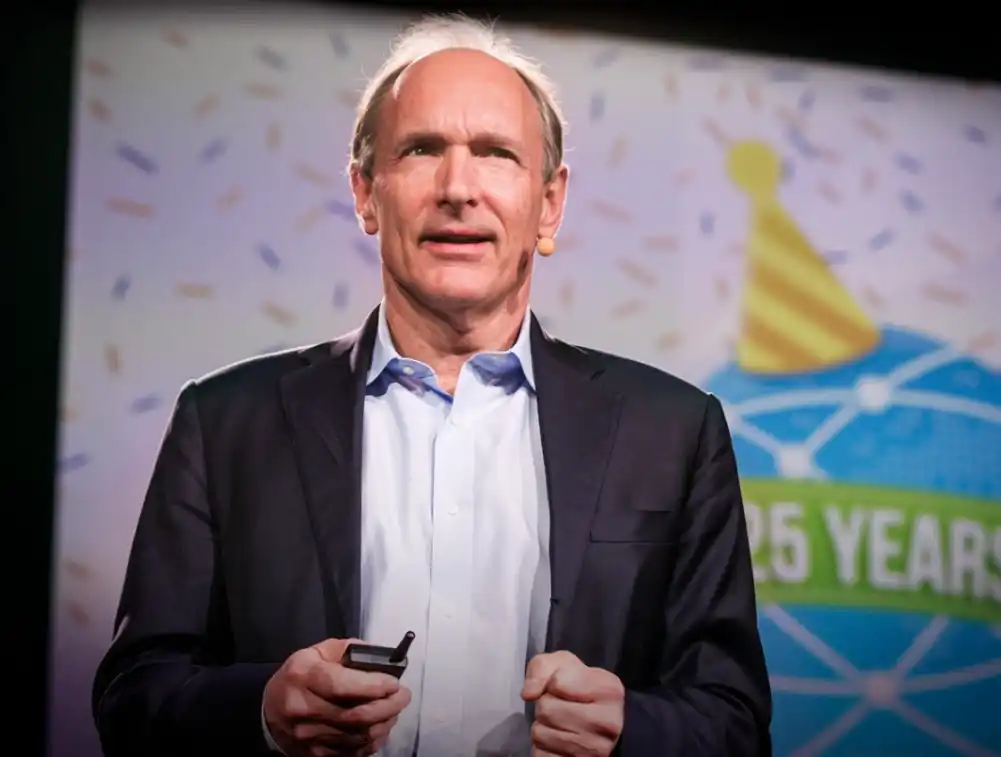
To give a concrete example: Tim Berners-Lee invented the World Wide Web (World Wide Web), released it for everyone to reuse, and made the World Wide Web source The code was successfully auctioned in the form of NFT to over US$5.4 million. As Berners-Lee put it in an interview with The Guardian:
"It's completely in line with the values of the web. The question I have is , they'll say, "Oh, that doesn't sound like a free and open web." Well, but the web is as free and open as ever. The core code and protocols on the web are royalty-free, as they always have been .I'm not selling the web - you don't have to pay to click a link. I'm not even selling its source code. I'm selling an image I made with a Python program I wrote as if its source code Was taped to the wall and signed by me. If they don't think it's appropriate for me to sell an NFT of a poster, what if I buy a book? I'll do something like this, there's money involved, but it's free and open The web is still free and open.
——Source: The Guardian
World Wide Web Inventor Tim Berners-Lee
Such as Friends With Benefits (FWB) Token There is no fundamental difference between a community and Patreon. In my opinion, compared to Patreon, by Token Controlled communities give content creators and fans more control as they are not subject to censorship by central authorities. With porn coming under increasing scrutiny on social networks, Web3 offers some communities a viable alternative.
In the end, I believe both frameworks have their own room for development. Just like video didn't really kill radio (podcasts anyone?), Web3 isn't going to kill Web2.
Digital ownership does not kill abundance.
“Utopia is a framework of various utopias, where people can unite freely and voluntarily to pursue and try to realize their vision of a better life in an ideal society, but No one can impose his vision of utopia on another.”
—Robert Nozick, Anarchy, the State, and Utopia
As web3 evangelist @damedoteth said, when you hear blockchain critics say "we don't need blockchain", try to understand where their point of view stands, rather than building a straw man argument , think they must be advocating complete luxury data centering. They're probably saying, "We've built so many things without a blockchain, I don't understand what it's going to bring."
They're probably saying That said, Web3 needs to prove everything compared to Web2.
And they might be right.
So let's get on with building.
**This article only represents the views of the original author and does not constitute any Investment advice or advice.
Original link
Welcome to join the official BlockBeats community:
Telegram Subscription Group: https://t.me/theblockbeats
Telegram Discussion Group: https://t.me/BlockBeats_App
Official Twitter Account: https://twitter.com/BlockBeatsAsia
 Related Articles