Hedge funds are selling off at a record pace, so why is Morgan Stanley calling it a buying opportunity?
TL;DR
· In the November 3 midterm elections, 40 of 41 data center-related local ballot measures went against the industry, and the newly elected governor of Texas pledged to pause approvals for new projects. On November 5, the Nasdaq 100 fell 6.4% in a single day, wiping out about $2.3 trillion in market value.
· Hedge funds net sold tech stocks at a near-record pace, and total leverage for U.S. long-short funds fell 8.7 percentage points in a single week. Morgan Stanley, HSBC, Jefferies and UBS said the selloff was overdone, while Citi downgraded U.S. equities and global tech to neutral.
· Related names: Nvidia (earnings due November 17), Broadcom, the Philadelphia Semiconductor Index and SOXX ETF, QQQ, Amazon, Meta, Google, Microsoft.
On November 5, the Nasdaq 100 fell 6.4% in a single day, wiping out about $2.3 trillion in market value, while the Philadelphia Semiconductor Index fell more than 12% the same day.
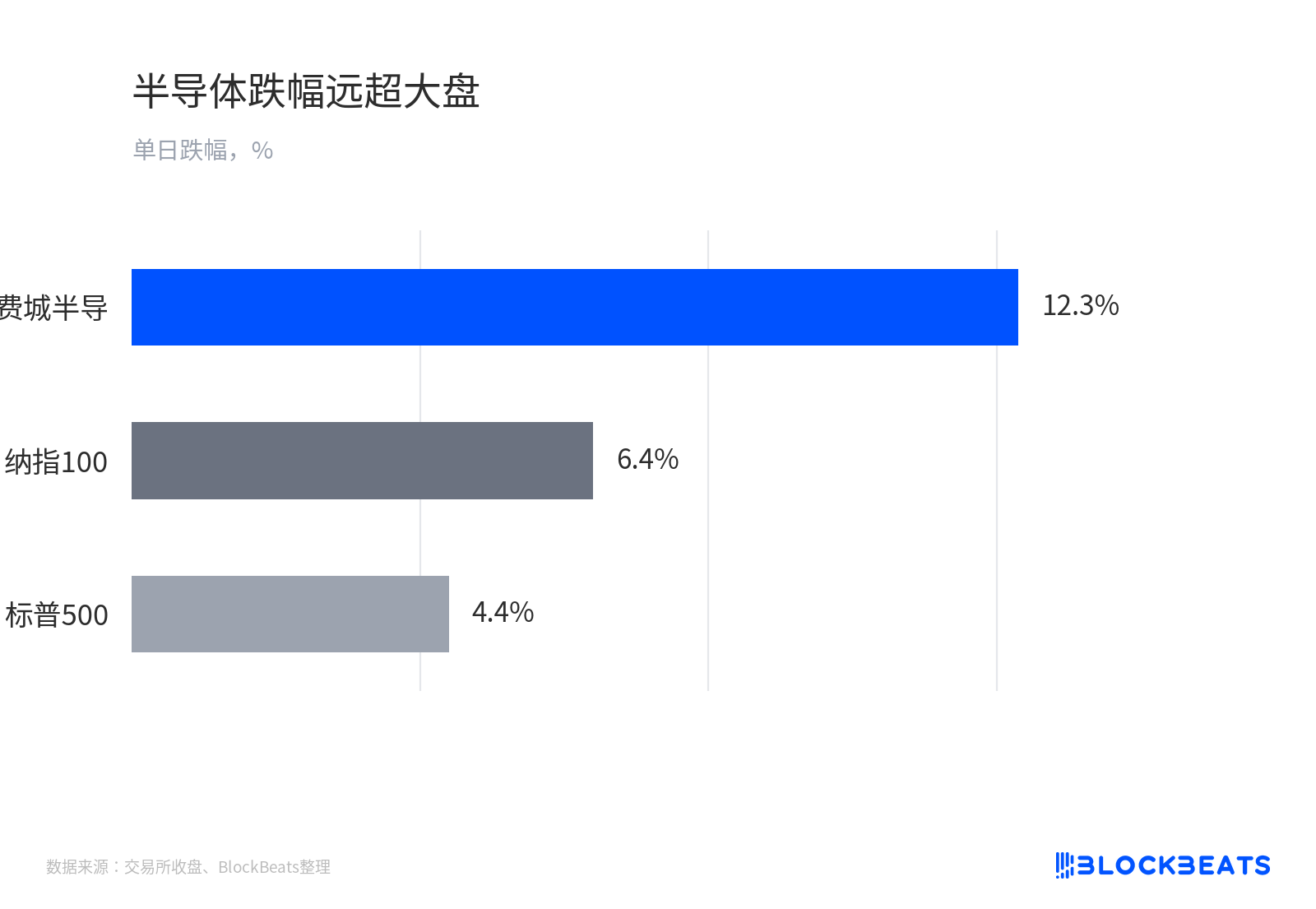
Semiconductor decline far outpaced the broader market
By November 9, Morgan Stanley, HSBC, Jefferies and UBS all said the AI selloff had been excessive, while Citi downgraded U.S. equities and global tech to neutral.
Buy-side firms did the opposite. Goldman Sachs prime brokerage clients' net sales in the tech sector in the week through November 6 were close to the highest on record since 2016. Total leverage for U.S. long-short funds fell from 216.2% to 207.5%, a drop of 8.7 percentage points in a single week, the largest weekly decline since March 2020.
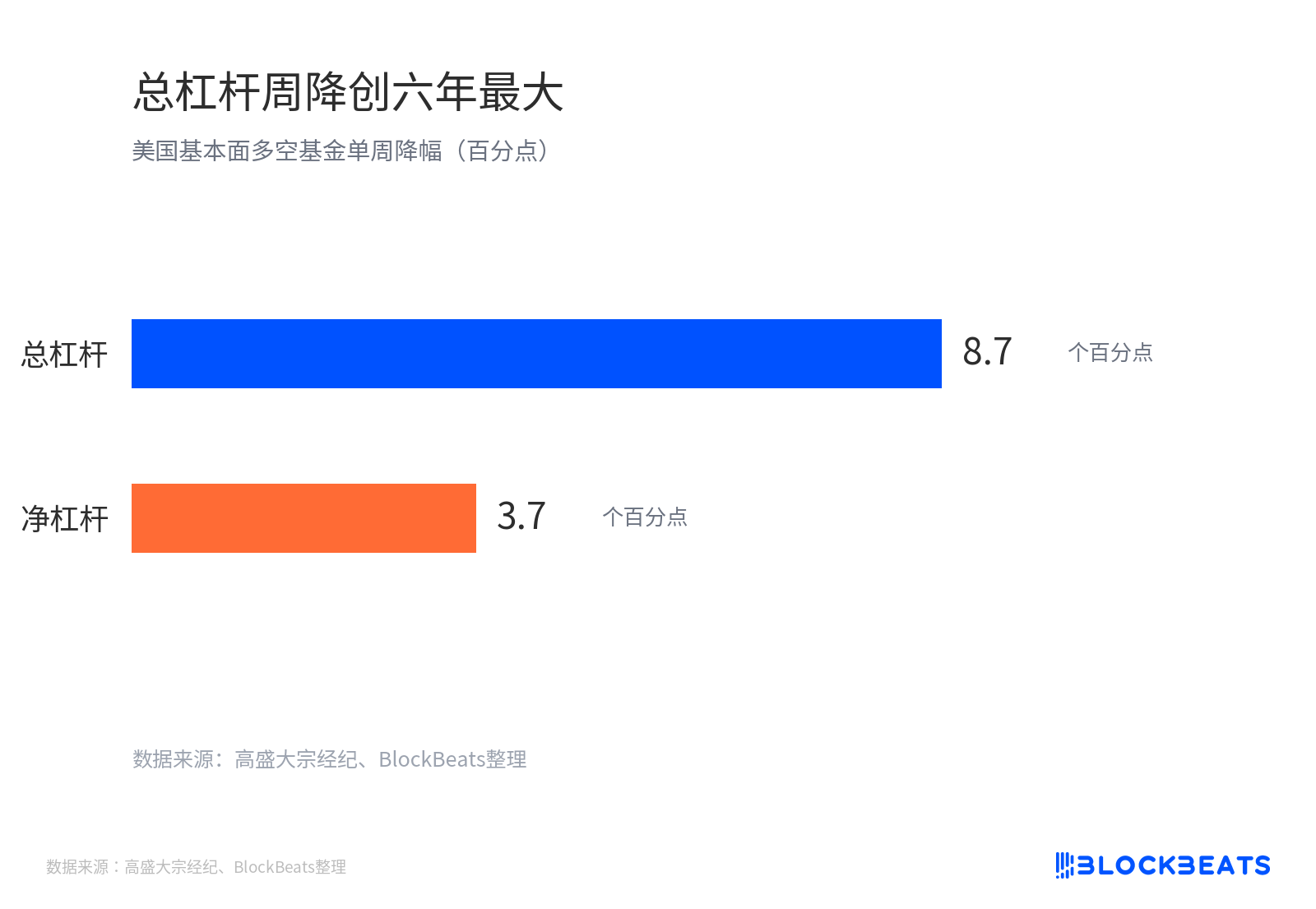
Total leverage posts largest weekly drop in six years
Total leverage is the combined size of funds' long and short positions, and a sharp one-week drop means risk was reduced on both sides at once. By the close on November 6, hedge funds had instead turned net buyers, buying short positions in indices and ETFs rather than rebuilding long positions in tech stocks.
Deleveraging often happens passively during a decline, amplifying the drop beyond the scale of the news itself.
In that week's prices, permitting politics pulled the trigger, crowded positioning determined the slope, and earnings did not collapse.
State and county ballot measures begin to rewrite the calendar for AI capital spending
Chips can be sold, but turning data centers into revenue still requires sites, power and approvals. The election did not change demand for computing power; it changed "when it gets built," and that is the variable that repriced the AI trade this week.
In the November 3 midterm elections, the Democratic Party won both the Senate and the House, with more direct changes occurring at the county and city level: of 41 local ballot measures related to data centers, 40 were unfavorable to the industry.
Texas Governor-elect Gina Hinojosa has promised to pause approvals of new projects until legislation passes "protection provisions," taking office on January 19 next year. Texas accounts for approximately 23% of planned AI campus capacity in the United States, a figure based on industry tracking standards.
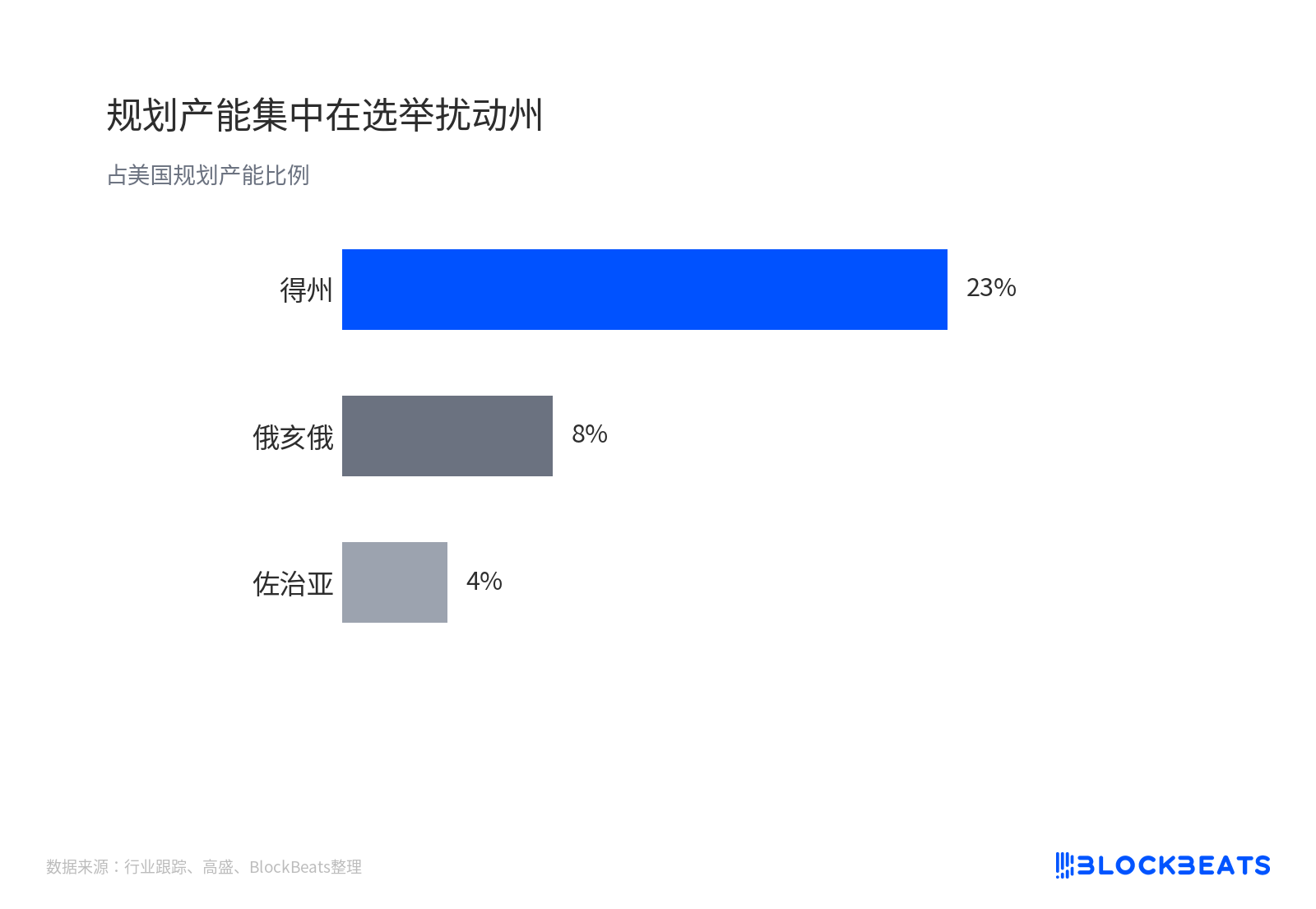
Planned capacity concentrated in election-disturbed states
Morgan Stanley's November 9 "Buy the Drop" report moved approximately 20% of U.S. projects originally scheduled to come online in 2028 (about 5 gigawatts) to 2029.
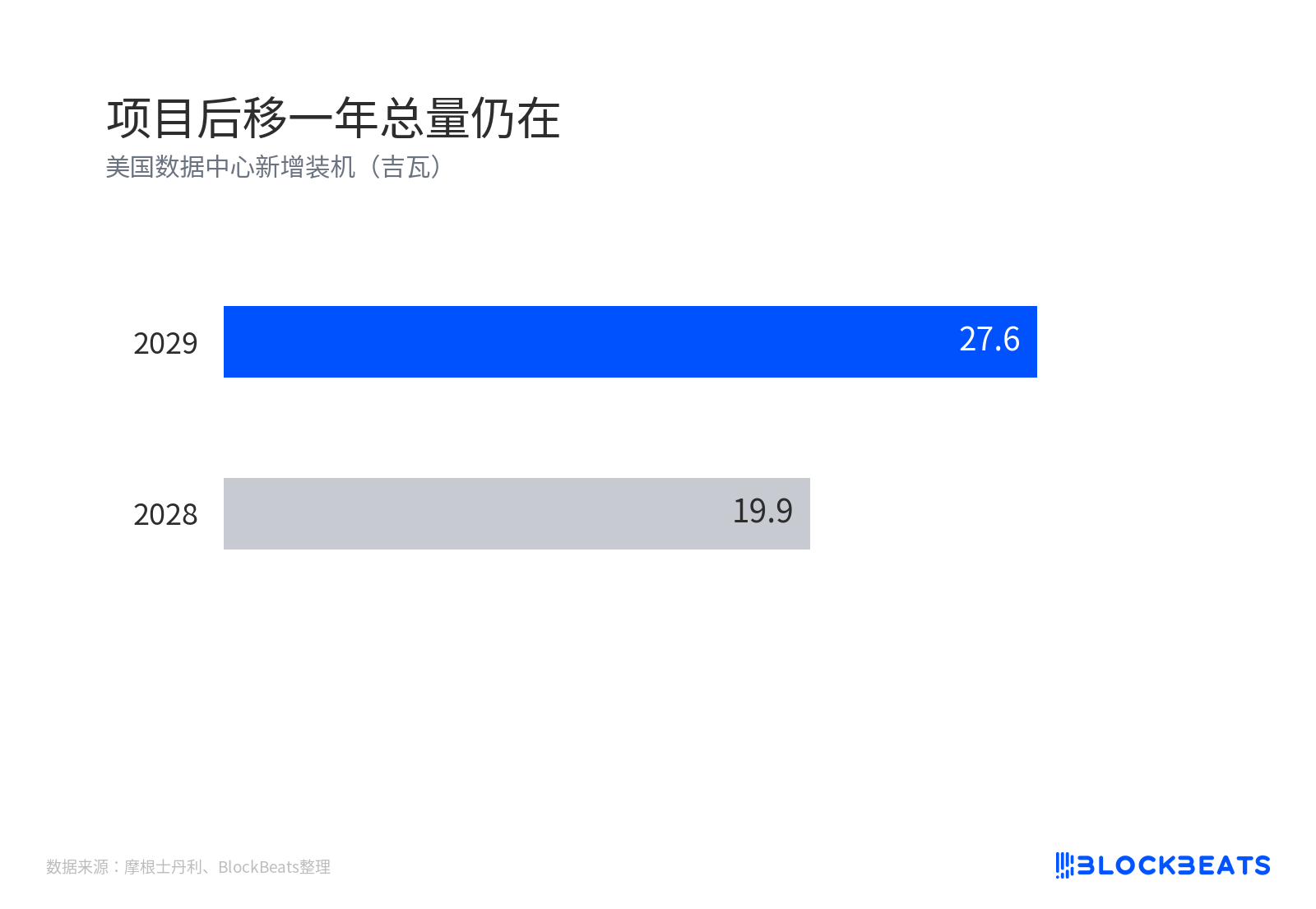
Projects pushed back one year, total volume remains
Hyperscaler capital expenditure forecasts remain at $1.6 trillion for 2027 and $1.8 trillion for 2028, but with a downward revision bias for 2028.
The sell-side message is clear: demand hasn't changed, the calendar has just shifted back one year.
Of the 8.7 percentage points, how much is position cutting and how much is market value shrinkage
Using the weekly decline in total leverage to infer "active net selling" does not hold up. Price declines simultaneously change both the numerator and denominator—long position market values shrink, fund net asset values shrink—and the leverage ratio decline may come from book values rather than trading.
Goldman Sachs has not publicly released the full client memo, and the 8.7 percentage points were not broken down into active and passive categories.
More reliable is the record position of net selling: technology was the most net-sold sector globally and in the U.S., with single-stock net selling hitting a four-month high.
Mechanical selling amplified the decline. JPMorgan derivatives strategy noted that after the index broke below momentum thresholds, commodity trading advisors (CTAs) turned net short U.S. equities, and volatility-target portfolios still had approximately $50 billion in exposure left to sell over the following days.
Leveraged ETFs sold off more than $60 billion in late trading, with about 90% in technology products. Barclays models estimate that U.S. equity futures would see another approximately $135 billion in selling over the following 24 to 48 hours—this is a model estimate, not actual trades, but sufficient to explain the 6.4% single-day slope.
Why the sell-side dares to call a buy-the-dip
The division of labor within this camp is not uniform. Morgan Stanley offered a timetable: roughly 5 GW of projects shifted from 2028 to 2029, with total volume unchanged. HSBC's Max Kettner had already reduced positions before the election and is now tactically adding back, viewing Anthropic's IPO as a bigger catalyst than the midterms.
Jefferies called November 5 a "reactive, non-fundamental reset." JPMorgan's Dubravko Lakos-Bujas described it as the largest "long momentum relative to market" unwind in roughly 40 years, with deleveraging back to levels seen during the week of "Liberation Day" in April 2025.
Their shared bet: extreme data center regulation at the federal level will not materialize. Passing major legislation in the Senate requires 60 votes, the new Congress won't be seated until January 2027, and data centers are tied to jobs and AI competition in both parties.
Citi is the exception within sell-side ranks. Beata Manthey's team downgraded U.S. equities and global tech to neutral, reasoning that positioning could continue resetting toward net short Nasdaq 100. This is a positioning-path judgment, not a call on the policy endgame.
The time-shift assumption rests on Nvidia's guidance and the Anthropic window
The most direct validation point for this narrative is Nvidia's earnings after the close on November 17. Guidance matters more than the numbers. If the company also pushes back its 2027 delivery cadence, sell-side calendar assumptions will need to be recalculated. If guidance stays unchanged, this round of buy-side trimming is closer to a positioning event.
Another window is Anthropic. The company publicly filed its S-1 on October 26 and submitted its S-1/A on November 2, planning to list on Nasdaq under the ticker ANT, but the share count and price range remain blank.
Reuters on November 6 cited potential investors expressing doubt about whether the listing can be completed in November, with Goldman Sachs and Morgan Stanley as joint lead underwriters.
Texas's new governor won't take office until January 19 next year, and until then the promise to pause approvals cannot take effect, leaving an enforcement vacuum. Whether permits will actually shift 2028 to 2029 depends on the first batch of project approval results. Whether positioning is already clean—Nvidia's guidance will provide half the answer.
Welcome to join the official BlockBeats community:
Telegram Subscription Group: https://t.me/theblockbeats
Telegram Discussion Group: https://t.me/BlockBeats_App
Official Twitter Account: https://twitter.com/BlockBeatsAsia
 Related Articles