Cobo CEO Shenyu: AI Reshaped My MBTI
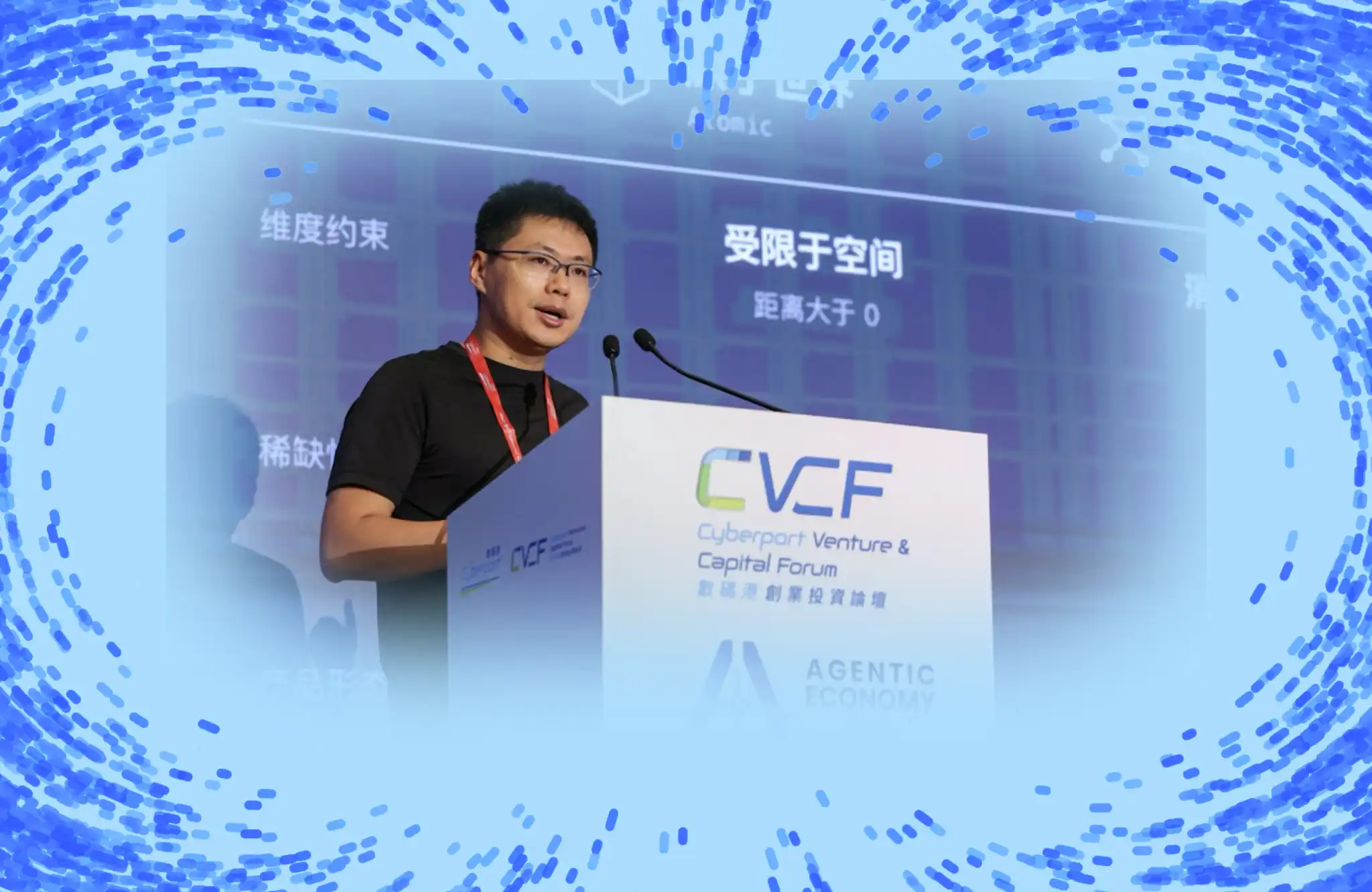
Editor's note: This article is based on and optimized from Shenyu's keynote speech "Beyond Execution: Individual Brilliance in the Agent Era" at the "Intelligent Economy Summit" of the Cyberport Venture Capital Forum (CVCF 2026) in Hong Kong, China on November 5, 2026.
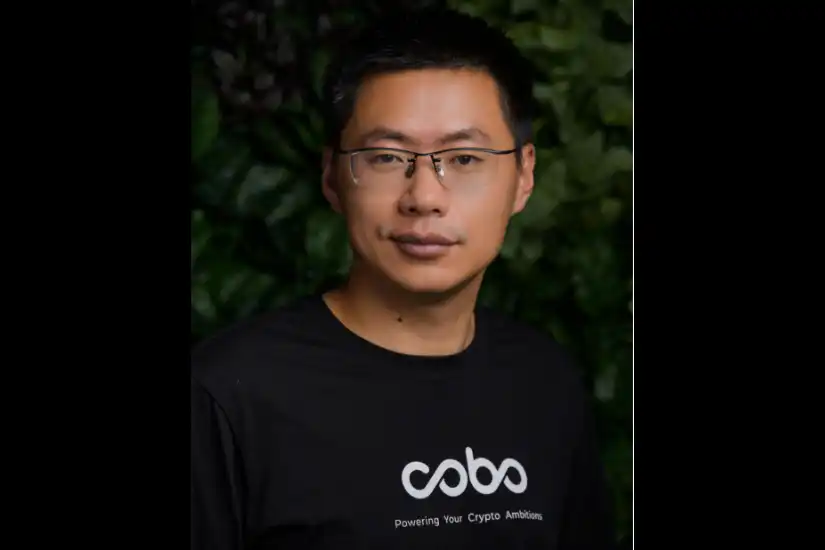
Speaker profile: Shenyu (Mao Shixing), co-founder and CEO of Cobo. Founded in 2017 and headquartered in Singapore, Cobo builds trusted wallet and payment infrastructure for humans and AI Agents, and has licensed entities in Hong Kong, China, Canada, and the United States.
The following is the compiled speech:
This year, I have invested enormous time, energy, and computing power in AI.
Many entrepreneur and investor friends around me often ask me the same question: "You've spent so much time, energy, and computing power—what exactly are you getting?"
Today, I will try to answer from three fundamental dimensions:
1. How computing power completely changes the way we observe the world;
2. How to use AI in daily work to reconstruct reading, understand oneself, and explore the world;
3. Once Agents can independently complete long-horizon tasks, how individuals and organizations should position themselves.
AI iterates extremely fast. The following are some of my insights from practice and reflection, and I hope they inspire you.
1. Computing power determines the world you see: from the atomic and bit worlds to the vector world
The starting point of the story is a paper I read at the beginning of the year. It solved a problem that had troubled me for a long time.
Information theory tells us that information entropy can be used to measure how much information a piece of information contains. But in reality, the same piece of information or the same dataset may be understood and reacted to completely differently by different people and organizations. Why?
This paper offers a simple explanation: it depends on the observer's computing power.
Traditional information theory assumes by default that the observer's computing power is infinite and can extract all structures from the data.
But in reality, the observer is just a brain—a twenty-watt computing unit, with very limited time. With limited computing power and time, the useful structures we extract from information are often very few.
The AI era gives us an opportunity: to invoke computing power far beyond the brain to mine the structures within the same piece of information. The more computing power, the more structures observed; different computing power brings different ways of seeing the world. After reading this paper, I couldn't sleep for days and decided I must make good use of the computing power this era provides.
This led me to re-understand how technology changes the way humanity perceives the world from three different worlds:
· The Atomic World: The core logic is exclusivity and scarcity. Buying a house is buying a location, because physical space is exclusively occupiable.
· The Bit World: Information travels through fiber optics at near light speed, and the importance of spatial distance is greatly reduced. The scarcest resource becomes attention, and algorithms thus drive "a thousand faces for a thousand people."
· The Vector World (AI Era): Time is highly compressed. The experience and knowledge accumulated over human history can be rapidly invoked, and massive computing power processes in parallel tasks that previously required long periods of time. In such a world, the scarcest resources are human taste and judgment, and application interfaces are beginning to shift from "a thousand faces for a thousand people" to "one face for one person."
"In the vector world, the experience and knowledge of human history can be instantly invoked, and the past, present, and future coexist. At this point, the scarcest resources are human taste and judgment."

2. Using Tokens to Buy the "Right to Fold Time"
After understanding the decisive role of computing power in structure extraction, I set a goal for myself at the beginning of the year: to use at least 100 billion Tokens this year.
Tokens here are not just numbers on an API bill, but a direct measure of how much AI computing power you have actually invoked.
The essence of spending Tokens is buying a higher-dimensional "right to fold time."

Over the past two or three years, I worked hard to read about 300 books, which is already quite a lot for the human brain. But with the boost of AI, at the beginning of this year I spent several months using massive computing power to compress each classic work into a one-page PPT, transform entire textbooks into knowledge graphs, achieve one discipline per week, and clearly outline the evolution of knowledge in that field.
More importantly, for hardcore books that I previously could not understand at all due to differences in background, I had AI reconstruct them from my perspective, incorporating my growth and entrepreneurial experiences, and found that I could suddenly understand them.
The same 24 hours, empowered by computing power, has been infinitely thickened.
3. Why does the AI era need a "brain gym" even more?
However, as the speed and breadth of knowledge acquisition increase exponentially, I quickly noticed a potential crisis: knowledge is acquired faster and faster, but may not truly go through one's own thinking and digestion. A large amount of information is extracted and organized in external systems, yet does not leave a deep enough imprint in the brain.
This is just like the transition from the agricultural age to the mechanical age: humanity was liberated from physical labor, but this gave rise to "gyms" to maintain physical fitness; in the AI era, we similarly need to build our own "brain gyms."
To this end, I built a "dual-track reading" mechanism:
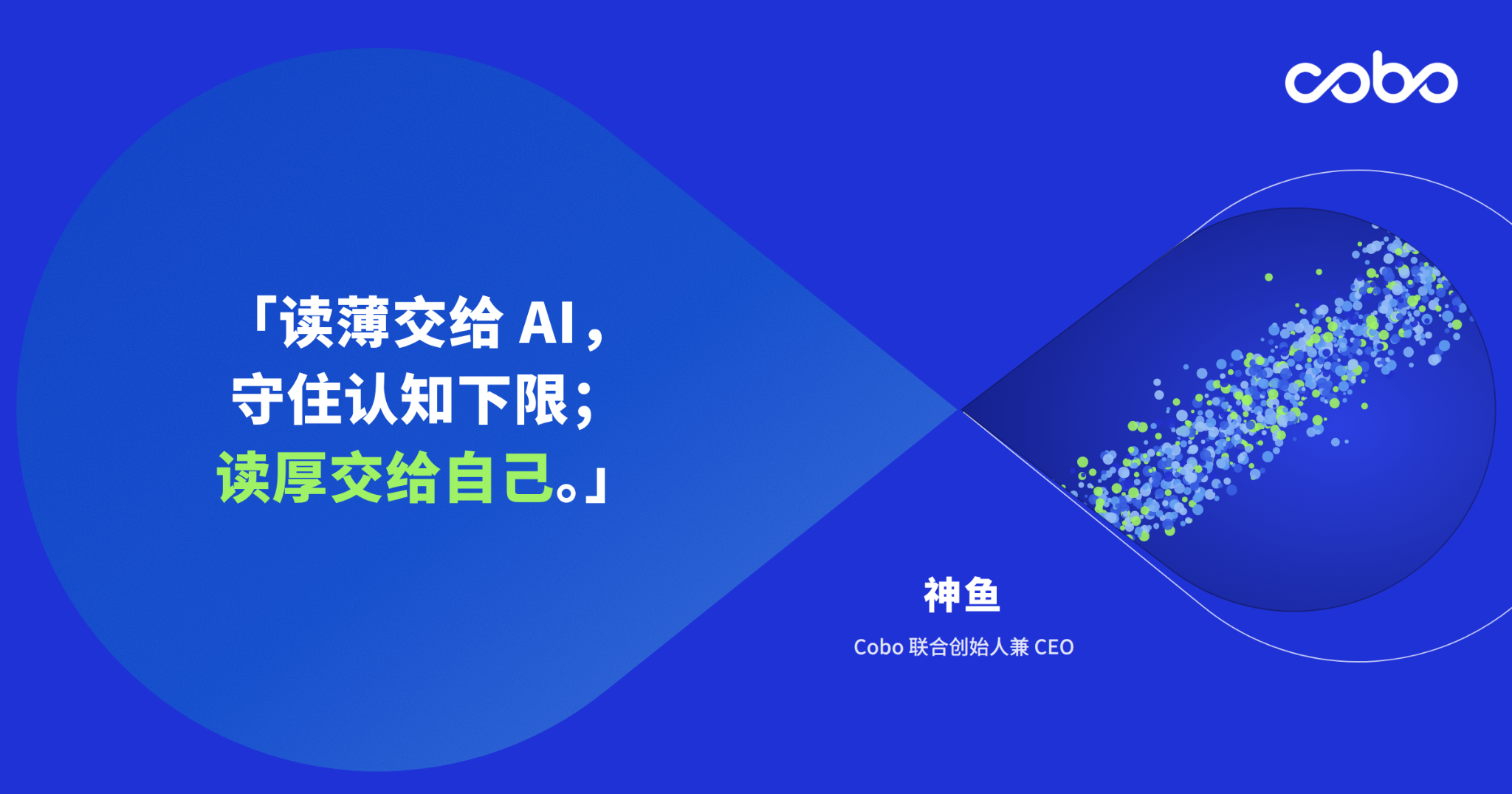
· Read thin, leave it to AI: rely on powerful computing to quickly extract structured frameworks, safeguard the lower bound of cognition, and gain insights across the full breadth;
· Read thick, leave it to yourself: return to the original text with the core framework distilled by AI, repeatedly flush the brain's neurons, and fine-tune and post-train the "small model" of your own brain.
"Read thin and leave it to AI, safeguard the lower bound of cognition; read thick and leave it to yourself, use frameworks to flush neurons, and fine-tune and post-train the small model of your own brain."
4. Inward awareness: equip the Agent with SOUL.md and make it the mirror that understands you best
At the beginning of the year, we began deeply experimenting with Agents and tried writing SOUL.md (soul configuration file) for them, and found the results astonishing. This prompted me to reflect: we should not only use AI to explore the external world, but also use AI to strengthen awareness of our inner selves.
I used AI to organize my years of experiences and reflections into digital memory files, trying to find within them those relatively stable worldviews and values. After the Agent read this information, it wrote me a letter. After reading that letter, I was silent for a long time and even shed tears—in this world, it may understand me better than I do myself.
Now, I have formed two regular AI-assisted habits:
1. Daily Blind Spot Scan: Every day, have the Agent conduct a blind spot scan based on my actions and thoughts of the day, highlighting perspectives I haven't noticed and matching them with predecessors' experiences, relevant papers, and book chapters. Just 10 to 20 minutes a day is exactly enough to precisely fill the cognitive blind spots from the previous day.
2. Trading and Psychological Reflection: I imported years of trading records into the Agent. After scanning them, it asked me a soul-piercing question: "Are you really trading, or are you satisfying some psychological need?" I was silent for two whole days, and suddenly realized that I was using trading to satisfy a psychological emotion. After becoming aware of this, the quality of my investment decisions made a qualitative leap.
5. Cybernetics Blueprint: The Two Core Knobs (K and τ) of the Human-Machine Collaborative Closed Loop
Once the Agent has the ability to handle complex tasks over long time horizons, the collaboration between humans and Agents is essentially a reconstruction of Cybernetics.
In this cybernetics blueprint:
· Human as Owner: Responsible for designing the vision, providing background context, and collapsing the infinite space of possibilities into a clear direction;
· Agent Team: Building the closed loop, conducting black-box exploration of the real world, rapidly iterating through trial and error, and crystallizing into Skills and methodologies.
In practice, there are two critical knobs for regulating this efficient closed loop:
Such closed loops can be nested layer by layer. Taking a company as an example, strategic goals are broken down into departmental goals, which are further broken down into specific tasks. The tasks of the upper layer become the goals of the lower layer, and each Agent continuously iterates within its own task scope.
· Knob K: How much to change at each step (the minimum unit delivered to AI). If K is too large, context redundancy will cause the AI to get lost and its intelligence to decline; if K is too small, it will devolve into big-company disease—90% of the time spent in meetings and communication, wasting massive amounts of Tokens without producing actual output. Our iron rule is: minimize changes, one PR does only one thing.
· Knob τ: How long until you know right from wrong (the cycle for obtaining real-world feedback). Too long a feedback delay will cause system oscillation, while too fast a frequency will cause system instability. The goal is to obtain real feedback from the real world at the fastest speed while ensuring stability.
"In the Agent closed loop, the iron rule of control is to minimize changes—one PR does only one thing—and to obtain real feedback from the real world at the fastest frequency."
6. The Irony of Automation: Why Do Super-Individuals Fail When Placed in Traditional Organizations?
In the Agent closed loop, humans retreat layer by layer, ultimately retreating to the outermost Harness (control framework) to set goals.
The classic paper "The Irony of Automation" mentions: the more automated and advanced the system, the greater the critical role of humans. Because if the top-level goal setting deviates even slightly, all the efforts and compute of the underlying Agents will be comprehensively thrown off course. And at critical junctures, humans must be able to embed themselves deeply within a short period of time to solve problems that Agents cannot solve.
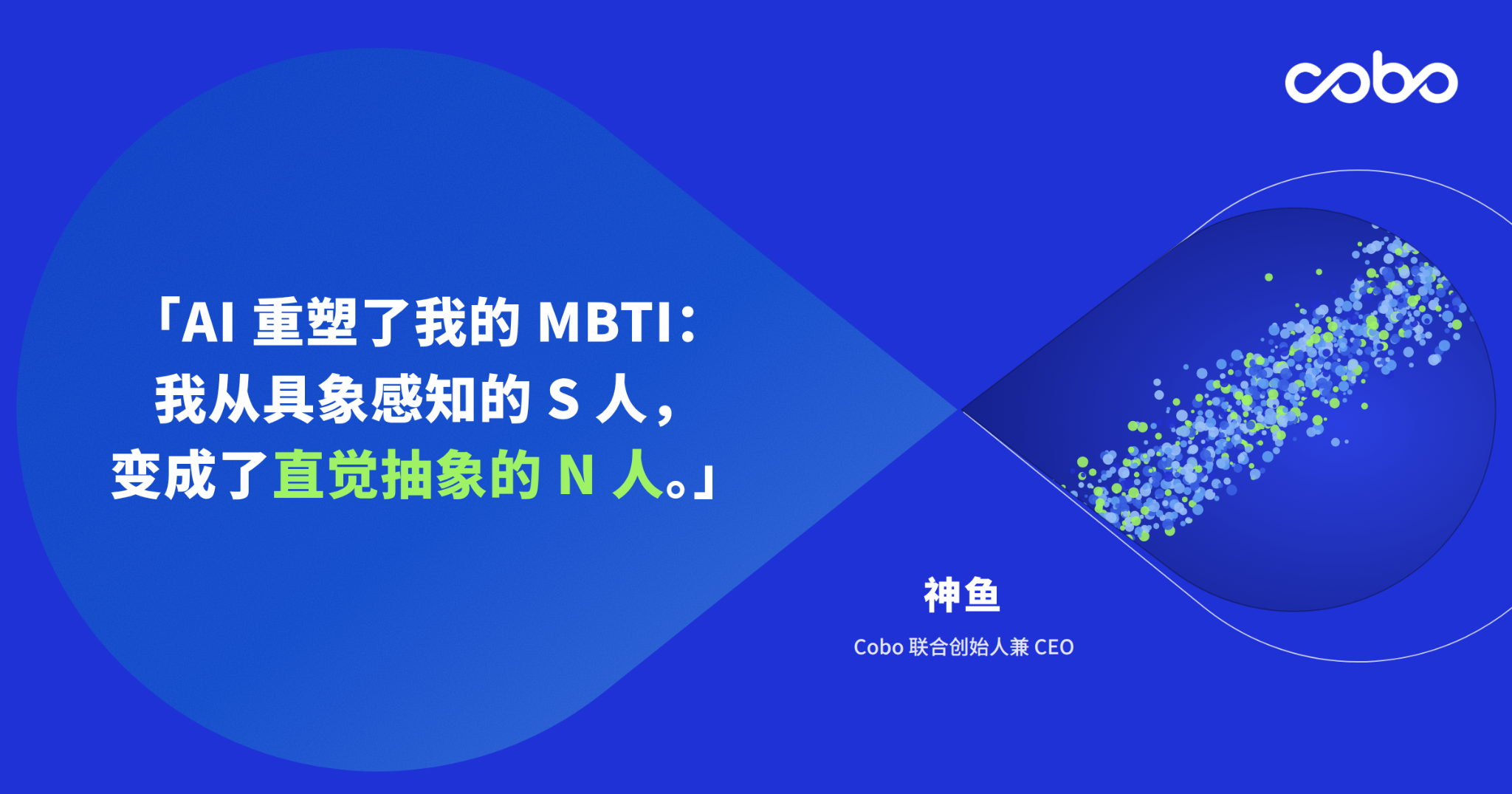
From a personal experience perspective, my productivity has improved by approximately 10x this year. At the beginning of the year, I wished to use 100 billion Tokens in a year; now I can consume 100 billion Tokens in a single month. Even my MBTI personality has been reshaped — originally I was an ISTJ leaning toward concrete sensing (S), and in the process of AI forcing continuous underlying abstraction, I evolved into someone leaning toward intuitive abstraction (N).
However, when I attempted to place these highly capable "super-individuals" back into traditional organizations, I discovered a startling phenomenon: efficiency actually got worse.
According to the Theory of Constraints: traditional organizations are essentially a set of rigid information pipelines and algorithms, filled internally with numerous collaboration bottlenecks. No matter how strong an individual's capabilities are, once embedded in traditional processes, they are immediately tightly constrained by system bottlenecks.
Cobo's organizational restructuring exploration: At Cobo, we are attempting to fully adapt to an AI Native organizational form: equipping every employee with a dedicated Agent, with a large amount of internal cross-departmental collaboration completed through real-time Agent-to-Agent interfacing, no longer requiring frequent alignment meetings; some originally fixed collaboration processes are beginning to be dynamically organized by Agent networks. Agents can discover errors during execution, continuously iterate, and even complete problem fixes while humans rest.
This also triggers deeper thinking: when real-time Agent negotiation can reduce transaction friction costs to extremely low levels, will the boundary of "why firms exist" in Coase's framework completely dissolve?
7. Endgame Thinking: Three Things in Life and the 4 Soulful Suggestions Agents Gave Me
After consuming massive amounts of compute and Tokens, I have increasingly come to understand a principle: life is essentially only three things — eating, sleeping, and aligning with the Dao.
· Eat well, nourish the body;
· Sleep well, settle the spirit;
· Align with the Dao—with all remaining energy, harness the computing power this era has bestowed upon us to externally explore the deep structures of the world and internally perceive the soul within.
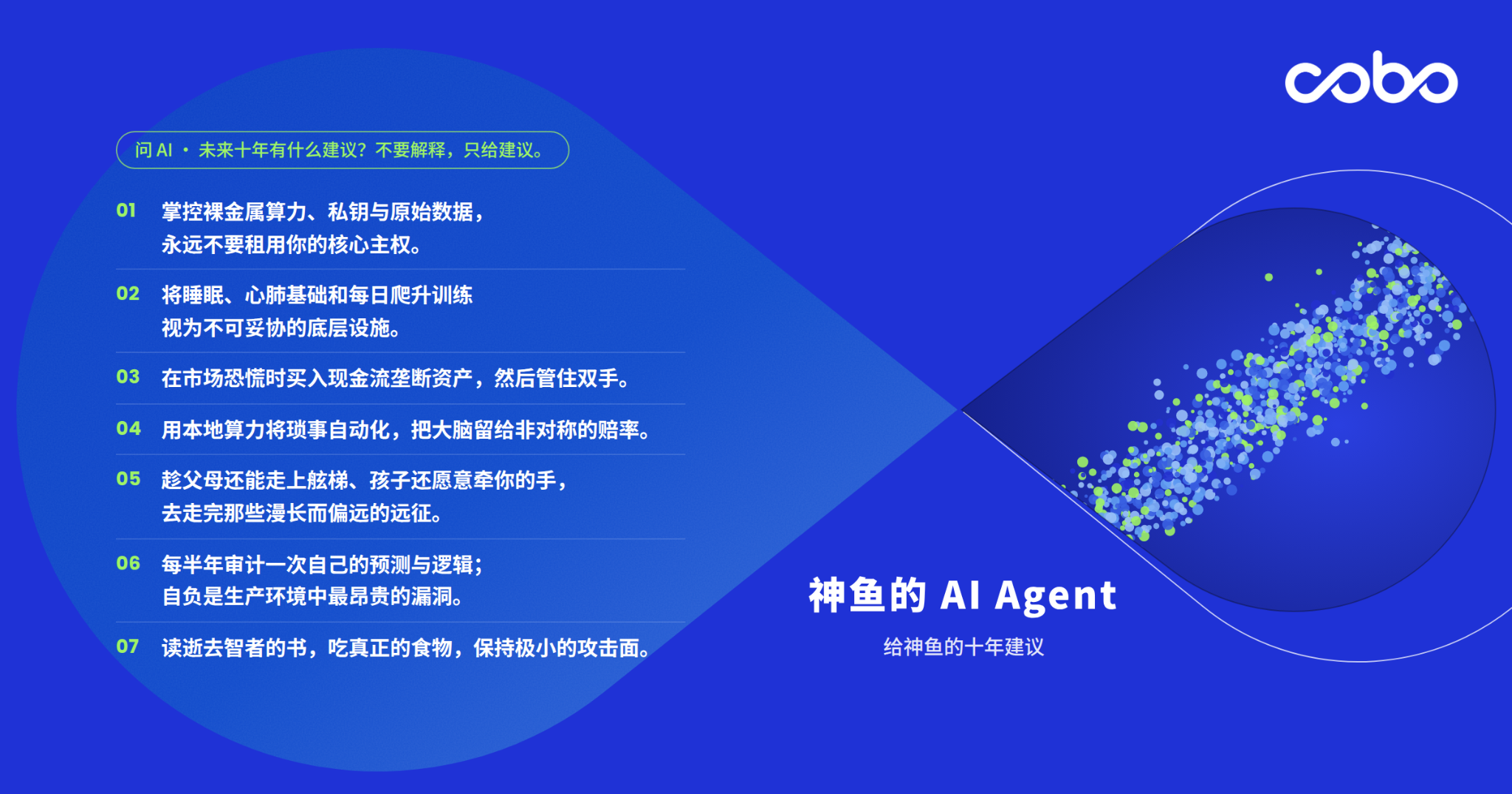
Finally, I asked my agent a question: What advice do you have for my next ten years? No explanations, just advice.
Among the suggestions, there were 4 pieces of advice I'd like to share with everyone:
1. Control bare-metal computing power, private keys, and raw data—never rent out your core sovereignty. In the AI era, data and private keys are the foundation of digital sovereignty. The series of explorations we've conducted around Agents are essentially about ensuring autonomous control over core data and assets.
2. While your parents can still walk up the boarding ramp and your children are still willing to hold your hand, go complete those long and remote expeditions.
3. Audit your own predictions and logic every six months; conceit is the most expensive vulnerability in production environments. (For example, in May and June, when US stock market sentiment was running high, my AI forced me to reread Chapter 5 on risk in Mastering the Market Cycle for three consecutive days. After the first day, I thought I understood; the second day, it made me read it again; only on the third day did I realize that I hadn't truly understood it at all.)
4. Read books by wise people who have passed away, eat real food, and maintain a minimal attack surface. (Amid the noise of the vector world, return to the purest truths and life.)
Conclusion
In the vector world stirred by the AI wave, we are all "stealing the wisdom of heaven."
Finally, here's a question worth pondering quietly tonight: In the age of agents, after making good use of AI, have your days—your 24 hours—become thicker?
Feel free to leave your thoughts and reflections in the comments—let's explore the path of super-individual evolution together.
This article is from a submission and does not represent the views of BlockBeats.
Welcome to join the official BlockBeats community:
Telegram Subscription Group: https://t.me/theblockbeats
Telegram Discussion Group: https://t.me/BlockBeats_App
Official Twitter Account: https://twitter.com/BlockBeatsAsia

 Related Articles