Behind Jensen Huang's Alice, 75% of China's overseas computing power comes from Southeast Asia.

On November 8, Jensen Huang sent a letter to all Nvidia employees.
In the letter, he admitted to being unfaithful to his wife, apologized to his family, colleagues, the board, and shareholders, and asked the public to give his family some privacy.
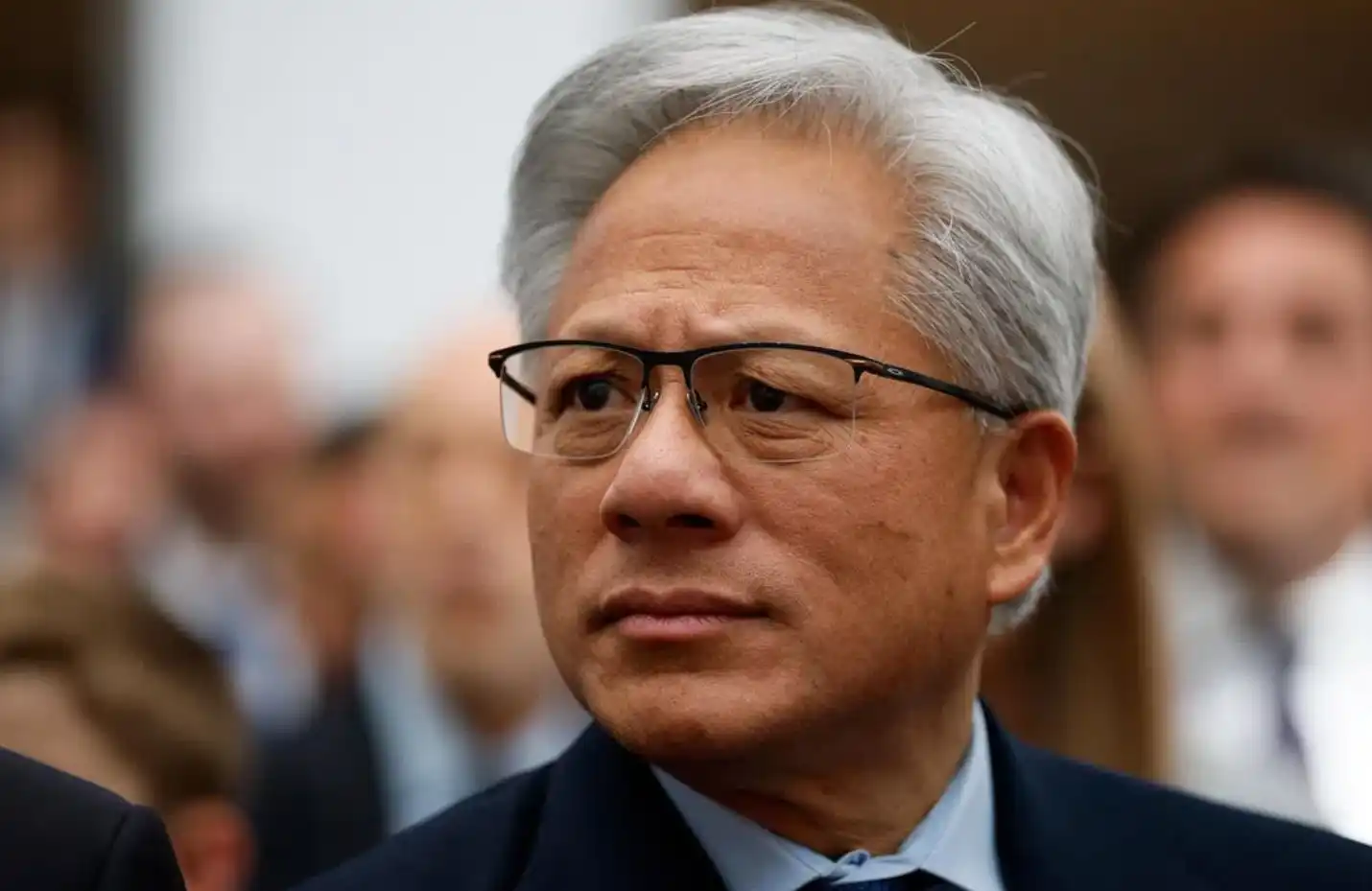
In the open letter, Huang did not name the other party. But before that, one name had already appeared in newspapers many times: Alice Huang.
The New York Times wrote about her in October 2025, saying she was an executive at Singapore data center company Megaspeed. On November 6, 2026, the Financial Times, citing a U.S. government memo, used the term "romantic relationship."
Beyond the gossip, what is really worth a closer look is the company she worked for.

Image source: The Information
A company that "rents computing power back"
Megaspeed's business is simple to explain.
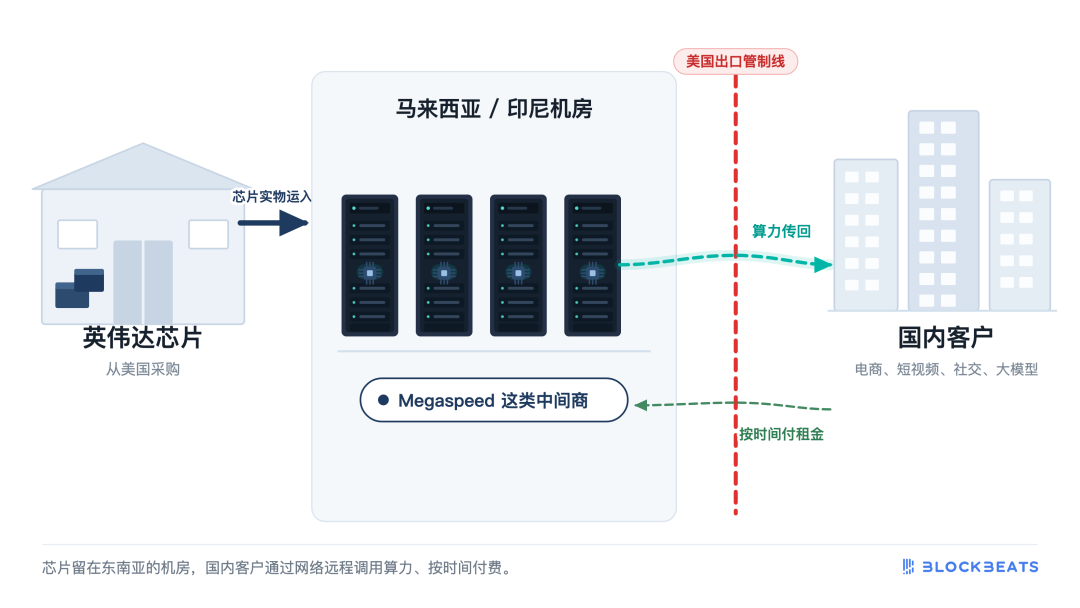
It first buys Nvidia's most advanced chips from the United States and puts them in data centers in Malaysia and Indonesia. Chinese customers do not need to ship the chips back home; sitting in China, they remotely access the computing power of these chips through network cables and pay rent by time.
Why go around this loop? Because the United States regulates who chips are sold to, but by and large has not tightly restricted renting computing power overseas. The chips stay outside the control line, and computing power returns inside the control line through network cables. This middle layer is the livelihood of companies like Megaspeed.
Its scale is not small.
A Bloomberg investigation in December 2025 said Megaspeed was Southeast Asia's largest buyer of Nvidia chips, importing at least $4.6 billion worth of equipment from its founding through November 2025.
In a report by the U.S. think tank Institute for Progress (IFP), a more conservative and more reconcilable figure was used: about 86,000 audited GPUs.
GPUs are what people commonly call graphics cards, and large model training and operation depend on them. What does 86,000 mean? Among the middlemen of this kind that can be named, Megaspeed alone is the largest pile.
Who Are the Tenants
Megaspeed's own client list has not been fully disclosed.
A Bloomberg investigation reported that it rented computing power to a leading domestic e-commerce and cloud computing giant—the one everyone knows.
Across the entire sector, the tenants' names are actually quite familiar.
The largest domestic short-video company—the one with an app that everyone has on their phone—plans to spend up to $7 billion overseas in 2025 to acquire Nvidia chips and cloud computing power. What this company denied was the claim of "purchasing Nvidia chips." The $7 billion is only the upper limit of the plan and has not yet materialized into actual rental payments.
A domestic social and gaming giant secured approximately 15,000 of Nvidia's latest-generation chips through a Japanese company, with a three-year computing power contract exceeding $1.2 billion—roughly $400 million per year on average.
And Kimi, according to foreign media reports, was also publicly named by White House officials, who said it used Nvidia servers in Thailand to train its new-generation models.
Simply put, Megaspeed's business does not lack customers.
About 75%, All in Southeast Asia
How big is this business exactly?
The most authoritative data currently comes from the October 19, 2026 report by that U.S. research institute.
It estimates the total: by the end of 2026, Chinese entities will be able to access approximately 1.05 million H100-equivalent units of computing power in overseas data centers.
"Equivalent" is a conversion term. H100, H200, and Blackwell are Nvidia chips from different generations—one new card's computing power is worth several older cards. Only by converting them all into the same type of card based on computing power can they be added together. By the end of 2027, this number will rise to approximately 2.8 million.
How much electricity will so many cards consume?
In the data centers rented by Chinese companies overseas alone, the portion used for AI is approximately 748 megawatts. That amount—even the Three Gorges generators wouldn't be enough.
The report also contains one of its most core statements: these data centers are highly concentrated in Southeast Asia—about 75%.
This 75% falls in the Malaysia, Indonesia, and Singapore area.
So, how much of this market does Megaspeed hold?
The report estimates that by 2026, Chinese companies will have rented overseas data center capacity housing roughly 416,000 high-end GPUs restricted by the U.S. Breaking that down by power consumption share, Southeast Asia accounts for about 280,000.
Compare that with Megaspeed's audited 86,000 GPUs — roughly 30%.
Of course, this is a purely rough calculation and not precise at all.
The window is narrowing
The tighter export controls get, the busier this business becomes in 2025 and 2026. But the window is also narrowing bit by bit.
According to a Financial Times report on November 3, Nvidia is requiring cloud partners to sell at least 51% of their services to customers not subject to export restrictions.
A major Chinese social media and gaming company had signed a five-year contract with U.S.-based Oracle for up to 100,000 chips worth about $7 billion. Roughly five weeks after signing, the contract was canceled.
Malaysia is also tightening. In October, local authorities paused 24 new data center applications, waiting for 117 already-approved projects to be completed before clearing new ones.
Megaspeed itself is under the spotlight. The U.S. Commerce Department is investigating whether it used this model to transship chips, and Singapore police say their investigation into the company is still ongoing.
A public price index shows that on November 6, the median rental price for H100s was about $3.9 per card per hour, double the $1.95 in October 2025.
Once the GPUs at Southeast Asia's largest data center are cut off, a chain reaction is inevitable. Fewer data centers and chips willing to rent to Chinese clients with clean paperwork will be available, and middlemen will add a risk premium. Costs will rise, and uncertainty will grow.
But there will certainly still be ways.
Original link
Welcome to join the official BlockBeats community:
Telegram Subscription Group: https://t.me/theblockbeats
Telegram Discussion Group: https://t.me/BlockBeats_App
Official Twitter Account: https://twitter.com/BlockBeatsAsia

 Related Articles