NYSE Selects Avalanche: Why AVAX May Not Capture Settlement Flow

TL;DR
· The NYSE-affiliated alternative trading system (ATS, regulated, non-primary market) has selected Avalanche's custom ledger to handle securities settlement, while matching remains with the NYSE's existing engine.
· The Wall Street Journal says Avalanche will provide "exclusive" settlement, with a target launch in Q4, while Ava Labs and NYSE statements indicate that issuance can be multi-chain and settlement runs on a custom chain rather than a public chain.
· Related tickers: AVAX, Intercontinental Exchange (ICE), Broadridge (BR).
On November 9, Ava Labs announced that the NYSE-affiliated, soon-to-launch tokenized securities trading platform has selected Avalanche to provide core ledger technology for its clearing company. The platform is a regulated alternative trading system (ATS) designed to support 24/7 trading, clearing, and settlement, and still awaits regulatory approval.
On the same day, The Wall Street Journal offered a stronger version: the NYSE will "exclusively" use Avalanche to settle tokenized stocks on the platform, while matching still uses existing technology, with a target launch in Q4. Ava Labs' announcement did not include a launch date or name the clearing company.
The market traded the headline first. AVAX rose about 8% to 11% that day, approaching $9 intraday. But the announcement places Avalanche at the clearing ledger layer, not moving the primary market onto a public chain. That distinction determines whether AVAX gets a narrative or verifiable demand.
On announcement day, the market read settlement as on-chain trading
The first reaction was direct: the NYSE has started using Avalanche to process stocks, and AVAX has become Wall Street's settlement layer. The platform is not yet live and still needs approval, and Avalanche handles post-trade records and settlement, not order matching.
Matching answers who traded with whom at what price; settlement answers how cash and securities are transferred simultaneously. The former remains with the NYSE's Pillar matching engine, while the latter is handed to the blockchain ledger.
Ava Labs' wording also supports the split. It provides core ledger technology for "the clearing company of the NYSE-affiliated ATS." Who the clearing company is, the contract value, and when it will launch were not disclosed in the announcement. What the market sees is an affiliated entity choosing a ledger provider, not an entire exchange completing a migration.
Matching, settlement, and issuance are split into three layers
Tokenized stocks have at least three layers: issuance determines who tokenizes stocks and who maintains the shareholder register; matching determines where orders are matched; settlement determines how securities and funds are delivered after the trade.
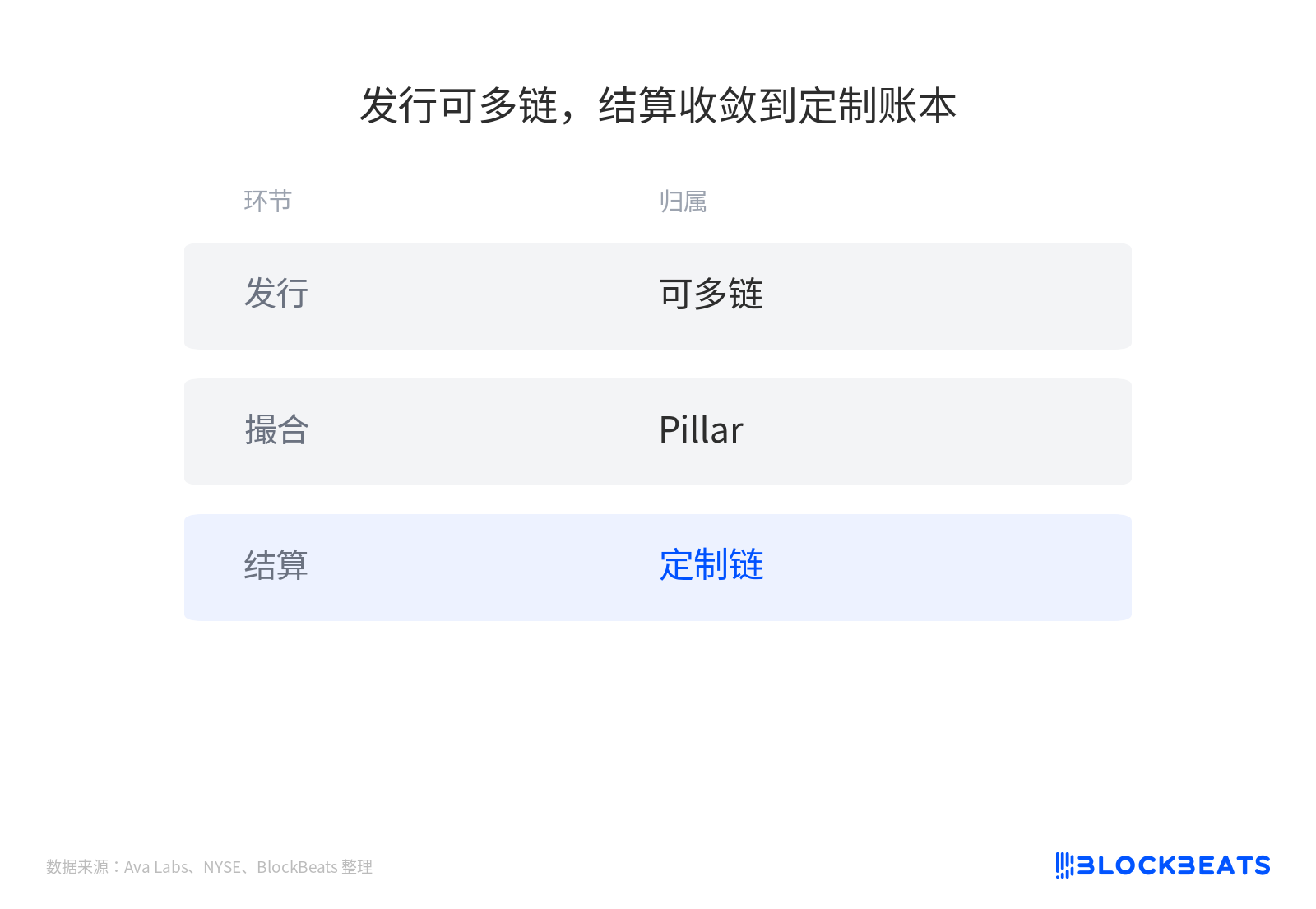
Issuance can be multi-chain, settlement converges to a custom ledger
Dennis Lee, Head of Digital Issuance at the NYSE, said in the announcement that the platform will support "stocks listed on a range of blockchains," but the ledger that records and settles trades must be fast enough, reliable, able to control who participates, and have predictable costs. Avalanche meets these conditions.
This statement draws a clear boundary: issuance can be multi-chain, but the settlement ledger converges to a controlled system. What the Wall Street Journal called "exclusive" is closer to exclusivity at the settlement ledger level, not the entire value chain being locked down by Avalanche.
Earlier architecture disclosures also point in the same direction. Intercontinental Exchange previously stated that the platform combines the Pillar matching engine with a blockchain post-trade system, with the capability to support multi-chain settlement and custody, targeting round-the-clock trading, instant settlement, stablecoin funding, and fractional shares, without naming any public chain. November was about adding a vendor for the post-trade ledger.
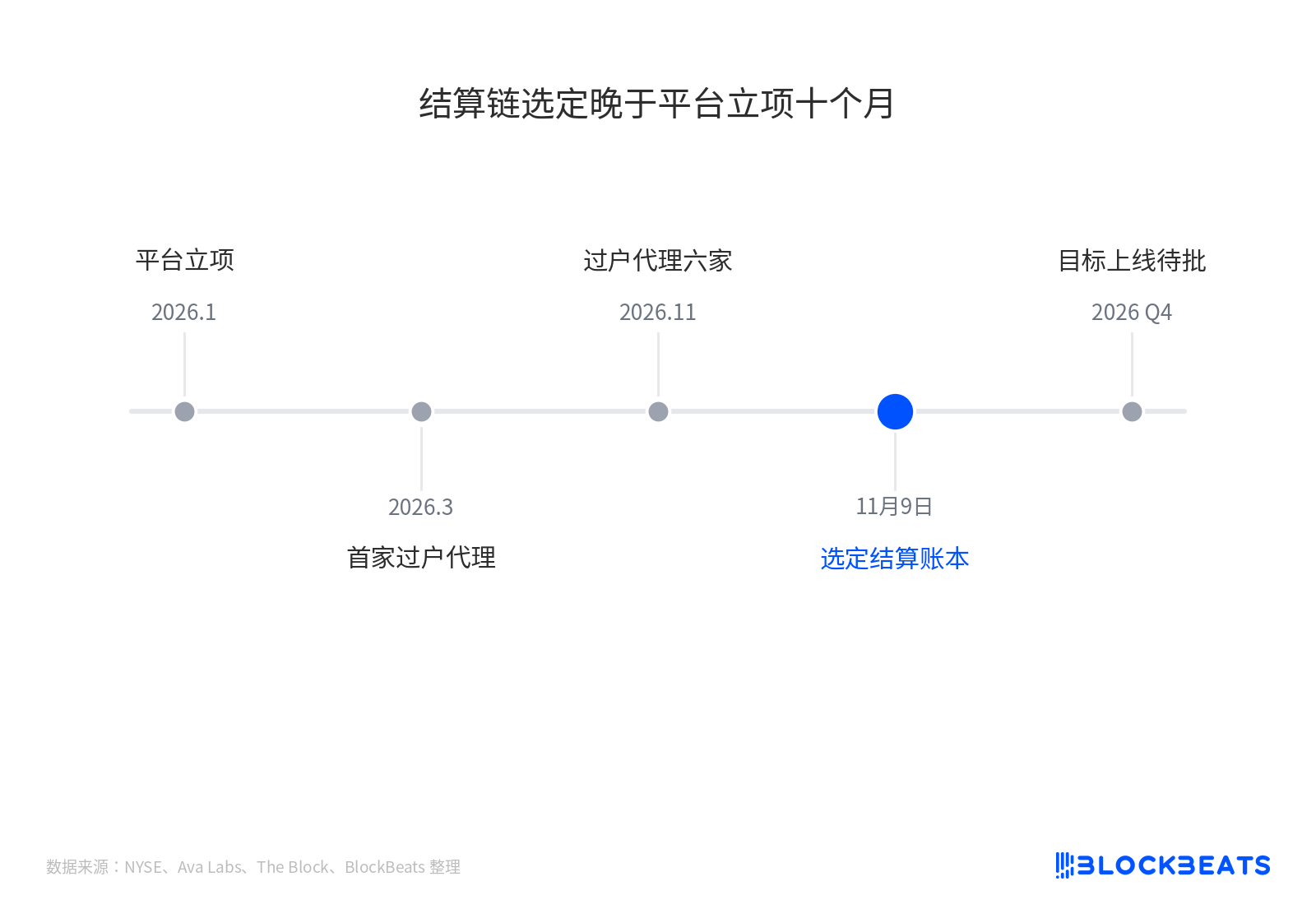
Settlement chain selected ten months after platform inception
Custom chain addresses permissions and costs, public chain narrative amplified
John Nahas, Chief Business Officer at Ava Labs, said the NYSE will run a chain built on Avalanche technology, customized to regulatory requirements, rather than using the Avalanche public chain to settle equities. This is a different matter from "the AVAX public chain capturing U.S. equity settlement flows."
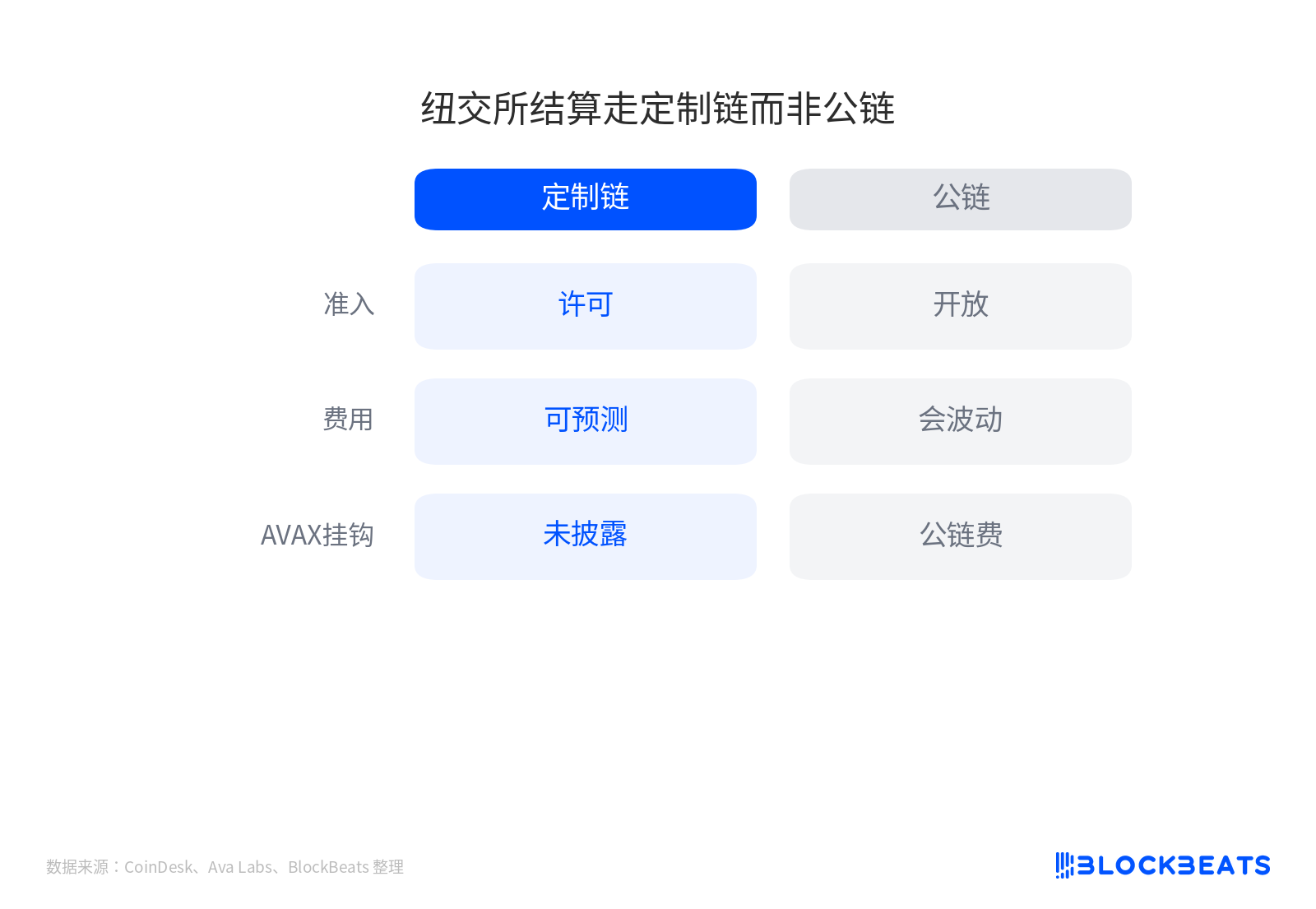
NYSE settlement runs on custom chain, not public chain
A custom chain (permissioned chain) means the NYSE can decide who can access it, how nodes are deployed, and how fees are priced. For an exchange, this is a necessary condition for a post-trade system—it's not about conceding on decentralization; the settlement ledger cannot be writable by anyone, and fees cannot fluctuate wildly with public chain congestion.
Ava Labs founder Emin Gün Sirer said the dedicated infrastructure is designed to meet round-the-clock atomic settlement, predictable performance and costs, and regulatory controllability.
This also explains why AVAX's short-term reaction was stronger than fundamental certainty. Brand association came first—Avalanche technology entering an NYSE-affiliated platform is enough to constitute an institutional adoption narrative. Fee capture, however, was not disclosed: whether the custom chain uses AVAX for pricing, staking, or fee payment—neither the announcement nor interviews provided an answer.
On the same day, Charles Schwab added AVAX to its retail trading platform, offering a competitive explanation for the price gain. It is a fact that AVAX outperformed the broader market, but attributing the entire 8% to 11% move to the NYSE lacks sufficient evidence. Markets can trade narratives, but investors must distinguish narratives from cash flow.
Approval, Clearing Firm Identity, and Fee Attribution Remain Unresolved
What determines the significance is not the announcement-day price gain, but three unresolved variables: regulatory approval, the identity of the clearing firm, and token economics. The platform still requires regulatory approval, and public information does not indicate how far the application has progressed. The Wall Street Journal mentioned a fourth-quarter launch, while Ava Labs' announcement provided no timeline—the two accounts cannot be merged into a definitive countdown.
The clearing firm is the actual user of the ledger and the licensed entity. The announcement only refers to "the clearing firm of the NYSE-affiliated ATS" without naming the legal entity. Without its identity, the strength of the contract, the scope of the launch, and the boundaries of liability cannot be assessed. Equating a related entity's procurement directly with a strategic commitment from Intercontinental Exchange Group would overstate the endorsement.
AVAX's economic linkage is even more distant. Avalanche gains a benchmark as institutional infrastructure, but a customized chain does not equal public chain lock-up volume, nor does it mean AVAX becomes a stock settlement asset. The fee mechanism, node incentives, and token utility have not been disclosed. If subsequent disclosures show that the dedicated chain is still denominated in or staked with AVAX, then value capture shifts from narrative to a calculable variable.
The issuer's willingness to participate is equally important. Earlier this month, the NYSE expanded the number of transfer agents for issuer-sponsored tokenized securities to six, with Broadridge (BR) also handling on-chain voting and governance, indicating that the back office for shareholder registers and corporate actions is being built out. However, whether tokenized common stock is willing to enter this ATS still depends on liquidity, compliance costs, and shareholder communication. Before the platform opens and the clearing firm is identified, vendor selection is merely a necessary step, not realized demand.
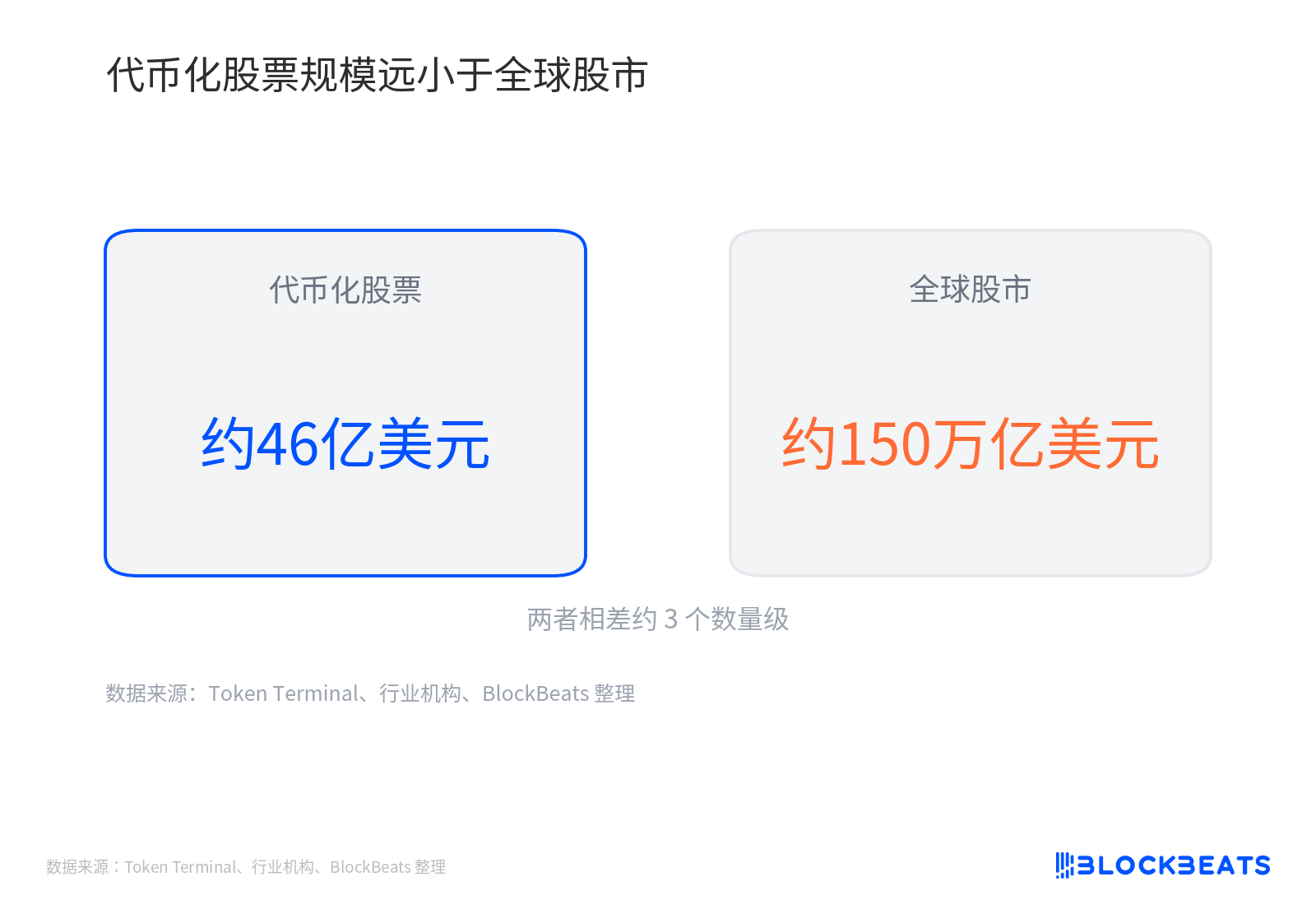
The scale of tokenized stocks is far smaller than global stock markets
Welcome to join the official BlockBeats community:
Telegram Subscription Group: https://t.me/theblockbeats
Telegram Discussion Group: https://t.me/BlockBeats_App
Official Twitter Account: https://twitter.com/BlockBeatsAsia
 Related Articles