Ethereum Foundation's 'Loyalty Test': Seppuku, Discrimination, and a Court Battle

The Ethereum Foundation is in trouble again.
On November 4, former employee Nixo filed a lawsuit against the Ethereum Foundation, Vitalik, and others in the U.S. District Court for the District of Colorado. She alleges that she was fired by the Ethereum Foundation thirteen days after she notified management in writing that she had cancer, and twelve days after she participated in organizing a "joint petition" by foundation employees.
What also pushed this matter into the spotlight was a "seppuku license" that appeared in the foundation's mission statement.
Mandate Declaration
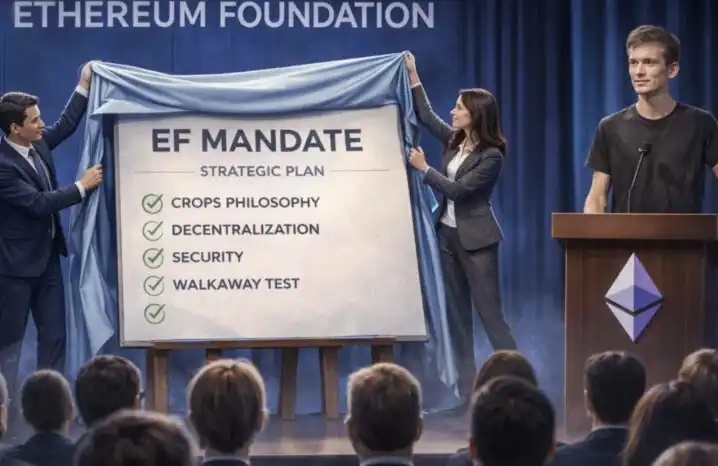
The controversial document is called "The Ethereum Foundation Mandate." Here, Mandate can be understood as a mission statement, answering why the foundation exists, what it will do going forward, and which principles cannot be compromised.
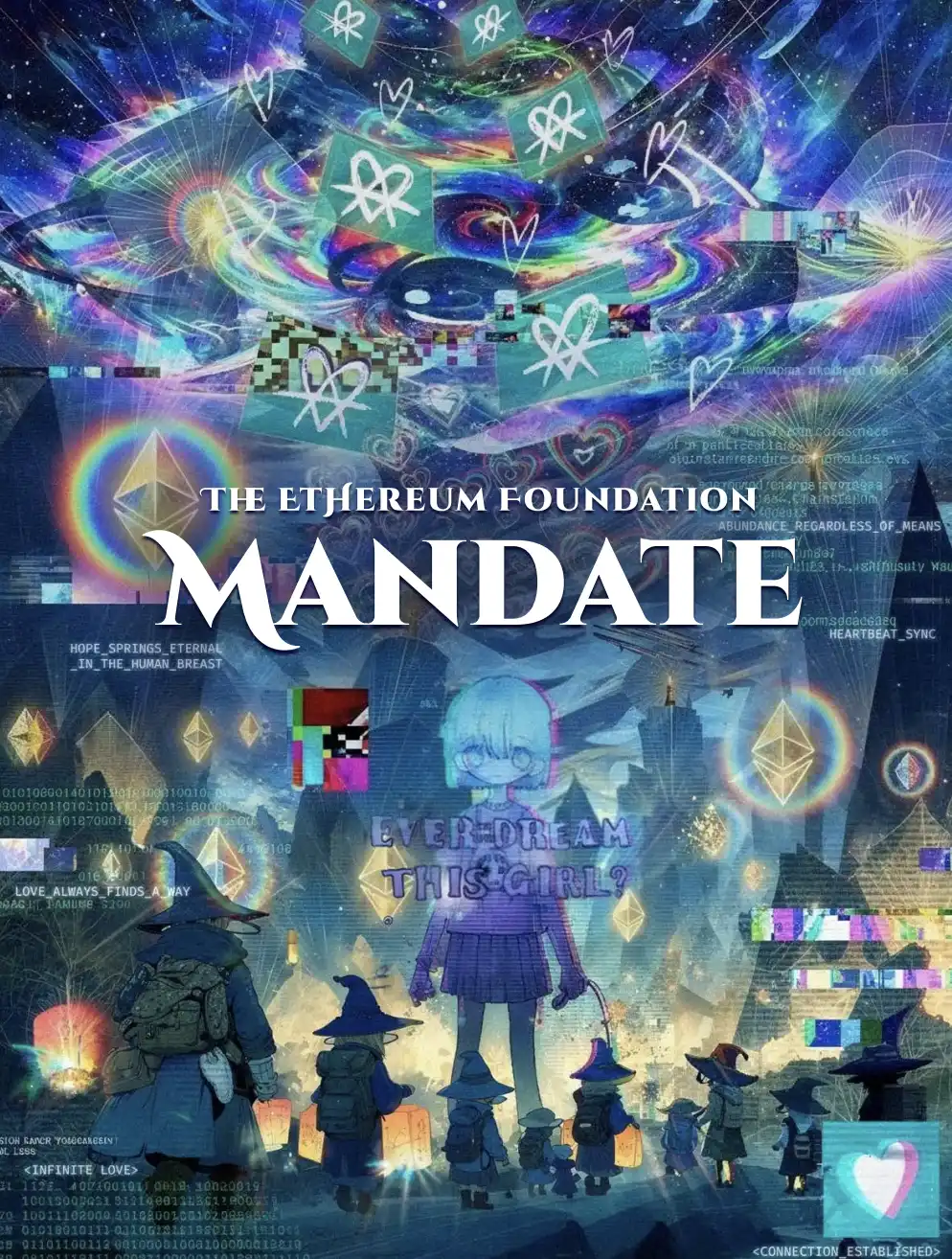
The core of this document is not hard to understand. Ethereum must uphold censorship resistance, open source, privacy protection, and security, and the foundation is responsible for helping these principles hold over the long term. It also explicitly states that the foundation is not Ethereum's parent, owner, or ruler. Everyone can build what they want on this network without first obtaining permission from some center.
The problem lies on page 11.

The illustration includes a section called the Source Seppuku License, which literally means "source code seppuku license," linking failure to fulfill commitments, modify, or delete the license with "ending one's own life with a sword." Next to it is a sentence to the effect that if the foundation betrays its solemn promise to Ethereum, it is willing to cut its own throat.
This is a joke from the Milady cultural circle. Milady, usually called 米莱迪 in Chinese, is a set of anime-style avatar NFTs launched by Remilia in 2021. The community formed around these avatars is keen on parody, provocation, and opposition to moral censorship, and many members also treat it as a cultural identity for expressing ideas of freedom. Vitalik had previously used a Milady avatar, so the appearance of this aesthetic in foundation documents has its cultural background.
Management also clearly explained that the seppuku text is an artistic and cultural reference and does not need to be taken literally. The employee confirmation form later specifically added that the commitment has nothing to do with actually committing seppuku.
But some employees did not accept making a joke of this. According to the narrative in the complaint, after the draft was sent to Ethereum Foundation employees for feedback in late February, 79 people voted to demand the removal of this part, and some mentioned that they had just lost a colleague to suicide the previous year. Vitalik had promised to revise the controversial content, yet the official version published on March 13 still retained it.
For employees, the discussion began to shift from "is this meme appropriate" to "do our opinions actually count."
On March 20, then co-executive director Bastian Aue demanded that all employees declare their position within a deadline. There were only two options: commit to executing the Mandate, or apply for compensation and leave. Failure to submit a declaration was also treated as choosing to leave.
Nixo was then responsible for ecosystem protocol support, participating in coordinating Ethereum core developer discussions and upgrade processes. She and colleague Trent Van Epps drafted a joint letter, which ultimately garnered 53 signatures, roughly half of the protocol department.
The content of this letter is very critical. Employees supported the general direction of the Mandate and committed to continuing work according to the principles of censorship resistance and individual autonomy, but refused to confirm under the pressure of losing their jobs, and explicitly wrote that everyone would continue to perform their duties and had not resigned.
On March 27, Aue initially accepted this expression, acknowledging the signatories' commitment to the mission and admitting that the handling needed improvement. However, on April 6, the two organizing signatories were notified of dismissal one after another. Nixo had disclosed in writing to management thirteen days earlier that she had cancer; she claims that during the dismissal call, Aue affirmed her work record but refused to explain the reason for dismissal.
This is also the truly heavy part of the lawsuit. Nixo's allegations involve discrimination, retaliation, and medical leave rights, far beyond "someone didn't understand the seppuku joke." The complaint also records that lawyers for the foundation's Singapore entity previously denied illegality, coercion, and retaliation, arguing that the separation agreement and arbitration clause were valid.
Milady Community "Purity"
Why does the Milady side support this document so strongly?
In the understanding of Milady creator Charlotte Fang and others, crypto is first and foremost a movement to protect freedom. Code can make transactions difficult to block, but an industry will also slowly accept censorship culturally, beginning to decide who is qualified to participate based on whether speech is respectable and whether associates are appropriate.
Remilia calls resistance to this change the "Cypherpunk Purity Spiral." Cypherpunks can be simply understood as people who hope to use encryption technology to protect privacy and reduce dependence on central authority. So-called "purity" means constantly pulling crypto back to the principles of free speech, free markets, free association, free information, and free thought. Milady, in this self-narrative, plays the role of cultural resistance.
So, offensiveness is precisely useful. Whether a person can tolerate avatars and jokes they dislike is taken by them as a way to test the concept of freedom. Charlotte's response to this controversy follows the same line of thinking: he calls Milady a cultural weapon advancing cypherpunk values, and understands Vitalik's use of it as a correction of the organization's internal direction.
Bonkle, a core member of the Milady community, had already characterized the requirement to sign the Mandate as an effective screening in an article on May 23. By his standards, salary, friendships, and personal comfort cannot override the mission of crypto protecting freedom.
He also offered a further explanation. Developers and funding revolving around the foundation for a long time has itself formed a center. People leaving the foundation to continue building at different organizations can instead disperse this dependence. Therefore, he sees personnel departures as an opportunity for decentralization. Leaving the foundation, one can still build Ethereum at other organizations.
By the time this lawsuit sparked discussion, Bonkle's response was even more intense. He elevated the incident to the level of freedom of thought, freedom of expression, and freedom of association being tested, questioning why state courts should be resorted to for personal disputes. In his narrative, Ethereum is preparing to resist stronger government and tech power in the future, and the organization needs people who can withstand conflict.
These statements illustrate a distinct stance within Milady: they see this controversy as a choice of direction and welcome the screening to happen.
Lawyer Gabriel Shapiro also believes it is normal for an organization to require employees to identify with its mission, and "seppuku" obviously cannot be taken literally. He also criticized the plaintiff's practice of publicly releasing phone recordings without Vitalik's consent, suspecting that some employees were preserving evidence for a lawsuit from the very beginning. This is his judgment of the parties' motives.
Freedom?
Milady's reminder about crypto culture has merit. A censorship-resistant network must accommodate uncomfortable expression; a system that can only accept mild speech and familiar viewpoints will find it hard to preserve openness under pressure. Ethereum's value cannot be measured solely by coin price, revenue, and market share.
The foundation likewise has the right to choose its direction. It needs employees to execute clear work objectives; not every decision can be discussed indefinitely. Willingness to commit to censorship resistance and privacy technology should be a basic requirement for joining such an organization.
But in this conflict, employees have already expressed support for these directions. What the joint letter rejects is the manner of forced statements, and Nixo also made clear that, compared with the association between seppuku and Milady, she minds more that near-unanimous opinions were ignored. Categorizing all these people as lacking commitment to the mission is in fact a neglect of their real demands.
According to the complaint records, Vitalik acknowledged in a later call that employees should have been given a few weeks to consider; but he also worried that once "making a big fuss" really worked, similar "troublemaking" behavior would intensify. This is management's concern. But after accepting the employees' jointly signed demands and confirming the direction everyone agreed on, then firing the two organizers who initiated the signature—what signal does that send to those who remain?
The Mandate document itself requires leaders to treat disagreements with goodwill, patiently explain difficult decisions, and acknowledge and explain when major mistakes are made. Employees asking for their voices to be taken seriously is consistent with these commitments.
The Foundation has the right to uphold the cypherpunk mission and also has the right to choose Milady aesthetics, but it should not use obedience to a certain aesthetic and management style as proof of whether employees identify with freedom.
Judging from the handling process presented in the complaint, requiring employees to pledge loyalty within a deadline and then firing the organizers of dissent damaged the values this manifesto seeks to uphold.
Ethereum needs people who dare to say no to external power. The Foundation also needs to allow employees to dare to say no to their own leaders.
Welcome to join the official BlockBeats community:
Telegram Subscription Group: https://t.me/theblockbeats
Telegram Discussion Group: https://t.me/BlockBeats_App
Official Twitter Account: https://twitter.com/BlockBeatsAsia
 Related Articles