From the perspective of operation and culture, how to do a good job in DAO?
Original title: " How to make a DAO work? It's all about experience "
Original author: Kyle, Tao of the Metaverse
Controlling the structure of shared economic resources and/or protocol rules, each DAO May work differently. Some DAOs are private, while others are open for anyone to join and contribute. For some DAOs, active contributors can get paid from the DAO.
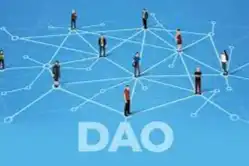
DAO has always been one of my favorite spaces to spend time in crypto. The ability for people from all over the world to come together to achieve a common mission is exciting, especially because of various arbitrary barriers (e.g. location, age, part-time job, non-traditional education/work experience) the same group would not be possible under a traditional company when established. For more information on the potential of DAOs, see my Beginner's Guide to DAOs.
This article covers some of the main takeaways I've learned working on DAOs. Most of my DAO work experience has been as a delegate to the Gitcoin DAO, but I have also participated in and observed many other DAO projects. There is no perfect DAO structure, and each DAO has its own culture, so what works for one DAO may not work for another. The following is my personal experience and opinion, others may have a different view. The field is also constantly iterating to figure out what works and what doesn't.
When initially starting a DAO:
- Establish a clear mission.
This is critical to keeping a diverse and growing community aligned over time and guiding decision making. If someone comes to a DAO with an out-of-scope funding proposal, it should be easy to say no. If the DAO's priorities are not clear, it will be more challenging to keep the team focused on getting things done.
- Consider progressive decentralization or decentralization.
While the intent of many DAOs is to fully decentralize operations and decision-making, putting a community into a DAO structure without guidance or leadership often results in a lack of effective coordination. The founding team almost always has the most background information and ideally sets the course for the DAO to gradually empower the wider community over time. For example, the newly formed Optimism Collective has a working charter that defines the Optimism Foundation's early role as steward and how the Foundation will help guide the Collective through plans to gradually spread out its role over time.
“3. The Optimism Foundation will be the steward of the Optimism Collective and its early governance model. The Foundation is a Cayman Islands organization responsible for guiding the growth of the Optimism Collective and development. Through its Board of Directors, the Foundation may: · facilitate the stewardship of the Collective's governance; · allocate treasury assets to fund public goods, incentivize participants in the Optimism ecosystem, or otherwise further its (and the Collective's) purposes; · Amend this Charter of Work; and · Take other actions in favor of its stewardship role. The Optimism Foundation will undertake all of these responsibilities in a manner consistent with the Collective's mission, with an eye toward increasingly decentralizing its role over time."
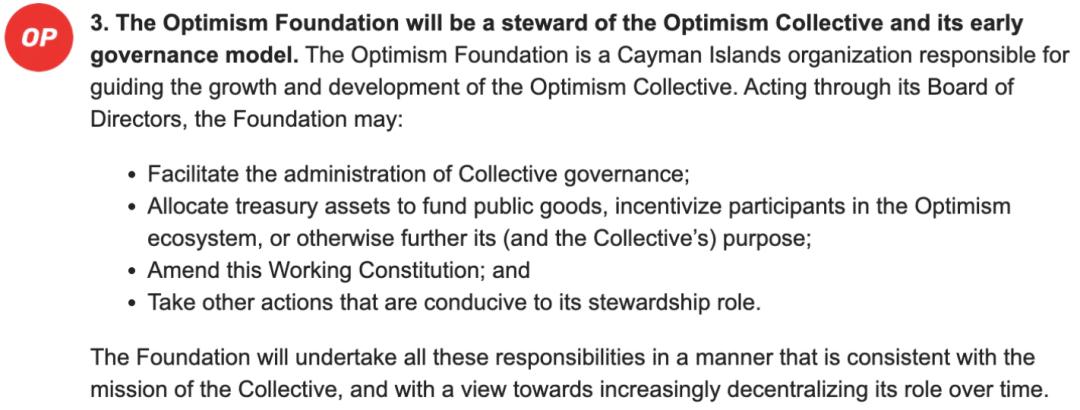
Optimism Collective Working Charter
Operation :
Smaller workgroups are more productive.
Not all DAO members vote on every decision required by the DAO. Trying to keep up with everything is impossible and not the best use of everyone's time, especially as the DAO scales. For this reason, I like the delegation model in DAOs like Gitcoin and ENS, which allow token holders to delegate their votes to individuals or groups who can invest their time and make informed decisions. Likewise, delegates will not and need to be involved in all aspects of day-to-day DAO operations.
Delegates will not all be experts on every subject, from finance to technology development to economic design, and may not care to review highly specific details. It is more efficient to create small specialized groups that can specialize in specific areas. For example, each quarter in the Gitcoin DAO, working groups share the work they accomplished in the previous quarter and the budget they need for the next quarter to be voted on by delegates. ENS DAO has been working with Orca, a DAO implementation dedicated to enabling small groups of workers called pods. Another example is Aave V3, which allows whitelisted addresses to update parameters without going through a governance vote. However, governance will have the ability to revoke these whitelisted addresses or add new ones.
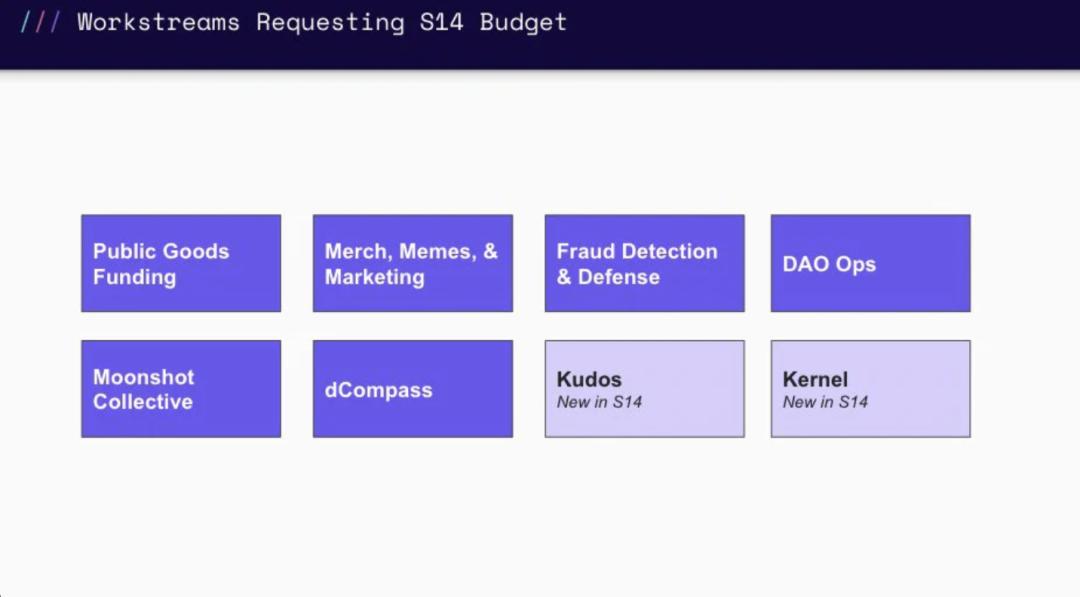
Gitcoin DAO workflow for requesting a budget (Image source: Annika Lewis)
< br>
Explore ways to establish accountability.
It is important to state the level of participation of each delegate and WG contributor. In Gitcoin DAO, one attempt to measure delegate participation is to use Steward Health Cards to measure things like voting activity and forum participation. Gitcoin DAO is building Workflow Health Cards and also started quantifying DAO contributions so that some workflow contributors can become top reps by participating and participating in the DAO. These metrics should improve over time so that it is not gameable and does not encourage misbehavior such as voting for the sake of voting without regard for knowledge or expertise. Delegation metrics can be helpful in deciding where to delegate votes to members. Sometimes people may simply delegate to someone they know, but may not actually be an active representative. I'm also open to the idea of a delegate election cycle, which could be a way for people to phase out of the DAO when they no longer want to work, and get delegates to think about whether the DAO is something they want to keep committing their time to.
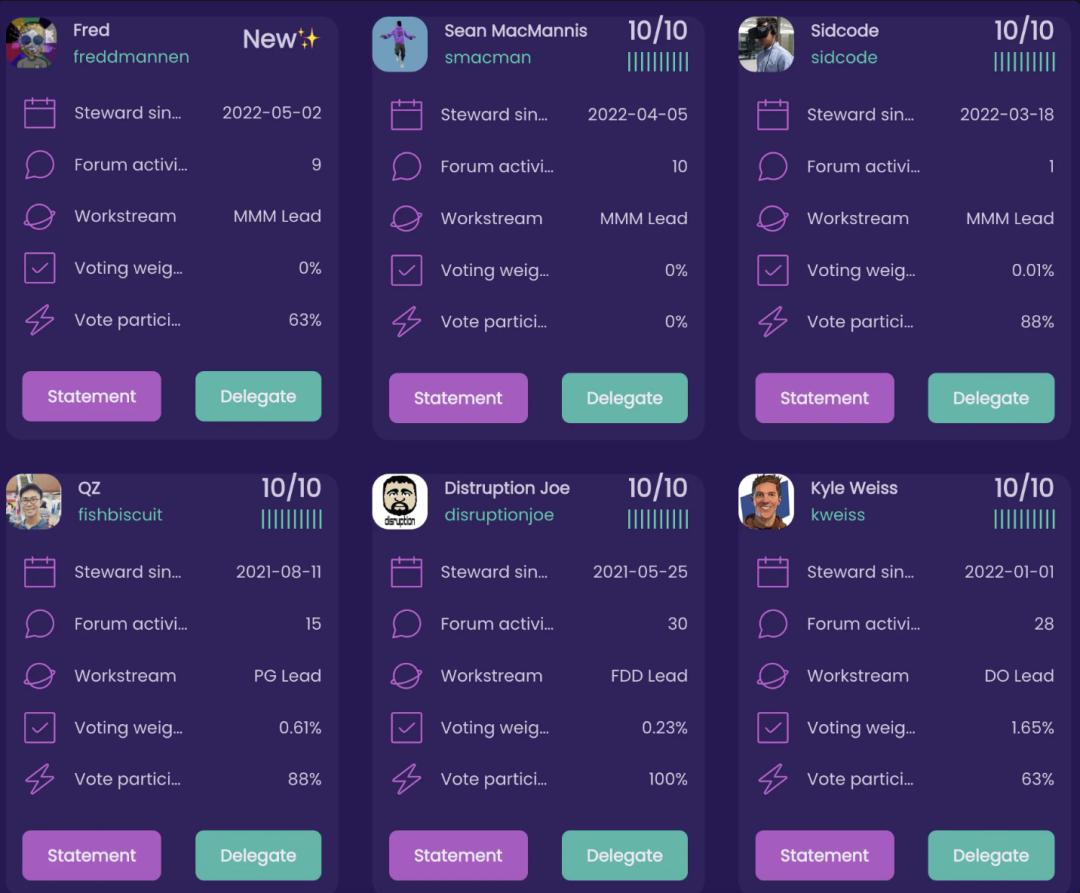
Gitcoin DAO Butler Health Card
Discuss the compensation structure.
When a significant work commitment is required from a member or representative, there should be an open discussion about the compensation structure. Not everyone can afford to work part-time on a DAO for free, so they should be compensated for their work. In a delegation model, I think all primary delegates should be compensated at least for the gas they spend voting and submitting on-chain proposals. This gives every delegate an equal opportunity to participate. Ideally, the DAO will also work on standardizing compensation so that the DAO is not substantially underpaid or overpaid.
Set up the DAO for long-term sustainability.
Consider diversifying the DAO treasury, either public funding or privately moving funds into more stable assets like USDC or DAI (Forefront's public funding diversification financing example). Crypto is a volatile space, and with corporations no different, it is important to ensure that DAOs can function in the long-term. Keep a tight grip on fees paid from the DAO, especially if it is a recurring fee and has no clear replenishment of funds.
Culture:
Cultivate a culture that is open to saying no and having difficult conversations.
With no CEO as the ultimate decision maker, and the inability to quickly say no to things that don't align with the company's goals, DAO members and representatives are responsible for protecting the DAO's resources ( time, attention, money). This can quickly get out of hand when anyone can publicly use the DAO's treasury to make funding proposals. When you may be working with a lot of friends and people you respect, it can be difficult to say no and have difficult conversations when requesting resources for some project that is not in the best interest of the DAO. Help foster a culture early on where everyone knows that the decisions being made are in the best interest of the DAO and that "nos" are not self-interested.
Create structure so members can take breaks.
Crypto is 24/7 and a DAO communicating asynchronously with people all over the world, with no breaks or rest standards, can be exhausting and lead to burnout. Set up methods for members to let others know they are on vacation. In a delegation model, it would be ideal to have liquid votes, so that delegates themselves can delegate their votes to others if they are inactive for a period of time (or if the content of the vote is outside their area of expertise) of. It's no different than having a company colleague take over someone's work while he's on leave.
Experiment early.
Try different systems and processes to see what works and what doesn't for a DAO. Experimentation is possible early on, as long as there is transparent communication. The larger the DAO, the harder it is to experiment, change or introduce processes. One area that might be worth exploring is the governance legos from the Element voting library, enabling many use cases such as giving GitHub contributors voting rights or allowing members to vote for their Token Stake or provide liquidity.
Thanks to Will Warren, Jordan Clifford, Simona Pop, Scott Moore, Derek Hsue and Julia Rosenberg for reviewing This article.
Original Link
Welcome to join the official BlockBeats community:
Telegram Subscription Group: https://t.me/theblockbeats
Telegram Discussion Group: https://t.me/BlockBeats_App
Official Twitter Account: https://twitter.com/BlockBeatsAsia
 Related Articles