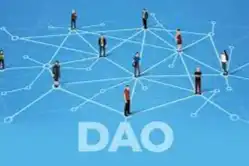
Five attributes that cannot be ignored when operating a DAO
Original title: "learning by daoing: designing for the unique properties of daos"
Original author: Raphael Spannocchi
Original compilation: Demo@DAOrayaki, DoraFactory
At the most basic level, DAOs are simple. They facilitate two things: collective ownership and collective decision-making. It starts to get more complicated when we consider the many ways to design a DAO. When it comes to designing DAOs, we spend too much time talking about how each one is different and not enough time thinking about how they are the same. This lack of a design framework forces us to either resort to traditional corporations as a baseline model (porting many of the limitations of traditional organizations), or to abandon any framework altogether in an effort to manage the evolution of DAOs.
Through the (currently painful) process of learning DAOs, DAOrayaki discovered some intrinsic properties common to functional DAOs. By designing DAOs with these common properties in mind, we can not only improve the DAO experience, but also design systems that are more accomplished than traditional corporations.
These properties are: Autonomy, Emergence, Complexity, Agency, and Transparency.
Autonomy
Meaning: the ability to make your own decisions without being controlled by others; The right of an organization, country or region to be independent and self-governing.
What it means in DAO: In contrast to a traditional corporation, a DAO cannot be controlled or captured.
Design principle: Design for the highest degree of autonomy (weak ties, autonomous sub-organizations), while maintaining checks and balances on distributed power.
The biggest difference between an enterprise and a DAO is that DAOs are capture-resistant, that is, they include mechanisms to prevent bad actors from capturing shared resources. Ensuring capture resistance through trust and reputation is weak in traditional corporate structures because both are important in the iterative game of public business. Internal capture of DAOs is prevented by regulations enforced by higher-level external agencies. DAOs require different assurances against capture because trust, reputation, and regulation are mostly non-existent in large, somewhat anonymous, digitally native networks. While most DAOs are not capture resistant, DAOs can be designed to be, and there are three main ways to capture DAOs:
1 Control over decisions
1 h4>
The DAO wave in 2020 created "progressive decentralization", that is, once a protocol established by a centralized core team achieves a product-market match, Hand over control to the community. This approach prevents the core team from being distracted by simultaneously building the community and the product, and avoids designing by committee, which is often bad for product launches. This approach builds a community around collective ownership, launching tokens once operations are “sufficiently decentralized,” and suddenly handing over decision-making power to a new group of token holders, often through token-weighted governance. All decisions so far have been centralized, and most product-related decisions remain centralized. Since decision-making is centralized from the start, decentralizing decision-making can feel like relinquishing control, something a core team is often reluctant to do.
Community members are attracted to token launches rather than co-building or participating in networks over time, which can create more speculative in nature community. In the absence of other criteria, such as previous contributions to the DAO, tokens are often distributed based on retroactive usage, which has proven to be a weak method of acquiring contributors. Contributors can quickly become frustrated by their low level of participation in decision-making. These dynamics lead to lower voter participation, making any decentralized decision-making less attractive because there are fewer voices represented.
Whatever the path to decentralization, token-weighted governance increases the likelihood of capture in the decision-making process, the risks of which are well outlined here. Optimism's two governance system is a positive first step towards more unruly governance.
In order for DAOs to be capture-resistant, we must decouple power (decision-making rights) from wealth (Token holding).
2 Control over resources
In order to avoid these challenges, we experimented with a different approaches to decentralization. Instead of building a community around already completed products and collective ownership of tokens, we hope to invite contributors to co-create with us earlier in the decentralization process (pre-token). We gradually involved the community in non-core business operations, establishing a series of community-led working groups. However, with no decentralized decision-making mechanism, working groups still rely on external stakeholders for key resources (in this case, a centralized corporation, with no governance mechanism). As a result, our workgroups are vulnerable to capture, and we've decided to pause this experiment until we can give workgroups more autonomy.
Even with decentralized decision-making, the party that controls the resource (i.e. the parent company) has a low perception of the value that the workgroup provides. While working groups may have their own budgets, they are still subject to a budget allocation process beyond their control. Even if there is Token to adjust the incentives between the parent DAO and the working group, the added value of the working group may not be reflected in the parent's Token value (that is, meta-governance, whose value is difficult to link with the core business value).
When one group controls another group's use of resources, the relationship becomes adversarial.
While working groups help control and separate scope within a single organization, a design choice for higher autonomy is to replace them with multiple sub-organizations. Autonomous suborganizations allow communities to organize around specific goals, have complete autonomy over how to achieve those goals, maintain direct ownership of their own resources, and directly share in any proceeds generated from their efforts.
These sub-enterprises can focus on building the supply side (increasing the size/scope of the product) or the demand side (exploring new use cases or gathering users). They can also take the form of subsidiaries that provide services to the entire ecosystem (i.e. meta-governance). All sub-tokens should have an economically sustainable business model, so they do not depend on external resources, but native tokens will soon become an important means of establishing "weak strategic alliances" between tokens through token exchange (more For more on this approach, see MetricsDAO and Goblin Sax).
3 Control over Execution
The greatest opportunities for capture occur during the execution phase. Governance works in general as follows:
- A proposal is made
- The community votes on the proposal
- Proposed outcomes are either autonomously enforced on-chain or off-chain by a chosen party
- Implementation is verified and/or analyzed by the community
Execution is the easiest phase to catch because there is nothing stopping those with enforcement power (i.e. multisigers) from executing whatever voters they choose action. This doesn't mean we should eliminate all trust positions within DAOs.
Positions of trust (such as those of executive power) should be elected or legitimized by the wider community, with clear mechanisms for accountability in these positions Revoked when misused or neglected. Yearn's gov 2.0 proposes a model where highly autonomous yTeams are empowered by YFI holders to act independently in the best interests of yearn within limited areas of action and independent decision-making powers, and accept YFI holders If the role is abused, YFI holders have the right to remove contributors.
Leadership in a DAO is the most humbling thing I've ever done, because you can't rely on static status authority. You have to continually earn respect in the community. In good times it is meritocracy, in bad times it is trial by jury.
Unauthorized participation can actually threaten the DAO's resistance because it creates more attack vectors. While participation in decision-making by as many community members as possible should be encouraged, the ability to make certain recommendations, make decisions, and hold positions of trust should be limited by eligibility criteria.
DAOs (human layer) do not need to be as decentralized as the protocols they surround (technical layer).
Emergence
Meaning: something becomes known or exists Facts (Cambridge).
What it means in DAO: In an enterprise, ideas flow from the top down. In a DAO, initiatives emerge organically from the community.
Design Principle: Emergent DAOs don't have to be amorphous. A strong mission and culture can guide collective decision-making without being too prescriptive.
Emergence is critical to maintaining a vibrant community. A DAO that doesn't support emergence can become like a shell community over time, as contributors get frustrated by their inability to influence the DAO. The most emergent DAOs are "Day One DAOs," which form organically when a group of people come together around a mission, idea, belief, or event. They are decentralized from the beginning to decide what to do or what to build collectively. These Taos usually issue Tokens immediately as a way to raise funds, which is also an immediate decentralized decision. This gives contributors complete autonomy to shape the DAO with emergencies, but day one DAOs can struggle to guide decision-making due to the lack of structure.
Let's define culture as a set of shared beliefs about how decisions are made (mission) and which behaviors are rewarded (values). Culture is mostly an afterthought in traditional businesses. Decision makers are identified through hierarchy and decisions are made through coercion, so there is little need to define a framework around how decisions are made. Culture, by contrast, is a critical tool for guiding collective decision-making.
Why is the mission statement so important to the development of the DAO? Because they provide a north star for decision-making and set an overall direction for the DAO. DAOs without direction tend to lose momentum, and I've never seen a DAO that lost momentum regain momentum. People think of a community as a moat, but it can't be a moat because community members are constantly changing. However, your mission can consistently attract value-aligned contributors and keep them there when the DAO dream inevitably fades into the DAO reality (twoirtter.eth).
Contributors can only meaningfully contribute to 3-4 DAOs, so they need a compelling reason to choose a DAO to contribute to instead of another. Contributors to RabbitHole say they work with us because they understand our mission and share our beliefs. This is important because it creates a sense of belonging, which is one of the things contributors crave most.
Clarified values are the second component of building a strong DAO culture. More emerging DAOs tend to develop around icons, "parody filters", lore, or specific events, which are natural filters for attracting value-aligned contributors. They must then work together to define their mission and values together (see Yearn Blue Pill).
Mission statements and values can be proposed by the core team (see CCS, Mirror 1, 2, 3 and ENS) or collectively created by contributors (see OADAO ). Regardless of the definition process, establishing a clear mission and values provides enough guidance for emerging DAOs to make decisions without being overly prescriptive.
Complexity
Meaning: A complex system is the organic result of the behavior of its internal components , rather than according to a predetermined plan.
Meaning in DAO: Most businesses are complex systems, and any complexity is tightly controlled by a bureaucracy. DAOs are complex systems, which means that influencing behavior is difficult to predetermine.
Design Principle: The community should work together to create a seasonal charter that guides work in a way that takes uncertainty into account while preventing confusion.
Because a well-designed DAO enables contributors to make decisions that meaningfully change the trajectory of the organization, the outcomes are difficult to predict. That doesn't mean DAOs have to be chaotic. Just because we don't know our exact destination doesn't mean we can't drive at all.
Strategy can exist in a DAO, and unlike corporate strategy, a DAO's strategy is co-created by contributors rather than top-down. The easiest way to do this is through a co-authored charter, which serves as a variable guide outlining high-level goals, advising process, and guiding principles to inform decision-making throughout the season. These contracts maximize the range of participants in the "container", providing a collectively agreed roadmap that defines "what needs to be done" while allowing participants to decide "how" to get to the desired destination. Allowing for periodic re-evaluation and updating of the contract is important, as most of the DAO's operations are discovered through day-to-day experience (twoirrtter.eth).
The vision of a DAO is discovered collectively over time, and the strategy of a DAO should be set collectively on a regular basis.
While contributors want the ability to strategize, I've found that they also don't want to be handed a completely blank slate. At RabbitHole, we've found the sweet spot of providing an initial charter outlining 70% of what a working group will drive, and empowering the community to provide feedback and fill in the rest.
Agency
Autonomy exists at the organizational/firm level, while agency exists at the level of individual contributors.
Meaning: The ability to take action or choose what action to take.
Implications in DAO: In a traditional enterprise, top management has most of the agency. In a DAO, agency is maximized by all network participants.
Design Principle: When designing a DAO, one needs to understand that individual contributors will optimize agency by speaking and exiting.
1 Voice (changing the system from within)
Governance provides contributors with Option to comment in . While most governance conversations focus on how to increase voter participation, *having the option to vote is actually more important than constantly voting. If contributors have the option to implement change, but don't choose it, no one can be held accountable. Since options are more important than actions, the expectation should not be that every shareholder votes on every vote. Most everyday users don't want to participate in the democracy of the products they use every day. Even if they wanted to participate, it's a full-time job to keep up with all the proposals, so quorum is usually only reached on the most controversial proposals. **Once we accept that the choice we vote for is more important than the action we vote for,** we can stop adopting a one-size-fits-all decision-making model in management. This will allow us to make more efficient decisions, which is one of the two main purposes of DAOs (along with collective ownership).
Effective decision-making boils down to empowering people of high background to make localized decisions while giving others the option to protest when necessary. If we design for proxy, we can start experimenting with more consent-based governance (see Mirror 0004), optimistic governance (see Aragon and Tribe), and lazy consensus (see Colony), we can start thinking about identity, reputation-based and contributed different voting rights (see Element).
2 exit (leave to create start a new system or join a competitor)
The core team should be ready to fill any gaps created by part-time contributors who often opt out. In the case of large personnel turnover, maintaining the continuity of work requires thorough and transparent process documents and clear strategies. Conversely, you probably don't want to evaluate your DAO on retention issues. Instead, the focus is on ratifying co-creation policies and processes that allow any contributor to plug into a well-defined, yet flexible and well-documented workflow, reducing dependency on any one contributor without adding top-down bureaucracy .
Transparency
Meaning: in an open manner, without the quality of secrecy (Cambridge ).
What it means in DAO: The DAO redefines what it means to be "radically transparent" in a way that will shock private industry*.
Design Principle: Designed for almost complete transparency and a higher level of accountability than traditional organizations.
While public corporations will make some data transparent, they are published in a highly edited format and not at long intervals. Instead, all raw data related to the DAO’s on-chain actions is publicly viewable in real time, and contributors expect similar transparency for all off-chain data and decisions.
The purpose of transparency for corporations and DAOs is also different. The purpose of corporate transparency is to keep shareholders informed of the decisions that have been made. The purpose of the DAO's transparency is to enable contributors to make decisions. This makes transparency in DAOs even more important, as information asymmetry actually prevents contributors from doing their part (Chase Chapman). However, this level of transparency also means that DAO operators will be held accountable 24/7. At the same time, anonymity among contributors reduces transparency and accountability. Since the best collective decisions are the product of disagreement and competition, not consensus or compromise, it can get tough in Discord. DAO operators need mental health benefits and support.
Postscript
If we start designing DAOs in a way that accommodates their unique properties , we can achieve greater success. Autonomy, emergent, complex, agency and transparency. If the above properties are destructive to what you're trying to achieve, a DAO may not be the best structure to achieve your goals.
*This doesn't mean that DAOs can't make products, they can and they do, it just means that DAOs, given their inherent type of activity may be much more effective.
We are still figuring out what a great DAO design looks like, and there is still a long way to go. DAOs are constantly evolving, so the best approach today may not be the best approach tomorrow. I still believe these design principles are useful even when we disagree on them, because they start a conversation that hopefully moves us all forward together, and isn't that what it's all about?
Original link
Welcome to join the official BlockBeats community:
Telegram Subscription Group: https://t.me/theblockbeats
Telegram Discussion Group: https://t.me/BlockBeats_App
Official Twitter Account: https://twitter.com/BlockBeatsAsia
 Related Articles