What is it like to work in an organization without a boss?
Original title: "No Boss: What It's Like to Work at a DAO"
Original author: ANDREW R. CHOW
Original compilation: Block unicorn
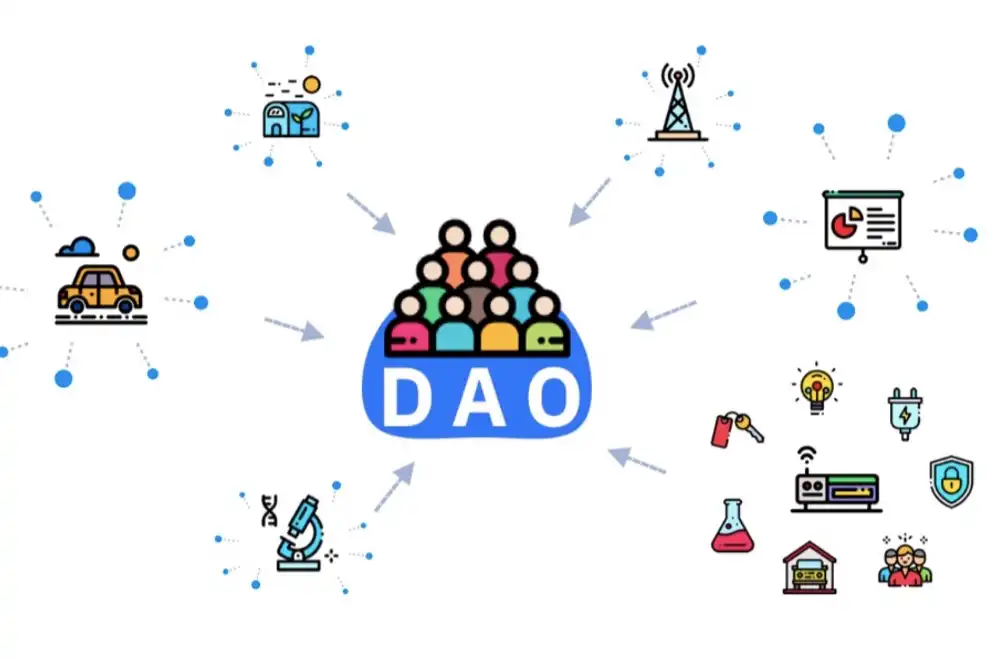
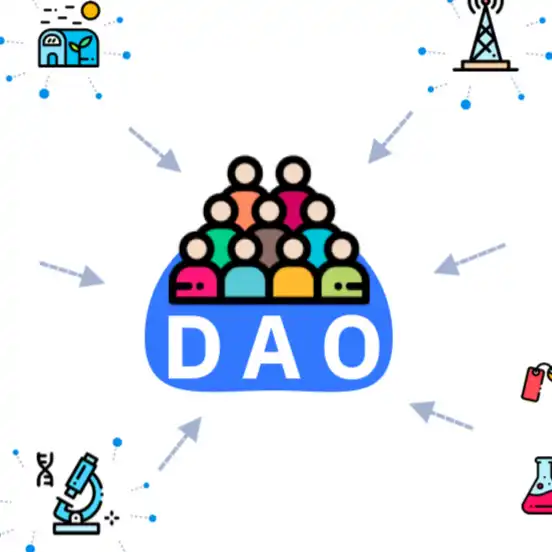
In January of this year, many people declared on Crypto Twitter that if 2021 was the year of the NFT, then 2022 would be the year of the DAO. DAOs are decentralized autonomous organizations, a new type of organizational structure that has proliferated over the past few years as money has poured into the crypto space. They are an extension of the crypto world’s promise of decentralization: instead of being owned by one person or controlled by a board of directors, they are owned collectively by participating members, voting on decisions via smart contracts, and enforcing the rules of the decision.
Aaron Wright, a lawyer and co-founder of Flamingo DAO, which invests in NFTs and creative projects, likens the DAO to "having a bank account." Subreddit". "The energy of the Internet is flooding in, but there's no real effective way to channel it," he said. "I believe DAO is the answer."
Professionals believe that DAO may eventually replace many traditional companies and become a cooperative organization of the new era. (For example, imagine a version of Uber where drivers collectively own the company). However, most DAOs currently focus on crypto and Web3 activities. There are DAOs that collect NFTs (PleasrDAO), others that facilitate decentralized cryptocurrency exchanges (Uniswap), build blockchain products and tools (PartyDAO), and incubate and fund NFT artists (herstoryDAO).
But skeptics point out that many DAOs are not particularly decentralized, and that they have limited ability to navigate the unpredictable complexities of human organization. Video critic Dan Olson argued in his viral YouTube video that calling the DAO a revolutionary structure is nonsense: it’s just voting rights. Earlier this month, The New York Times published an article noting some of the DAO's struggles, including massive hacks, low turnout and internal conflict.
While some DAOs have exploded spectacularly, others are quietly advancing, offering another model for what the workplace might look like. One of these is Dorg, one of the first DAOs in the US to be legally recognized as a limited liability company. Formally launched in 2019, Dorg is a software development company that helps build infrastructure for Web3 and encryption projects. I interviewed four members of The DAO to find out how Dorg differs from traditional LLCs, and how those differences help or hinder their work.
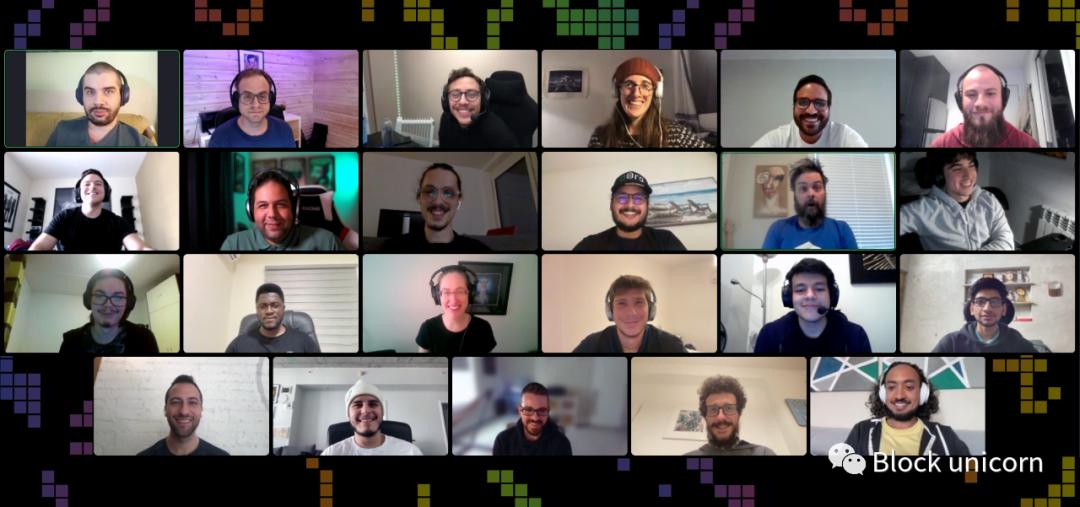
No management team, every Individuals are owners of companies
From the top, Dorg has no general management positions (CEO, CFO, etc.). While software engineer Ori Shimony co-founded the company, he doesn't have a formal leadership title, instead describing himself as "helping with R&D." Instead, roles are fluid, with people falling into different roles based on each project. Everyone officially working for the company is the legal owner of its Vermont LLC, owning one share each. The company's decision-making is to use Token to vote, Token Generated when you complete a project for the company. (Thus, Shimony owns the company Token The largest share, around 9%, has been in steady decline since the company's inception and will continue to decline. )
Colin Spencer, Dorg's full-time product designer, said learning about this ownership model was a huge wake-up call. "In almost every company I've worked at, my boss has said to me, 'I really want you to own this project.' But that's not true. Now, everything I build is mine, and it completely changes the way you manage your time.
However, the company is not entirely without hierarchy. Specific aspects of the project are led by experts (e.g. technical, project management, etc.). However, the leader of one project may find himself reporting to a subordinate on the next project. "There's a difference between leadership and authority," Simonyi said. "There is no one authority to wave a magic wand to make a decision. But having someone, or preferably multiple people, offer advice, guidance and guidance is really helpful.
Developers choose their own projects and control their own budget
Working hours and locations are flexible and self-driven. The employees I interviewed live in three None of them in 2 different countries said they worked more than 45 hours per week. They also spoke of having a high degree of autonomy in finding work projects, cultivating relationships with clients, and then building teams to execute those plans. For example , Dorg project manager Magenta Ceiba is passionate about regenerative agriculture and supporting local economies. When she came across AcreDAO, she wrote a proposal that was quickly accepted by Dorg's Token The holder accepts. AcreDAO is an investment club focused on issues that require development assistance. “This program has an exceptionally high level of value alignment,” she said. Many of Dorg's developers are from Venezuela, so they have a deep understanding of when economic collapse happens.
Nestor Amesti, a technical executive from Venezuela, said that developers handle budget allocation themselves. "We conduct a joint audit of ourselves," he said. If someone abuses the budget -- which has certainly happened in the past -- his or her peers will have a responsibility to make their voices heard when they see something they disagree with. If a conflict arises, we have a clear structure for deciding how to proceed.
Disputes are mediated and then voted on
Where there is no central authority to adjudicate disputes In this case, employees first follow the company's guidelines on "decentralized dispute resolution." Sometimes, HR operations specialists (mainly HR staff) act as mediators. “It’s been working really well lately,” Magenta said. “We have a culture of being direct and frank with each other.”
Shimony himself was not overthrown. Rare, he said, when he wants Dorg to go public Token -- so investors could buy a quasi-equity stake in the company -- an idea that "died in committee" after several phone calls. "I argued with them; it turned out to be the opposite, and I'm glad they did," Shimony said. "Dorg is what it is now." If the decision cannot be resolved in the discussion, then the DAO members will vote on the block. chain to vote. The company used to have a vote on nearly every decision, Spencer said, leading to "information overload and a constant need to feel like you need to move on with everything that was put forward." A democratic system, but it got in the way, so the company began delegating decision-making to smaller, more specialized groups.
The company outsources health benefits
Currently, Dorg is working with Opolis, which provides Healthcare for Digital Workers and Freelancers - Provides health insurance for its US members. Ceiba, who lives in California and is currently on State Insurance, said she's interested in advocating for the company to explore its own insurance options because "we're starting to have a healthy enough Treasury Department to reconsider this."
Salary is transparent
Dorg aims to be "total transparency" when it comes to compensation and finances. All salaries and budgets are maintained publicly on the blockchain; spending logs are visible to every member. And, no matter where in the world employees live, they are paid according to their skills.
Amesti, who moved to Madrid from Venezuela after joining the company, said that when he previously tried to work for Latin American agencies, they usually forced the developers Work for lower wages because they know it's very tough in Venezuela. After I started working with Dorg, it didn't feel like my nationality mattered - it was my job and what I was passing on. On another interesting point, employees who work on specific projects can choose to pay in cash or Token get paid. If they choose the latter option, they are sacrificing immediate spending in favor of the idea that Token The valuation of will increase as the project matures.
Amesti, for example, who helped build the development platform PolyWrap, says he chose to use the Token pay, this Token Will be awarded after 4 years. "I really believe (PolyWrap) has a lot of potential for growth over the next few years and want to be a part of it," he said. "It also motivates me to want to make things as good as possible because I'm a part of this sport.
Skill building is still a work in progress
In theory, a Companies with flattened hierarchies can lead to stagnant employees who feel less motivated to develop skills or advance. To address this, Dorg's playbook emphasizes "upskilling" and creates a collaborative structure where employees with different skills can learn from each other. When people form teams, senior developers will encourage more junior developers to take on greater responsibility or a new skill, Ceiba said. Employees with more expertise or additional skills are paid more. Spencer hopes the self-promotion process will become more formalized and provide a guide to the skill sets developers need to master in order to achieve higher pay grades and status at Dorg.
He envisions a system in which developers are contracted to build various skills for each project, which are then peer-reviewed by collaborators. "So there's an ongoing mechanism to assess the performance of construction workers and make sure they're really developing the skills they need," he said. Spencer said he has floated the idea in the past and hopes to help bring it to life next year.
Until then, Dorg will continue to take on projects, vote on new proposals, and work to simplify the technical process. “A lot of things started as experiments, and some things still need to be worked out,” Armesti said. But it worked, and I hope I’m here for a long time.
Original Link
Welcome to join the official BlockBeats community:
Telegram Subscription Group: https://t.me/theblockbeats
Telegram Discussion Group: https://t.me/BlockBeats_App
Official Twitter Account: https://twitter.com/BlockBeatsAsia
 Related Articles