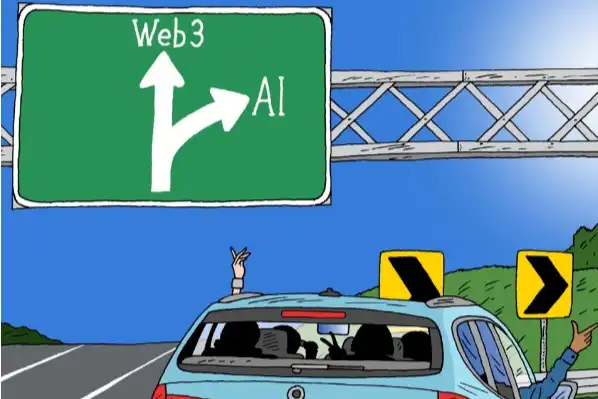
Why can't the giants make Web3 products?
GW XIE is a researcher at AnchorDAO LAB and an algorithm consultant at MetaDEX
In July 2021, Paradigm and the Uniswap team published a mathematical paper on DEX, TWAMM, which eliminated T mathematically and allowed the algorithm to automatically execute a matching order within T. When the algorithm was released, the industry was very excited, as a new trading paradigm. The AnchorDAO research team also discussed TWAMM optimization and implementation issues with Dan and Dave of Paradigm and published a mathematical review [1]. An implementation of TWAMM was later published by Paradigm's researchers [2], but even the algorithms constructed by Paradigm were not brought to market. At that time, a reflection was that for a new DEX product, are innovative algorithms and product power the key? In fact, TWAMM has a relatively high threshold of understanding and use for market makers, users and project parties, which is far away from ordinary users and runs counter to UNI's original idea that "everyone can be a market maker".
Web3 was born for the masses and should serve the masses. As DeFi matures, DeFi's threshold for the public is getting higher and higher, and it is getting further and further away from the public. The more mature DeFi did not explode again in 2021 as expected. On the contrary, gamefi, NFT, Meme, etc., which are closer to players, have led this bull market.
The underlying logic of blockchain, first and foremost, is universality, a kind of fairness based on code, in which the public is the protagonist. Web3 wave is actually a bottom-up movement driven by grassroots, the starting point and foothold of building Web3 products should not leave the public.
One of the technical essence of blockchain lies in the remolding and optimization of production relations, rather than product force driving. Therefore, the core of Web3 has never been technology, algorithm or product power, but the change of production relations and ownership transfer brought by Token, which is an urgent mission of humanistic care. Through the Token mechanism, value and control are placed below the user and the "Builder", allowing participants to build together a world of "no permission", "freedom" and "sacrosanct private property". That's why it's so hard for web2 companies to make Uniswap/Axie/Opensea. Because these agreements are not based on product power, but rooted in the Web3 culture driven by the product, and is a round of difficult adhere to the product.
When it comes to answering the question of why web2 giants can't make great web3 products, I think "faith" is the biggest reason. This "belief" is not an abstract expression, it is a sense of pride, participation and excitement for Web3 culture that has been deposited over time, and it is a specific sensory expression. When cryoto is paid to colleagues and peers who don't have bank accounts, the pride is concrete, because we know it may give them new hope; When a $5 airdrop is given to a Southeast Asian Gamefi user who completed a task overnight, the connection to the Southeast Asian player is concrete, because we know that $5 could be their lifeline; When crypto was used to buy the artist NFT, the relief was concrete, as we knew it might be the only source of income for the artists affected by the pandemic. It is because of the sense of mission brought by "faith" that we holders can continue to stick to "build" when the crypto price drops 90% and then 90%.
Web3 product power under the background of new generation infrastructure: freedom and public service
Compared to Web2 infrastructure, Web3 is a completely new infrastructure background. If the former is electricity and networks, the infrastructure of the latter is data and liquidity in a new production relationship:
At the data level, blockchain data is open and shared. It's not limited API access like Web2, it's data that can be connected anywhere, and it's even timeless. In terms of capital liquidity, the infrastructure built by DEX is also very mature, and all scenes can share DEX's liquidity to help complete transactions. At the same time, with the expansion of THE asset pricing power of DEX, more market-making funds are forced to enter the DEX field, deepening the network bandwidth of liquidity.
In such an infrastructure context, a few people can build a project (DeFi/NFT/MeMe) and issue tokens, delegating the power of building a network to the masses.
Taking the securities trading platform of Web2 as an example, it needs to consider hacker risk, policy risk, user trust risk, liquidity risk, technical risk, including matching system/operation and maintenance/server, etc. The limit of its threshold makes the trading platform can only be participated by giants. However, if you build a converged DEX, these costs do not need to be considered. You only need to focus on serving users and constantly optimize user experience in different scenarios.
Therefore, web3 new infrastructure brings a brand new thinking on product form, the core of which is thinking on production relations. When we talk about the importance of Tokenomic, what it expresses is a remolding of production relations: because Token builds a self-marketing network, the Holder who bends into the game spontaneously spreads the "product". When we mention the "consensus is king" of Web3, it is the "flow is king" of Web2 after the remodeling of production relations. Compared with the flow driven by product power, Web3 values the flow driven by consensus spontaneously.
DeFi needed a new narrative point: building scene finance
An integral part of Web3 is the DeFi product, which has not had a protocol and platform to serve mass users for a long time. With the infrastructure data and liquidity behind DeFi maturing, what's the next trend? How do you serve trillions of dollars of assets and get DeFi accepted and used daily by hundreds of millions of Crypto users?

If we refer to the financial inclusion brought by wechat and Taobao to mobile payment, then DeFi's next trend should also be financial services based on scene construction. How to make DeFi accessible and make it easy for users to use DeFi in the scene is the next trend that should be paid more attention to.
For the next phase of the DeFi product, its tagline and mission should be as simple and understandable as possible, just like MetaDEX's mission: DeFi at Your Fingertip, the Next Genration of Web 3.
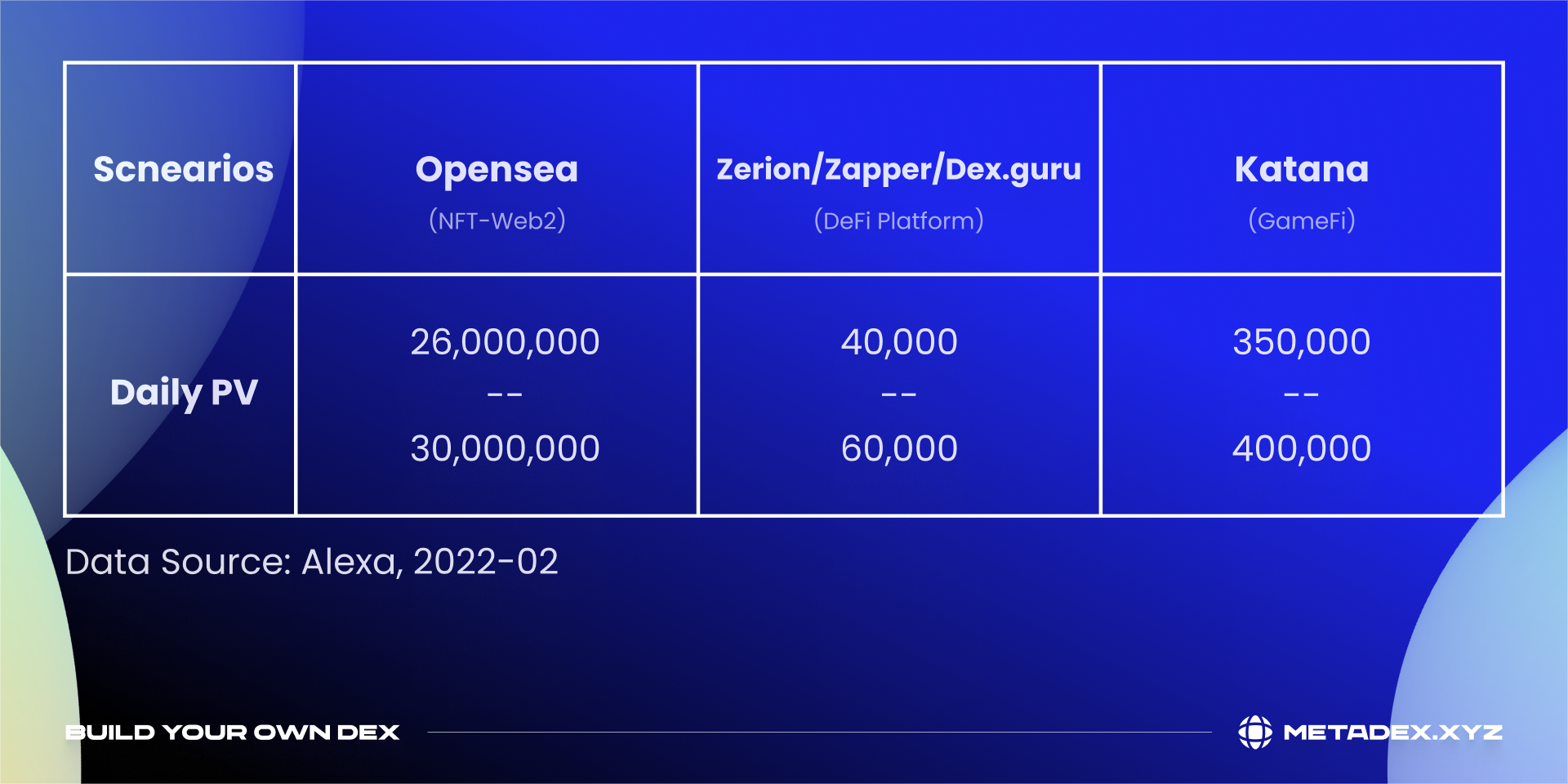
Aggregation platform is the main direction of DeFi at present, such as Zapper and Zerion, and information aggregation platform dex.guru, but their average daily PV is only 40,000-60,000, and the conversion rate of users who convert from these platforms to transactions is respectively 0.087% and 0.076%. [3] In sharp contrast, the average daily PV in the Opensea scenario is close to 30 million, among which the users who visit Metamask.io for the first time account for about 50%. Statistically, close to 50% of Opensea's users come from Web2.
The magnitude of the difference between the two is unimaginable. How did this gap between them come about? If the current innovation in DeFi's product is to compete with Zerion/Zapper/Dexguru, or with the same user base as their service, what's the point?

A similar example is Katanna of Axie's upper side chain, whose Axie transaction volume once exceeded Binance's at katanta's peak.
It is not difficult to see:
· The DeFi community served by Zapper/Zerion/dex.Guru is a very curly, very small scene with low conversion rates.
· OpenSea's vast traffic pool can expand DeFi product service users by several orders of magnitude.
· The Kanata protocol states that DeFi products should be scenario-based rather than a separate DeFi platform.
The Opensea scenario is like taobao for Web3, allowing a large number of Web2 users to use their wallets for the first time. As opposed to the current directionless social scene, the next obvious trend is definitely games. On the one hand, the open economy of the game gives the system a chance to be "permanent" and "inviolable" through web3 soil; On the other hand, the game audience is larger, more far-reaching, and generates more value than the NFT audience. Compared with the collection property of NFT, games are more a way of life for users, and many users even find the purpose and meaning of life through games.
MetaDEX: Put DeFi at your fingertips
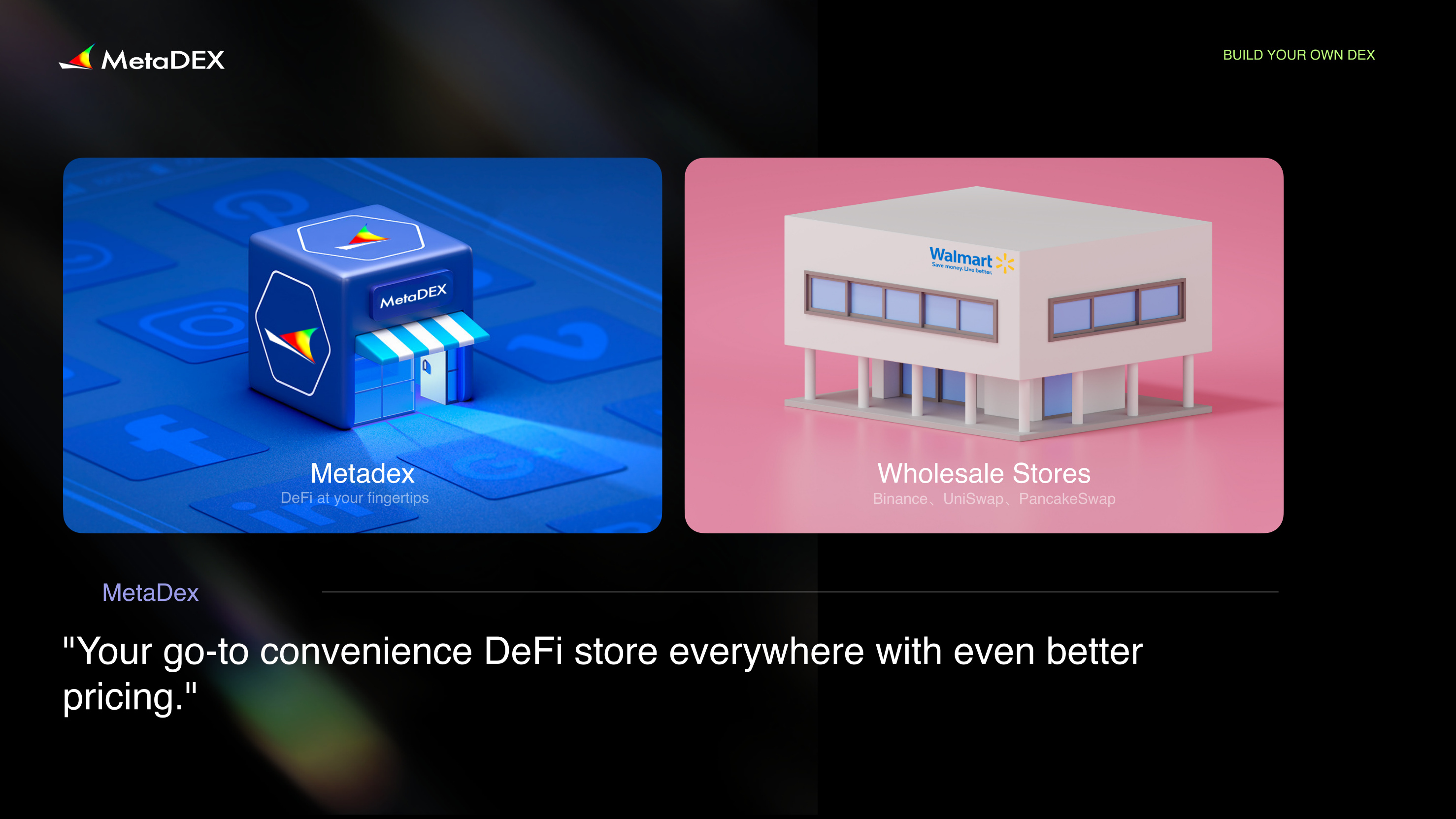
Based on this, the algorithm team of MetaDEX tried to find the concept and mission of DeFi product design in the production relationship revealed by convenience stores and Wal-Mart. Binance, Uniswap, Pancakeswap perfect infrastructure, like a Wal-mart supermarket, large platform, and do a Wal-Mart type of opportunity less and less, also more and more volume. In order to serve a larger user group, the product should bring DeFi to the scene end as far as possible. In each scene end, users and developers can easily reach DeFi, and the "financial inclusion" mission of Web3 can be accomplished through 7-11 convenience stores.

Arche Network provides swap service on player pages (Powerd by MetaDEX)
The current concept of "DeFi as a service" is more based on the DeFi service provided by the platform, which is still the logic of the internal volume of the platform. What is more important is to use DeFi as a SaaS system to serve more Web2 scenarios, just as digitalization in the Web2 era enabled physical business, financialization in the Web3 era enabled the scenarios.
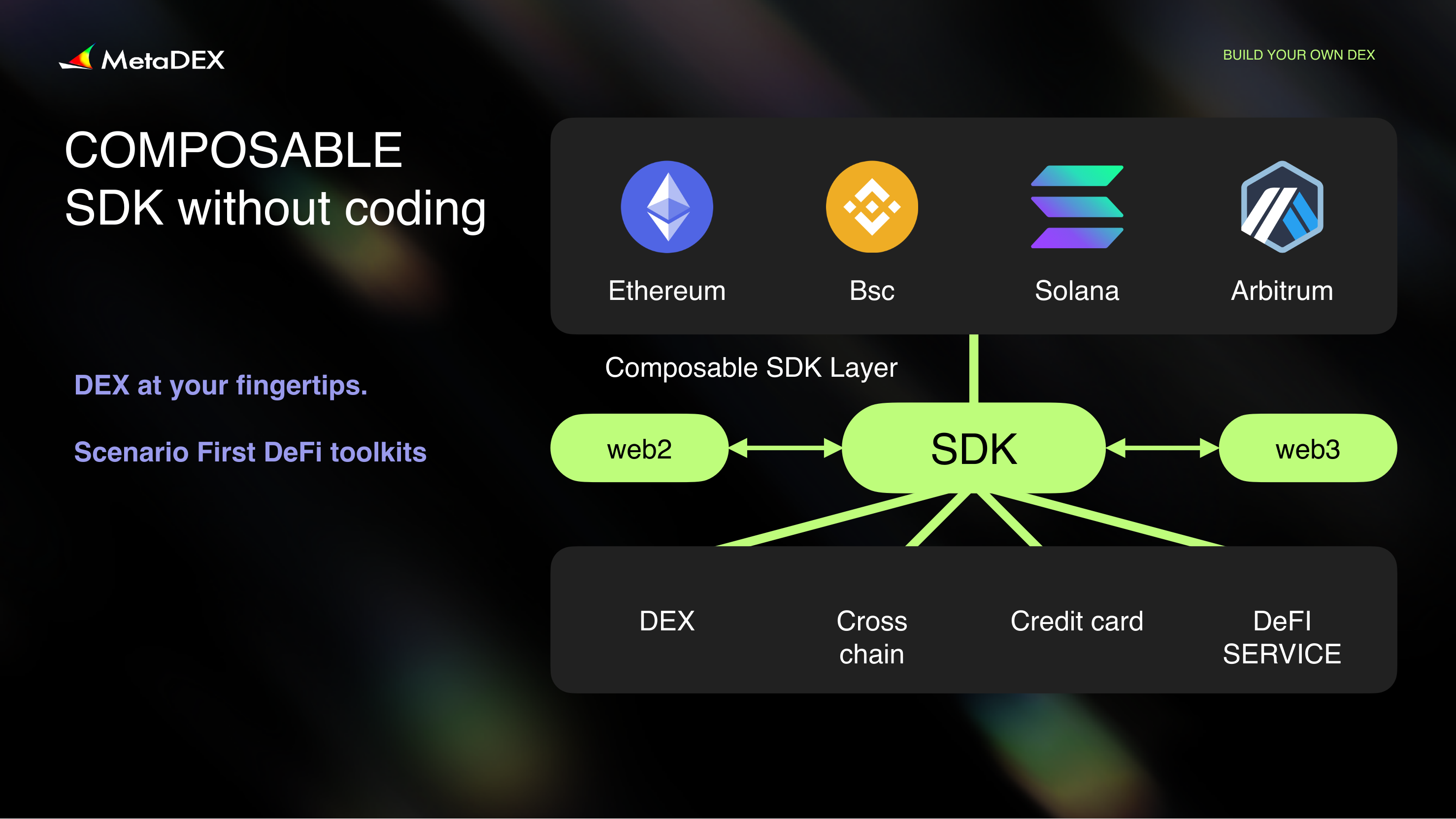
When we talk about making DeFi accessible, it means two things:
The first layer is user-facing scenario finance, bringing the DeFi infrastructure to the scenarios and making the scenarios match DeFi functionality rather than building a new innovative DeFi platform. For example, in a Web2 scenario, integrate credit card related component functions; Integrate cross-chain function in web3 trading web page scenario.
In the game scene, MetaDEX released a small transaction algorithm framework [4], dedicated to serving the small transaction in the game scene, allowing game players to complete the transaction in the process of playing with one click. At the same time, innovative AMM is used to improve the capital utilization rate of market makers.
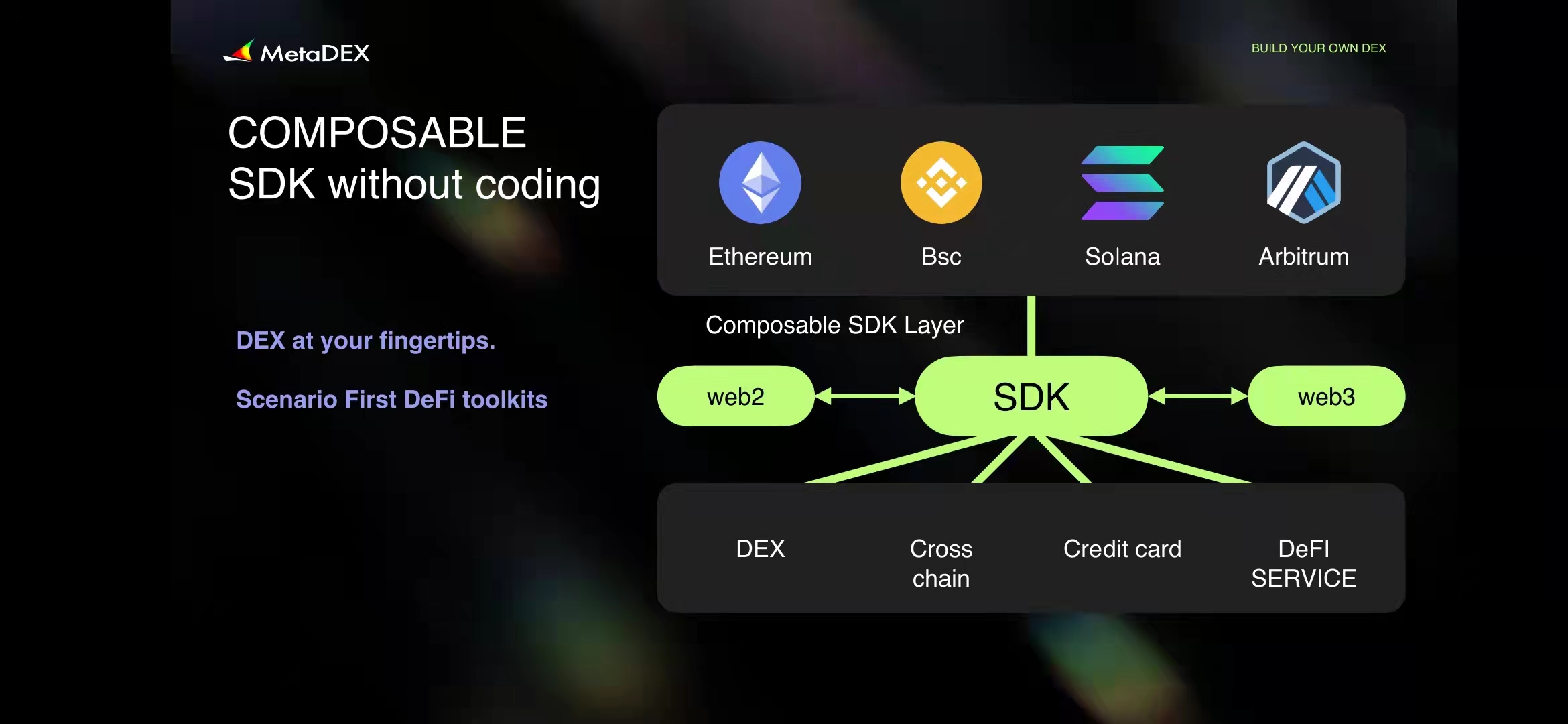
The second layer is the SDK call for the scene side. Web3 is an open era, and the development of public chain cannot be separated from web3JS database. Similarly, the SDK common capabilities of components need to be continuously precipitated as the construction of scenario finance progresses. The third party scenario can be convenient and free to call SDK, without the need to understand the bottom of Web3, can call DeFi function, for the user service.
Reference links:
[1] Leo LIU and Guangwu XIE. 2021. A Mathematical View of Automated Market Maker (AMM) Algorithms and Its Future. URL:https://medium.com/anchordao-lab/automated-market-maker-amm-algorithms-and-its-future-f2d5e6cc624a
[2] Frankie, An implementation of TWAMM,https://github.com/FrankieIsLost/TWAMM
[3] 0x API,https://0xtracker.com/apps
[4] Boo Stark. 2022. WHY WE DESIGN A NEW AMM FOR NOVEL ASSET?https://medium.com/anchordao-lab/metadex-new-amm-in-small-trade-9c0c9b889f7b
Welcome to join the official BlockBeats community:
Telegram Subscription Group: https://t.me/theblockbeats
Telegram Discussion Group: https://t.me/BlockBeats_App
Official Twitter Account: https://twitter.com/BlockBeatsAsia

 Related Articles