Resigned ants, they flock to Web3
Source: WSJ Chinese version
In the tech industry of 2023, there is almost groundbreaking news every day. It is the year of generative AI and the deep bear market of Web3. Those who once believed that "Web3 is the new sexy" now find it less attractive and have turned their attention to AI. However, there are still those who choose to enter the market at this moment, such as the "Big Company Gang" from Web2. They bring with them relatively mature technology, but also face doubts about not being "CryptoNative" enough. We interviewed several Web3 pioneers who are striving to catch up in this race.
AI Rise, Web3 No Longer Sexy?
In the technology industry, there are two highly regarded technological revolutions: AI and Web3. AI is expected to reshape productivity, while Web3 is expected to reshape production relationships. In the tech world of 2023, there is almost daily groundbreaking news. It is the year of generative AI and the deepening of Web3. The total financing amount for Web3 in 2023 is only $3.6 billion, a 78% decrease from nearly $16 billion in 2022. Meanwhile, the financing funds for the AI track in the first half of the year reached $25 billion. Paradigm, one of the largest crypto venture capital firms, has undergone a paradigm shift and announced that it will no longer focus solely on the cryptocurrency and Web3 fields, but will expand its focus to include AI. Those who once believed that "Web3 is the new sexy" now feel that "Web3 is no longer sexy" and have turned their attention to AI.

But it must also be acknowledged that the recent deep dive into Web3 seems to be more lively than before. Even in the bear market, people are still discussing compliance, ZKP (zero-knowledge proof), and Bitcoin ETF. Some are also choosing to enter the market at this moment.
"When I was at Ant, I often used AI and Web3 as analogies when communicating with colleagues. Their development trajectories are very similar." Jerry Li made the analogy that in the past 60 years, there have been three waves of artificial intelligence, with billions to tens of billions of dollars invested almost every time. There have been constant ups and downs until the emergence of OpenAI. "This new large-scale technological revolution requires multiple cycles before it can truly bring about a leap in development."
Jerry Li has had several prominent labels: former Ant Financial Chief Architect, former Apple China R&D Director, Shanxi Province's top scorer in the college entrance examination, and now he has added another one - newcomer to Web3.
Of course, strictly speaking, Jerry is not a newcomer to Web3. After graduating from Tsinghua University, Jerry worked in Silicon Valley for more than 10 years before returning to Shanghai in 2015 to establish Apple's Asia-Pacific R&D center. In 2017, Jerry joined "Ant Blockchain", which had not yet been upgraded to "Ant Chain", with a job level of P10.
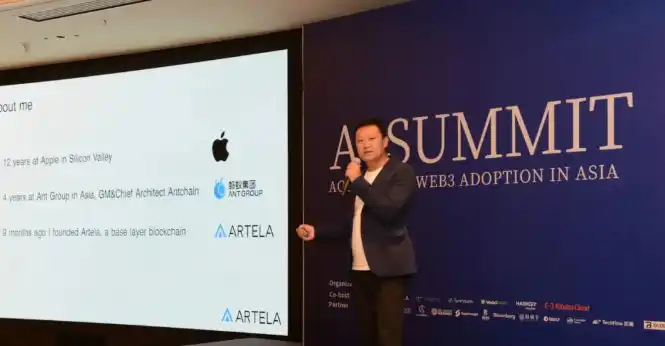
"The industry is still in its early stages, and compared to AI, it has not yet reached the level of development of the previous cycle. The entire market capitalization of the cryptocurrency market is still less than half of the market capitalization of Apple. Jerry compared to his previous employer, the cake of Web3 seems to be too small."
Of course, compared to the AI that is over half a century old, Web3 seems to still be in its adolescence.
The concept of Web3 was first proposed in 2014. Its predecessors, "cryptocurrency" and "blockchain" concepts, were only released for the first time in 2008 through Satoshi Nakamoto's "Bitcoin White Paper", which is only 15 years ago.
Rebellion, instability, and the painful period that Web3 is going through are making "parents" shake their heads. After FTX, which had a market value of $32 billion in November last year, went bankrupt, regulators around the world began to put a tight curse on this "naughty child".
At this critical juncture, by the end of 2022, Jerry left AntChain and officially went All in Web3 to start the Artela entrepreneurial public chain project. He stated that he would not consider doing anything else in the short term. When asked about the reason, Jerry used Ant's motto: "Because we believe, we see."
Ant "Gangster" Mass Adoption Ambition
Artela's team has chosen the public chain track, which belongs to the infrastructure of Web3 and is also known as the "highway" of Web3. Without roads, nothing can be transported.
In the public chain track, there are well-established Web3 genesis projects such as Ethereum, which have already built their own moats with the "network effect" of their ecosystem. There are also multiple all-star lineup projects with golden keys in their background.
Now, choosing a relatively crowded track, "WSJ." talked to Jerry about his views on "first-mover advantage".
"Although there is a lot of competition in the public chain market, it is still far from perfect and has a long way to go." Recently, Jerry has been running around the world as a first step in adapting to his new role. After exchanging ideas with many projects, he gained a lot of confidence.
Artela's biggest difference from other chains is not in the current "inwardness" of Scalability, but in Extensibility, and it is compatible with EVM (Ethereum Virtual Machine), allowing developers to transfer applications with one click.
This is to prepare for future Mass Adoption.
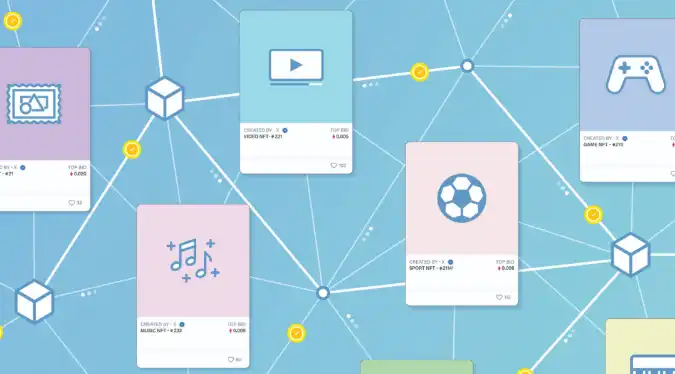
Mass Adoption is a term that is often mentioned in the Web3 industry. In other contexts, it can also be described as the "iPhone moment" or the "last mile" of the industry. However, the core issue is clear: how to enable ordinary people to use Web3?
Ant "gangsters" were the creators of Mass Adoption during the Internet era. In their context, Mass Adoption is closer to building another "Alipay" in Web3.
Of course, it is full of experience. Artela's CTO, Qiu Honglin (nickname: CP), has supported the underlying architecture of Ant Group's digital collection platform, Jingtan. He said that Jingtan has already achieved a daily active user base of billions through the Chinese New Year's "Collecting Five Fortunes" activity. "At that time, we had already achieved stable on-chain transactions in the billions, while Ethereum was only in the millions. In a sense, AntChain has truly achieved Mass Adoption."

CP was once a member of the OG team of Ant Chain. He joined the initial form of Ant Chain in 2015, when it was still an interest incubation group.
"They say that if someone in Ant Group wants to chat about blockchain, by the time they ask the second person, my name will definitely come up." CP has slightly curly hair and speaks with a hint of Cantonese accent. His smile always seems to be hiding something, but upon closer listening, his explanations are very professional and detailed. Ant Chain has the highest number of blockchain patents in the world, and CP alone holds hundreds of blockchain patents.
Regarding Extensibility, CP gives an example: "In addition to player input in the foreground, games also have background tasks, such as map refreshing, time and weather changes, or when a big boss dies, the small monsters next door will also be eliminated together. However, blockchain does not have any background tasks because all executions on the blockchain must be done through user interaction."
In the future, running Fully On-Chain Games on Artela may become "the world keeps turning without you", where players design the rules and the system runs automatically.
For the blockchain industry practitioners, translating Chinese to English without considering the context and industry-specific terms. English words and phrases, as well as capitalized English words and phrases, should not be translated or omitted, for example: ZKS, STARK, SCROLL -> ZKS, STARK, SCROLL. If there are English characters in the a link, do not translate and return directly. When there are only punctuation marks in the content, return the punctuation marks directly. HTML tags in the content should not be translated, such as
, , ,, etc. If there are English characters in the HTML tags, omit the translation and return directly. The content in the a link should be preserved and not translated. All Chinese characters should be translated.
For the blockchain, which is currently having difficulty playing chess games smoothly, there are higher requirements for the computing layer to achieve smooth interaction. "We want to achieve 100 times that of EVM." Thanks to the experience accumulated in AntChain, CP added, "In fact, the current test data shows that we can already approach two orders of magnitude at the computing layer."
But they don't want to replace Ethereum. Projects on the Ethereum blockchain can be easily migrated to Artela. CP "Abstract" summarized Artela's features: "Simply put, if we compare EVM to the CPU of the blockchain, we added a GPU to the blockchain." In simpler terms, we can now play large-scale games on the blockchain.
"The borrowing and spending products of the Internet finance era, such as Jiebei and Huabei, were innovations from scratch. We, as a group of people, have experienced the process of turning a vague concept into a concrete commercial product and understand the complexity behind it." CP believes that walking the same path again in the era of public chains poses many challenges, but fortunately, there is experience to reference.
Before obtaining "consensus", the consortium chain seems to be in an awkward position for a long time. Outsiders are not familiar with it, and insiders do not like it.
During his time at Ant Group, Jerry joined an interest group related to public chains, where CP was also a member. Today, this interest group has once again become the initial incubation soil for the project.
When meeting with "WSJ." this time, CP mentioned his previous identity as a "internet celebrity engineer" and jokingly said, "I'm already out of fashion." CP now wears a Mobius ring on his ring finger, bidding farewell to his past blind date story and moving on to the next stage of his career and life.
Dr. Chen Jidong (nickname: Pi Dong), a member of the Standing Committee of the Big Data Expert Committee of the China Computer Society and an AI expert with nearly 20 years of experience, has also become a "Web3 newcomer". Pi Dong has a more well-known background as the founder of Alipay's facial recognition payment and Ant Financial's anti-fraud system, with a job rank of P10.
Pi Dong was transferred to Ant's blockchain team in 2017, responsible for the commercialization of security technology in the security aspect, and thus came into contact with blockchain. Before coming to Web3, their team had always been independent of Ant's operations, and the team was closer to the entrepreneurial state, so Pi Dong has rich experience in technology, business, and going global.
However, now that the wind is blowing towards AI, Pi Dong chooses to be a rebel.
With great anticipation, Pi Dong went to study CP "Advanced Studies" Web3. After studying for half a year, Pi Dong decided to bring his AI expertise into Web3. In less than a month after its establishment, Trusta Labs won the Gitcoin Open Data Hackathon championship.
With the rise of compliance, this time, the architecture of AntChain has also expanded to include compliance Web3 on top of the industrial Web3, taking a two-pronged approach.
Insiders close to Ant Group have told the WSJ that the company has invited individuals to give a series of Web3 lectures internally, "they don't want to miss this opportunity."
The Web3 industry is still working and won't stop. If comparing helping companies build apps to "building a building", the next step after building the building is "building roads", which means realizing data circulation and achieving incentives in a non-token way.
"We don't believe that Web3 is just about issuing a coin and then exploring business models," explained an Ant Group representative.
"Multi-party incentives are the spirit of the industry Web3, but it doesn't necessarily have to be done in the form of tokens. Why do we have to use tokens for incentives? It's because the circles abroad are a group of strangers. But we do business in the industry in China, and it's impossible for us to not know each other. In the TO B industry, it's originally a network of acquaintances, so it's not necessary to use tokens to achieve rapid asset circulation throughout the industry chain and gain trust from all parties."
For the development of compliant Web3 in Hong Kong and overseas markets, AntChain has taken new actions. At the Bund Summit on September 8th this year, AntChain released a new Web3 product called ZAN. ZAN provides technical solutions for Web3, with a focus on security and compliance-related products. The former CTO of AntChain, Zhang Hui, serves as the CEO of ZAN, and he is currently based overseas.
"We have actually been paying close attention, but just looking for the right timing," said the person in charge of Ant Group. ZAN was not a "spur of the moment" decision.
In fact, it's not just Ant Group. Big companies like Huawei and Tencent have also chosen to "forge ahead" this year.
Huawei Cloud has frequently appeared at various summits in Singapore and Hong Kong, and held the "TechWave Web3.0 Special Day" at Hong Kong Cyberport, where it released a series of blockchain services such as the Web3.0 node engine service NES and the QingTian Enclave confidential computing service.
The "Goose Factory Gang" is even more well-known. Cai Yige, the former head of Tencent's blockchain, left the company at the beginning of this year and founded the Web3 wallet Punk Code. In addition, many employees from business lines such as Huannucleus and Zhixin Chain, which have more contact with blockchain and metaverse, have turned to Web3 entrepreneurship.
Next question is, "Why now?"
"In 2021, there was a lot of money, but the projects were also chaotic. Many well-known people in the industry ended up in ruin." Jerry began to engage with investors in October of last year, when the financing window had not yet closed.
"If we start the project this year, it may be difficult to launch." According to the WSJ, another major company's Web3 project faced significant challenges when seeking funding this year.
"Too early or too late won't work." For those who embrace a long-term investment philosophy and have access to capital, this may be a good opportunity to invest in the bear market.
"In the previous cycle, blockchain was not considered an industry," said Kevin, a co-founder of Artela who studied psychology at Fudan University and worked at Ant Group for over a year before joining the family office of Alibaba's top management to manage investments. Due to personal interest, he participated in activities in the Bitcoin and Ethereum communities as early as 2016."
Kevin gives off the impression of being more like the original image of a cryptographic geek in the industry. He doesn't like to be in the spotlight, but he always manages to have deep connections within the industry. In Web3 jargon, Kevin is very "Crypto Native".
When there was no concept of bear or bull market, the community atmosphere was really different from now. People gathered together to discuss economics and decentralized currency, not like today.
Kevin was completely disillusioned with the industry due to the ICO boom in 2017 and 2018. He described it as a "misalignment of idealism" at the time. He sold most of his coins and turned to entrepreneurship in the AI education field, where he also received funding. However, the education industry was also hit hard, and Kevin went to Columbia University to pursue a master's degree.
Now, he has returned to Web3. "Because I see that the public chain has developed to this stage, if we want to take the next step towards Mass Adoption, what I have done, seen, and experienced in other industries is exactly what they need, and this is my motivation. My personal Builder mentality is still strong, although the market conditions are very poor, but if this matter is meaningful, I will do it."
"The development of things is still a tortuous process. One important thing that this industry has taught me is not to make value judgments," explained Kevin.
Aliens sent a piece of code, and everyone translated it into frog eggs. But what does frog eggs actually represent? I tend to believe that in this industry, the so-called 'build' is really about having a driving force that allows it to develop and grow on its own, and then produce some unexpected results. I think this process must be meaningful.
"It may sound a bit abstract, but to summarize, it means not making value judgments, but always doing things that are beneficial to the industry."
Kevin believes that Web3 will become more mainstream as it is adopted by the public, finding its own place and point of integration, even if it deviates from the idealistic vision at the beginning.
Welcome to join the official BlockBeats community:
Telegram Subscription Group: https://t.me/theblockbeats
Telegram Discussion Group: https://t.me/BlockBeats_App
Official Twitter Account: https://twitter.com/BlockBeatsAsia



 Related Articles