The vanished Tencent blockchain and the "Goose Factory Gang" of Web3.
 The content you provided is:
Original author: Jack, BlockBeats
Web3 has seen the emergence of the "Tencent Gang".
As a leading internet giant, Tencent was one of the earliest companies to lay out its blockchain strategy in China. In 2021, the news that "Axie Infinity's revenue surpasses that of King of Glory" became an emotional turning point within Tencent. Since then, Tencent has actively explored the metaverse and Web3, cultivating a large number of influential projects and teams, including ZKS and STARK.
However, in the past six months, the news of "big players entering the game" in the encryption industry has mostly come from AntChain and Alibaba Cloud. When BlockBeats inquired with Tencent about the situation, it was found that there are basically no Web3-related businesses within the company.
On the other hand, Tencent employees are "group entrepreneurship" in Web3, with close social and collaborative connections between them. The organizational structure and product logic of the project also have obvious style characteristics, and many projects have also begun to take shape in the industry.
Save GameFi
On Saturday, the 19th of last month, Meta Space Cafe in Beijing was particularly lively. A Web3 shooting game called Matr1x Fire held a community offline event here, with more than 100 people gathering together to share their gaming experiences, views on GameFi, and discuss the project's future roadmap. A 5V5 game was also organized on site, and the scene was very active.
In the cold winter of the encryption industry, even in the highly sought-after field like ZK, few teams can organize such a community event on their own, let alone Matr1x Fire, which is a GameFi project from the "outdated track".
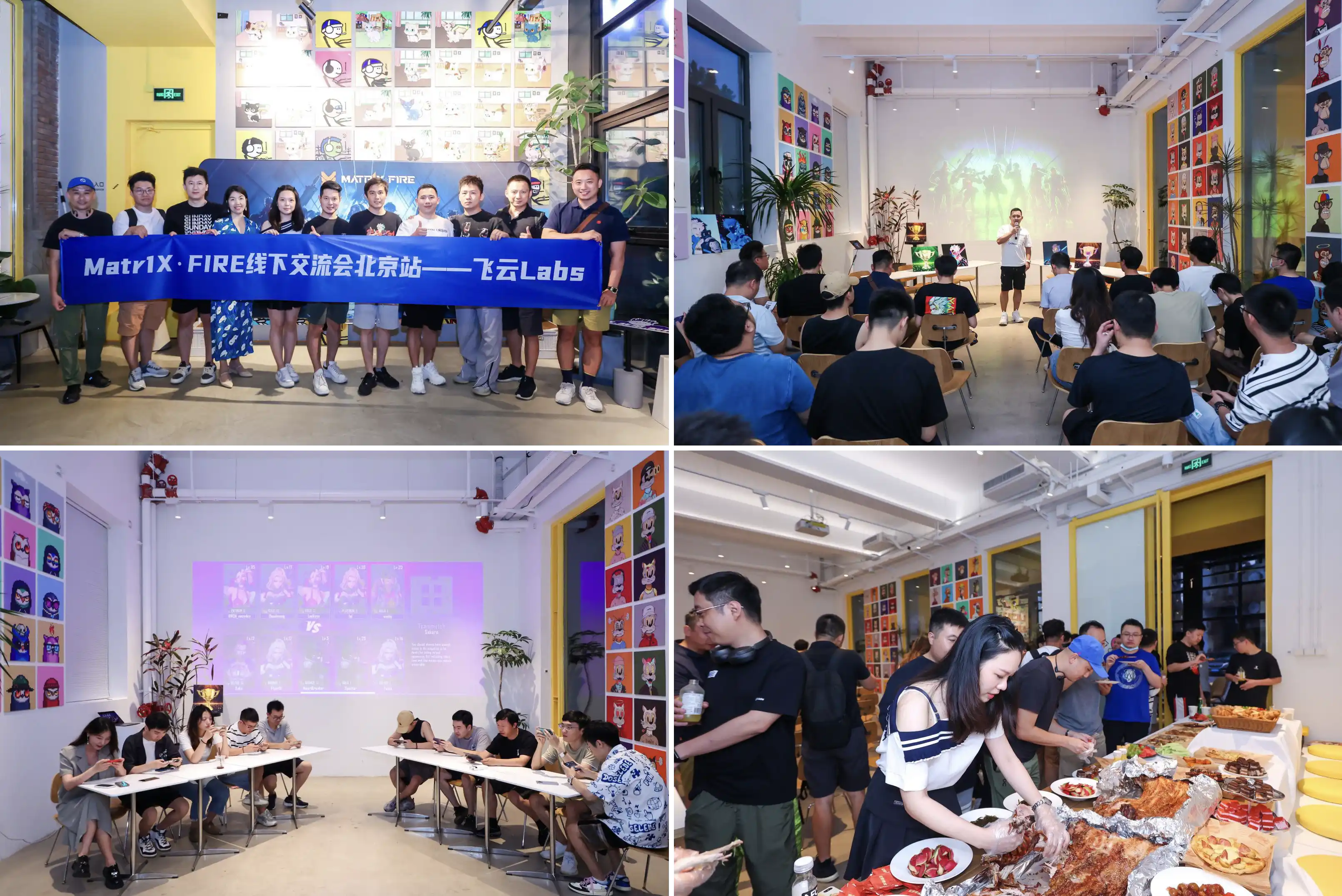
Matr1x Fire event on site
Since StepN fell from grace last April, the sustainable development of GameFi seems to have become an unsolvable problem. Due to the uneven quality of games, lack of player demand, and deficiencies in economic model design, GameFi has left a deep impression of "local dog" and "Ponzi scheme" on most Web3 practitioners.
According to Footprint Analytics data, the market value of the GameFi track has shrunk from $93.7 billion at the beginning of 2022 to $13.3 billion. In terms of the number of GameFi projects, there are currently less than 80 active projects, while the number of inactive projects exceeds 1600, and the gap between the two continues to widen.
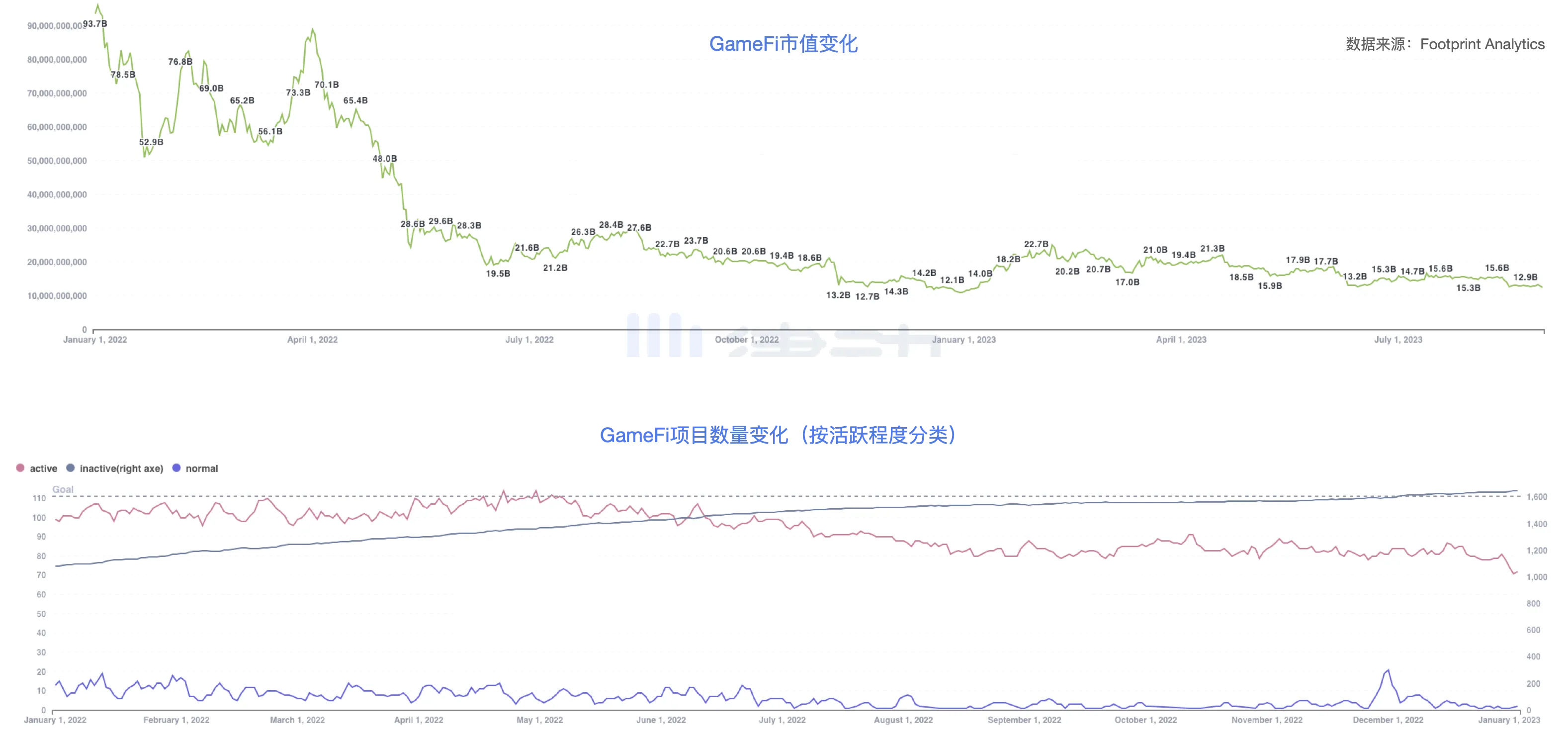
Data source: Footprint Analytics
As the track cools down, investors are beginning to shift their focus to new narratives, and discussions about the full-chain game are becoming increasingly frequent in the crypto VC circle. Automated worlds, on-chain modifications, AI-driven NPCs... Traditional GameFi, relying on NFT transactions and token incentives, is no longer attractive in the new imagination of full-chain games. Project financing is difficult, product roadmaps are progressing slowly, and the era of GameFi seems to be coming to an end.
The emergence of Matr1x Fire seems to have interrupted this seemingly irreversible trend.
This is an FPS mobile game that focuses on PVP multiplayer and PVE casual gameplay. A few weeks ago, all 3000 BattlePass NFTs of this game were sold out in less than 5 hours. In the subsequent open test, Matr1x Fire achieved user data rarely seen in the GameFi field. BlockBeats learned from members of the Matr1x Fire team that the number of registered users on the website exceeded 200,000 on the day of the test, and the game app still maintains tens of thousands of active users.
Matr1x Fire completed a $10 million financing round last September with participation from Korean financial giant Hana Financial Investments, HashKey, and Amber. The team only began alpha testing and promotion work in August of this year. According to team members who spoke to BlockBeats, the team has spent nearly 100 million yuan on game development so far, with a significant amount of time spent on polishing product details during the year and a half of development.
True FPS players or professional players pay great attention to the overall hunting experience of the game. "For example, FPS involves time delay, synchronization of opponent's shooting time, matching of players from different regions, TTK (Time To Kill), shooting feel, and so on. These are all very complex issues. Many Matr1x players have given us feedback that they feel the experience of game recoil and shooting feel is done very well," Hang told BlockBeats.
Related reading: "Matr1x FIRE in-depth experience: a top-notch Web3 FPS game and a potential leader in the Web3 gaming ecosystem."

Matr1x Fire Game Screenshots
Other than Matr1x Fire, there is also a Web3 mahjong game called Mahjong Meta that has recently caught the attention of many people.
On August 3rd, this Ethereum-based game announced that it had completed a $12 million financing round in the GameFi winter. Dragonfly, Folius Ventures, and StepN's parent company Find Satoshi Labs were all on the list of investors. According to the team's data, Mahjong launched its beta test in May of this year and attracted over 15,000 players in the following two months, completing over 490,000 games. Its game NFT achieved a total transaction volume of nearly 500 ETH on Opensea.
After the official launch in early August, the Mahjong team has remained very busy. "There are still quite a few recent milestones, including some detailed features and optimizations that we want to achieve in version 1.0, as well as new apps and various new gameplay modes. We are a product-oriented team, so most of our time is spent on research and development," said Brice, co-founder of Mahjong, to BlockBeats.
Mahjong is different from shooting esports games like Matr1x. It belongs to the category of casual gaming and is more suitable for long-term users. "For example, a player who starts playing cards at the age of 25 is likely to continue playing until the age of 60 or even 70. Combined with some esports mechanisms, it is very suitable for long-term operation, improving the overall game experience through new seasons."
The team has completed the CV recording with well-known Japanese voice actors such as Naozumi Takahashi. They have also invited many artists from home and abroad to create and select scenes and BGM for the game. During the beta testing phase, many Japanese players have asked the team about the names of the background music and the composers. "It is these details that many players are very sensitive to, so many fragmented things are personally handled by me. We hope that the game presented to the players is a complete and self-consistent narrative loop in all aspects."
Against the backdrop of the booming full-chain gaming and the declining popularity of GameFi narrative, Mahjong and Matr1x Fire have rekindled the industry's attention and reflection on Web3 games. In addition to a profound understanding of game development, strict control of product details, and mature consideration of track selection, these two projects also share an important commonality - they are both created by former Tencent employees.
In September 2021, a series of articles about "Axie Infinity surpassing King of Glory in revenue" began circulating online. According to official game data released that month, Axie Infinity has over 2 million daily active players, and in the past month, the transaction amount has exceeded $334 million, surpassing King of Glory's $231 million. Although the project party's actual revenue from the 4.25% transaction fee is far less than $334 million, the phrase "surpassing King of Glory in revenue" is enough to attract attention from within Tencent.
"We, as practitioners in the encryption industry, have been exposed to Web3 for a long time. However, we were still very surprised when we found out that Axie Infinity's revenue exceeded that of King of Glory. Therefore, many people within Tencent have started paying attention to this direction." Before founding Mahjong, Brice worked for many years in Tencent's gaming investment department, leveraging Tencent's comprehensive investment tools and resources in the upstream and downstream of the gaming industry. He volunteered to lead the team's exploration in the Web3 gaming field.
Within a few months, Brice had talked to hundreds of GameFi teams and investors. "But within Tencent, you are more of an observer to discover and support other people's dreams, which is completely different from the experience of focusing on making a product yourself," so in the fall of 2022, Brice decided to take the initiative to "leave the factory" and start a Web3 business with his partners.
Unlike Brice, Hang comes from Tencent Financial Technology, which is the business line within Tencent that first got involved in the blockchain and cryptocurrency field. The Tencent Blockchain team under it is the core engine driving the exploration of blockchain technology within the company, incubating and launching many well-known projects such as WeChain and ZhiXin Chain. However, not long ago, its leader also left Tencent and joined the Web3 startup.
Disappeared Tencent Blockchain
In May of this year, Cai Yige, the head of Tencent's blockchain division, gave an interview to 36Kr reporters, revealing for the first time the reason for his departure from Tencent to start a Web3 venture.
Cai Yige is a true "Tencent veteran". After graduating from university, he joined Tencent and, in his own words, spent the most precious ten years of his life growing with Tencent. Since joining Tencent's financial technology business unit in 2017, Cai Yige has been the general manager of Tencent's blockchain business, responsible for exploring the commercial applications of blockchain technology.
When it comes to why to start a Web3 business, Cai Yige said that he and his partners have been exploring Web3 entrepreneurial opportunities for almost a year. After seeing the Web3 industry policies in Hong Kong being introduced one after another, they firmly decided to leave Tencent. "Seize the opportunity while we still have ideas and motivation, otherwise we may regret not doing it in the future."
After the interview article was published, Tencent employees forwarded it one after another and wrote in their circle of friends: "Go, Big Brother."

"Pony Cai" is a key figure in Tencent's blockchain industry. Under his leadership, the team has successively incubated the blockchain supply chain financial platform Weiquan Chain and the Zhixin Chain, which is applied in the judicial evidence preservation scenario. The latter provided underlying technical support for multiple digital collection platforms such as Huanhe from 2021 to 2022. When Tencent's blockchain business first entered the public eye, Cai Yige also often acted as the team's "official spokesperson".
In February of this year, Tencent announced that it had been selected for the fourth consecutive year in the Forbes Blockchain 50 list. However, the representative of Tencent's blockchain business on the list is not the "top dog", but rather Tencent Cloud's blockchain leader, Li Li.
Actually, since Forbes launched the Global Blockchain 50 list in 2020, Cai Yige's name has never appeared on it. In 2020, Hu Mingli, the current Vice President of Tencent Cloud, was listed as the "head of the blockchain team", representing TrustSQL, a project developed by Tencent's blockchain research and development team. In 2021, Li Li, the head of Tencent Cloud's blockchain, and Zheng Hao, the Vice President of Tencent Financial Technology, were both selected, representing FISCO BCOS (Golden Chain Alliance), launched by WeBank. From 2022 to 2023, Li Li was selected again, and Chang'an Chain, incubated by Tencent Cloud's blockchain, was also included as a representative project on the list in 2022.
Over the past four years, the technology developed and incubated by Tencent's blockchain team has only appeared on the list once, while Tencent's most well-known blockchain project, TrustSQL, has never been selected.
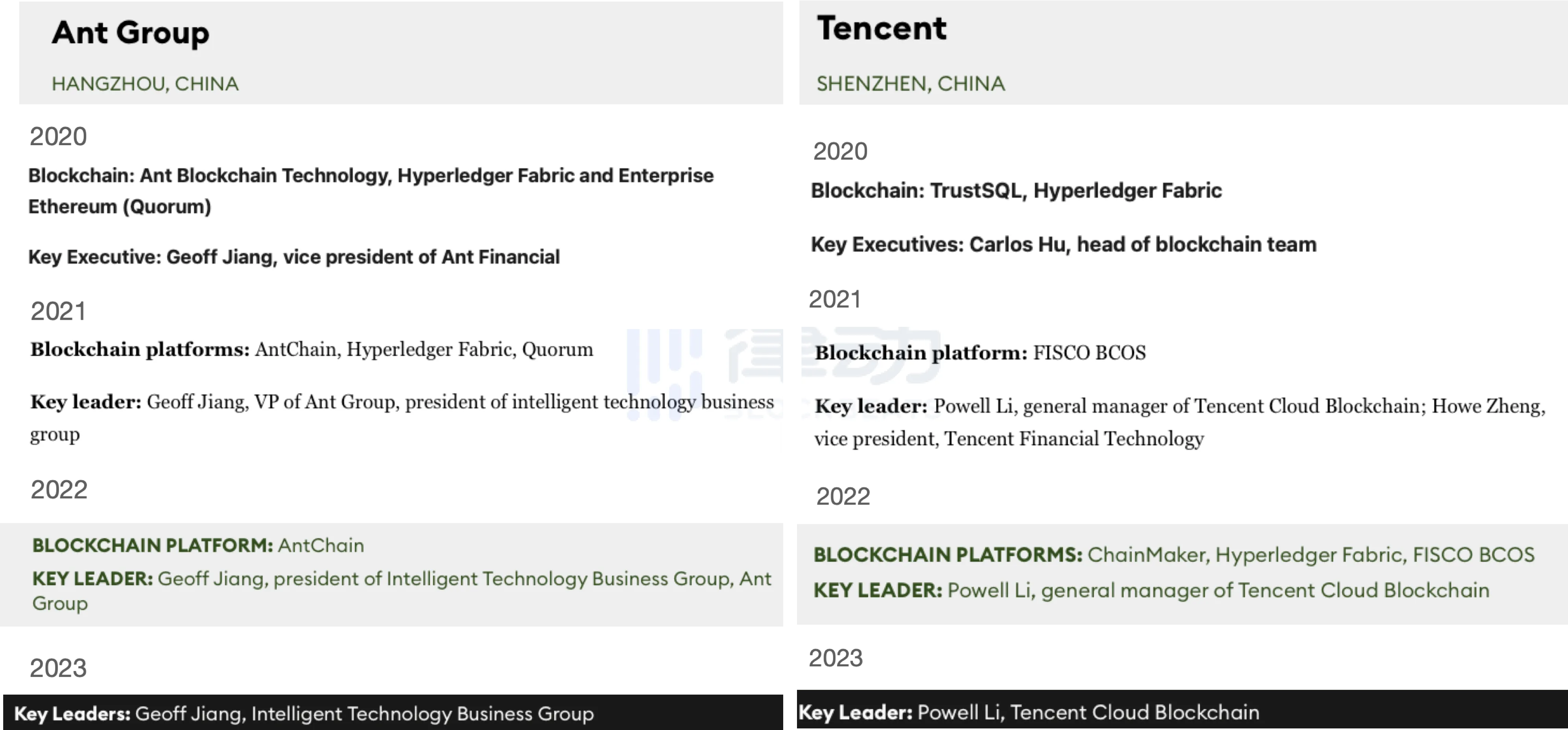
2020 to 2023 Forbes Global Top 50 Blockchain Companies (Tencent vs. Alibaba)
全面落后阿里系
translates to
Completely falling behind the Alibaba ecosystem
in English.
Compared to Tencent, the Alibaba blockchain is much more stable in terms of organizational structure and business. For the past four years, the list has always included Ant Chain and its leader, Jiang Guofei.
Many people who understand the Ant Chain business have told BlockBeats that Alibaba's blockchain business is driven from top to bottom. In 2015, Ant Financial established a blockchain interest group and researched and verified the feasibility of blockchain in various application scenarios during an internal hackathon. That same year, the newly established Alipay publicly stated that it has been focusing on technologies such as blockchain to solve trust issues. Subsequently, the group decided to find a person in charge to formally launch the blockchain business.
Initially, Ant Group brought in Xu Yiji, co-founder of Xiaoyi Chain (later founder of Nebulas). Xu Yiji was a former Google engineer and a passionate "public chain enthusiast". After joining Alibaba and Alipay, he began to promote his public chain idealism and pushed the entire Alibaba blockchain business towards the direction of public chain. He even once boasted about using blockchain to replace Alipay.
However, after China's policy tightened in 2017, Alibaba no longer recognized Xu Yiji's business ideas and replaced him with Jiang Guofei as the person in charge of the blockchain business.
Jiang Guofei is also a technical expert who has developed numerous products and solutions in the fields of IoT, big data analysis, and artificial intelligence, and has won multiple industrial innovation awards. Due to the similarity in pronunciation with his English name (Geoff), he is often referred to as "brother-in-law" by his colleagues in the company. However, like Cai Yige, Jiang Guofei is also the top expert in Alibaba's blockchain industry.
In February 2017, Jiang Guofei joined Ant Financial as Vice President and President of the Financial Technology Business Unit, in charge of Ant Blockchain. According to insiders, after Jiang Guofei joined Ant Financial, there were more than 500 people within the Alibaba ecosystem working on blockchain-related businesses. In September 2019, Jiang Guofei became the President of Ant Intelligent Technology Business Group and the core person in charge of Ant Blockchain platform.
At the end of 2019, Ant Group announced its IPO plan. In December, Ant Group declared its three major strategies of globalization, domestic demand, and technology, and began to accelerate its transformation into a technology company by "de-financializing". Shortly thereafter, Jiang Guofei led a team to launch the blockchain technology platform Trusple, stating that "blockchain technology enables Trusple to better meet the needs of international trade trust."
In June of the following year, Ant Financial officially changed its name to Ant Group Co., Ltd. In July, Ant Group upgraded its Ant Blockchain brand to "AntChain" and disclosed for the first time its daily active users exceeding 100 million. In September, under the guidance of the Shanghai Municipal Government, the first Global Financial Technology Conference hosted by Alipay and Ant Group was held on the Bund, where Ant Group fully demonstrated the technology of AntChain, announced the launch of an open alliance chain for small and medium-sized enterprises, and released a hardware and software integrated machine for on-chain use.
In June 2021, AntChain held its first developer conference, where Jiang Guofei elaborated on AntChain's development philosophy. In January 2022, Jiang Guofei was appointed as the President of Ant Group's Digital Technology Business Group and the head of Ant Group's technology business sector. Since joining Ant Blockchain in 2017, the Ali blockchain under Jiang Guofei's leadership has consistently held the world's first position in blockchain patents. Today, when you visit the AntChain OpenLab website, you will see solutions for smart contract security, multi-party computation, ZKP, FHE, and other cutting-edge technologies in the encryption industry, all of which are being researched by AntChain.
Compared with others, Tencent's blockchain business has shown a clear and rapid downward trend. Since 2015, China has been the global engine of blockchain patents, with major contributors including Alibaba, Baidu, Tencent and other internet giants. In terms of quantity, the number of global blockchain patent applications reached its peak in 2019 and then rapidly declined in the following two years. In the competition for patent applications, Tencent is the only major player in China that can compete with the Alibaba system, but since 2021, Tencent has started to collapse across the board, with the number of patent applications dropping from 1,006 in the previous year to 427, while the number of patent applications from the Alibaba system has remained basically unchanged.
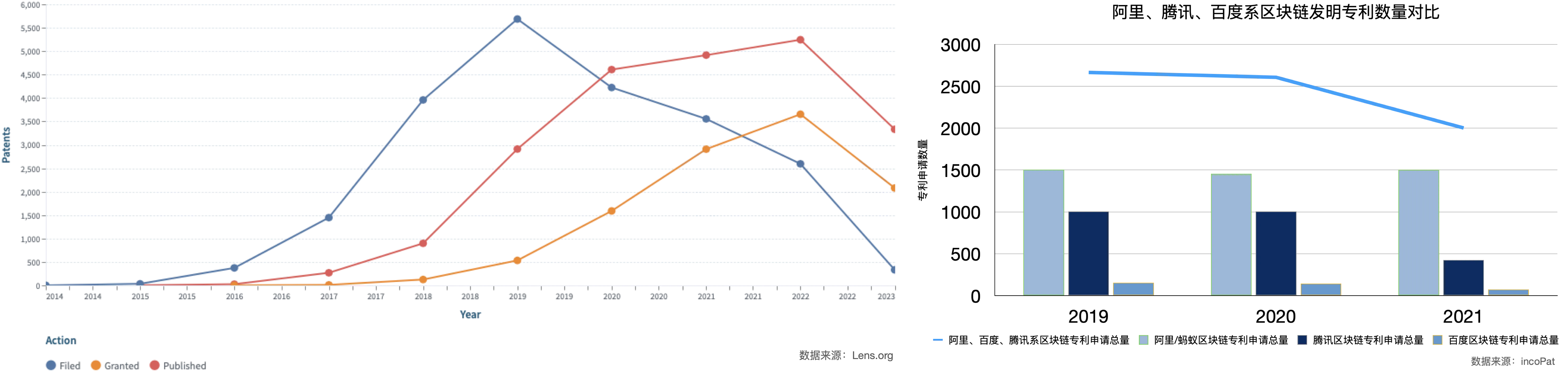
The left chart shows the global trend of blockchain patent applications, while the right chart shows the trend of blockchain patent applications by Alibaba, Tencent, and Baidu.
Regarding organizational structure, the Alibaba Group has demonstrated a clearer division of labor in its blockchain business. The blockchain business of the Alibaba Group is mainly undertaken by two entities, AntChain and Alibaba Cloud. AntChain provides research and development of underlying technology, while Alibaba Cloud provides enterprise services through its BaaS (Blockchain as a Service) platform. Among them, AntChain is the main executor of the Alibaba Group's blockchain strategy, and the vast majority of blockchain applications within the Alibaba Group are based on AntChain.
The organizational structure of Tencent's blockchain business appears to be chaotic. First, there is the Golden Chain Alliance led by WeBank, followed by Tencent Blockchain and Tencent Cloud Blockchain. Each business line has its own research and development in both underlying technology and top-level applications, fully demonstrating Tencent's "horse racing mechanism". Since 2022, Tencent's blockchain business has made almost no significant progress. Interestingly, in June of this year, the first national standard for blockchain technology was released, and both Tencent Blockchain and Tencent Cloud Blockchain published articles on their official accounts, stating that they participated in the drafting of the national standard.
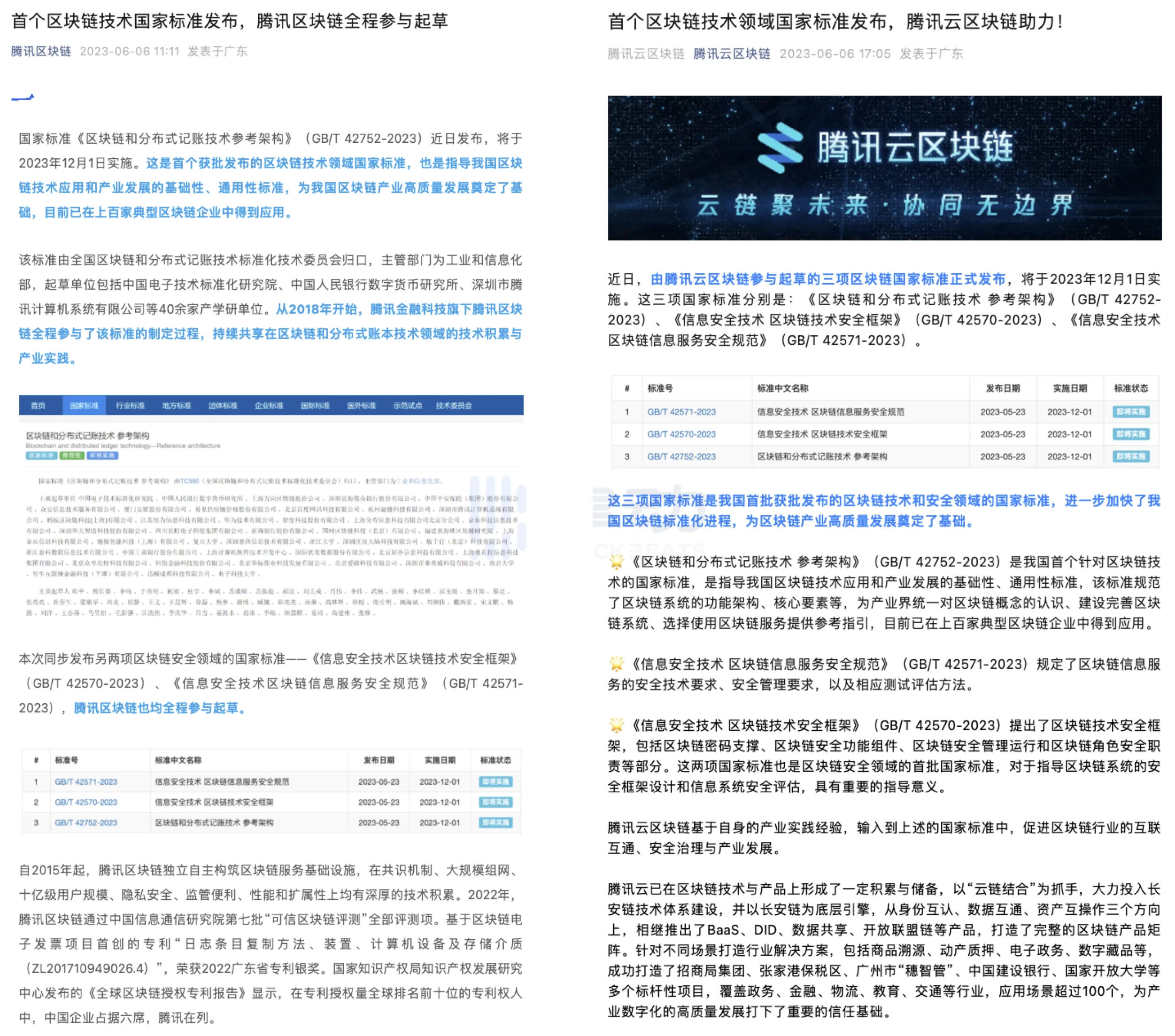
Tencent Blockchain and Tencent Cloud Blockchain public account articles
Between 2015 and 2022, Tencent and Alibaba have had a very obvious competitive relationship in the research and development and business promotion of blockchain technology. Insiders told BlockBeats that Tencent had once conducted in-depth research on Alibaba's approach in the blockchain field, and even had precise grasp of its annual pricing, KPI completion quantity, and the planning and situation of each business department.
However, after that, Tencent Blockchain suddenly collapsed in the competition and disappeared from the domestic blockchain landscape.
Tencent's Rise and Fall in the Blockchain Industry
From the launch time of Tencent's blockchain white paper, underlying technology platform TrustSQL, and Tencent Cloud's blockchain TBaaS business, Tencent's blockchain business was on par with or even ahead of Alibaba's in the early competition.
Tencent also began to lay out the blockchain industry in 2015. At that time, an important strategic goal of Tencent's business was to use Tenpay (now Tencent Financial Technology) behind WeChat Pay to attack Alipay and Alibaba's financial business. In terms of extension business, WeBank, invested by Tencent, was the first to undertake the task of exploring blockchain finance.
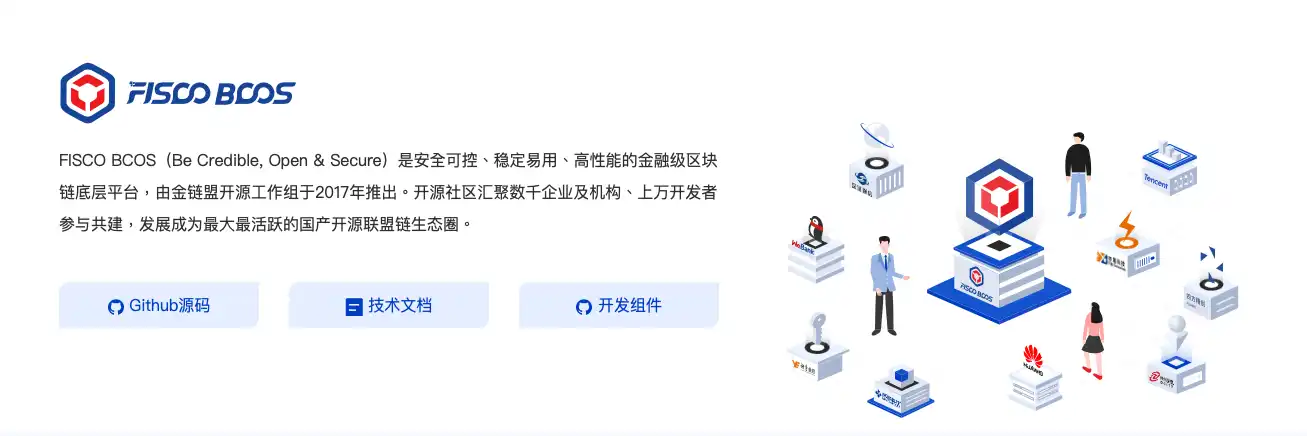
In May 2016, WeBank and Tencent Enterprise jointly initiated the Golden Chain Alliance (Shenzhen Financial Blockchain Development Promotion Association), and began independent research and development of blockchain underlying technology. In June, they released the first financial alliance chain cloud service BaaS. In 2017, WeBank, together with Wanxiang Blockchain and Matrix Element, launched the financial-grade blockchain underlying platform FISCO BCOS, which has been applied in government affairs, finance, supply chain and other fields. Insiders told BlockBeats that many of the technical members in WeBank came from Tencent, but there were also a large number of members from Ping An. There have been some internal turbulence, and many people have left at different times.
However, WeBank is ultimately an extension of Tencent's investment business. Within the Tencent ecosystem, it was the financial technology business unit's team that first explored the blockchain field.
Tencent Financial Technology (referred to as Tencent FiT) belongs to the Corporate Development Group (CDG) and serves as the middle and back-end for financial products such as WeChat Pay and QQ Wallet. Around 2016, some experts in Silicon Valley sent Tencent FiT a lot of research on the blockchain field. At the time, Tencent was internally exploring related technologies such as Bitcoin. As a result, the team responsible for the backend of WeChat Red Envelopes began leading the research and building the Tencent blockchain system.
In January 2017, Tencent launched Weihuangjin, the first application scenario based on Tencent's blockchain technology. In April of the same year, Tencent FiT and Tencent Research Institute jointly released the "Tencent Blockchain Solution White Paper", becoming the first enterprise in China to release a blockchain white paper. The white paper revealed Tencent's self-developed underlying platform TrustSQL for blockchain. At this time, it was still two years before Ant Group launched its blockchain technology platform Trusple.
Also in 2017, Tencent Cloud, which was then under the Social Network Group (SNG), began to explore blockchain business. An insider told BlockBeats that the Tencent Financial Cloud team was often asked by banks or financial institutions if there was a BaaS service for blockchain, so they turned to Tencent Blockchain to learn about the relevant technology. However, the team later decided to develop their own blockchain cloud service technology, which led to the birth of Tencent Cloud Blockchain. In December of the same year, Tencent launched the TBaaS blockchain infrastructure platform and began to explore blockchain solutions for various industries.
In March 2018, Ma Huateng mentioned blockchain for the first time at the National People's Congress, stating that Tencent is laying out electronic bill business and will make blockchain invoices a key focus. In August, Tencent Blockchain and the Shenzhen Taxation Bureau of the State Administration of Taxation jointly launched the Tax Chain and issued the first blockchain electronic invoice in China, which was regarded as an important milestone event in the blockchain industry by many insiders.
On September 30, 2018, Tencent underwent the 9.30 transformation and established the Content Business Group (PCG) and the Cloud and Smart Industries Group (CSIG), raising Tencent Cloud's strategic position for To B business to a higher level. In October, the Trusted Blockchain Summit hosted by the China Academy of Information and Communications Technology was held in Beijing. At the summit, more than 20 companies that passed the first round of functional and performance testing were selected and announced, including Tencent Technology Limited and Tencent Cloud Computing Co., Ltd. from the Tencent group.
In April 2019, the blockchain game "Let's Hunt Monsters" spanning the three major business groups of IEG, TEG, and CSIG officially began its open beta test without deleting files. On the same day, more than 12 million users registered, and the game topped the free list of the App Store within hours of its release. However, the market response to the game was not as expected in the following period.
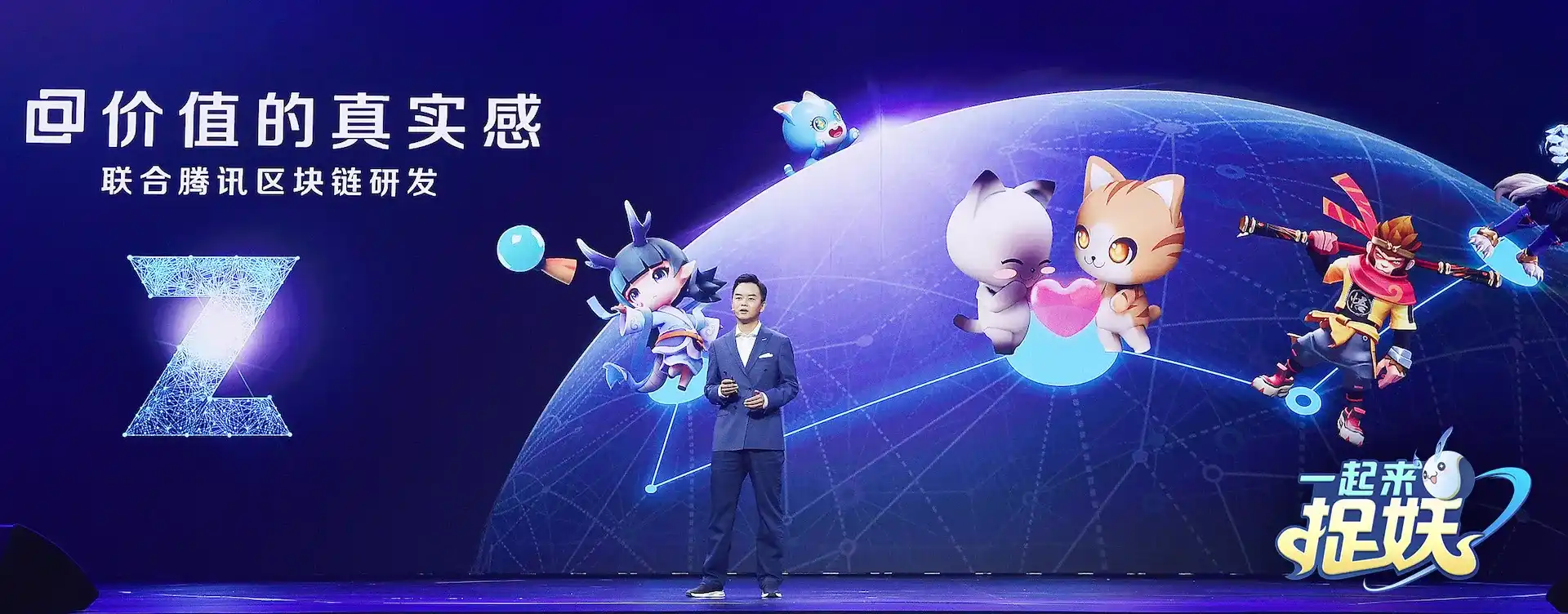
"Let's Catch Monsters" Release Event
In August 2019, Tencent officially launched the certification service platform ZhiXin Chain. ZhiXin Chain was first initiated by Tencent's Smart Legal team to solve judicial certification issues. At the beginning of its incubation, ZhiXin Chain aimed to upgrade technology in the copyright protection scene, and later expanded to the financial certification scene. It has successively accessed several domestic Internet court evidence certification platforms. At the same time, AntChain undertook the judicial chain of the internal network file circulation of the Supreme People's Court, Guangzhou Internet began the "Netcom Law Chain", and Beijing Internet Court comprehensively blossomed in the judicial chain and judicial certification scenes.
In January 2021, Tencent Cloud, Beijing Microchip Research Institute, China Construction Bank, and the Digital Currency Research Institute of the People's Bank of China jointly established the Chang'an Chain Ecological Alliance. As a result, the underlying technology of ZKSwap upgraded from Tencent Cloud Blockchain to Chang'an Chain.
In August, under the wave of the metaverse, PCG incubated the digital collection platform "Huanhe" internally, which quickly ignited the domestic digital collection market upon its launch. At the same time, Tencent Cloud revealed that ZXC has supported the landing of more than ten digital collection platform projects, including QQ Music, Kugou, Yuewen Group, and Xiaohongshu.
At the end of the year, Zhang Xiaolong, the CEO of WXG, gave a speech at the Tencent employee conference, stating that "Web3 may be a false carnival, but the disappointment left by Chinese Web2 is real." Three months after the statement was made, Tencent's investment arm participated in the $200 million financing of NFT gaming company Immutable, completing its "first investment in Web3."
Tencent's blockchain business reached its peak. However, soon this momentum began to decline and fell directly to the bottom.
In May 2022, Wang Shimu, the former general manager of Tencent News, was suddenly transferred to the PCG social platform and application business unit to be responsible for innovative businesses such as Huancore. In August, Huancore announced the suspension of digital collectible issuance and reminded users to initiate refund applications. Wang Shimu resigned in September. In March of the following year, Huancore officially announced its shutdown.
The shutdown of Huancore is not only a landmark event marking the end of the domestic digital collection boom, but also a crucial turning point for Tencent's blockchain business from prosperity to decline.
Since August 2022, Tencent's internal blockchain-related business has basically come to a standstill. Tencent's official blockchain account has almost stopped updating content, and Tencent Cloud's blockchain official only has news updates related to Chang'an Chain business. ZhiXin Chain, which was in the limelight before the new year, has been shelved. When BlockBeats asked ZhiXin Chain about the current ongoing business, the reply was only four simple words - electronic invoice.
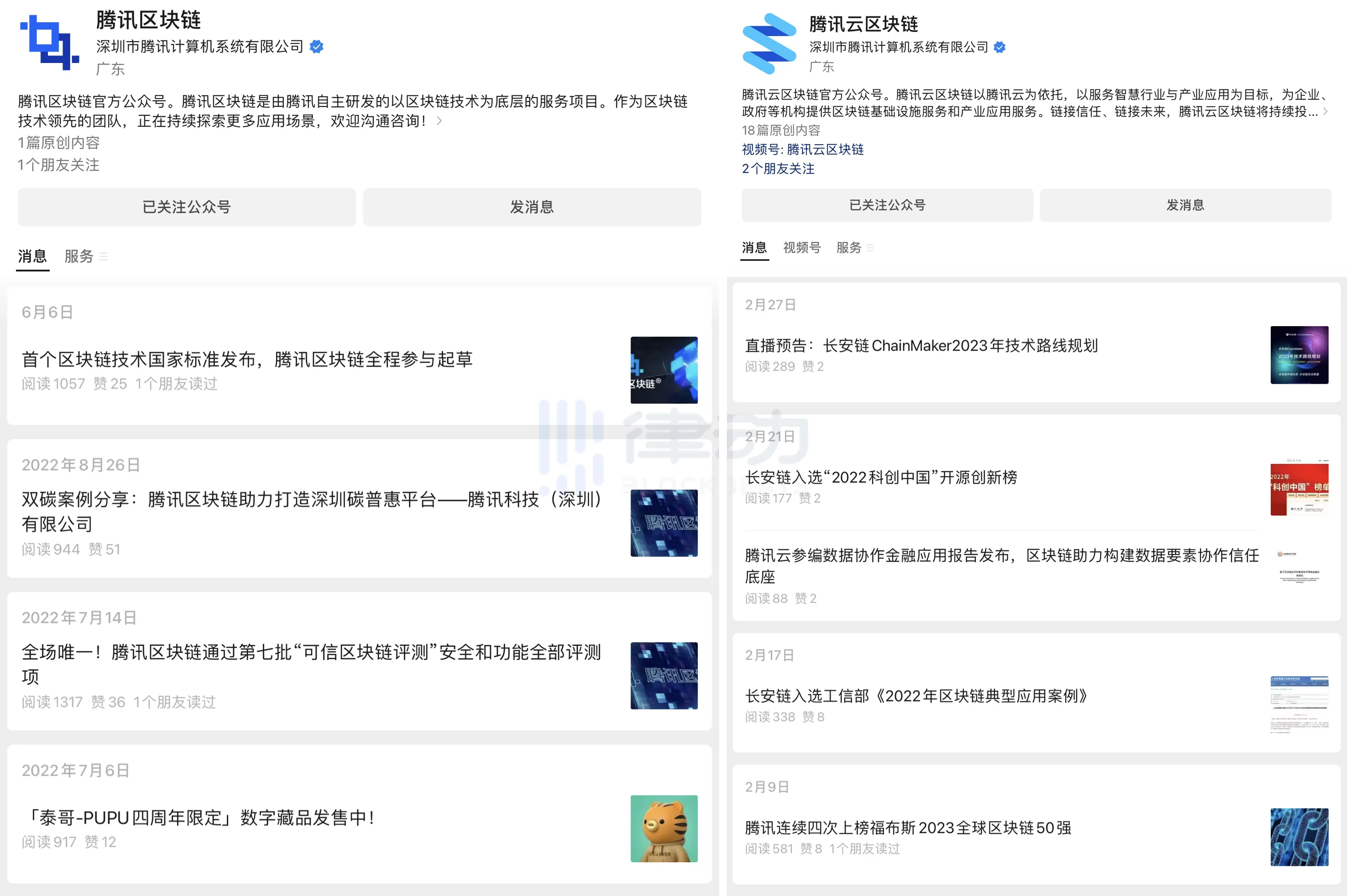
After the shutdown of Huancore, Tencent Blockchain and Tencent Cloud Blockchain public accounts have updated their content.
Tencent Talks about Dreams
Whether in the blockchain industry, the metaverse, or the Web3 field, there is a strong interest and active exploration within the Tencent system, including managers at the senior level. In both the cryptocurrency booms of 2017 and 2021, Tencent's blockchain business achieved rapid growth. In 2022, after reviewing Tencent's investments in related fields, TF Securities stated that Tencent has the "most comprehensive metaverse layout".
However, Tencent's exploration in the blockchain and Web3 fields was not driven from top to bottom. The organizational structure was too chaotic and loose, lacking a real strategic backbone. Under the dual pressure of cost reduction and top-level decision-making, Tencent's blockchain business was eventually cut off. Today, in the new Web3 and virtual asset field, Tencent has completely retreated and lost its ability to compete with the Alibaba Group.
Rabbit Hole Adventure
Matr1x Fire founding member Hang first encountered Bitcoin during the cryptocurrency bull market from 2016 to 2017. During that time, he spent countless nights reading whitepapers on Bitcoin and other blockchain projects, often studying until three or four in the morning. "At that time, there was no concept of 'Web3', but once you enter this rabbit hole, you can never get out," he said. At the time, there were also many ideas about blockchain within Tencent, especially within the financial technology business line where Hang worked, which were often directly from its leaders.
Other than WeBank, Tencent is also exploring blockchain and virtual assets in Hong Kong, China, with a small player called Fusion Bank. The President of Fusion Bank is Lai Zhiming, who also holds a more well-known title as the former Vice President of Tencent.
The official evaluation of Lai Zhiming by Tencent is: Lai Zhiming has made significant strategic contributions to Tencent's creation of payment infrastructure and financial open ecology... He has laid a solid foundation for mobile payment overtaking and seizing the industry high ground, and successfully established a financial ecosystem covering multiple fields such as finance, securities, banking, blockchain, etc. with payment as the entry point.
Lai Zhiming is a Hong Konger who graduated from MIT in 1995 and returned to mainland China. He joined Tencent in 2009. In September 2012, Lai Zhiming became the general manager of Tenpay. Three years later, Tenpay was upgraded to Tencent's financial technology business unit, and Lai Zhiming became the head. During his tenure, he showed a particularly strong interest in blockchain.
In January 2019, Lai Zhiming proposed as a member of the Guangdong Provincial Political Consultative Conference to further promote the pilot application of blockchain electronic invoices in Guangdong Province. In October 2020, Lai Zhiming appeared as a participating author with Xiao Feng, Executive Director of Wanxiang Holdings, in the book "Blockchain and Asset Securitization" published by the former head of the Science and Technology Regulatory Bureau of the China Securities Regulatory Commission, Yao Qian. According to insiders who spoke to BlockBeats, around 2016, Cai Yige was starting a fintech business, and it was Lai Zhiming who invited him back to Tencent to serve as the head of Tencent's blockchain division.
In 2019, Ethereum founder Vitalik visited Tencent. At that time, the cryptocurrency market was chaotic, and Cai Yige did not want his team to touch these gray areas, but instead focused on thinking about the scenario value of blockchain technology. After communicating with Vitalik, Cai Yige felt that Ethereum's narrative as "a world machine that provides trust" was an interesting and exciting direction.

Vitalik and Cai Yige
In June 2019, Lai Zhiming stepped down as the head of Tencent FiT and became the chairman of Tencent Virtual Bank (Infinium Limited), a subsidiary of Tencent. In November, Cai Yige officially became the general manager of blockchain at Tencent Virtual Bank, participating in the preparation of Furu Bank and exploring blockchain finance and digital assets.
Regarding the specific business he explored at Furuong Bank, Cai Yige said, "Hong Kong has very strict requirements, and the launch of new businesses takes a long time." Internal sources told BlockBeats that Furuong Bank proposed many concepts in the early stages, but most of them did not really materialize. For example, Furuong Bank once considered issuing its own STO tokens and digital gold. During the 2020 Tokyo Olympics, the team also attempted to do blockchain cross-border remittance settlements with Japanese banks. However, these businesses were all halted due to Hong Kong's regulatory policies and other reasons.
In 2022, the financial data shows that eight banks in Hong Kong collectively lost over HKD 3.7 billion, with Furuong Bank losing over HKD 533 million. In June, Tencent announced that Lai Zhiming would no longer serve as the company's vice president and would instead serve as the chairman of Furuong Bank. The "behind-the-scenes mastermind" of Tencent's blockchain business was officially exiled. The following year, Cai Yige also left Tencent.
Within Tencent, there is a growing enthusiasm for exploring the Metaverse and Web3.
In April 2021, Tencent announced a new round of organizational restructuring to save QQ. Yao Xiaoguang, the president of TiMi Studios and vice president of Tencent, took over as the head of PCG social platform business, replacing Liang Zhu.
During his time at IEG (Interactive Entertainment Group), Yao Xiaoguang's planned game "King of Glory" became Tencent's "cash cow". After taking on the role of social platform business leader, Yao Xiaoguang immediately began a series of business explorations combining "social + gaming". In August 2021, PCG launched a game social product called NokNok, which is positioned to compete with Discord. In September, TiMi Studio announced a recruitment poster to form the ZPLAN project, with a team size of over a thousand people. Several months later, the Super QQ Show was launched, which many people see as Tencent's determination to explore the metaverse project.
Same as QQ elements, in November 2021, Tencent issued a 23rd anniversary commemorative NFT for its employees.
This series of NFTs is produced by the Fantom team incubated by PCG, based on the IP derivation of QQ penguin image, with a total of 72,000 pieces and 58 elements included, divided into three levels of high-quality, rare, and epic according to the probability of appearance. There are also 1,000 special egg-shaped NFTs. After the release of the NFT series, it quickly sparked a "trading frenzy" within the company, and some even built a rudimentary "trading market" using spreadsheet software. The popular "Chang'e Goose" hidden edition once sold for a high price of 50,000 yuan, and "buying and selling penguins" became a new social trend within Tencent.
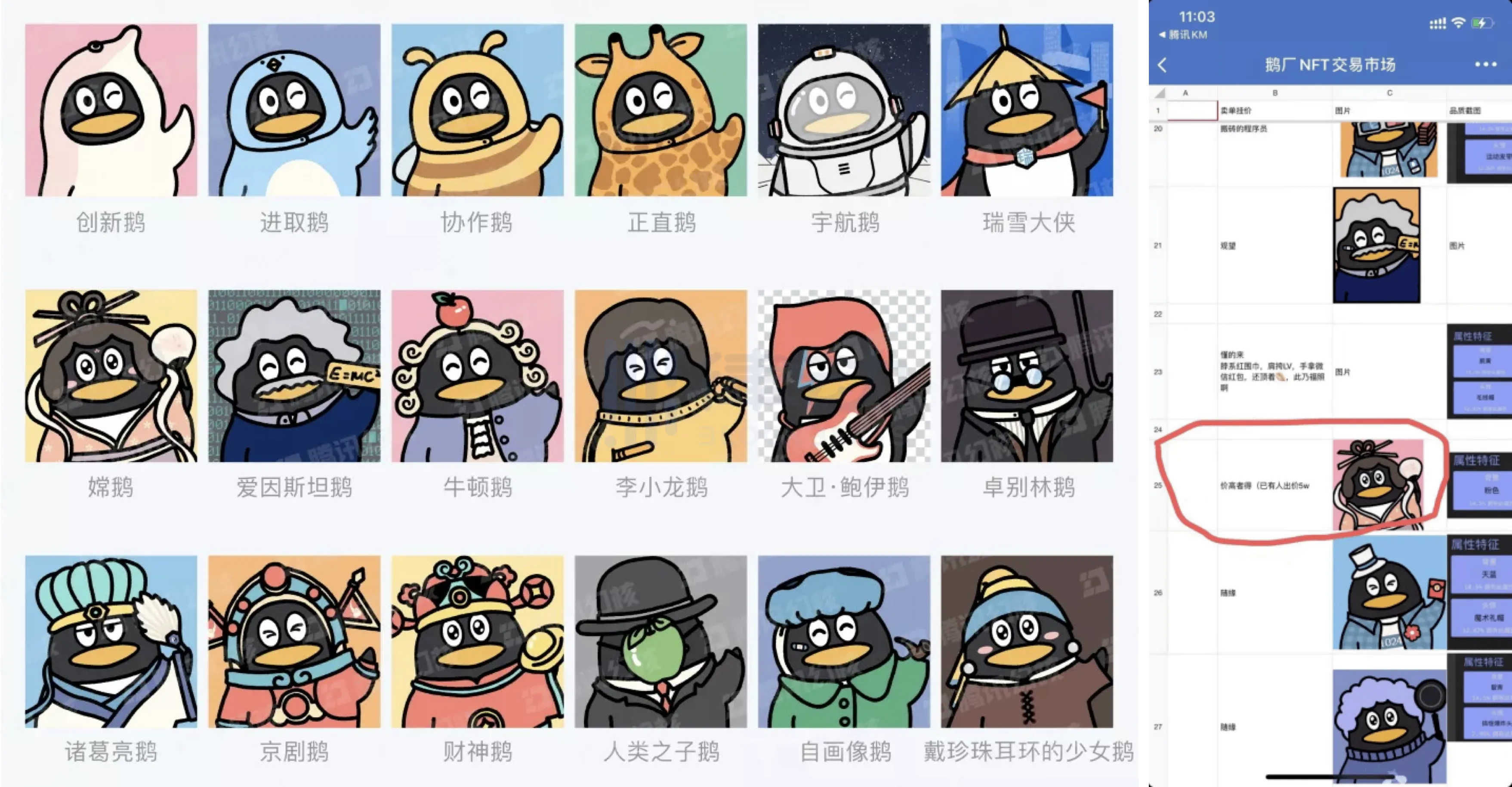
QQ Penguin NFT, and its "trading market"
"During that time, the atmosphere within Tencent was particularly good, with its own 'exchange U group' to facilitate trading. Because they were all colleagues and could see each other's real names on the enterprise WeChat, everyone felt very at ease." A former Tencent employee told BlockBeats that the internal WeChat group for deposits and withdrawals was established after a Tencent ZhiXin Chain conference.
In the first half of 2021, the popularity of NFTs has reached an unprecedented level, and there are many people within the company who want to understand, learn, and participate in this trend. ZhiXin Chain happens to be the earliest team within Tencent to focus on and research this field. Taking this opportunity, ZhiXin Chain's leader, Wang Leqing, organized a conference within Tencent with the aim of promoting the on-chain assets of Tencent's internal business. According to Tencent employees' recollections, this conference was particularly lively. "Normally, a public event held within Tencent would not have a particularly high participation rate, and having several dozen people would already be impressive. But at that conference, there were nearly 500 participants, and after the conference, Discord and WeChat groups were created to discuss these topics."
After the ZhiXin Chain conference, many teams within Tencent, such as QQ Music and Yuewen Group, began to establish business relationships with ZhiXin Chain, including the Phantom Core team of PCG.
The department where the Phantom Core team is located is an innovative product incubator under PCG, and Xiao'e Pinpin was incubated here. At that time, the team also developed a domestic alternative to Discord, but after the QQ business line launched the Nao Nao community, they began to shift their focus to exploring the Web3 and Metaverse fields.
Former members of the Qianhuan team told BlockBeats that the main considerations for the establishment of Qianhuan were two-fold: firstly, there are a large number of IPs within PCG that do not have good commercialization methods, and secondly, NFTs can serve as an economic system that connects with the metaverse, linking Tencent's gaming and entertainment content businesses in the future.
At that time, QQ Music had already been cooperating with ZhiXin Chain for some time. However, the incubation speed of Huanhe was very fast, and it was launched more than a month after the project was established. With the concept of "Tencent's first NFT platform", Huanhe became popular overnight, and many of the team's subsequent actions had a significant impact on domestic products of the same type, such as Jingtan and iBox.
Initially, the benchmark for Huanhe was the overseas NFT trading platform OpenSea, but later it was changed to platforms like Nifty Gateway that attempt to 3D-ize. Interestingly, the concept of "digital collectibles" was also first proposed by Huanhe. Prior to this, some domestic platforms used "non-fungible tokens", which was originally a temporary transitional concept. After we finished our work, all competitors changed to this name and never changed it again.
In addition to NFT, the department where Phantom was located also worked on many other projects in the Web3 field. "We also tried GameFi. The product was already completed, but it was not launched in the end because Tencent has high requirements for compliance. If you want to launch overseas, you need to isolate from the company," former Phantom members told BlockBeats.
The Phantom Core once planned to release an overseas version, but due to unfavorable timing and trading volume, it ultimately did not go online. "Tencent values a project's ability to self-generate revenue, not just in terms of user growth, but also whether the project can sustain itself. It may not have been a concern in the past, but revenue has become the most critical measure in the past two years."
Cost Reduction and Efficiency Improvement
At the 2021 year-end Tencent employee conference, Ma Huateng mentioned "wintering" for the first time. He emphasized that Tencent now needs to strengthen internal collaboration and reduce costs while increasing efficiency.
In March of the following year, Tencent released its 2021 annual financial report, with a net profit of 123.788 billion yuan, a year-on-year increase of 1%, marking the lowest net profit growth rate in nearly a decade. The net profit of Tencent in the fourth quarter was 24.88 billion yuan, a 25% decrease from the third quarter. Subsequently, Tencent's stock price fell below HKD 300, with a year-to-date decline of over 12%.
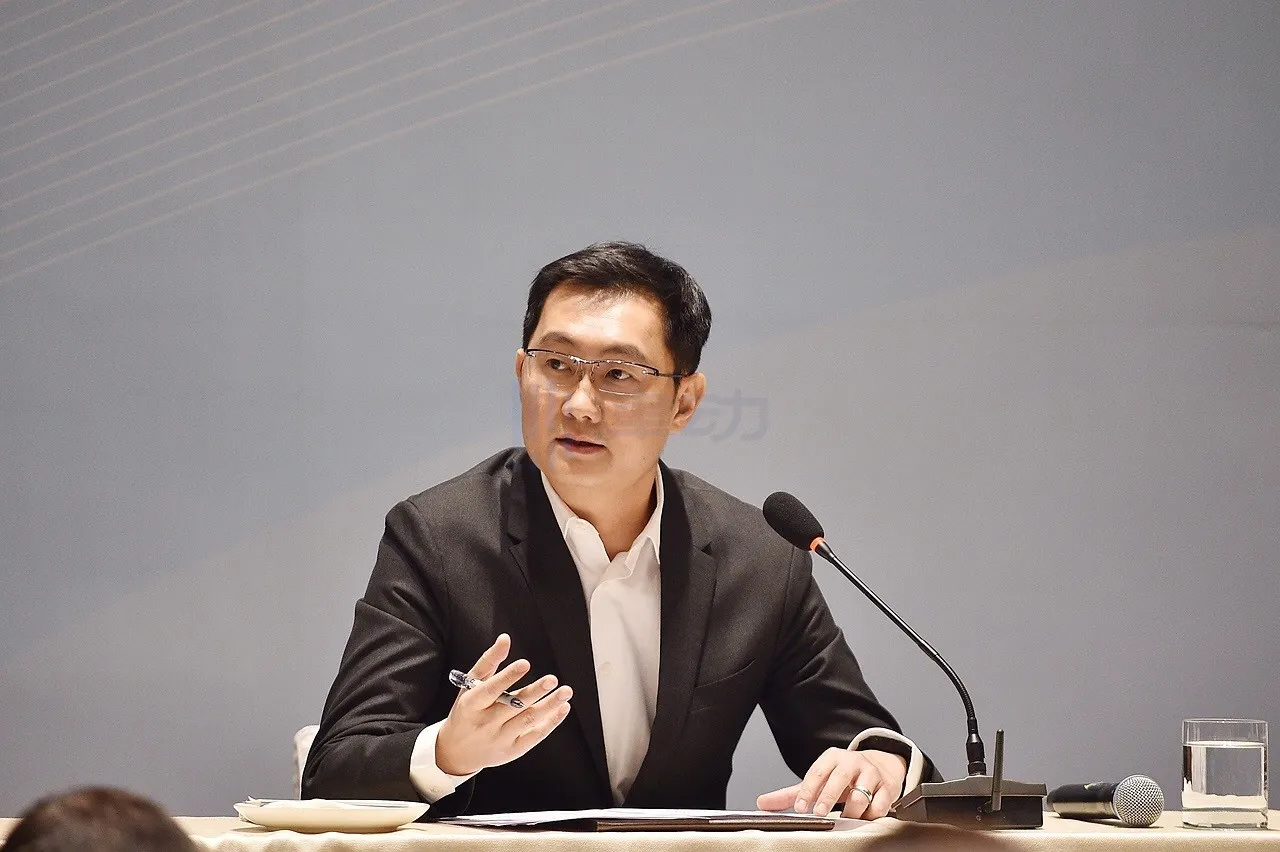
马化腾在腾讯员工大会上
Ma Huateng at Tencent's employee conference
The tightening of the capital market and the dual reduction policy have squeezed the online education industry... The sudden change in the internet trend has greatly affected Tencent's revenue. According to 36Kr, Tencent has been reducing staff in multiple business groups since the end of 2021, with the PCG and CSIG groups being hit the hardest with a layoff rate of over 20%, while the IEG group, which includes Tencent Games, has remained largely unaffected.
As one of the most affected business groups, nearly half of the 9 products that Tencent stopped in the past few months came from PCG, and its products such as Tencent News and Tencent Sports also faced tremendous pressure. According to feedback from Tencent employees, the turning point of this round of layoffs was the organizational restructuring across PCG and IEG in April 2021.
After nearly a year of contraction, Tencent's sales expenses in the first three quarters of 2022 decreased by 20%. At the year-end employee conference, Ma Huateng still emphasized the theme of reducing costs and increasing efficiency, stating that reducing costs and increasing efficiency "should become a habit" and that no business that has been cut should be missed. A strong signal at the meeting is that there is not much time left for the PCG business, with Tencent News being the first to be affected. Ma Huateng mentioned that if the team does not have strong and effective changes, "the entire (Tencent News) can be cut off."
Huanhe is also a PCG project, but its revenue and income have been very good, but these numbers cannot be compared with the scale of gaming and live broadcast businesses. Therefore, in fact, whether to shut down Huanhe has little impact on Tencent's revenue. "Because the overall scale and budget of product investment are not much, and the income has to be handed over to the company, so whether this innovative business can survive, it does not depend on ROI or cost, but mainly on the company's level of attention to it," former Huanhe team members told BlockBeats.
The signal of the changes in the Huancore business started with a PCG personnel change in May 2022.
In August 2021, Wang Shimu, former Vice President of NetEase Cloud Music, joined Tencent News as the new head. However, in May of the following year, Wang Shimu was transferred to the PCG social platform and application line to be in charge of innovative businesses such as Huanhe. Then in August, Huanhe announced its shutdown, and Wang Shimu resigned a month later.
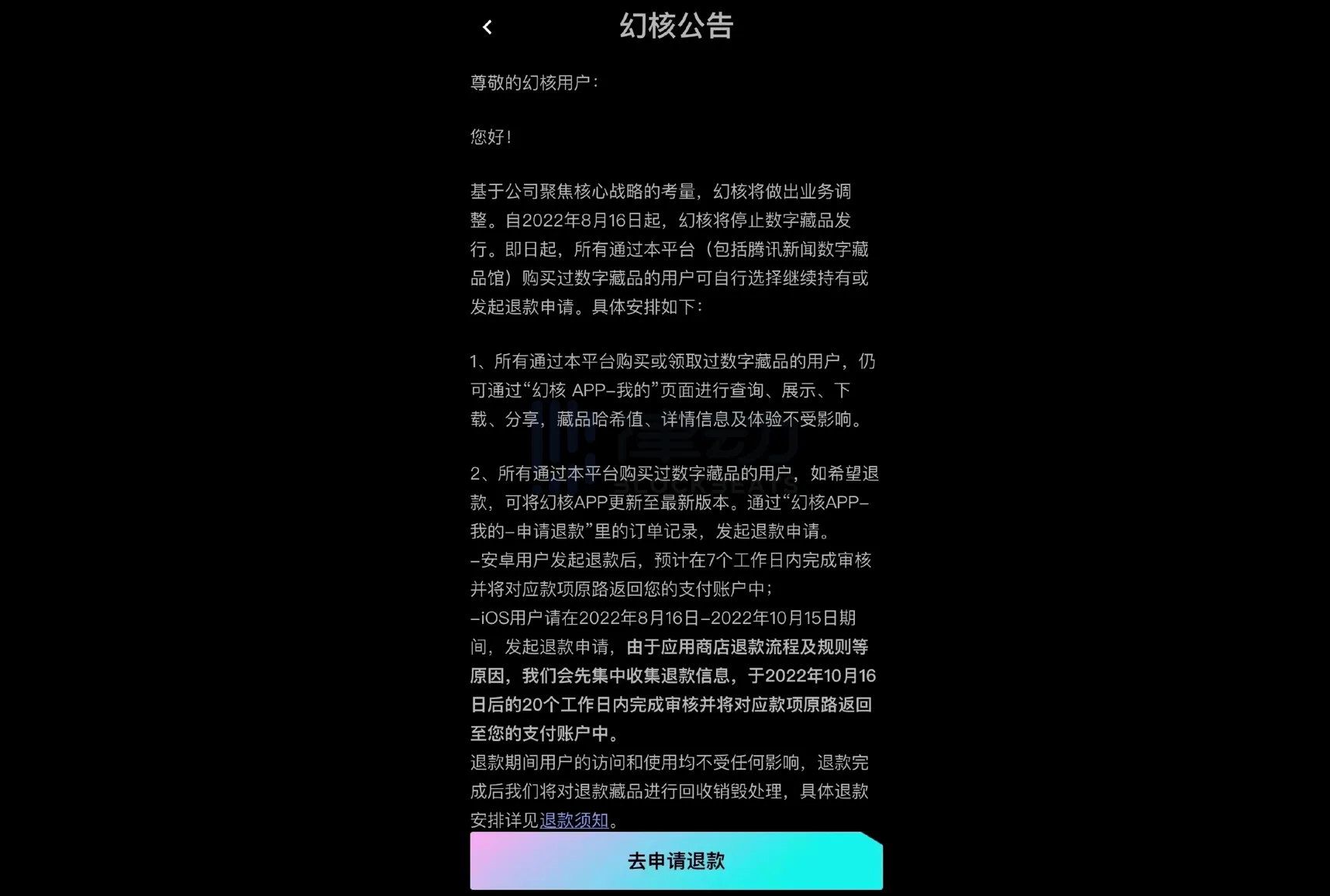
Insiders told BlockBeats that the decision to shut down businesses such as Huancore came directly from Tencent's top management. "At that time, Pony (Ma Huateng) decided that these C-end businesses would gradually be discontinued," said several Tencent employees who confirmed the rumors that Ma Huateng "disliked" Wang Shimu, but also believed that there were other reasons for the shutdown of Huancore. Tencent has always been very cautious about financial innovation, and the strong speculative sentiment of digital collections in the secondary market means that the regulatory risks faced by this business are far greater than its profits.
Tencent is a very conservative and 'well-behaved' company. It won't push the boundaries and test limits like Alibaba does, and it rarely goes after risky ventures that don't offer much return for Tencent," a former member of the Magic Core team told BlockBeats. The issuance of digital collectibles by Magic Core would be split with the cooperating IP party, and the entire project would be a loss after refunds to users. After Magic Core shut down, Tencent was required to shut down all of its digital collectibles businesses, including QQ Music and Tencent News.
CSIG's situation is also very pessimistic.
In the fourth quarter of 2021, the revenue of the financial technology and enterprise services sector increased by 25% year-on-year to 47.958 billion yuan, surpassing online gaming for the first time to become Tencent's largest revenue-contributing business sector. However, despite surpassing gaming in terms of revenue, the financial technology and enterprise services sector is also the fastest-growing business sector in terms of cost investment for Tencent, and there is still a significant gap in net profit compared to the gaming business.
In March 2022, Liu Chiping, the President of Tencent, stated in a conference call that Tencent will continue to focus on international gaming and SaaS businesses in the future, while strengthening cost control for cloud and long video businesses to maintain a healthier growth.
During the layoffs that began at the end of 2021, CSIG also became a hard-hit area. In addition to the 20% of employees who were laid off, the remaining employees were informed that CSIG's profitability would be a key indicator for business development, which directly affected Tencent Cloud's previous business model. In the cloud service market where growth has hit a bottleneck, Tencent Cloud often engages in loss-making sales through methods such as "one yuan bidding" and "total package subcontracting" in order to compete with Alibaba Cloud and Huawei Cloud for market share.
However, the shift towards profit-oriented goals will render all these sales tactics ineffective. A middle-level employee at CSIG stated in an interview with 36Kr, "The bosses don't have that much patience anymore. They hope CSIG can run faster and stop losing money all the time."
The Tencent Cloud Blockchain, which belongs to Tencent Cloud business, was also greatly affected by this wave of layoffs. Insiders told BlockBeats that over the past two years, Tencent Cloud has held Web3-themed salons almost every week to discuss how to replicate new technologies in the Web3 field to the alliance chain and innovate in combination with the domestic environment. "But Tencent's internal Web3 hasn't done much and hasn't produced anything. When it came to layoffs, many of these departments were also cut."

Tencent Cloud Blockchain-related Online Salon
However, Tencent Cloud's blockchain business has not been completely shut down.
In February of this year, Tencent Cloud held the first Web3 Global Summit "Tencent Cloud Web3 Build Day" in Singapore, where well-known native encryption projects such as Scroll, Avalanche, and Sui attended the event. The theme of this conference was "Accelerating Web3 Success". Yang Baoshu, the International Senior Vice President of Tencent Cloud, stated at the conference that Web3 is the new iteration of the Internet, and Tencent Cloud sees its future and has already established partnerships with Ankr, Avalanche, Scroll, and Sui.
During this period, Tencent Cloud announced its support for the global Web3 ecosystem development and launched "Metaverse-in-a-Box", a one-stop Web3 solution mainly aimed at developing on-chain metaverse. However, according to insiders of Tencent Cloud's Web3.0 business who spoke to BlockBeats, Tencent Cloud is also struggling to compete with Alibaba Cloud in the Web3 field. "The so-called 'Metaverse-in-a-Box' is just a set of Web2 tools provided by Tencent Cloud, and everything else needs to be built by oneself. In addition, there are also gaps in performance and available enterprise scenarios."
Despite being stuck in a growth bottleneck, Alibaba Cloud still holds a very important strategic position within the Alibaba ecosystem. In March of this year, Alibaba Group Chairman and CEO Zhang Yong took on the role of Chairman and CEO of Alibaba Cloud Intelligence Group. Having a group chairman also serve as a business CEO is not only rare for Alibaba, but also extremely rare in the development history of major internet companies.
Compared with Tencent Games, Tencent Cloud's strategic position in the entire Tencent architecture system is far inferior, as reflected in the significant gap in market share between Tencent Cloud and Alibaba Cloud. "Most Web3 projects are willing to cooperate with Tencent, but they are actually attracted by Tencent Games. However, there is a huge difference between Tencent Cloud and games. Alibaba is much better in this regard, with the largest number of enterprises in Asia and a richer range of businesses and "toys" provided."
Taking Avalanche as an example, although the team announced its partnership with Tencent Cloud in February, most of their activities in the following months were carried out with Alibaba Cloud. In May, Avalanche also collaborated with Alibaba Cloud to launch the competing product "Metaverse-in-a-Box" called Cloudvers.
Be more careful and you will find that the trend of domestic cloud service giants entering Web3 has become a new trend. This year, Huawei Cloud held Web3-related summits in February and August, announcing the provision of technical services for Web3 projects. Insiders told BlockBeats that the main consideration of these giants is still to "use small resources to leverage the large profits of overseas markets".

Cloudverse promotional poster
除了 PCG 和 CSIG,腾讯的投资也在收缩。
Translation: Apart from PCG and CSIG, Tencent's investments are also shrinking.
A veteran practitioner in the mining industry said to BlockBeats, 'Around 2020, when Bitmain, led by Wu Jihan, went public on the US stock market, Tencent approached me hoping that I could help them go public.' During that period in 2020, mining stocks were very popular, and Tencent's investments were frequently seen in the mining industry, including the later investment in Shanda Games, whose main data center was primarily engaged in mining.
Since last year, Tencent's investment in Web3 has been shrinking. Since the $200 million financing of Immutable in March, Tencent's investment in the Web3 field has not been announced. BlockBeats has learned from multiple sources that Tencent's gaming and cloud investment teams still look at some Web3 projects, but rarely take action. The same is true for investment entities associated with Tencent.
According to insiders, there are many investment companies owned by Tencent executives in Nanshan, Shenzhen. In the past, they actively sought out projects, but recently they have paid less attention to Web3 and turned to focus on the AI field. "These companies' funds come from Pony (Ma Huateng) and are controlled by Tencent executives." Against the backdrop of tightening global liquidity, many USD funds are struggling, and financing in all industries is very difficult. "Of course, it cannot be said that they do not invest in Web3 at all. Due to compliance reasons, sometimes even if they invest, it will not be made public."
Except for Tencent Cloud, Photon Web3 Research is also one of the few departments within Tencent that still pays attention to Web3. According to insiders, this department mainly focuses on infrastructure, but its business is still in the research stage and is waiting to slowly lay out when allowed by the company and policies.
Many former employees believe that Tencent's cost-effectiveness in Web3 is not high now. One reason is that the market is not large enough, the second is that the regulatory direction is unclear, and the third is that the industry's labor costs are not low enough. "Big companies often don't take the initiative to innovate, they just follow and then use their resources to enter together. When a pole-type product appears in this industry, I believe that many traditional manufacturers and big companies will follow suit."
"Tencent is very conservative about Web3, and this conservatism is mainly reflected in the top decision-makers' qualitative and tonal alignment with domestic policies. In this matter, Tencent lags behind. At the 2021 Tencent Employee Conference, Ma Huateng mentioned that he wants to "lose weight and build muscle, and use bullets in key battles," brewing the next trend or battle."
In Ma Huateng's view, Web3 will not be Tencent's next opportunity.
鹅厂人不想等
translates to
Geese Factory employees don't want to wait
in English.
In June of this year, Sparkle announced the completion of its pre-seed round of financing led by Folius Ventures, followed by its selection for the sixth phase of the Binance accelerator. This is a Web3 astrology application with built-in GameFi and SocialFi elements. In August, the project released the first batch of free Genesis NFTs using the ERC-6551 protocol, and the first day's trading volume surged to second place on the OpenSea trading list.
Sparkle's founding members were former Tencent employees who participated in the incubation of Magic Core from scratch. "After the Magic Core business was shut down, everyone started their own businesses one after another. I know of at least five teams that came out of Magic Core, including those working on virtual humans, SocialFi, and fundraising," an insider told BlockBeats. The former head of the department where Magic Core was located, Wang Shimu, has also started a Web3 business.
With the wave of layoffs at Tencent PCG, CSIG, and many other internet giants, many Web2 teams have joined the Web3 industry since the end of last year. During the Web3 event in Hong Kong in April this year, many former Tencent employees found that the people from the tech giant who are involved in Web3 entrepreneurship are not limited to their own social circle. The presence of Tencent employees can be seen in many project BPs, "During that time, projects from big companies were more likely to receive funding, and some projects that shouldn't have been invested in according to normal logic also received funding. Investors are also betting that they can produce the next product like StepN."
"Goose Factory Gang"
BlockBeats found that many projects with "Tencent lineage" are combining "financial technology + gaming" to start Web3 entrepreneurship.
For example, as mentioned earlier, Matr1x Fire's founding member Hang comes from Tencent Financial Technology, while co-founders and many development members come from Tencent Games. The same combination can also be seen in the project PunkCode, the "number one" in Tencent's blockchain field. Cai Yige, who was previously exploring the blockchain field at Tencent Financial Technology, is the co-founder, and Guan Zhiyuan, the former head of communication for Tencent's gaming and esports market, as well as a founding member of the King of Glory market team.
As two of the most frequent business lines within Tencent to engage with blockchain and metaverse, it is also where the most people come out to start their Web3 entrepreneurship. Among them, most people from Tencent Games are driven by interest and exploration of the industry, while those from Tencent Financial Technology are more due to spatial compression within the business department.
BlockBeats has learned from multiple sources that many members of the Zhixin Chain team have also entered the Web3 entrepreneurship field, among which the most well-known is a Web3 equity aggregation platform called VIP3. In August, VIP3 announced the completion of a $2 million seed round of financing, with participation from IOBC Capital, Ankr, and other institutions. Currently, VIP3 has established equity partnerships with mainstream cryptocurrency platforms such as Binance, HashKey Exchange, and OKX.
Interestingly, in the list of projects collaborating with VIP3, there is the Web3 game Mahjong founded by Brice. "At that time, the Founder of Mahjong, the Founder of VIP3, and we had ideas for some projects during our time at Tencent, and we have been in contact ever since," a Web3 entrepreneur told BlockBeats.
Some Web3 Tencent entrepreneurial projects refer to each other as "brother teams" and often organize meetings and exchanges to find feasible cooperation opportunities. Everyone has more than one "Tencent Web3 Entrepreneurship Group", which is not only used to solve deposit and withdrawal problems, but also often has related recruitment and job information. "Now there is a feeling of a small alliance, and some friends even joked that they want to pull out a Tencent to do Web3 DAO."
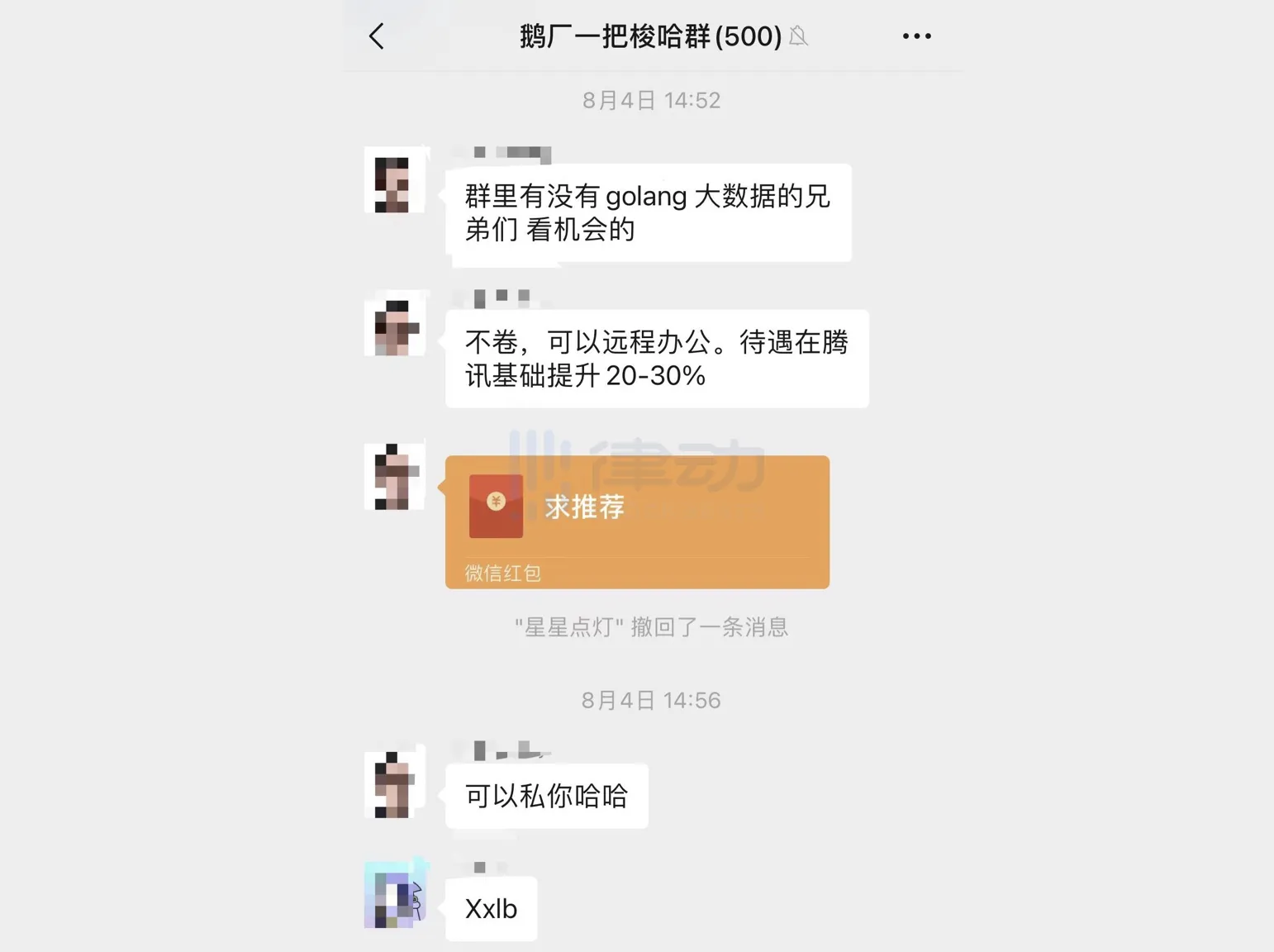
Tencent Web3 Entrepreneurship Group
On the matter of "building DAO for off-factory teams", it seems that Alibaba's projects are not falling behind. During the upcoming Token2049 event, the Side-Event of A³DAO has attracted the attention of many entrepreneurs from big factories, and the initiators of this DAO organization are several entrepreneurial projects that came out of AntChain.
The purpose of establishing A³DAO is to bring together teams with a common vision and shared genes. It is not easy to integrate into the cryptocurrency industry due to many orthodox beliefs, so it is necessary to establish a brand among entrepreneurs in order to show that there are also a group of people who can bring good technology and business to the crypto world. CP, a core member of A³DAO, told BlockBeats.
CP is the CTO of Artela, a public chain project. He was also one of the core members of the Ant Blockchain Interest Group in 2015. In his view, most of the teams that started Web3 entrepreneurship after leaving Ant were not forced by internal space constraints, but driven by different visions. "I think AntChain has always been a brand that believes most in blockchain technology in China and is willing to contribute to it. Everyone's long-term vision is 'Mass Adoption', but AntChain has its own breakthrough method, and we have our own breakthrough method."
CP told BlockBeats that many of the Web3 entrepreneurs in the Alibaba ecosystem are former executives of Ant Group, with several holding positions of P10 or higher. They all maintain close ties with AntChain, and there are even members from within AntChain, such as ZAN, among the initiators of A³DAO projects.
However, in terms of the number of people, "Alibaba Web3" is not as large as "Tencent Web3". BlockBeats learned that the current number of members in A³DAO is about 50 to 60 people, while Tencent's Web3 entrepreneurial group already has more than 500 people.
Tencent Curse?
It is worth mentioning that many Tencent entrepreneurs in the Web3 industry often mention a concept like "Tencent curse" when talking about their entrepreneurial experience, indicating that some teams may experience "culture shock" and "some Web2 to Web3 teams may be at a loss when they first enter the industry and do not know how to establish contact with users, eventually leading to a state of isolation.
According to BlockBeats, the group of people who left Tencent and moved into the Web3 industry can be divided into three categories. The first category consists of people born in the 1980s and 1990s who were early adopters of Bitcoin and blockchain technology. They have strong technical skills and are mainly involved in infrastructure development. The second category consists of younger people born in the 2000s or even 2005s, who mostly entered the industry during the bull market in 2021. Although they may lack professional skills and work experience, they are often active in various Discord communities and hold mod positions, and are well aware of industry trends. The third category is teams that have transitioned from Web2 to Web3. They may have stronger product capabilities and a sense of ethics and bottom line in their work, but they may not have a strong understanding of Crypto Native things. The group of teams that are most likely to fall into the "Tencent curse" are those who have transitioned from Web2 to Web3.
For Tencent, 2015 was an interesting time. During this period, Alipay, Tenpay, and various other companies were just beginning to explore many new businesses, including blockchain. People who joined Tencent before and after 2015 have significant differences in product thinking and methodology.
During this period, large companies are in an expansion phase, and many new businesses require manpower to explore and develop. Newcomers can quickly accumulate a set of mature product methodologies. "For example, at that time, Pony (Ma Huateng) often said that if you are a product manager, you need to collect 1000 user feedbacks, follow 100 user blogs, and conduct 10 user surveys every month, which are very trivial but necessary product research. By mining user pain points and collecting feedback, they can be fed back into the entire product design."
Insiders told BlockBeats that product managers who joined Tencent before 2015 had solid basic skills, and many of the Web3's invisible champion projects were created by these veteran product managers.
However, after 2020, Tencent's many platform products have become very large in scale, with user bases of tens of millions or even billions. During this period, product people who joined Tencent may easily fall into the trap of platform thinking when starting a Web3 business.
Due to the fact that many scenarios rely on Tencent's high-traffic platform-level products such as WeChat and QQ Music, most Tencent product teams tend to choose a large entry point and a market with a high revenue ceiling when starting a new venture. However, the traditional business model of Tencent differs from that of Web3. Tencent's model is more like collecting one yuan from each of its 100 million users, while Web3 is a high-value product model that may only require 1000 users, each paying 100 yuan, as one industry insider told BlockBeats.
Of course, having a big company's perspective is not without its benefits. "It means that when you start a business, you won't be like a pure startup company. You will have a framework and be able to avoid many pitfalls, which is a very good advantage, because Web3 products themselves lack user experience and design rationality." As a result, many teams are able to make adjustments quickly and get through the adaptation period.
In addition to product methodology, the advantages of Tencent employees in product detail control and crisis response are gradually becoming apparent. This can be seen from the Matr1x Fire and Mahjong Meta teams mentioned at the beginning of the article. "Everything, both seen and unseen, requires a lot of effort and attention to detail. If you don't have these product skills, even with good momentum, you may not be able to catch up," Hang told BlockBeats. On the day of the Matr1x open test, the number of registered users exceeded the team's expectations, causing server crashes. However, the team resolved the issue within an hour and immediately restarted the server. "If the repair time exceeded three hours that day, all new users may have been lost."
In the current Web3, users' demands for product details seem to be not high, but this is more because Web3 is still in the stage of needing to combine product experience and logic. In the early stages of the industry, the market is more operation-oriented. A senior observer told BlockBeats, "Tencent is not an operation-oriented company, it is a product-oriented company. Web3 is mainly filled with investment, but what is scarce is consumption. And the construction of consumption scenarios must first have good projects to supply."
Perhaps the era of the "Web3 Tencent Mafia" is coming.
Welcome to join the official BlockBeats community:
Telegram Subscription Group: https://t.me/theblockbeats
Telegram Discussion Group: https://t.me/BlockBeats_App
Official Twitter Account: https://twitter.com/BlockBeatsAsia