Change forward or fall into silence, a summary of the NFT track in 2023
Original Title: "The Current State of NFT 2023"
Original Author: Francesco
Original Translation: Luccy, BlockBeats
Editor's note:
Many people have staunchly declared that NFTs are dead, but since the release of the Blur airdrop, NFTs have never been the same.
Crypto researcher Francesco delves into the current state of NFTs, using BAYC and DeGods as examples to illustrate the various challenges facing NFTs, and explores them based on analysis and market trends. Francesco believes that if we judge the entire industry based solely on the current trend, it is equivalent to declaring cryptocurrency dead in the bear market of 2018. The future of NFTs will depend on the ability of creators and platforms to evolve, providing real value and practicality far beyond pure speculation.
In the dynamic and ever-changing field of digital assets, non-fungible tokens (NFTs) have always been a hot topic. Once seen as the next major revolution in the art and collectibles market, NFTs have undergone a huge transformation in the public's perception.
Many people insist that NFT is dead. This article will delve into the current state of NFT and discuss it based on data analysis and market trends.
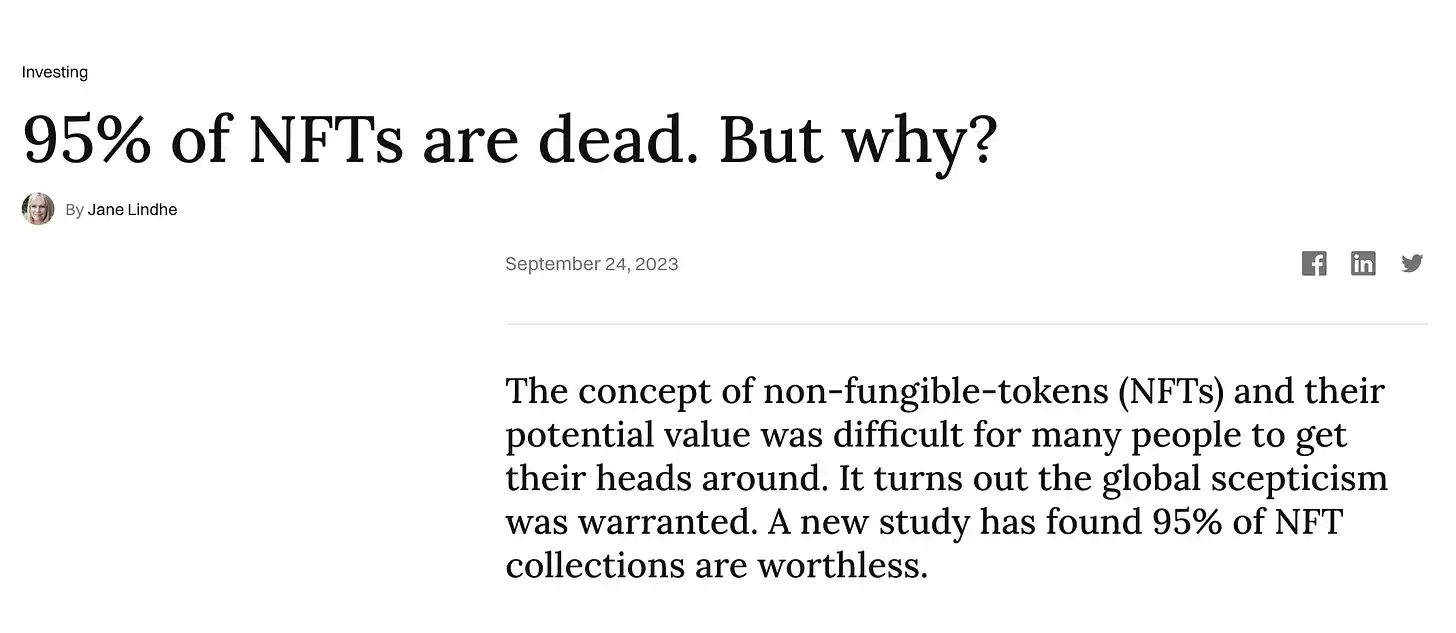
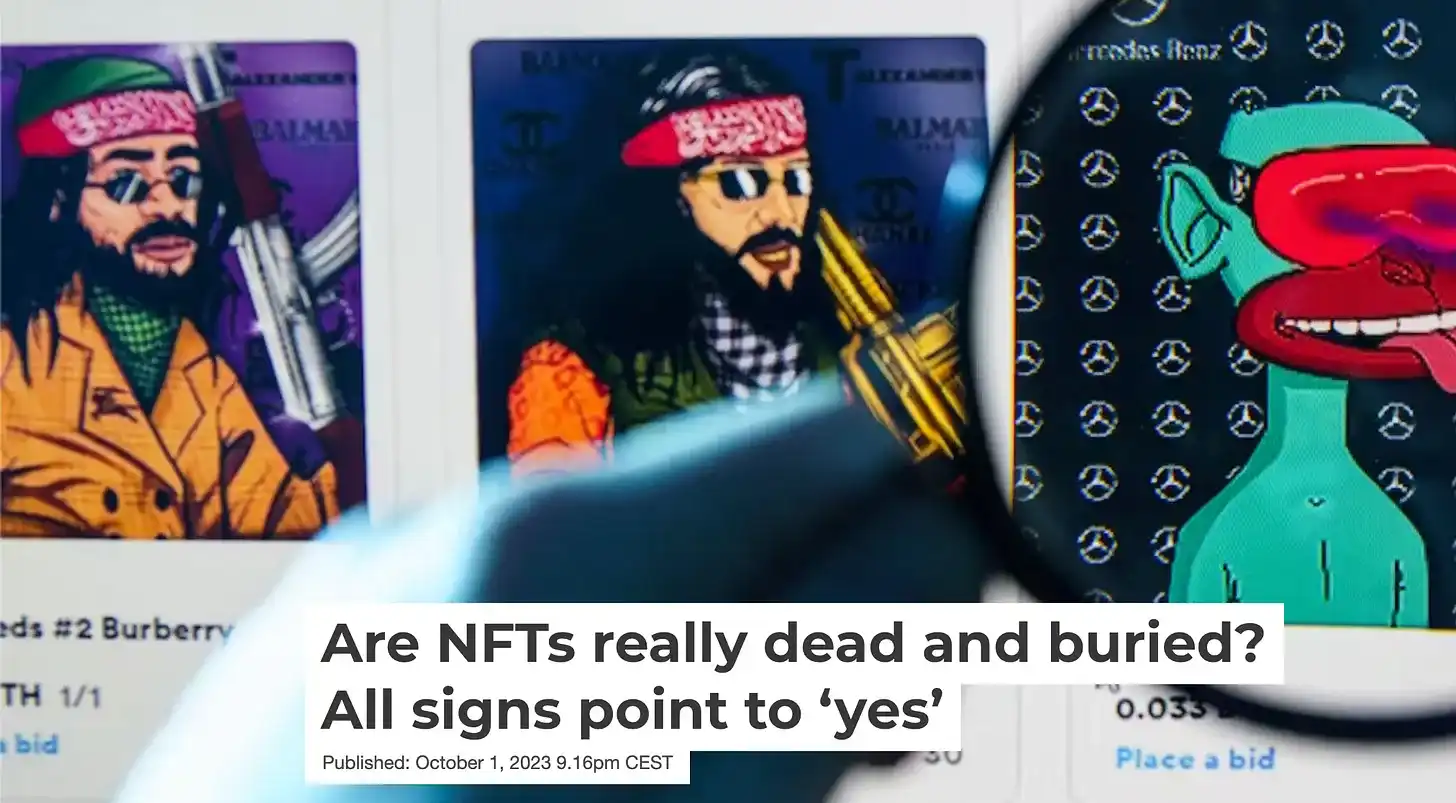
I hope no one here treats them as the sole source of NFT news. In my opinion, this seems like a bottom signal.
Despite the recent rebound in the cryptocurrency market, driven by the expected launch of Bitcoin ETFs and the upcoming Bitcoin halving, the NFT market seems to be lagging behind due to the lack of strong catalysts.
Perhaps the only necessary catalyst is to ensure that NFTs are no longer dormant and will eventually return to speculation.
NFT = Not Fun Times
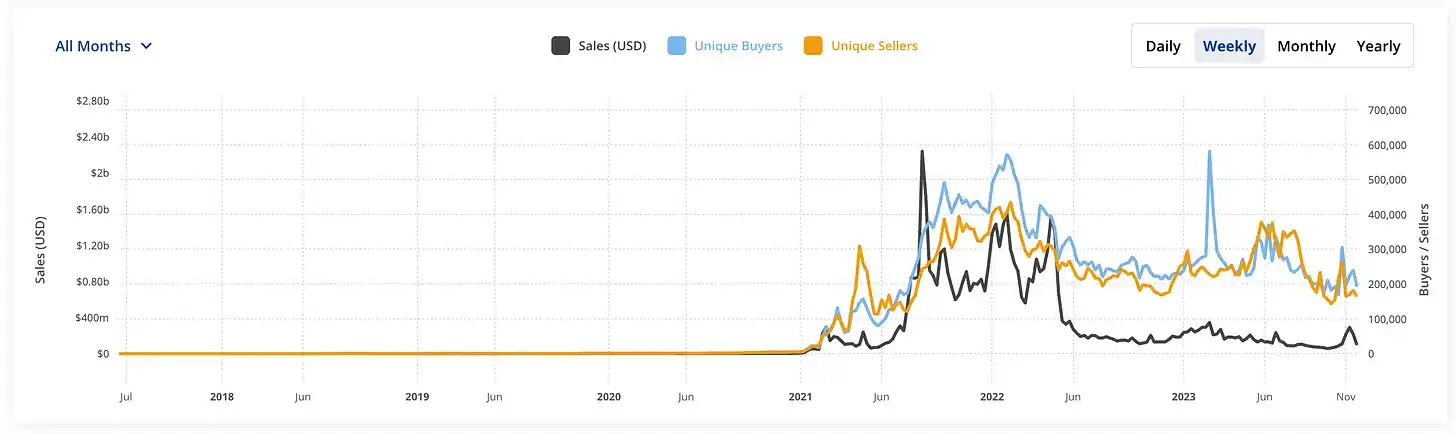
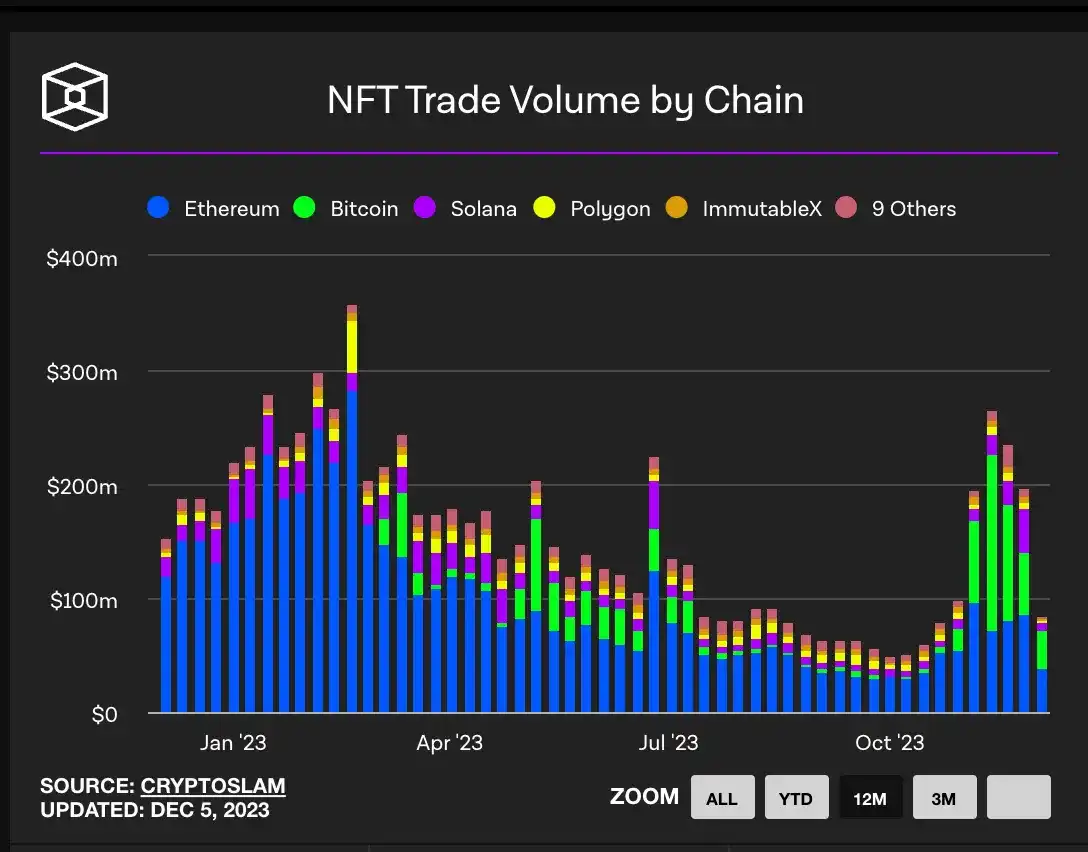
My point is, has the trading volume of NFTs decreased sharply compared to 2022? Yes.
So are they already dead? This may be a bit premature.
From a definitional standpoint, NFTs exist on the blockchain and therefore will always be present.
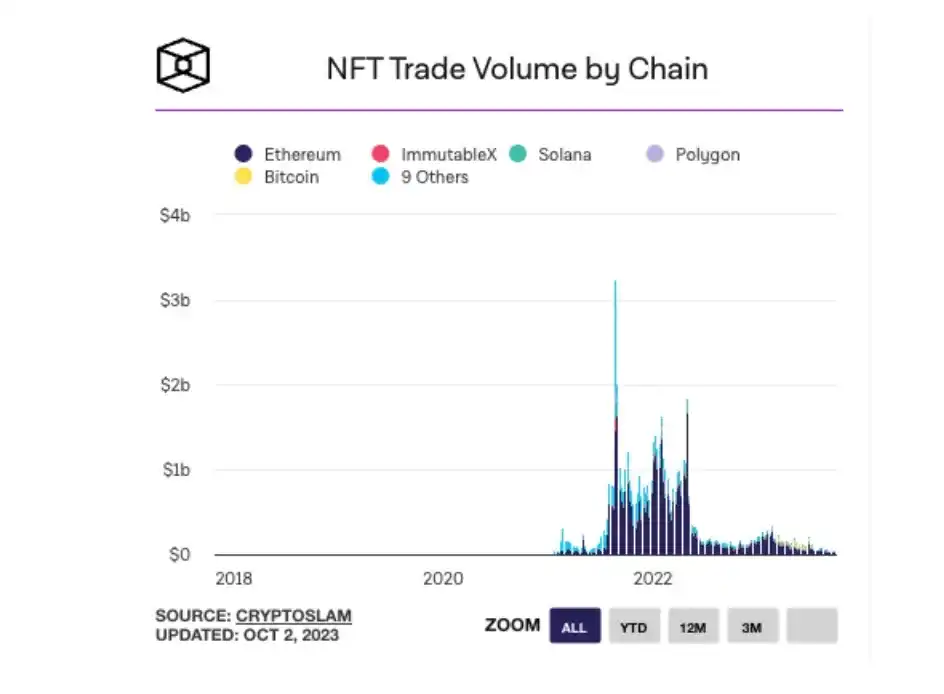
However, it would be dishonest not to mention the fact that we have moved away from the heyday of NFTs. We must acknowledge the significant decline in sales and public interest over the past year.
The decline of NFT is undeniable: during this period, the high-profile sales of NFTs have decreased, and market saturation (with countless new NFT projects deployed) has led to consumer fatigue.
NFT exists with what main problems?
The core issues behind the slump of NFT are several:
The false promises of new projects: 99% of new projects deployed in the market are for the sake of chasing the hype of NFTs. Similar to the "shitcoins" of 2018, many NFT projects are built on hype, lacking substance or long-term vision, inevitably leading to their decline.
Blue-chip projects find it difficult to reshape themselves into global brands: After the success of their NFT collections, some blue-chip projects are now facing the challenge of reshaping themselves and providing value to their holders.
Comparing NFTs to the 2018 "shitcoin frenzy" is not entirely unreasonable. Many NFT projects lack clear utility or practicality, and are more like speculative assets rather than sustainable digital goods.
This leads to the birth of bubbles, and when the bubbles burst, many investors' assets become worthless.
Another group
Although the boundaries are often blurred, compared to the crypto degen, the NFT community is a different type. They have different moral values and different reasons for getting involved in this field.
Overall, the NFT community has a lower level of participation in the ideological aspects of the field and places more emphasis on art and economics.
In addition, many scammers have found that NFTs have become a current trend, just like previous trends (multi-level marketing, cross-border e-commerce, etc.), and they have followed suit.
This has also received countless celebrities starting to promote scams or start their own scams as proof of making money quickly, especially Kim Kardashian, Mayweather, Paul Logan, etc.

Therefore, the stance is that we cannot consider the NFT community as a part of the cryptocurrency community, but rather an external subset with different reasons for participation.
However, we must also acknowledge that NFTs have indeed empowered artists worldwide, which is a positive aspect.
Challenges Faced by Blue Chip Projects
Even so-called "blue chip" NFT projects are facing difficulties. These projects were once at the forefront of the NFT boom, but now they are struggling with an uncertain future.
They face multiple challenges:
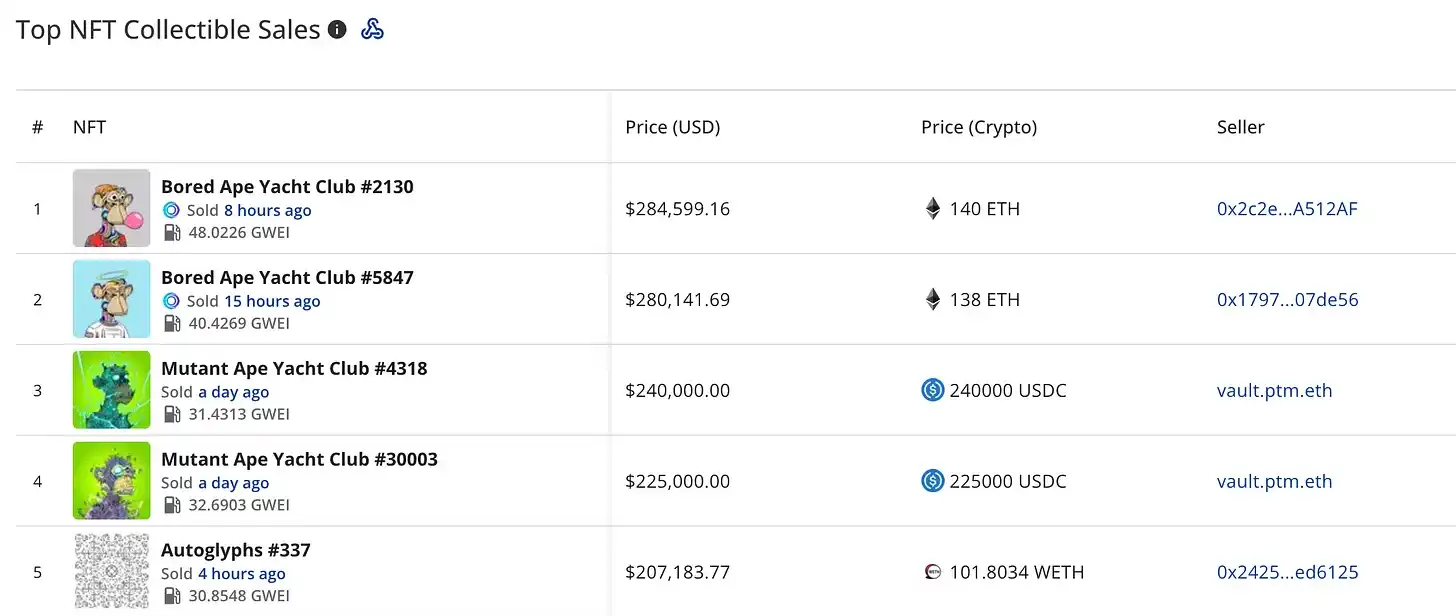
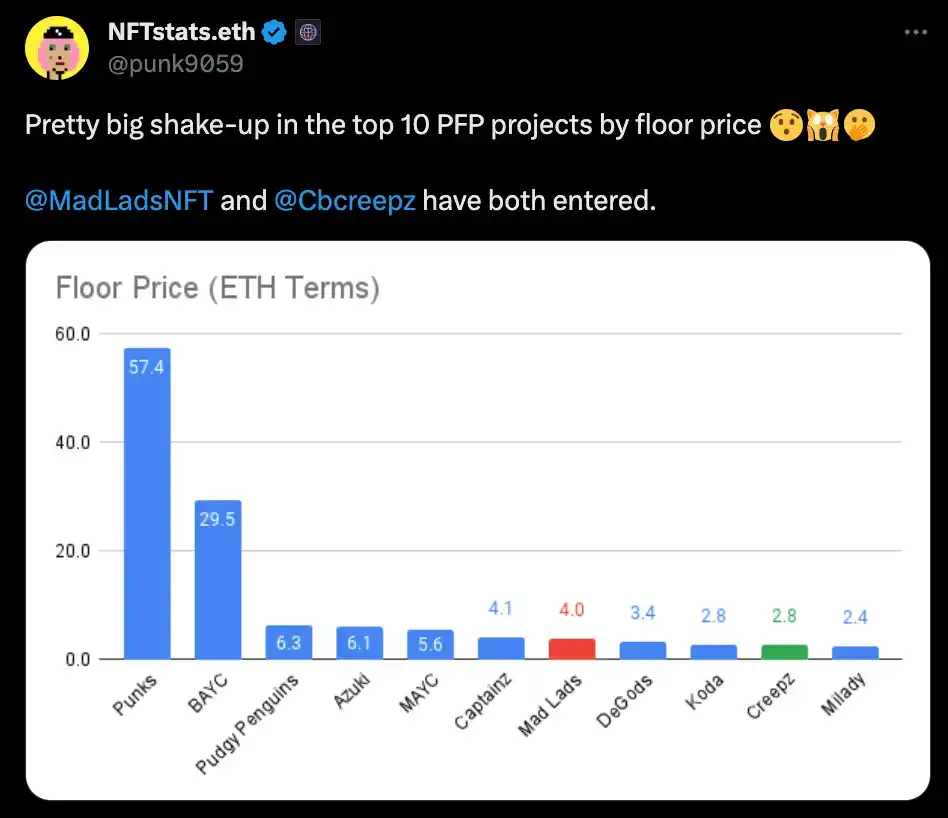
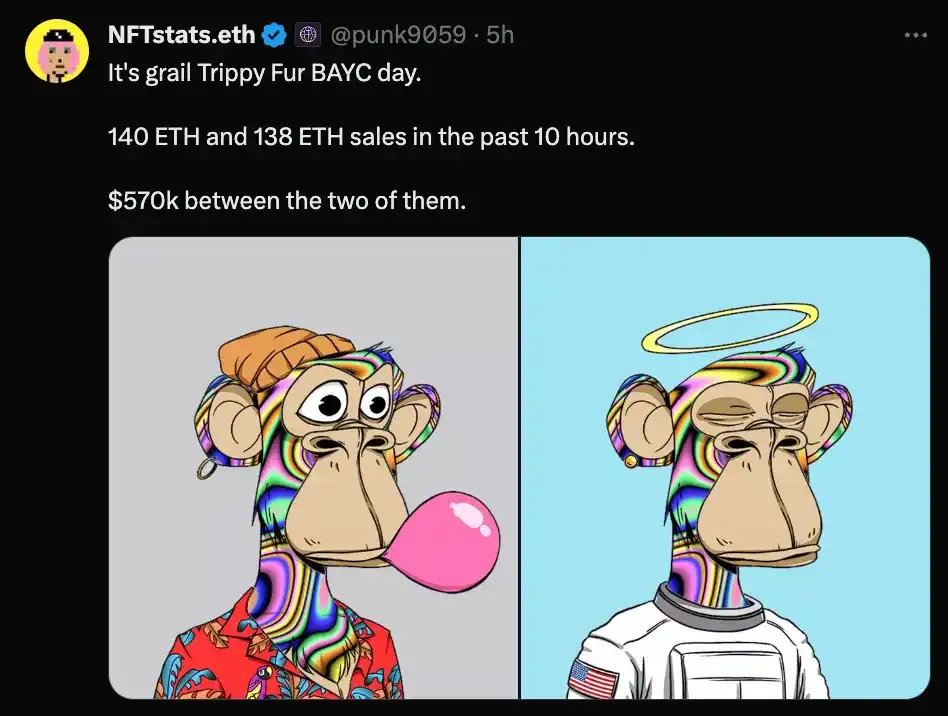
BAYC
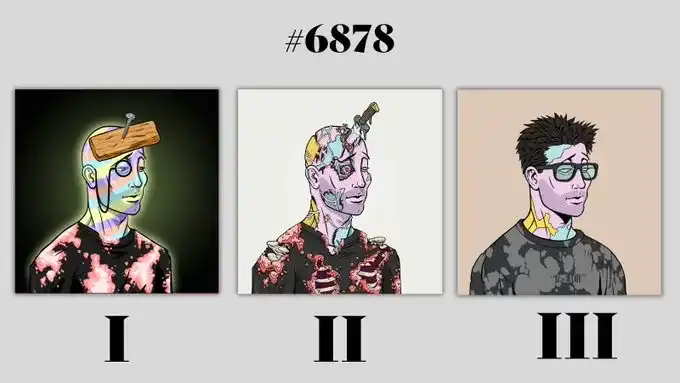
DeGods
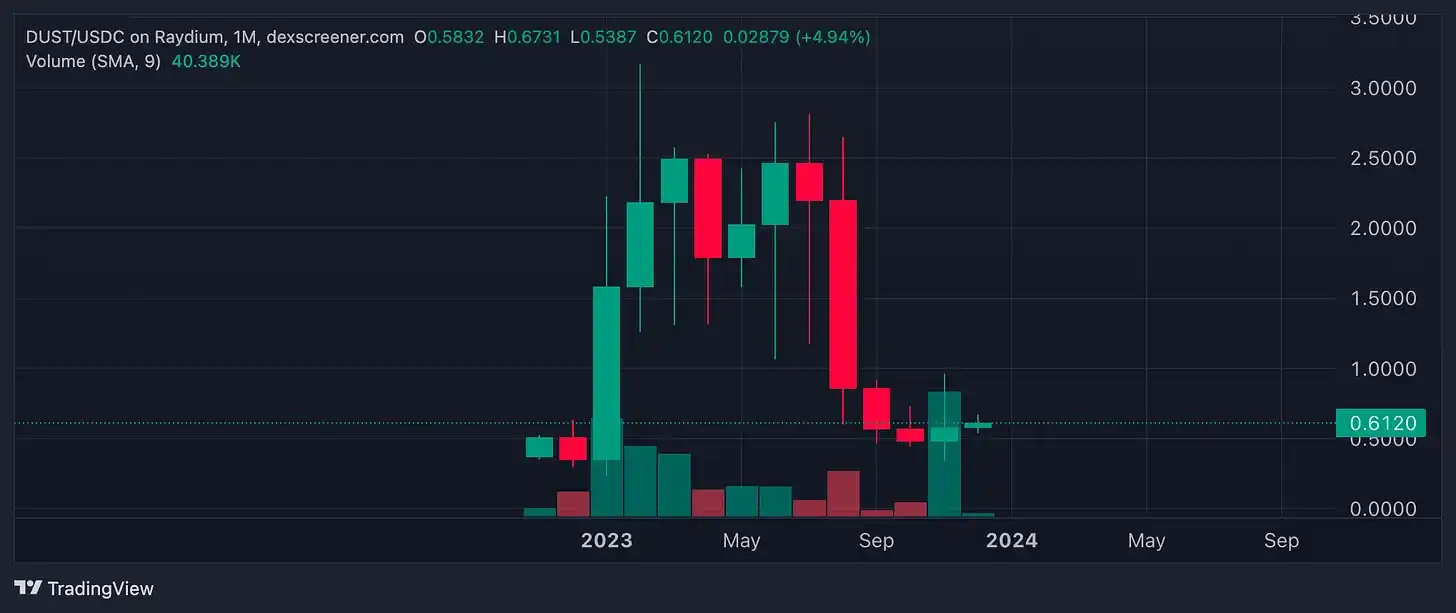

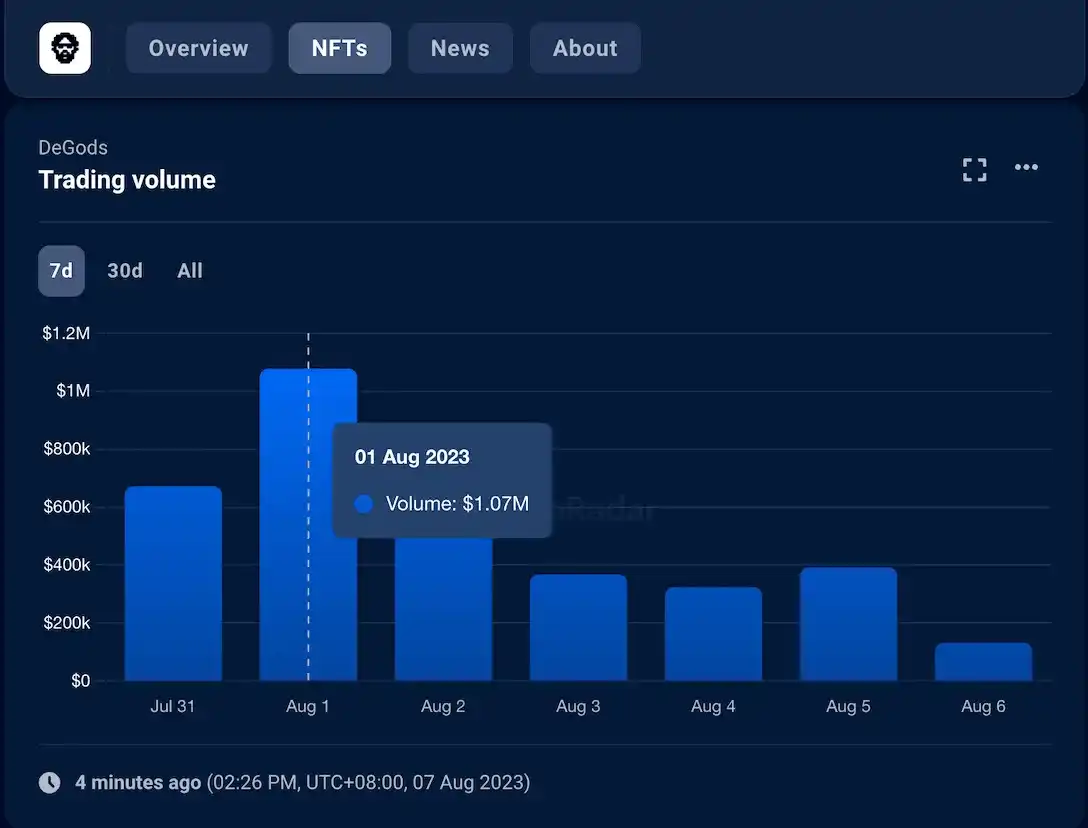
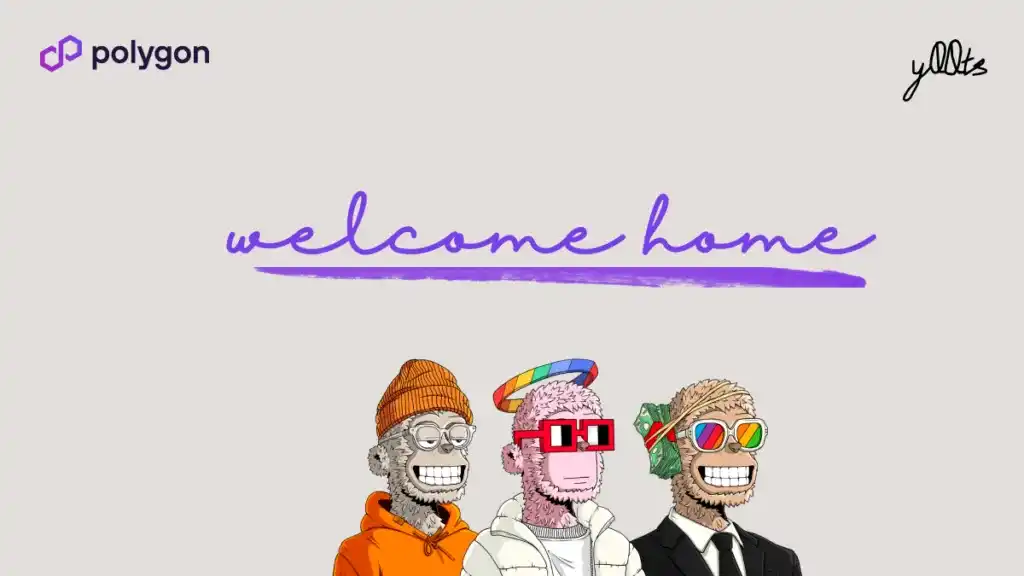
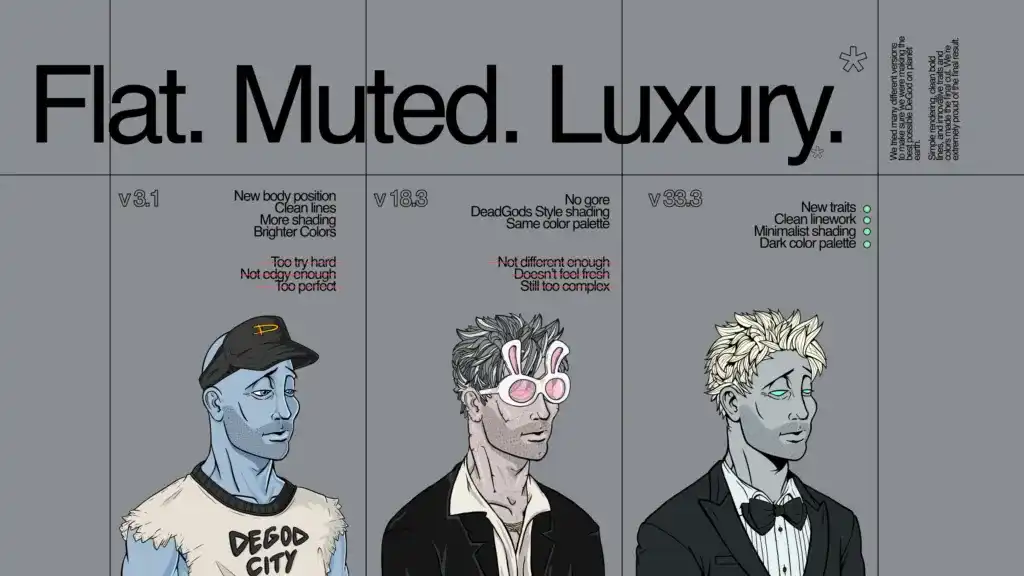

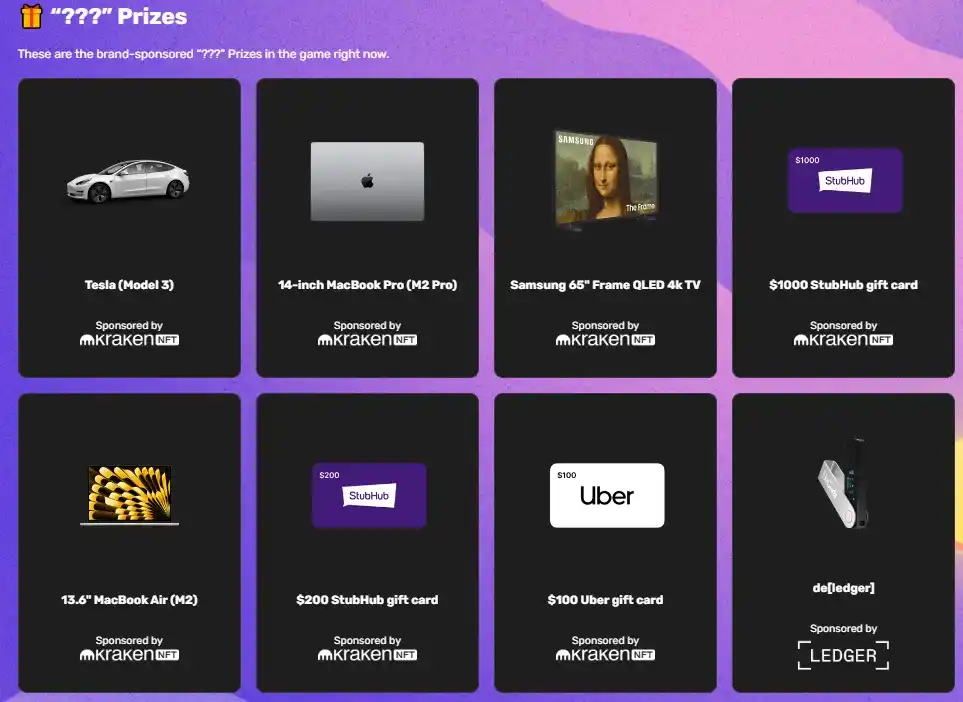
Here are some prizes from "Point Parlor": Of course, these are very good, but I'm not sure if 10,000 DeGods holders will be satisfied with just a few good prizes.
Like many other collectibles, DeGods' holders have elevated their founder Frank into a mysterious figure with business acumen and brand potential similar to Steve Jobs.
The promises made by the team were never truly fulfilled, leaving a huge gap between promise and execution.
Therefore, they ultimately lost over 50% of their value in just over a week's time.
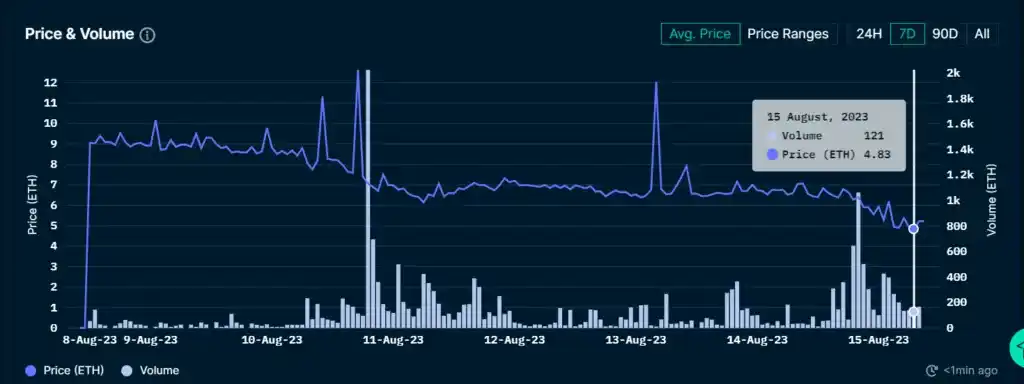
Regardless, DeGods' example tells us the importance of delivering more with less promises, rather than the other way around.
Every new update somehow touches the artistic dynamics of the collection. In addition, they failed to fully utilize Dust Labs and DUST, which was a huge missed opportunity.
Finally, but not least important, it has become even more deteriorated under the behavior of their founders, who reluctantly admitted their mistakes.
Although I may sound biased, it is not actually the case. I have high hopes for DeGods and even hold some DUST myself, but I am personally very disappointed with what has happened during the execution process.
Both of these blue chip examples demonstrate that sometimes, simplicity is the best approach.
Complicating things often makes them too complicated.
NFT Market
After discussing how blue-chip projects can strive to create the next wave of development for their projects, let's take a closer look at market data.
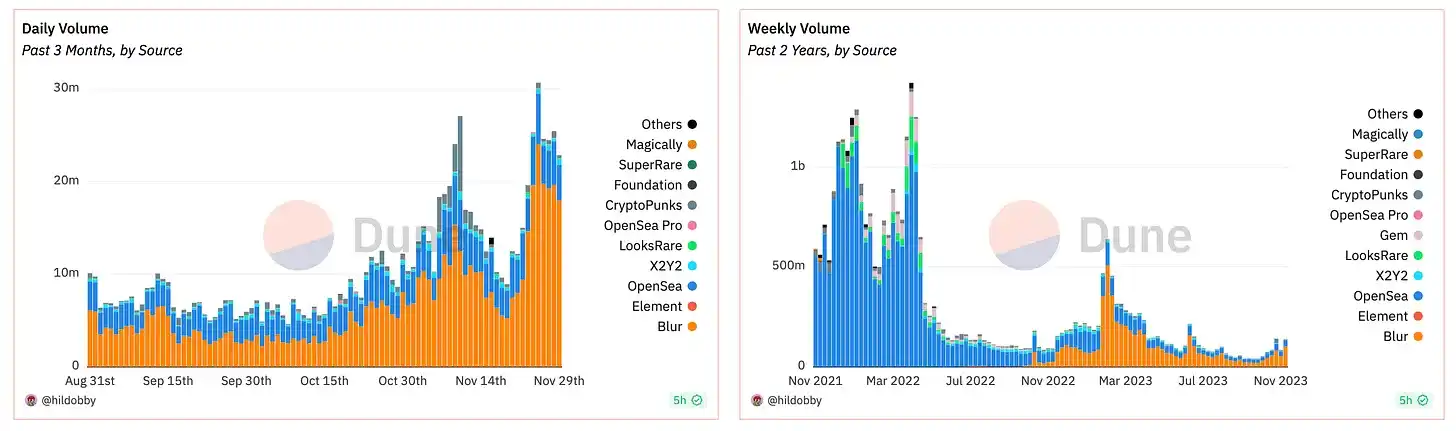
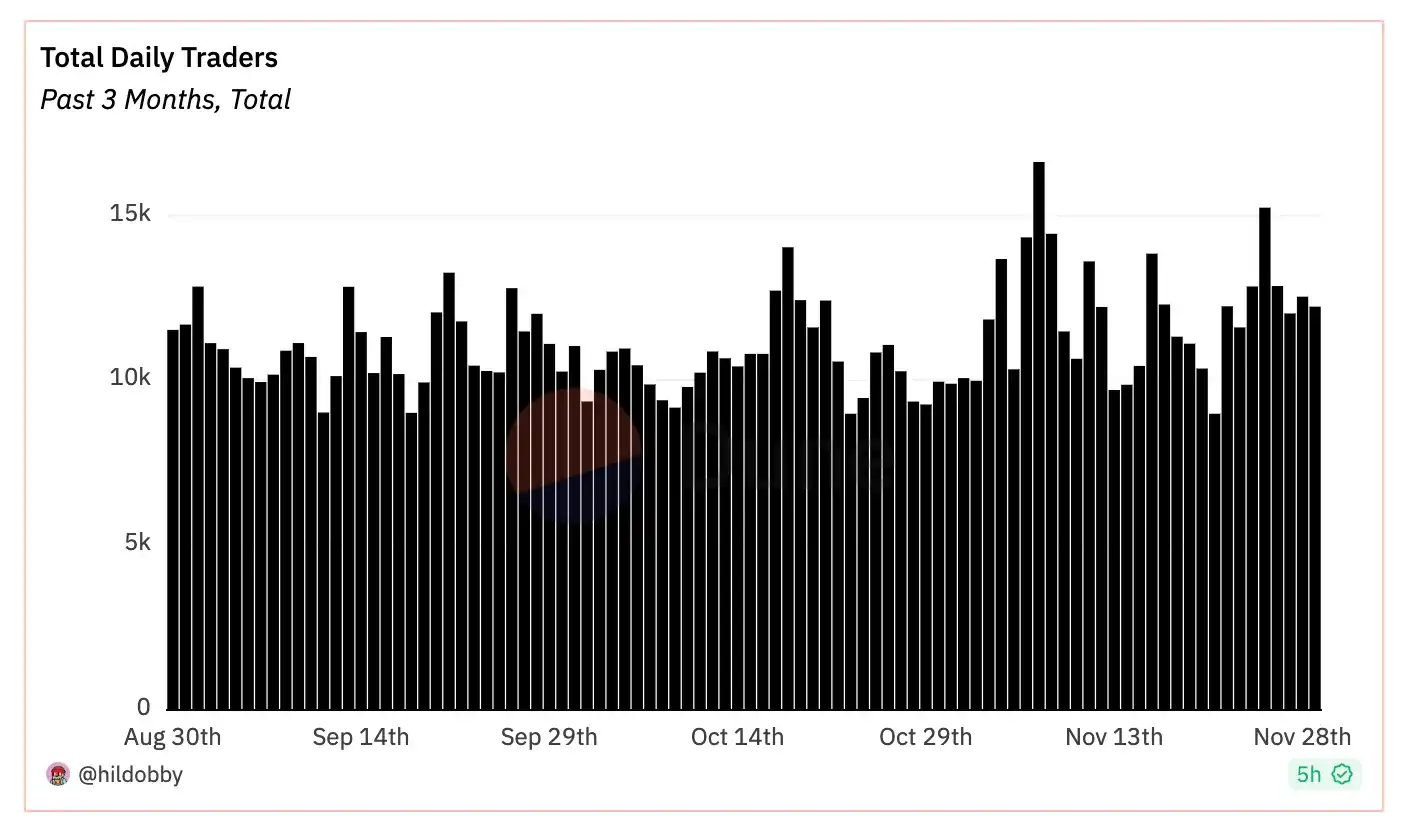
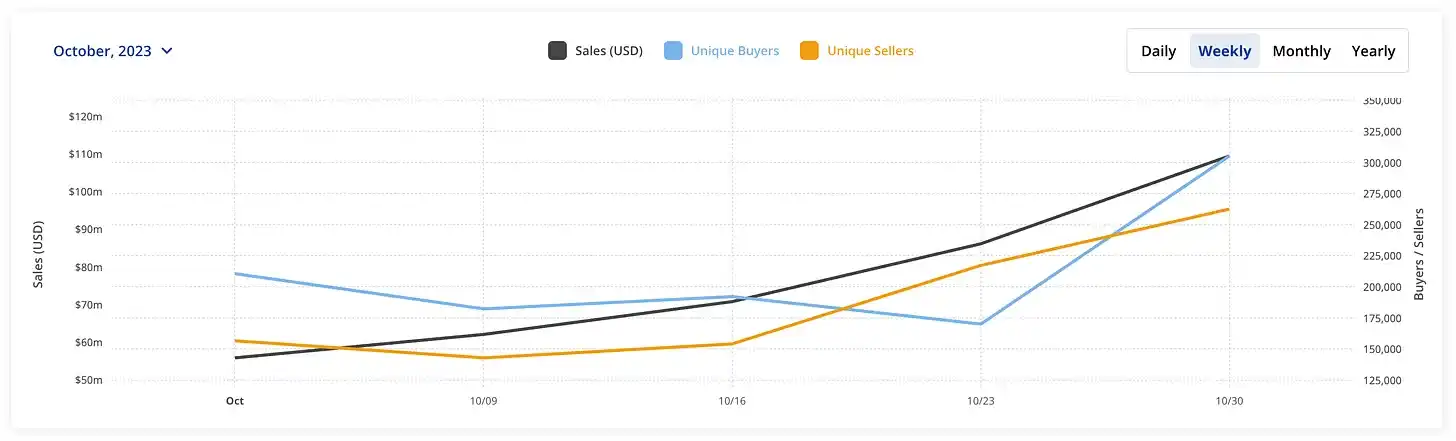
Is the trading volume of NFTs declining?
Is anyone currently buying NFTs?
Starting with the monopoly of OpenSea, the leading platform for NFTs, Ethereum faces a series of challenges in regards to NFT-related issues and development.
The market on Ethereum is adapting to the ever-changing consumer preferences and evolving nature of NFTs. These platforms are working to address accessibility, scalability, and environmental concerns.
Especially, the market has already entered two major trends:
· From OpenSea's Monopoly to Blur's Dominance
· Debate on royalties and non-royalties: Should users who buy and sell NFTs pay royalties to artists or NFT markets? More and more markets are ultimately turning to non-royalties. This article provides a brief overview.
Since Blur announced the launch and airdrop, NFT has never been the same. Many people accuse the platform of unilaterally lowering the NFT market, as whales cultivate Blur points by providing and listing NFTs.
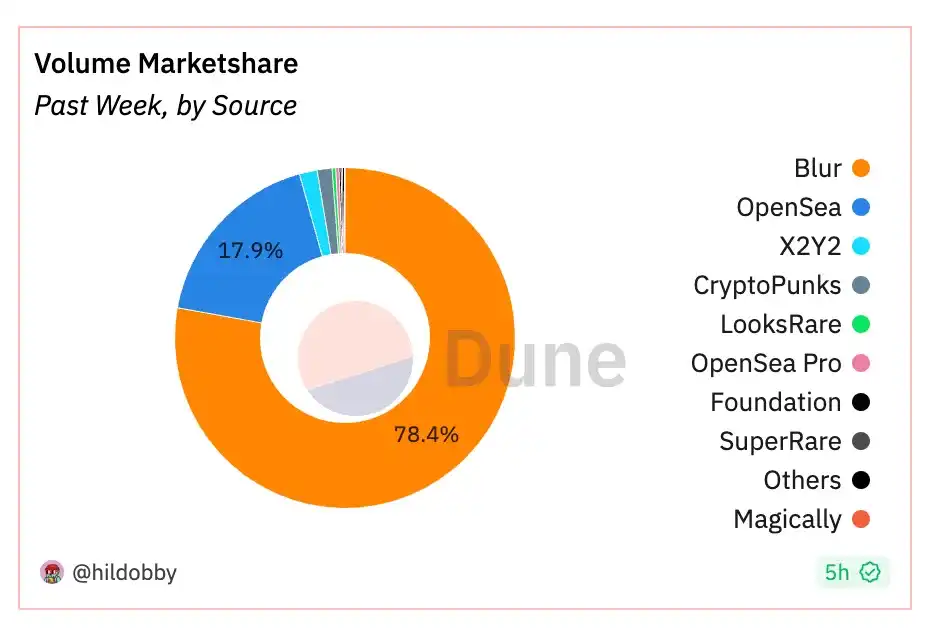
Currently, over 78% of the total NFT trading volume occurs on Blur, while OpenSea accounts for less than 18% of the total volume.
However, even if it is far-fetched to hold Blur responsible for the decline of NFTs, they have introduced new dynamics that affect both buyers and sellers.
So what about royalties?
Initially, the NFT market enforced royalties either to the artists or to the teams behind the NFT, which eventually sparked industry-wide debates involving major markets.
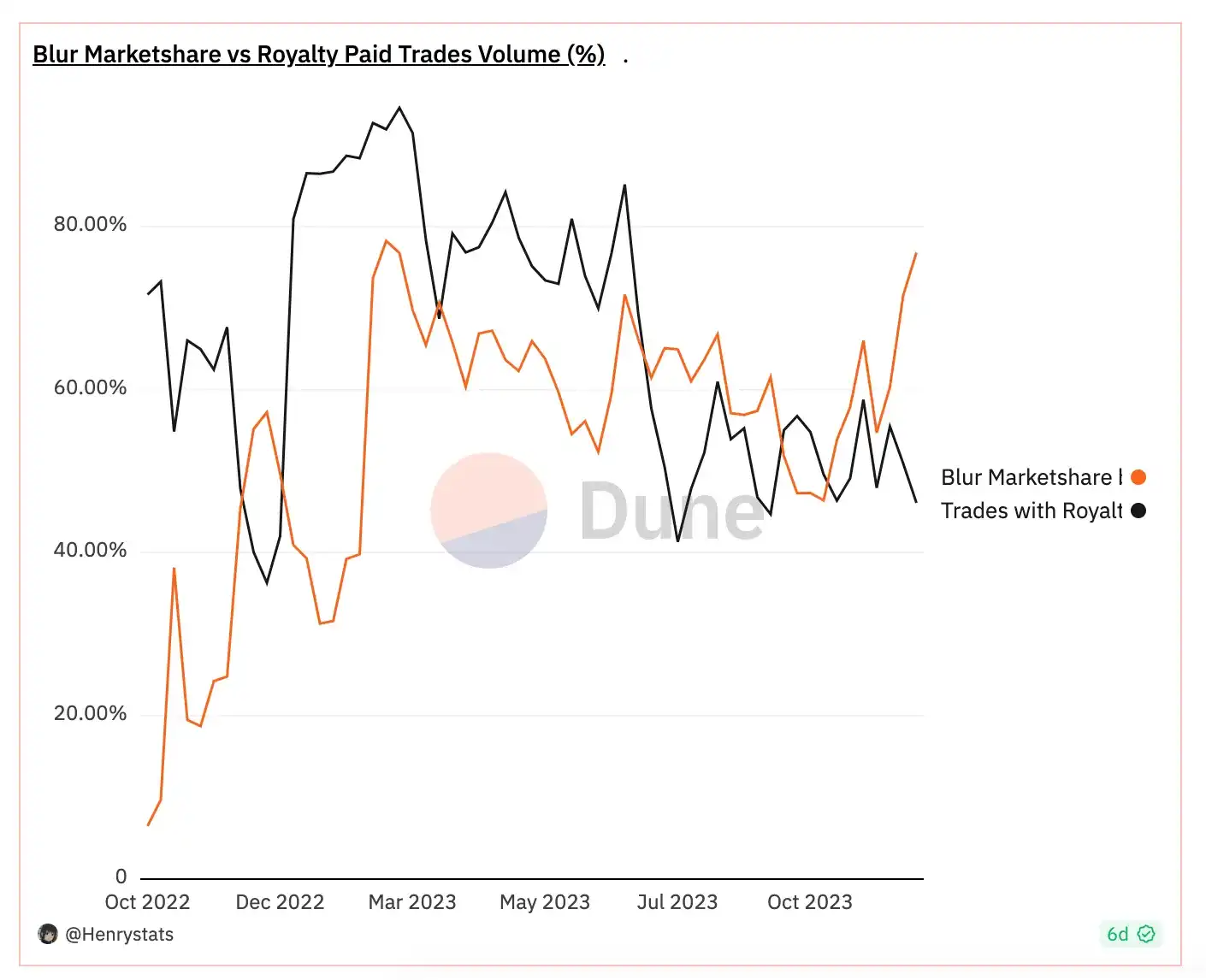
As shown in the figure below, March 2023 marks a crucial moment for the market to introduce optional taxes.
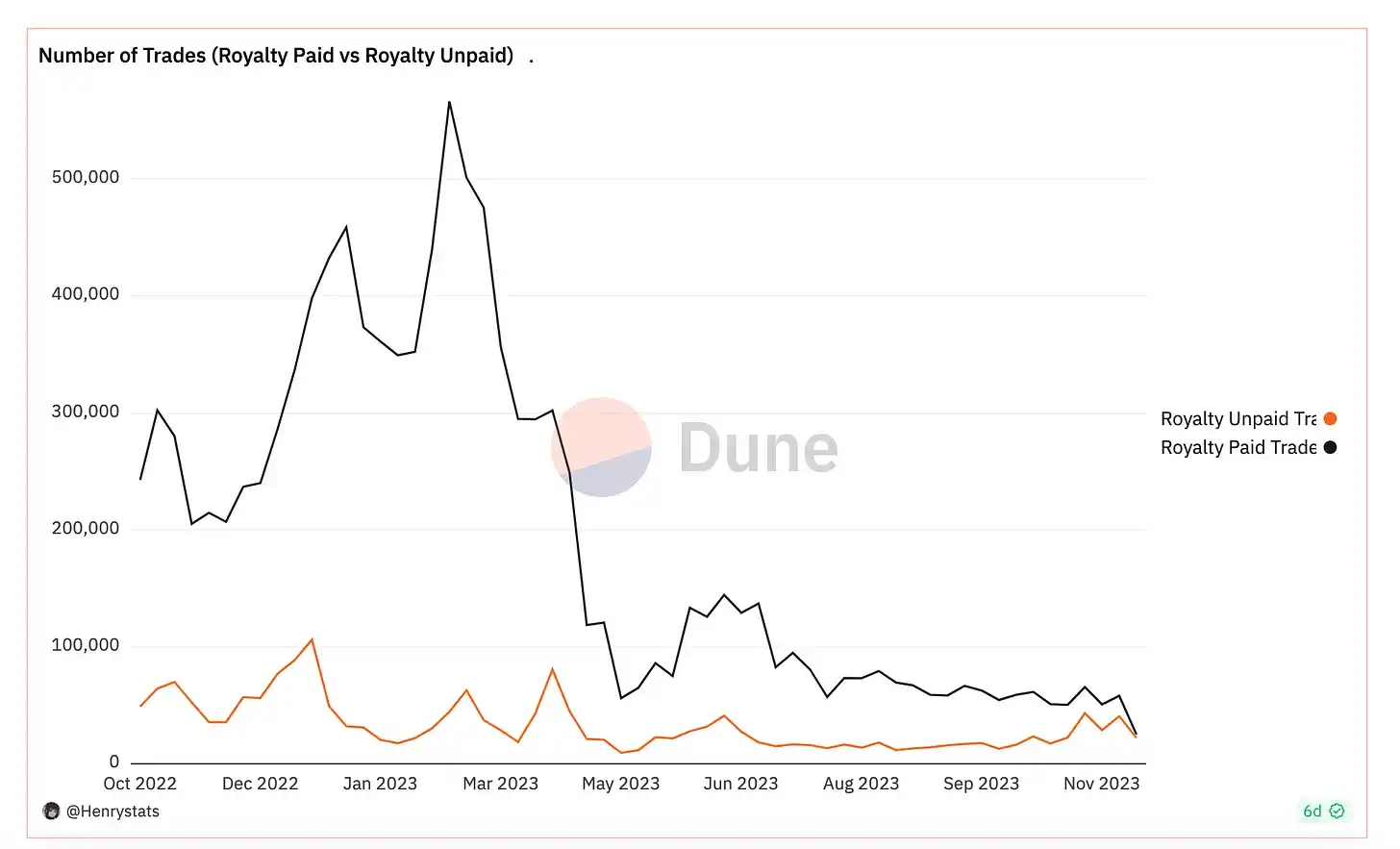
Currently, only slightly over 45% of total NFT transactions have paid royalties.
那么 Solana 的 NFT 怎么样呢?
So, how about Solana's NFTs?
Solana has become a notable competitor in the NFT field due to its high transaction speed and lower costs. NFT projects based on Solana provide an alternative to Ethereum's high gas fees, but they also face the common challenge of maintaining relevance and public interest.
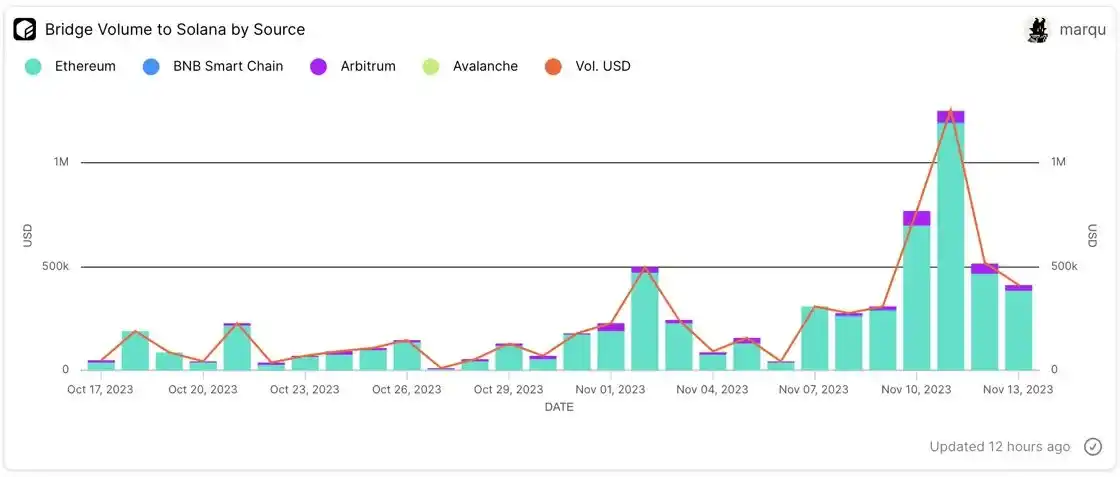
Especially in the past few weeks, with Solana's most hated surge to $60, there has been an increase in on-chain NFT activity, particularly in the volume of transactions from Ethereum and Arbitrum to Solana.
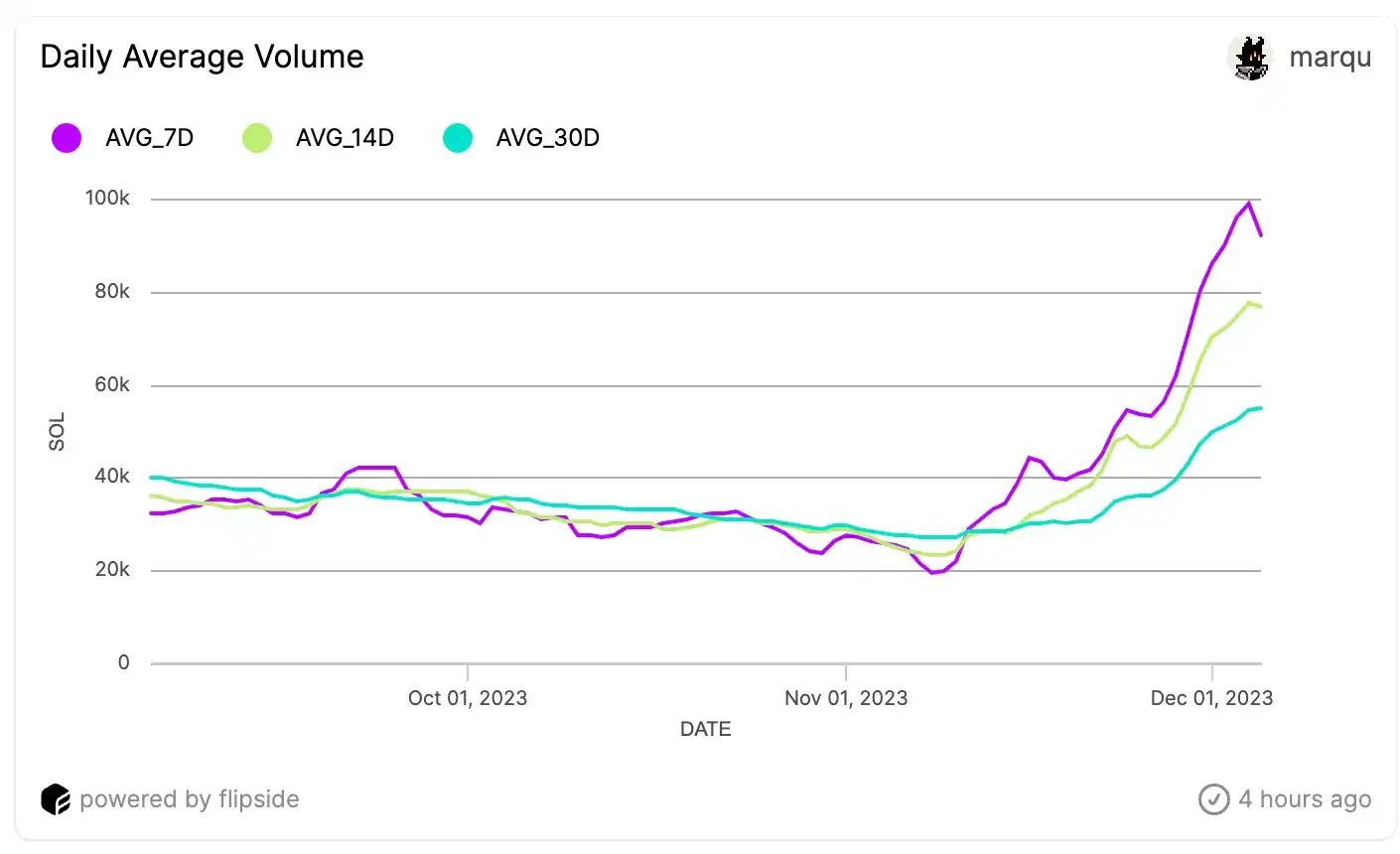
From the above chart, it is clear that Solana's daily trading volume has been increasing since early November 2023.


Welcome to join the official BlockBeats community:
Telegram Subscription Group: https://t.me/theblockbeats
Telegram Discussion Group: https://t.me/BlockBeats_App
Official Twitter Account: https://twitter.com/BlockBeatsAsia

 Related Articles