Rising interest rates: How will Circle solve the dilemma of USDC supply reduction?
Original Title: "Circle's Silver Lining: Unpacking USDC's Supply Drop in an Era of Rising Rates"
Original Authors: Matías Andrade & Kyle Waters
Original Translation: Deep Tide TechFlow
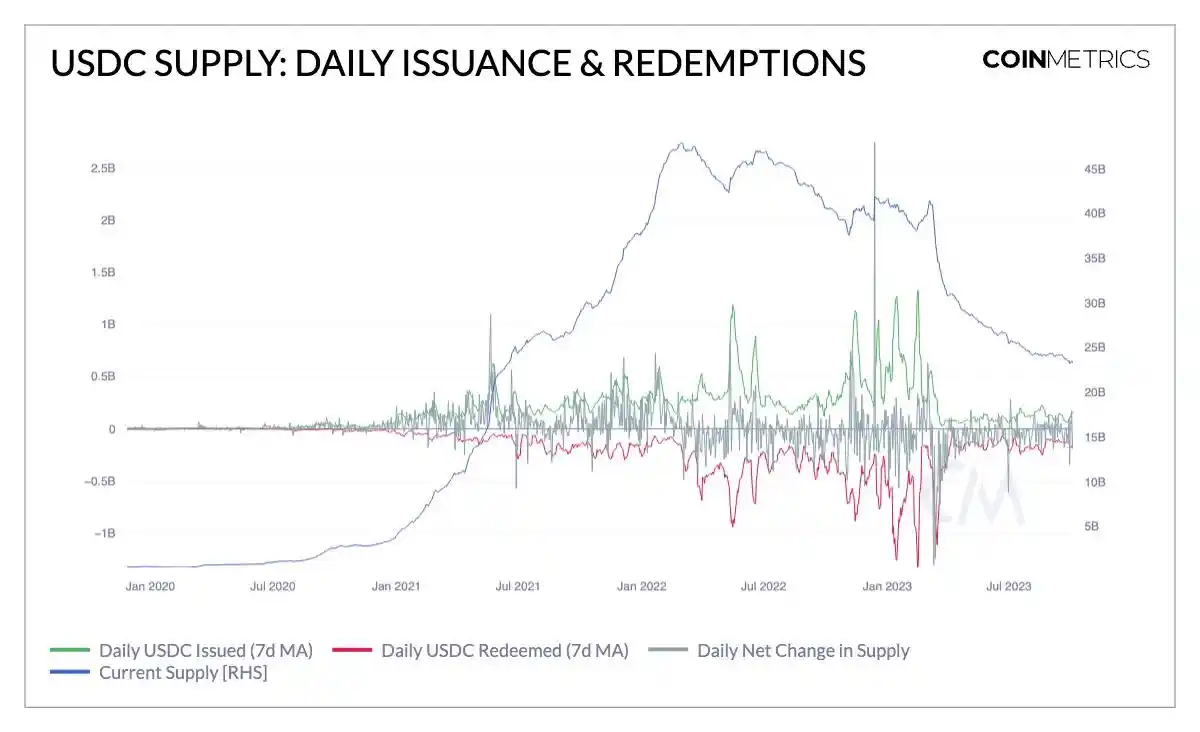
The strong growth of stablecoins indicates a booming demand for digital US dollars on public blockchains - platforms that operate 24/7 across borders and time zones. Among the stablecoin giants, Circle, as the operator of the largest domestic stablecoin USDC, has made an impressive rise. However, the start of 2023 has brought a series of new challenges. The supply of USDC on Ethereum (which accounts for the majority of USDC's total supply) has dropped from $41.5 billion at the beginning of the year to about $23 billion now, a decrease of 44%, as redemption exceeds new issuance.
In this article, we will analyze the loss of USDC supply and its impact on Circle. We will break down the current USDC supply into various categories to pinpoint the areas where the decay is most pronounced. A pressing question still remains: is this supply reduction a cause for concern? Furthermore, in a macroeconomic environment where interest rates are constantly rising, can this business model maintain its flexibility?
By integrating on-chain analysis and off-chain financial insights, mainly from public SEC filings and Circle's verification reports, we comprehensively examine the impact not only on the blockchain ecosystem but also on Circle as a corporate entity, especially considering Circle's vision to go public. Through this synthesis of on-chain and off-chain data, we assess the issues related to cryptocurrency localization and the broader business impact on Circle.
Missing $18 Billion USDC
Despite currently standing at $23 billion, the supply pattern of USDC is complex. This still represents almost a tenfold increase compared to the supply just three years ago, but it has also fallen significantly from its high point of over $47 billion at the beginning of 2022. The most severe period of USDC supply loss occurred in the first quarter of 2022, coinciding with the collapse of Silicon Valley Bank (SVB) - an event we have previously analyzed in depth. Following this event, the supply of USDC dropped by a staggering $10 billion in just the month of March.
However, SVB is not an isolated incident; the increasing government and regulatory scrutiny of domestic stablecoin operators (referred to as "Operation Chokepoint 2.0" by some) adds another layer of complexity. Overseas issuers such as Tether have benefited greatly, with its supply increasing from $70 billion to $77 billion in just the period of March 2023.
The current trend of rising interest rates is also an important variable. For USDC holders, this shift brings clear opportunity costs. Existing operators of stablecoins such as Circle do not directly pass on the interest generated by reserves to on-chain USDC token holders - we will explore this further later.
However, the significant outflow of USDC supply appears to be slowing down, as shown in the following chart. However, the daily trading volume of redemptions and issuances is still far below the level before the collapse of SVB.
The structure of the USDC supply contraction in 2023 presents a multifaceted narrative, with several trends standing out. Here, we divide the supply into different categories:
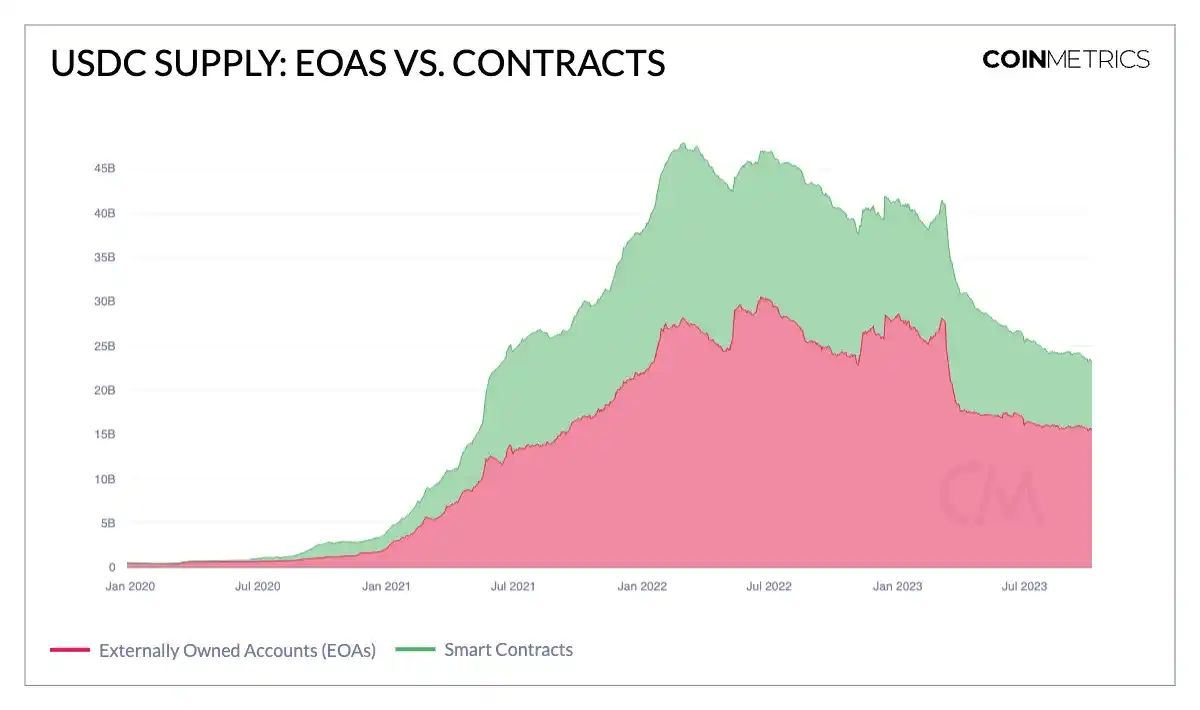
Divided by EOA and Smart Contract
First, let's compare the USDC held in smart contracts with the USDC held in regular Ethereum accounts (also known as externally owned accounts or EOAs in Ethereum terminology). Currently, about 7.6 billion USDC, or about one-third of the total, is held by smart contracts. This marks a 44% decrease from the $13 billion in early 2023. EOAs have also experienced a similar contraction, dropping from $28 billion to $15 billion. Interestingly, since the direct aftermath of the SVB crisis, a greater proportion of the supply loss has come from smart contracts.
按地址余额规模划分
Translation:
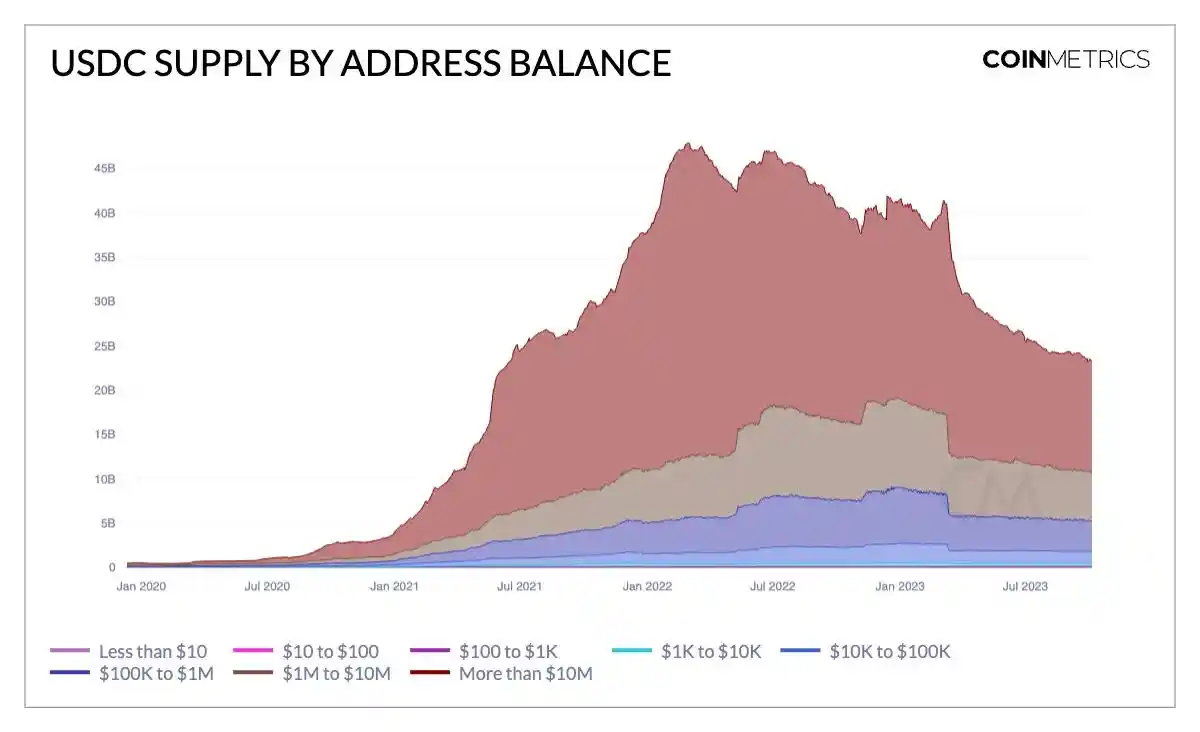
Divided by address balance size
We can also divide the USDC supply according to various wallet sizes. As expected, the segment with the largest market size suffered the most losses. Wallets currently holding over 10 million USDC account for 1.25 billion USD, down from 2.25 billion USD earlier this year. While this decline is partly a function of wallet distribution skew, the largest wallets witnessed the most significant contraction in percentage terms. In contrast, wallets holding between 100 and 1000 USD of USDC have collectively seen a 28% increase in their USDC supply since the beginning of the year. Most of the losses in the large wallet category occurred during the SVB collapse, which makes sense for large holders with diversified investments.
Top Holder
We further examined the top holders of USDC. The top 1% and top 10% of addresses now hold a greater proportion of the total USDC supply than they did at the beginning of 2023. This concentration peaked around the SVB crisis and may be due to USDC being pooled into decentralized exchange pools or exchange wallets. However, the total number of accounts holding USDC has increased from 1.6 million to 1.8 million this year.
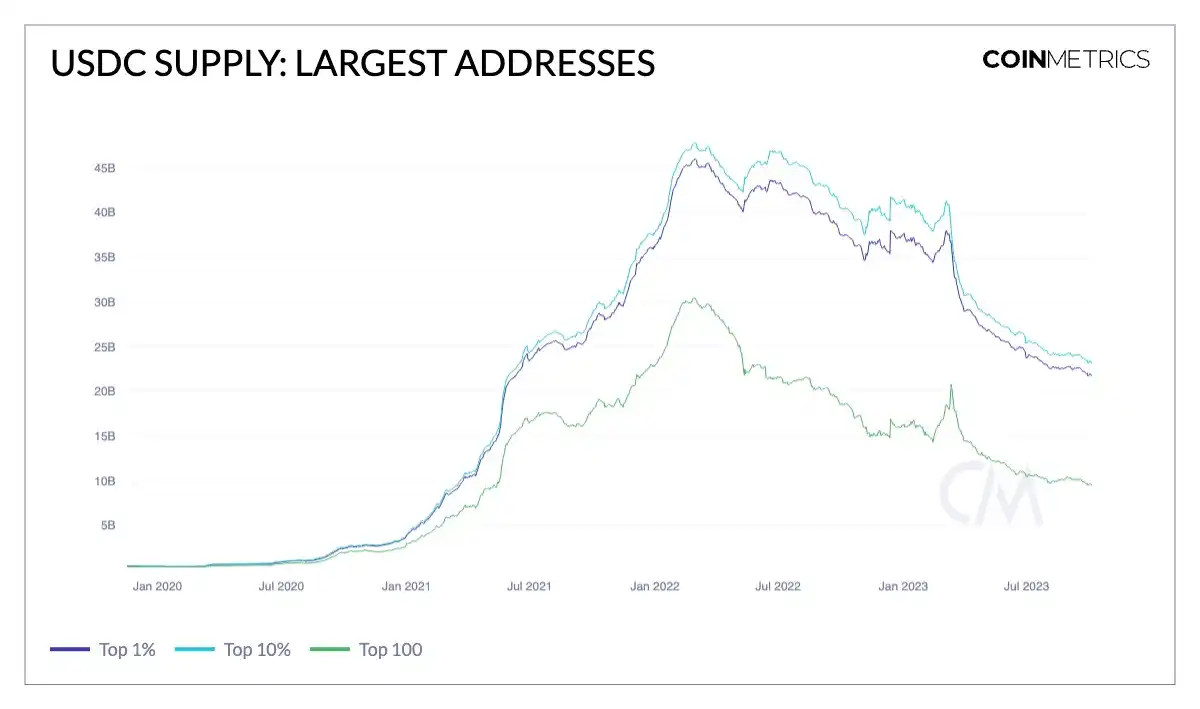
The supply structure of USDC in 2023 is complex, but mainly driven by two overall trends: the migration of SVB backward offshore stablecoins and rising interest rates that incentivize capital to pursue higher yields. Despite potential uncertainty on the supply side, the continuously rising interest rates are boosting Circle's business operations.
Circle Treasury
One advantage of stablecoin design is supply transparency, which can be audited in real-time (at least in terms of data on the blockchain). However, if we also consider Circle's financial statements and monthly verification reports, we can begin to establish a model of Circle's USDC treasury and its operations, particularly its profitability.
If we take a look at BlackRock's Circle Reserve Fund, we will find that it lists investment portfolios by the maturity date of the investment assets. All assets with a maturity date within 2 months, as well as 65% of assets with a maturity date between 1-7 days, are included. This estimate is based on a constant proportion allocation of overnight repurchase agreements and 4-week period notes, which are allocated at 70% and 30%, respectively.
The estimated size of the investment portfolio is exactly the current supply of USDC, which may not fully represent Circle's treasury operations, especially redemption operations, but should be proportional and consistent. However, this should constitute a naive estimate of the expected daily return on these investments, as it ignores transaction costs, rollover costs, and management fees, which will occur in managing this investment portfolio.
According to FRED's data, we can estimate the returns generated by these securities, using the effective federal funds rate to estimate the returns on overnight repurchase investments, and using the 4-week Treasury bond rate to estimate the returns on the remaining portion of these assets, which are 70% and 30%, respectively.
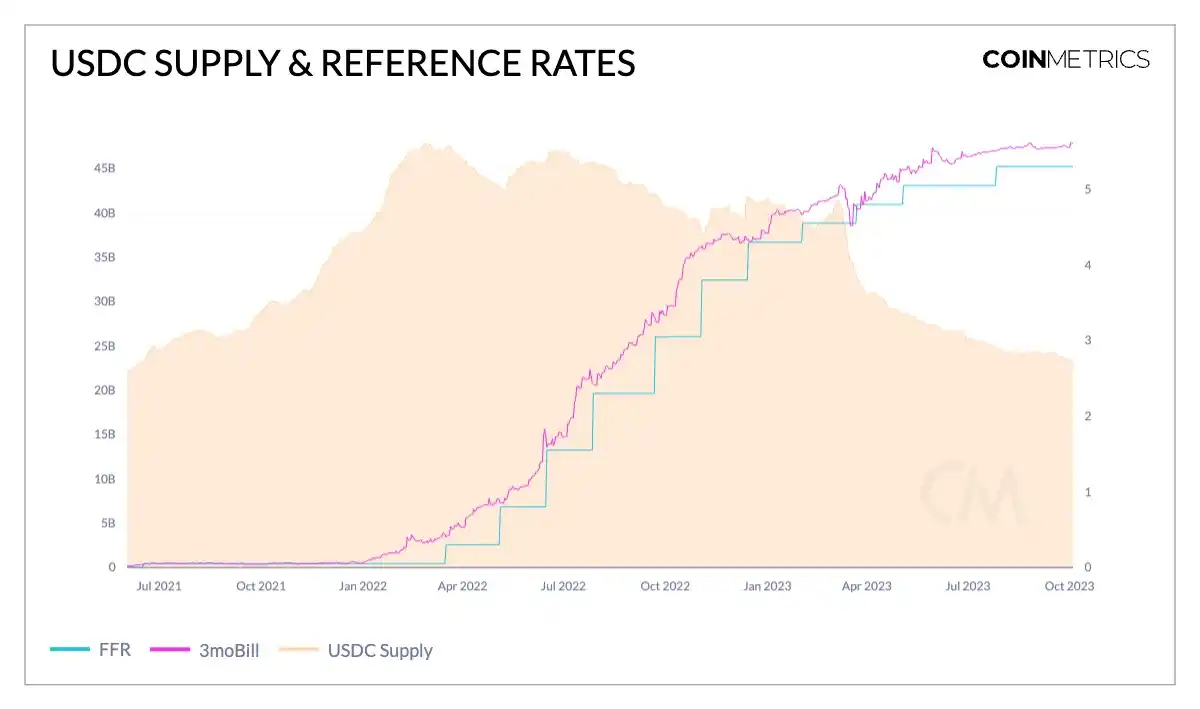
As shown in the above figure, daily returns are highly correlated with interest rates. Although the USDC supply reached its peak in early 2022, estimated daily revenue actually reached its peak in early 2023 - after a decrease in supply of nearly 7 billion US dollars. Even today, with the supply level 18 billion US dollars lower than earlier this year, interest income is still much higher than in 2021 when the USDC supply was at a similar level. This well illustrates the business model of fiat-collateralized stablecoins, indicating that interest rate sensitivity is becoming an increasingly decisive factor in driving their profitability.
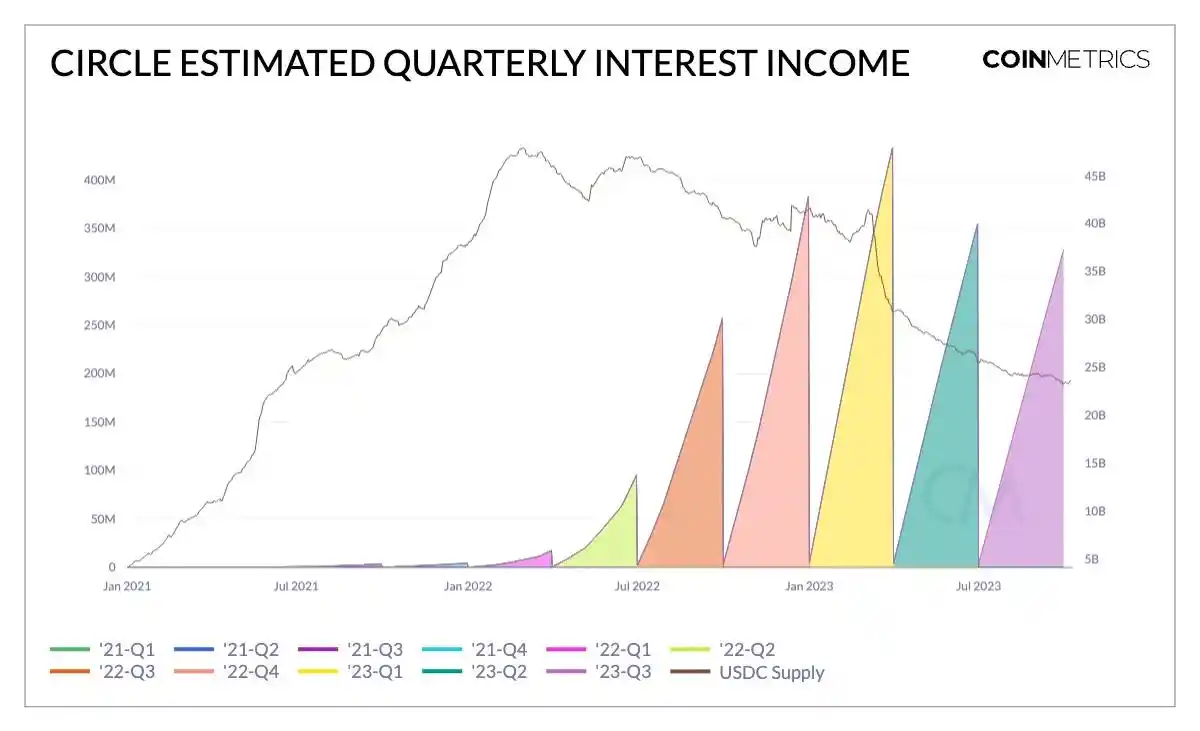
Using the quarterly data shown in the above chart, we can compare these figures with Circle's disclosed reserve interest income in their financial report. We can see that they reported interest income of $274 million in Q3 2022, which is similar to our estimated $240 million - however, this simple model seems to be ineffective when considering all data and redemptions for the current year. The lack of publicly available financial statements after 2022 hinders our model validation. Nevertheless, it is worth noting that Circle reported revenue for the first half of this year (considering all of Circle's businesses) was higher than the entire previous year, at $779 million compared to $772 million.
Even with the news of Paypal stablecoin, people's interest in stablecoins is increasing, and the structural factors driving the adoption of stablecoins are changing, with the most important factor being the rise in interest rates. The increasing opportunity cost of holding cash may push stablecoin users towards yield-bearing investments such as money market funds, which offer a substantial return of over 5%, compared to an annualized return of less than 2% in the past few years. In addition, yield stablecoins such as sDAI and sFRAX are gaining adoption, and Coinbase is also offering a 5% yield on USDC.
Summary
The drastic fluctuations in the supply of USDC in 2023, including the consequences of the SVB crisis and intensified regulatory scrutiny, have created a challenging environment for the industry. Despite the significant decrease in its supply, Circle has successfully utilized the exact same rate dynamics to boost its business operations. The constantly changing macroeconomic conditions and evolving stablecoin landscape have highlighted the need for adaptability and innovation, with alternative solutions such as yield stablecoins taking center stage. Circle's strategic partnership with Coinbase, which provides competitive returns for USDC, demonstrates the necessity of taking proactive measures in this rapidly developing environment. As Circle considers going public, its ability to navigate these tumultuous times will prove its business acumen and vision for the future of digital currency.
Original article link
Welcome to join the official BlockBeats community:
Telegram Subscription Group: https://t.me/theblockbeats
Telegram Discussion Group: https://t.me/BlockBeats_App
Official Twitter Account: https://twitter.com/BlockBeatsAsia

 Related Articles