The Road to the Future - one of the five Web3 tracks
The Road to the Future -- One of the Five Songs of Web3
Ryuono @x element
preface
This series of articles mainly discusses Web3 as the main object, including the meaning of NFT, metaverse, gamefi and a series of emerging concepts and representative issues in practice. I will also describe their future trends and values from the perspectives of practitioners and scholars.
What kind of project should be called a Web3 project? Why is NFT so popular? What should the ultimate form of the metaverse be? Why did most NFT launches by celebrities and famous brands fail? How does Game and NFT and metaverse fit together? As an entrepreneur, how to launch a successful NFT? What should investors think of the future
What about this set of alternative assets that are even harder to price than tokens?
One: Start with web3
Starting in 2021, the word Web3 is really hot. It's not easy to explain exactly what web3 means. So in the opening section, I'm going to be a little bit more academic, and in the later sections, I'm going to incorporate more practice.
Web3 is like a mountain, and more and more people realize that there is a treasure on the mountain.
There are a lot of different treasures, some called NFT, some called Metaverse, and some called gamefi.
Wait, what exactly are we talking about when we talk about Web3?
If we want to see the full picture of this mountain, we have to first understand what Web2, or Web1 and Web0 are like now, and then we can say, web3 looks like this.
Web0 has no Internet, Web1 is the information (PC) Internet, Web2 is the service (mobile) Internet, and Web3 is the asset (digital/blockchain) Internet.
So, the first, most central, and most overlooked feature of Web3 is capitalisation.
I will continue to convey and emphasize this point in the following paragraphs, not even in this series, but in any of my articles
The core of Web3 is assets, and if you look at web3 users only from a consumer perspective, you are reducing the value of potential customers by a factor of 100. In fact, every user of web3 is not only a producer and consumer, but also a trader and stakeholder.
Web1 is centralized content generation, web2 is we-media, and web3 is benefit sharing.
The second feature of Web3 is value validation.
For example, the web2 era, which is clearly represented by mobile Internet, greatly facilitates individual self-expression and strengthens User Generation Content (UGC), thus giving birth to a large number of Kols and Internet celebrities; web3 realizes users' independent ownership of their assets, data and information through blockchain technology, thus strengthening User Financial Behavior (UFB) at the financial level and making users more willing to participate in cross-border transactions that are almost impossible to achieve and financial strategy and asset interaction between strangers. This is in line with the development of The Times. Once upon a time, VC and PE were the representatives of the specialization of financial institutions, but now more and more family office, syndicate and even independent angel investors and independent transaction analysts are occupying the financial market of the former professional institutions.
This point is closely related to the asset characteristics of web3. When personal information, data, etc. are authorized and privatized, they become tradable assets. Information assets, data assets, have become a larger class of assets.
Web1 is the "line" from media to users, web2 is the "surface" connecting users and users by platforms, and web3 is the "body" where people from all over the world, even strangers, can work together by digital currency bound by interests.
Third, interactivity.
Traditional Internet media and content distribution platforms, no matter how professional the content, no matter how many editors and writers, can exceed the commercial value of Twitter, Instgram.
In the Web3 era, no amount of professional financial personnel and no amount of profitable companies can compare with a universal open protocol. With the unified crypto and token system all over the world, we can cross the bridge of language and culture to capture greater value.
Just as we media is the link of information sharing, Token is the link of interest sharing. We imagine a future where blockchain game items are defined by a set of standards and protocols that allow rapid comparison, pricing, and trading. A sword in World of Warcraft can be compared with a gun in Dota because of its rarity, creation quality, old and new, active use and other parameters, so it is easier to be valued in the same dimension, and then traded directly on the chain. The game of both sides will also give a certain value to each other's items. And a new battle game, directly on the blockchain to World of Warcraft users to "air drop" their own creation items, encourage them to play their own game, thus achieving a cold start. Will World of Warcraft therefore lose users and become less valuable? No, because of the interactivity, their assets become a new value anchor, and people are more willing to hold them, thus having a higher financial value.
Of course, we say that web3 should have more features. The three features I put forward are explained from three aspects: medium (asset), consumption (value confirmation) and production (interactivity).
The most appropriate definition of Web3 should be: the project of Web3 is that users make contributions to the ecology, help the ecological growth, and share the capital benefits of ecological growth in addition to producing more assets and obtaining practical utility. Web3 projects also need to have significant user autonomy to ensure that user behavior has a significant impact on the project system, rather than the project "technology developer" itself, and low friction interactions with more web3 projects through strong composability.
A few examples:
1. The rise of Defi, Uniswap's user-built pool, Compound transaction (mining) and YFI's machine gun pool revenue aggregator make retail investors not only passive receivers of revenue, but can interact with the protocol, which is not just a simple way to put traditional finance in blockchain.
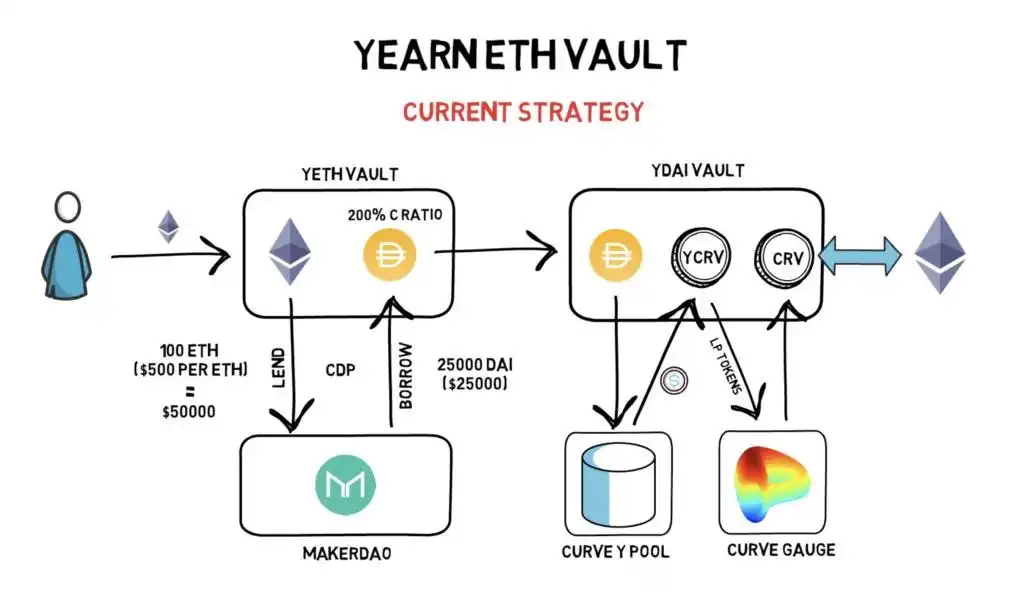
Figure: Example logic of YFI machine gun pool

Picture: Machine gun tank principle
2. The rise of Opensea is due to the fact that hundreds of thousands of monthly active users participate in transactions and contribute incalculable fees. In fact, Opensea has always been a relatively closed "Web2.5" project that uses Web2 thinking to trade Web3 NFT assets. These core web3 users, most of them, are looking forward to Opensea being open source in the future and incentivizing their early users, who contributed a lot to Opensea's revenue, by issuing coins. When the Opensea team announced in early 2022 that they were going public, they dashed that hope. The crypto community was furious, and a large number of native web3 users left Opensea for more native platforms like Looksrare, X2Y2, Blur, and others. By taking advantage of this opportunity, $SOS airdrops its own issued tokens to Opensea trading users, realizing the cold start of the project.
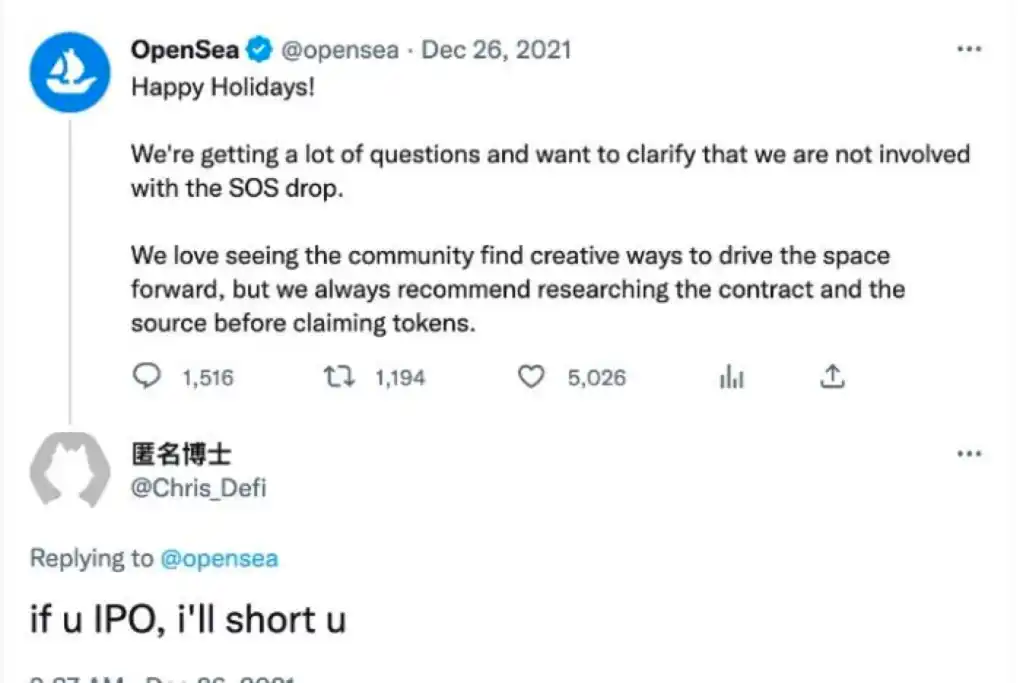
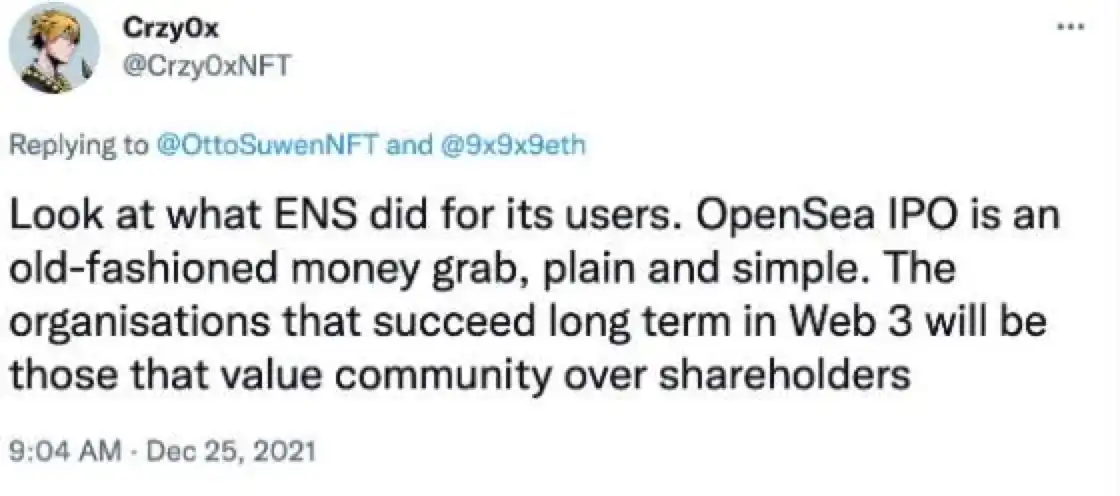
Photo: Kol on Opensea's IPO
In the future, we see Web3 gaming as having to break away from the idea of traditional games paying a lot of money for traffic, and there's a lot more about how to build interworking game agreements that share user value.
Therefore, I emphasize that web3 public chains and agreements are more like countries. Only by opening up international trade rather than blindly practicing "trade protectionism" can a country become more productive (GDP) and more prosperous.
Of course, everything has its limits. If you don't have a good foundation for your project and just want to copy a protocol through the feature of "interactivity", then some countries like the current currency crisis and economic crisis, they are often developed countries or used to be developed countries, but their domestic productivity has been extremely weak. How to do a good web3 project, or more bluntly, how to issue moneyCrypto Capital Tetralogy 2: A Battleground Without Smoke -- VC or token fund?.
In the larger ecosystem of Web3, there are many components --
NFT is the merchandise (what), Metaverse is the scene (where), Gamefi is the gameplay (how); The Crypto is the monetary system and the blockchain is the rule of law. The future has truly entered the age of the meta-universe, only these connections can produce higher value, you see any thing in isolation, is not too sexy. We also need both tools (web2) and more protocols (web3) to connect them to users (who) and really achieve marginal cost reduction.
If you can see a web3 project that connects these perfectly, let me know, I'd like to talk about it.
So, about Metaverse, NFT, and Gamefi... Where shall we start?
Two: NFT overview - capital first, utility second
Actually, I was going to start with Metaverse. But compared to metaverse, I think it is NFT that holds the value of the web3 world, and compared to Metaverse's expectations, NFT is divided. Scenes that lack merchandise and content can feel hollow. So I'll start with NFT, talk about Metaverse and Gamefi, and finally turn back to how NFT trades.
First things first. In Chapter 3 of my book Unlocking the New Code -- From Blockchain to Digital Currency, I talk about pan-entertainment as the key to mass adoption in the third stage of blockchain and industry integration. NFT is the best carrier for this kind of transboundary property
utility+capitalization. Generate bubbles through capitalization, generate short-term focus; Maintain long-term value through utility, whether it's IP, community significance, or games. So, NFT is not digital points, physical digitization, or the sale of IP goods.
Please note that, here, we emphasize the cross-attribute of NFT -- utility+capitalization, but do not use only one of them. Traditional coin circles attach too much importance to capitalization, so it is impossible to understand the community behind NFT and the use of capitalization. More importantly, people doing traditional business, NFT is only understood as a consumer product, but not as an investment property.
Compared to the consumer end of the financial markets, which I mentioned earlier, the liquidity of finance with the rapid exchange of information, I think the more dramatic and overlooked change is the capitalization of everything under the current global sovereign currency inflation system, the production end of the financial markets.
From a larger macro perspective, the capitalization of all the "business media" in the world is the main theme -- large organizations (enterprises), small information, because the most mainstream asset - fiat currency is constantly overissued, the extra printed money must find new asset forms to complete the flow, and gave birth to one new capitalization industry after another.
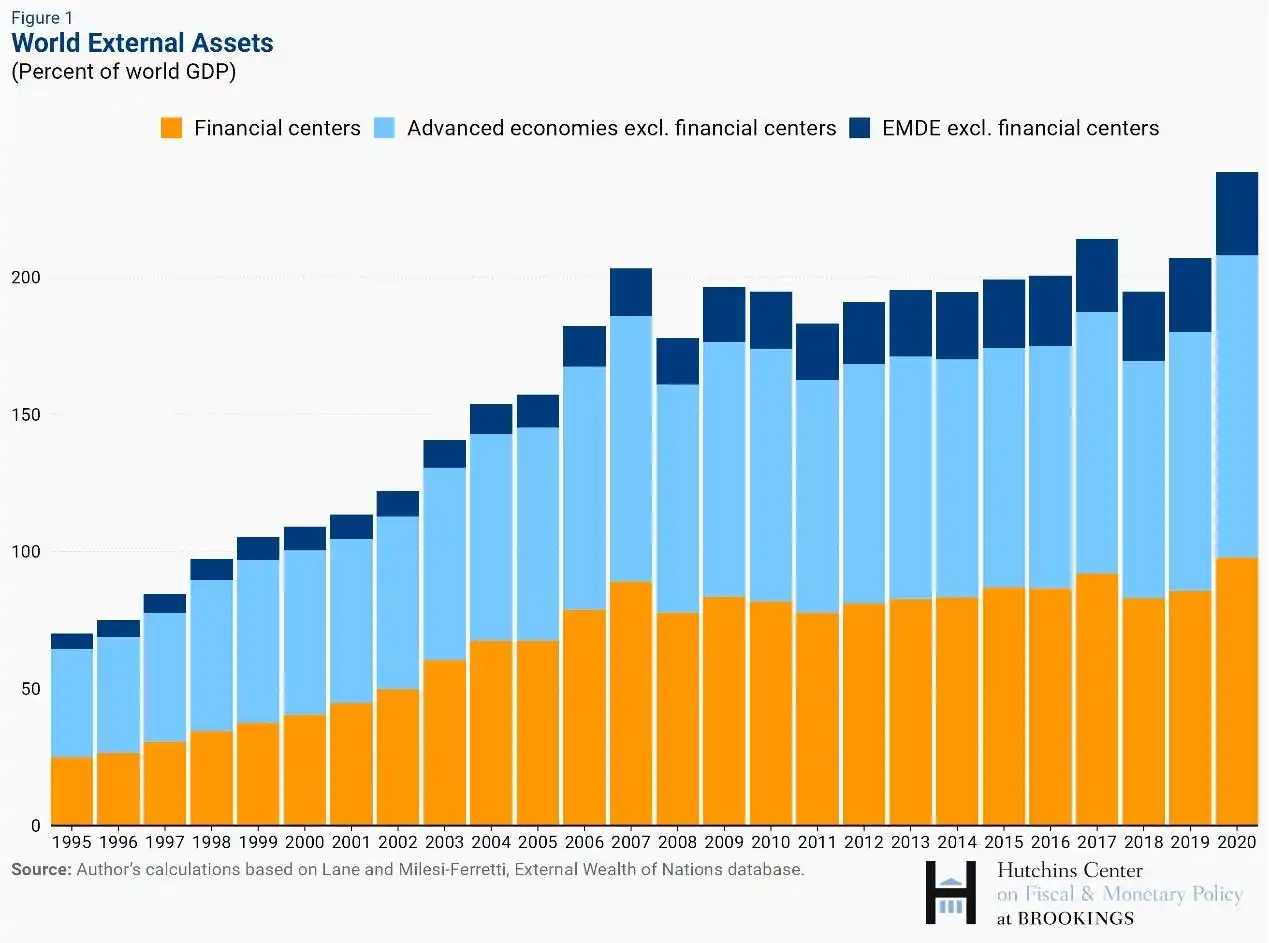
Figure: Changes in global assets
As short as four or five hundred years ago, there were not many global assets. In 2009, the subprime mortgage crisis saw the emergence of Cdos and graded bonds collateralized by real estate, and alternative investment gradually became a common asset allocation. To crypto, NFT, information explosion corresponds to the explosion of financial assets.
NFT capitalization is also part of a larger narrative -- capitalization of data and goods. For the excess money to generate better flows, pushing up the value of existing assets on the one hand, new forms of assets need to be created to complete the transfer of wealth on the other, or the world will be destroyed by class solidification.
The Internet has completed the process of opening people's minds for free. The next step is not the Internet of consumption as people think, but the Internet of assets on the blockchain, which starts to create greater asset value.
Also, don't forget that NFT stands for Non Fungible Token, so the asset attributes of the token, and the corresponding transaction scenario, are the core.
Naturally, this type of asset also has utility properties, so ERC721 (or ERC1155 or ERC998) is a better vehicle for utility than ERC20.
Therefore, I firmly oppose arguments like "the potential audience of NFT is more in the consumer field, so each enterprise should mainly use the point system at the consumption end for the purpose of enterprise marketing to gain customers". In my opinion, "blockchain credits" issued by companies like Starbucks and Nike (not to mention that some companies issue their "NFT" on their own private chains rather than public chains) are not NFT at all, just as "ownership warrants" issued in China based on physical artworks are not NFT, they should be called "digital collections". I'll come back to that later.
But doesn't NFT also have utility, and how does this part manifest?
I have always believed that the ultimate goal of NFT is to become the digital commodity of the metacomverse. In the future, when you are in the metaverse, you can put some furniture for your home (we call it equipment in the game), and buy a plane ticket to travel to another place (we call it a scroll in the game) -- these are NFT. However, these "commodities" now lack the scene of the existence of commodities. The attribute of NFT utility cannot keep up with the changes of the industry. Before the maturity of the industry infrastructure, it will slowly evolve to the future "ultimate goal" in an "intermediate state" way. Now, the blind digitalization of physical goods replaces the value of future NFT as a "digital commodity", just like we go back to the Middle Ages and give people there a light bulb. They only put kerosene wicks in, to solve the problem of no electricity, and laugh at the light bulb as useless. Of course, I will also focus on the states and stores of value that I believe NFT should develop before the metaverse scene matures in 8-10 years.
However, before this, just like the house, art and so on used to be a commodity, but after the gradual maturity of the capital market, this high-end value of the goods are the first assets. Therefore, the NFT we see now, led by the "digital identity certificates" such as land in Sandbox, Cryptopunk and Ape, and the financial attributes including tokens, have emphasized the characteristics of assets too much, so that the purchase behavior of NFT is more like an investment.
Of course, will there be several iterations along the way... Because the road does not appear logically, but people walk out.
You can't impose an old paradigm on the new world.
Including the pandemic, more and more people are dissatisfied with the real world and are seeking to build a free online world.
In order to link fiat coins, we created original stablecoins such as USDT and USDC.
The need to empower physical art led to the emergence of digital art such as the Beeple.
Real estate STO? How about we build the metaverse...
So, when each of us talks about the "New world," we're bound to talk about the metaverse, the metaverse. What is that supposed to be? In the next video, I'll expand on that.
January 25, 2023
Original link
Welcome to join the official BlockBeats community:
Telegram Subscription Group: https://t.me/theblockbeats
Telegram Discussion Group: https://t.me/BlockBeats_App
Official Twitter Account: https://twitter.com/BlockBeatsAsia
 Related Articles