FTX Community AMA: Is Web3 the next era, or will Metaverse last forever?
On January 14, FTX held an online dialogue in the community. Guests including Johnson (GBV), Rui (HashKey Capital), Benson (FTX Taiwan Community Partner), Min (Founder of TechFlow), 0xTodd (Nothing Research), and Bowen (Smrti Labs) participated in the discussion and expressed their views on the theme of "The next era of Web3, or will Metaverse last forever". The following is the transcript of this AMA, which is organized as follows.
Sally: Good evening, everyone. I am Sally, today's guest host. Let me briefly introduce myself. I am Sally, who is mainly responsible for post-investment at SGC. Last October, crypto venture capital firm Sino Global Capital and FTX Trading jointly launched a $200 million fund that will invest in crypto projects. We have invested in more than 20 cryptocurrency projects, including Solana, FTX, Serum, Wintermute, Mask, etc. Next, let's ask today's guests to introduce themselves.
Johnson: Hello everyone, I am Johnson from GBV, aka 0xminion. I am currently mainly doing research and investment at GBV, and I am one of the top 250 members of DegenCitatel. I was previously responsible for Huobi's industry research, investment, coin listing research and other related work.
Rui: Hello everyone, I am working at HashKey Capital, mainly doing pre-investment work. Because I pay more attention to the market, I will also regularly share hot topics within the team.
Benson: Hello everyone, I am Benson, the Taiwan community partner of FTX. I started out as a secondary trader, and I have a 20,000-member channel on Telegram called Benson's Trading Desk. I am also an Angel Investor, focusing on projects in the Solana and Avalanche ecosystems.
Min: Hello everyone, thanks Sally, I am Min, the founder of TechFlow, we mainly produce and disseminate in-depth content related to Crypto, I like to chat, and welcome everyone to pay more attention in the future, thank you.
0xTodd: Hello everyone, I am 0xTodd. Thank you very much for Sally's invitation and the organizer FTX Chinese. I am a partner of Nothing Research. Our NR is a research-driven Crypto Fund that focuses on primary early-stage investments in DeFi and Metaverse, while increasing assets through DeFi yield farming. The backgrounds of several of our partners mainly come from Huobi and Ascendex.
Bowen: Hello everyone, I am Bowen@Smrti Labs, co-founder of DDEX.io.
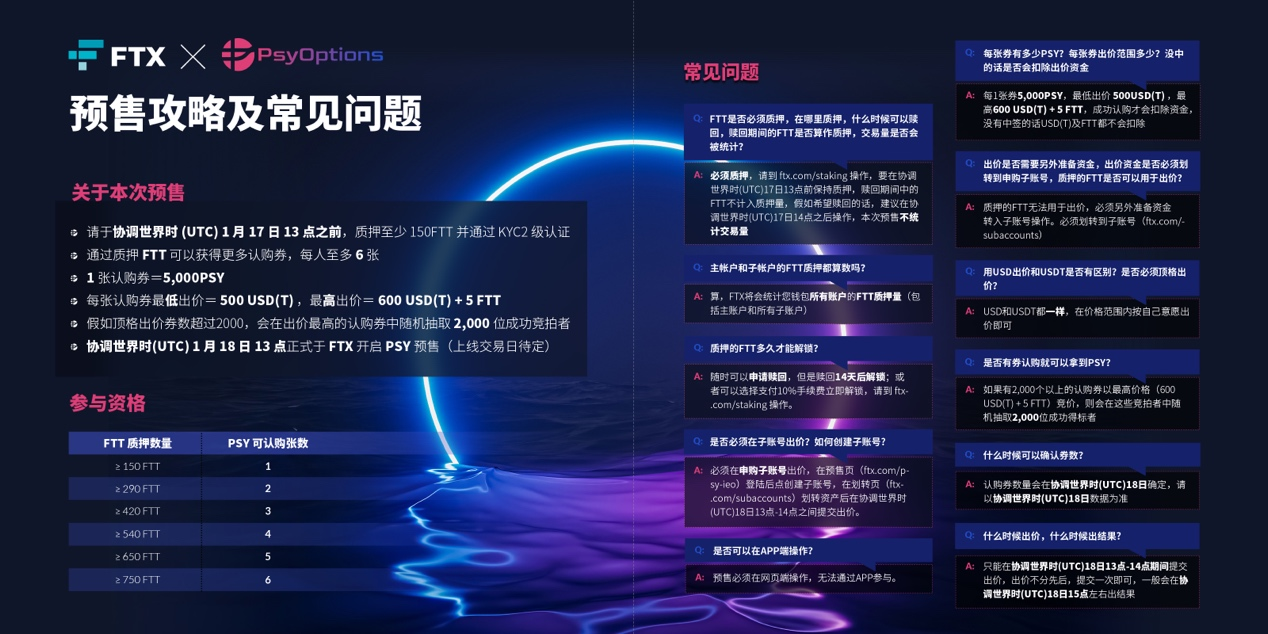
Sally: Okay, thank you all for the invitation. As we officially enter our first round of panel open discussion, you can pay attention to FTX's IEO.
Sally: Q1, the recent Curve Wars have brought about the curve ecosystem, including the CVX war. How will the future pattern of DeFi change? Some people even say that they are looking forward to the birth of ve (NFT). What do you think?
OxTodd: I have always had a view that the "gods" of various projects on Curve. Without Curve's "god's help", these anchored assets actually have almost no interest-bearing scenarios or uses, and the continuous $CRV rewards seem to have become the most important use of these stablecoins.
For example, a stablecoin starting with M, look at the on-chain data, either in Curve, or in the cross-chain bridge, and then cross to other chains and exist in the Curve of other chains. Everyone soon realized that the speed at which this fairy nanny produces milk is limited. In this case, there must be a way to distribute these scarce resources, and then there was Convex, votium built on Convex, and a series of vote-buying ecosystems. Vote-buying continued for a long time, and the leverage ratio was about 1:3, which means that now 1 yuan of bribe can leverage 3 yuan of CRV rewards.
But this is also beginning to enter a more competitive state. So some vested interests began to consider how to further pocket these milk. Therefore, AC proposed ve(3,3). From the words between the lines of his article, it can be seen that he hopes that the rules for distributing milk will become biased, such as using a Locker to distribute all CRV rewards to the pool with the highest handling fee. But if you go to Curve and take a look, you will know that the one with the highest handling fee now is MIM, which he personally promoted...
Therefore, the evolution of Curve ecology is a "milk distribution" problem, and this topic must be a long-term topic. Only in the long run can it continue to evolve into the most perfect form. The DeFi ecosystem is currently relatively elementary in terms of milk distribution, and many of them are big pot rice systems.
Therefore, Curve's evolutionary debate is a good thing. In the long run, everyone should follow Curve's DAO model, and we have to thank him for this. We previously invested in a project called izumi, which absorbed some of CRV's milk distribution skills, which I think is quite meaningful.
I look forward to the future, when Curve will also become the "god" at the level of DAO governance and milk distribution.
Rui:As I understand it, the core reason for the governance dispute on Curve is that the stablecoin Swap can bring stable low-risk mining income, and the competition is for the liquidity of the mining fund pool, that is, funds with low risk preferences bear certain potential losses to obtain stable income. Governance is important, but Curve and a few other DeFi protocols have evolved to the stage where governance needs to be seized. Regarding the future direction, I think that projects based on aave and uni, which have accumulated most of the underlying assets, have the potential to redevelop the efficiency of locked funds.
There have been many attempts at interest rate derivatives before aave, but these attempts have not been very successful, because no one uses the protocol no matter how sophisticated it is, because it is too complicated. In this area, I am optimistic about projects that redistribute deposit and loan interest rates and new lending projects based on long-tail assets.
Then there is Uni. Uniswap V3 is a cash machine for capable market makers, but the scale of market making strategies is limited, so there is no need to develop it for everyone to use. Then another way is to hedge through option derivatives. It may be a good path to make LP assets into risk-neutral mining products through crypto naitve derivatives.
I think it is unlikely that the underlying assets of DeFi will increase 10 times according to the current BTC ETH price, and the status of the head protocol is unlikely to be shaken in a short time, but there is a great opportunity to redistribute the value generated by the existing underlying assets.
Johnson:DeFi is too fast, and there are too many variables. I started from the direction of "change", and there are several directions that are roughly determined.
1. Curve's veCRV model/ecosystem, such as Redacted and other bribing protocols based on OHM or not based on OHM.
2. Permissionless lending protocols for long-tail assets. For example, Silo Finance, Euler Finance, and then try to join veCRV lending.
3. Crypto native Game DeFi, such as MAGIC, Genesis Adventures, etc. in the Loot ecosystem. For example, the MAGIC ecosystem may join the ve model.
4. Exploration of on-chain derivatives. I think most of the existing on-chain derivatives (options, futures, IRS) are not designed for DeFi. What DeFi needs is on-chain derivatives primitives tailored for DeFi instead of moving a centralized set to the chain and doing it again.
5. DeFi's attempts at L2s and the established ecosystem solve problems such as high gas fees in L1.
In general, DeFi emphasizes composability. Early protocols need to solve their own liquidity problems and acquire enough early users before discussing whether the protocol design is optimal and whether asset efficiency can be more efficient. Although DeFi innovation will be more difficult at this stage, the gameplay will not stagnate.
Min:The war on Curve has never stopped since its birth. First, the war of yield platforms, Yearn.finance, Stake DAO, Convex, Frax and Wonderland, all want to attract liquidity from competitors to their side by controlling CRV. Secondly, there is the offensive and defensive battle of stablecoin trading volume between Curve and Uniswap.
With the entry of non-stablecoin projects into Curve, for example, the addition of Tokemak will continue the liquidity war to an unimaginable level of intensity. There will be more new and old projects that want to integrate into this ecosystem and join the battle.
As for the future of DeFi, it still needs to bring incremental growth through innovation, or it will madly increase the utilization rate of funds and leverage.
Some of the directions observed are: one is "RdeFi" (Regulated DeFi), such as Aave Arc and Compound Treasury, which provide DeFi services for institutions.
Second, real-world assets on the chain Aave and Centrifuge have launched a new market called Real World Assets (RWA), where users can use their real-world assets as collateral to borrow cash.
Third, unsecured lending, such as Goldfinch, which was recently launched by Coinbase, and TrueFi (which seems to change some models), but in the final analysis, it still depends on the credit line of the B-side. The long-tail market is not large because the currency circle lacks a credit system and risk control measures, so I am quite optimistic about the future Web3 reputation rating based on wallet addresses, which can also be regarded as a kind of credit.
Overall, I am not so enthusiastic about DeFi, mainly because I am not smart enough. Looking at fixed interest rates is like doing calculus for me. I fell asleep halfway through.
Benson:Currently, DeFi protocols generally face the problem of liquidity loyalty. In addition to liquidity mining, is there a better and more sustainable way to retain liquidity? This is a problem that DeFi 2.0 needs to solve. I personally think that Tokemak's model may shine this year. Tokemak thinks about the interaction between DAOs, rather than a game limited to personal opinions. For example, if you want to build a new reactor in Tokemak, you need to obtain the corresponding token and deposit it into the reserve pool.
And this process requires DAO to DAO-style communication, using toke tokens to exchange for corresponding tokens. This process is full of possibilities: it can be carried out in the name of lending, introducing new protocols specifically for lending between DAOs, or adding a new PCV protocol, etc. In addition, algorithmic stablecoins are also a holy grail that DeFi has not yet conquered. Whether it is the early AMPL, the mid-term Basis, to the latest Fei, OHM, UST, etc., they all rely on narrow game theories in terms of mechanism and cannot be truly anchored.
I personally think UXD is a very interesting stable calculation. It uses delta neutral positions as collateral to print UXD. The mechanism is very close to holding spot + short position hedging, but at the same time it has available liquidity and potential funding income.
The truth is simple. Perhaps the real stable calculation does not need to rely on too complicated game mechanisms. At present, the balance of stable games in the market is very optimistic. Basically, it will explode when encountering a corner situation. For example, everyone is happy when Luna spirals up, but if it spirals down, it may die. The model of UXD is worth paying attention to.
Bowen:1. Curve, as the uncrowned king of DeFi in 2020, has achieved a market-making depth of stablecoins and homogeneous tokens [WBTC/SBTC, ETH/Lido ETH] with a TVL of 24 Bil, surpassing the stablecoin FX market points and depth of most centralized trading platforms. Now many OTC Desk stablecoin transactions will also go through CRV.
2. The iteration of algorithmic stablecoins, the issuance of stablecoins is like the Federal Reserve printing money. Every new project wants to replace the status of USDC, USDT, and DAI in the ecosystem from different angles, such as FXS, MIM, UST, FEI and other multi-chain 85% asset back algo stable coins with defi income attributes. However, in order to increase circulating supply and utility, the best way for these new Algo Stable Coins is to be able to go on the 3crv / algo stable coin pool to increase market credibility. So if there are more stable projects in the future, the competition for CRV governance tokens will continue.
3. Compostability of DeFi is the core, and no one can do it all. How to re-combine the ecosystem can open up a lot of expansion space.
4. There are many strange cultural trends in the Crypto Degen community, which are self-contained, such as Magic on Arbit, Hdao on Tezos, Crypto Raiders on Polygon, and AAVEgotachi. Although they are very quirky, they also have a lot of bottom-up community feeling.
Sally: Q2, L1 vs L2, will the L1 pattern gradually settle down, do old public chains (such as cosmos) still have opportunities? Will new opportunities in the future explode in the second layer or the first layer?
Johnson: WAGMI, I think there are opportunities, but most opportunities will last for a short time unless there is a very strong community and ecosystem.
Capital will consider underestimation and overestimation. If ecosystem A has risen 10x and ecosystem B has not risen, capital will think that ecosystem B is relatively undervalued, so once capital enters, there will be an explosion.
The opportunities of the second-layer network are slightly different from those of the public chain, although the second-layer ecological approach will also be similar to that of the public chain, such as the emergence of ecological funds, native major protocols, etc.
In the short- to medium-term, the second-layer opportunities will mainly appear in Boba, Optimism, Arbitrum, Metis and other Layer 2 based on Optimistic Rollup technology. Currently, only Boba and Metis have issued Native tokens to stimulate their own ecosystems, while Optimism and Arbitrum have not yet issued coins. I think the second-layer network can only start to stimulate its own ecology after issuing coins. If there is no coin incentive, it will be difficult for the first batch of users to migrate.
Whether it is the second layer or the public chain, the first batch of users will always be Degen—the second batch of users are the power users of DeFi,---> the third batch of users are the more common users.
Sally:This is quite interesting. The incentives for users on the second layer will be very different if there are coins or not.
Min:The biggest investment theme from last year to this year is the expansion war, new public chain VS L2, and the war continues this year...I believe that the future will be multi-chain, and each chain will have its own way out, but this will only be revealed in a bear market. I am more optimistic about public chains that have their own characteristics in some aspects, such as games, NFTs...As far as new public chains are concerned, there are currently two MEMEs. In 2021, it was SoLunAvax, and now FOAN is beginning to rise (Fantom, One, Atom, Near). I pay more attention to the latter. There are still a lot of opportunities on the new public chain, especially some Native things, not just things on Fork Ethereum, such as DEFIKINGDOM.
From another perspective, large VCs have a need to promote the L1 narrative. The track ceiling is high enough and can carry enough liquidity. The primary and semi-financing of large public chains is also very active. For example, a large public chain recently sold 1B at a discount.
For L2, the focus is still on zkEVM. After all, V God has said that in the medium and long term, with the improvement of ZK-SNARK technology, ZK Rollups will win in all scenarios, and several solutions are under attention.
A core point for new public chains and L2 to compete for users is the entrance. At least for now, the cost and physical examination of interacting with L2 are actually not as good as those of new public chains. Therefore, it is particularly important to strive for the bridge support of large trading platforms at this time to reduce the interaction cost of users.
0xTodd:How should an L1 public chain develop?
Subsidize financing + brush data, raise funds again with data, subsidize again + brush data, raise funds again with data (including selling to retail investors), subsidize again + brush data…
Infinite loop method, whoever has more loops will be more powerful. The richest L1 can also invite Curve, AAVE and UNI to help, and the difficulty of invitation increases successively. Successful invitation can accelerate the cycle.
L2 will be relatively difficult, like Arb and OP have not issued coins yet. Because there is no subsidy, their speed is definitely slower than L1, but they should be given a chance. Without subsidies, there will be fewer Fork projects, because these Forks only make quick money. Fortunately, they are legitimate, so some projects that generate electricity for love have been born. They still have the genes of ETH entrepreneurs. I know a lot of innovative teams. Although they are limited by ETH's high GAS, they still give priority to Arb, such as Divergence, which we led the investment. For example, Arb gave birth to a marketplace like Magic. In addition, interesting L2s like Metis Boba have tokens, which may develop faster.
In summary, L1 and L2 have opportunities, but we really need to give them more patience for L2.
Sally:In summary, be patient and give L2 more time.
Bowen:The competition for LAYER1 has just begun. There are 4 million DEX user addresses in total, and Opensea has 300,000 more active addresses. Polygon had Sunflower gas of 600gwei due to 300,000 addresses participating, Arbitrum and Sol had downtime, and Dfinity was blocked due to NFT issuance.
Although each Layer1 company has sufficient food and grass, not every company can withstand the test of the battlefield.
Zksync, Starknet, Aleo, Aztec, these star ZK teams have not yet been launched, I am more looking forward to the architecture of separation of Computation and Storage.
For the L2 ecosystem, I prefer Arbit, GMX, DOPEX, MAGIC, HND - derivatives, NFT transactions, lending have native developers, and the ecosystem is relatively healthy.
Recently, I have also been re-watching the developers of the Dfinity ecosystem. Many Social Fi projects, decentralized Reddit, Twitter, psychedelicDAO and other developers are a bit like the ETH community in 2016, all developing tools and underlying layers, very creative but without a killer app.
I agree with 0xTodd's statement, give them more patience, it is not the time to talk about the results yet.
Benson:As Johnson said, this wave of FOAN (FTM, One, Atom, Near) suddenly outperformed the market. It may also be that funds rotated to public chains that had not risen much before. The low base period makes it easier to be favored by hot money. From the perspective of EV in the short term, compared with SoLunAvax, the opportunity on FOAN is definitely greater.
I personally think that the opportunity for Layer1 lies in the development speed of zk-rollup. L1 public chains must seize as much territory as possible before zk is perfected. Since zk requires more computing resources and is more complicated to implement, it should generally be about half a year slower than the op-based L2. The seven-day exit period of op-rollup is too long, which seriously undermines the user experience.
However, in the long run, I personally still think that L2 will not be the ultimate solution. Everything still depends on the development of ETH2.0 itself, because Layer2 will destroy the composability of DeFi. For example, Aave is only available on Polygon, and Uniswap is only available on Optimism. We cannot conduct a transaction that calls Aave and Uniswap smart contracts at the same time. Protocol fragmentation leads to limited composability, which will reduce the attractiveness of DeFi.
In addition to the fragmentation of protocols, liquidity is also fragmented. Although some top protocols have been moved to L2, the overall transaction volume and TVL are still not as good as the main chain version. The main reason is that the liquidity is too fragmented.
Rui:I am very optimistic about Cosmos. The Tendermint framework is currently the most stable and easy-to-use one-click chain-issuing tool outside the EVM framework. It is also very free and can be connected to the IBC ecosystem or not. The IBC bridging function is very good, and cross-chain is fast, accurate and stable. Before, Cosmos did not charge for the Tendermint framework and let everyone develop it, but as more and more chains join the IBC ecosystem, the value capture of ATOM will become clearer and clearer. Another interesting point is that the Cosmos network does not stipulate which chain must be the Hub, but is determined by the market, which also means that Cosmos will be more open.
In addition to the old public chain of Cosmos, there are Polkadot and Dfinity. In fact, the technical direction of these two is quite good, but they have not found their own ecosystem, and they have overdrawn the increase of their own currencies before building their ecosystem. It is very difficult to rely on the increase of their own currencies to drive the infrastructure with strong money-making effects. On the contrary, we can expect to run out of some different ecosystems.
In my understanding, avax, matic, bnb and many new public chains started from forking the Ethereum ecosystem and slowly found their own ecological direction. BNB found a suitable development direction for itself and went to games to divert traffic from outside the circle. Avax and matic are more polarized. On the one hand, they are low-gas replacements for some head Ethereum Defi protocols, and on the other hand, they are some native projects with strong money-making effects. But both of them have upper limits on growth, and new chains will grab users and attention from the old ones. So it is very important for them to find a development direction for these L1s.
For L2 in a general sense, my personal understanding is that the earliest development direction is also such a polarization. On the one hand, some high-quality protocols and developers are migrated by sharing security with Ethereum. On the other hand, the rise of native tokens is used to attract some users who have a strong demand for money-making effects, but this can only be achieved after the issuance of native tokens is completed. After there are a certain number of users, some native protocols will be supported. These L2s are orthodox and have inherited Ethereum's huge developer group. I believe that a group of native and interesting protocols will emerge.
But to be honest, the applications and underlying layers of L1 are too consistent. Compared with the competition between L1 giants, I am optimistic about functional chains like ar and mina that can serve other L1s.
Sally: Q3, in the past two weeks, Chinese NFTs, including Mr. Zhou Pantabear, the previously emerging Heliren, and the old IP Lengtu X Rabbits, which is about to be launched, have received widespread attention. Some people say that Chinese NFTs are going to counterattack. How far are we from the birth of the light of Chinese NFTs? In your opinion, at which stage of the wheel of history are we now?
Min: I want to throw a brick and ask me whether domestic NFTs are popular. Of course, Chinese style is the strongest.
To diverge, I think Token and NFT will gradually become two different development paths. Among them, I have always been optimistic about the narrative of encrypted fashion brands (although I wear Adidas), and even think that the future "Supreme" will first appear in the digital world and then be mapped to the physical world.
First of all, in my opinion, whether it is traditional finance, Crypto, or even religion, they are all Ponzi. Without incremental growth or collective runs, they will collapse. The question is how to maintain Ponzi. Social security pensions are forced to lock positions by national power, but a more advanced means is culture (the ability to tell stories makes humans the boss of the earth), which makes you willing to lock positions.
For example, diamonds are just a pile of carbon, one of the best marketing in human history, but a story of "A diamond is forever" (A dimond is forever) is told, and it is bound to love, and it becomes a physical NFT (3, 3), buy, hodl & pledge (wear it on your hand every day)...
Therefore, an awesome NFT must have cultural attributes, whether it is from the atomic world (such as Jay Chou) or Crypto Native (PUNK) from the bit world, because there are always people who regard it as a "consumer product", forever (3, 3).
OxTodd:Great, I'll take over. Today we are in the Chinese channel, and it is very appropriate to talk about this. +1 for the strongest Chinese wave.
I feel that Chinese people still have to play their own NFTs, after all, this is where the cultural conflict lies. To be honest, I really don't get this point in the works of some European and American painters.
In addition, I think that in terms of NFT Chinese, it seems that the atmosphere in Taiwan is now better. You can listen to @Benson's detailed talk later, hahaha. Mainland China currently has this regulatory requirement, such as digital collections need to be sold at T+180, restricting secondary market transactions, etc. These will actually affect the development of NFT assets in mainland China to some extent. On the contrary, NFTs from Hong Kong, Taiwan, Malaysia or Chinese living in Europe and the United States may have some very interesting things. In short, I am looking forward to it.
Johnson:I think it is necessary to understand the playbook of NFT. Web 3 is a global movement without borders. Only when you find your own product market fit and unique gameplay, you will naturally attract widespread attention. I believe that each region and culture will have its own unique NFT culture and bring new cognition to the world.
Sally:It is very interesting that many of our guests today are senior crypto collectors. Personally, I am very curious about how everyone sees it from the perspective of users/industry practitioners. @Benson I know that people like Woody in Taiwan should have seen NFT, and many people in the community are also early supporters of blue-chip NFTs such as BAYC/MAYC. I don’t know what Benson thinks.
Benson:Pantabear's transaction volume has reached the first place in OS, which is a height that Justin Bieber's Xiao Jia Xiong has not reached. From this point, we can see the huge potential of Chinese NFT. But I didn't buy it. It's really sad to see you making money. I'm so proud of it.
Following what Tod said, Taiwan is really crazy about NFT now. There is a Fomo Dog similar to the Western CyberKonz community, a subculture Demi community, and a salty fried chicken (Taiwanese fried chicken?) store that also issues NFT.
I have participated in the BAYC community gathering and found that many of the participants were unknown to me. Many of them were outside the native currency circle. It can be said that the narrative and cultural tolerance of NFT may be greater than that of the traditional currency circle. This can also be seen from the different cycles of the NFT bull market and the currency circle bull market.
Recently, an artist in Taiwan named Chen Lingjiu did a yolocat project, giving 9% of his personal income to this group of NFT holders. This is a very special way of playing, where fans are transformed from content consumers to artist investors. I personally think this is very Web3.
I buy NFTs because I love you, and I praise your works because I am your investor. Because I praise your works, more people love you. This kind of positive feedback is also a fan flywheel.
Rui:I don’t think Chinese people are really lagging behind in the field of NFT. There are quite a few Chinese who own APE, and there are many popular anonymous projects that are led by Chinese people behind the scenes. It’s just that on the one hand, everyone uses English to communicate (English is the most common language), and on the other hand, after the baptism of DeFi, everyone always feels that the moon is rounder abroad.
Whether it is Chinese NFT or NFT in any language, it is very important to find the core narrative and target buyers, and to continuously build expectations so that users can see that the team is doing things. The liquidity of NFT is average. As long as everyone is 33, it can't be sold at best, and it won't plummet. APE is a good example. The community cohesion is very strong. It has become a totem-like belief. New expectations continue to emerge. The result is that the bear market can't fall, and the bull market is rising. I haven't seen any Chinese NFT team with such operational capabilities and understanding of Crypto Naitve yet.
Cultural NFTs will be more interesting. Most of these NFTs are endorsed by some resources outside the circle, so there are naturally expectations of basic value. Regional differences determine the differences in player groups, and people in other regions/who don't understand this culture will have FOMO emotions because of the skyrocketing prices, which will lead to a rapid Pump of NFT prices. But once the Fomo sentiment is gone, there needs to be enough community education and intrinsic value to support the price. For example, Jay Chou's NFT, this kind of NFT endorsed by celebrity IP has a clear price expectation.
When it was bought at 0.4E, everyone expected that if it didn't work out, Jay Chou had so many fans, and the better seats at the concert would be at this price, and there would always be people who would pay for it. If it didn't work out, the project party would give NFT some physical empowerment as fans would support it. But the purchasing power of die-hard fans also has an upper limit. As the price rises, this expectation gap is gradually leveled, and the project party needs to provide a new actual roadmap and utility expectations to prepare for the next wave of pumps.
Bowen: Domestic NFTs are similar to trendy brands/luxury goods, and they are regional. For example, diamonds are global ponzi, but jade is Southeast Asian ponzi. Everyone needs to show off and show that they are popular, cool, and tasteful. So there will be batches of new brands coming out to represent new and new types of people.
Celebrity promotion is definitely a very effective way, just like Edison Chen's Clot before. I think every traffic star will definitely have his own record NFT, trendy brand NFT, and Profile NFT in the future. I met Chainsmoker in New York. He said that he invested in an NFT record company, so he could get top bidders to work with him on a mix. This fan economy is very cool and a good utility.
Sally: In Q4, the Web3 narrative seems to have returned to the public eye. Whether it is the early VC-driven narrative or the Web3 battle between technology giants and top VCs not long ago, can you talk about your views on Web3 and the projects you are optimistic about?
Min: Since I have always been doing hard content (brothers and sisters, please support us more), I have always paid more attention to the creator economy.
The logic is that the Web2 Internet is not built to promote the flow of funds, but information, so its profit model is based on the attention economy of free products, and the attention and traffic are essentially deposited on the platform rather than the creator, so the platform often becomes very large, and the creator is more "exploited".
Web3 can turn the attention economy into an ownership economy. Authors can truly own their own content and use it as an asset to directly connect with users. It can also make traditional support for creators (rewards & subscriptions) an investment behavior, making them bigger and stronger and creating greater glory, and sharing the results of content.
For example: This is a case. Thanks to Benson. At present, OPENSEA is the leader of the creator economy, but this is considered Web2.5. There will definitely be more sexy platforms. This is a very large track. As for specific projects, I am still studying and researching. Welcome to recommend them to me.
Johnson:Let me talk about it briefly. Web 3.0 can include too much.
1. Social token and social fi, such as how to organically combine personal tokens into DeFi gameplay, how to make NFT pfp sustainable, and how mobile wallets can better connect some Crypto native things.
2. The development and gameplay of the metaverse, how to combine some middleware of Web 3.0. For example, real estate leasing, advertising services. Metaverse decoration clothes, etc.
3. Web 3.0 native applications and unique cultural tools. For example, the generation of (3,3), ape, rekt, meme and other cultures and how to apply them to various ecosystems.
OxTodd: Which track and direction are promising is the most difficult topic to talk about. I have a few opinions. What is revolution? Revolution is bloody conflict. Since Web3 is called a revolution, its competition must be life-and-death to be considered a real revolution.
Now many Web3 applications call themselves Web3 if they support metamask wallet links, or call themselves Web3 if they support the display of NFTs. It really has a bit of the flavor of "why not eat meat porridge". These micro-innovations do not look like what a revolution should look like.
I wrote an article last month. My core point is that I hope that Web3 can really pay attention to the general public. I am very happy to chat with you today, mainly because everyone has a very wide range of knowledge, but in fact, this does not mean that ordinary people or people in other industries can also have such knowledge accumulation and can use these Web3s so smoothly.
People from all walks of life are very busy, unlike us who are immersed in it. The Web3 they need must solve what Web2 cannot provide, so that it can be considered qualified, and it cannot just play high-brow things as selling points.
Let me give you an indicator - 40% of the population in rural areas in China, I think at least 1/3 of them must be able to use these Web3 smoothly, then I believe that they can change the world and carry the mission they should have.
Rui:First of all, I don’t think everyone is suitable for Web3. The definition that data belongs to oneself is easy to say, but it is difficult to do in practice. Without search and recommendation algorithms, many people’s lives will be very difficult. For example, if Chain News is gone, many high-quality content about crypto will not be found, and users need to discover their own information flow. For another example, although living in the traffic matrix of WeChat has paid some extra costs, it is at least comfortable. Therefore, Web3 will definitely be a niche for a long time, and it will require a large amount of high-quality content and money-making effects to inspire more people to enter.
Secondly, I think all the Twitter and Facebook projects that say they want to do Web3 are impossible to do. On the one hand, the user experience of Web3 is definitely not as good as Web2. The role of the chain is to distribute the interests of each participant under low trust conditions. The interests are only for valuable things. Not all content needs to be on the chain. What value can GMGN generate even if it is on the chain? On the other hand, the traffic matrix of Web2 is based on data. Web3 returns data to individuals, which itself cannot establish a traffic matrix. For example, when users migrate from WeChat to tg, the chat content is lost, which has a large migration cost, but if all these data are migrated on the chain, there is almost no need to consider the migration cost. Therefore, Web3 should be modular for valuable data, and the product form is a modular product spliced through composability.
Then investment in Web3 should be invested in some core modules, such as identity, storage, and the reading and parsing of on-chain data. These belong to infrastructure investment. No matter which direction Web3 goes, they have their own place.
Bowen:Web 1 What you see is what you get (all emails that can be read, played, and checked);
Web 2 What you recommend is what you get (all you can buy, play, and eat are based on big companies or friends/KOLs who have influence on you, and are put on the "shelf" or in some form, recommended to you for your choice);
Web 3 What you build is what you get (people who participate in the construction have the benefits of building a community and following new rules);
The most obvious thing about Web3 is that Metamask connects to the wallet, and all transactions are recorded in the Smart Contract layer, and everyone can see your on-chain operation records. The current Web3 may be 2000, and everyone can only make a display page to display NFT Profile, but I am very optimistic about the application scenarios and composability of Creator Economy, DID, Social Graph, and Onchain Credential.
For example, our good friends are working on Project Galaxy and CyberConnect.
Benson:The logic of Web3 itself is very politically correct, a concept of returning power to the people, allowing users to become owners of some networks/organizations, which can break the boundaries of many relationships, like what I just mentioned, the yolocat issued by Chen Lingjiu turned holders from fans into investors.
Traditional content producers, no matter they are artists, writers or cartoonists, have their income taken away by middlemen or platforms. There is no way around it, as traffic is concentrated in the hands of these middlemen. In addition to the unfair profit-sharing mechanism, some middlemen do not make money from the product itself, but from advertising attention. This makes many talented content producers extremely painful, because they can only make some sensational works to attract everyone's attention. For example, reporters will always report on sex-themed articles, not because they really want to, but because the platform only looks at traffic, and only with traffic can they sell advertising.
But Web3 can subvert this model. A creator does not need 100,000 ordinary fans, but only 1,000 crazy fans who are really willing to pay to survive. If a creator is willing to create in the digital world and distribute part of the profits to fans in the form of DAO fundraising or NFT, and use smart contract cash flow tools such as superfluid to bind and distribute profits regularly, this is a good Web3 application. These fans who have changed from content consumers to investors have stronger stickiness and missionary attributes than ordinary fans.
I personally think that this kind of Web3 project derived from the creator economy may be a huge track.
Welcome to join the official BlockBeats community:
Telegram Subscription Group: https://t.me/theblockbeats
Telegram Discussion Group: https://t.me/BlockBeats_App
Official Twitter Account: https://twitter.com/BlockBeatsAsia

 Related Articles