Gitcoin co-founder: DAO is a new way to impact work
DAO is the New Way to Impact Work
原文作者:Scott Moore, Gitcoin 联合创始人
Block unicorn
The COfounder of Gitcoin says the DAO impact is at the forefront of an emerging work culture that requires us to align our values with our actions.
The Web3 community is rooted in deep optimism at its core, and the increasing popularity of this technology makes it possible to imagine a world in which everyone has the ability to survive and thrive.
In essence, Web3 has become a rallying point for hope.
In a world where it's easy to be cynical about failing institutions, crumbling infrastructure, privacy violations and climate disasters, we're all the more important on the Internet. Sometimes we even feel like we're living in a divided world and don't know who the "good guys" are.
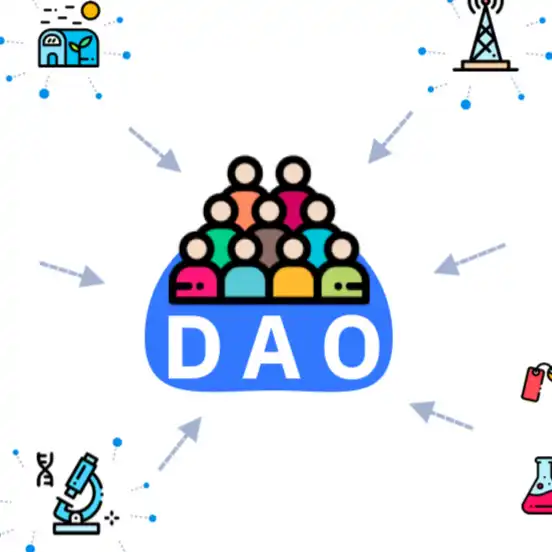
While Web3 will not solve these problems overnight, I firmly believe that we have more tools than ever to address the most pressing coordination issues we face today. Collaboration such as decentralized autonomous organizations (DAOs), Internet native organizations in particular provide shared narratives (memes), economic incentives (money), and more flexible local governance structures (governance) to move us in the right direction.
Impact DAO is at the forefront of this new work culture trend that requires us to align our values with our actions and not move away from the Bullshit jobs. In this sense, despite cries to the contrary, Web3 is an antidote to an increasingly abstract economy and, through a sense of play and absurdity, gives us the opportunity to participate more directly in every meaningful work.
"Shit Job" is based on the theory of David Graeber: A shit job is one that contributes nothing to the world, that even the person doing it thinks it has no meaning, and that if it disappeared, it would have no effect on the world.
Many DAOs, such as Gitcoin, are actively driving industry change, focusing not only on their mission but also on forming multi-centric "networks of influence" -- networks that collectively create positive externalities for those around them. With that in mind, platforms like Gitcoin Grants (Gitcoin2.0 donation platform has more features, composability, forking, modificability, donation of NFT credentials, etc.), Has been able to help projects move from seed rounds to core infrastructure (such as ether.js) to extended systems (such as optimismPBC layer 2 network) to widely used applications (such as Uniswap). Thanks to the composability of Web3, the success of these projects has enabled us to build more shared infrastructure together.
The impact of shared narratives
Keeping these networks alive, however, requires new ways of thinking about what it means to work together when we are often far apart, sometimes as mere on-screen avatars. Specifically, it requires deep thinking about how we can align ourselves with others and build non-standard approaches to self-management (self-organization) on a large scale.
Solidarity is fundamentally about our ability to connect deeply with each other in smaller groups, squads, or what many now call pods -- our ability to find connection and belonging. If social media has taught us anything, it's that achieving consistency above Dunbar's Law is extremely difficult.
Everyone reading this is almost certainly part of a group chat, by constantly sharing memes and building the empathy needed to see each other as 3D humans. But as teams grow from 15 to 150, or even 15,000, the resonance may not be diminished by our ability to connect with each other. This is the main challenge facing the DAO, or social club model, promoted by Friends With Benefits (FWB).
Sharing stories and knowledge, especially around creating impact, can help us stay consistent for longer. Of course, this isn't new to Web3 -- every society has its own set of narratives to help us manage our collective memories, stay on the same page, and head in the same direction. With Web3, we were able to go one step further and create incentives that allowed us to work towards a common goal, in order to continue to play positive-sum games, to play infinite games together without being bogged down in endless bureaucracy. By using a shared currency that aligns with our values, we play these games for a long time to make a bigger impact.
Generate common administration
But like any organization, DAOs still need structure -- sharing protocols act as the glue that holds us together even when we're not on the same page.
Crucially, structure is not hierarchy, but an often clumsy negotiation aimed at holding Spaces together in a formal, inclusive way. Movements like Occupy Wall Street are good examples of why this is necessary. The simplicity of "We are the 99 percent" is a powerful cry that unites people across divisions, but it cannot withstand pressure from those in power without clear structures and accountability.
At Gitcoin, we consider a lot of regeneration structures, starting with taking care of our own local sharing needs. To do this effectively, much of our thinking in DAOs is based on Ostrom's eight principles:
1. Set clear boundaries between community and resources.
2. Define rules locally with direct stakeholders.
3. Propose explicit participatory procedures for updating rules.
4. Once the rules are in place, accountability can be established.
5. The imposition of "progressive" social sanctions to resolve conflicts.
6. Ensure that conflict resolution is informal, accessible and cost-effective.
7. If necessary, make sure your rules are not blocked by higher regional authorities.
8. Continue nesting rules in this way until everyone is aligned.
In short, Ostrom refutes the idea of public tragedy -- that communities naturally tend to overconsume and underinvest in scarce resources, eventually exhausting their common needs. By developing many small agreements that work locally and slowly expand, it is possible to really control resources and keep ecosystems sustainable.
In the DAO, public tragedies occur in less intuitive ways, such as leaders not sharing backgrounds with their successors, or when time is taken up by riding bikes. But with shared principles, protocols, and creative constraints, DAOs can be generated from the ground up and set the initial conditions for an unordered open environment. Unlike traditional corporate structures, these mycelium networks are formed without bureaucracy, leaving contributors open to reclaim their agency and self-organization. It's important to note that no DAO is perfect, and as with any organization, it's critical. Investor Linda Xie(co-founder of ScalarCapital) is one of our most active managers, and she does a great job of outlining the development process we've been thinking about.
The best part about the DAO's emerging future work is that none of these questions have been answered by anyone yet. In Web3, there are no "experts." No one knows where Web3 is going, but we're all finding our way here.
Find your team, join a DAO and make an impact, let's create a future worth writing about.
The original link
Welcome to join the official BlockBeats community:
Telegram Subscription Group: https://t.me/theblockbeats
Telegram Discussion Group: https://t.me/BlockBeats_App
Official Twitter Account: https://twitter.com/BlockBeatsAsia
 Related Articles