Decrypting Gitcoin's Supported New Chain: PGN
Original Source: Biteye
On July 7th, Gitcoin published an article introducing the Layer2 network Public Goods Network (PGN) built on the OP Stack. Meanwhile, on August 18th, Gitcoin officially announced its 18th round of funding support for the PGN network.
What makes this L2 network so favored by Gitcoin? This article will explore PGN from the following aspects.
I. What is a Public Good
II. Background of Public Goods Network and the Problem It Solves
III. Highlights of Public Goods Network
IV. Will Public Goods Network Conduct Airdrops
V. How to Interact with Public Goods Network
01 What is a Public Good
A Public Good, as defined by Toby Shorin, the founder of the widely-used Other Internet, is:
“Anything that is non-excludable and non-rivalrous, meaning that people cannot be prevented from using it and one person’s use does not diminish another's.”
It possesses four key characteristics: unrestricted membership and participation, open APIs, transparent resource allocation, and power distribution. In the traditional world, examples of Public Goods include parks, the power grid, libraries, etc.;
While in the blockchain context, projects classified as Public Goods usually refer to open-source software, open infrastructure, open standards, and projects that benefit the public.
02 Background of Public Goods Network and the Problem It Solves
The PGN (Public Goods Network) is a Layer2 application chain based on the OP Stack created by Gitcoin in collaboration with multiple organizations.
Since 2017, Gitcoin has been building tools to enable community and project funding and development assistance, having funded numerous high-quality crypto projects through 18 rounds of donation drives, deploying over $50 million in funding for public goods projects.
PGN is currently being developed under the Gitcoin incubation, with support from Protocol Guild, Public Nouns, Clr.fund, Giveth, Hypercerts, Protocol Labs, Octant, Eco, Hedgey, and other groups.
The current mainstream blockchain funding mechanism for public goods is through Gitcoin grants, which primarily rely on community enthusiasm and cannot yet serve as a stable funding source. Therefore, Gitcoin has launched this experiment plan focused on public goods funding, aiming to explore a new funding mechanism to provide a sustainable funding source for public goods beyond Ethereum.
03 Public Goods Network Highlights
1. PGN inherits the OP Stack architecture, where every transaction in the network incurs sequencer fees. PGN will collect the vast majority of sequencer fees generated by user transactions on the network to fund public goods and public goods projects.
This means that any user utilizing the network is supporting the development of public goods.
(Note: Sequencers are mechanisms on Layer 2 that collect transactions and submit them back to the Ethereum base chain, with their revenue being the Gas received minus the cost to submit to L1.)
2. Six months after the mainnet launch, PGN will decide on the distribution of sequencer fees to Public Goods schemes based on data to achieve growth and funding public goods goals. The specific governance details of PGN are still under research.
3. After EIP-6969 is approved in the future, PGN will also enable Contract Support Revenue (CSR) to meet developers' demands for a sustainable income source.
Contract Support Revenue allows smart contract developers to claim a certain percentage of all transaction fees paid by users when interacting with the smart contract.
This means that the more dApps built on PGN, and the more users engaging with these dApps, the more revenue generated for the developers deploying these dApps and public goods.
The PGN is currently planning to deploy CSR after October 2023.
04 Will Public Goods Network Airdrop?
The answer to this question is uncertain. Currently, PGN has indicated that in 2024, it will explore better governance of PGN, with possibilities for both non-tokenization and tokenization.
There are not many Layer 2s developed based on the OP Stack with newly issued tokens. However, as an L2 with a very special use case and a vision that aligns well with blockchain values, it may attempt low-cost interaction.
05 How to Interact with Public Goods Network
1) Cross-chain:
Start by adding the network
Network Name: PGN
RPC: https://rpc.publicgoods.network
Chain ID: 424
Currency: ETH
Explorer URL:
https://explorer.publicgoods.network/
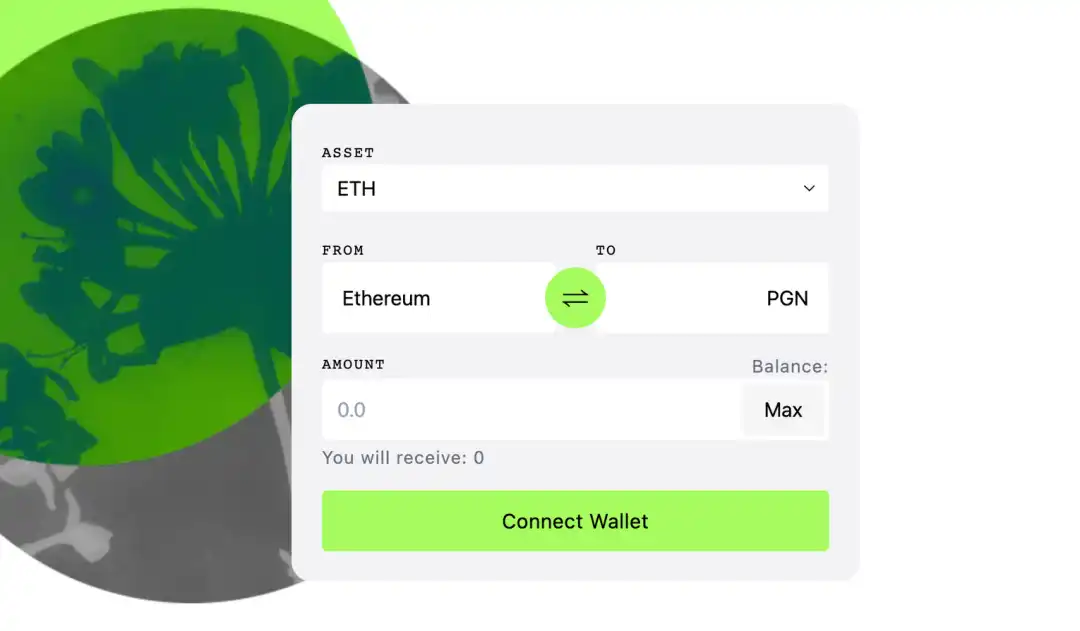
Then go to the PGN official bridge website:
https://bridge.publicgoods.network/
Enter the amount, confirm the transaction, and wait for 5-10 minutes, but please note that currently, crossing back requires a 7-day challenge period.
2) Participate in Gitcoin Grant Round 18:
Gitcoin Grants Round 18 supports donations on two chains: Optimism and PGN;
For projects in the Ethereum Infrastructure category, users can only donate through the PGN network.
Donate on the official website:
https://grants.gitcoin.co/
For those who want to know about donation projects, they can check the Biteye Grant Round 18 Dashboard:
https://chaineye.tools/gr18
As well as the "Gitcoin Round 18 Donation Guide and High-Quality Project Overview" published by Biteye
3) Participate in Zora PGN Commemorative NFTmint, minting cost approximately 0.004e:
https://zora.co/collect/pgn:0xadfabd2a6ee264d01c534c320e5b4b06ba19fc4f/1/mint
Summary
According to the data published by PGN, less than a week after the launch of its testnet on July 6, the deposit/withdrawal transactions have exceeded 100,000. It is believed that after this Gitcoin Grants Round 18 donation, the number of interactions on its mainnet will also reach a new high.
As a vision-driven exploratory project, this well-designed new L2 mechanism is, it has to be said, more refreshing among the various homogeneous public chains currently. However, the development of this public chain is still very early-stage. Everyone can pay long-term attention to timely interactions without FOMO.
Original Article Link
Welcome to join the official BlockBeats community:
Telegram Subscription Group: https://t.me/theblockbeats
Telegram Discussion Group: https://t.me/BlockBeats_App
Official Twitter Account: https://twitter.com/BlockBeatsAsia

 Related Articles