Experience history (1) | stock prices, currency prices, oil prices fell historically macro reasons
Original title: "living history (a) | stock prices, currency prices, oil prices historical macro reasons for the decline"
Lin rong is a senior vice President and head of lending and payment lines at Matrixport. Former vice President of global markets at deutsche bank, engaged in foreign exchange and interest rate structure derivatives sales; As a senior expert of ant financial, I am engaged in the construction of cross-border remittance of blockchain and international fund payment network.
Since the beginning of the oil price crash on March 9, we have experienced four circuit breakers in the us stock market, a 40% collapse in the currency price, a Defi clearing and attack incident, a negative crude oil futures price... A series of historical financial market events.
This series of articles will first analyze the macro factors of the market shock, and analyze the risk control methods of centralized financial Cefi and decentralized financial Defi to the market within the encrypted financial circle. I hope to discuss the future path of Cefi and Defi with you.
Since the beginning of the oil price crash on March 9, we have experienced four circuit breakers in the us stock market, a 40% collapse in the currency price, a Defi clearing and attack incident, a negative crude oil futures price... A series of historical financial market events.
One, the us stock market ups and downs: who is behind the hand?
In 2009, the familiar supermarket giant wal-mart posted a net profit of nearly $13.4 billion, ending the year at $53.45.
In 2019, wal-mart's net profit halved to $6.7 billion. Over that period, the share price has risen 122%.
Over the course of a decade, who was buying their shares?

The biggest buyer is wal-mart itself. In the decade since 2009, the company has bought back about $77.3 billion of its shares, nearly a quarter of the total value of its shares at the end of the 19th century.
It's not just wal-mart. Federal reserve statistics show that over the past decade, U.S. households, insurance, pensions and other domestic institutions have been net sellers of stocks.

Why would companies buy their own stock?
A big reason is that buy-backs can boost share prices; . In addition to increasing stock demand, conduct confidence, etc., there is an important earnings index in the listed companies is called earnings per share (Earning per share), simplified to be equal to: after tax net profit/the number of shares of common stock outstanding.
Share repurchase, the number of shares in the denominator is reduced, EPS rise, thereby pushing up the price. Stock rises, shareholders are happy, the company executive compensation incentive in many of their own company's stock, also happy.
Of course, share buybacks also include the role of an alternative dividend, avoiding dilution, and so on. However, Robert Jackson, the securities and exchange commission's commissioner, said that many individual executives sold large amounts of their own shares after announcing the buybacks.
So what's the broader context for the massive share buybacks of the past decade?
Above all, it was a decade in which central Banks were printing money and the cost to companies of borrowing to get cash fell sharply. After the 2008 crisis, when central Banks let loose and interest rates stayed low for a long time, corporate debt in the United States began to rise rapidly. Corporate debt in the United States totaled less than $6 trillion at the end of 2009, up from $16 trillion in the third quarter of 2013.

As a result, since the beginning of 2009, the s&p 500 stock index has risen 400%, EPS has risen more than 360%, while corporate revenue growth has barely exceeded 50%, and debt growth has consistently outpaced profit growth.
A typical example is Boeing, which has been hit hard by the outbreak: over the past decade it has spent more than $40 billion on share buybacks. By the end of the 19th century it had a debt-to-asset ratio of 106%, with short-term debt of $97.3 billion and cash of $9.49 billion.
Therefore, when a tall building rises, the foundation is not strong, a strong wind, the building is easy to collapse.When oil prices fell and the immediate trigger for the outbreak ignited, markets sold off in panic and fragile stock markets saw historic mass meltdowns.
Of course, when the u. s. stock market building shook, or the government's rescue team came to directly hold up a hand.
The fed's rescue, at first using traditional tools, more than expected interest rate cuts, quantitative easing... But the market tumbled anyway. It's like the government is giving tools to people around the building to encourage them to stay together, but you know you can't go back at that time, you don't risk it.
If the financial crisis in 2008 was mainly caused by financial institutions, the problem this time is mainly caused by the real enterprises in the United States. When the market panic reached its peak, the federal reserve stuffed the financial institutions with capital tools, and the institutions saw that the risks were too high, they would not have the incentive to lend to buy assets at this time.
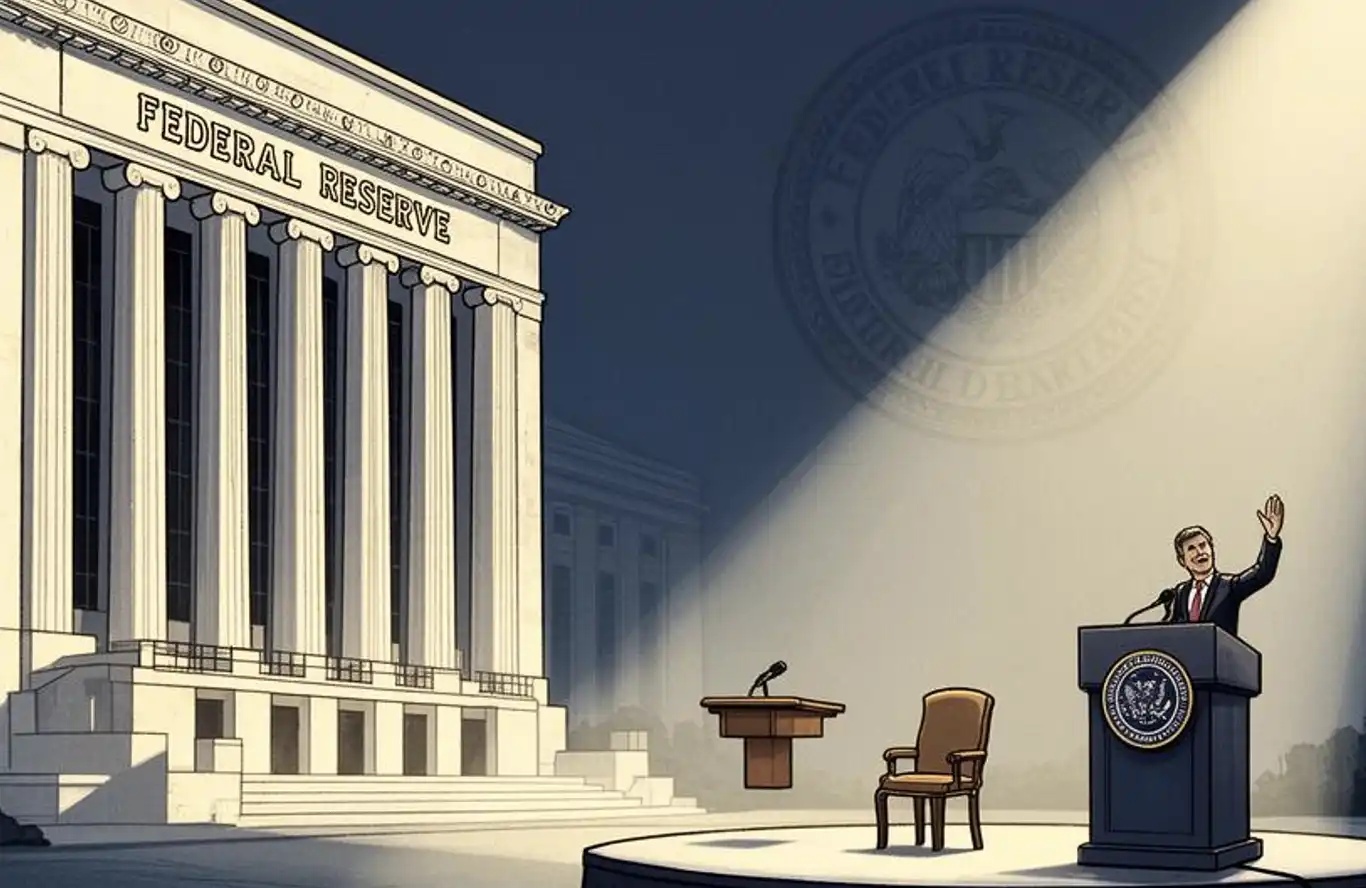
It was not until the evening of March 23, Beijing time, that the federal reserve made its historic policy breakthrough: it went directly to buy investment-grade corporate bonds and bond etfs.

This is not the traditional practice of a regulatory agency - like a developer whose building is badly built, where the government in theory simply implements the policy or supports, at best, other engineering teams to help, now that no one is willing to go, the government steps in. - & have spent It is all but necessary for the central bank to lend to firms itself, provoking market - wide criticism of the fed's powers and the moral hazard it may pose.
But after all, it's the right answer. The stock market is finally starting to rise. Coupled with the passage of a $2 trillion stimulus bill and the fed's decision to buy more junk-rated bonds, huge amounts of money were printed and scattered in Caesar's place, and the U.S. stock crisis eased for a while.
Remarkably, there are clear requirements in the stimulus bill: & NBSP; Enterprises benefiting from government loans may not repurchase their shares within one year after the maturity of the loan.
2. Bitcoin: can it still be "safe"?
& have spent
Before the currency circle is not much to see the U.S. stock trend, after all, bitcoin is regarded as a safe haven "digital gold." On that day, bitcoin fell even more than risky assets, down 40 percent in 24 hours.
Does the fact that bitcoin has fallen with the stock market mean it is not a safe haven asset?
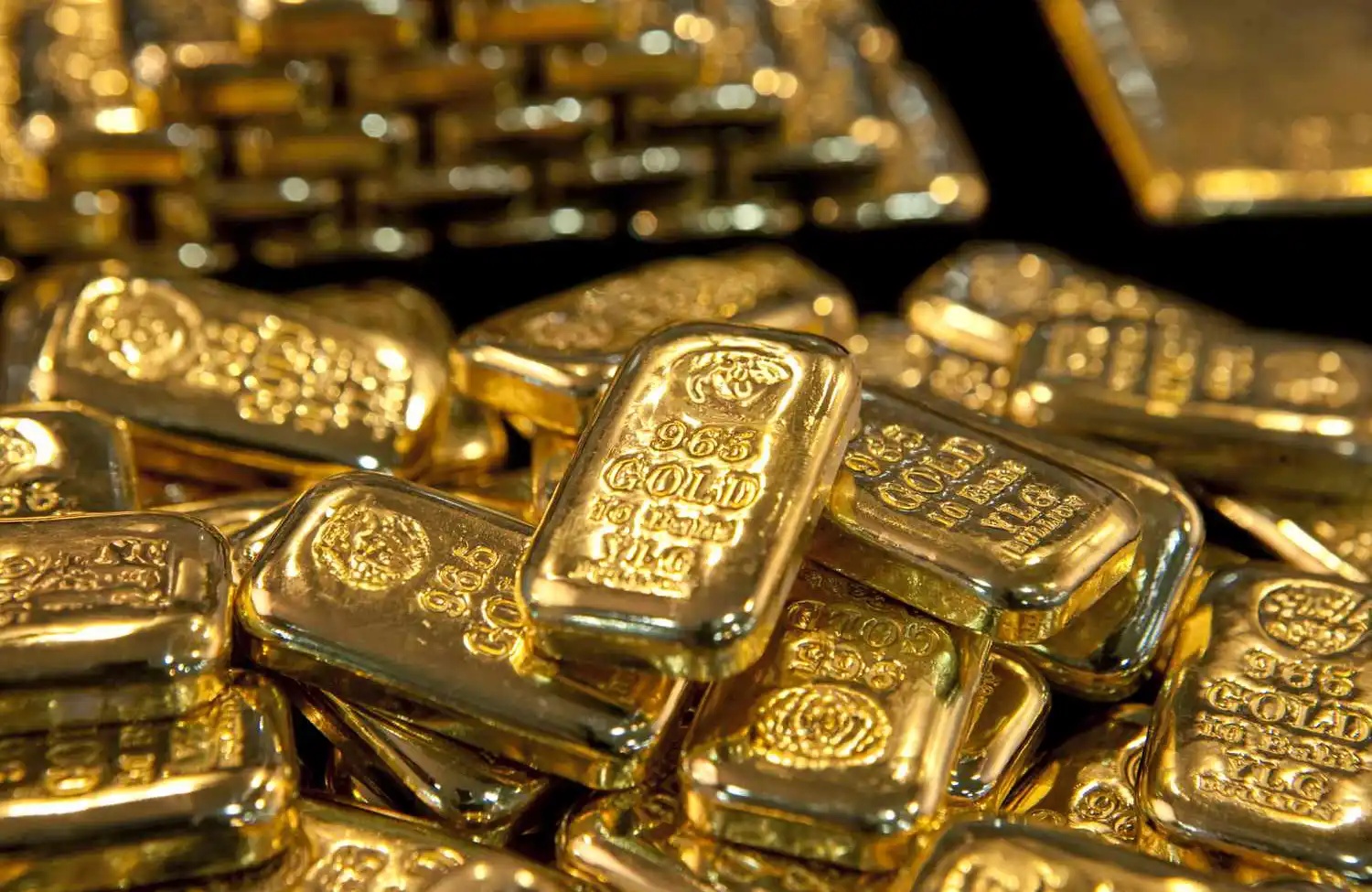
The phenomenon of light does not lead to such a conclusion. & have spent Turning to the gold chart, gold began to fall on March 9 with the first circuit breaker, falling 15 percent in a matter of days. And that's what happened during the 2008 financial crisis.

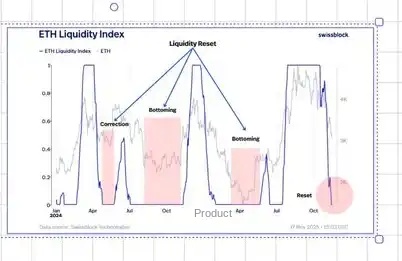
The reason for this extreme moment of asset decline,It is the liquidity of the entire market that has dried up.What does that mean?It's the lack of money in the market. You sell your shares first, there are calls to cover your positions, and your fund has been flooded with redemption requests from clients. B: both in dollars. Not just bitcoin, gold, us treasuries... Also regardless of the risk does not avoid risk, can quickly become ready cash, first sold emergency.
In the past, gold has continued to be the place to go when everyone is risk-averse, and we have, by convention, ruled out this extreme scenario and called it a safe haven asset.
However, at this time, the risk is not just, why bitcoin will fall so fierce?
Ray has been buried since late 2019. Since then, bitcoin has gone from 6,600 to nearly $10,400 in two months in mid-february.
Where did the money come from? Over the same period, interest rates on the dollar and stable currencies have surged at an unusually rapid pace, with the implied premium for late March 20 bitcoin futures on BitMex, the largest futures exchange, rising from around 0.5% to more than 30% on an annualized basis.In addition to prices, some of the world's largest lending platforms have run out of dollars to lend for days on end.

The main entry is not new money, but the old players themselves heavily leveraged to buy up the price.
The debt and leverage of the currency ring basically rely on the currency itself to do the form of collateral, plus the price volatility is big, the futures market lever ratio is as high as 100 times, once the big fall, the original bullish trade has to trigger the reverse stop loss, close the position to sell, sell more fall, fall more sell.
High leverage, high risk. The stampede of panic and a series of store-busting effects have made bitcoin's fall so violent.
So is it safe to say that bitcoin isn't a safe haven after all?
It's too early to say. If "risk aversion" is divided into two levels:
From a macro financial perspective, bitcoin has not yet proved to be a safe haven. One reason may be that bitcoin is a niche alternative asset, small and hard to buy.We often say 'Fly to Safety,' where people sell risky assets and money flies into them. Many institutions and people around the world don't even know what bitcoin is and have trouble buying it, making it difficult for them to become the object of a massive influx of money. Even before it became popular, this event had dealt a profound blow to its "risk off" expectations.
& have spent
However,From the perspective of geopolitical risk, we are unfortunately entering the process of anti-globalization. It is foreseeable that regional conflicts will be further intensified in the future, coupled with the current economic vulnerability of weak countries, and the stability of their currencies and financial markets will be challenged.& have spent Similar to gold & NBSP; Bitcoin as such existsReal global circulation of payments, value storage replacementOf utility, believe can still show value.
3. Oil price: & NBSP; Oil must be sold upside down, & paste; Bargain hunting? & have spent
In retrospect, the current round of market turmoil began on March 9 when the oil price fell sharply. The opening price fell by 30%, which was directly accompanied by the U.S. stock market circuit breaker, and thus the currency price fell sharply.
By April 20, the decline was 300%, going straight to minus $40 a barrel.
It is important to note that the price of -$40 / BBL is only for the may futures contract, while the spot and June futures are still around $20 / BBL.
Why a may contract? What's so special?
By the rules, & NBSP; The may contract is due for delivery soon -- at 2:30 a.m. Beijing time on April 22. Holders of the contract may be forced to settle at the official delivery point, the Cushing oil storage center in the United StatesAccept physical delivery, find their own warehouse, prepare their own barrels.
The total capacity of the Cushing storage center is about 90 million barrels. About 750,000 barrels of oil a day flowed into the economy in the three weeks before the slump, and Morgan Stanley predicts that Cushing will be full by mid-may. The transportation is not convenient, and the cost of transporting oil is high.
Meanwhile, the USO, the largest us oil ETF, saw retail inflows of about $1.6bn last week alone amid cries of "bottom-fishing" as oil prices plunged. And domestic Banks, including bank of China, have also launched a series of "paper crude oil" investment model products such as "crude oil treasure".
If the buyer is really a big company, but most just want to take a bet. Really to give you a barrel of crude oil, transport, inventory is not in any way, can only be sold as soon as possible before delivery, inverted also sell.
Boc crude oil treasure: what did you do wrong?
When we thought that witnessed the United States financial investors blood and tears history, 22, suddenly found that the injured seems to be a lot of people, especially bank of China crude oil treasure customers. Each community is Posting a tweet:

The online complaints against boc are mainly two:
Charge 1: other home already finished processing, why did bank of China make a mistake in judgment operation, delay to finally close the position?
It should be said that this is the bank of China on the product of the last trading time set up differently.
If you don't want to accept the product when it is due, your options include:
(1) directly choose reverse selling before the product settlement date, and leave after the gap settlement.
(2) move the position to turn period, for example, originally is to buy may, now sold may to buy June, so there is a position, just become held in June due.
Can see, when the operation, by what way of operation, this actually should be the choice of investors themselves, unless it is to the last deadline settlement time, the bank according to the agreed way.
By contrast, neither bank of China has caught the last day stipulated by the us oil futures itself, but bank of China's products basically take the date of more imminent expiration as the last trading day, while for the same term, icbc is earlier to end.

There are good and bad rules:
The upside is that it gives investors more time to maneuver -- anyone who wants to advance can do so, and the futures behind it still have time to expire. What if it goes up? What's more, we only see the long side, and the short side has been hiding in the corner.
The disadvantage of nature is that many customers are passive waiting for the expiration, the closer to the delivery of the more easy to be closed. In fact, in the early days of the industrial and commercial bank of China early move, the customer loss is also launched a complaint.
Complaint two: is not the bank of China by the regulation deficit to margin 20% strong flat? Why can you still default on the contrary, is there no liquidation system broken?
If it is understood that bank of China is completely following the rules, according to the product design of bank of China statement, there is a difference between "trading deadline" and "settlement price of the day" time.

For the confirmed time to enter the warehouse or to expire, the expected time to enter the warehouse or to expire is at 22:00The contract closes at 22:00, the stare, the close, and then waits to be settled with an average of 2:28-2:30 in the morning.
One of the more unbelievable doubts for a financial practitioner is that the bank of China did not carry out market risk control from 22:00 to 2:30 in the evening for nearly four and a half hours at the time of product design.
Moreover, CME actually issued a notice on April 15, supporting negative futures prices.

However, according to official information, there are at least two problems with boc:
& have spent 1. For highly volatile assets such as crude oil, market risks are grossly underestimated. In particular, CME futures exchange has announced support for negative trading, but has not taken timely measures.
Two, for such a high risk products, flaring low trading threshold (1 bucket of starting investment) is obviously for retail investors, and the settlement of maturity time and other design and failed to consider the characteristics of retail investors, customer risk tips, product operation education... It's also clearly not in place.
& have spent
And to every one of us,& NBSP; It is a wake-up call; - "These violent delights have violent ends", when the pile was surging, burst will also be more tragic.
& have spent
Always fear the market, always responsible for their own decisions.
The original address: https://mp.weixin.qq.com/s/YF5GU5DLWTakP_EWeBfJpw
Welcome to join the official BlockBeats community:
Telegram Subscription Group: https://t.me/theblockbeats
Telegram Discussion Group: https://t.me/BlockBeats_App
Official Twitter Account: https://twitter.com/BlockBeatsAsia

 Related Articles