CertiK and Columbia University researchers release TensorLean technical achievement, completing the world's first production-grade formal verification of DeepSeek and FlashAttention AI operators.
On November 20, CertiK announced TensorLean, a technical achievement developed jointly with researchers from Columbia University, completing the world's first production-grade formal verification of AI operators. This breakthrough enables mathematical proofs to be applied to real AI computational code that has undergone complex performance optimization, providing stricter correctness guarantees for large model vendors seeking to increase training speed and reduce inference costs.
Large model training and answer generation rely on low-level computational programs in AI operator libraries. These programs running on GPUs are called GPU kernels. A single error can cause the system to silently compute incorrect results during normal operation, affecting subsequent outputs and even causing training to deviate from expectations. Take scenario estimation as an example: a training run with $100 million in compute investment, if 1% of the computation requires redoing due to errors, means an additional $1 million in costs.
The core value of formal verification is using mathematical proofs to eliminate errors and vulnerabilities. Conventional testing finds problems through specific examples; formal verification can prove that a program always meets requirements under specified inputs and operating conditions, with no errors or vulnerabilities within the verification scope.
Applying this method to production-grade AI code is difficult because of real performance optimizations. GPU programs compute while moving data, adjust execution scheduling based on task size, and use lower-precision arithmetic. TensorLean can handle these complex conditions simultaneously, directly verifying the PTX code generated after program compilation, proving that computation meets requirements under specified conditions and error bounds. All proofs are completed in Lean and can be machine-verified.
TensorLean research team members Qiang Wei and Ganxiang Yang stated: "These complex optimizations are precisely what makes production-grade AI code run fast. Our challenge is to complete proofs without ignoring these real operating conditions, enabling rigorous verification to apply to high-performance code in actual use."
The research team evaluated 149 compiled GPU kernel instances and formally verified that 83 of them conform to their corresponding Lean specifications. The research covered GPU architectures across different generations and involved DeepSeek's DeepGEMM and the widely used FlashAttention operator library. The team found 38 correctness issues across 6 libraries, including 2 in DeepGEMM and 23 in FlashAttention.
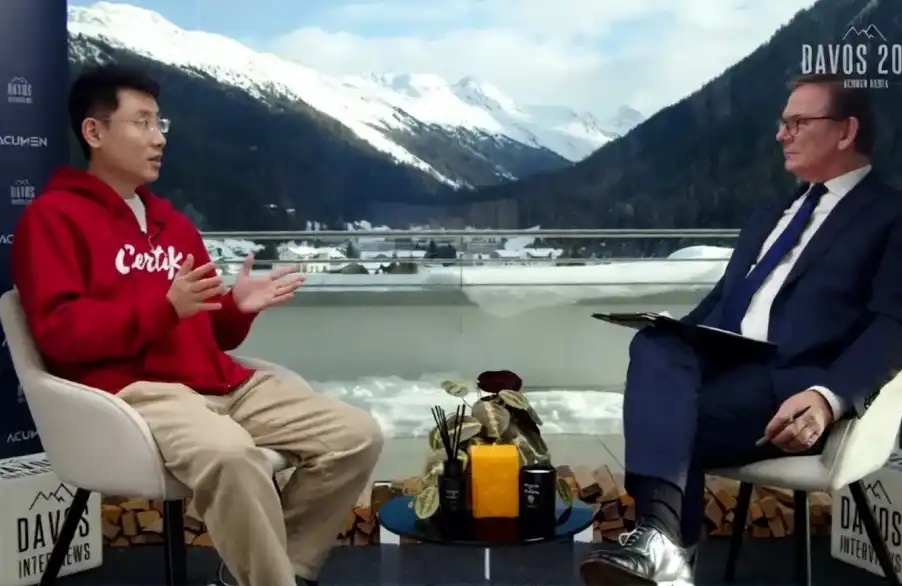
CertiK co-founder and Columbia University computer science professor Ronghui Gu stated: "After discovering vulnerabilities, it is also necessary to prove that the fixed program meets requirements under specified conditions. For large model vendors, every speedup should have a reliable basis for correctness. We hope to enable this rigorous verification to keep pace with code iteration, blocking the risk of computational errors before large-scale training and deployment as much as possible."
The practical value of this achievement for large model vendors lies in every round of performance optimization. After code updates, R&D teams can not only measure speed improvements but also re-run verification to check whether optimizations have introduced computational errors, and provide machine-verifiable proofs for programs that meet the requirements. This helps reduce wasted compute, training rework, and the risk of erroneous results flowing into subsequent computations.
Similar computations can also reuse existing verification requirements, enabling this method to be applied to more kernels and executed repeatedly as code updates, providing a more reliable foundation for continuously improving AI computational efficiency.
In October of this year, Anthropic also published research on using Claude to construct mathematical proofs for open-source software. TensorLean focuses on AI's own underlying computations, demonstrating the application value of automated formal verification in production-grade AI code.
Welcome to join the official BlockBeats community:
Telegram Subscription Group: https://t.me/theblockbeats
Telegram Discussion Group: https://t.me/BlockBeats_App
Official Twitter Account: https://twitter.com/BlockBeatsAsia

 Related Articles