Legendary investor Druckenmiller nearly liquidates US stocks: the most unclear market in 50 years, the next wave of AI opportunities is not in computing power.
Editor's Note: If a legendary investor who has navigated financial markets for nearly 50 years and maintained an annual profit record for a long time suddenly tells you that he doesn't want to buy anything now, what does that mean?
In a recent public interview, Stanley Druckenmiller, founder of Duquesne Family Office and legendary macro investor, gave a rare judgment: "I can't remember any period like now that makes me so unclear about the market in the next 12 months." At the beginning of this year, he was fully bullish on US stocks, short on US Treasuries, betting on copper price increases, and had achieved considerable returns through AI infrastructure investments. In less than a year, these positions have almost all been exited. The Federal Reserve's shift to raising interest rates, widening credit spreads, peak and decline in commodities, and continuously deteriorating technical signals within the stock market have led him to choose to temporarily step aside and prioritize capital preservation.

But more noteworthy than his reluctance to bet again is his reassessment of the AI investment logic. Over the past four years, chips, data centers, and computing infrastructure have been the most important wealth creation engines of the AI bull market, and Druckenmiller believes that this phase may be passing. The next round of opportunities will shift from building computing power to utilizing computing power, and may even be created directly by today's foundation model companies. He proposed a bold idea: when AI labs possess sufficiently powerful intelligence capabilities, why would they still charge by Token instead of directly selling task outcomes, or even entering industries such as cybersecurity and healthcare to compete for profits with existing enterprises? If this judgment holds, the value distribution landscape of the AI industry may undergo major reconstruction.
In this approximately 23-minute conversation, Druckenmiller also discussed his trading discipline of not relying on VaR models and judging risk by actual profit and loss, concerns about an economic slowdown in the second half of 2027, and potential breakthroughs in space data centers, nuclear fusion, and AI healthcare over the next decade. He even believes that the probability of space data centers becoming reality within ten years is at least 70%.
He does not doubt the long-term potential of AI, but he has begun to doubt the current market's pricing and financing environment; he believes the technological revolution will continue, but does not believe investors must participate at all times. For a market that has experienced years of AI investment enthusiasm, the most thought-provoking question from this interview may be: when computing power expansion is no longer sufficient to support continued gains, where will the profits of the next AI bull market flow?
The following is the original text:
TL;DR
· Shift from fully bullish to capital preservation. Druckenmiller said that positions held at the beginning of the year, such as long stocks, short US Treasuries, and long copper, have now almost all been exited; the equity portfolio is currently overall close to neutral, and he has turned to short copper.
· The macro environment has reversed. The Fed's shift to rate hikes, widening credit spreads, weakening market breadth, and defensive stocks leading the gains have made him wary of economic performance in the second half of 2027.
· AI investment focus is shifting from infrastructure to applications. The past four years of computing infrastructure investment generated enormous returns, but the future growth engine may shift to the application layer, especially cybersecurity and healthcare.
· AI companies may no longer charge by token. He expects that leading AI labs may no longer be content with selling model calls, but instead directly deliver tasks and run businesses, capturing a larger share of commercial value.
· Politics and financing are the two major risks for the AI bull market. Despite his long-term optimism about technological progress, he remains wary of financing pressures and political risks in AI infrastructure.
· Long-term judgments for the next decade. He believes the probability of space data centers being realized is at least 70%, the probability of a decisive breakthrough in nuclear fusion is about 20%, and he believes cancer is expected to become a manageable disease within a decade.
After nearly 50 years active in investment markets, legendary investor Stanley Druckenmiller, founder of Duquesne Family Office, offered a rare judgment: he has almost never been as uncertain about the market's direction over the next 12 months as he is now.
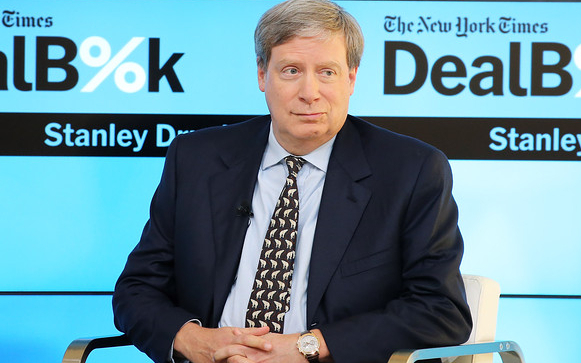
On November 17 at the TomorrowX Summit in Austin, USA, Druckenmiller held a roughly 23-minute conversation with Iliana Bouzali, a senior executive in Morgan Stanley's global derivatives business. From Fed policy and AI investment to risk management and technological trends over the next decade, he explained why he is shifting from his previous state of actively betting on the market to prioritizing capital preservation.
In an interview in January this year, he was still bullish on the U.S. economy and stock market, shorting U.S. Treasuries as a hedge, holding long copper positions, and believing the healthcare sector could become a breakthrough winner.
But when asked how many of those positions he still holds today, his answer was just one sentence: "Basically none of them."
This does not mean he has suddenly turned bearish on AI or long-term technological innovation. On the contrary, he believes AI's enormous potential remains, but the macro environment that previously supported the stock market's rise has reversed, and the next phase of AI investment opportunities is shifting from infrastructure to applications that truly create commercial value.
From Fully Bullish to Standing Pat: The Market Environment Has Completely Reversed
Druckenmiller explained that at the beginning of the year, he had a very high degree of certainty about the market's direction.
At the time, the U.S. economy was performing strongly, the federal funds rate was around 3.5%, and nominal economic growth reached 6%. In his view, this meant monetary policy was still extremely accommodative. The Fed's dot plot even indicated that further rate cuts were possible within the year.
Meanwhile, commodity prices continued to rise, with copper and other commodities repeatedly hitting new highs. The stock market's Advance-Decline Line and other technical indicators he monitored were strengthening in tandem, while credit spreads remained at extremely low levels.
With strong economic growth and an accommodative monetary environment, he believed the probability of a recession over the next 6 to 12 months was extremely low.
Another important driving factor came from AI.
In the fall of the previous year, progress in Claude Code made tech industry insiders begin to realize that the pace of AI technology evolution could accelerate once again. The resulting expectations for capital expenditure expansion further reinforced his bullish equity thesis.
However, the war that subsequently broke out changed the investment tempo. Druckenmiller admitted that he briefly panicked and sold off a large number of assets. But when he quickly re-entered the market, he became even more convinced that AI infrastructure investment was about to experience a full-scale boom.
This round of adjustment also helped him clean out assets with limited upside potential from his portfolio, further concentrating his positions in AI infrastructure-related opportunities.
However, by November, the situation was completely different.
Although the U.S. economy remained strong, nearly all the other factors that had previously supported the bull market had reversed.
The first was monetary policy. The Fed was no longer cutting rates but had entered a rate-hiking phase. Druckenmiller noted that the Fed's leadership had changed, and the new policy orientation was clearly more vigilant about the prolonged ultra-accommodative monetary environment, continuously expanding fiscal deficits, and five consecutive years of above-target inflation.
The second was commodity trends. Commodities that had been repeatedly hitting new highs at the beginning of the year now appeared to have peaked and were pulling back. He revealed that his portfolio had even shifted from long copper to short copper.
Within the stock market itself, warning signs of divergence had also emerged.
He specifically noted that the U.S. stock market's Advance-Decline Line had already peaked on August 14, while the major stock indices did not hit new highs until October. This meant that even as the indices continued to rise, the breadth of stocks participating in the rally had actually begun to narrow.
At the same time, credit spreads are widening, and defensive stocks have begun to outperform cyclical stocks.
In his view, these signals collectively indicate that the market environment is already completely different from the beginning of the year.
"Almost everything now is the exact opposite of what it was then."
Therefore, he has neither gone massively long on stocks nor turned to full-scale shorting.
Druckenmiller acknowledged that he has always enjoyed looking for shorting opportunities, but faced with the enormous innovation being driven by AI, he is unwilling to rashly short against the trend. Especially after some tech stocks have already experienced significant declines and market positioning has been cleaned out, the possibility of a short-term rebound cannot be ignored either.
Currently, although his equity portfolio still contains both long and short positions, overall net exposure is basically close to zero, with only some smaller-scale dollar-related positions retained.
His primary goal has shifted from pursuing returns to avoiding losses.
"What I'm doing now is capital preservation. Rather than trying to make money, I'm trying not to lose money."
He even joked that when friends call him to discuss the market, they can directly hear an auto-reply: "Don't look for me, I'm not playing right now."
This pause could last just two days, or it could last six months. He does not know when he will re-enter the market in a big way.
As for the future economic trajectory, he is particularly focused on the risk of growth falling short of expectations that may emerge in the second half of 2027. Weakening commodities and the market style shift from cyclical stocks to defensive stocks have led him to reassess changes in interest rates and the economic cycle.
AI infrastructure is no longer the best long-term trade; the next round of opportunities lies in the application layer
Despite the overall shift toward caution, Druckenmiller has not lost interest in AI.
On the contrary, he believes that if the stock market can launch a new round of significant gains in the future, AI may still be an important driving force. But the main investment opportunities in the next phase may not necessarily come from the chip, data center, and other infrastructure companies that have performed most strongly before.
"What we are looking for now is AI application scenarios, not infrastructure."
He acknowledged that after the recent decline and positioning cleanup, AI infrastructure may still present very good tactical trading opportunities.
But he does not believe that this sector can continue to serve as the core engine driving substantial portfolio growth as it has over the past four years.
New value creation may emerge at the AI application layer. Among the many potential applications, he offered a rather controversial judgment: the most attractive AI application companies may in fact be the very AI labs training foundation models today.
His logic is that as AI capabilities continue to strengthen, leading model developers may not remain long in the business model of selling model invocation services by token.
Instead, companies that command the most advanced intelligence capabilities could skip the step of merely providing underlying models and sell completed tasks directly to customers, or even enter specific industries to conduct business themselves.
"If you command the most powerful intelligence in the world, you can start selling tasks rather than tokens, and you can create your own enterprise."
This means the business model of AI companies could undergo a fundamental change.
Under the existing model, AI companies primarily generate revenue by providing model interfaces, computing power, or subscription services, and customers then use these capabilities to develop various applications.
But if model developers deliver task outcomes directly, the way commercial value is distributed will change. Enterprises will no longer be buying merely the right to use a model, but the actual value brought by problems being solved and work being completed automatically.
The first example Druckenmiller cited was cybersecurity.
In his view, the most advanced AI models can both introduce entirely new cybersecurity threats and deploy large numbers of AI agents to automatically identify, defend against, and respond to these threats.
"In cybersecurity, who can compete with these companies?"
His view is that since advanced AI itself is changing the boundaries of cyberattack capabilities, the companies that command the strongest AI technology may likewise possess the strongest defensive capabilities.
Healthcare is another area with enormous potential.
As model capabilities, automated systems, and domain expertise continue to combine, AI can not only assist existing operations but may also directly take on some of the work previously requiring professionals.
For investors, this shift means AI value capture may move from infrastructure suppliers to companies that can directly complete commercial tasks.
What is worth watching in the future is not only which companies have the most GPUs and have built the most data centers, but who can use AI to truly complete work and generate revenue and profit from it.
However, he did not equate this judgment with an unconditional bullish view on the entire AI sector.
At the end of the interview, when the host asked him to identify the AI bear market arguments most worthy of serious consideration, he gave two answers: political risk and financing risk.
He believes both factors are worth worrying about. Even if AI technology itself continues to advance rapidly, changes in the policy environment and capital supply could also affect the returns and pace of development of related investments.
No VaR for Risk Management: When P&L Performance Is Off, It's Time to Reduce Positions
Compared with his judgment on market direction, Druckenmiller's explanation of risk management is equally noteworthy.
As a macro investor who has long spanned equities, bonds, commodities, and interest rate markets, he does not believe investors must always maintain a high position in a certain asset class.
During his investment career, there was a long period when he completely exited the stock market and instead used other macro assets to find opportunities.
This freedom of cross-asset allocation allowed him to proactively reduce risk when certainty was lacking, rather than being forced to maintain positions continuously in order to preserve a certain investment style.
He pointed out that Duquesne's long-term returns have not accumulated at a uniform pace, but have shown obvious阶段性 characteristics. In some years, the portfolio might have returned only 5% to 8%; then there could be three or four consecutive years of strong performance, followed by a relatively flat period.
He described this investment approach as recurring bursts of returns.
This is also why he does not mind a lack of major investment opportunities over short periods. He emphasized that the fact he has not had an annual loss over the long term does not mean he has not experienced large drawdowns during the investment process—only that, measured from year-end to year-end, he ultimately did not record a negative return.
In terms of risk management, his approach is even completely different from that of many institutional investors.
He does not rely on Value at Risk (VaR) models, nor on stress tests, but instead treats the actual profit and loss (P&L) performance of the portfolio as the most important risk signal.
If the actual performance of a position begins to deviate from the original judgment, or if the correlations among different assets no longer meet expectations, he will consider reducing risk exposure.
He believes there is a key problem with traditional risk models: when the market truly enters a chaotic state, the original correlations among assets often fail. And these correlations are precisely the foundation on which many risk models depend.
He mentioned that earlier this year, some investors who were simultaneously involved in shorting software stocks and holding AI infrastructure positions experienced the shock of this correlation breakdown.
By contrast, actual profit and loss can more quickly reflect the deviation between investment assumptions and market reality.
Behind this is also a discipline related to trading rhythm.
Druckenmiller believes that investors, like athletes, also go through periods of good form and periods of poor form.
When he finds that his judgments are continuously validated by the market, he increases his positions; when his judgments begin to frequently go wrong, he reduces risk and tries to regain his rhythm with smaller positions.
He compares this state to a batter in a baseball game: sometimes he can clearly see the pitch, and sometimes he completely loses the feel. "When I'm in good form, I bet big. When I'm in poor form, I try to make only small-scale attempts."
For him, one of the most important abilities in investing is knowing when to attack and when to pause.
The advantage of great investors lies not in IQ, but in execution, open-mindedness, and discipline
Druckenmiller also talked about the mistakes that highly intelligent investors are prone to making.
In his view, intelligence cannot guarantee investment success. In fact, being overly smart can sometimes hinder investors from adjusting their judgments in a timely manner.
The reason is that once people spend a great deal of time building a certain investment thesis, they easily become overly reliant on their own research conclusions. Even if the market has already changed, they are still unwilling to admit that their original judgment may no longer apply.
Druckenmiller believes that investing requires a kind of "Intellectual Humility," that is, always maintaining an open mind and being willing to adjust judgments based on new information.
He is not opposed to highly concentrated investing.
On the contrary, he once borrowed a famous saying to describe his investment philosophy: "Put all your eggs in one basket, and then watch that basket carefully." But in his view, many investors remember only the first half of the sentence and forget the second half.
Concentrated investing requires investors to have strong conviction while also closely monitoring market changes. Once the facts begin to deviate from the investment thesis, rapid action is needed.
Regarding the difference between excellent investors and top investors, he emphasized four traits: great passion for the investment endeavor, continuous intellectual curiosity, an almost obsessive competitive spirit, and strict discipline.
In his view, top investors are often extremely eager to win and extremely reluctant to lose. More importantly, they can adhere to their investment discipline over the long term, even though the specific methods of different investors may be completely different.
His own trading approach, to some extent, also reflects this combination of judgment and execution. Druckenmiller calls it "Invest, Then Investigate."
When he hears an attractive investment idea, finds that the technical charts align with the logic, or believes that the person proposing the idea truly understands the relevant industry, he may first establish a meaningful position.
This position may not be particularly huge, but if the judgment is wrong, it is still enough to produce a noticeable loss.
And when making the initial decision, the information he has may be only about 15% of what traditional investors require.
After that, he will have the research team conduct in-depth investigation for two to three weeks, and then decide based on new information whether to continue adding to the position or exit directly.
This method does not mean ignoring research, but rather combining preliminary judgment, real market feedback, and subsequent deep research to avoid missing investment opportunities due to the pursuit of fully sufficient information.
However, he also admits that he has seriously violated trading discipline before.
In January 2000, he sold Nasdaq-related positions, but then bought back on the day the tech stock bubble reached its peak.
He believes he may have been only an hour away from the market top.
What drove him to buy back was not a change in fundamentals, but extreme fear of missing out (FOMO).
When someone asked him what he learned from this mistake, he replied: "Nothing. I knew at the time I shouldn't do it, but I just couldn't control myself."
Long-term risks facing the United States: talent supply and fiscal deficit
In addition to short-term market fluctuations, Druckenmiller also mentioned two issues that are slowly accumulating but may have a profound impact on the U.S. economy.
The first is education and talent supply.
He is worried that the quality of basic education in the United States from kindergarten through high school is declining. In the past, the United States was able to partially offset the shortcomings of its domestic education system by attracting outstanding talent from around the world.
But if immigration policy continues to restrict the entry of highly skilled talent into the United States, this mechanism that has long supported U.S. technological innovation may be weakened.
He stated that a significant portion of large American tech companies are led by immigrants, and whether future talent inflow can be maintained will directly affect the long-term competitiveness of the U.S. tech industry.
Nevertheless, he still believes that relevant policies are ultimately likely to be adjusted.
The second issue is U.S. fiscal policy.
Druckenmiller recalled that as early as 2011 to 2012, he had called on young people at multiple U.S. universities to pay attention to fiscal deficits and welfare spending issues.
At the time, based on demographic changes, he judged that U.S. fiscal pressure would intensify significantly between 2020 and 2030.
Subsequent pandemic spending, as well as expanding government expenditures under a prolonged low-interest-rate environment, further accumulated fiscal problems.
But the dollar's status as an international reserve currency also allows the United States to sustain deficit levels for a considerable period that other countries would find difficult to maintain.
He worries that this state may not be able to continue forever.
Borrowing a saying about bankruptcy, he described how a fiscal crisis might occur: "First slowly, then suddenly all at once."
He expects that in the next decade, the United States may need to carry out fiscal reform driven by a financial market crisis.
This is not to say that he believes a crisis is necessarily imminent, but rather that long-accumulated fiscal imbalances may ultimately require market pressure to drive political-level adjustments.
The Next Decade: Space Data Centers, Nuclear Fusion, and Cancer Treatment
Despite being unusually cautious about market trends over the next year, Druckenmiller remains optimistic about technological development over the next decade.
When asked to offer a few predictions that seem radical but that he believes have a certain probability of materializing, he gave three directions.
The first is nuclear fusion.
He believes the probability of achieving nuclear fusion within the next decade, or at least clearly proving that commercialization of nuclear fusion is about to become a reality, is about 20%.
The second direction is space data centers.
For deploying data centers in space over the next decade, he gave a probability of at least 70%, and possibly even higher.
This judgment reflects his optimistic expectation for the long-term evolution of computing infrastructure. Although he believes the return opportunities in traditional AI infrastructure investment are changing, this does not mean that computing demand or related technological innovation is nearing an end.
The third direction is healthcare, especially cancer treatment.
Druckenmiller said he has served on the board of Memorial Sloan Kettering Cancer Center for about 30 years.
In his view, breakthroughs in cancer treatment over the past few decades have come from advances in gene sequencing, understanding of genetic mutations, and technologies such as immunotherapy.
The addition of AI could further accelerate this process.
"I think we will beat cancer. I believe cancer will become a manageable disease. I'm talking about ten years, not twenty."
"Beating" here does not mean that all cancers will be completely cured within ten years, but rather Druckenmiller's personal long-term optimistic prediction that cancer will gradually become a manageable disease.
This also explains why he chose to be conservative in the short-term market while not abandoning his long-term confidence in technological innovation.
In his view, the long-term development trend of technology and the short-term pricing environment of financial markets are two different things.
AI may still create enormous economic value, but that does not mean that buying related assets at any time will yield ideal investment returns.
From being fully bullish at the beginning of the year to now having almost exited directional trading, what Druckenmiller has done is not to negate his previous AI judgment, but to acknowledge that the market environment has changed.
For current investors, his views point to two threads: on the one hand, monetary policy, the credit environment, and political and financing risks are changing the investment conditions for AI assets; on the other hand, as AI moves from infrastructure construction to practical commercial applications, the next batch of value creators may no longer be the companies that performed strongest over the past four years.
Preserving capital when certainty is lacking and concentrating bets when real opportunities emerge may be precisely the core investment method that has allowed Druckenmiller to span multiple market cycles.
Welcome to join the official BlockBeats community:
Telegram Subscription Group: https://t.me/theblockbeats
Telegram Discussion Group: https://t.me/BlockBeats_App
Official Twitter Account: https://twitter.com/BlockBeatsAsia

 Related Articles