Hyperliquid, personally mentioned by Trump, has a completely bullish ecosystem

HYPE has surged from around $58.5 to $73.7 in the past two days, marking a 26% increase. It is now only about 4% away from its all-time high of $77.
As the price approaches a new high, Hyperliquid is also making headlines.
pre-IPO Contract Steps into the SEC
The first piece of news comes from the Hyperliquid Policy Center. It has jointly submitted a comment letter to the SEC with trade[XYZ] in response to the U.S. regulatory agency's public consultation on reforming the IPO process, proposing to include pre-listing perpetual contracts in the regulatory discussion.
The starting point of this comment letter is the traditional IPO pricing long held in a few underwriting firms' bookbuilding inquiry and order allocation. The HPC's materials state that the number of companies listed on U.S. exchanges has decreased by about 40% compared to the mid-1990s. Companies stay in the private market longer, and ordinary investors often have to wait until the late stages of growth to have the opportunity to buy. When a company is ready to go public, underwriters privately collect orders, and the issuer and the public can only see the true market price after the stock opens for trading.
The end result often sees a severe disconnect between the offering price and the opening price. The issuer ends up with less money, while the institutions receiving the allocation pocket the price difference.
The Hyperliquid pre-IPO contract seeks to introduce a period of public trading before listing. Traders can express long and short views on the company before its IPO, and the order book continuously provides a public price. The HPC and trade[XYZ] state that the contract's price as the listing nears is close to the stock's opening price, sometimes even more accurate than traditional pre-market indications.
The key move of this letter is to place Hyperliquid's pre-IPO contract within the IPO policy framework. The HPC and trade[XYZ] hope regulators will see it as a public price discovery tool and establish rules around product categorization, derivative risk disclosure, listing eligibility, oracle and settlement transparency, developer conflicts of interest, and phased opening for U.S. investors.
An originally on-chain contract product is now attempting to influence the stock issuance system.
Entropy & Trasia Join HIP-3
The second piece of news occurs on the supply side of the market. Entropy has become a new deployer in HIP-3, planning to start from the Pre-IPO market and then expand to the stock market, with two contracts already live.
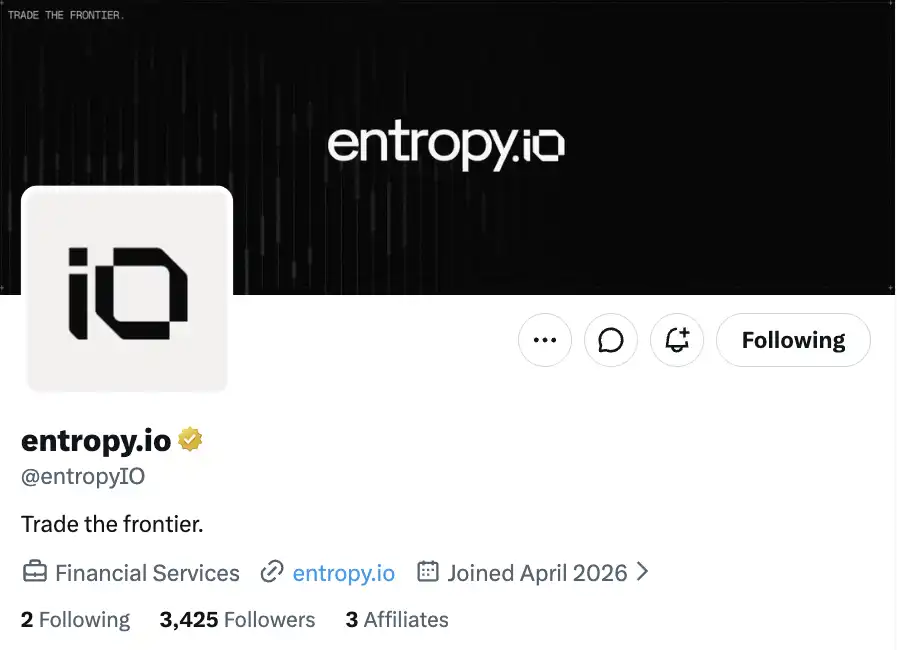
This eight-person team's resumes are almost all related to trading. Both co-founders dropped out of Stanford to start a business. The CEO was the first intern recruited by Polymarket, involved in designing the fee structure and liquidity incentives, and later worked at Jump. Another co-founder worked on MEV on Solana before joining Ribbit Capital. Other team members come from Jane Street, Hudson River Trading, Jump, Radix, and Virtu.
These backgrounds align closely with the requirements of HIP-3. Deployers need to select assets, design contracts, maintain oracles, set leverage limits, and handle settlements. Entropy brings experience in prediction markets, on-chain trading, and traditional quant institutions, naturally leading to higher market expectations.
Entropy's entry timing is also unique.
Early deployers of HIP-3 such as Felix, Dreamcash, and Ventuals have already exited. Early players tried to avoid trade[XYZ] by relying on niche assets and first-mover advantage, but it turned out that launching new assets is far from sufficient. Without stable user distribution and liquidity, even the most unique trading pairs find it challenging to sustain operations.
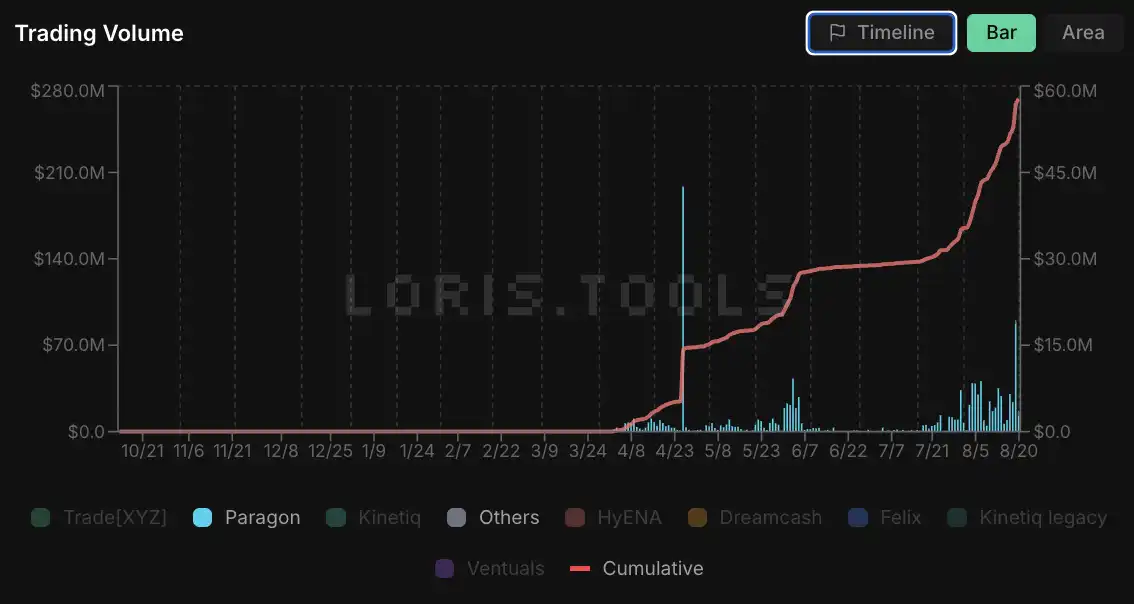
Now, Paragon is rapidly rising. According to Loris Tools, Paragon has traded approximately $126 million across 20 markets in the past 30 days, attracting over 3,400 traders. Trasia, focusing on the Asian market, also entered the scene almost simultaneously with Entropy.
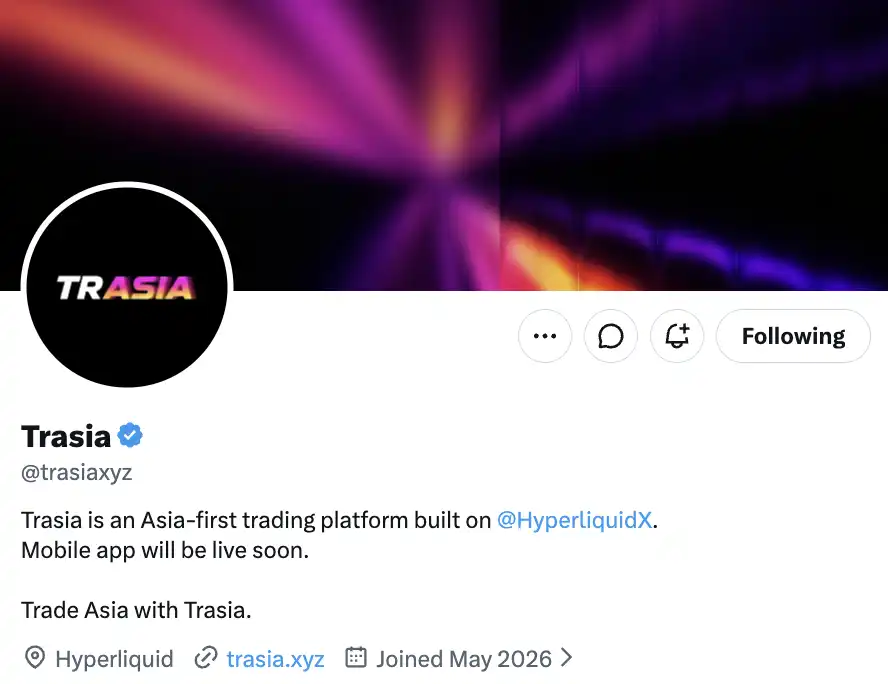
The competition for HIP-3 has entered the second stage.
Trump Mentions Hyperliquid in Person
The third piece of news comes from the White House. Trump mentioned at a cryptocurrency industry conference that the CFTC is working to bring Hyperliquid to the U.S. in a "fully compliant, legal" manner.

For Hyperliquid, being directly named by the President has shifted the discussion's landscape. Previously, it was challenging to fit Perp DEX into the traditional exchange venue's definition, and U.S. investors could not access related products. Now, the question has shifted from "Will the U.S. deal with Hyperliquid" to "How will the U.S. prepare to handle Hyperliquid."
This speech has greatly alleviated the market's compliance concerns regarding Hyperliquid. The regulatory direction is shifting from excluding on-chain trading venues to seeking legitimate entry points for them.
A potential path is taking shape. Regulators are establishing new market structures for on-chain trading venues to obtain a legal identity distinct from traditional designated contract markets; U.S. brokers then distribute 24/7 perpetual contracts, spot, and prediction markets to more investors through HyperCore.
Druckenmiller Holds HYPE DAT
The fourth piece of news comes from institutional holdings. Stanley Druckenmiller's family office, Duquesne, disclosed in its quarterly 13F that it added approximately $23.2 million in holdings of Hyperliquid Strategies / PURR, a digital asset treasury company with HYPE as its core asset.
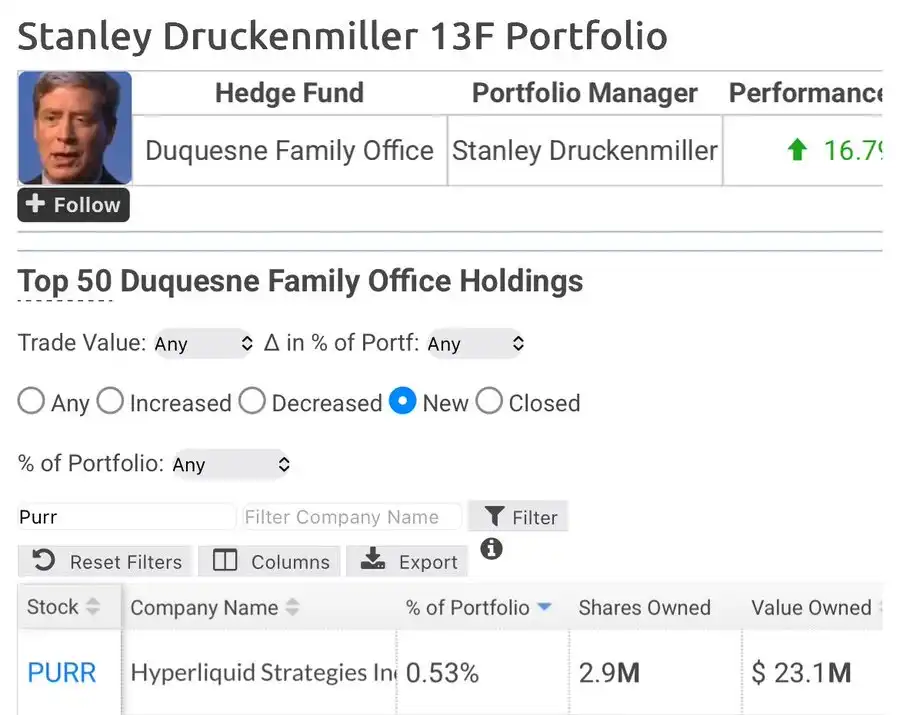
Druckenmiller carries significant weight in traditional financial markets. He founded Duquesne Capital in 1981, subsequently overseeing investments for Soros's Quantum Fund. Morgan Stanley's summary of his career record indicates that Duquesne achieved an approximately 30% annualized return from 1981 to 2010 without any losing years. Today, he manages his capital through the Duquesne Family Office.
Druckenmiller’s stature lends more significant signaling to this transaction. Hyperliquid has long been in the sights of traditional financial investors.
The market is reinterpreting Hyperliquid. The on-chain finance version is vying for the pricing power, distribution channels, and institutional position of the future financial market.
Welcome to join the official BlockBeats community:
Telegram Subscription Group: https://t.me/theblockbeats
Telegram Discussion Group: https://t.me/BlockBeats_App
Official Twitter Account: https://twitter.com/BlockBeatsAsia
 Related Articles