Goldman Sachs CEO: 'AI Job Doomsday' Overblown
Original Title: I'm the C.E.O. of Goldman Sachs. The A.I. Job Apocalypse Is Overblown
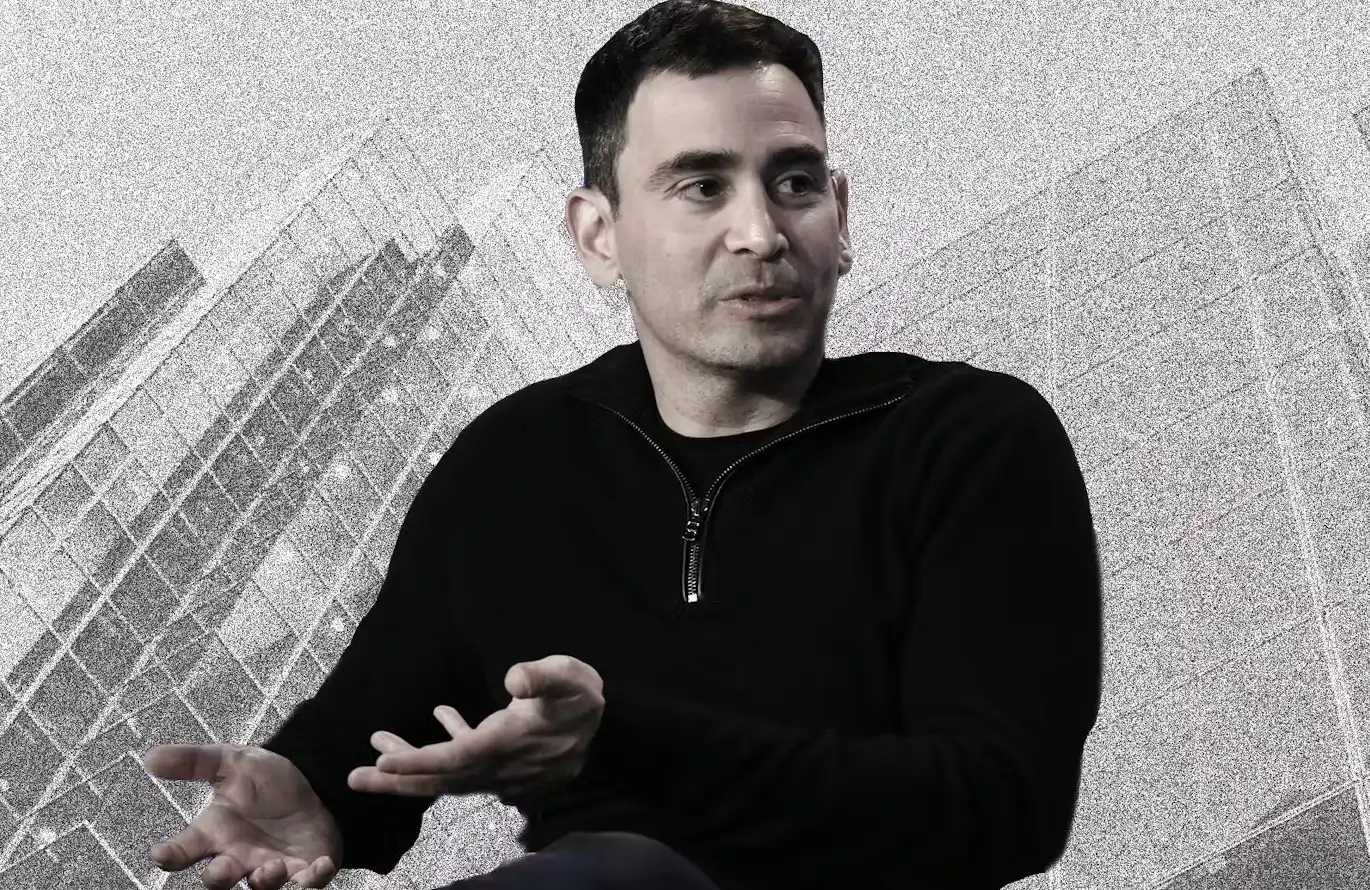
Original Author: David M. Solomon
Translator: Peggy
Editor's Note: Whether AI will bring about an "employment doomsday" is becoming one of the most concerning issues in the business world. David M. Solomon, Chairman and CEO of Goldman Sachs, wrote in The New York Times that this concern is exaggerated. AI will indeed impact the labor market, especially repetitive tasks in white-collar positions such as accounting, banking, law, software engineering, and customer service, but it is more likely to change the nature of work rather than simply eliminate a large number of jobs.
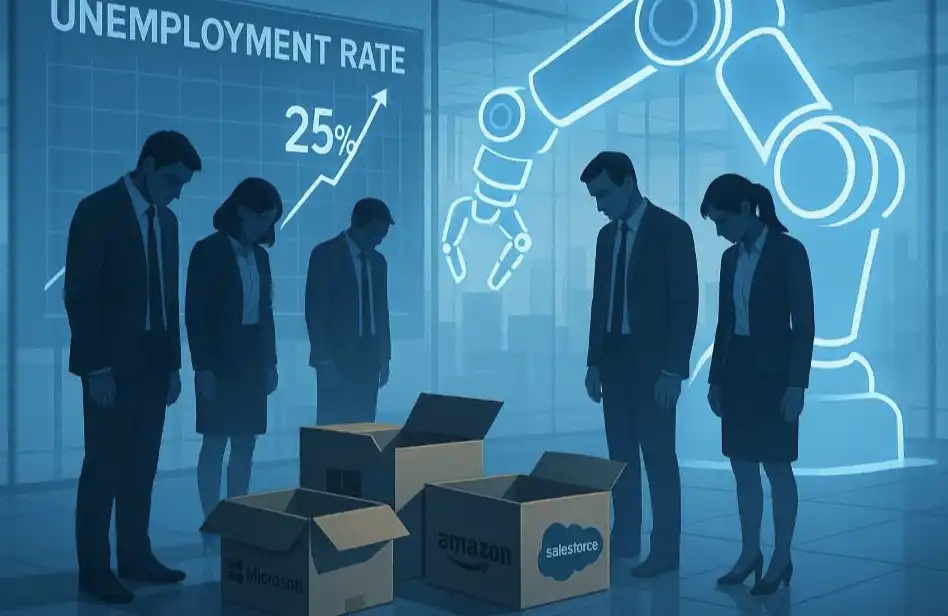
Solomon's key insight is that AI will automate not 25% of jobs but 25% of work hours. In other words, some low-value, repetitive tasks will be taken over by machines, while humans will be pushed towards more complex tasks that rely on judgment and customer interaction. Meanwhile, new demands such as data center construction, AI workflow management, and compliance validation are also creating new job opportunities.
What this article truly aims to address is an age-old question in technological change: Every new technology brings about labor pains, but historically, the economy has often recreated jobs after the disruption. The risk of AI lies not in it necessarily causing unemployment but in whether society, businesses, and the education system can adequately help workers transition in time.
The following is the original article:
Over the past several months, I have spoken with hundreds of business leaders and noticed a sharp divide in their views on artificial intelligence. Some believe that an "employment doomsday" and mass unemployment are imminent, while others think that AI will propel society through a major leap forward.
I belong to the latter group - with some reservations, of course. Will AI impact the labor market? Undoubtedly. This transformation, like other significant changes in history, will bring new challenges, especially as AI separates labor from productivity on a scale never seen before. However, the United States has long had the ability to create new jobs after technological disruptions, from the electrification at the beginning of the 20th century to the digital revolution of the 1990s. I see no reason to believe this trend will stop today.
Without a doubt, AI will reshape our daily lives. Goldman Sachs economists estimate that in the next decade, AI may automate 25% of current work hours. The impact of AI on professions that require hands-on work such as food preparation, construction, and the service industry is still difficult to assess; however, in white-collar positions including accountants, bankers, and lawyers, many job tasks are likely to be automated. A Stanford University study shows that in professions most susceptible to automation, such as software engineering and customer service, entry-level job employment has already declined by 16% compared to the least affected positions.
However, if we look at jobs or industries with weaker automation ties, the picture changes. Our economists estimate that since 2022, the growth in data center demand has created over 200,000 construction jobs. While AI may eliminate jobs in certain industries, it may also spur employment growth in others. For example, Goldman Sachs may no longer need as many people handling regulatory reporting or client onboarding processes in the future, but this would allow us to hire more bankers, traders, and asset managers focused on ongoing client interaction.
Of course, we cannot overlook the real human cost behind this disruption. The Industrial Revolution did elevate living standards, but only after societies endured harsh labor in factories and mines, and the squalid tenements of rapid urbanization. In recent decades, due to automation and global outsourcing, manufacturing employment has sharply declined, posing significant challenges for many American families and communities, such as Gary, Indiana, and Greenville, South Carolina.
Yet, despite these challenges, I keep coming back to one reality: the vast majority of Americans are far better off today than in the past. I was born in 1962, a time when the average American adult did not have air conditioning; later, as AC prices dropped, nearly everyone enjoyed the cool air. In the 1950s, only large corporations like IBM had computers; today, about 90% of American adults hold a supercomputer in their hands. In 1900, global life expectancy at birth was 32 years; today, that number exceeds 70 years.
Perhaps more crucially, job growth has outpaced population growth. Since 1962, civilian employment in the U.S. has grown by roughly 145%, while the civilian population aged 16 and over has grown by about 128%. During this time, new industries emerged, and others expanded or declined. Manufacturing employment fell from 15.5 million to 12.5 million, with textile and apparel manufacturing shedding nearly 2 million jobs; meanwhile, the healthcare industry now employs over 18 million workers. The U.S. economy remains the world's most innovative, dynamic, and entrepreneurial economy.
Indeed, even the most dependable historical patterns can be disrupted. However, I believe the U.S. economy will continue to demonstrate resilience and vitality for three reasons.
First, if our estimates are correct, AI will not obliterate 25% of jobs. It is more likely that people will find more efficient ways to allocate their time. When I was a first-year investment banking analyst, creating a simple stock performance chart would take 6 hours, flipping through back issues of The Wall Street Journal on microfilm. Today, a first-year analyst can do it in seconds, and we have more people on staff than ever. As tools advance, the complexity of work naturally increases. Despite the convenience brought by Excel, email, and Zoom, can any of us truly say we have less to do now?
Second, just because a job can be automated doesn’t mean it will be. Television didn’t eliminate the desire for live entertainment, and the internet didn’t make real estate agents or personal trainers obsolete. Instead, these technologies highlighted and reinforced the value of these professions. Technological change and cultural change do not always move in lock step. After all, despite decades of ATMs, online banking, and bank consolidation, total U.S. bank employment remains broadly where it was in the mid-1990s.
Third, the U.S. labor market is inherently dynamic. While net job creation in any given year may be only a few million at most, the gross churning at the aggregate level is much larger; U.S. businesses destroy and create between 25 to 35 million jobs each year. As AI drives more innovation, this pace is likely to quicken, and we are already seeing the economy adapt. Firms are now looking for talent that can manage so-called “centaur-stage AI” and apply it across a wide array of scenarios, from executing on the ground and workflow, to compliance and validation, spanning a broad range. All of this is inseparable from human judgment.
If AI is indeed going to destroy jobs, and potentially at a faster pace than before, public policy must respond: either by funding large-scale retraining, or by encouraging the development of AI that augments rather than replaces the worker.
This must be a joint effort between the public and private sectors. The public sector should provide incentives and resources as needed, including increased investment in vocational schools and community colleges; the private sector should help workers upskill and redesign on-the-job training.
Historical patterns are clear: the U.S. economy can and will adapt to significant technological advances. Equally clear is that even the smartest people’s dire predictions often miss the mark. In 1930, John Maynard Keynes famously predicted that by 2030, people would work just 15 hours a week. While his vision of a leisure-filled future did not materialize, it serves as a good reminder: the fear of “job doomsday” likely underestimates AI’s potential to drive an economic and productivity renaissance.
In addition to leading Goldman Sachs, David M. Solomon is also an electronic dance music producer, known as DJ D-Sol.
Welcome to join the official BlockBeats community:
Telegram Subscription Group: https://t.me/theblockbeats
Telegram Discussion Group: https://t.me/BlockBeats_App
Official Twitter Account: https://twitter.com/BlockBeatsAsia
 Related Articles