The Pope Shares the Stage with Anthropic: Understanding the Vatican's First AI Encyclical
Original Author: Ole Lehmann
Translation: BlockBeats
Editor's Note: On May 25, 2026, the Vatican released Pope Leo XIV's first encyclical titled "Magnifica Humanitas: Safeguarding Humanity in the Age of Artificial Intelligence." This document was released on the 135th anniversary of Pope Leo XIII's "Rerum Novarum," and it was clearly not a coincidence: if "Rerum Novarum" was the Catholic Church's response to the Industrial Revolution, then "Magnifica Humanitas" is seen as the Church's formal stance on the AI era.
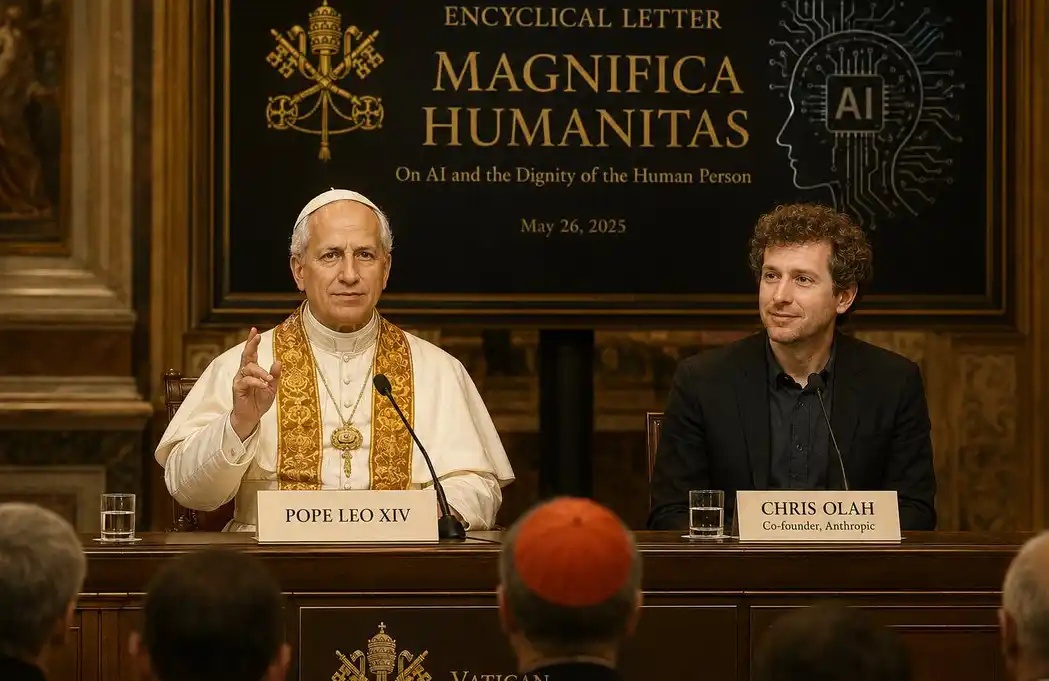
What makes this release most noteworthy is not only the Pope's juxtaposition of AI with nuclear weapons, suggesting that "AI needs to be disarmed," and not only the presence of Anthropic co-founder Christopher Olah at the Vatican, but also the first direct confrontation of religion, philosophy, and cutting-edge AI labs on the same issue: as AI is transforming labor, warfare, wealth distribution, and human self-understanding, is it sufficient to rely on tech companies and market competition alone to determine its future?
The article delves into the 11 key details of this release: from the historical metaphors behind the title "Leo XIV," to how the Church is responding once again to major technological transformations after the Industrial Revolution, nuclear weapons, and the climate crisis; from Olah's description of AI models "grown from human language," to his acknowledgment that AI labs cannot solely answer questions about how developing nations can benefit, what human flourishing entails, and what exactly we are creating.
Below is the original text:
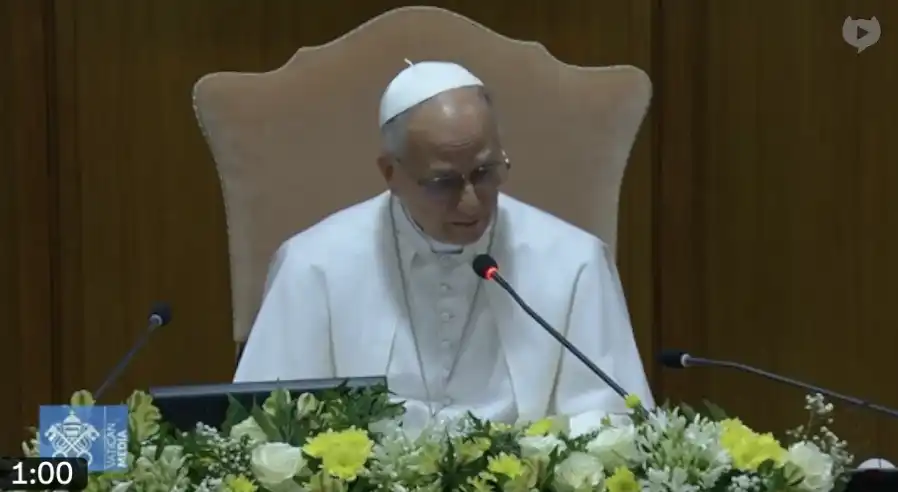
The Pope and Anthropic co-founder have just stood together at the Vatican, releasing "Magnifica Humanitas" — the Catholic Church's first-ever formal doctrinal document on artificial intelligence.
Yes, you read that right. The entire release ceremony lasted two hours.
Here are some key highlights:
1. This is by far the most significant response from the religious community to AI. The Pope usually only publishes a few of these highly weighty formal documents throughout his entire term. To have one specifically discussing AI indicates that the Church is taking the upcoming changes very seriously.
2. A small but significant detail is that the Pope intentionally chose the name "Leo XIV." The last Pope by the name of Leo was Leo XIII in 1891. His most famous action was scribing the Catholic response to the Industrial Revolution. Now, to once again choose the same name sends a very clear signal: this Pope views AI as the new industrial revolution.
3. Whenever a significant technological transformation reshapes human society, the Catholic Church responds. In 1891, they responded to the Industrial Revolution with the encyclical "Rerum Novarum"; in the 1960s, amidst the threat of nuclear weapons, they penned "Pacem in Terris"; in 2015, the emergence of climate change and uncontrolled technological issues led to "Laudato Si'." Now, it's AI's turn, titled "Magnifica Humanitas." Such documents are not common.
4. The core statement of the Pope is: "AI needs to be disarmed." He actually equates AI with nuclear weapons. He has stated that the Church spent decades advocating for nuclear disarmament because that technology was too dangerous to be held by a few. Now, he believes AI has entered the same category of concern.
5. Anthropic co-founder Christopher Olah took the stage at the Vatican to tell the Pope that Anthropic's own research team has consistently found things within AI models that "echo joy, satisfaction, fear, sadness, and unease."
6. Olah reframed the essence of AI: These things are not simply made; they are more like "grown." They are trained on a system that roughly mimics the structure of the human brain and are fed almost all of the content humans have produced to date. In his own words: "They are made up of us, of our language." He also stated that even the people building these systems do not fully understand what is happening within them.
7. Olah openly acknowledged that all AI labs, including Anthropic itself, face pressures that may conflict with "doing the right thing": the commercial pressure to keep shipping products, competitive pressures from other labs, and the older sins of pride and ambition. The solution he proposed is: we urgently need those external critics without vested interests to point out deviations in the lab's work.
8. Olah believes there are three major questions that AI labs cannot answer alone, requiring the intervention of religion and philosophy:
How do we ensure that developing countries truly benefit from AI?
What does human flourishing actually mean in this new world?
And what exactly are we creating?
9. One of the sharpest lines in the entire encyclical is: "The promise of universal prosperity brought by automation has often turned out to be an illusion." In other words, the belief that AI will automatically make everyone wealthy is itself a fantasy. Someone must design a system that allows the benefits of technology to be shared.
10. The Pope also referenced a statement from a hundred years ago: "Contemporary people have not yet been properly trained to use power wisely." This statement is from a theologian in the 1920s. The entire encyclical is almost entirely focused on a central argument: before this power starts to dominate us, we must first learn how to use it.
11. The Pope repeatedly emphasized that he does not have the answers at the technical level. However, he stated that the Church has millennia of wisdom on "what it means to be human," and this wisdom is precisely what is most lacking in the current AI development process. He concluded by saying: this technology should serve "the flourishing and dignity of humanity, rather than control the conscience of humanity."
Welcome to join the official BlockBeats community:
Telegram Subscription Group: https://t.me/theblockbeats
Telegram Discussion Group: https://t.me/BlockBeats_App
Official Twitter Account: https://twitter.com/BlockBeatsAsia