IOSG: DeFi Reaches Its Most Dangerous Moment, the Real Vulnerability Is Not in the Code

Original Article Title: "IOSG Weekly Brief | DeFi Reaches Its Most Dangerous Moment: The Real Vulnerability Isn't in the Code #327"
Original Article Author: Darko, IOSG Ventures
On April 1, 2026, at 16:05:18 UTC, an attacker submitted a transaction to Drift Protocol. One second later, another transaction approved it.
Twelve minutes later, $285 million disappeared. Seventeen days later, a compromised validator on KelpDAO's cross-chain bridge single-handedly minted $292 million of unsupported tokens, triggering an $8.5 billion outflow from Aave within 48 hours, with around $4.5 billion flowing out of other DeFi protocols.
Another twelve days passed, and an attacker holding the stolen deployer's private key siphoned off $4.5 million from Wasabi Protocol across four chains.
None of these events occurred due to exploiting a smart contract vulnerability.
For the better part of a decade, DeFi had believed security to be a code issue. Audits, formal verification, bug bounties—the entire industry was organized around a premise: as long as smart contract logic is sound, the protocol is secure. Math is law. April 2026 was the month when this premise collapsed in the public eye.
In a single month, around 30 incidents led to over $625 million in theft—according to DefiLlama's data, in terms of the number of incidents, this was the heaviest month of hacking in crypto history—and every major loss traced back to admin keys, cross-chain bridge validators, oracle blind spots, or social engineering attacks, all of which are operational linchpins not covered by audits.
This article will discuss this migration. We will break down the three severe hack incidents in April into three facets of the same underlying failure, replay how a protocol's misconfigured cross-chain bridge led to a protocol 25 times its size experiencing a $13.2 billion outflow, and candidly examine the true face of DeFi now—essentially an open infrastructure with trusted operational leverage, even if not marketed that way. The issue is not with math.
The issue lies with the "mental model" surrounding math.
Math isn't flawed. What's flawed is the mental model layered on top of math, and the cost of this misalignment is forcing the industry to reconsider what "decentralization" truly means.
Mind Model Gap
Throughout most of DeFi's history, mainstream security culture has been based on solidity. Auditing reviewed contract logic. Bug bounties for reentrancy, integer overflow, access control errors. Formal verification for on-chain code proving invariants. The implicit assumption is: everything outside the contract—multisigs, deployer keys, cross-chain bridge validators, Relayer infrastructure, team communication channels—is either out of scope or someone else's problem.
This assumption only holds true when attackers are exploiting Solidity bugs.
The several hack events in April 2026 had a structural feature that an audit report could not capture: the smart contract itself had no vulnerabilities. According to independent on-chain researchers' postmortem, Drift's code was audited by Trail of Bits in 2022 and ClawSecure in February 2026, with both audits passing.
Both audits did not cover Drift's multisig configuration, durable nonce handling logic, nor did they cover the social engineering attack surface around its Security Council. KelpDAO's LayerZero adapter is standard OFT template code, with no issues in the contract itself. The mistake was in deployment configuration, which is typically outside the scope of a Solidity audit.
Wasabi's Vault contract is designed to be upgradeable; the design itself was the vulnerability.
In April, what broke wasn't the math but the operational base on which the math relied.
Three Dissections: Three Faces of the Same Failure
The three severe hack events in April 2026—Drift, KelpDAO, Wasabi—represent three radically different "non-code failures."
Together, they cover most of the novel attack surfaces and share the same structural feature: in each event, one or two breached entities or infrastructure led to a domino effect across the entire protocol.
Drift: Human Multisig ($285 million)
The Drift hack was an intelligence operation, not an exploit. The attribution analysis conducted by TRM Labs, Elliptic, and Drift itself with assistance from SEAL 911 identified North Korea's Lazarus Group, specifically the UNC4736 sub-group, with Mandiant previously linking them to the October 2024 Radiant Capital attack.
The attacker spent approximately half a year planning this operation. The social engineering aspect started at an industry conference in the fall of 2025, while the on-chain preparation began just three weeks before the incident.
On March 11, 2026, the operation commenced with a 10 ETH withdrawal from Tornado Cash. The next day, around 9:00 AM Pyongyang time, these funds were used to deploy the CarbonVote Token (CVT) on Solana. The attacker created a small liquidity pool on Raydium, performed a wash trading of CVT to peg the market price around $1, set up a self-controlled price oracle, and fed this artificially manipulated price to Drift.
The wash trading was designed to make the oracle's output "look legitimate" – any auditor would find the market price consistent with the oracle price.
Simultaneously, the attacker posed as a quantitative trading firm, spending weeks building relationships with Drift contributors. The goal was not to extract information but to accumulate trust in advance of a specific moment.
That moment relied on Solana's feature called durable nonces: a mechanism that allows for "sign today, execute later" functionality. Between March 23 and March 30, the attacker obtained durable nonce signatures from at least two of the five members of the Drift Security Council.
From the signers' perspective, they were approving routine transactions. From the network's perspective, these signatures were valid authorization credentials, in a dormant but active state.
On March 26, Drift made a retrospectively disastrous decision: migrating to a brand-new 2-of-5 Security Council multisig with a zero-time lock. This migration eliminated the previous delay window that could have revealed or thwarted the attack.
At 16:05:18 UTC on April 1st, the attacker submitted the first pre-signed durable nonce transaction – a proposal to transfer administrative control to the address H7PiGqqUaanBovwKgEtreJbKmQe6dbq6VTrw6guy7ZgL. Exactly one second later, at 16:05:19 UTC, the second pre-signed transaction was approved and executed. The attacker took over Drift.
What followed took only twelve minutes. The attacker collateralized the worthless CVT, borrowed almost infinitely, deposited 500 million CVT at the manipulated oracle price, and withdrew $285 million worth of real assets – JLP, USDC, SOL, cbBTC, wBTC, and ETH – from three core Vaults. Drift's TVL collapsed from $550 million to approximately $250 million. Two signers, one protocol, smart contracts all functioned as designed. The vulnerability lay in the "human" factor.
One aspect of Drift's post-mortem response is worth highlighting, as it sets a standard for the next round of victim protocols: Drift's own post-incident disclosure was exceptionally candid.
Within five days of the vulnerability disclosure, the team released a detailed social engineering attack postmortem—revealing facts such as contributors being contacted multiple times over six months, two contributors potentially being compromised through repository clones and a TestFlight wallet beta, deletion of Telegram chats with the attacker around the time of the breach, and a decision made six days before the incident to migrate to a zero timelock multisig, eliminating the final detection window.
The team also publicly attributed the attack with medium confidence (UNC4736 / Citrine Sleet), coordinated with SEAL 911, and shared operational details to assist other protocols in identifying a similar modus operandi.
Victim protocols often retreat into legal caution and vague language; what Drift chose to release was the kind of narrative that turns a single event into industry-wide threat intelligence, with an evidentiary texture. The event itself remains a hack, and the underlying governance flaw remains a vulnerability. But being willing to disclose "how social engineering works" is the key that sets apart those protocols contributing to collective industry learning from those silently swallowing losses.
KelpDAO: Single Verifier ($2.92 billion)
On April 18, seventeen days later, a threat actor with a similar profile executed an attack of a completely different nature. KelpDAO is a liquidity re-collateralization protocol issuing rsETH—a token representing user deposits, enabling additional yield through EigenLayer routing.
By April 2026, rsETH's TVL had exceeded $1 billion and was deployed on over 20 chains using LayerZero's OFT (Omnichain Fungible Token) standard.
No issue with the contract. Issue with the configuration.
KelpDAO's cross-chain bridge ran on a 1-of-1 DVN (Decentralized Verifier Network)—meaning only one validator. A single node was enough to approve a cross-chain message. "Decentralized" was a term, not an architecture.
The attack was staged. The attacker first compromised the internal RPC node that the validator relied on to read the source chain state, then launched a coordinated DDoS attack against external nodes, forcing the system to fall back to tainted infrastructure. With control of the data source, they forged a cross-chain message instructing KelpDAO's Ethereum mainnet contract to mint rsETH with a burn transaction that had "never occurred on any source chain."
At UTC 17:35, the contract released 116,500 rsETH — worth approximately $2.92 billion, around 18% of the token's circulating supply — to the address controlled by the attacker. Within minutes, these rsETH tokens were deposited as collateral in Aave, each valued at around $2,500.
The attacker used under-collateralized assets to borrow real WETH, USDC, wBTC, and managed to withdraw over 82,600 ETH (approximately $191 million) before the contract was paused by KelpDAO at UTC 18:21.
In two subsequent attempts at UTC 18:26 and 18:28 to withdraw another 40,000 rsETH each time, the transactions were rolled back. The pause prevented further losses, but did not stop the initial withdrawal.
There was no reentrancy bug, no missing access controls, and no oracle manipulation within Kelp's logic itself. An invariant of the cross-chain bridge — that assets released on the destination chain must match assets burned on the source chain — was violated at a system level, not at the transaction level. A node, billions of dollars in losses.
What followed was a public dispute: where does the responsibility lie? LayerZero's initial postmortem report squarely placed the blame on Kelp, citing Kelp's violation of guidelines by opting for a 1-of-1 DVN. In a rebuttal memorandum dated May 5, Kelp painted a different picture: at the time, 47% of active LayerZero OApp contracts — approximately 1,250 applications with a total market cap exceeding $45 billion — were all running on the same single-validator setup.
Kelp argued that LayerZero's own OFT Quickstart, GitHub examples, and developer templates came preconfigured with LayerZero Labs' own DVN as the required validator and had no secondary validator; they provided Telegram screenshots from LayerZero staff indicating that using the default settings was acceptable in two and a half years of eight integration discussions.
Security researcher Sujith Somraaj (formerly a LayerZero auditor) had submitted a bug bounty report to Immunefi detailing this attack vector, which LayerZero rejected on the grounds that validator network selection falls under application layer configuration.
LayerZero's response to Kelp's memorandum was that this assertion was misleading. The bug bounty excluded "application layer configurations," setting a standard "platform/application" boundary (a LayerZero spokesperson noted that otherwise "any app could set itself as the sole DVN and maliciously claim rewards"); defaults in the protocol are actually multi-DVN in almost all paths; and in cases where a 1-of-1 setup occurred, the lone DVN pointed to a placeholder contract named "DeadDVN" that rejects all messages, forcing developers to configure the security stack before deployment.
Regarding Kelp, LayerZero stated that Kelp was initially deployed as a multi-DVN and was later manually downgraded to a 1-of-1—not merely "using the default."
The boundary between platform and application is indeed a real point of contention, and rational engineers may disagree on the question of whether a platform that can be configured into a dangerous state should be responsible for the actual deployment configuration users choose.
Even more undisputed is the second part of LayerZero's ultimate response. On May 8, three weeks after the initial postmortem report, LayerZero reversed course and apologized: "We made a mistake allowing our DVN to operate as a 1-of-1 DVN in high-value transactions. We didn't constrain our DVNs to why they provide protection."
The protocol ceased support for 1-of-1 within the DVN system, migrated the default to 5-of-5, raised its in-house multi-sig threshold from 3-of-5 to 7-of-10, and announced a new issuance monitor platform (Console).
Whether the underlying configuration was Kelp's fault, LayerZero's fault, or—most likely—a joint failure between a platform that could be configured into a dangerous state from the factory and an integrator that actively downgraded, both parties' ultimate responses converge to the same conclusion: 1-of-1 validation is insecure at scale, and the industry should not have had to learn this $292 million lesson.
Wasabi: Admin Key ($4.5 million)
Wasabi's incident on April 30 was an order of magnitude smaller than the other two incidents, making it the most embarrassing. It was a case of a "boring hack."
An deployer EOA—with the address 0x5c629f8c0b5368f523c85bfe79d2a8efb64fb0c8—held the ADMIN_ROLE in the perpetual contract manager deployed on Ethereum, Base, Blast, and Bera. There was no multi-sig. The contract framework supported a timelock, but the configuration value was set to zero.
The attacker obtained that private key—phishing, device compromise, and supply chain attacks are all possibilities, with Wasabi not providing a conclusive answer. With the ADMIN_ROLE, they granted the same role to a malicious proxy contract, performed a UUPS proxy upgrade on the Vault contract, and drained collateral and pool balances. The cross-chain total loss was $4.5–5.5 million.
Wasabi did not employ any new technology. This exploit, as a DeFi anti-pattern, has been warned about for many years: excessive centralization of power, lack of power separation, and no time lock. This, which has been constantly exploited and reported on in hindsight since 2020 without being corrected in practice, is the same vulnerability.
Connecting the dots: ultimately, they are the same kind of hacker. Whether privileged access is obtained through manipulating signers, compromising validating nodes, or stealing deployer keys, the attack surface is the same — a concentration of power outside the smart contract layer, inadequately protected. This pattern also serves as a warning: in each event, one or two breached entities triggered a domino effect that not even multiple Solidity audits could prevent.
Asymmetric Domino Effect
The significance of the KelpDAO incident goes beyond its dollar amount because of what happened afterward — this was the first true stress test of DeFi composability in the face of operational failure — and also the most compelling case to date of how "the spread mathematically disproportionate asymmetry" can be.
Putting the scale in perspective: at the time of the incident, KelpDAO's rsETH TVL was approximately $1 billion; Aave's total AUM across all chains exceeded $250 billion. A protocol that is roughly only 4% of Aave's size, based on a single event, managed to siphon $8.45 billion away from Aave in just 48 hours — this number grew to $15.1 billion in three and a half days — while the total DeFi TVL decreased by $13.21 billion in that 48-hour window. Asymmetry is the real story.
A small protocol misconfigured on a cross-chain bridge triggered a larger protocol that was "operating by the book" based on all of its contract metrics, significantly larger than itself, to experience a bank run.
When the attacker minted unsupported rsETH and deposited it into Aave, Aave's contract operated as per the specifications. Its oracle continued to read rsETH close to 1:1 during the brief window of the attacker's borrowing. The lending pool released real WETH, aimed at collateral that appeared "legitimate" on-chain to all systems.
The market reaction was immediate. rsETH traded at a deep discount on DEXs within hours, reflecting a true uncertainty — whether the remaining 82% of the supply was fully backed. Aave V3 and V4 halted the rsETH market; Fluid, Compound, Euler, Morpho followed suit within hours (SparkLend had delisted rsETH as early as January).
Holdings of rsETH on Arbitrum, Base, Mantle, Linea, Blast, and Scroll are now in doubt as token holders are unable to trust a 1:1 redemption back to the Ethereum mainnet.
The subsequent fund outflows were not due to a hack of Aave, but rather because depositors could not ascertain whether the collateral backing their loans had sufficient liquidity.
In the weeks leading up to the event, Aave had accumulated a significant amount of rsETH exposure as users engaged in leverage and rehypothecation trades; the protocol collected fees from this activity without setting a cap on this exposure. Therefore, the contagion was not simply a matter of innocent bystanders—Aave had willingly taken on counterparty risk—but the triggering event occurred outside its own contracts and beyond its observable governance.
Aave's response to the event is noteworthy as it sets a benchmark for other major lending protocols. Within hours of the event coming to light, the protocol's emergency admin froze the rsETH markets on all affected chains' V3 and V4, set the LTV to zero, and ring-fenced the subsequent losses.
Within 48 hours, Aave's service providers posted a detailed incident report on the governance forum, publicly modeling two distinct default scenarios—if the loss were socialized across all rsETH holders, the default would be $123.7 million; if the loss were isolated to the L2 deployment, it would be $230.1 million—accompanied by a breakdown per chain detailing which markets would bear which shortfalls.
Aave founder Stani Kulechov personally pledged 5,000 ETH for reimbursement; the DeFi United consortium, led by Aave's service providers and including Lido, EtherFi, LayerZero, Mantle, among others, raised over $300 million in commitments to cover the rsETH shortfall. This is the largest cross-protocol rescue effort in the industry to date.
The criticisms are narrower and should be viewed separately from the response: Aave's posture shifted as the default range became clearer. The initial commitment that its Umbrella Reserve would cover the gap was softened within days to "exploring paths to address the shortfall." The narrative shift is subtle but significant—a protocol-level insurance that sounds absolute in abstract terms becomes a negotiable item once the numbers materialize.
Aave managed the operational aspects well, but it does not change the structural fact: depositors who deposited USDC into the protocol took on counterparty risk for a token they might not have been aware even existed, and the protocol's insurance mechanisms ultimately proved far less robust than implied in the documentation.
This is the deeper structural issue at play. Aave's design of deep liquidity and a seamless experience in a single pool also means that a single bad collateral addition can have a protocol-wide blast radius. Even with Aave's own diligent governance and robust smart contracts, the protocol is still downstream from a much smaller set of counterparties—a security failure at this downstream exposure is enough to stress-test nine-figure deposits and trigger market freezes across nine protocols.
Composability, which underpins DeFi growth and is also its vector of propagation, saw its first large-scale reckoning in April 2026. The mend was not apparent. What once drove DeFi growth through composability has now turned into a conduit of "how one protocol's operational failure becomes another protocol's bank run."
The Truth About OpenFi
We've arrived at a conversation the industry has long avoided.
Let's call it OpenFi: permissionless access, on-chain auditable, yet still operationally reliant on trusted third-party financial infrastructure at a critical juncture where the original decentralized premise would have intermediaries removed. By this definition, most of what is marketed today under the banner of DeFi is OpenFi. A Security Council with the power to transfer admin keys.
A cross-chain bridge with only a 1-of-1 validator. A deployer EOA with a cross-chain ADMIN_ROLE. A governance token central enough for a patient minority to capture the treasury, much like Nouns. Each a "privilege seam" in a system touted as seamless but patched.
It's worth recalling what the original arguments were about. Szabo's "trust minimization" computation, Buterin's "trust neutrality" infrastructure, Cypherpunks' insistence on removing trusted third parties for privacy and freedom—not just transparency. Transparency is necessary and trivial. The truly hard claim—the one that foots all the friction of "running a global state machine on tens of thousands of redundant nodes"—is "no one actor in the system can be coerced, captured, bribed, or invaded to change the rules."
A public ledger you can scrutinize but not influence is very different from a public ledger where an admin key lies in someone's safe or hardware wallet. OpenFi kept the front half of that trade-off and quietly dropped the back half.
Each protocol relies on a different kind of trust, and their failure modes differ.
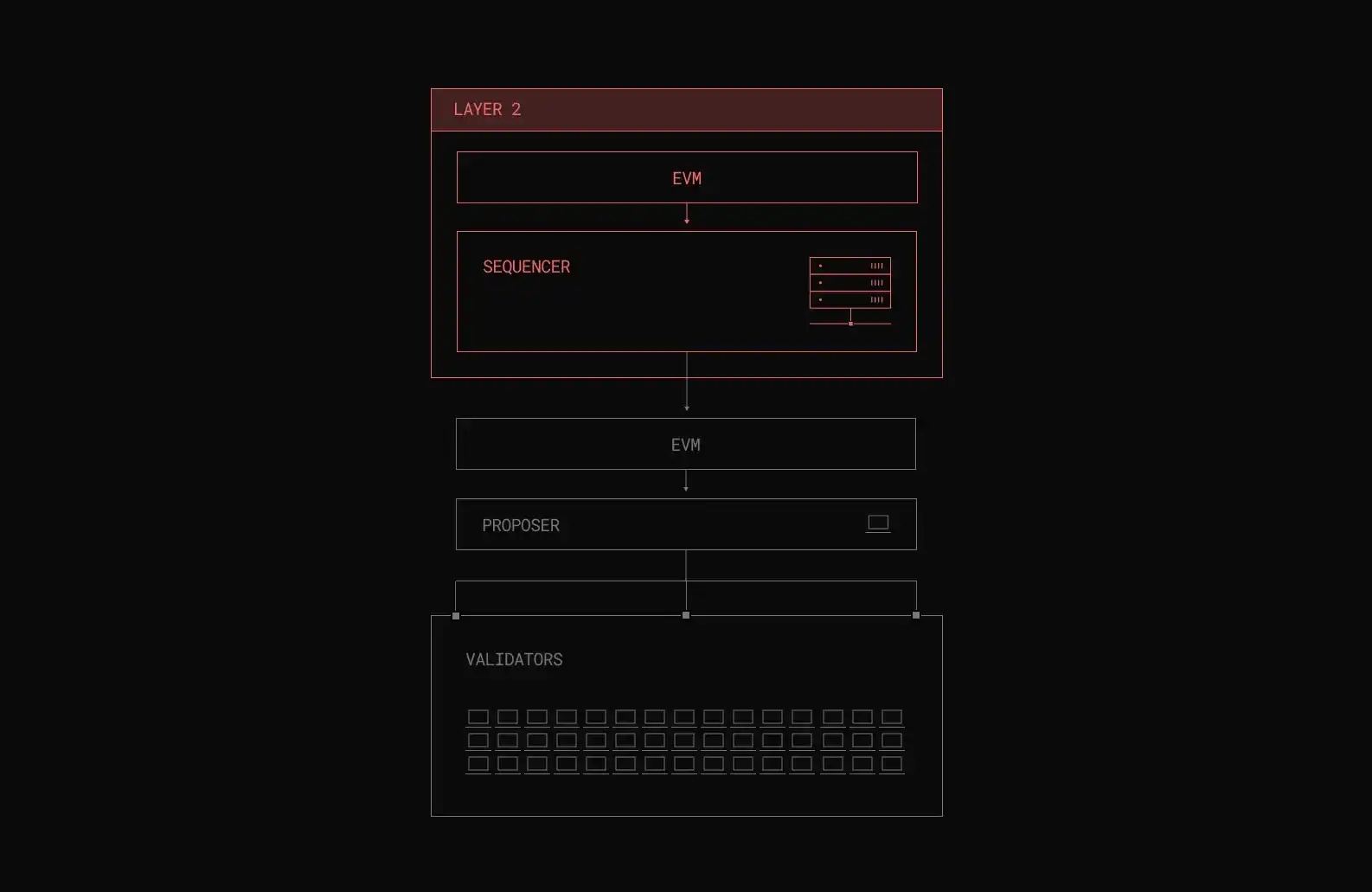
It is useful to name them one by one: Custodial Trust (someone holds the underlying assets for you, and you trade claims on it—cross-chain bridges, wrapped tokens); Upgrade Trust (someone can change contract behavior after your deposit—admin keys, Security Council); Oracle Trust (someone provides data that the contract itself cannot generate—price feeds); Live Trust (the system's normal operation relies on someone running operations continuously—sequencers, Relayers, Keepers); Governance Trust (token holders, or the small minority that can muster a quorum in a contentious vote).
Most protocols rely on three to four of these at once. Most marketing copy collapses them all into the word 'decentralization,' letting readers guess at the rest themselves.
The bigger problem is that some of these assumptions are entirely hidden. In its May apology, LayerZero admitted that three and a half years ago, one of its multisig signers had once made an individual transaction using a production hardware wallet. This mistake was internally rectified and never disclosed to users, only coming to light as part of a hardening announcement, packaged as routine housekeeping rather than a voluntary admission. Users of the trust system had no way of knowing about this incident, nor any way to price the risk of 'it actually happened.'
There's a euphemism in the industry for this gap: "training wheels." The selling point is that admin keys and Security Council are transitional—present today, to be removed once the protocol matures enough to walk on its own. In practice, training wheels are almost never taken off. They get renamed, repackaged, renewed, or quietly transferred to a foundation.
The L2Beat Stage 0 / Stage 1 / Stage 2 framework is the cleanest exception, proof that 'this industry can candidly describe its actual trust assumptions if it is willing.' Virtually no protocol adopts the L2Beat-style parlance in its marketing, which in itself is "evidence that dishonesty is structural, not incidental."
This is an engineering reality and is shaped by the incentives that builders actually face at every layer. If you want to quickly launch a complex product, respond to vulnerabilities without forking, support new collateral types, or integrate with other parts of the ecosystem, you need operational leverage.
Fully immutable, with no privileged-access contracts, is indeed robust, but also brittle—any change requires a full migration, any bug becomes permanent, any new feature demands user re-enrollment. Besides technical factors, there is a reality: VC timelines do not allow for a three-year formal verification cycle; protocols that launch first get the liquidity.
Composability further exacerbates the issue: an immutable protocol cannot access a new oracle, support a new chain, or patch discovered vulnerabilities without forcing all users and integrators to migrate.
The result is this: for any single team, the rational choice is to "deploy with an admin key and promise to remove it in the future"; for any single user, the rational choice is to accept this trade-off because either alternative protocols don't exist or lack liquidity. OpenFi is not a moral failing of individual builders. It is the Nash equilibrium of this space.
An honest statement is this: DeFi has almost universally opted to trade some decentralization for operational feasibility. This choice is defensible. The dishonesty lies in not calling out the trade-offs and continuing to market protocols as "decentralized" when their actual security models rely on a few signers, a single validator, or a multi-sig vulnerable to social engineering.
The way forward is closer to "disclosure" than "revolution": enforce trust assumptions labels as per the L2Beat model; significant time delays to allow users to exit before privileged operations complete; pricing "operational risk" in insurance markets rather than a fictional "pure code risk"; and a sober partition of "what parts of the system genuinely need an upgrade path" versus "what parts are only made mutable due to architectural inertia." April 2026 has not proven OpenFi untenable.
It proves this: marketing an OpenFi system as DeFi leaves its users unprepared for its actual failure modes. To make such a system secure, the first step is to honestly admit what we've built.
The Dual Nature of Centralization
The core trade-off of OpenFi became glaringly visible in the Arbitrum freeze event. Three days after the KelpDAO exploit, the Arbitrum Security Council voted to freeze the 30,766 ETH—approximately $71 million—the attacker had moved to Arbitrum One. The freeze was coordinated with law enforcement and, by most standards, is seen as a positive outcome: stolen funds were prevented from being laundered, the attacker's downstream channels were closed, and some user losses might be recoverable.
But note what made this freeze possible: Arbitrum has a Security Council with the authority to "reach into the on-chain and move funds." This is not a feature of decentralized infrastructure. It is a centrally designed kill switch—defensible under the guise of "emergency response" and used in a way that critics have long been concerned about—not necessarily bad, but certainly consequential.
The same type of mechanism that allowed Arbitrum to play the "good guy" in the Kelp incident also happens to be the same type of mechanism that allowed Drift to be exploited—a small set of trusted signers holding the power to perform protocol-level actions, with the only difference being the level of "robust constraints" on that power. Once, this power was legitimately used to freeze stolen funds; another time, it was socially engineered to drain user deposits. Leverage that can cut both ways.
The "kill switch" failed through at least five different avenues—social engineering (Ronin, Drift), insider compromise (Multichain), sovereign coercion, legal compulsion (Tornado Cash, USDC), and governance takeover (Beanstalk, Mango Markets). Each was a different attack with different defenses, yet the blanket statement "the Council failed" obscured it all. Pointing out the specific failure vectors is the first step to defending against them.
This is the "centralization duality coin" in DeFi, and it is the most critical aspect of the industry's current state: every piece of operational leverage that can deliver a "good outcome" in an emergency is also an attack vector—it will bring disastrous results in another event.
A deeper issue is that, in the case of Arbitrum, the term "good outcome" carries too much weight. Legitimacy is socially constructed, and the same form of leverage has been exercised in situations far from consensus. The Ethereum 2016 DAO fork remains a classic example: half the community insisted that reversing the $60 million vulnerability was the most apparent and legitimate use of social consensus; the other half insisted it was a fatal betrayal of "code is law," and they forked off, allowing the original chain to continue as Ethereum Classic.
Circle and Tether often freeze USDC and USDT addresses, sometimes in response to OFAC sanctions, sometimes merely out of suspicion, with affected users having no recourse—freezing is packaged as compliance but is inherently discretionary. The Arbitrum freeze worked. The DAO fork, in a way, also worked.
USDC freezes work consistently. The real question is not whether the "kill switch can produce good outcomes," but rather "who decides what qualifies as a good outcome"—and how much of this decision-making process the protocol's users have been informed about.
No version of trade-offs can "have it all." You either have a kill switch, which means you have something that can be captured, manipulated, socially engineered, or you don't, and you must accept that some events will be permanent and irreversible.
These levers themselves are not interchangeable. Arbitrum's Security Council can swiftly move funds at a low threshold through an emergency process— the combination of "speed + scope" makes freezing possible, but the same combination also makes the failure mode catastrophic if the Council itself is compromised.
THORChain's lever is narrower: it can pause and recapitalize through RUNE issuance, but has no power to seize or redirect user assets. Aave's emergency admin can freeze markets, adjust risk parameters, but cannot transfer user balances. MakerDAO's emergency shutdown is a one-way exit, not a seizure tool. Different forms, different trade-offs, yet all referred to as "emergency switches." A protocol willing to honestly address its own trust model owes users not a category but a specific form.
The industry also tends to evade another distinction: the difference between "leverage used only in extreme situations" and "leverage operated in regular rhythms."
Bitcoin and Ethereum theoretically have emergency switches— a sufficient level of coordination among nodes, miners, validators, and exchanges could fork either chain at any given day. The reason these two chains are still considered trust-minimized is because this lever has hardly been pulled, and each pull comes with the cost of a permanent community split.
It has been a decade since the DAO fork, which remains the most controversial event in Ethereum's history. Bitcoin has never experienced a similar fork.
While the leverage exists, the commitment to "do nothing" in regular transactions is what has granted the underlying system a trustworthiness that any single design feature alone could not provide.
In contrast, Arbitrum's Security Council operates on a regular cadence. It votes regularly to upgrade. It has taken emergency actions before Kelp's freeze and will take more afterward. It is not a reserve dormant power but an active governing body. OpenFi criticizes the degree of scrutiny for "active leverage" far exceeding that for "dormant leverage" because the restraint of dormant leverage itself is a signal— the trust earned by high-threshold operators is something that the leverage itself cannot grant. Active levers lack this signal. They can only be evaluated based on their controls, controls that have repeatedly proven insufficient.
After encountering a vulnerability in 2021, THORChain took the "no leverage" route, facing criticism for lack of intervention. Arbitrum took the "emergency switch" route and received praise. Both choices are arguable. Neither is free. The industry must stop pretending to have the best of both worlds— and must honestly inform users of the specific trade-offs each protocol has actually made.
The Final Turn: This trade-off will only worsen over time. Once a protocol is capable of freezing, regulators and courts increasingly tend to rule that it *must* freeze. The freezing capability of USDC, initially an emergency compliance tool, has now become a de facto mandatory response to OFAC notices and an expanding array of state-level enforcement lists.
The decision to "launch with the kill switch" is also a decision to "inherit a mandatory usage list that will grow throughout the protocol's lifecycle," many use cases of which are not in line with the direction the protocol's own community would support. THORChain's "no leverage" stance is therefore not just an engineering choice but also a regulatory posture—it precludes "compliance possibilities" and preemptively excludes "compliance obligations."
Whether this posture can survive ongoing enforcement pressure is an open question, but the asymmetry is real: Leveraged protocols can be compelled to use it; unleveraged ones cannot.
For onlooker institutions, this honesty is far more important than marketing. An operation with a transparently disclosed operational kill switch, accompanied by documented governance, key management, and incident response—that is something a fund management team or insurance company can underwrite. A protocol claiming to be trust-minimized but running on a zero timelock 2-of-5 multisig is not. The former is a legitimate engineering choice. The latter is a risk no one can price.
What Comes Next
A habit of the industry cycle is forgetfulness. Each four-year cycle reimagines the institutions that DeFi was originally supposed to supplant, takes a beating, briefly remembers why principles exist, and then forgets again. What happened in April is not unprecedented. It is an industry of unnamed trade-offs, where convenience trades for principles, leading to a predictable end state.
Today, the industry is faced with three decisions, none of which can be postponed any longer.
Centralization. Every protocol must openly choose which operational levers it holds and explain this choice to users. The honest version of DeFi is not the kind that self-promotes as "decentralized" while running on a zero timelock 2-of-5 multisig DeFi, but rather openly discloses the multisig composition, thresholds, timelocks, and each condition under which levers are used. Named trade-offs are the only way for trade-offs to survive.
Security. Audits are not the boundary. Protocols that will survive the next cycle will treat operational security—keys, signers, cross-chain bridges, configurations, incident response—as seriously as Solidity audits. Most teams still treat it as a back-office operation. The moment they start asking the questions today they would've asked starting from the treasury allocation phase, that attitude will no longer suffice.
Capital Allocation. Deciding the funding for the next cycle, sitting on pension funds, sovereign wealth allocators, corporate treasuries, and insurance balance sheets—they are watching. They don't need pure trust minimization. They need operational risk that can be underwritten. It looks more like critical infrastructure rather than an experimental protocol that will absorb this flow of funds. Other protocols will continue to hold onto the retail funds they have always had, watching as the institutional wave bypasses them.
April 2026 is not a security crisis. It is a moment when the industry's mental model completely shatters, and it is the moment when those protocols that survive, start to differentiate themselves from those that don't.
Original Article Link
Welcome to join the official BlockBeats community:
Telegram Subscription Group: https://t.me/theblockbeats
Telegram Discussion Group: https://t.me/BlockBeats_App
Official Twitter Account: https://twitter.com/BlockBeatsAsia

 Related Articles