《The New York Times》: Afghanistan, a Cryptocurrency Innovation Born from the Rubble

Original Article Title: An Unlikely Source of Crypto Innovation: Afghanistan
Original Article Author: Aryn Baker, The New York Times
Original Article Translation: Luffy, Foresight News
At a crowded currency exchange point in northwest Syria, 46-year-old farmer Hala Mahmoud Almahmoud clutched a plastic card as if it were her lifeline. She had never heard of cryptocurrency, but the $500 worth of cryptocurrency on the card could help her restart her farm after nearly 14 years of civil war.
As the teller confirmed the amount and dispensed the cash, Hala Mahmoud Almahmoud finally breathed a sigh of relief, smiled, and whispered her thanks. She couldn't help but ask, where did this technology come from.
The answer took her by surprise: Afghanistan.
In this country known for Taliban's conservative rule and government suspicion of the internet, no one would have expected that blockchain transfers, such as the one on this card, could originate here. However, in this largely isolated nation, an Afghan startup is developing various tools in the hopes of transforming the humanitarian aid distribution in a conflict-ridden country.
「We have experienced these hardships firsthand, so we know exactly how to build a practical solution.」 26-year-old Zakia Hussaini, a programmer at this startup called HesabPay, is behind the technology that powers the card that changed Almahmoud's fate.
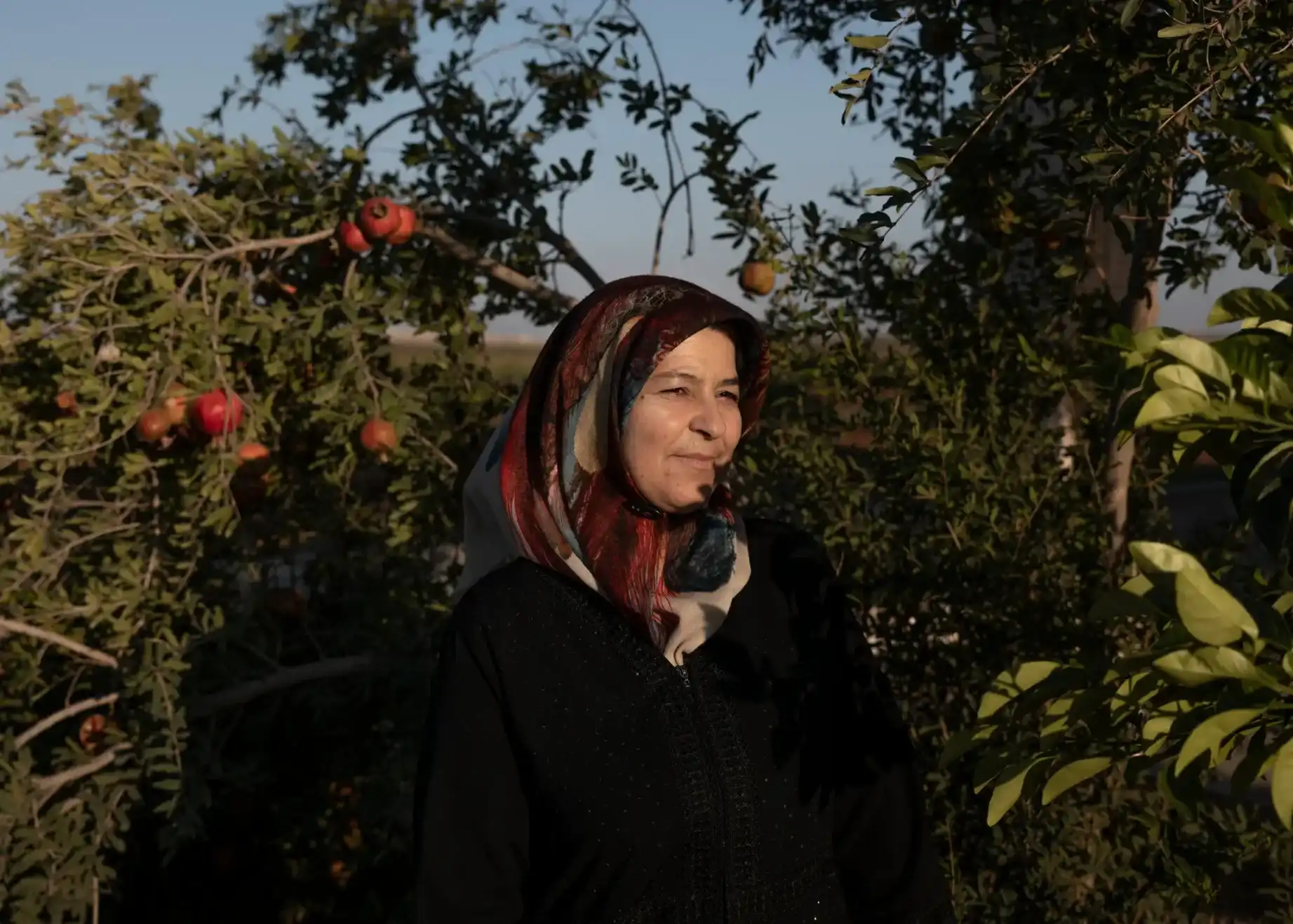
Near Syria's Idlib, Hala Mahmoud Almahmoud stands outside her home. She received $500 in cryptocurrency aid to relaunch her farm.
The UN Refugee Agency is an early supporter of this platform, using HesabPay to assist over 86,000 Afghan families, making it one of the world's largest public blockchain aid initiatives. Mercy Corps, the organization that funded Almahmoud, has also partnered with HesabPay, expanding its services to Syria, with aid projects in Sudan and Haiti in the pipeline.
In Syria, the process of receiving funds from overseas is extremely challenging: there is a cash shortage, international banks avoid the country, and remittance companies like Western Union charge transfer fees as high as 10%. However, HesabPay enables organizations like Mercy Corps to bypass these obstacles.
The founder of HesabPay is Afghan-American entrepreneur Sanzar Kakar, who previously ran a payroll processing company in Afghanistan. In 2021, the U.S. military withdrew from Afghanistan, the Taliban regained power, triggering a financial collapse. International sanctions halted all cross-border transfers, and the central bank system collapsed as a result.
To address his country's increasingly dire financial security issues, Sanzar Kakar turned to blockchain technology. He created the mobile app HesabPay, named after a local Afghan term meaning "account," which supports instant transfers between digital wallets without the need for banks or Taliban government intervention. He stated that the Afghan government has issued a license for his venture, allowing it to operate as a formal financial institution.
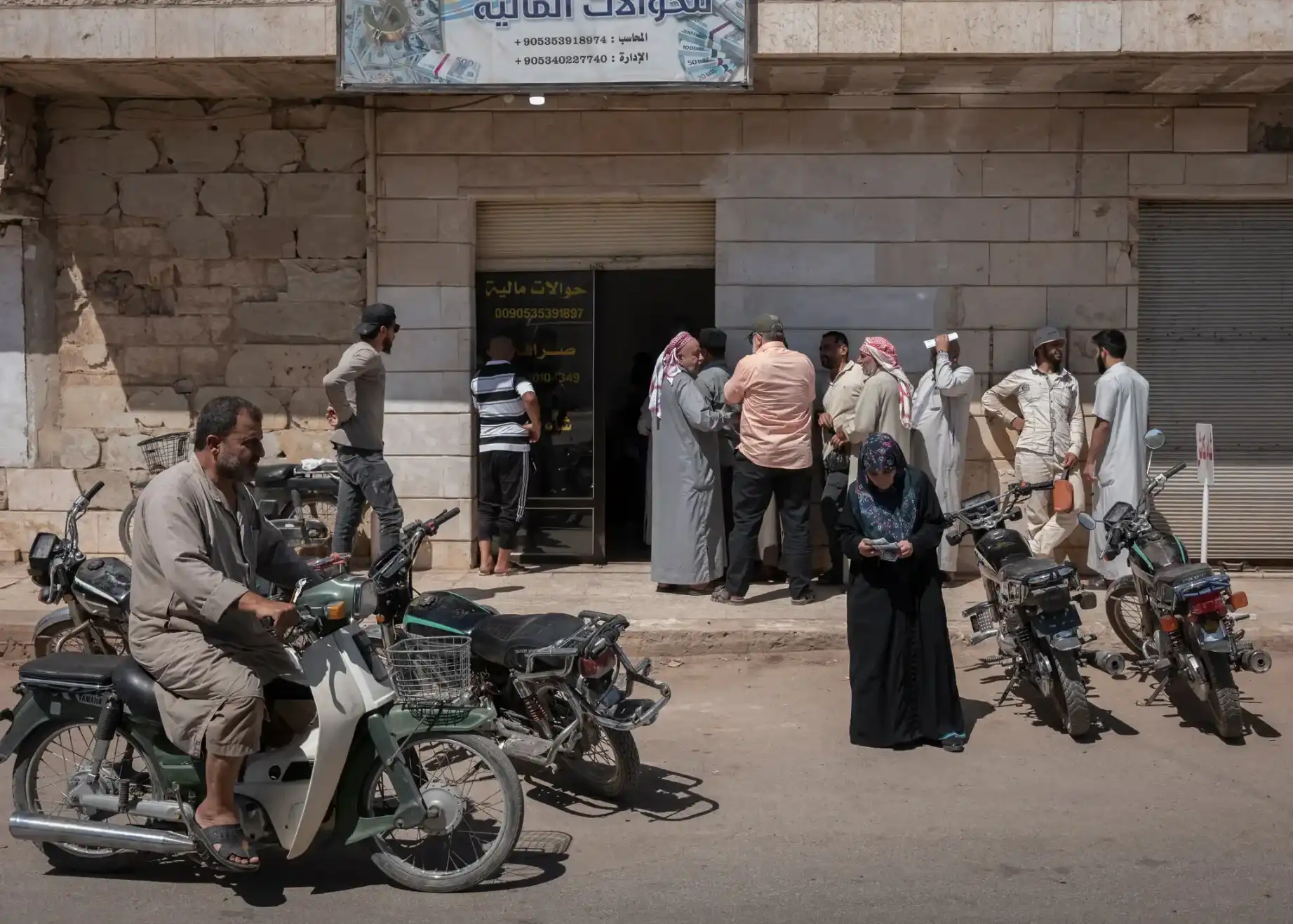
The aid organization Mercy Corps, in collaboration with HesabPay, has expanded the platform's coverage to Syria.
Today, the platform has over 650,000 digital wallets in Afghanistan, with approximately 50,000 in active daily use. Each month, about $60 million in funds are circulated through a stablecoin endorsed by the Afghan afghani.
Carmen Hett, the Financial Controller at UNHCR, revealed that since February 2025, the United Nations has distributed nearly $25 million in aid to 80,000 vulnerable Afghan returnees' digital wallets through HesabPay. "This model has significantly reduced transaction fees, shortened fund transfer times, and improved transaction traceability, real-time monitoring capabilities, and accountability."
Ric Shreves, Decentralized Finance Solutions Expert and Chair of the Decentralized Collaboration Foundation, stated that it is not surprising that organizations like Mercy Corps and the United Nations have chosen to conduct aid work through blockchain transfers. For these organizations, "this model has almost only advantages compared to traditional aid distribution methods."
However, he also pointed out that this model still carries risks, especially in a payment system like Afghanistan's, which is based on a stablecoin endorsed by the local currency (while Syria's HesabPay wallets are backed by a USD-backed stablecoin, which is a more prudent choice). Digital wallets may be frozen for engaging in transactions with sanctioned individuals, and theoretically, central banks of various countries could freeze wallets for political reasons.
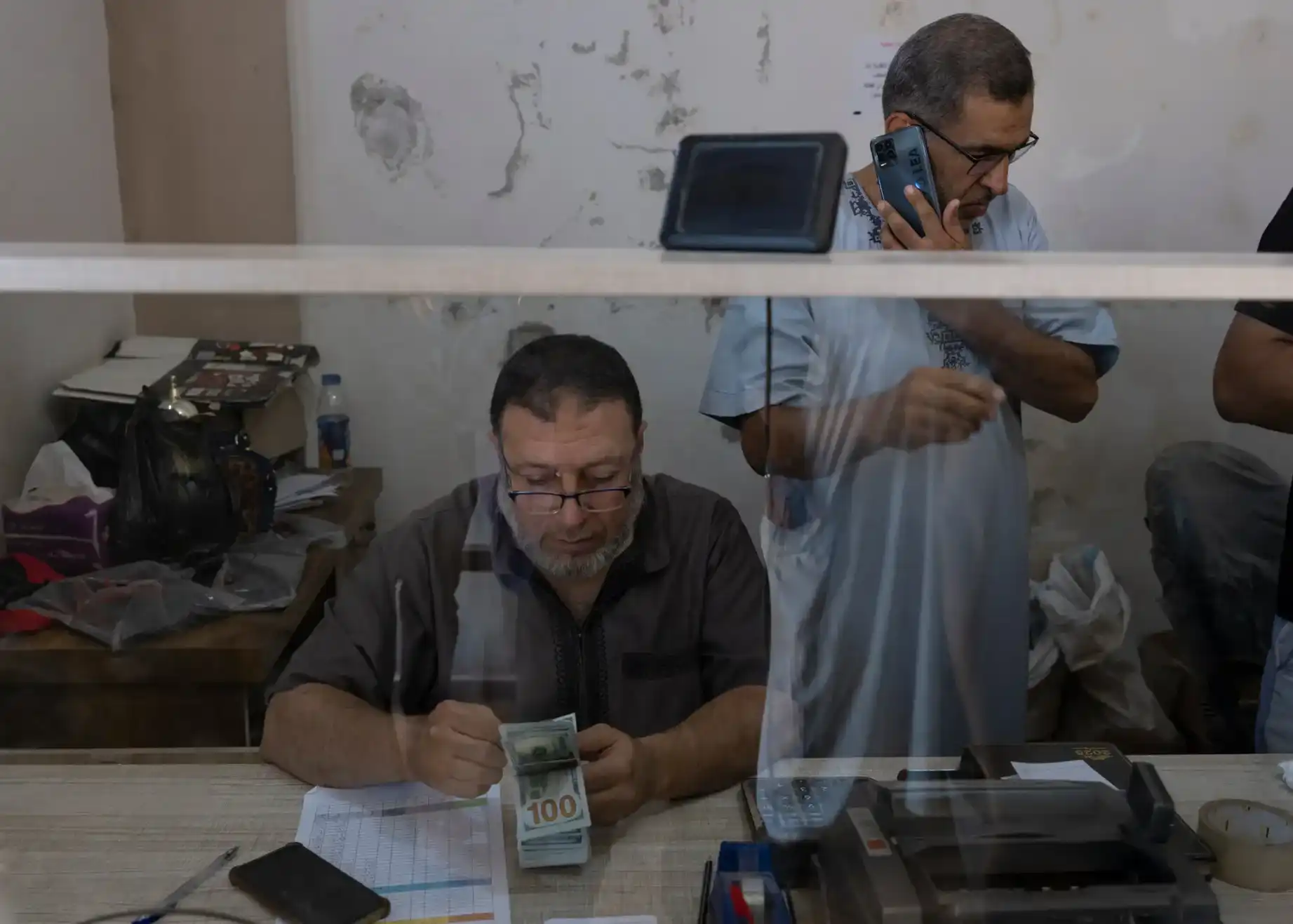
Mercy Corps, leveraging blockchain technology, successfully delivered aid funds to Syria where cash was scarce, and most international banks did not operate in the country
“We are offering people a non-physical form of transaction, which means these transactions can also be disrupted through technical means,” said Ric Shreves. He added that while digital currencies are much more secure than cash, they cannot be stashed under a mattress like cash.
In recent years, aid agencies have increasingly favored cash-based assistance, which is efficient and upholds the dignity of the recipients. However, cash has one fatal flaw: it is hard to track. Donors want to see evidence that their funds have truly reached those in need. Since President Trump drastically cut U.S. foreign aid funding early last year, organizations like Mercy Corps have faced increased pressure to demonstrate the tangible impact of their aid work and the compliance of their fund usage.
Blockchain technology happens to solve this problem: it creates a clear digital trail, accurately recording the amount of each fund disbursement, the recipients, and the usage destination. Scott Onder, Chief Investment Officer of Mercy Corps, stated that this efficient and accountable model “may be able to regain the trust of those who are skeptical of the value of aid work.”
HesabPay also comes with additional security measures, such as a real-time data dashboard that can track wallet transaction behavior and cross-verify with international compliance databases. The company stated that this system can identify illegal activities such as terrorism financing, money laundering, and online fraud. Once a suspicious transaction is detected, an alert is immediately issued. For aid donors, it provides a level of oversight that is hard to achieve in fragile countries.

Hafa Village resident Abdul Moti Hammoud accidentally triggered a landmine while driving a tractor, losing a leg. He is also one of the beneficiaries of the Mercy Corps aid program.
In a recent online demonstration, Nigel Pont, the company's Senior Humanitarian Affairs Advisor, clicked on a purple dot representing a HesabPay agent in Afghanistan. Dozens of light blue wallet icons representing beneficiaries then expanded, clearly displaying recent transaction records. Clicking again revealed the subsequent flow of funds. During the demo, one wallet suddenly flashed a red potential fraud alert. While this live demo had some awkward moments, it precisely demonstrated the system's ability to identify risks.
Nigel Pont previously served as Chief Strategic Officer at Mercy Corps, where he stated, "From the perspective of a donor to aid, this feature is invaluable. A system that can automatically flag fraud risk allows us to immediately conduct verification, rather than waiting six months to receive a report revealing that $20,000 of aid funds have been misappropriated." He acknowledged that no system can completely eliminate corruption, and cash aid cannot achieve this either.
22-year-old Abdul Halim Hasan is waiting in line at a currency exchange point in Syria to cash out with Almahmoud. He said he hopes that one day he can use HesabPay as a regular bank account to securely receive, send, and save money. But for now, having this HesabPay card to access the funds needed to rebuild his life after the war is sufficient.
"I sincerely hope that this approach can become widespread in Syria," he said.
Welcome to join the official BlockBeats community:
Telegram Subscription Group: https://t.me/theblockbeats
Telegram Discussion Group: https://t.me/BlockBeats_App
Official Twitter Account: https://twitter.com/BlockBeatsAsia