Bitcoin Reserve Company's Poison Pill Leverage: A Soon-to-Be Collapsing Financial Ponzi Party?
Original Article Title: "Opinion: Public Companies Funding Bitcoin Purchase Is 'Toxic' Leverage"
Original Article Author: lowstrife, Crypto KOL
Original Article Translation: Felix, PANews
Lately, Bitcoin reserve companies such as MSTR, Metaplanet, Twenty One, and Nakamoto have been in the spotlight. However, I believe their "reserves" are a destructive leverage, the worst thing to happen to Bitcoin and what it stands for. Here is an analysis of how this pattern would collapse under certain conditions.
The feedback loop these companies utilize involves using corporate funds to purchase Bitcoin, recording it on their balance sheet, and then leveraging that balance sheet through various corporate mechanisms to raise more funds. This pattern has been widely discussed and hailed as the greatest invention of all time.
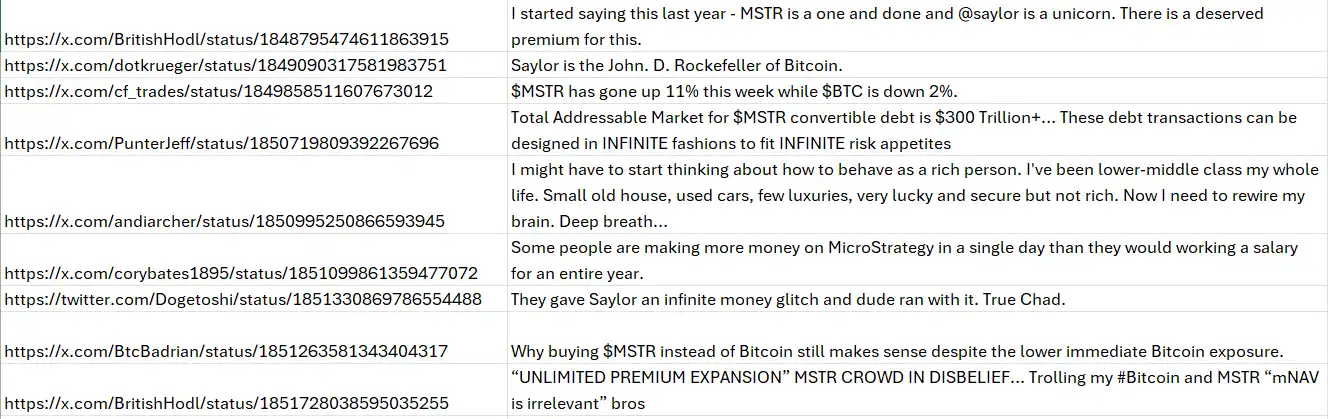
Funds raised through methods such as issuing new shares (ATM), bonds, preferred stock, loans, etc., are immediately used to buy Bitcoin to drive this flywheel. An important distinction here is the use of appreciation leverage: companies like Tesla simply hold the assets in Bitcoin (which I personally have no objections to).

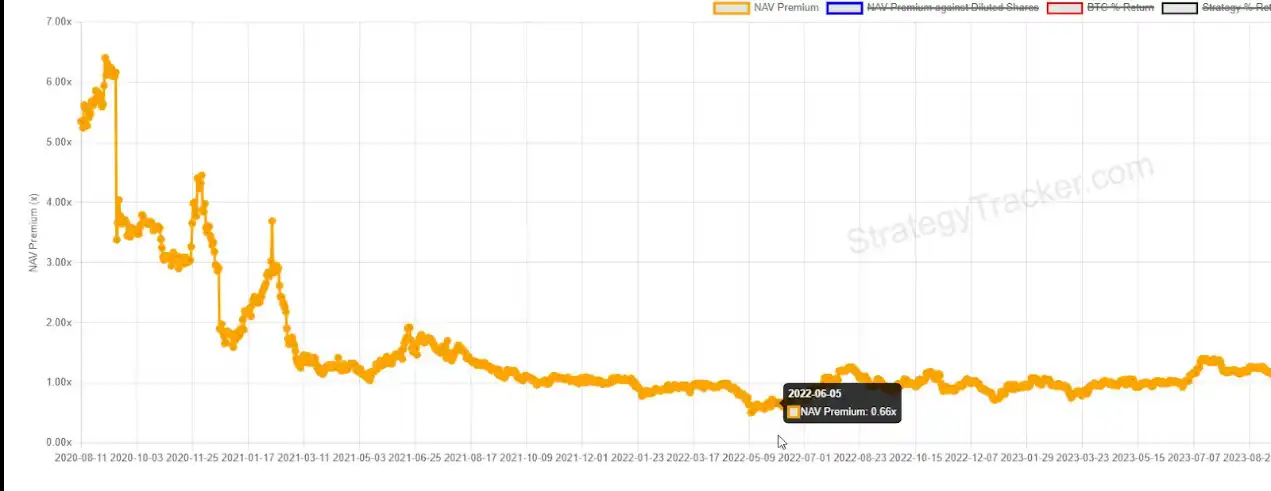
But the crux of this flywheel is that common stockholders are the ultimate holders of these financial assets. All these funding mechanisms ultimately lead to the dilution of common stock, selling shares on the market to fund this flywheel. MSTR's primary method is the issuance of new shares (ATM) to achieve appreciation dilution. This method works well if the mNAV (PANews Note: representing the current stock price compared to the value of Bitcoin it holds) is greater than 1.0. However, the issue arises when this leverage relies on issuing new shares to meet its cash flow. If MSTR's stock price falls below 1.0 times mNAV (as it did in 2022), problems arise.
Another tool is to use leverage to enhance the yield on their products, such as convertible bonds and perpetual preferred stock. Because buying is expected in the future, this accelerates the expected value of equity and first magnifies the stock premium. By issuing more common stock, diluting existing shareholders' equity, this leverage will eventually mature. However, they allow this dilution to occur later, exchanging today's dollars for tomorrow's cash flow/dilution, deferring this payment and "cost" to a distant future. Truly "smart." The issue here is twofold: the first problem is if the underlying stock does not meet performance targets, these products cannot be the fulcrum of all leverage. For convertible bonds, MSTR must refinance or sell BTC to raise cash.
The second issue is preferred stock. They require paying a perpetual, non-appreciating dividend to these debt holders (i.e., interest). MSTR plans to issue trillions of dollars of such securities, with the funds for these payments coming from diluting MSTR shareholders' equity. Specifically, the Strategy's STRF (PANews Note: a fixed-income product packaged as preferred stock issuance to easily and continuously raise funds to buy Bitcoin) has no maturity date and carries a 10% annual interest rate as permanent debt. MSTR will forever rely on non-appreciating ATM, diluting shareholder equity for every dollar of financing issued. Today's purchase comes at the expense of tomorrow's shareholder interests. What does this sound like?
The issue with using the ATM to provide the needed cash flow is that it relies on mNAV, which does not stem from its own assets. It is entirely reliant on market sentiment: what people think its treasury is worth. This is an insult to Bitcoin's essence. While there are provisions for dividend suspension, it would lead to more problems. STRK must pay all outstanding dividends plus penalties to convert (mature). Not to mention that suspending dividends would significantly reduce the product demand.
If the meaning of income-producing assets is to remove risk, the last thing you want to see is destroying the intention behind holding that security. These risks are not mentioned by MSTR's advocates. Suspending dividends would serve as a warning of solvency. Supporters argue that the issuance of these preferred stocks is to buy Bitcoin at the moment, and dividend payments are worthwhile. They believe that if it has already been "modeled out," then raising funds is worth it.

You have to look at the transaction holistically rather than isolating each part. If they funded it with preferred stock, you must consider the valuation/premium at which they funded. Then, you can simulate paying dividends using the ATM and forecast the future based on your own predictions of Bitcoin and stock performance to determine how much stock needs to be issued and when conversion would be more value-additive. Once you do this, you will realize how good these preferred stock issuances are.
Currently, about $1.8 billion of such securities are in circulation, making these payments still feasible. However, Saylor proposes to issue $3 trillion of such securities, which would require diluting shareholder equity by $300 billion annually, making it clearly unsustainable.
So, how will all of this unravel? It all starts with mNAV, which is crucial. It is life, it is vitality. If mNAV falters, the company's ability to raise funds will vanish, and debt conversion will harm mNAV, making the company unable to repay its debt.
GBTC is another closed-end fund that gained popularity during the 2021 bull market. People used it to invest in BTC when their existing accounts didn't allow it. Today, the reason for MicroStrategy's purchase is also largely the same. The issue is that there are increasingly more channels to acquire Bitcoin. GBTC is a closed-end fund, and its price relative to the underlying asset can have a premium or discount. Once the demand for this investment channel dries up, the fund's need to purchase new assets also diminishes.
Once the mNAV is shattered, so is the demand.
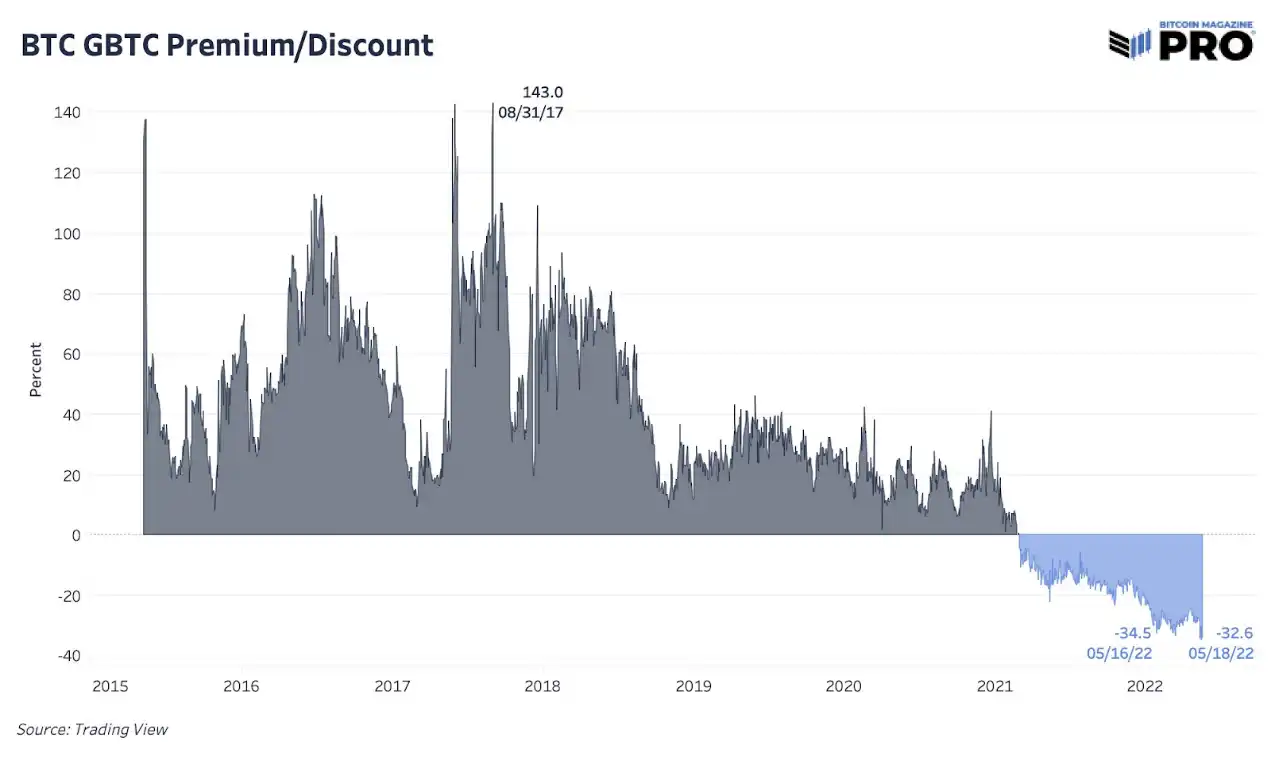
Once the mNAV falls below 1.0, MicroStrategy's ability to raise funds will be in jeopardy, similar to the loss of GBTC's buying interest and capability. It's worth noting that mNAV is entirely based on market sentiment. There is no mechanism or reason that requires it to trade based on asset value.
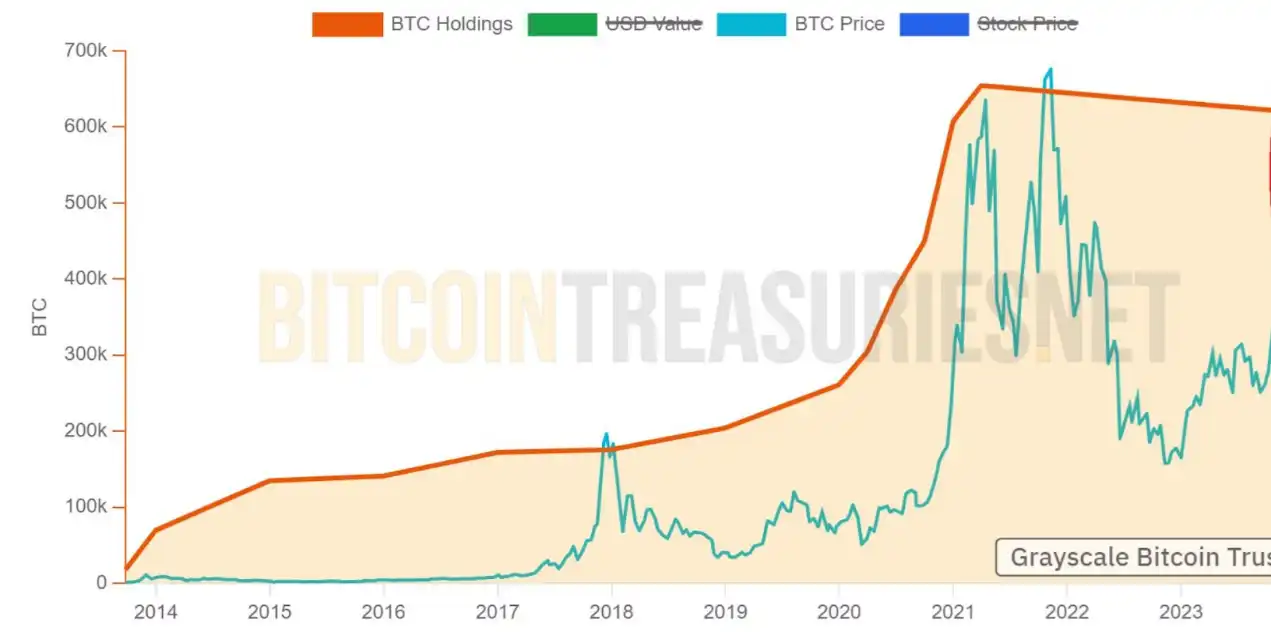
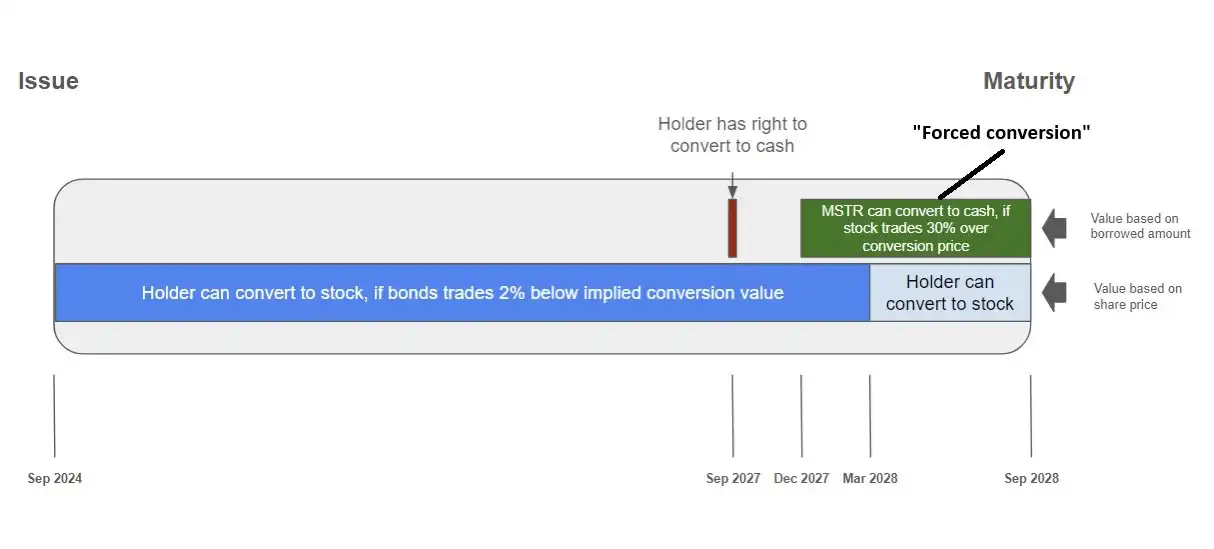
As mNAV declines, the ability to continue raising funds in the future (and buying Bitcoin) weakens, and the stock's expected value also decreases. If forced to issue debt dividends under unfavorable conditions, this situation could exacerbate. Convertible bonds make the situation even more complex. Currently, MicroStrategy holds $8.2 billion in convertible bonds, maturing between 2028 and 2032. The risk with these bonds is not in price; regardless of Bitcoin's price fluctuations (within a reasonable range), the bonds will not undergo a "margin call" or require additional collateral.
The issue with convertible bonds lies in their name. They need to convert. MicroStrategy's stock needs to appreciate to a predetermined price level to allow the bonds to convert into new stock issuance. Remember: this trigger point is MicroStrategy's stock price, which is based on floating mNAV, and mNAV is based on market sentiment. If, for some reason, the price fails to rise, then the problem becomes a matter of time, not price. Regardless of Bitcoin's underlying price, the bonds could still mature. MicroStrategy must either refinance or repay the debt by selling BTC for cash.
Ultimately, the flywheel mechanism will reverse, leading to the entire plan's failure. Buy back stock below an mNAV of 1.0 and sell the underlying assets to raise funds. Some believe this falls under fiduciary responsibility, and Bailey has publicly stated he would do so as well.

This is not a financial revolution. It is the fervor of Ponzi scheme enthusiasts chasing leverage. Individuals have held Bitcoin for a long time, witnessing Bitcoin OGs cheer for Saylor, who is, in turn, replaying the 2008 financial engineering using Bitcoin, which is truly heartbreaking. It should be known that it was precisely these tactics that led to the birth of Bitcoin.
Welcome to join the official BlockBeats community:
Telegram Subscription Group: https://t.me/theblockbeats
Telegram Discussion Group: https://t.me/BlockBeats_App
Official Twitter Account: https://twitter.com/BlockBeatsAsia

 Related Articles