Technooptimism: A powerful political movement
Original Title: Behind the Curtain: A new, powerful political movement
Original Author: Jim VandeHei, Mike Allen
Translated by: Kaori, BlockBeats
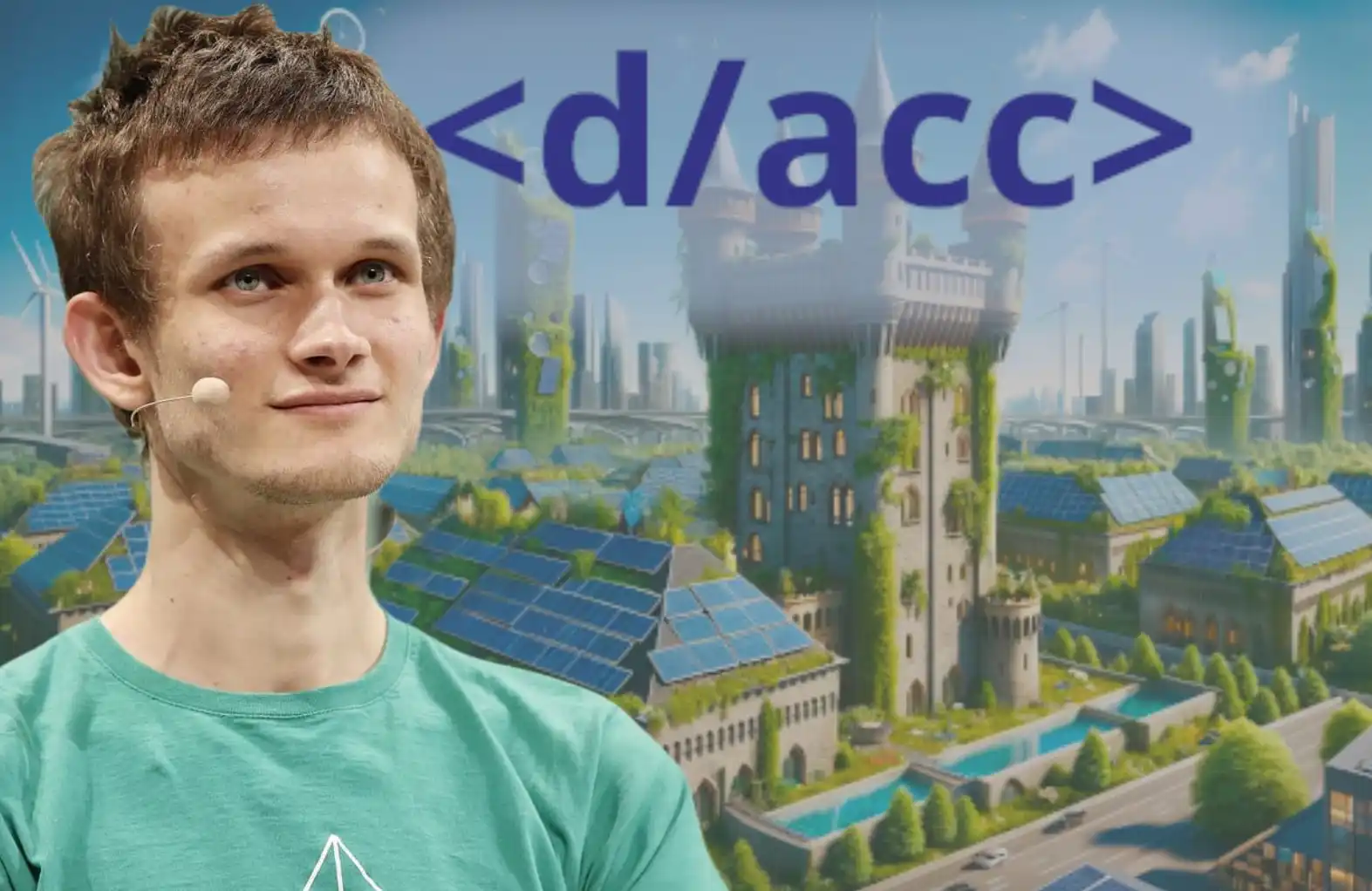
Editor's Note: The world of cryptocurrency is not just about finance, but also has intricate connections with political ideologies. Previously, a16z and Vitalik have publicly expressed their political inclinations towards technology. The rise of new political movements such as American techno-optimists mentioned in this article signifies a challenge to traditional beliefs and systems, reflecting the increasing influence of technology on politics and society. This movement is centered around universal free-market capitalism, support for artificial intelligence, and opposition to mainstream media. They are building political power through social media, podcasts, and other channels, and are speaking out on a series of major issues. At the same time, their influence is gradually penetrating into the political arena, supporting candidates and participating in election campaigns, which has sparked widespread attention to the future political landscape.
In the United States, a new, powerful, and well-funded political movement is rapidly emerging: the techno-optimists.
Why it matters: This group - mainly wealthy, white, middle-aged men with technology jobs, companies or investment funds - has built an impressive but loosely organized political force through social media, podcasts, news projects, and political donations and activities.
These tycoons have changed the political landscape of the entire social media platform (X), helped elevate the most threatening third-party candidate (RFK Jr.) in decades, and established a powerful and popular podcast network.
The Rise of Technological Optimism
Understand the underlying message: Technological optimism is an imperfect name for this movement. However, it captures the active spirit of an emerging ideology.
This is a common philosophical view, not a political party - although some billionaire tech investors who support and promote this movement privately discuss the idea of forming a political party in the near future.
A true political party may just be a fantasy: individuals with strong egos, varying interests, and short attention spans.
Current situation: Currently, it can be seen as a loose alliance of very powerful people with a large following, who share platforms, ideas, styles, and beliefs.
They have a social media platform: Elon Musk's X, formerly known as Twitter, where they are fighting against traditional thinking and institutions. In 2020, X has transformed from a breeding ground for mainstream media thinking to a breeding ground for technology/anti-establishment thinking in this election. They exchange greetings by retweeting and exclusive interviews with X.
They have a fairly common ideology: unrestrained freedom of speech, support for artificial intelligence, opposition to mainstream media, and a skeptical attitude towards diversity, political correctness, and elite consensus.
They have an attention-grabbing philosophical manifesto, the most famous of which is investor Marc Andreessen's "Manifesto of Technological Optimism," which declares: "Technology is the brilliance of human aspirations and achievements, the spearhead of progress, and the realization of our potential."
They have a growing media ecosystem that operates online and receives a lot of engagement on X. These writers, including Matt Taibbi, Bari Weiss, and Glenn Greenwald, often recommend each other and gain exposure on large audience podcasts like Joe Rogan's. They have a growing media ecosystem that operates online and receives a lot of engagement on X. These writers, including Matt Taibbi, Bari Weiss, and Glenn Greenwald, often recommend each other and gain exposure on large audience podcasts like Joe Rogan's.
"Termination of DEI" Declaration
What they are saying: Weiss, the founder of The Free Press, recently wrote a popular anti-DEI manifesto called "Ending DEI," which is a hot topic within the movement.
She wrote: "It's time to completely end DEI. No more standing by and encouraging people to self-isolate. No more forcing declarations that you will put your identity above excellence. No more coercive speech. No more going with the flow just to be polite."
Weiss stated in California that The Free Press has grown by treating its listeners, viewers, and readers as "adults capable of handling complexity" and adopting a "more curious than knee-jerk reactive" approach.
She said, "We clarify the things that people hesitate to discuss publicly but talk about privately. We provide people with tools to describe things they notice and may be skeptical about, but cannot yet explain or express in words."
Nellie Bowles, a former technology reporter for The New York Times and now a columnist for The Free Press (and also Weiss's wife), tells us: "The tech optimism movement is a rebound from a kind of exhausting negation and reaction."
"In terms of reporting obvious risks," Baols added, "journalists, including myself in the past few years, have lost the feeling that any progress is possible or even desirable for a period of time, and [they] have rejected the possibility of progress that could make the world a better place. You can call it 'pessimism.' So now there is an opportunity to make some corrections and have an open-minded attitude."
Kara Swisher - who will release "Burn Book" on February 27th - is a harsh memoir of Silicon Valley, criticizing this group of people and their mocking tactics. She believes it is the need of billionaires to stay relevant and bored.
She said, "This is a false dichotomy - an argument put forward by someone who cannot think clearly, that 'if you're not with us, you're against us.' You can be optimistic about many new innovations, but still be concerned about their impact."
However, the influence of the combination of technology in the industry is real in politics - and it is growing.
You can see that when Ron DeSantis chose to announce his campaign on X instead of Fox News (where he encountered a disastrous malfunction). He did so in an interview with David Sacks, a technology investor and co-host of the popular "All-In" podcast. Sacks' political colors on X and his podcast are becoming increasingly prominent.
He is not the only one, allies of Musk, Andreessen, Ben Horowitz, Bill Ackman, and many other tech optimists are placing themselves in the politics of everything. Their views or themselves have been widely spread on podcasts, especially on Logan's "Full Send" and Lex Friedman's.
Trump-Biden Rematch
These individuals helped boost Vivek Ramaswamy and supported RFK Jr.'s third-party campaign in the early stages of the Republican presidential race. They often did so through podcast interviews and releases on X. However, they also invested funds into this work.
Ackman is a hedge fund manager who launched an online attack against a university president who made mistakes in his testimony to Congress on combating anti-Semitism. In a lengthy tweet, he announced that he will spend $1 million to help Minnesota representative Dean Phillips in his seemingly hopeless bid for the Democratic nomination.
Welcome to join the official BlockBeats community:
Telegram Subscription Group: https://t.me/theblockbeats
Telegram Discussion Group: https://t.me/BlockBeats_App
Official Twitter Account: https://twitter.com/BlockBeatsAsia

 Related Articles