Countdown to the end of MEKE public beta testing, focusing on derivative trading.
"In the bear market of cryptocurrency industry, besides waiting for the bull market, what else can be done?" This was a question asked by the audience during an offline event I attended. One of the suggestions given by the guests on stage was to participate in early-stage projects and seize the opportunity of airdrops. Airdrops are rewards given to early participants of a project by distributing project tokens to them, as a way of thanking them for their support and contribution. As a low-cost and high-return investment method, airdrops have already brought returns to many participants.
MEKE is the first decentralized derivatives trading protocol on the opBNB Layer 2 network. It is currently undergoing its second round of public testing, with a deadline of September 6th. Detailed tutorials can be found on the official website meke.fun. There will be a total of three rounds of public testing, and after the testing is completed, MEKE will be launched on the opBNB mainnet and airdrops will be available for application.
Not only MEKE, but also the leading Layer2 projects Arbitrum and Optimism have launched airdrops this year from a historical perspective. Layer2 networks have been the hottest narrative in the industry since the second half of last year. Technological innovation can enable blockchain to support more project construction, have faster transaction speeds, and provide smoother user experiences, which has always been a concern for everyone. The Layer2 network opBNB where MEKE is located is a new star in the BNB ecosystem. Participating in the public beta on MEKE can increase interaction on opBNB, which can be described as killing two birds with one stone, while also providing opportunities for airdrops for both MEKE and opBNB.
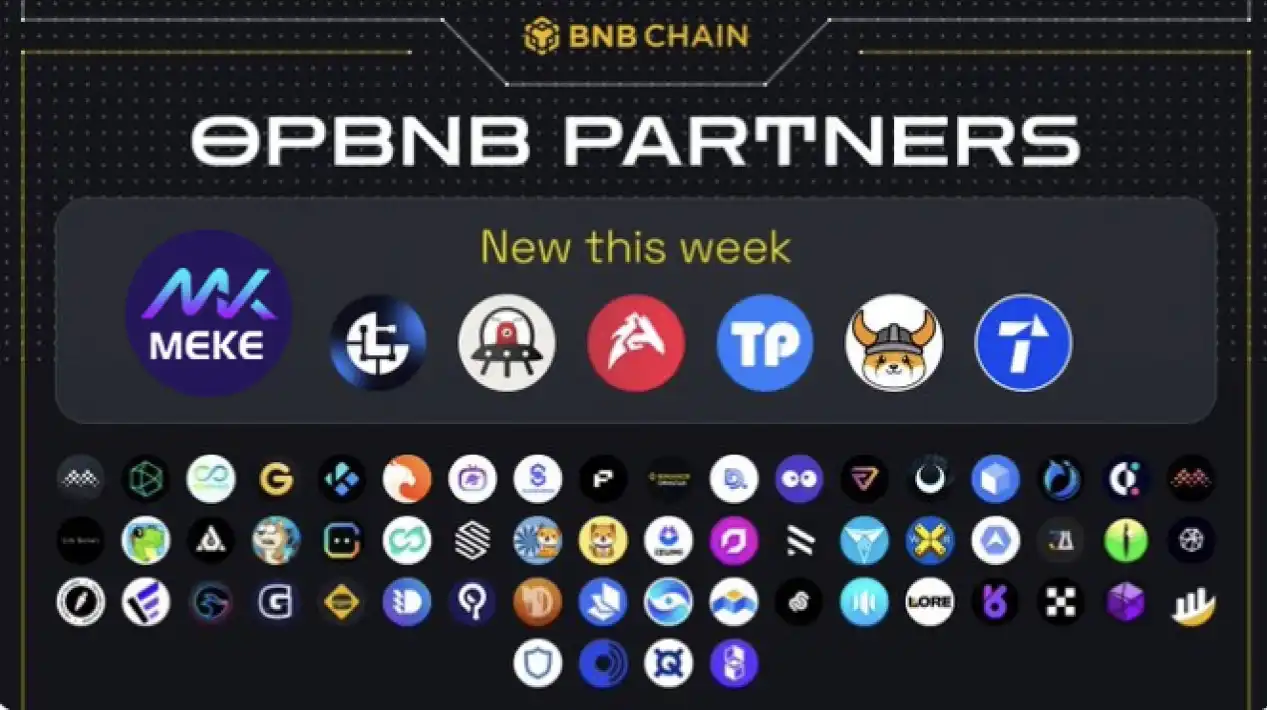
opBNB ecosystem has a large number of users and traffic. After the official announcement of the partnership, Binance Chain's Twitter account highlighted MEKE's information. MEKE's popularity and user base have significantly increased. In addition, MEKE will be able to share opBNB's technical resources and experience, including better security, scalability, and performance optimization, which will help MEKE provide better services and products.
Speaking of MEKE, the project itself is also a strong disruptor in its industry, which is the fundamental reason why it has gained the favor of opBNB. Since the first round of public testing was opened on July 31st, tens of thousands of people have participated, with over 50,000 independent wallet addresses and a daily trading volume of over 300 million US dollars. This number is still growing, laying a solid foundation of users for the later development of MEKE.
First of all, MEKE has a simple and user-friendly interface and usage. MEKE has chosen the classic order book model instead of the commonly used liquidity pool model in DeFi. Currently, MEKE only supports contract trading of encrypted assets, and will gradually add leveraged contract trading of financial products such as foreign exchange and gold. Currently, all orders support a maximum leverage of 25 times, and may be increased to a maximum of 100 times in the future according to market demand.
Secondly, timely and accurate data can prevent users from suffering losses due to drastic price fluctuations in the cryptocurrency industry. The price fluctuations in the cryptocurrency industry are much more severe than those in traditional stock markets, and the situation is even worse in the derivatives market, which is the main battlefield for many professional operators. Therefore, MEKE uses Chainlink's price feed as a reference price and also considers the real-time prices of contracts on its platform. Through a weighted algorithm, MEKE calculates a reference price that is more stable in the event of drastic fluctuations or intentional manipulation in the contract market, thus maximizing the protection of user interests.
The current cryptocurrency market is in the process of maturing, attracting more traditional financial institutions and retail investors. The derivatives market in traditional finance provides investors with opportunities to hedge risks, and institutions and investors typically use tools such as futures and options to reduce their risks. The same narrative will also happen in the cryptocurrency industry, and the trading of cryptocurrency derivatives is on the rise.
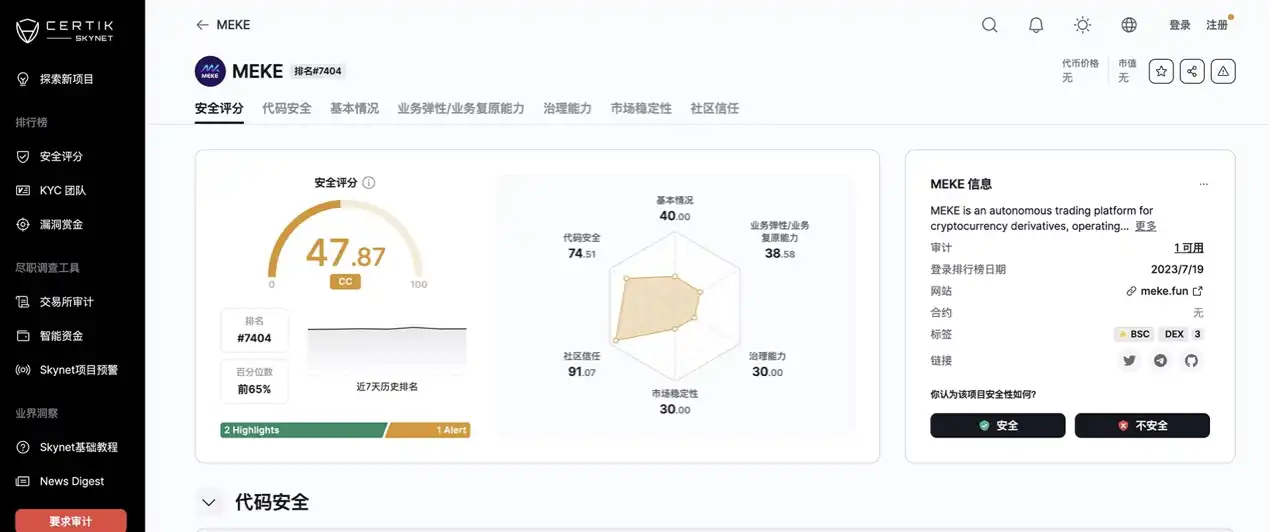
Participating in the public beta can get the opportunity to receive MEKE airdrop rewards
During the public beta testing of MEKE, approximately 10% of MEKE will be airdropped to participating users. To obtain USDT for testing MEKE, users can trade on the MEKE platform using USDT and receive airdropped MEKE platform tokens.
During the public beta period, users who meet the airdrop requirements will not only receive the MEKE airdrop, but also have the opportunity to earn additional WMEKE by inviting other users to participate in the beta. WMEKE can be directly traded for USDT on Uniswap.
MEKE will have three phases of public beta airdrops. After the public beta ends, it will be launched on the opBNB mainnet and airdrop applications will be open.
"Bull markets rely on market trends, bear markets rely on vision." From APT airdrop, BLUR airdrop, to ARB airdrop; from ordinals to PEPE to BALD, and then to friend.tech. MEKE may be the next hot spot to ignite the market.
Official website: https://meke.fun
Telegram: https://t.me/MEKE_culb
Discord: https://discord.gg/meke
Twitter: https://twitter.com/MEKE_PROTOCOL

Welcome to join the official BlockBeats community:
Telegram Subscription Group: https://t.me/theblockbeats
Telegram Discussion Group: https://t.me/BlockBeats_App
Official Twitter Account: https://twitter.com/BlockBeatsAsia

 Related Articles