10 Ways to Look at Things: What do We Believe in the "Web3 Era"? Do something?
Wang Tianfan is a partner at BAI Capital
first
The original concept of "metacomes" in Avalanche is a scenario in which the digital world is hacked and the physical world is devastated. It is more like imagining a self-driving car hacked and its passengers killed than a three-dimensional virtual world. This is a prediction of what human society will be like in a highly digitized world. The movie "Ready Player One" inadvertently interferes with most people's understanding of the term metaverse and even mixes it with the concepts in the book Avalanche, leading to a lot of misinterpretation, which can lead to a narrow understanding of the digital future, What the RPO describes is more a prediction of a certain human condition brought about by a virtual reality game. The virtual reality network, in our view, is a kind of network in a highly digital state, also worth looking forward to.
second
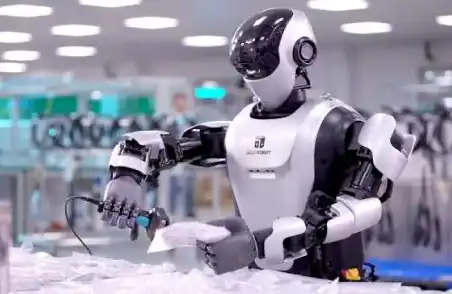
After the mobile Internet era, we are all looking for "Next Generation Networks", but they are in the dark, such as autonomous driving networks, robot networks, near-earth satellite communication networks, VRAR virtual reality networks, large model AI search and content networks, These new networks are different from smartphone networks in terms of computing, storage, communication, interaction and energy consumption, and the new species that result from these five driving forces represent a variety of human ways of living. Of course, these networks are not split and can also cross each other, just as PC and Mobile can share the same Internet application service.
third
Blockchain network is not a continuation of the mobile Internet, because they were almost born in the same era, starting from around 2009/2010, and the last ten years of blockchain network hardly make use of the leverage of the mobile Internet, even in computing, storage, communication, interaction and energy. Its direction of development is not coupled with the underlying progress of the mainstream hundreds of thousands of times.
fourth
The term Web3, if narrowly defined as blockchain or encrypted network, attempts to include more than its own definition. At the same time, it fails to effectively define what web2 is. Mobile Internet is often miscalled web2, or the era of social networking represented by facebook is narrowly defined as web2. Only from the perspective of creator economy can we define the separation and value attack with the big Internet platform, but also the blockchain network is narrow.
fifth
Our way of life is undergoing rapid and irreversible digitization over the past few decades. Instead of materializing web3, it is better to regard Web3 as an era and a concept of time. The characteristics of this era are that the digitalization degree of all aspects of human existence is increasing rapidly, and human beings are unconsciously living in a lot of networks and interacting with these networks. Whether it is consumption decision, action mode, use object, payment method, etc., are all rapidly digitized, and even the end is one by one agent. Over the past decade, AI collectively (or big data, intelligent recommendation, automation) has been the last leap of digitalization in almost every field.
sixth
As almost everything becomes intelligent, human behavior, in the face of computing, becomes more and more predictable. When we put all the data and behavior in the hands of computational intelligence, when the accuracy of prediction is infinitely close to 100%, we can also correspondingly conclude that human beings are infinitely close to having, definitively, no free will? Perhaps this is the biggest proposition of the Web3 era, the era of high digitalization or the combination of digital and real (the so-called metacomverse age)?
seventh
Nakamoto mentions trust 13 times in the white paper, and wants to try to create a peer to peer cash system without a trusted third party, which is where it all started. The homespun quest to get rid of a trusted third party runs through blockchain's design. Interestingly, in order to build this trustless economy, over the past decade, numerous so-called trusted parties have helped users inject economic resources into the economy, but also in every cycle, With Ponzi and excessive leverage being eliminated step by step, the entire industry seems to be going through 200 years of bloody history of classical finance in 20 years, from which the real trustless network is born.
eighth
Humanity is surrendering its way of existence to two huge trusted third parties: technology and finance. One is the big Internet and technology giants, which, it seems, are ultimately big data and AI behemoths, and digital penetration into every corner of our lives; The other is central banks, whose rampant easing and money-printing have piled up debt to 250% of global GDP. They have brought us convenience in life and prosperity in the stock market in the past decade, but we also know that financial freedom can be taken away at any time in the event of war. If mobile payments become important enough to become an organ of ours, then taking away it would be like killing people. Of course, it would be simple to simply disable a person's communications and financial capabilities on ID. Nor do the currencies of most small and medium-sized countries have the purchasing power of the currencies of our powerful homeland.
ninth
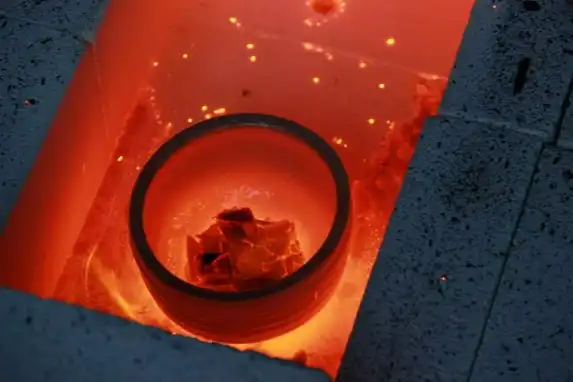
The core differentiation between blockchain network and other networks lies in "trustless". Even for trustless, blockchain field is quite different from the mainstream PC/Mobile/Robotics in five aspects of computing, storage, communication, interaction and energy consumption. To put it bluntly, fundamentalists believe that either the faster you calculate is right, the more you save is right, the faster you transmit is right, the simpler the interaction is right, or the lower the energy consumption is right. Because the concept of "to" in the blockchain network is based on the premise of trustless, which seems to be the opposite of all the above next generation networks. The development of blockchain network starts with the end, from chaos to cure, like a precocious financial giant baby, but it is constantly baptized in one cycle after another. (Attached is a simple graph depicting the immortal flame, the data is not up to date, it should be better by now)
tenth
Finally, a simple question: how much insurance are you willing to buy and how much hedging against the freedom of the "metauniverse" or the "web3 era" when you know that the unchecked growth of these trusted parties is likely to bring about unexpected crises? Of course, we have a lot of things to worry about in life, and it's not like we're on fire every day, which is why we call it insurance and hedging.
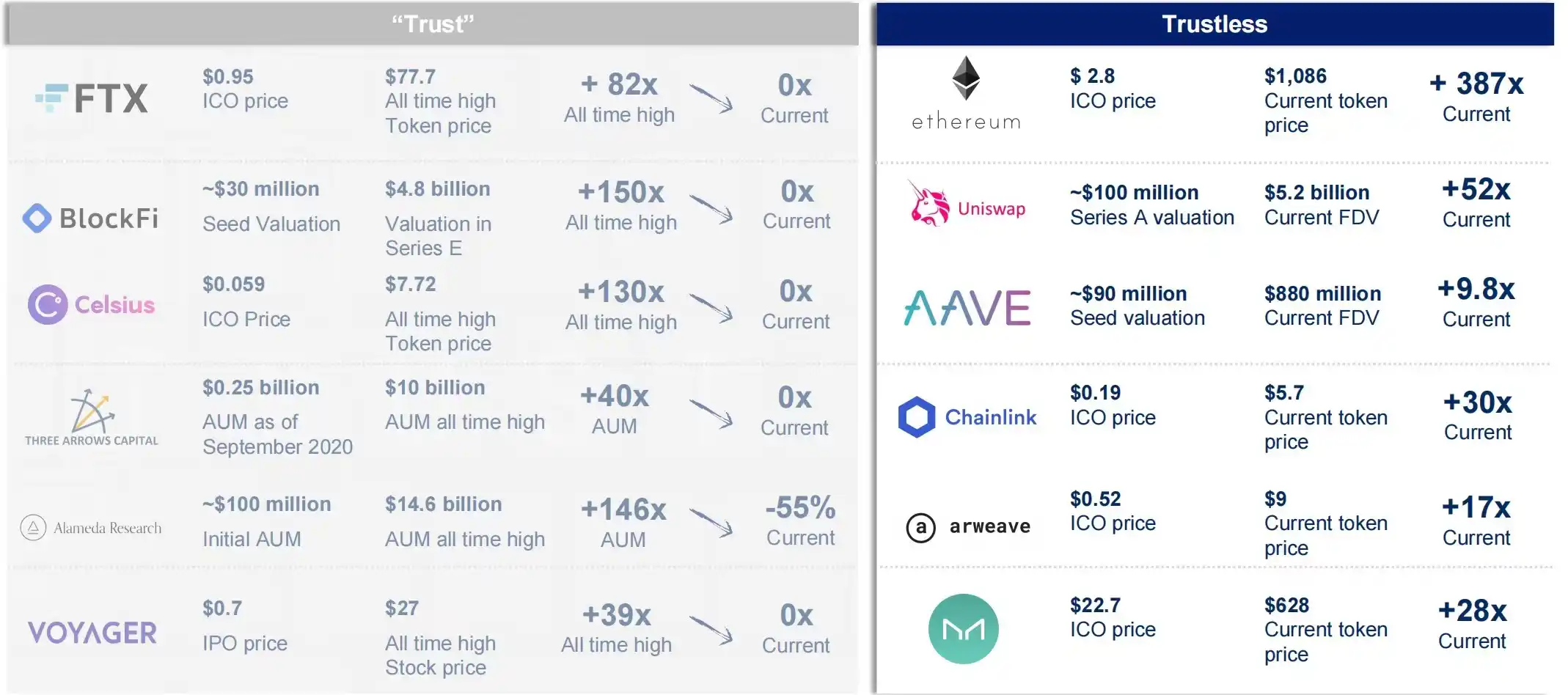
In trustless we trust, a plan B for humanity.
Welcome to join the official BlockBeats community:
Telegram Subscription Group: https://t.me/theblockbeats
Telegram Discussion Group: https://t.me/BlockBeats_App
Official Twitter Account: https://twitter.com/BlockBeatsAsia

 Related Articles