Ethereum Shanghai upgrade is imminent, nine aspects analysis ETH pledge unlock will produce a lot of selling pressure?
Original title: "Nine Aspects of Ethereum Shanghai Upgrade selling pressure problem"
Source: Blue Fox Notes
One of the Ethereum Shanghai upgrades scheduled for March is the Beacon Link Open ETH Pledge Unlock, also known as IP-4895. At the time of writing, the total number of ETH pledges is approximately 15.85 million ETH, or about 13% of the ETH total, with 495,000 active validators and an annualized interest rate of 4.2%.

Many people worry about this, open pledge after unlocking, will produce a lot of selling pressure? There are also bears who believe that the previous ETH dollar price has low cost and good dollar standard profit after unlocking, so there is a high possibility of selling.
How to look at this problem?
As things stand, the high probability does not lead to a lot of selling pressure (of course, future price changes depend on more factors, and we will only discuss the single event of potential selling pressure here). From nine aspects:
1. Unlock cash is released gradually, not all at once into the market
At present, the gradual unlocking mode is used, and the theoretical limit is around 55,000 ETH per day. Ethereum can activate approximately 7.55 verifiers per epoch (total verifiers / 65,536), with 225 epochs per day. Currently, about 55,000 ETH can be unlocked at most every day.
In addition, the withdrawal rate will also be adjusted according to the total amount of pledged ETH, to prevent instantaneous large outflow, etc.
2. The majority of those who participated in the early pledges were long-time supporters of Ethereum
In the early stage, those who are willing to take big risks and uncertainties to enter the ETH pledge market are all user groups with big risk appetite, and most of them are relatively long-term and firm supporters of Ethereum. Under the current bear market, these people are relatively less willing to sell.
3. Many pledged users who are willing to quit have already quit
Most pledge participants use Lido or through CEX, and some have already completed exit. For example, users who pledge through Lido protocol can convert their stETH into ETH through Curve and withdraw cash to unlock without waiting for Shanghai upgrade. Statistically speaking, stETH had a good discount for much of last year. That is, some users who wanted to quit sold stETH for ETH. It also includes the fact that some agencies have stETH out of their operations in the past due to the impact of a number of violent incidents.
4. Unlocked openness may be more attractive to institutions or large households
With the opening of pledge unlock, it is possible to attract more institutions or large households into, one is, this function itself to bring confidence to more users; Second, it can provide better exit channels for this part of users, without worrying about exit liquidity or discount exit and other problems; Third, these users also have a demand for relatively stable returns in the bear market (the current ETH currency standard annualized return of 4.2%, although not compared with the bull market DeFi, but in the current market conditions, for long-term supporters, this rate of return is still attractive). It is estimated that after the pledge is opened, it may fall slightly in the short term, but the overall trend is upward, and it may break through 20% of the total ETH in about 1 year.
5. The entry cost of ETH pledge is not low
According to the bear cost theory, in fact, the average cost of entry is not low. The ETH cost for the first batch of pledges is around $500, but the increase in pledges is gradual. According to rough estimates (precise figures are not available here), a large proportion of the cost of the pledge is about $1,500 or more, higher than the current market price.
6. The asset nature of ETH changes after PoS
First, ETH is gradually heading for deflation, which has a huge impact on ETH. As of this writing, the ETH has been added in a total of 4,248 since 112 days after the merger. Without the merger, there would have been 1,332,883 new ETH launches in the 112 days, valued at approximately $1.66 billion, or approximately $15 million less potential selling pressure per day. ETH holders can capture the value of their ecological growth even if they keep it in their wallets, do not participate in the pledge and do not participate in the income activities of the DeFI agreement.
Second, ETH can obtain income through pledge. Right now it's about 4.2% on an annualized basis. With the pledged income, ETH is not only a security support for the entire network, but also captures the benefits of its ecological growth. ETH changes fundamentally. As the ecosystem grows, it will eventually benefit ETH by providing security services on a larger scale for L2 and its networks. In other words, ETH becomes the real underlying asset of ecology. It is supported by more and more usage scenarios. When these networks are large enough, ETH has the opportunity to generate a currency premium, not only as a payment medium within the ecosystem, but also as a store of value. From this alone, it is also competitive with BTC.
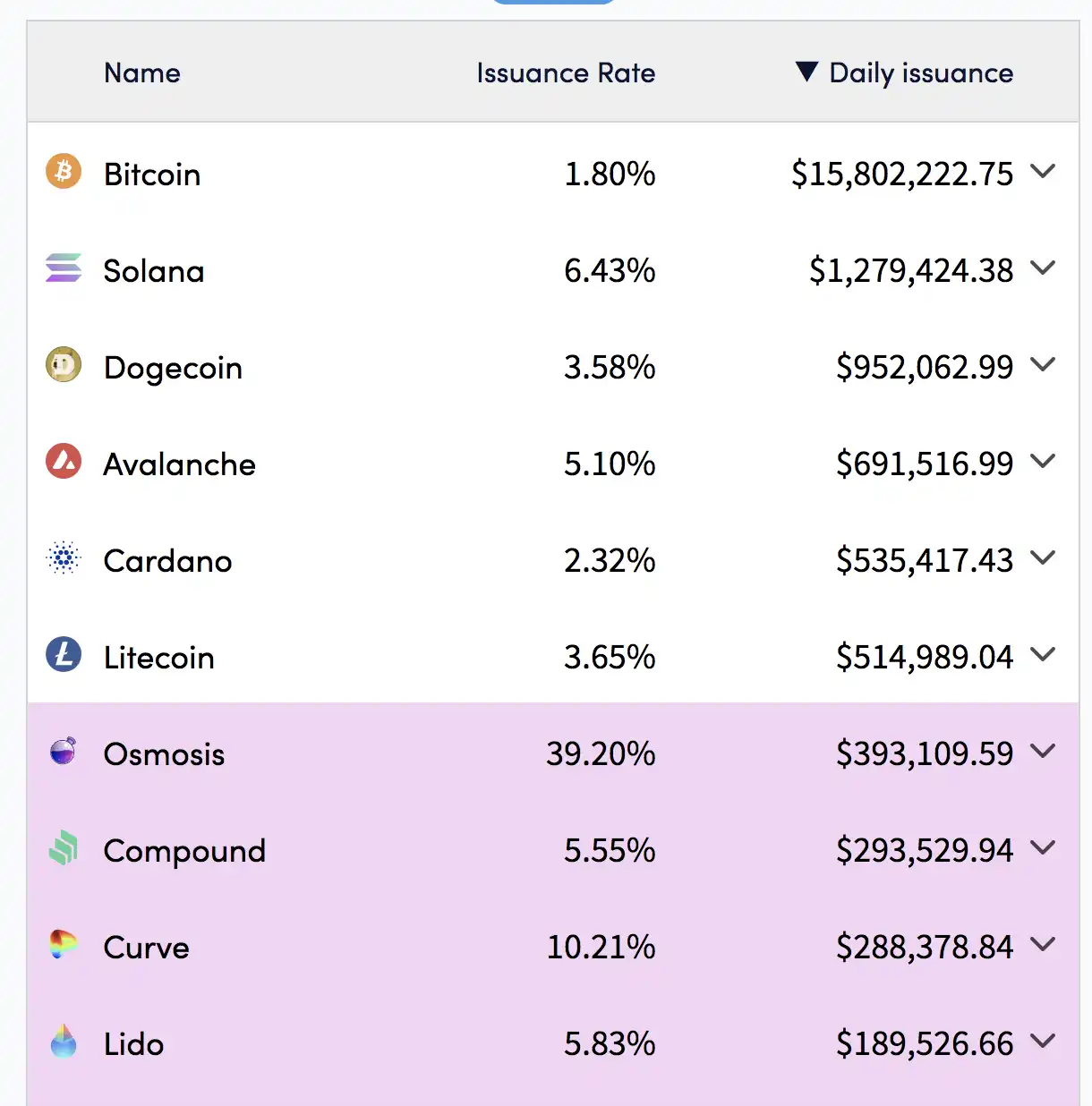
In addition, compared with other chains or projects, such as BTC and Solana, ETH has been added very little. As of this writing, according to the statistics of MoneyPrinter, the annual increase rate of BTC is 1.8%, that of Dogecoin is 3.58% and that of Solana is 6.43%. At present, ETH is only about 0.01%, and its increase rate is about 180 times lower than that of BTC. It is 350 times lower than Dogecoin and 600 times lower than Solana. The increase rate of BTC and Solana is not high, more than 10% are also many, such as Osmosis annual increase rate of 39.2%; Balancer was 13%, Curve 10.21%, etc.
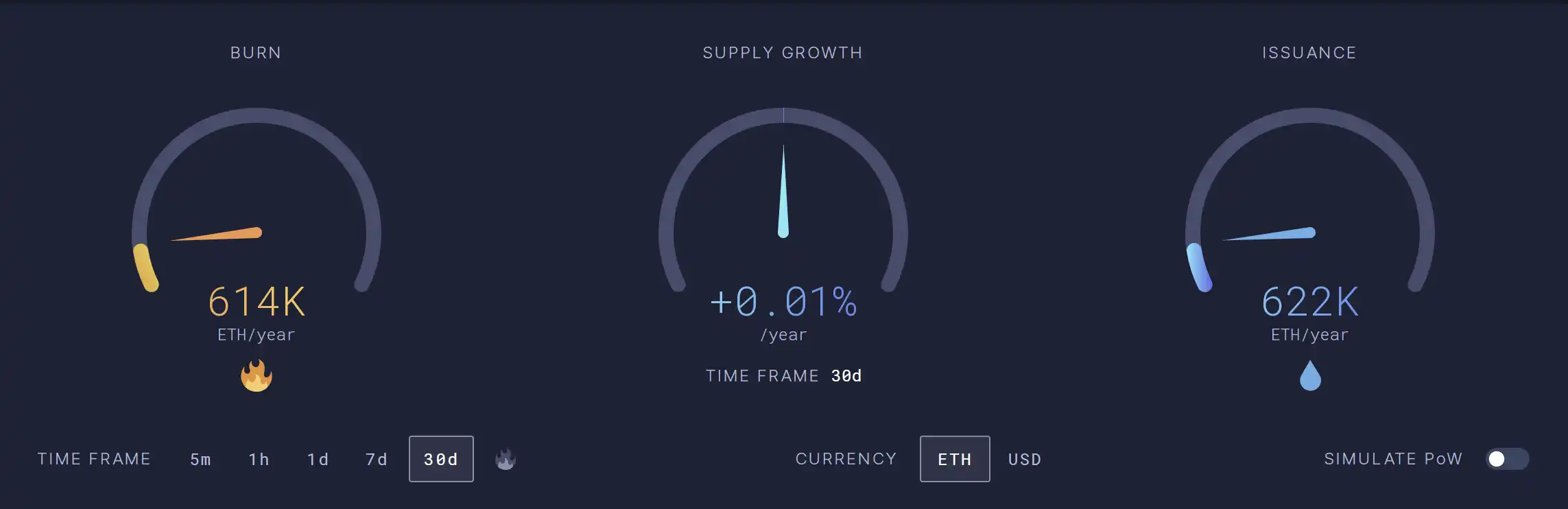
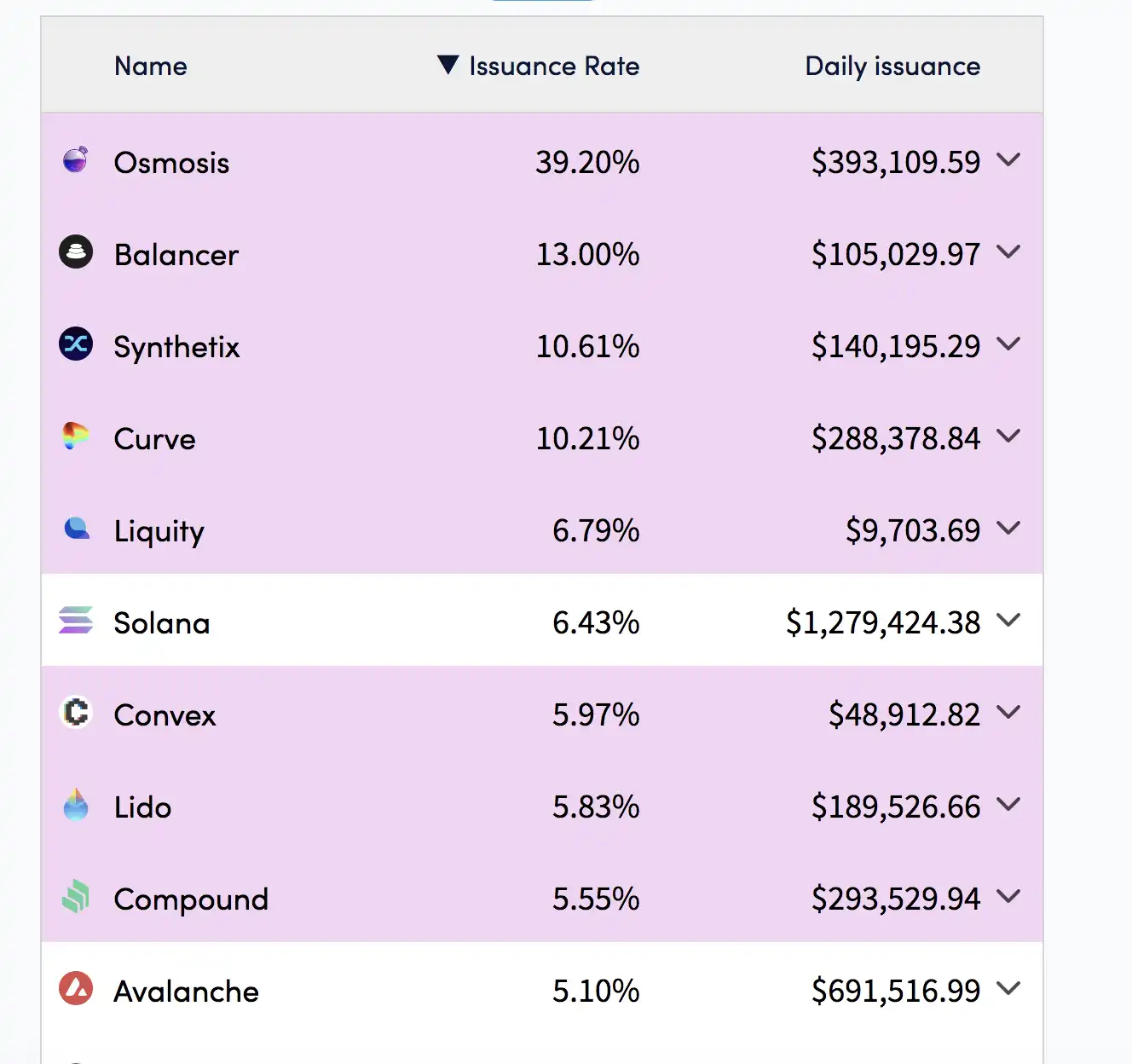
Ethereum is among the lowest in terms of value added per day, if not by rate. Based on the current situation, the new value of BTC is more than $15.8 million per day (more than $470 million per month); Solana added more than $1.27 million per day (more than $38 million per month); Dogecoin adds over $950,000 per day (over $28 million per month); Avalanche is adding $690,000 a day (over $20 million a month). At the time of writing, Ethereum added an average of around 38 ETH per day after the merger, or less than $50,000 per day, or about $1.5 million per month. That is, the daily added value of ETH is more than 300 times lower than that of BTC. More than 25 times lower than solana; It is 19 times lower than Dogecoin and 13 times lower than Alalanch.
The current bear market, gas consumption is relatively low, if the future market becomes more active, Ethereum daily shrinkage will be very significant.
At present, ETH is much lower than other public chains and BTC in terms of new addition rate and daily added value.
7. Community consensus on Ethereum
Ethereum itself has a developer base, an ecological base, a user base, and based on that, a strong community consensus has been formed. This community consensus, as the Ethereum ecosystem continues to evolve, including L2 moving beyond the vast majority of public chains, Ethereum's role as the most fundamental clearing layer and security provider in the crypto space will only strengthen its moat. Having enough moats will gradually be seen by more organizations and users.
8.ETH pledge rate of return is dynamic game
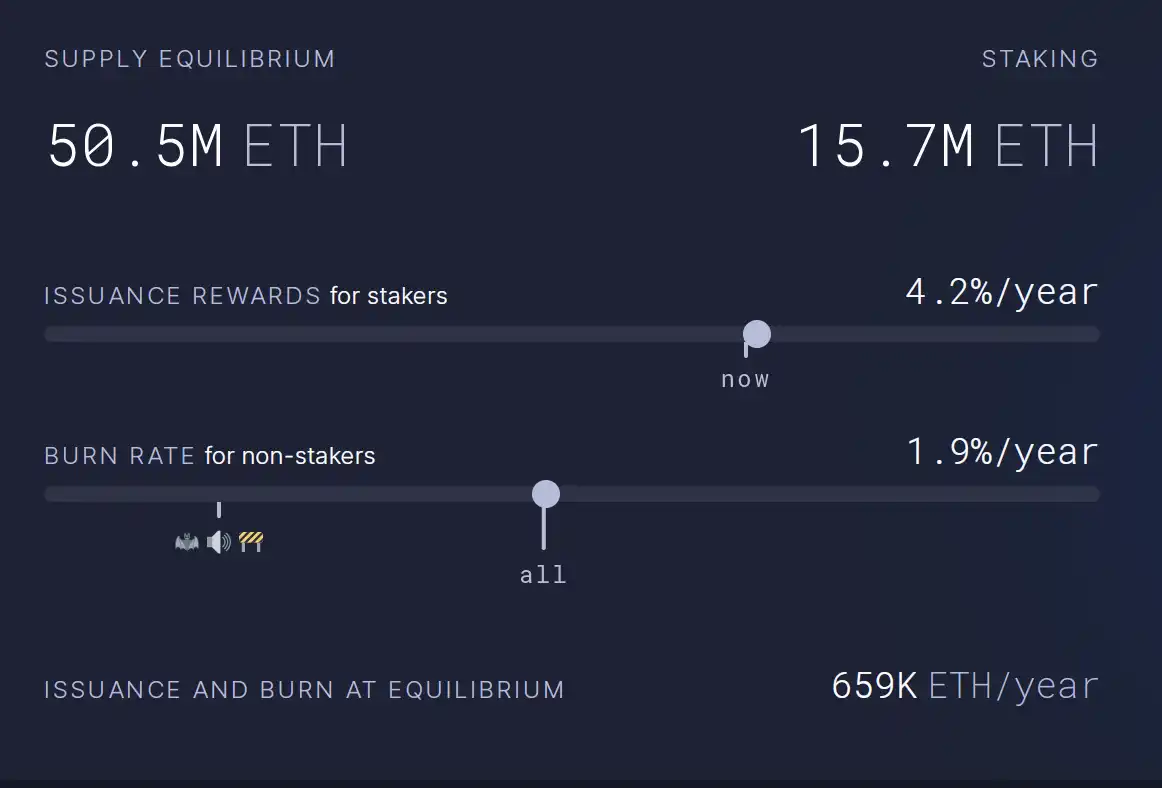
The less ETH pledge, the higher its yield; If the number of pledges falls to a certain level and the yield rises, the crowd will be attracted to it, and this relatively stable yield will look more attractive in a bear market. So, there's a dynamic equilibrium here as well.
When the amount of ETH pledge is 1 million, the annual income can reach 18.1%. When the amount of ETH pledge is 10 million, the annual income is about 5.72%. When the amount of ETH pledge is 12.5 million, the annual income is 5%; When it hits 30 million, the annualized yield is around 3.3%.
9. Shanghai Upgrade has other upgrades besides ETH Pledge unlock
Shanghai upgrade includes not only ETH pledge unlock, but also other upgrades, which are also conducive to its ecological long-term development. For example, IP-3651 helps miners save gas costs and speed up the transaction of miners. For example, IP-3855 also reduces gas consumption; Ip-3860 can support larger contracts, support the deployment of more rich features of the contract, enabling developers to launch more imaginative Dapps; Ip-3540 (EVM object format EOF) V1 supports the separation of contract code and data, simplifying contract interaction.
conclusion
In general, even if Shanghai upgrades the open withdrawal function, the impact on ETH selling pressure is limited. As Shanghai upgrade this event itself, is conducive to the long-term development of ethereum ecology, is a long-term positive event.
Finally, it needs to be reminded that although Shanghai upgrade will not bring big short-term selling pressure, it is separate from ETH price fluctuation. If there is a black Swan event in the meantime, then even if there is no pledge unlock, it will have an impact on the market.
Risk warning: All the above analysis is only a one-sided observation of technology and market, and may not be correct. Please keep your own judgment and do a good job in risk control.
Original link
Welcome to join the official BlockBeats community:
Telegram Subscription Group: https://t.me/theblockbeats
Telegram Discussion Group: https://t.me/BlockBeats_App
Official Twitter Account: https://twitter.com/BlockBeatsAsia
 Related Articles