Interview with Coinbase founder: Regulatory aspirations and reflections on crypto Reality
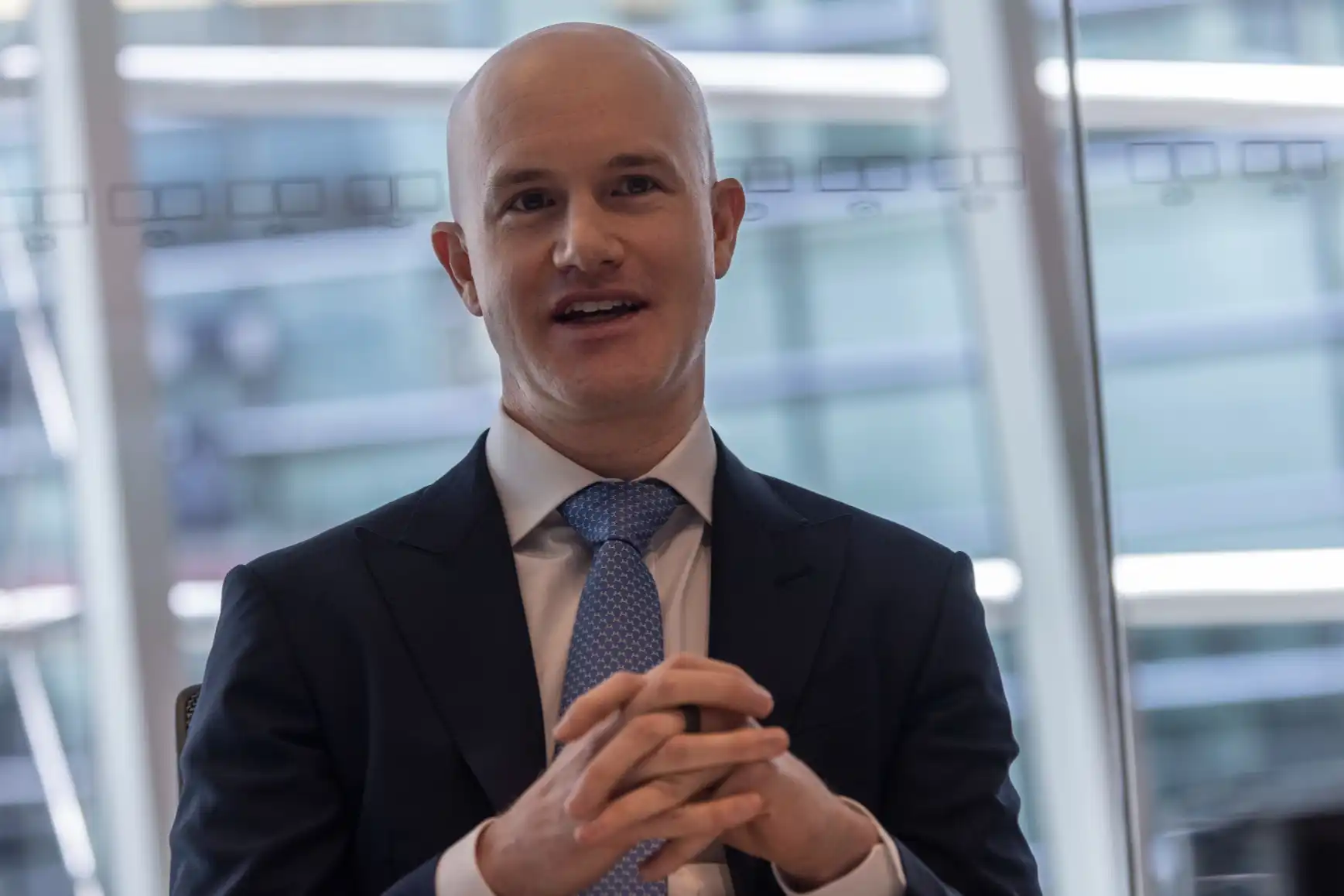
An Interview with Coinbase Founder and CEO Brian Armstrong about FTX and Crypto Realities
Original source: Stratechery
nbsp; NBSP; 7 UpDAO Association of overseas returnees
Brian Armstrong's upbringing
As a child I was a bit shy and nerdy, not very confident and not good at talking to people. So I love computers and I'm fascinated by them. I had a couple of different computers in my room when I was a kid, and I built my own computers, learned Linux, things like that. In middle school, I tried to learn a little programming, but I had no idea what I was doing. I actually went to a couple of community college classes, read a couple of books, and started building websites, and it was easier for me to do it in PHP and stuff like that rather than C++, and all of that was really challenging for me, especially at that age.
So I tried to figure out the technology. I love technology. I just find it fascinating. I'm also a late sleeper. I stay up until the early morning every day. 00 I just play computer and read books. When I finally got online, I was just endlessly obsessed with consuming different things. I was a zombie in the morning and basically got a passing grade in school. But I'm most interested in technology, and that's what I'm willing to spend any free time doing.
People always look back in hindsight, and they tell their success story that it started at a certain point, but it wasn't that simple. I didn't know what I wanted to do with my life. In college, I tried to start a company in the coaching field, but it wasn't very successful. So after college, I got a regular job and tried working in a few different places. I'm at I interned at IBM and I didn't know what I wanted to do because I liked programming and stuff like that. When I tried to work for a big company like IBM to write software, I didn't really like it.
So I wandered around, a little lost, to be honest. I try a lot of different things. Finally, I read the book, Seth Godin. By the book's title. The Dip. It was a simple book, but at the time, it was something that I had to learn to think about in life, which was, "There are a lot of things that you're interested in, but what do you really love to do? How do you excel at what you're going to love and stick with it for the next 10, 20 years and be great at it?" Because there's a big gap between being a beginner where everything is fun and being a pro where you get paid for it. There is a long way to go.
So when I sit down with this blank piece of paper and think, " what would I love to be doing in 10 years, even if I'm not very successful at it yet?" I was doing a lot of things, like investing in real estate, learning martial arts, etc. The only thing on my list that I want to do long term is tech entrepreneurship. It's the only thing I can think of that I've been interested in all my life, and I'll be in 10 years. Be interested in it in 20 years. So I redoubled my efforts, moved back to the Bay Area, and decided I was going to do this for a living. This has certainly helped Coinbase move in the right direction.

Encryption law
I'm curious, when you look back, are there situations where you've been constrained by regulators, whether it's a lack of regulatory transparency, whether it's enforcement oversight and so forth that ultimately turned out to be a good thing for Coinbase in the long run?
Yes. Looking back, first of all, we planned to offer very low yield products and had very strong risk controls on them. So I think even if we roll it out, it's probably going to be fine. But it's a little controversial, because my reaction in that tweet was the part that bothered me. There is no level playing field, or regulators should allow it, in which case these competitors have been in the market for a few years.
If they're allowed to do it, we should be allowed to do it, too. If they are not allowed to do so, then we should not be allowed to do so either. The part that bothers me is the hypocrisy of it saying, "Well, these competitors have been in the market for years."
I can also understand the other side of the argument, that the regulators are busy, they're overwhelmed, and they may have been pushing things behind the scenes with people we weren't fully aware of. I think it's basically just a fog of war, like something lost in translation. Yes, my frustration was expressed on Twitter. And then I think it does help level the playing field, but I don't know. A lot of what you're doing as a CEO, you're trying to do the best thing you can think of at the moment, but you don't actually know what's right.
I do think a lot of the crypto industry has been moved out of the US due to a lack of regulatory transparency by US regulators. While regulators have a tough job, I sympathize. But I think it's really important for people to know that, because the simple narrative that people are saying is, "Well, if something bad happens to regulators in the crypto space, we need tougher regulation." But it misses the nuances of what actually happens in this case.
Because first of all, FTX is not in the US, they are overseas. By the way, they may or may not serve US customers through ftx.com. So this is another interesting point about leveling the playing field.
But because of the lack of regulatory clarity in the United States, companies incorporate offshore and try to serve the world from these profitable havens, if you will. So it doesn't really benefit customers or investors in the United States. In fact, it hurts them even more. They're being pushed into these unregulated offshore things, and it's not good for American companies because it again hurts our ability to build companies here in the United States. So I think the more important question is probably where do we go from here?
Coinbase Do you feel a real burden as you seem to be trying to follow existing rules? You've mentioned this before, but has it intensified in the last month?
I've been working in the crypto space for the last 10 years, and over the years, I've had a lot of people come up to me and say, "You know, you can be there, you can be that guy." In some ways, I think we are. For the past two weeks, I've been in Lots of interviews and media coverage on CNBC, CNN and ABC News.
I'm happy to do some of that, but actually I think the best ceos are not the ones who are doing media 100% of the time and trying to get on TV. To me, this misses the point of the company. Because you have to do something valuable in the world to create a product or service that's better than anything that's out there. One of my favorite books is called Outliers, which is about eight unconventional ceos who show how they beat the market.
A lot of them are actually kind of introverted, and they're tech-savvy. So I actually think introverts can make really great ceos, and the industry doesn't necessarily need someone who can shine on TV and appeal to everyone. They just need someone trustworthy, someone who has good judgment and has built a solid, reliable company and infrastructure. I think that's 100% me.
So I'm happy to play that role, I'm happy to go and do all the things, like appearing before Congress, doing interviews, being on TV when I need to, but it's not my main focus. My main focus is, how do we build a better product for our customers?
FTX and the face of cryptocurrencies
FTX, what can I say? Not only is this a violation of the terms of service that I know of as written, but it may also be a violation of the law and an outright fraud.
To be honest, I think I have a pretty good idea of what's going on, and I think every time he's asked these questions by the mainstream media, people are giving him an escape. Of course, some journalists did a better job than others of actually tying him to the matter. But honestly, I just want to turn the page on this. The bankruptcy lawyers, the Justice Department and everyone has to figure out how to put these people behind bars. Not just. Sam, and the other people involved. I'd rather think about where we go from here as an industry.
Maybe it looks like some kind of bias, he donated a lot of money to Democrats. But he seemed to admit in an interview with VOX that he doesn't actually believe in many of the causes he claims to believe in. So I'm not sure where that loyalty comes from. It kind of broke my mental model of the world, and I thought, if someone in the tech and crypto world turns out to be a fraud, it's the easiest layup to dunk against him. However, we still see that some people believe him. There's obviously something going on here that I haven't fully thought through.
Is encryption real?
I think the answer is yes. And the reason is because you can look at how many more people are using it every year, or every cycle. So now there are 200 or 300 million people in the world who have used or owned some cryptocurrency, and it goes up in an up cycle, it goes down in a down cycle, but it's in an up channel. Cryptocurrencies are definitely real, and in many ways real.
First of all it's a new form of money, which is actually a very important thing. In many parts of the world, people do not have a stable currency, and all kinds of wealth are being eroded from the poorest in society. That's just the basic part that we take for granted in the United States, because we have 8 or 9 percent inflation, which we think is extreme. In many parts of the world, a month or about 25 percent. .
So it's money, and then new financial services, and new application platforms. Like identity and decentralized social, so it's a lot of different things. But is this regulatory arbitrage? Maybe, I think I would describe it differently, it helps mitigate the inefficiencies of the global economy. There are good reasons for some things.
For example, if you want to build a global lending market or something like that, you have to go to the world. 200 Many countries and all states of the United States. Only then can you create a more efficient global market for how to get a loan between someone in India and someone in Brazil or anywhere else, but the amount of bureaucracy and rules and the patchwork of different proprietary systems in every country in the world makes that unfeasible. So yes, encryption is a new, more global, fairer, more transparent and freer system.
It's not just inefficiencies and global regulators, it's also about technological improvements where you can send assets somewhere very quickly, or trade them on dispersed books. So it's permissionless, it's decentralized, it's global, and there are technical benefits to that. That's part of why there's a lot of innovation on the encryption front right now. It's like 20 years. The same thing happened with the Internet 25 years ago.
It may lean toward virtualization early on because that's more natural. But it will also eventually play a growing role in the physical world. So virtual might be easier to follow, and if you're building a new community on the Internet, it would be discriminatory or odd to use one country's currency in something that's open to people all over the world.
I definitely think cryptocurrencies could be seen as assets that people flee to in times of uncertainty. Bitcoin is a bit like gold. But the broader macro economy is still much bigger, and in that environment they see all cryptocurrencies as a growth stock rather than something to escape to. And it's very liquid, and it's easy for people to cash in.
Basically the virtual economy is becoming a bigger and bigger part of the global economy and GDP. I think it's interesting to look at e-commerce, back in 1999. In 2000, people said, "Oh, I've never put my credit card on the Internet." It's a tiny proportion, less than 1% of global GDP. Right? Now, fast forward. 20 years, and I think COVID-19 accelerated it. It's almost gone global. GDP nbsp; 20% . To people like you and me, that even sounds low. Probably 70% of my spending is online or otherwise. But there are always people who live in different worlds and situations than we do.
So consider this trend in terms of cryptocurrencies. If you fast forward another 10 years, will more people do things virtually than actually? Will a greater proportion of the economy happen virtually? Therefore, as the inherent currency of the Internet, cryptocurrency is well positioned as the transnational global currency of the Internet. It's hard for me to imagine a world 10 years from now where there's more e-commerce, more people using the Internet, more virtual economies, and cryptocurrencies getting bigger with it.
Shares of Coinbase
You make billions of dollars in 2021 and you lose hundreds of millions of dollars in 2022. Its stock has fallen by 80% in the last year. , and has been downgraded to garbage status. Given that you said this would happen, is it still very frustrating? Or is that what you expect? Or are the reactions and negative emotions stronger than you expected?
I think we expected that to happen.
If we go public first as the first really public cryptocurrency company, it will be nice in some ways, it will help us get the deal done. We did that deal with BlackRock, the largest asset manager in the world, and now we've been doing deals with Google and Meta. We took on a big debt last year when prices were very good. $3 billion of debt at an attractive interest rate. Therefore, there are many advantages to being a public company.
But yes, some of the challenges we know are that it's tough being a public company without super predictable revenues, and our revenues still fluctuate with transaction fees. But over time, we've done a very good job of differentiating and diversifying. As a result, more and more of our revenue now comes from subscriptions and services, such as hosting and AUM fees, dollar tokens, pledged revenue, etc., which really helps smooth the revenue.
I think our stocks are basically a good fit for growth investors, for example. Ark nbsp; Cathie Wood, and there are many such funds that are excited about the future. They want to see high yields. They are technologically progressive.
There are other companies that are actually just looking for more stable assets that are more mature in their life cycle, and they are paying dividends and things like that. We're not that kind of company yet. I think the next 10 years look very bright and at some point we will be a target company for other types of investors. But for now, growth investors are the ones most interested in our stock.

I think Crypto has benefited from the stock rout along with every other tech growth company, from DoorDash to Zoom, or whatever you want to look at, and I think the market has contracted a little bit, a lot of tech stocks and biotech stocks. I don't think it reflects the long-term potential of biotech or streaming platforms or anything.
We are in the early stages and the leaders in these industries will have to go through the down cycle to become stronger. It's actually a very big opportunity that we can not only survive through, but thrive through, and actually get a lot of the best assets in these down environments, whether it's people, companies, etc.
That's what Coinbase has done in the last five or four crypto cycles, and what makes this one different is that it coincides with a broader macroeconomic recession, and we're in the middle of a global war and pandemic and all sorts of things like that, but we're a company that's happy to go through cycles.
Original link
Welcome to join the official BlockBeats community:
Telegram Subscription Group: https://t.me/theblockbeats
Telegram Discussion Group: https://t.me/BlockBeats_App
Official Twitter Account: https://twitter.com/BlockBeatsAsia
 Related Articles