Coinbase IPO roadshow: Coinbase standard, DEX and NFT
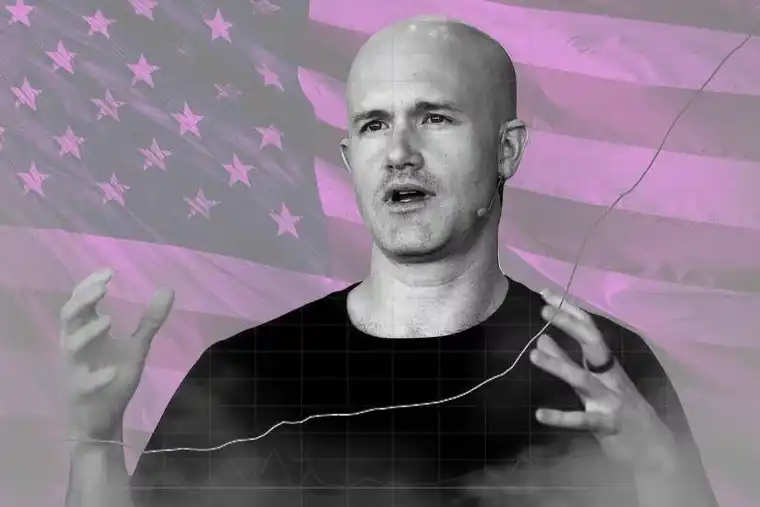
Rhythm BlockBeats News, March 24, & NBSP; Coinbase CEO and co-founder Brian Armstrong and CFO Alesia Haas launched an online roadshow on overseas forum Reddit.
Coinbase answered nearly 20 of the more than 1,300 questions in detail. The questions covered Coinbase's in-coin standard, Coinbase's product mix, views on the NFT market, and why Coinbase chose to go public directly.

Rhythmic Blockbeats has compiled Coinbase's response and translated it as follows:
Brian Armstrong:Welcome to our Reddit Coinbase Going Public AMA. We want to make sure that we spend some time engaging with all types of investors, not just the traditional investors that we meet on the road show, the institutional investors, but anyone who wants to participate can read in an open forum. That's our philosophy of going public directly and opening up the financial system, which is part of Coinbase's mission.
Joining me today is Alesia Haas, the CFO of Coinbase, the main force behind Coinbase's initial public offering. I just want to say that we are very happy to see that there are so many problems. More than 1,300 questions were submitted. Due to time constraints, we won't be able to cover all of them today. For others, we're not allowed to answer questions, but we'll do our best to answer as many as we can, at least some of the topics that you want to know about.
Alesia Haas: I just want to say, I'm very happy to be here, I'm very excited. I've been looking forward to this reply all week. Thank you very much to everyone who has read us and read it a lot of questions or polls and we'll be answering most of the polls and it's nice to get started and go straight in. I should start with the first question.
Q1: What is the standard of currency on the platform?
Alesia Haas:First, we want to be a platform that lists all the assets our customers want to trade, assuming they are legal, secure and compatible. These are the criteria.
We recently launched a product called Asset Hub, where issuers have the opportunity to submit an application to launch tokens on Coinbase. There are so many assets looking to come online that we would like to be able to bring them all online on Coinbase, but it does take some time.
We evaluate it [for tokens] for security, legal and compliance reasons.After we complete the process and evaluate it, we have a process to list it with our engineers and integrate it for our customers. We would like to do more of that, we would like to get it off the ground faster, but it is a very complex process and there are a lot of checks and balances to make sure we are protecting our customers and providing the best assets we can.
Q2: Are security tokens available?
Brian Armstrong:I'd love to say yes, but the answer is: no. We are listing on the NASDAQ Global Market platform. This is a traditional secure coin vault, an encrypted platform, and we only list secure tokens. Unfortunately, the shares we offer will not be available on a token basis. We have another question later, probably about security tokens. So I'll keep thinking about that before we answer that question.
Q3: What's the biggest threat to Coinbase?
Brian Armstrong:
regulatory
Obviously. I think of a couple of things: one is our policy efforts and our engagement with governments and regulators, and I think it's fortunate that there are a lot of people there. They're very excited about encryption and government, and they're very excited about the opportunity. This can be brought to people all over the world, not just to Americans. There is still a lot of education to be done. We've had a lot of misunderstandings.
There are still huge gaps in people's understanding of what cryptocurrency is and what its risks are? What is its potential? We need to get out and talk to everyone. It's a very powerful new technology, just like the Internet. When it started in the US, it helped build some fantastic companies, brought a lot of benefits to the population, increased GDP, created jobs and so on.
security
So we need to continue to do a lot of education and advocacy work. Second, we've always made cyber security a top priority, and Coinbase has done an extraordinary job protecting our customers' money over the years. We retain the vast majority of our data, about 99% of which is stored offline and refrigerated.
We separate the private keys, and we distribute them geographically so that I can sleep well at night. Our money is always on the server to serve the daily flow of money. We already have an online requirement for insurance. There are a lot of things that have helped me, but that doesn't mean that cyber security isn't a big threat. We must always remember.
innovation
And the third, the last thing I want to say is that I want to make sure that we continue to be an innovative company. This will continue to grow rapidly, especially as we become a public company. The industry, the cryptocurrency industry is an emerging industry, it's growing very fast, and we have to make sure that we don't get to a point where we start to slow down or get complacent. It's just the beginning. We have to keep innovating. These are the questions I want to think about.
Q4: Will early Coinbase fund users be offered stock preemption options?
Brian Armstrong:It's a long question. We'll break it up. Are we planning to offer some of our early Coinbase users a fund-like stock option?
We're doing a direct listing. Will a direct listing allow all investors, institutions, retail investors and anyone in between to participate in our opening order on the NASDAQ platform? It doesn't have any preferential treatment, so no one gets allocated. There is currently no opportunity to invest in the company prior to the direct listing.
Tell us how we ended up with a secret list. When I had to go public, we saw this as an opportunity to provide more transparency to encryption. Cryptocurrencies are ripe for this, and we want to be able to share with all investors and the general public what's actually happening in the industry. Once we made that decision, we had to decide how to go public. There are so many ways companies can go public these days: you can do a traditional IPO or go public directly. A lot of people go public through special purpose acquisitions.
We look very creative. Can we do something with blockchain? Can we make a security token? When we evaluate these options, right? What we have to do is that the infrastructure for security tokens is not there yet, and we don't have a way to give all investors the opportunity. Many institutional investors cannot participate in security tokens. We don't have enough broker-dealers to trade and provide liquidity to the market.
We at Coinbase do not have the right licenses or foundations to provide these services. It is very important that we are able to provide crypto native security tokens that can be used in DEFI like ERC 20. Until we can offer something that we feel satisfies a client or an investor in this case, we want experience. We find it unnecessary to discuss the question now.
As I said, we are looking for a direct listing. We believe this is a step towards fulfilling our mission as an open financial system because everyone can participate in our direct listing. It creates the transparency that we hope will bring to the token base. Hopefully in the near future, we'll make the right investments, get the right licenses, build the ecosystem that we want, maybe there will be security tokens, maybe based on Coinbase or maybe based on some other company.
Yes.I think we want to make it available, hopefully not just for Coinbase, but for any future crypto company that wants to integrate security tokens, raise money, build their own shareholding structure, and eventually go public in this way.
I think there will be companies going public this way in the future. Hopefully we can help build some of that infrastructure in the future that doesn't exist yet.
Q4(1) : Will you airdrop Coinbase shares to loyal customers?
Brian Armstrong:Security tokens might make this easier. Unfortunately, in this case, we are not in a position to do so now. The above says the third question is important to me and effectively asks how Coinbase changes the dynamics of cryptocurrency investing under the ownership model. Why build a centralised exchange?
In the traditional model, a company issues public equity. It is essential to change the financial world, both legally and feasibly. It looks something like that, right? This is something we should consider and do, as millions of users take huge risks in the industry and are long-term investors in your platform.
I think we've already covered this, but we agree with you. I think the future is what you're describing, thinking in our heads. There's a path to get there. This involves regulation. Licensing challenges. It's not just a few technical parts. So I think if the mission of the company is to help the company grow in the future, we're not yet ready to go public directly. We don't want to delay any longer. Sounds like we're at least thinking the same thing.
Q5: Coinbase and Coinbase Pro have different fees. Are there any future plans to merge platforms or lower Coinbase fees?

Brian Armstrong:Some say it's weird to have two platforms, especially when you're going public. I'd like to talk about our vision in the product roadmap.
No problem, Coinbase has a lot of different products. We do this as part of our culture of repeatable innovation, and we want to continue to build more and more crypto, economics, and infrastructure. One of them is Coinbase Pro, which has a different architecture.
In fact, if people want to do more professional transactions, they can feel different fees on different platforms. I think the answer to that question is that over time these things will get better integrated. I think there's a blurring of the line between people who are going into cryptocurrencies and people who just want to buy their first $5,000 bitcoin, and those people will become more professional traders, or even semi-professional traders, and there's a gradient between different users.
Efforts are being made to better integrate them into one product. So people can, by the way, also have a price gradient. If you buy a relatively small amount of cryptocurrency, the price percentage may be lower than if you buy millions or even hundreds of millions of dollars of cryptocurrency. Over time, you'll see better integration.
Q6: What was the design decision behind launching a standalone app service? Coinbase, Coinbase Pro, Coinbase Wallet, why not put them all in one APP?
Brian Armstrong:This question is very similar to the one that if you look back at Coinbase history, you can try to put everything into one product. Some people call it, you can have a monolith or people even talk about sharing services in matrix organizations.
Early on, we decided to split up and try different ideas, and the teams worked independently. I think that creates some victories in the sense that, for example, the Coinbase-based wallet has a completely different architecture based on self-hosting, which would be very difficult. But this has also caused some confusion, as with the previously mentioned issue about Coin Base and Coin Base Pro. Some people want to move between these products, but they don't integrate well. So I think there's a trade-off between execution speed, creativity, and customer experience.
So then you'll see us incorporate something that makes sense, like some professional trading experience, into the main retail app.
Q7: When will we ordinary people be able to buy stocks?
Brian Armstrong:We filed a preliminary prospectus. We are educating investors that we hope you will be able to buy stocks in the near future, but we don't have an exact date yet. Please visit our website and we'll post updates there and you can go to the SEC's website and they'll post updates there as well.
Q8: What happens when encrypted payments are fully integrated into Internet services? Do you think there are any cryptocurrencies that can do that right now? Are we still waiting for a scalable solution?
Brian Armstrong:Our CBDC central bank digital currency will serve this purpose. So what needs to happen with the full integration of crypto payments and Internet services? I think there are a couple of things. So you mentioned one of them, scalability. Is a very important part of it. I think. If you look at how many transactions occur per second on the Bitcoin Network or Theorem Network, it's still orders of magnitude below what you can do. You can see the PayPal or Visa network. In order to be a truly global platform where people can make all kinds of payments, we need to get this. Blockchain has at least 5,000 transactions per second, something like that. Ideally, it might support more use cases, such as builds, social media applications, and all sorts of things.
This can happen at Layer 2 or at Layer 1. There's a lot of innovation. I'm not sure we need new cryptocurrencies, but we do need scalable solutions. So there's a whole bunch of lightning networks about bitcoin and optimistic people converging on a theorem.
There are new projects or next generation blockchain teams, Dfinity, Poca, Cosmos, Alogrand, etc. There are a lot of good teams working on this, they are trying to do all the work on scalability. Extensibility is the first important thing to bring together all the networking efforts.
I think the other two that come to mind the second one might be usability. We probably need a way for people to be able to send a human-readable name, like Brian, at Coinbase instead of a machine-readable name, like a random password address, which looks like a random string to make another Internet analogy. Scalability is a bit like when we go from dial-up to broadband. The availability of the named part is like what we do from IP address to DNS, which to some extent reflects the availability and extensibility of the Internet.
Finally, here's what I want to sayprivacyYou have to do the same on the Internet. We have to move from HTTP to HttpSi and get that little lock in the browser icon. Not everyone wants to trade on the public books.I think privacy coins are an important thing that more and more people will want in the future.
So these features, we need to make blockchain scalable, more usable, and the privacy features that people want. And I think that's how it's integrated into all of these Internet services. Central banks, digital currency, mentioned here. I think this is also an important trend. Obviously, I'm more excited about a decentralized global cryptocurrency and the innovation it can open up, but I think a central bank digital currency will also be a big deal. Almost every major government has started thinking about how to build them. So we will support any cryptocurrency, including CBD, CS, stablecoin, and even decentralized currencies like DAI. As long as it meets our listing criteria. We think of ourselves as the main financial account for people in the crypto economy or the Internet of values.
So they're probably going to store it with us. Or, if they use one of our self-hosting options, they store their own data, but with our product, they can use that data to access a whole set of products and services in the crypto economy, which would be great. I think it will bring more economic freedom to the world.

Q9: How high do you think the business risks of decentralized currency trading platforms are? How to treat DEX?
Brian Armstrong:Dex has shown great traction since last summer. Does it make you lose sleep? Will Dex disappear? Or are you going to move into the Dex space? There's another problem.
Dex, like Uniswap, has been getting a lot of attention recently. Frankly, we're excited about it. That's the right question. It does compete with one of our products. We operate a centralized exchange. These are all decentralized exchanges, but we have a lot of different products, and we basically try to make it easier for our customers to access all the different things that they might want to do with cryptocurrency, whether it's one of our products or not. One of the things we've built into the main product is that it has a smart ordering router that guarantees the best price.
My idea is, whether we build it or not, we want people to be able to access it. It's like the early days of Amazon, Jeff Basil thought, why don't we allow third-party sellers to put their products there as well? People thought he was mad. Why do we put our competitors' products next to our own? He realized that we wanted to create value for our customers. In the long run, this will make us a valuable cost to the company. So we always think about what our customers want and give them, rather than just coming to Coinbase.
We want, as I said earlier, we want to make it easier for our customers to access all types of encryption products, whether they are ours or others. We wanted to provide our customers with easier access to NFT, and now Coinbase Wallet supports NFT token storage. Maybe every three to six months, something like that comes along, and we need to make sure that whatever you want to add is easier for people to access.
Q10: His "hands-off" customer support may make sense to other next-generation tech companies. But I'm not so sure about fintech companies, especially one with a 12-figure valuation, which brings me to my question. Is there a vision when they support greater accessibility and customer friendliness? If so, what kind of investment will Coinbase make? What is the goal? When can we have a resolution in less than two days?
Brian Armstrong:So I wonder why you have had a few different experiences recently. Unsurprisingly, the number of people reading about cryptocurrencies and signing up for Coinbase has increased dramatically. Just 34 months ago, we were getting about 25,000 inquiries a week. Within four weeks, the number had soared to 100,000 or more. As you can imagine, this is an unprecedented leap forward.
In fact, we brought in more volume this year than our entire client. As you can imagine, it takes a long time to hire and train these people before they can really help customers effectively. So you're going to see some automation and things like that to prevent the customer from contacting someone. Therefore, we hope to earn your trust as we build this capability and respond to the recent encryption cycle.
I just want to add that, in addition to hiring new customer support agents, we are also investing in products to reduce friction, and we are seeing a lot of customers calling to complain or. We tried to solve the problem in many ways. One on the product side, two more carefully handle call prompts so you get agents who are trained to know how to answer your questions, and then increase the capacity. This is a primary issue that will continue to be invested every week.
Q11. Will Debit Card be introduced later?
Brian Armstrong:In case you didn't know, we have Coinbase-based debit cards. It has been available in the UK for some time. We provide a weight list in the United States yes, you'll see that in a minute. There is a lot of demand for these cards and a lot of printing and creation.
Q12. Why was Satoshi Nakamoto's address included in Form S 1 of the prospectus?
Brian Armstrong:As the first cryptocurrency company expected to go public, this is a big moment for Coinbase. We want to pay tribute to the original founders of the entire crypto economy. This is a recognition of Nakamoto, opened the door to our success.
Q13. Is my Bitcoin safe?
Brian Armstrong:Security is one of the most challenging issues in cryptocurrencies. Clearly, some people choose to trust Coin Base and let us store cryptocurrencies for them. And then we also offer a self-custody product, based on Coinbase Wallet, for people who want to store it themselves and take on more responsibility. So I think both are good options for people who are storing cryptocurrencies on their behalf. We put a lot of effort into making passwords secure. The other 99 percent is refrigerated.
I can only tell you that I have no personal access to it. Here are some of the intellectual property and patterns we've acquired on how to safely store cryptocurrencies offline. We We split the private key. We use consensus mechanisms and hardware security modules, which are distributed in data centers around the world.
And then we keep 1% of the money on the server for the daily flow of money, which is what we call a hot wallet.
Q14.Coinbase is not the only place to buy bitcoin. Why do you think people use Coinbase instead of other platforms? Who is your biggest competitor?
Brian Armstrong:Fortunately, Coinbase isn't the only place you can buy cryptocurrency. We hope that cryptocurrency can be integrated into the world's traditional financial system, so that people around the world can master it. Coinbase is just one of them. So we want thousands of companies around the world to integrate encryption. Why do users choose us? There are two things that we strive to do very well and value very much, and that is trust and ease of use. Trust can come from many aspects of cybersecurity. It can come from regulatory compliance, which, by the way, allows us not only to stay in business, but also to connect to the convenient payment methods that people want.
We also have a commercial payments business, and we have competitors in every area. I'm not going to name any one of them specifically, but I think you can look at what the competitive landscape is like in general, and there are a number of other more traditional fintech and financial players that are starting to use cryptocurrencies. That's great, but they're not 100% focused on encryption. So we usually have more features, more assets people want to do things with. Even when they get into crypto through other platforms, they usually open a Coinbase account just in case.
We also have competitors from pure crypto companies like us, but they don't always follow a regulated approach. They can do something we can't, and they can do it quickly. But we want to make sure we're following the law. We think it's a good thing in the long run and we don't want to do anything coercive or anything like that. It will delay our time. So, in general, this is the way we are 100% focused on encryption, but we are following a trusted regulatory approach that tries to make encryption easy to use.
Q15: Can you talk a little bit about how Coinbase operates as both a broker and an exchange? In the current situation, there seems to be some conflict of interest.
Alesia Haas:It's true. On the retail side of our business, we operate a full broker, including retail brokers, as well as escrow embedded in the retail trading experience. On the institutional side, we exchange intermediaries and custodians. But I think what's important about Coinbase's business model is that we've built this business. No conflict. We don't do proprietary trading for clients. This means that we simply execute the order on behalf of the customer and seek the best execution for the customer.
Q16: Will Coinbase consider adding a product to its mobile app that allows users to use cryptocurrency? One example is the Gemini Pay feature in the Gemini app, right?
Brian Armstrong:Yes, we certainly now allow people to spend their cryptocurrency in the app. We have some people doing peer-to-peer payments, paying merchants for goods and services with cryptocurrency.

Q17: Would you change the title of CFO to financial guru? Does it make sense for a company called Coinbase?
Alesia Haas:Coinbase games are innovative in many ways, but we're not renaming games today. Even if we were, I don't consider myself a master. So the answer is probably no.
Brian Armstrong:Before we wrap up, we've seen a lot of references to site stability, and I'd like to make a couple of comments here. As I mentioned earlier, we expanded customer support during this period of unprecedented price increases. We've also put a lot of effort into expanding our engineering resources, our website architecture, to make sure it can handle these new, high levels of capacity.
The second thing I want to say is that we're seeing a lot of people asking about certain assets, and one of those assets is going to be on Coinbase. The answer is that we want to add all of the assets that meet our listing criteria to Coinbase. We need to support millions of different assets in the future. There will be some crypto assets for payments and media exchange, some for security tokens and stablecoins, and some for NFT and all the rest.
So there will be tens of thousands of tokens and over time we need support. One of our priorities is to accelerate the pace of asset growth. These are the problems we want to solve. We're running out of time. This is our last question. Just want to say one big thing. Thank you for your questions and for keeping an eye on our progress and our direct listing.
Welcome to join the official BlockBeats community:
Telegram Subscription Group: https://t.me/theblockbeats
Telegram Discussion Group: https://t.me/BlockBeats_App
Official Twitter Account: https://twitter.com/BlockBeatsAsia

 Related Articles