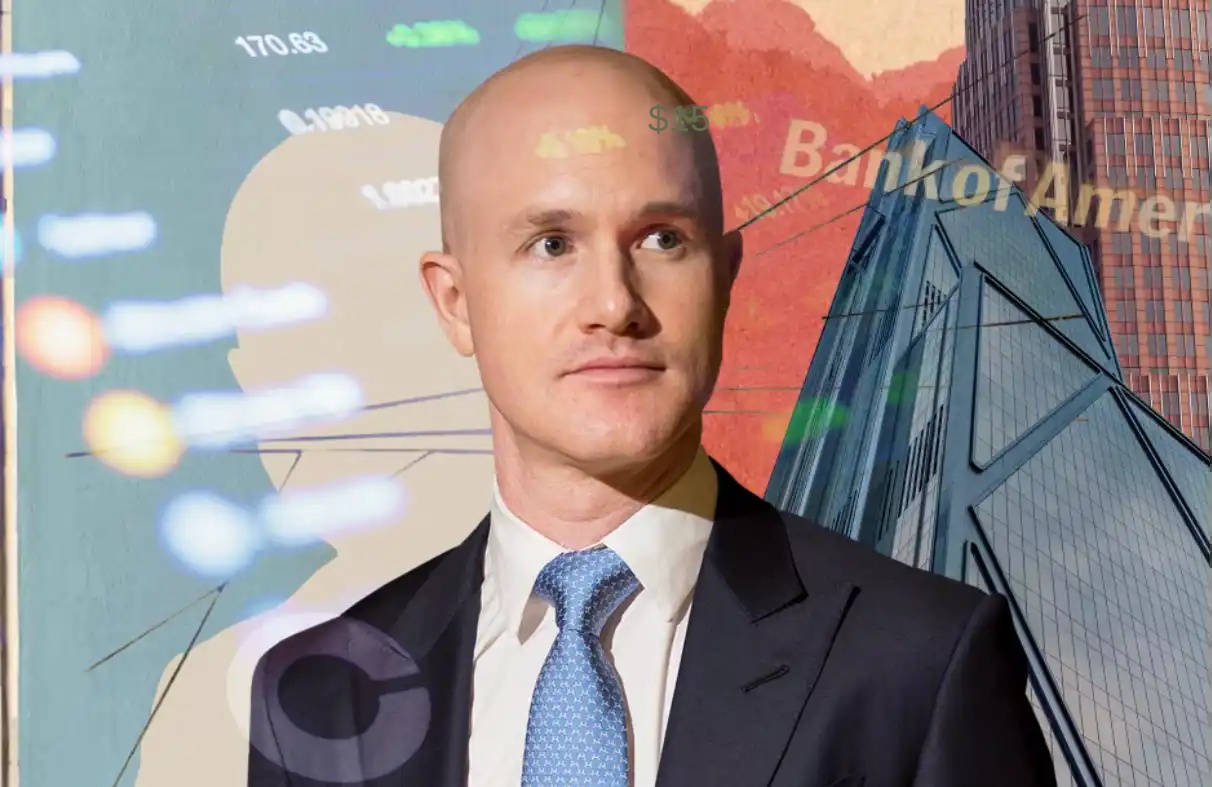
Coinbase CEO: Talk about some of the regulatory challenges that encryption faces right now
原文标题:《 Transcript: Brian Armstrong on the Challenges Facing Crypto 》
Original source: Bloomberg
Kxp, BlockBeats
Brian Armstrong, Chairman and CEO of Coinbase, a compliance-based crypto trading platform for U.S. stock listings, appeared on the podcast Odd Lots on March 1, 2023. In this program, Brian gives his views and opinions on "whether the winter of crypto is over", "how to think about the future of crypto industry regulation", "how to think about Bitcoin" and other questions. He believes that cryptocurrencies can help improve the US financial system. And discussed working with lawmakers to come up with a "clear rule book." This article was compiled by Bloomberg and compiled by BlockBeats.
Joe WeisenthalHello and welcome to a new episode of the Odd Lots podcast. I'm Joe Weisenthal.
Tracy AllowayI'm Tracy Alloway.
JoeTracy, Crypto A lot of things have happened recently, among which two things are the most important. One is the Crypto winter. Although the Crypto market has rebounded, but the price of the currency still has not recovered to the past level. The second thing is that regulation has been ramping up recently.
Tracy: Indeed, for the Crypto industry, this undoubtedly caused a double whammy, and it is difficult to determine whether the decline in the price of the currency is directly related to the increase in regulatory activity.
JoeHistorically, regulators have tended to step up efforts after investors have lost money as a result of scams. So it is not surprising that regulatory activity has increased during a period of declining investment.
Tracy: I agree, but it also raises the question of whether regulators should be more proactive so that investors don't lose money.
JoeWe have an expert on the subject joining us today. Let's welcome Brian Armstrong, CEO and co-founder of Coinbase, one of the leading Crypto trading platforms in the US. Brian, thank you for joining us for this episode of Odd Lots.
Brian ArmstrongThank you for inviting me.
Joe:I'd like to ask you a question that we've actually asked other Crypto executives before, but I'd love to know what you think. What is liquidity mining and where do its returns come from?
Brian: The reputation of liquidity mining has been negatively impacted in the current environment due to the collapse of Terra Luna, BlockFi and similar companies. This is a matter of concern, but I am not qualified to answer on their behalf. However, other aspects of the Crypto industry remain promising and there are many areas we can continue to explore.
TracyWe've discussed before in the program that Crypto is the ultimate momentum asset, and its price fluctuates as money flows in and out, so the Crypto trading platform's business is cyclical. However, in your most recent report, you mentioned that you expect to be profitable throughout the cycle. Can you explain how you intend to achieve this?
BrianIn the past, transaction fees accounted for a large portion of our revenue. As you point out, this source of revenue is volatile due to fluctuations in Crypto prices. In order to create a more stable revenue stream, we have been transitioning to a subscription-based and service-based model. Stablecoins like the USDC have proven to give us decent growth even during bear markets. In addition, we earn fees from hosting services and merchant transactions using Coinbase cards. While these revenue streams are not completely separate from the Crypto market, they are less correlated than transaction fees, which helps us build a more predictable business model.
Joe: I want to talk about the regulatory side Yesterday, I saw a new Coinbase program, called Project 435, urging people to contact their member of Congress and voice their support for Crypto's policies. Similarly, Uber has utilized a similar approach, requiring users of their app to contact local regulators and ask to be able to drive for Uber. I want to state this in the most tactful way possible, because I have many acquaintances who are passionate about Crypto, and I admire many of them. However, do we really want people who will contact members of Congress to be spokespeople for Crypto regulation?
Brian: The average person who participates in Crypto, which includes about 50 million Americans, or one in five households. They form an important lobby that will influence future elections. These people may not have exact solutions on how to regulate the Crypto industry, but they want elected representatives to ensure that it is regulated while providing consumer protection and enabling innovation. Eighty per cent of Americans now believe the financial system is inefficient, expensive and does not work for all. Today, the financial system uses 40-year-old technology, and the laws that govern it were written even before the Internet. So the financial system is in dire need of modernization, and Crypto is one of the technologies that can help make that happen. American voters recognize this and expect their elected representatives to help establish norms and laws regarding Crypto in the United States.
Tracy: On the political side, and Joe and I have hinted at this before, crashes and scandals have led to increased activity by industry regulators. Can you share how the approach to dealing with the US authorities has changed between 2020 and now?
Brian: I see more officials in the Washington establishment now with a better understanding of Crypto than in 2020. It is no longer a niche topic, but now it has been discussed more deeply. There are two main camps. The FTX's collapse has haunted them, and they are hesitant to approach Crypto. Camp Two thinks they have a chance to put Crypto under regulation and are working to craft legislation and gain bipartisan support. Personally, I support the latter camp.
Joe: So, I would like to ask, given that FTX, one of the largest trading platforms, went out of business without any significant impact or consequence, why do you suggest bringing Crypto under the regulatory umbrella, as if placing Crypto in a gray area has effectively avoided the "too big to fail" problem. Also, what do you think of the argument that regulators have done a good job of preventing any negative impact on the financial system from the volatile Crypto industry?
Brian: I disagree that the FTX crash didn't have a bad impact, because after all, a lot of people lost money.
JoeThat's true. A lot of people lost a lot of money.
Brian: There is some bad activity in Crypto, so the key issue is consumer protection. I don't think there should be bailouts in Crypto, because nothing in Crypto is too big to fail, which goes against the principles of Crypto. Bitcoiin emerged as a response to the 2008 financial crisis, and the first Bitcoiin block contained a message that the prime minister was embarking on a financial bailout of banks. However, I do believe that centralised players, such as trading platforms and custodians, should be regulated to prevent fraud and corruption. But for the decentralized parts of the Crypto, such as Bitcoin and Ethereum, they should not be subject to any centralized institution, which is necessary for a more global and fair financial system.
Tracy: In your opinion, what should Crypto's consumer protection look like? What's your take on a product like Dogecoin that doesn't have a clear economic purpose and people are likely to lose money on it?
BrianI believe that centralized players such as custodians and trading platforms should be responsible for regulation and consumer protection, not necessarily Dogecoin, which will be another decentralized coin. But I also believe that companies built around custody or trading need to adopt some of the best practices of the traditional financial services industry. These include having audited financial data, separating customer funds from company funds, implementing anti-money laundering /KYC programs to prevent fraudulent transactions, and providing appropriate disclosures. However, these practices should be for centralized actors, not decentralized parts.
Joe: Interestingly, you distinguish between centralized actors and decentralized DEFIs. However, you seem to have combined the two recently with a layer-2 rollup to expand Ethereum. As a regulated entity, you are obligated to comply with FINCEN and anti-money laundering laws, can you clarify if there is any tension when implementing rollup Layer-2 with a centralized sorter and transactions made on it are sent to the Ethereum main chain in batches? How do you, as a regulated entity, address issues like this? If someone wants or tries to launder money through layer 2, are you facilitating those transactions by putting them on the Ethereum main chain?
Brian: Earlier, I mentioned that we should regulate centralized players like Coinbase, especially in terms of our main revenue sources like custodians and trading platforms. But you're absolutely right that Coinbase is embracing decentralization through our various products and legal entities, including the layer 2 solution called Base. We built Base because we wanted to provide more scalability and better usability for Tier 2 solutions. We want to get Ethereum trading down to a penny or less and help scale it up, hopefully one day to a billion people or more.
I think what you're asking is, how do we differentiate between the centralized and decentralized parts. There are still some centralized components to Base today, but it will become more and more decentralized over time. So, we still need to monitor transactions, especially in the early stages. But, with the decentralization of Base, I think centralised actors may need to bear the greatest responsibility for avoiding money laundering problems and setting up transaction monitoring schemes and so on.
TracySpeaking of taking responsibility, there are currently thousands of coins and tokens on Coinbase.
Brian: No, there are only about 250.
Tracy: I didn't read every page, but there were many. Although you have never listed a security, the current regulatory environment makes it very likely that at some point the SEC will declare a coin a security. For example, not long ago, there was an enforcement action against Kim Kardashian for promoting an illegal Crypto security. Given the current situation, how can you confidently assert that there are no securities on Coinbase?
Brian: I believe it would be beneficial for our industry if there was a clear set of rules that everyone had to follow. We have petitioned the SEC to this effect, and have outlined that the current securities laws do not adequately cover the niche area of Crypto. At the same time, we have developed our own internal process to review assets, which includes a 72-point legal analysis and consideration of compliance and cybersecurity risks. We have evaluated about 1,000 assets and rejected 800 of them due to securities, compliance or cybersecurity issues, while listing about 200-250 assets. If the SEC determines that an asset is a security, we will be happy to update our procedures. However, if the SEC declares all assets to be securities, we will defer to the court's decision because we all have to follow the law.
Joe: Can you provide an example, not necessarily related to a particular coin, of a Token feature that you think is unsuitable for listing due to its resemblance to a security?
Brian: There are many factors to consider, just like the Howey test has a lot to say, and I won't go into the deep legal analysis here.
Tracy: We've never done a program that dealt with the Howey Test, so that's probably what this one will cover.
Brian: Yes. So there are multiple aspects, right? I think, you know, if people buy it primarily with the expectation of making a profit and having a common business...
Joe: Have you noticed a pattern within the Crypto project, particularly in the actions taken by the team, that indicates certain tokens do not meet Coinbase's standards? Do you observe practices in the industry where teams may have pushed the boundaries of what you consider to be a common enterprise aspect, making it unsafe to list them on the platform?
Brian: I'll provide one example of securities, but there are others in cybersecurity and other areas. Securities laws that invest money in a mutual enterprise with the expectation of profit from the efforts of others apply to legally seeking funds for a company or project, such as an apartment building. It is a necessary aspect of business and should remain.
Our broker trading license is currently dormant, but we plan to activate it and are working with the SEC to make that happen. Crypto technology has the potential to provide benefits that improve the financial system, including settlement times and more.
We take consumer protection seriously and will avoid bad patterns, such as those seen on YouTube where tokenomics appears sketchy and insiders are selling. In addition, we may reject assets for other reasons, such as cyber security risks. For example, we assess potential vulnerabilities in smart contracts and the issuer's ability to secure investors' funds.
If the issuer loses the key, this could accidentally or maliciously sweep away everyone's money, which does not meet our security standards.
Tracy: In some ways, did Crypto kill itself by resisting securities regulations? Does that imply that maybe there's no reasonable profit expectation here?
BrianI mean, we want Crypto securities to exist. We're not saying that none of these things are securities, or that all of these things are securities, that's not accurate. The mere expectation of profit does not make something a security; It has to pass every step of the Howey test. Buying Picasso paintings or gold, for example, does not make them securities. We think of Bitcoin, Ethereum and the assets we trade on the platform as Crypto commodities, which people sometimes trade by increasing their value, similar to buying gold; Other times it is used for other purposes.
Joe: Before we get into the issue of regulation, may I ask your opinion on Bitcoin? Although the Crypto industry has evolved from Bitcoin in many ways, there are still some people on Twitter who think you don't like Bitcoin. That said, you launched Ethereum Layer 2, and I'm curious if you're going to launch Coinbase Lightning node after that?
Brian: We want to do more things with Lightning node.
Joe: But it hasn't happened yet, and there are still some unresolved issues, such as the funding of Bitcoin core developers, they don't get enough funding to sustain, which makes them very frustrated. What is your opinion on Bitcoin?
Brian: I like Bitcoin, but I really don't understand why anyone would think otherwise.
Tracy: We've all been devastated by Bitcoin minimalists.
BrianI'm not sure how serious the situation is. While I've seen similar claims on Twitter, I'm not sure the extent of its impact. Given that I have spent a large part of my life working on Bitcoin and its development, this seems implausible. In fact, I even quit my job to start Bitcoin after reading the whitepaper. While the Crypto industry has evolved in many ways since then, I remain a strong supporter of Bitcoin, which I believe is the gold standard in the Crypto economy. I expect this to remain the same and its popularity to continue to grow, especially if Lightning continues to gain traction and if Bitcoiin evolves into a settlement layer. I run a trading platform and custodian and strive to be impartial, listing and offering every currency that meets our standards and necessary legal requirements. My neutrality may lead some people to think that I am against certain coins, but this is not the case.
Tracy: Back to the SEC, which seems to be emphasizing enforcement. As a result, the SEC is likely to make a number of new announcements tomorrow. In your opinion, what is the SEC's ultimate goal with regard to Crypto? Is the SEC aiming to eliminate Crypto entirely, or is the agency trying to make the industry sustainable in a different way?
Brian: My approach is not to speculate on the SEC's motives, although we have developed positive relationships with several staff members and commissioners. Although it is difficult to be certain, there may be different opinions within the organization on the matter. I wouldn't be surprised if some within the SEC just want Crypto to go away. However, I believe that this is not the majority view, as it is not in the best interest of American citizens or consumer protection. One in five American households uses this technology, and if we don't establish regulation, consumers will turn to unregulated overseas options. I believe the general attitude is that this technology is here to stay and we have to bring it into the regulatory framework. Ideally, this would be achieved through the publication of clear guidelines and a regulatory rulemaking process involving industry. So far, however, that has not been the case. If necessary, an enforcement-based approach can be taken to resolve some issues through case law. This method may take more time, but it is acceptable.
Tracy: What do you think are the reasons for the incoherent or unclear actions of the regulatory authorities? Is it due to a shortage of resources or simply a lack of understanding of the industry by regulators?
BrianPerhaps you could clarify what you mean by incoherent?
TracyI think the first thing is that they were slow to respond and a little unclear.
Joe: You go in and ask them questions, but they don't give you answers, is that right?
BrianFrankly, I've spent a lot of time in Washington trying to figure things out. Perhaps I was a little naive to think that regulators would simply provide the rules for running a business and that we would follow them. However, it seems to be more complicated than that. There are different factions within the authority with different goals. So, people who succeed in passing legislation call it a miracle, because it requires agreement between the House, the Senate and the president, and a certain amount of momentum. I believe the FTX crash may provide further clarity on legislation next year.
JoeLet me ask you another regulatory question, although it has nothing to do with the SEC. It seems that some banks are removing Crypto from their banking services, but I don't see this as a threat to Coinbase. Do you see this as a regulatory advantage for Coinbase in an environment where smaller trading platforms may have a hard time getting banking partners?
BrianI don't see it as an advantage. We don't have any problems with our banking partners. However, in the wake of the FTX affair, bank regulators are understandably asking tough questions about the liquidity risks associated with Crypto deposits. Specifically, they are asking about the feasibility of lending against these deposits and whether it is too risky. We do not believe that the banking industry will be required not to handle any Crypto business. No one mentioned this to me, and it would probably be beyond their authority to do so without congressional input. Nonetheless, regulators are right to question liquidity.
Joe: Have you made any lobbying or other attempts by the Washington authorities to ensure that Crypto is not subject to discriminatory treatment within the banking system?
Brian: In our conversations with members of Congress and the Senate, we have emphasized the need for Crypto to be treated fairly and impartially compared to traditional financial services. We do not advocate preferential treatment, but advocate a level playing field, not excessive punishment of Crypto industry, but just to achieve a balance.
Tracy: We've covered this topic before, but I'd love to hear your thoughts on what happened at FTX. The events of that November week were startling to many, and the reactions varied from person to person. However, I'd love to know how it affected you, given how quickly everything happened - from a Twitter exchange to a bankruptcy filing in seven to ten days.
BrianIt was a tumultuous week, and when I met with our team and authority officials in Japan, I was told that FTX could collapse within the next 48 hours and Sam could face imprisonment. After that, I contacted Sam and CZ and started assessing the situation we were facing. We wrote to our counterparties, including FTX and any other parties with potential secondary impact, and validated our approach to building compliance over the past decade. While the industry may suffer as a result, Coinbase can benefit from increased trust and compliance awareness given our longstanding commitment to these values.
Joe: I would like to know the price of Crypto in the current market downturn. Although there was a slight recovery, it seems to be mainly due to the upside of the NASDAQ. Many of these coins appear to have a high correlation with other risky assets. In the past, investors had two reasons to invest in Crypto: It was classified as a new, unrelated asset class, especially for Bitcoin, which served as a hedge against inflation. Despite recent record inflation, Bitcoin's value has not increased significantly over the past few years. In fact, it has remained relatively stable. At this point, most Crypto seem to be closely related to NASDAQ, QQQ, and similar indexes.
Tracy: Now we have a new narrative.
Joe: What new arguments can be made about the industry, given that previous claims made by some in the industry have proved ineffective in persuading investors to invest? I am not referring specifically to you, as I do not know your involvement, but it is clear that many in the industry have not been successful in trying to present a convincing investment case.
Brian: Of course. I find it interesting that Crypto has become as volatile as the stock market. During my time at Coinbase, people often questioned whether anyone would use it because of its volatility. However, now that it has reached a level of volatility similar to the stock market, I think that's a small victory and a step in the right direction.
Joe: Well, we don't use Tesla stock to buy our coffee either, but anyway.
Brian: Obviously stablecoins can now be used for business, which is a positive aspect. However, let's turn to your question about inflation hedging. Initially, it was widely believed that Crypto and Bitcoin in particular would serve as the new gold standard for the Crypto economy. This idea is echoed by many, including Bitcoin minimalists, who argue that in times of uncertainty, people will buy Bitcoin because it is as scarce as real estate.
The reality was different, however, and rapid declines in Crypto occurred in a high inflation environment. There is a sense that the world has changed and people are ready to consider Crypto as an inflation hedge. Unfortunately, this assumption has proved premature. For now, Crypto remains a small part of the global economy and is seen more as a growth asset than a true "gold" asset. Thus, in order to play a substantial role in the broader macro environment, the Crypto economy needs to grow 10 or 20 times from its current state.
Tracy: Regarding Stablecoins, I remember a few years ago Sam Bankman-Fried was on the show and we asked about the potential impact of Tether's sudden collapse. In hindsight, it might have been more pertinent to ask about the impact of the FTX crash. However, can you share your thoughts on Tether's function in the Crypto ecosystem?
BrianI don't want to criticize anyone in the ecosystem, and I'm not sure where they stand. There have been a number of ways that Tether has been used on our platform in the past, and I know they've been investigated and agreed upon by all parties and are happy with the various approaches. At the moment, we're focused on USDC, and we work with Circle, which is very well supported, one-to-one supported, and audited. While I lack information about Tether, I have nothing negative to say about them, nor any complaints.
Joe: I also wanted to ask you that even without the FTX incident, there have been questions about the effectiveness of Crypto, which many consider a pure speculative exercise with no practical application outside of certain market segments. While many people have made handsome profits from Crypto, most of these digital currencies have no purpose other than financial gain, and there is currently no decentralized platform similar to Facebook. The absence of such a platform is worrying, given the degree of power wields by the likes of Mr Musk and Mr Zuckerberg. When do you predict there will be a Crypto that has practical uses, rather than being limited to speculative investments?
Brian: I don't quite agree that Crypto is entirely speculative. While that may have been reasonable five years ago, there won't be an obvious turning point. Instead, the transition will be gradual. We've been monitoring the activity of Coinbase's active customers to determine what percentage of them are engaged in activities other than Crypto trading. As of now, that number is more than 50 percent.
Joe: What are some examples? Is buying NFT something other than trading?
BrianThere are many other use cases for Crypto in addition to those already mentioned. However, I will provide a framework to explain its evolution over time. While people are doing business, lending, making money, and pledging, Crypto has three main uses. First, as a new form of money and asset class. While the early activities were speculative, we must recognize the significance of having a new form of money that is global, decentralized, and scarce. It's a luxury that most people in the world don't have. Secondly, Crypto is also a new type of financial services, such as DeFi, which can make loans, loans, payments, pledges and so on. Third, it is a new application platform beyond financial services, including decentralized identity with ENS, which allows the creation of decentralized social networks, public profile pages, badges and authentication. With this technology, access to buildings, concert tickets and other items can be managed with proof of attendance. This development has opened the door to new business models for industries such as music, YouTube and Spotify.
TracyI guess the question is why hasn't it happened yet? You know, it has been more than ten years since the White Paper was published. So if this is revolutionary technology, and it's so much better than the way we've always done things, why isn't it being adopted more quickly?
Brian: One reason for the slow development of blockchain technology is the lack of scalability, which needs to be addressed. In addition, improving the usability of the technology is critical because the average person may not understand technical terms such as "private key" and be reluctant to install extension packs. For blockchain to gain widespread adoption, it will have to become better accessible to the average Internet user. Using the analogy of the development of the Internet, although the basic parts of the Internet date back to the 1960s, it was not until the 1980s that early versions of Telnet and similar technologies appeared. Although the Internet is widely adopted today, it took years of foundational work and technological advances, such as broadband, to make it scalable.
JoeThe same goes for Crypto, of course. I mean, in some cases, people have been working on hash cash and all of this for decades. So Bitcoin went through a long process before it was born.
BrianTo be honest, the current regulatory environment is not conducive to progress. In the United States, there is a fear that starting a company in this area will generate a lot of legal bills and subpoenas. That doesn't help, but it's not entirely to blame. The technology has to become more scalable and user-friendly, and although it is progressing, it is taking longer than expected.
Joe: I want to ask a question about Coinbase, which was inspired by our previous guest Jim Chanos, who has been critical of Coinbase. He questioned why Coinbase wasn't profitable during some of the most improbable Crypto bull markets, and also pointed out that much of the revenue came from the huge gap between institutional traders on Coinbase Pro and regular Coinbase commissions. While it's easy to switch between the two, people may not realize how cheap it is to trade on the Pro version. What steps will you take to close the gap, and how do you view claims that retail investors are getting a raw deal compared to more professional traders?
Brian: Our profitability declined in 2022. However, in 2021, our company is highly profitable, with $4 billion in EBITDA and 600% revenue growth. While we experienced a downturn in 2022 due to market conditions, we have implemented cost reduction measures to ensure profitability in any market environment. Your problem seems to be related to cost compression, which has several aspects. One is that pricing varies according to customers' choice of a professional or simple interface and their volume of transactions. Our customers are willing to pay for ease of use and trust. Our fees are comparable to others in the market, and while some claim zero fees, they may be accepting payment for order flow or other fees that are not obvious. We also launched Coinbase One, a subscription service that provides customers with reduced fee deals and other benefits, especially for our power users.
JoeBrian Armstrong, thank you so much for coming to Odd Lots. We've been meaning to have you here for a long time, and I'm glad we finally met.
BrianI am very glad to talk with you today.
TracyYes, I'm glad we were able to do that in the end. I'd like to thank Brian for being willing to answer our questions in the middle of the Crypto winter.
Joe: The current regulatory landscape is quite complex, with many entities in the industry facing challenges in complying with various regulations. Concerns have been raised about the SEC's lack of clarity on securities rules. In addition, some entities start cautiously until they are sure they are operating within the limits of the law. However, this caution has resulted in some entities still being pre-launched three years later, while others have already made billions. It's worth noting that several people in the industry share this view.
Tracy: Yes, you are punished for participating, and sometimes it's better if you just post without asking questions.
Joe: The industry tends to focus on tokens like the Kim Kardashian Token, which may not have a major impact. In this respect, however, I do empathize with entrepreneurs.
Tracy: While I think it's important to talk about the clarity of regulations, it's also important to talk about why regulators don't go further. If regulators start enforcing or establishing new rules, they could inadvertently give Crypto legitimacy. If regulators want to avoid legalising Crypto, they should make their position clear.
Joe: While many people did experience economic losses, there is an argument that the failure of FTX did not have a broad macroeconomic impact, which should be seen as a positive outcome. This is particularly important when compared with the big impact of the shadow banking collapse in 2008. Therefore, it may be worth considering certain parameters when deciding whether to include FTX. However, the exact parameters involved are still unknown.
Tracy: 人们虽然损失了金钱,但至少金融系统没有因此崩溃,这就是我们如今所能希望看到的最好结果。
Joe: It's not terrible.
TracyOk, let's cut to a close.
Source of original text
Welcome to join the official BlockBeats community:
Telegram Subscription Group: https://t.me/theblockbeats
Telegram Discussion Group: https://t.me/BlockBeats_App
Official Twitter Account: https://twitter.com/BlockBeatsAsia

 Related Articles