Interpreting MOOAR: The Unique Selling Point of StepN's new NFT market

Original article by Col Jung
Leo, BlockBeats

The NFT market industry is a highly competitive one.
What started with just a few players has grown into a thriving industry, with new entrants competing for the same lucrative slice of the pie every time.
MOOAR , an emerging NFT market, whose parent company is Find Satoshi Lab (FSL), the developer of Stepn. After launching its popular Web 3 lifestyle app, FSL led to the growth of the Moon-to-earn industry, followed by DOOAR, which quickly became Solana's largest decentralized exchange (DEX).
Currently, the FSL team is launching its own NFT market. But how can a new entrant like MOOAR gain a foothold in a market crowded with established competitors?
Fierce competition
Competition in the NFT market can be fierce and brutal for entrants who can't keep up with the frenetic pace of innovation. There is no such thing as "safety" in the NFT market.
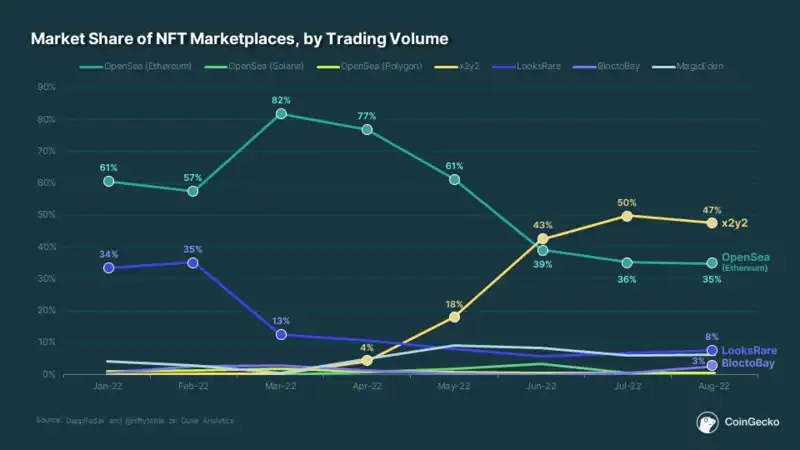
The largest NFT marketplace, Ethereum's OpenSea, accounts for the lion's share of transactions. But in recent months, the late-entry "potential" X2Y2 has been slowly taking volume away from OpenSea and surpassed it in the most recent quarter.
We witness a similar dynamic cycle of dominance in the Solana ecosystem.
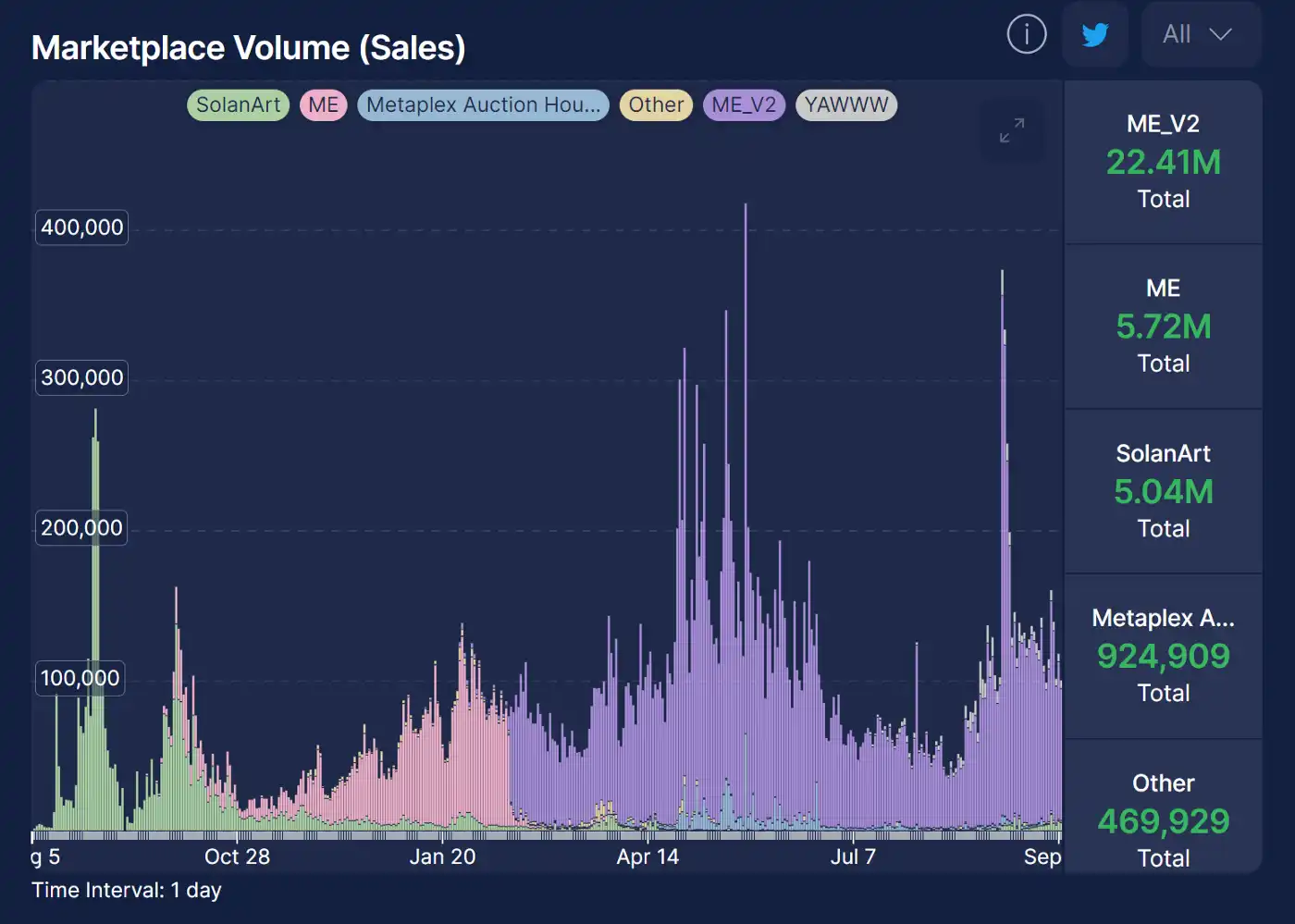
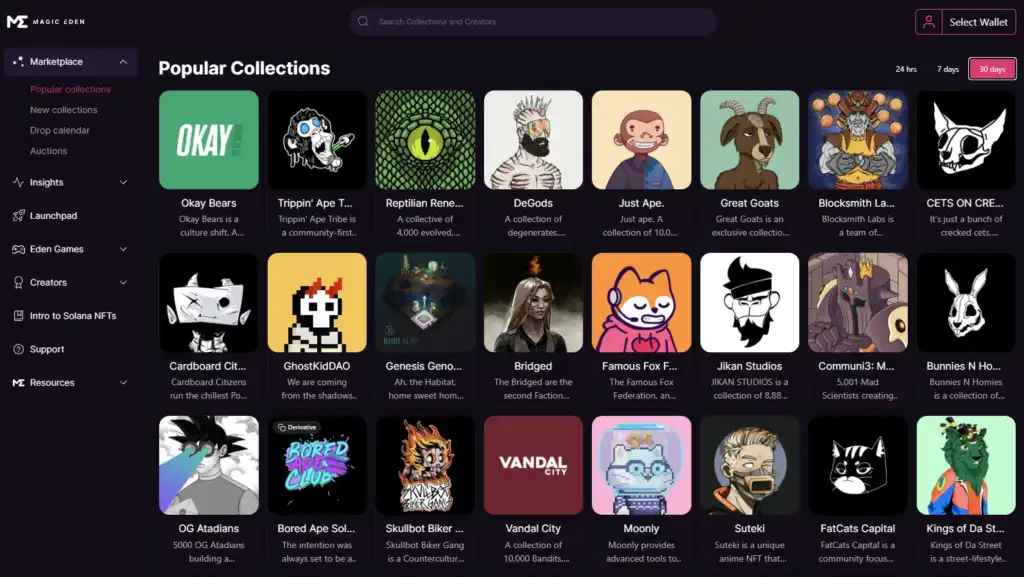
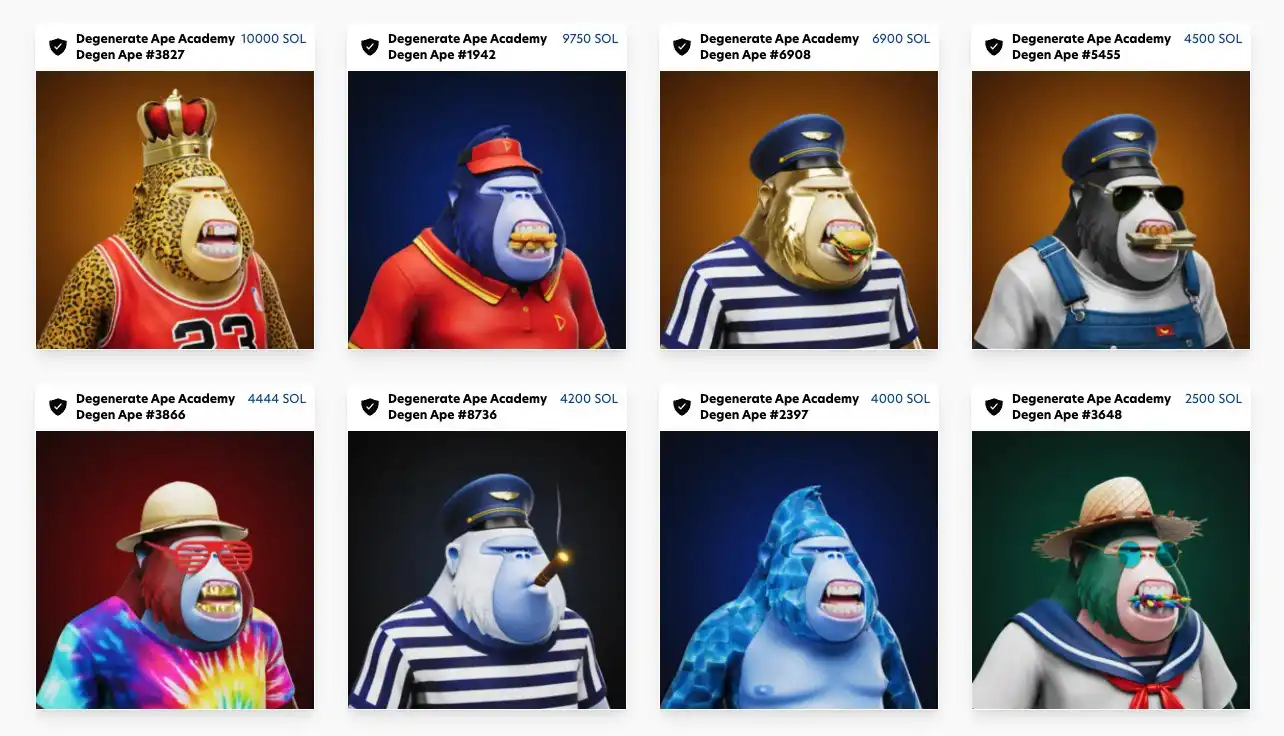
Magic Eden currently accounts for 70%-80% of Solana's NFT trading volume, while the second most popular market (Yawww) has only accounted for 15% in the past month, but a temporary advantage is not sustainable. Solanart, which owned Solana's share of NFT before Magic Eden came along, rocketed into the mainstream in the third quarter of 2021 after the large-scale launch of Degenerate Ape Academy, which sold 10,000 Apes in eight minutes.
It was from there that SOL peaked at $260 in November. At that timeYouTube There's a story on it.
Note: Still finds it interesting that Solana, the chain that aspired to disrupt Wall Street with its staggering amount in circulation, ended up being called the ultimate chain of nft in the bull market.
Unfortunately for Solana, that didn't last long.
How did Magic Eden beat Solanart in a month and become the leader in the Solana NFT market in just a few months?
Will X2Y2 repeat history on Ethereum and continue to fight OpenSea's dominance?
Can the MOOAR of STEPN team compete with Magic Eden?
To address these questions, we need to understand why and how these past milestones occurred.
Humble beginnings
Many are familiar with how the NFT craze started on the Ethereum blockchain, with CryptoKitties, CryptoPunks, and Bored Ape Yacht Club (BAYC) fueling the start.
Solana NFT started around March 2021. Some of the og's within this market are Kreechures and solarian. This was followed by the first generative art-based Solana Monkey Business (SMB), and of course the Degenerate Ape Academy (DAA) launched in August 2021, which put Solana's nft in the limelight, And created a new "blue chip" nft.
In the early days, Solanart was the dominant market on Solana (this was only a year ago). Launched in June 2021, it quickly became a badge of honor for the platform's home page.
The rise of Magic eden
Then Solanart became a thing of the past. The reason everything changed so quickly: Magic Eden. A year later, Solanart had gone from being the king of the market to only 3% of Magic Eden's daily trading volume. Like I said -- brutal.
How did Magic Eden do it?
The ambitious team hit the ground running. What started as a very basic marketplace quickly evolved into a very comprehensive NFT platform that made it easy for both creators and traders to grow, and easy meant adoption.
Magic Eden has also adopted:
- An active Twitter supported by an AMA with founder participation
- Large-scale marketing in Solana events
- Continuous new features and platform updates;
- Internal Account Manager for the NFT project.
These positives -- along with the overwhelming support of the community -- helped Magic Eden's rise, and subsequent dominance, to be a successful scheme.
Indeed, this meteoric rise has not been without controversy.
We've seen persistent technical issues, such as platform crashes after every mint and the infamous.Balloonsville rug, finally pushed Magic Eden to toughen up their launchpad rules. Then there's the recent upsurge in creator royalty wars and the platform's recent launch.MetaShield NFT tool The collapse of
The space of two giants
Just as X2Y2 skyrocketed on Ethereum and now accounts for almost 70% of OpenSea's monthly volume, can Solana accommodate two cats? Or is Solana too small for both?
Multiple markets will always exist, and humans grow up in familiar environments, so there will always be users who end up loyal to certain markets for comfort and convenience. It's no different from why you always go to your favorite grocery store, even if there's another cheaper store just a few feet away.
I think that if the two dominant NFT markets have different value propositions, then it seems reasonable that they exist at the same time, that is, they can both offer something different from each other.
For example, OpenSea remains the most liquid NFT market due to its inherent recognition as an established market. On the other hand, we see quite a number of users flocking to markets like X2Y2 as they "gamify" the entire trading experience - from the ability to bet on native tokens, to distribute trading rewards, to offer novel exemptions to bypass royalties for NFT projects that are not "constructed."
This apparent difference in expectations and functionality opens up multiple consumer niches that OpenSea and X2Y2 and even LooksRare occupy, respectively. Different markets offer unique identities and features to users. So for a new market that challenges Solana's status quo, it needs Magic Eden to fill a scarce part of it.
Talk about MOOAR: Challengers emerge from the shadows
Many of you are familiar with STEPN, an M2E app developed and expanded by the talented team at Find Satoshi Lab (FSL). In less than a year, FSL has attracted over 1 million users to Web 3 on Solana, BNB Chain and Ethereum.
clickSTEPN and FSL are introduced in detail.

Now, the team is launching their own nft marketplace, MOOAR, but what are MOOAR's unique selling points?
Fair royalties that put the creator first
The industry is moving in a direction where compensating creators fairly for their efforts may be dispensable. MOOAR refuses to enter the fray and aspires to be a beacon of support for creators, who will be able to set their royalty rates at a reasonable level.
This fits in with MOOAR's focus on being the platform of choice for those looking to launch the PFP NFT series, either independently or as part of its roadmap. PFP collections are essentially art, which guarantees the artist royalties. That's only fair.
The goal of FSL is to promote a virtuous cycle where NFT creators become better under MOOAR, and they will be more willing to create better content for the members who are encouraged to stay. This establishes a positive feedback loop, positioning MOOAR as a platform known for quality projects, with a loyal user base and loyal creator base who can rely on passive income to sustain their work.
A form of collaborative loyalty between users, creators, and platforms, but would members really want to pay royalties if they no longer had to compete with other members for quality content? Great question! This leads to the next unique selling point.
Zero-service subscription model
How does MOOAR strike a balance between creators and users? The former want to be paid fairly for their work, while the latter may not want to pay any royalties!
I mean, we all love creators, but times are kind of tough, right? MOOAR has introduced a zero-fee subscription model for the NFT market. Instead of paying a flat monthly subscription fee to use the platform, members will save money by paying a 0% service fee for trading NFT on MOOAR. This means that whether you are making a bulk transaction with a cheaper NFT or exchanging a single Bored Ape (60+ ETH), you will save a significant amount of money.
Like exchanges that offer very low crypto trading fees or brokerage firms with low spreads, the zero-fee subscription model offers MOOAR members the freedom to swap NFT's as much as they like.
This also opens the door for FSL to offer additional rewards and interesting gamification programs in the future, such as upgrading the reward system. There has even been talk of integrating MOOAR members into all FSL products in the future, although I expect this to take longer.
Exciting stuff.

Finally, MOOAR's unique selling point even extends to their launchpad.
Community-driven "themed style" launchpad
launchpad's concept is similar to private equity and venture capital in traditional finance, except that ordinary people like you and me can participate and democratize finance for the little guy!
The idea is to give launchpad participants the chance to buy into new projects before they hit the market -- often at super-low prices.Click to learn YouTube
Similarly, many NFT marketplaces offer a launchpad service where creators can launch their new NFT. It is interesting to note that MOOAR has a unique take on the launchpad concept.
Instead of waiting for projects to approach them, they limit project releases to a specific topic at each "season." This could go on for months.
The Web 3 team can conceive of a project that fits the theme and submit it to the MOOAR team for publication. MOOAR members who hold GMT can vote for their favorite project. Each quarter, community-led winners are then given the opportunity to launch on MOOAR's thematic launchpad, providing a comprehensive package of marketing and technical support before and after launch.
MOOAR's litepaper
conclusion
The NFT market is evolving and it was only a matter of time before a serious competitor arrived to compete with Magic Eden for a share of the lucrative market, especially in Solana, the chain of choice for NFT.
Could it be MOOAR? That remains to be seen.
I will say that the FSL team that built STEPN has the talent, technology and track record to build and scale groundbreaking startups in a short period of time.
In addition to significant financial backing from STEPN and DOOAR, plus FSL's growing team of driver developers, engineers, marketers and content writers, I think MOOAR has the potential to go head-to-head with Magic Eden.
The team is determined to immediately stand out from its competitors by leveraging a set of unique selling points (a creator-first royalty policy, a zero-fee subscription model, a main community-driven "themed style" launchpad).
NFT market industry is about to enter the white heat!
Welcome to join the official BlockBeats community:
Telegram Subscription Group: https://t.me/theblockbeats
Telegram Discussion Group: https://t.me/BlockBeats_App
Official Twitter Account: https://twitter.com/BlockBeatsAsia