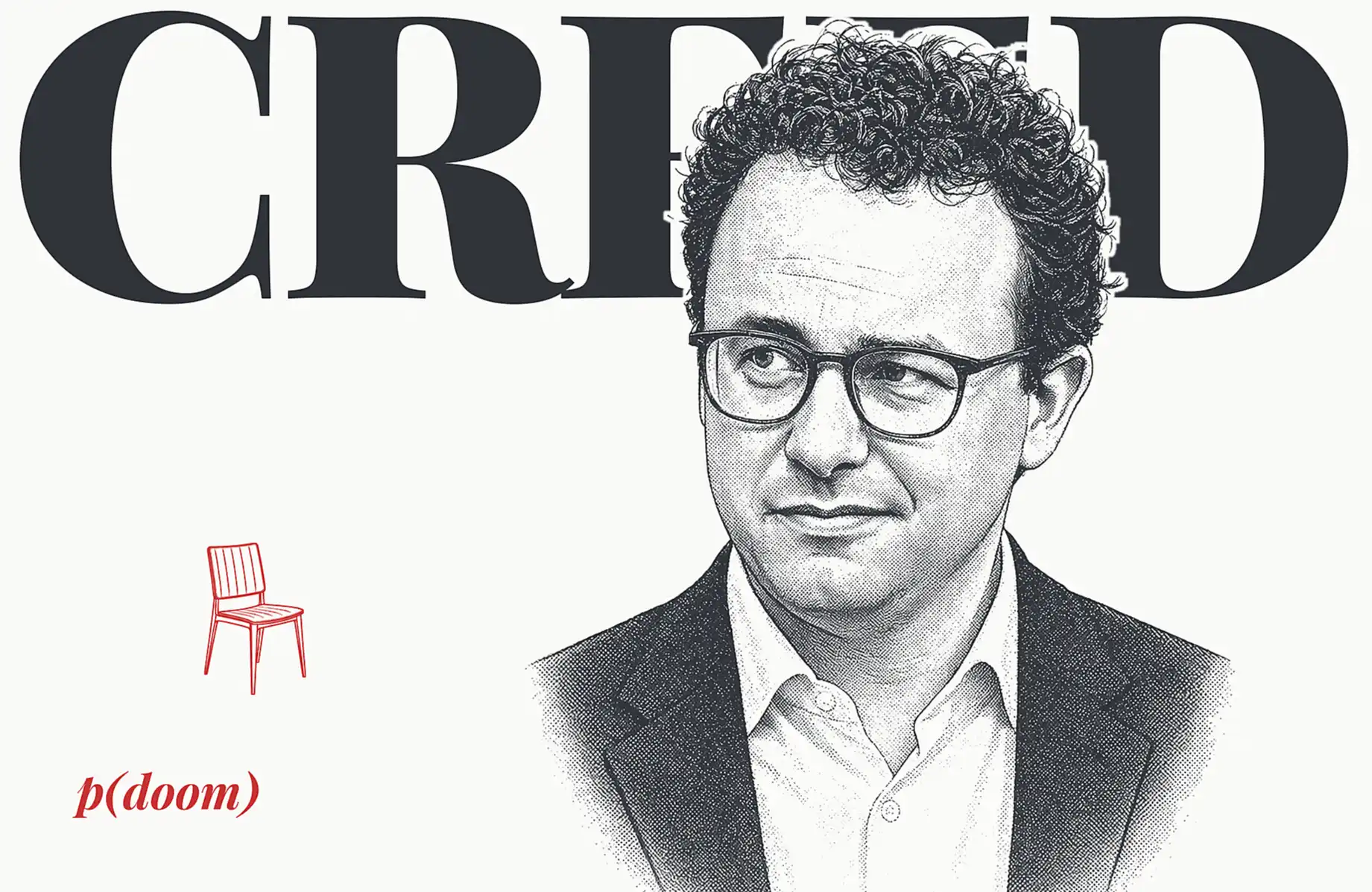
Dialogue with Kava CEO: After 3 years and 11 upgrades, the Kava co-chain architecture has unlimited potential and innovation
It is difficult for us to judge whether the project is good or bad, whether to concentrate on developing projects and continuously innovate or choose to reduce expenses and other market changes is a different choice for projects when the market is down. However, we carefully found that a downturn in the market is sometimes a good time to overtake on a curve.
Kava's Kava 10 main network intersects the previous version with a larger iteration, combining the flexibility of Ethereum smart contract development and The interoperability of the Cosmos SDK introduces a co-chain architecture.
At the same time, with the Pioneer Program and developer incentives worth 750 million US dollars, the Kava ecology has first seen effectiveness. In just a few months, 42 projects joined the Kava ecosystem and brought nearly $300 million in TVL to Kava. Among them, Kava also jointly launched user incentive activities with well-known DeFi projects Sushi and Curve. Kava 3pool on Curve had a TVL of $14 million on the first day the pool’s KAVA rewards went live.
Just as Kava is about to launch the Kava 11 mainnet, BlockBeats chatted with Kava CEO Scott Stuart about the new Kava 11 mainnet Features and how Kava achieves such great results.
Online for 3 years, 11 upgrades, integration of more than 40 projects
BlockBeats: From the data point of view, the main achievements of Kava 10 are reflected in the fact that 26 projects joined Kava, which laid the foundation for the subsequent development of Kava. Can you explain to us from the perspective of the project itself, the achievements of Kava that cannot be seen from the perspective of ordinary users?
Scott Stuart: This October is exactly the third anniversary of Kava’s mainnet launch. The DeFi protocol track has developed into a mature public chain, and security has always been the result of our efforts behind the scenes. Kava's main network has undergone 11 upgrades in three years, and three self-operated DeFi protocols have been launched successively, and more than 40 projects have been integrated on the chain.
Since the Kava EVM common chain was officially launched in May this year, the Kava EVM common chain has generated more than 1.99 million blocks in total. More than 5.5 million transactions were processed between more than 1.89 million wallet addresses, and Kava's TVL has been leading in the Cosmos ecosystem. There has never been a single hack or security issue behind this data.
On the process side, we have invested millions of dollars in an audit-driven development process. Users can perceive some of our security measures, such as our routine internal and external audit reports, testnet activities before the mainnet, Kava SAFU security fund, community stability committee, etc.
But outside of these, we actually do a lot of work that is not known. We not only conduct code audits before each mainnet upgrade, but the audit itself has been integrated into our daily development process. For example, there was a vulnerability in Cosmos IBC some time ago, and we had already discovered and fixed it before the news was announced. At the same time, we will also review the code of other projects, and we can know which projects are better written than others, or are more likely to be hacked. While ordinary users cannot perceive this, it is that Kava sets a high security standard in the management process.
BlockBeats: The $750 million incentive may be able to quickly attract developers to join, but will it be detrimental to KAVA in the long run Influence?
Scott Stuart: At present, the Layer 1 network generally provides a large number of incentives to attract developers Join, including Avalanche, Evmos, etc. The same is true for Kava, where we launched this $750 million Kava Rise initiative under the principles of fairness and transparency, and it has been very successful. But we also clearly know that this large-scale incentive is only applicable to the early stage, and long-term inflation and dilution will be a huge test for the project's economic model.
When Kava formulates this incentive plan, it will calculate the incentive calculation method, development and operation cycle, and the adoption rate of the agreement Deep and long-term binding is done, and we also encourage developers to appropriately distribute rewards to users who use the protocol on the Kava platform.
In the meantime, we are creating tools to help the protocol grow in a healthy competitive environment. As long as developers contribute value, they will be rewarded accordingly. To this end we are building a team working on formalizing the process of protocol evolution with Kava. This would be a scalable solution, no other Layer 1 is currently doing this.
On the other hand and most importantly, even though the crypto industry has been around for over 10 years now, we are still in the cryptocurrency maturity cycle early adopter stage. While some projects may aim to only serve early adopters, Kava has been building from scratch for the past few years for the early majority. When we attract users to our platform through incentives and other means, we have provided a smooth product experience, safe and reliable services, and a community composed of various individuals or organizations, which will continue to spread to deliver information to the world.
This is how we finally cross the chasm and make the crypto world mainstream.
Kava co-chain architecture has unlimited potential and innovation
BlockBeats: What is the difference between Kava's co-chain architecture and EVM compatibility, and what are the main advantages?
Scott Stuart:Kava is built on the powerful Golang language architecture, compared with Solidity , Golang development is easier and safer. Kava's transaction processing engine is very fast, so there is no need to worry about obvious network congestion like Ethereum. But we cannot deny that the EVM environment is still favored by most developers and users, so based on the Cosmos SDK module architecture, we have developed an architecture like "one public chain, two public chains".
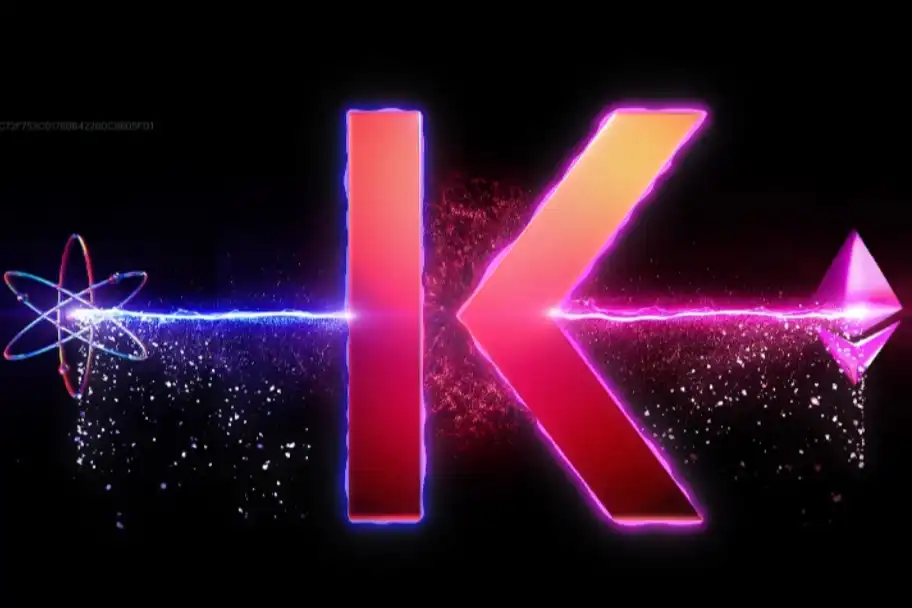
That is, on top of Kava, the underlying blockchain, there are two common chains at the same time, that is, Cosmos common chain and EVM co-chain. These two common chains share Kava's secure infrastructure and cross-chain technology. While retaining the original development environment, they can also seamlessly cooperate through the translation module, which means that the two can also share each other's User and value capture capabilities.
BlockBeats: You said on Twitter that the Cosmostation team, composed of top Korean blockchain developers, will be on Kava 11 Start Stableswap "SPACE", can you introduce SPACE to us?
Scott Stuart:SPACE Stableswap is the first Cosmos/Ethereum hybrid protocol, the development team behind it Cosmostation is an encryption company that predates Cosmos. After years of development, they have become the most used block explorer in Cosmos and one of the largest POS validators in the industry.
Kava is very pleased that Cosmostation has chosen to launch SPACE Stableswap exclusively on Kava. As a Cosmos/Ethereum hybrid protocol, SPACE will operate similarly to Curve n-pools, which can be used in native Cosmos for inter-chain exchange with extremely high efficiency.
Additionally, the SPACE Stableswap EVM proxy smart contract can be used for native Ethereum swaps. SPACE is a new development only possible with the reliable Kava co-chain architecture. Both Cosmos and Ethereum developers and users can access SPACE Stableswap natively in their respective environments. This first-of-its-kind technology is brought by one of the strongest teams in the Cosmos ecosystem to power Kava Layer 1.
BlockBeats: As you said, SPACE adopts a hybrid protocol of Cosmos and Ethereum, a new development that can only be realized by the Kava co-chain architecture . So, can the Kava co-chain architecture achieve some more innovative operations?
Scott Stuart: Ethereum provides EVM as the operating platform for smart contracts, but its scalability , development flexibility, and decentralization have been difficult to perfect. Although there are many Layer 2 and side chains working to solve this problem, the limitations and inefficiencies of functional interaction still exist. Therefore, from the perspective of network infrastructure and user experience, Cosmos has more advantages than Ethereum. But we don't want to put Cosmos and Ethereum on opposite sides. They should be complementary, so that we can realize a larger Web 3 world, which is also our original intention of developing a common chain architecture.
Currently through the common chain architecture, after the EVM protocol and the Cosmos protocol are deployed on the Kava network, both can enjoy the Kava common chain architecture All the advantages of , including excellent interactivity and scalability, efficient transmission speed, and low network fees. And after Kava's cross-chain bridge is continuously upgraded, such as the Bitcoin cross-chain bridge we plan to build, this architecture system will expand again, and its innovation and potential are unlimited.
BlockBeats: Kava already has an incentive policy for developers. For ordinary users, how to deeply participate in KAVA What about ecology and community?
Scott Stuart: Of course, the most attractive thing for users is the incentive of Kava's ecological value of 750 million US dollars. Users can also enjoy these incentives. For example, participating in user incentive activities jointly carried out by Sushi, Curve and Kava can get high rewards. Kava 3pool on Curve hit $14M in TVL on the first day the pool’s KAVA rewards went live. On the third anniversary of the launch of the Kava mainnet, we will also launch more incentive activities.
In addition, on the Cosmos common chain, users can choose to participate in mining in the three protocols of Kava Mint, Kava Lend, and Kava Swap , to obtain different combination rewards. In order to lower the threshold for users, Kava also launched the Kava Earn module, which adopted a non-destructive revenue model in the early stage. After the Kava 11 mainnet goes live, users can also convert KAVA to bKAVA through liquid staking and supply assets to the new Kava Earn and Boost modules, which will greatly increase the annualized rate of return of staking.
BlockBeats: Kava's first fully convertible liquid staking protocol Liquid (bKAVA) is here The biggest highlight of this upgrade, please explain to us, what kind of changes will Liquid (bKAVA) bring to Kava?
Scott Stuart: The new liquidity staking protocol Kava Liquid (bKAVA) will quickly join Kava Network's DeFi protocol releases more value of Stake KAVA, which will bring explosive growth to the TVL of Kava ecology.
Unlike other forms of liquid staking that can only support conversion of a small portion of liquid staking assets, Liquid (bKAVA) can handle staking KAVA 100% conversion to liquid bKAVA, a design first for Kava.
Liquid (bKAVA) is a catalyst for the growth of the Kava protocol. In order to achieve better scaling, Kava proposes to transfer a portion of PoS rewards to liquidity rewards. This is consistent with our goal of adding DeFi protocols on Kava. In the future, bKAVA is bound to become a huge contributor to the growth of Kava ecological protocols.
The launch of bKAVA means that users will have more revenue opportunities than they currently have. At the same time, the support of community users will also directly contribute to making Kava the fastest growing blockchain in the protocol.
Kava will continue to lower the threshold for user participation to welcome the arrival of the multi-chain era
BlockBeats: In fact, users who have followed Kava for a long time can find that Kava generally has a relatively long-term plan. After the launch of Kava 11 Actually, can you disclose the main upgrade points of Kava 12?
Scott Stuart:Kava 12 will continue to maintain our long-standing purpose, which is to strive to reduce user access In addition to optimizing the product form as much as possible to allow users to have a simple and smooth experience, it will also actively integrate with different head protocols and subdivided fields. The main upgrade point will focus on supporting CosmWasm, which is a core component in the Cosmos technology stack, and its iteration speed is faster and more secure.
BlockBeats: The current bear market has lasted for a long time, and many projects have been shut down. As the CEO of Kava, what do you think Follow-up market and Kava's follow-up plan?
Scott Stuart : After several years of steady development, Kava's ecological and technical teams are becoming stronger and stronger, including the deployment of more well-known protocols in the EVM common chain, and the protocols in the Cosmos common chain that are fully deployed using Kava's common chain technology (such as Cosmostation Space developed by the team), with the support of the Kava Rise plan and Kava co-chain technology, the adoption rate will have a further breakthrough. We have witnessed the arrival of the multi-chain era in the past two years, and it will continue to develop. Every project that insists on contributing will benefit from the progress of the industry.
Welcome to join the official BlockBeats community:
Telegram Subscription Group: https://t.me/theblockbeats
Telegram Discussion Group: https://t.me/BlockBeats_App
Official Twitter Account: https://twitter.com/BlockBeatsAsia
 Related Articles