Detailed explanation of CC0 NFT: open source and out of control of IP
Original title: "CC0: IP Open Source and Loss of Control"
Original author: @shenhuili2022
The CC0 trend of NFT has emerged , Many projects hold the banner of decentralization and blatantly rug. In its article, a16z also highly praised the CC0 model. However, is CC0 really valuable to NFT, or is it just a gimmick for masturbation in the bear market? We sorted out this issue.
In order to understand the CC0 of NFT, we need to understand the rights and interests distribution of IP first. Advocate, then disassemble the attributes of NFT, and analyze the corresponding impact. NFT is accompanied by a series of new things such as metaverse and gamefi, and the concepts are intertwined and connected vertically and horizontally. Understanding CC0 requires a certain grasp of the overall situation of web3.
The main point of this article:
1) There are inherent irreconcilable conflicts in the existing distribution of IP rights. Existing laws recognize and try to resolve conflicts, recognizing IP as “public goods,” but they still face lobbying attacks from capitalists.
2) CC0 tried to resolve conflicts in the traditional IP industry, but in the traditional IP From a different perspective, the lack of innate motivation makes it a utopian fantasy.
3) NFT has the duality of IP and token, and CC0 affects the value of IP , to affect its token.
4) In the commercial scenario of the second creation, CC0 gave up the traditional IP rights in exchange for Gotta grow. In non-commercial scenarios, CC0 is only a reshaping of production relations, but it needs more powerful productivity tools to really play a role.
5) At different stages of the IP life cycle, CC0 plays different roles. The early value of the second creation to IP is greater than that in the middle and late stages.
6) However, due to the existence of law enforcement costs, the actual effect of CC0 is not very great . With the growth of IP, the value of CC0 will be truly reflected when the benefits of law enforcement are greater than the costs of law enforcement.
7) CC0 needs more powerful productivity tools. And together with a more complete equity system, more orderly DAO governance, more mature NFTfi, etc., it has become the infrastructure of NFT.
There used to be a joke That way, if you're stranded on a deserted island, don't panic, just draw a Mickey Mouse on the beach, and Disney's legal team will fly a helicopter to pick you up to file a lawsuit.
Behind this joke, it means that high-quality IP has huge commercial value. Indeed, Mickey Mouse brings in as much as $5 billion a year for Disney as a cartoon character. However, from a simple point of view, is the centralized IP owner justifiably enjoying the benefits? In the process of using and consuming IP, people have contributed to its value. Especially when an IP has grown for decades, or even hundreds of years, and enters a mature stage, the process will be accompanied by a large number of secondary creations, which also play a role in maintaining the vitality of the IP. And the founder has already left us, should the benefits obtained at this time be diluted?
The issue of IP rights and interests distribution is actually a legal issue. Faced with this doubt, the law has already given the answer. For example, in the United States, Japan and other countries, the general copyright protection period is the author's life and 70 years after his death; in my country and most countries in Western Europe, the copyright protection period is the author's life and 50 years after his death. This also means that after the death of an IP author for several years, the distribution of IP benefits will be released, and IP becomes a kind of "public goods". For example, today, all publishing houses can publish Journey to the West for free, which plays a role in the continuation of its dissemination and benefits from it.
But centralized organizations will always come up with some ways to fight against the law. For example, Disney has continued to lobby Congress in order to extend the copyright protection period of Mickey Mouse. The most recent one was the "Mickey Mouse Extension Act" in 1998. The copyright of the company in the United States was extended to 95 years after the work was published (the individual is still lifetime plus 50 years after death). Mickey Mouse was born in 1928, which also means that it will expire in 2023. And if it is extended further, the resistance of lobbying will be greater.

(Picture: The gray line indicates the expiration date of the original Mickey Mouse copyright, and the sections added on the gray line are Disney lobbying Congress changed the copyright laws to buy Mickey Mouse's lifespan.)
Here we see , is the confrontation between the centralized organization and the decentralized benefit distribution. Will lobbying continue? Will there be a next revision? We don't know. However, history has quietly turned the other side.
If IP is destined to become public goods one day, then if it starts from day one , is it a public product? This creative idea is the Creative Commons license. In 2002, the American non-profit organization Creative Commons first released the CC license. The original Creative Commons licensing terms were written in the US legal system, so the wording may not match existing laws in other countries. So in subsequent versions, localization was carried out in combination with different national laws. In 2006, China officially released a version of the Creative Commons license agreement.
The effort of the CC organization is to counter the increasingly restrictive " culture of authority". This is a culture that traditional publishers vigorously promote to the society in order to maintain and strengthen their oligopoly in popular music and popular movies. This effort seems very slight in the long history.
In the traditional IP market, CC0 is undoubtedly a utopian idealism. From the non-profit nature of CC organizations, we can also see that CC0 in the traditional IP market is not pleasing. The reason is very simple. In the traditional IP commercial closed loop, copyright authorization is the core profit point. If this profit model is abandoned, creators will lose motivation. Especially under the background of modern entertainment industrialization, there are higher requirements for the collectivization of creation. If there is no interest-driven, a centralized organization will never be able to create. Organizations that adopt CC0 are mainly public organizations that have no expectation of profit, such as the European Digital Museum.
As a result, CC0 has fallen into a stalemate in the traditional IP market. Like the slogan of egalitarianism, everyone is equal, and everyone loses momentum. So why does the emergence of NFT make the CC0 model re-enter people's vision?
In order to further understand the impact of CC0 on NFT, we need to dismantle NFT.
When scientists perfected quantum mechanics, they once questioned light. We already know today that light has "wave-particle duality". When it is observed, it is a particle, when it is not observed, it is a wave. How can a thing be both a particle and a wave? Such a counter-intuitive feeling has troubled people for decades, and they have been arguing with experiments.
Similarly, when people face NFT, they can't help being confused. How can a thing be both IP/picture and data/token? Such counter-intuition makes it difficult for people to further understand NFT. In fact, NFT is exactly this kind of duality. When people observe, it is a picture, a meaningful IP; when people fall asleep, it becomes a token, and the price changes up and down.
So, looking at NFT from the "image" of IP, does CC0 affect it? On the surface, as mentioned above, CC0 allows users to recreate IP, which is more conducive to the dissemination of IP. As the scope of communication increases, the traffic will increase, and some users will be converted into purchasing power, thereby increasing the price of tokens. At the same time, due to the increase in the token price, its traffic exposure and community power will be stronger, and the community power will further increase the secondary innovation, thus forming a positive cycle of growth flywheel.

< /p>
(Picture: CC0 growth flywheel)
But there are also some interrelated deep-seated issues involved, let us look at them in turn:
a) What are the specific scenarios of the so-called "second creation" of IP, and whether different scenarios can play a role? Positive effect?
The "second creation" scenario can be divided according to commercial and non-commercial use. The basis for the division here is whether the second creator who uses the IP has obtained direct economic benefits, or whether he is "generating electricity for love".
A typical example of commercial use is the joint name of some big names and head NFTs. Such as China Li Ning and BAYC, Tiffiny and CryptoPunks. Neither of these are CC0 NFTs. Once NFT adopts CC0, the commercial value of "joint name" is almost lost. The reason is simple. The brand has changed from asking for authorization with a project party to asking thousands of holders for authorization, and any one of these people can agree.
There is actually a concept of "second-order CC0" here, that is, in the current context Next, CC0 is first-order, that is, the IP is not in the hands of the project party, but in the hands of the holder. The meaning of "second-order" is that the copyright is not even in the hands of the holder, but is completely public. But we quickly discovered that in commercial scenarios, there is no essential difference between the first-order and second-order. Among the thousands of holders, someone is willing to contribute the right to use for free (no cost but indirect benefits), which is equivalent to public copyright.
When the object of the joint name loses its scarcity, it loses its commercial value. We found that non-CC0 NFTs can still be converted into IP in the traditional way. In other words, CC0's NFT will lose the traditional commercial value of IP. (Perhaps due to the popularity of a certain CC0 NFT for a period of time, there will be brands to attract traffic, but it is not sustainable after all).
So, when we consider the second creation of CC0 NFT, we should pay more attention to its non-commercial use scene.
First, let's consider a simple presentation scenario. On Anfu Road in Shanghai, community users of mfer (CC0 NFT project) rented an entire wall for display. This is a typical non-commercial scenario, and users do not get direct benefits. So passing tourists paid attention to it and made subsequent purchases. Although we can't count the conversion rate, combined with its spread on social networks, there must be an indirect positive effect.

(Picture: mfer display wall, Anfu Road, Xuhui District, Shanghai)
So we can initially draw a conclusion: CC0 sacrificed The traditional IP monetization method, but in exchange for the growth of NFT holders. But is such a sacrifice worth it?
Let’s look at another secondary creation scenario, which is also a tool called Createra used by mfer community users made a scene. Users can use mfer's avatar to carry out activities in the Metaverse. But there is no doubt that such users will not remain after early adopters.

(Figure: The space created by mfers in Createra)
At this time, some people will question that the ability of real high-quality IP creators is scarce, and second creators cannot create Haribo special. But in fact, this is a traditional way of thinking. The IP attached to the NFT may not be the same as the traditional IP realization, authorization, games, film and television. Instead, it is used in the metaverse as a fragmented component. The avatar of the NFT can be used in the metaverse as the display surface of the user; NFT assets are also part of the user's DID. Together with gamefi and the economic model in the metaverse, NFT has built greater commercial value.
But today, whether it is metaverse or gamefi, there is currently a lack of useful "Productivity Tools". Game engines such as unity and UE are only suitable for traditional end games and mobile games, and have not been deeply cultivated in the metaverse field. Tools like Createra have played a good leading role. We can imagine, when productivity tools are further improved, what kind of secondary creative potential will NFT release?
Overall, in traditional IP commercial scenarios, CC0 makes NFT give up its value ; But in new areas, CC0 has achieved higher growth, but due to the lack of productivity tools, it has not been able to maximize the release of user creativity.
b) different life cycles IP, CC0 difference in its value?
IP life cycle, we can simply and roughly divide it into infancy, growth and maturity , heyday, recession/stable period. From the perspective of commercial value and user attention in a general sense, even the top IP in the current NFT is only in the late stage of growth. The total GMV created by classic IP is much higher than the transaction volume of CryptoPunks, BAYC, etc.

(Figure: Different stages of IP lifecycle)
< /p>
The role of "second creation" on IP is closely related to the life cycle of IP itself. Before the mature stage of IP, the motivation of the second creator is limited, and the income of creation is relatively limited. At this time, a high-quality second creation can even help the original IP to spread. After the mature period of IP, it is the second creation that rubs against IP. As a result, a large number of masterpieces and classics are continuously remade, just because the audience will have a preset lower limit in their hearts, or they will pay for their feelings.
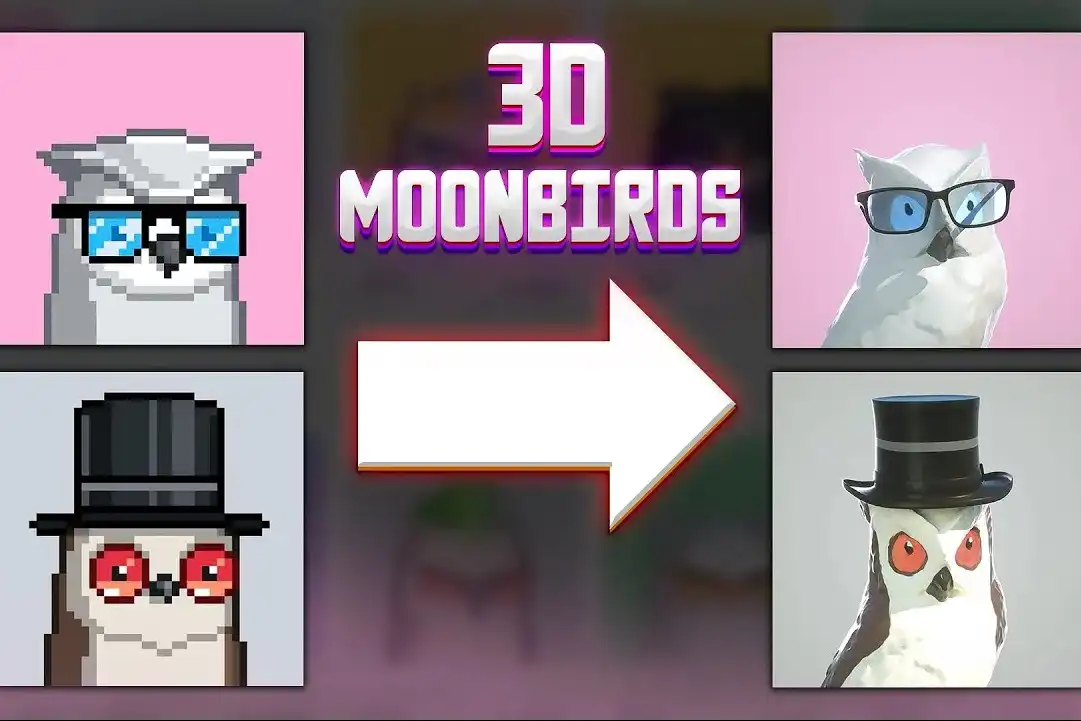
Because of this, the effects of CC0 on IPs with different life cycles are significantly different. For example, if the CC0 project is announced on Day 1, the IP is still in its infancy. If the project party does not operate itself, it can only hope for a small probability event to make the IP popular. It cannot be because of the existence of CC0 that NFT project parties completely place their hopes on the community, which is unrealistic. There are also projects such as Moonbird, which announced CC0 after entering the growth period. At this time, although the community culture has been formed, there will still be suspicion of rug after all.
Compliance with the CC0 agreement from Day 1, supplemented by better operations to survive the infancy , entering the growth period, perhaps this is the correct way to open CC0.
Historically, there are very few successful projects that are truly completely decentralized. Ethereum, which is in full swing, also needs a leader like V God to lead it. BTC can be regarded as CC0 in a broad sense. The founder, rug, relies entirely on the miner community for growth. But only Satoshi Nakamoto can do this:
"I just started, the rest Leave it to you."
In a sense, "open source" itself is a symbol, To build consensus through open source, only enough first movers have this ability. BTC and Linux in the operating system are all isolated cases. Therefore, can we conclude that the CC0 model in NFT can grow into a relatively high-value project, and there will be a small number of them?
c) For NFTs without CC0, it is due to the existence of "enforcement costs" that make non There is no essential difference between CC0 NFT and CC0 NFT?
When outsiders look at NFT, they always have questions: "If I don't buy it, just take a screenshot Can it be used as an avatar? Presumably even Disney will not hunt down your circle of friends. Here we only consider the commercial situation. Even if it is not out of personal vanity, there will be many complicated situations, such as :
- Previously owned, now sold, but my purchasing power allows me to buy again anytime Can I use it after buying it?
- I pledged the NFT to benddao, then the IP Is the commercial power of the business owned by benddao or me?
- I have united 10,000 people to buy After splitting part of the NFT, does the commercial power of IP belong to these 10,000 people? If one of them makes effective profits, should they be shared equally with others?
And so on. This area is currently in a complete legal gap (even if it is a relatively complete regulatory system for FT, it only appears in Dubai and other A few places). At this time, the so-called "enforcement cost" problem will arise. Even if it is known that someone in China has made profits without the permission of CryptoPunks (non-CC0 project), CryptoPunks will not travel thousands of miles to "protect rights". The main reason for this is that even for the top NFT, its IP has not really come out of the circle compared to the well-known IPs of the public, and needs to be infringed in exchange for exposure; on the other hand, such an approach may be exposed People criticized it as "too not web3", which contradicts the decentralization that web3 has always advertised (at least on the surface), which may backlash the community. Various reasons constitute the high "enforcement costs" for non-CC0 projects when facing infringement.
From this perspective, we will find that a CC0 project in its infancy, and It will not be more able to motivate people to carry out secondary innovation than a non-CC0, mature project. The latter will not have a negative impact in the actual sense due to the existence of a certain "enforcement cost". So at this time, where does the meaning of CC0 exist?
Actually, this problem is still related to the life cycle of IP. As mentioned earlier, the IP of NFT is essentially in the "infancy". BAYC has only existed in the world for one year. Compared with Disney, there is still a long way to go. The cycle is not over, the game is not over, and the luxury Insufficient and limited users are all problems faced by early projects. It is too early to talk about defending IP rights at this time. In other words, assuming that BAYC's IP can be obtained by "authorization" only in addition to NFT transaction fees. If the income is at the level of US$100 million, law enforcement will definitely be chosen at this time. It is necessary to wait until the real centralized NFT big IP appears, and the value of CC0 will be more valued.
In addition to some of the issues discussed above, NFT itself is also developing dynamically. What effect it will have, remains to be seen. For example, what we discussed before is CC0, which is mainly for image IP. For non-image IP such as artwork and music, what is the relationship between CC0 and it? For "programmable NFT", that is, dynamic NFT, will the core of the IP itself change, and how does CC0 combine with it? Will it weaken its value as an IP after NFT is more deeply bound to rights and interests (which is also an attribute of the token itself)? How does the development of NFTfi relate to CC0? These questions can only be answered with time as the industry develops.
What we can imagine is that CC0 has changed the production relationship and is an integral part of NFT , but in today's early stage of the industry, its value has not been highlighted. Moreover, CC0 has not directly solved the problems currently encountered by the NFT industry, such as low liquidity. In the subsequent development of NFT, CC0 will become the infrastructure of NFT together with more powerful productivity tools, a more complete equity system, more orderly DAO governance, and a more mature NFTfi.
This article is from a contribution and does not represent the views of BlockBeats.
Welcome to join the official BlockBeats community:
Telegram Subscription Group: https://t.me/theblockbeats
Telegram Discussion Group: https://t.me/BlockBeats_App
Official Twitter Account: https://twitter.com/BlockBeatsAsia
 Related Articles