Starting from OKPC: Why is CC0 and art on the chain the next trend of NFT?
Written by: LeftOfCenter
The on-chain art project OKPC is groundbreaking on multiple levels. It adopts the most radical copyright license CC0 and stores 100% of all data on the chain. ), whose curated galleries cover almost all productive people in the current encryption industry, whether they are encryption-native artists, developers or Web3 KOLs, which makes us look forward to its future possibilities and development potential.
On the other hand, it is an experimental project, with a certain self-entertainment nature, community developers did not put much effort (even during the initial release period) to promote the project, and Copyright standards and adoption of the new medium of on-chain art has led to a lack of awareness among the general public.
This article will be for OKPC Conduct a popular science introduction and try to analyze the possibility of CC0 copyright licensing and on-chain art for digital artworks in the decentralized new media context endowed by the emerging technology of blockchain. The content referenced in this article comes from the OKPC disocrd community, OKPC founder A Space show with people and a direct conversation with shahruz, one of the authors and developers of this article.
The length of this article is long, and part of the content is technically related. Therefore, the following version is prepared for readers who only want to know the key information:
1) In terms of basic functions, each OKPC can be It is used to collect pixel art NFTs issued by gallery artists, and can also be distributed by creators as Easter eggs, Token rewards, and even used for community cultivation and governance.
2) "Setting a piece of art as an OKPC screen" is a "lightweight" pledge mode that does not need to lock the Token in the contract and can be used Issue airdrops, whitelists, or threshold access to NFT gated for creators/developers.
3) On the whole, 8192 OKPC NFTs are more like a public booth, owned by collectors in the form of a single NFT, which is a decentralized version The unique outdoor billboard can express identity, aesthetic taste and public opinion through text and image information displayed on the screen.
4) OKPC is an on-chain artwork and follows the CC0 copyright license. Artwork on the chain is a trend and very important. It can not only guarantee permanent storage and display dynamic digital "living" objects, but also NFT can be used as its own communication medium; CC0 copyright license perfectly fits with the spirit of Web3 liberalism, which is conducive to maximizing the stimulation of derivatives Brands/fans create and create a completely decentralized brand, especially suitable for cultivating community-based art projects.
5) The OKPC community is currently deploying an endogenous NFT market, which is mainly used to trade OKPC's internal artworks, and community and communication functions are also worth looking forward to.
6) OKPC supports rendering upscaling, which means it can be extended to higher resolution and richer colors through different rendering schemes.
7) Owning an NFT on the chain essentially means owning the data on the chain pointed to by the NFT. If it changes, it can present a different appearance based on the time dimension, that is, dynamic NFT; These data in the environment can present different appearances, such as presenting a 3d version, or even changing the format of the ontology to become an audio version. One potential use case for OKPC is on-chain MIDI music.
8) OKPC will issue the original Token OKGLD, which is expected to be released in May.
Introduction to OKPC
OKPC is a somewhat experimental on-chain The pixel art project was initially released on March 26 in the form of multiple rounds of allowlist and publicc sale, with a total supply of 8192 NFTs. For collectors, the initial casting is equivalent to casting a digital artwork photo frame, which includes a pixel artwork from a cryptographic artist in OKPC Gallery.
The main purpose of OKPC is to collect pixel art on the chain. In addition to a random collection of works at the initial release, collectors can also choose to collect more works of artists in the OKPC Gallery at a price of 0.02ETH. In addition, OKPC also supports collectors to draw pixel art by themselves through an application called Paint.
But that's not all.
As a 100% on-chain artwork with a CC0 copyright license, the potential of OKPC depends on the development and momentum of the community. OKPC supports rendering upgrades and provides 3 open expansion slots, including communication, community and market, which means that anyone can write OKPC into external contracts to affect user behavior. In the future, OKPC will be played by developers, collectors, and communities Explore together.
In fact, keeping the data open and available is the most anticipated part of this project. It means the arrival of a new, decentralized, new medium that makes on-chain art incredibly powerful.
Basic use
For different user groups, OKPC has different use cases.
For artists, they can apply to become a Gallery artist, create and sell pixel works in the Gallery, the average price of each piece of art is 0.02ETH, the maximum circulation is 512, and each person can issue up to 8 works. Theoretically, there is a limit of 4096 artworks published by an artist in the Gallery. It should be noted that artwork published on OKPC automatically follows the CC0 copyright license.

Gremplin's work is the most favorited SWAMPY , currently sold out, the number of favorites is 544, and it even exceeds the maximum value of 512 due to a bug
For collectors, owning an OKPC is equivalent to owning an NFT digital art collection and display screen. It can be used to collect (from the Gallery artists introduced above) pixel art NFT, and can set any NFT as a screen display.
OKPC Digital Photo Frame and Collectibles have a one-to-many relationship. In terms of data structure, the OKPC photo frame as a container is an NFT in the ERC721 format, and the artwork collected in it, whether it is purchased from a gallery, paid a commission to commission others to create or draw by yourself, belongs to the NFT in the ERC 1155 format. When a collector collects a work of art through OKPC, it essentially wraps an ERC 1155 NFT into the contract of an ERC721 format NFT (your OKPC). Each OKPC electronic photo frame can only set one collection as the screen display at a specific moment. When a collector replaces the NFT of his display screen, the relevant characteristics of the NFT will also be updated on Opensea, including the name of the work and the name of the artist (if the work he draws is set as a screen saver, his ENS address will be displayed).

OKPC can be seen as an NFT artwork container, like A real computer has its own hardware, color, frame and other attributes, which will never change. That is to say, if your OKPC is green in appearance, it will always be green. We can view these characteristics from OKPC NFT attributes, including headband, word, color, left speaker, and right speaker.

When the same work is collected and displayed on different OKPCs, we see different colors, headbands and text. Therefore, you can pick the appearance you like (color, headband, text, left and right speakers, etc.), just like picking a computer, and the "software" in it can be changed later)
In addition to collecting, collectors can also apply via Paint Draw your own pixel art, or commission others to create art for you.
Developers and participating artists
OKPC is a bit geek experimental project, behind it Core developers are active in multiple Web3 projects and are deeply involved in the development of multiple community projects. There are three main OKPC core developers, namely Scott Dodge, shahruz and cjpais, among them, Scott Dodge once led the development of the game project Horizon, and shahruz participated in it Community projects include shields, Lark.fm, tombseries, internetcamera, community project corruption(s*) and loot and XQST LAND, cjpais.eth and shahruz as well Contributor to XQST LAND.
This participation Artists also cover almost the entire crypto art scene. At the time of initial release, OKPC curated a total of 58 gallery artists. Among them, there are not only well-known encryption artists such as Gremplin, but also some developer community contributors from well-known NFT projects, including Loot founder dom, community project The Genesis Project leaderTimshel, worm, founder of Web3 application Contex, John Palmer, also like former Nike global design director Eric Hu Such people from the traditional design industry joined.

CC0
OKPC adopts CC0 copyright license, which is an increasingly popular trend in the encrypted art industry.

According to the description on the official website, the works of art published in OKPC follow the CC0 copyright license by default, so they can be used for free and can be used to create new works of art, even commercial use.
Different NFT projects may choose different copyright licensing models. Some NFT projects retain full rights to the artwork, such as CryptoPunks, and some NFT projects give the rights to specific artworks to NFT holders, such as BAYC. Larva Labs, the creator behind CryptoPunks, retains all rights to its work, which restricts its holders from creating derivative works or using the brand, and eventually caused many holders to abandon the project due to dissatisfaction. And Yuga Labs grants BAYC holders greater commercial rights to create derivatives at will. The latter's greater intellectual property freedom has attracted the likes of Li Ning and Universal Music to establish BAYC co-brands. In contrast, CryptoPunks spin-offs are conspicuously absent despite being a longer-established top blue-chip project.
Another type of NFT project adopts the CC0 model, which is a more radical knowledge license sharing agreement. Once the creator declares the CC0 license, it means giving up the legal ownership of the work, allowing anyone to freely use the original copyrighted work, whether it is remixing or modifying it, or even for commercial purposes. In contrast to the "all rights reserved" disclaimer, replace it with the "no rights reserved" disclaimer.

Artworks using CC0 can be used to create derivative NFT artworks, and even make physical peripherals for sale
CC0 fits perfectly with the liberal spirit of Web3 and provides NFT with the real world Provides an additional layer of ownership security. That is to say, although the blockchain can easily verify the authenticity of digital works at the technical level, support the ownership of trusted assets, and thus realize a "de facto" property ownership of digital assets under the anarchy of the Internet. But this kind of ownership is limited to the digital field. Once the CC0 copyright license is declared, it can legally provide the holder with an additional guarantee that its ownership is still valid except for the Metaverse/Internet and the virtual world.
However, for the project party, adopting the CC0 copyright license is not out of noble moral reasons, but still out of self-interest considerations. This is because, although the project adopting CC0 copyright license gives up the control of the copyright of the work in the real world and transfers it to everyone, this can stimulate the creation of derivatives to the greatest extent and create a completely decentralized s brand.
As a result, we have seen an explosion of NFT projects that have adopted the CC0 model, such as Mfers, Cryptoadz, and Nouns, and at the same time, a huge number of other projects derived from these projects, such as the current CC0 NFT launched more than 8 months ago The project Nouns has inspired 130 derivatives on the chain items (and counting) and Real-world merchandise, which helps underpin brand equity.
OKPC adopts the CC0 copyright license, which means that all artists who publish their works in the OKPC gallery follow the CC0 copyright license, and the works published in it are in the public domain by default. Collectors can collect them at a price of 0.02ETH through OKPC. The fee is 100% owned by the artist and can be withdrawn at any time. Adopting a CC0 copyright license will encourage more spin-offs, even hardware and real-world merch.
The CC0 model creates an environment where the open community jointly develops IP. All derivatives/remixes will bring greater influence to the original works, such as secondary creations such as fan art, which will expand the popularity of the original NFT brand and eventually drive sales in the secondary market.

peripheral drum machine made by OKPC fans
;
These influences will be fed back to the upstream, that is, the original NFT. The most direct impact is the increase in the price of the original NFT, allowing NFT holders to obtain a premium by selling in the secondary market. In addition, the increase in sales in the secondary market also brings more royalties to creators, allowing upstream creators to capture permanent value.
Why is on-chain art important?
CC0, chain Up art is another crypto future trend embraced by OKPC. As the name suggests, on-chain art means that 100% of the artwork is stored on-chain. On-chain art is a future trend and is very important. It can not only guarantee permanent storage and present dynamic NFT, but also NFT can be used as its own communication medium.
Before answering why on-chain art is important, first understand the structure of NFT itself. As a unique asset that exists on the blockchain, each NFT has its own identifier URI, which points to the data containing the NFT metadata and corresponding visual effects. Usually, this URI is an HTTP link pointing to the storage location of the video or image, which may be hosted on a common server, or it may be hosted on a decentralized storage service such as IPFS or Arweave. But no matter which of the above solutions, a server is required, so they all belong to off-chain art.
The NFT that stores all the information related to the NFT on the chain is the art on the chain. This solution does not require a server. It uses a "data URI" structure, which can realize all the content related to the NFT on the chain. Includes NFT visuals. In "Data URI", the NFT visual effect exists in SVG, so there is no need to go through an http request, and it can be parsed in real time through the browser every time the NFT is viewed.

In a tweet posted by Loot developer dom, 100% of the on-chain art is rated as "Michelin three stars", which means that everything from relevant data storage to rendering is stored in the on-chain contract.
1) Art on the chain will be permanently stored
< p>When we ask why on-chain art is important, the first reason is of course permanent storage.
As mentioned above, on-chain art stores all NFT-related data, including metadata, smart contracts and NFT visual files, on the blockchain without relying on other settings, which means that as long as the Ethereum block As long as the chain exists, the NFT will not disappear.
In contrast, if the off-chain storage system/decentralized storage network node is interrupted, the smart contract will redirect the "unavailable" picture to the "link", which will make the NFT assets you hold useless.
2) The art on the chain shows digital "living" objects
On-chain art can display a dynamically changing NFT appearance. Compared with static NFT, dynamic NFT refers to a digital "living" thing that can change its appearance over time.
In appearance, this kind of NFT is like animation, but this does not mean that the NFT asset itself contains animation, but is determined by the characteristics of the NFT itself on the chain.
By using the data URI scheme, NFT visual effects are stored as SVG, which makes it easier to achieve real-time on-chain image rendering since most browsers support SVG native parsing. Just like javascript can transform a website from a read-only file into an interactive experience, on-chain SVG can transform NFT from a static asset to a dynamic digital object.
For collectors, owning an NFT is not a static JPEG, but owning the on-chain data it points to, which is essentially on-chain data and transaction data.
These data will be accumulated with the user's behavior on the chain, and then change. Once the data changes, every time you view the SVG NFT on the chain, it will display different image effects through automatic rendering. In the underlying data layer, what happens is: NFT reads the on-chain data in its underlying contract, finds related state changes, user operations, and external activities, and then presents the corresponding appearance display based on these real-time data through certain rendering conditions or text messages.
Every time the user views the NFT, the rendering function will be called automatically, and then a real-time image will be generated according to the code stored in the smart contract. If the data changes at the time of the call, the appearance changes accordingly, so to the human eye it appears to be an animation-like effect.
For OKPC, you can think of it as an electronic album loaded with NFT artwork, but what it collects is not just a static JPEG, but a changeable, living digital object as a block The emoji of this emerging technology, the chain, presents the real-time data status in the contract on the chain in real time with visual or text information.
3) Data is open and available, art on the chain brings endless Imagination
In the long-term development, the data media and applications of Web2.0 have been Be part of the walled garden. In contrast, all data on the blockchain is open and transparent, as are artworks on the chain in NFT format. As part of a smart contract, on-chain artwork resides on an open and transparent blockchain, part of a large public database.
All data related to OKPC artwork is 100% stored on the chain, which means that OKPC data can be publicly accessed by other contracts or web servers. Therefore, whether artists, NFT project parties or application developers can integrate OKPC to develop other use cases.
The following are the data that OKPC can call, including:
· Currently displayed on the OKPC screen What are the artworks (including displaying the artwork's title, artist, bitmap/svg data, and the length of time the artwork has been set as a screen saver);
· Which artworks does an OKPC collect , the total number of artworks in the OKPC collection; the attributes of an OKPC such as color, text, headband, and speakers;
· What custom artworks are in an OKPC (whether set to The data can be obtained from the display);
· The clock speed of an OKPC (Clock Speed). The clock speed property was inspired by Insight from Corruptions. The clock speed has a numerical value, which will change according to the operation of the holder. The longer it is held in a wallet, the faster it grows. If a transfer occurs, it will decelerate to the original speed. The number of transfers of an OKPC and the block height of the latest transfer.
By invoking different data combinations, developers can construct complex software based on the art on the chain, and even the artwork itself, as a decentralized medium, becomes a tool for our contact and communication. Like the decentralized computing system, art on the chain will be a decentralized artistic expression, which makes the artwork develop in a dynamic and community-oriented direction.
More than that, OKPC is open to all possibilities. It can be seen from its smart contract code that it has 3 open expansion slots, including communication, community and market, which means that it supports third parties to develop and integrate related functions. In addition, OKPC supports rendering upgrades, which means that the functions of NFT can also be freely extended beyond the existing functions of the core contract, and anyone can develop new contracts to provide new use cases for OKPC.

Compared with non-chain NFT, chain The above NFT is undoubtedly more in line with the openness and interoperability needs of the Metaverse. Only by completely storing NFT data on the chain can it be realized that in the future coexistence of multiple metaverses, players can freely shuttle in different metaverse games, socialize, play, and enter different worlds through the data they carry with them. In the virtual universe, data interpretation is obtained according to the current rendering conditions, and different ontology avatars are presented, such as a 3D version, or even a sound version.

OKPC MIDI music derivative
< /p>
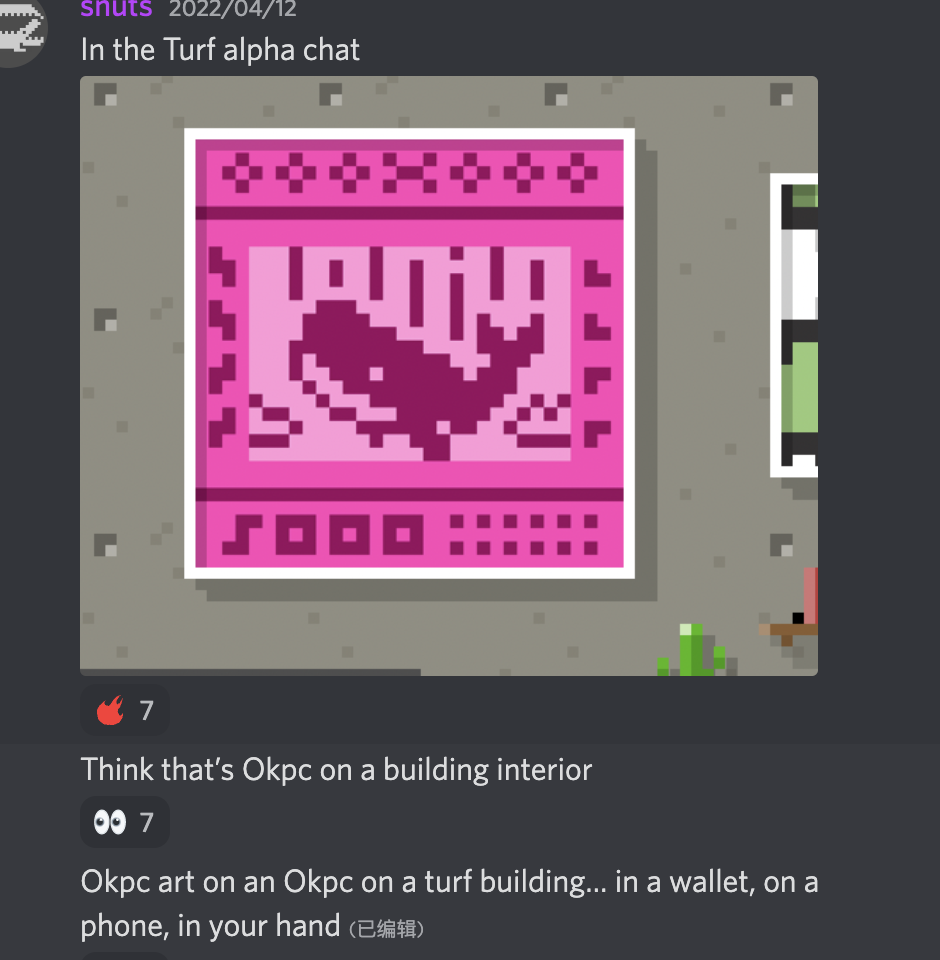
The art on the chain is more convenient for integration and interoperability, such as a nesting doll combination, loaded with OKPC artwork (ERC 1115) OKPC The virtual picture frame (ERC 721) can be freely integrated into the walls of buildings in the open metaverse project Turf under CC0 license.
In fact, keeping the data open and available is the most anticipated part of this project. This openness makes us look forward to more possibilities beyond the basic functions.
More ways to play
The CC0 copyright license followed by OKPC encourages the generation and dissemination of UGC content, while As art on the chain can be publicly accessed by other contracts or web servers, it means that anyone can write OKPC into smart contracts to affect user behavior. This kind of openness makes us look forward to more possibilities beyond the basic functions. In the future, the gameplay of OKPC will be jointly explored by developers, collectors, and the community. More gameplay can be expected. This is the most interesting and exciting aspect of this project. place.
How to play 1:
Copy artwork through the Paint app for on-chain messaging as a way of community voting and expression of opinion.
Paint app allows OKPC players to copy and paste other people's paintings (this feature is only available outside the Gallery), shahruz told Rhythm that this feature is mainly used to express community governance opinions, such as imagining such a scene, when the community votes on decisions , directly let holders draw YES or NO on OKPC to express governance opinions.
Play 2: Public performance art
A total of more than 8,192 OKPCs will become an attention-scarce resource, just like the outdoor billboards erected in Times Square.
Although each OKPC can collect multiple works (the upper limit is 512), only one pixel work can be set as a screen at a specific moment, which means that OKPC will become a kind of public booth, just like an outdoor booth in Times Square billboard. It’s just that unlike physical billboards, it’s not a purely commercial display or attention-grabbing, but a decentralized encrypted native medium through which OKPC holders can collect artwork and set it as a screen This action is used for on-chain identity expression, aesthetic preferences, community affiliation, and even political declarations through votes.
Because of the CC0 copyright license and open data system, it makes it easier to integrate third-party applications and peripherals, which means that it is not a problem to map from the virtual to the real hardware version of the OKPC bulletin board.

Human flesh mobile art exhibition board: NYC def Someone sewed the OKPC display to his clothes during the meetup On the back, the OKPC dynamically displays multiple art collections
How to play 3 :
Extended low-fidelity resolution and color variety with scalable rendering.
< /p>
The initial screen resolution of OKPC is 24x16 pixels, and only 6 colors are supported. However, OKPC supports upgraded rendering, which can combine the original limited colors and The resolution is extended to higher. For example, developers can generate a rendering algorithm through the clock speed (Clock Speed) attribute of OKPC, that is, provide different rendering versions according to the value of the clock speed. If your OKPC clock speed score is higher, Higher rendering, richer colors, etc. are available.
< p style="text-align:center;">
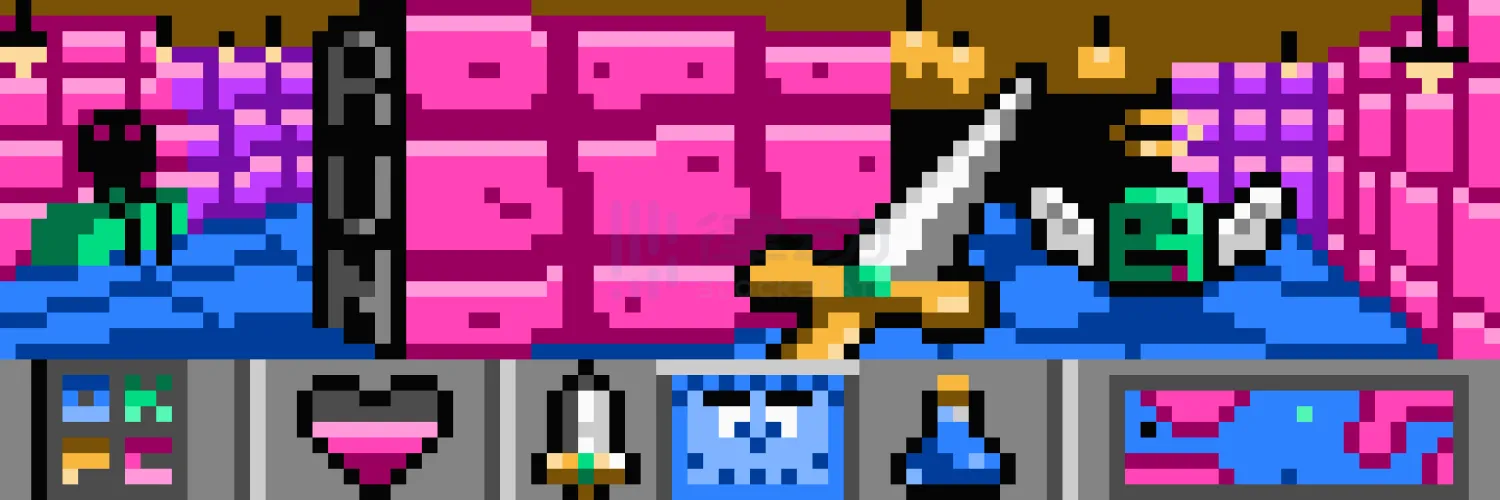
This is another side project called OKPC Billboard that community developers are working on, where OKPC showcases higher resolution and more colors .
How to play 4:
The artist or project party deploys the corresponding contract to set specific rules to issue airdrops or NFT gated threshold access rights. For example, an artist (or maybe a developer) can deploy a contract and write code in it to calculate the data of "the length of time to set an OKPC artwork as an OKPC screen", and based on the result and The weight distributes community benefits to corresponding collectors.
"A piece of art is set as an OKPC screen", which is a more "lightweight" form of staking. Shahruz calls this method "toy like staking mechanism", which is translated here as a fun Staking mechanism. It can be used as an airdrop/whitelist permission screening. Artists can publish corresponding rules through the contract to distribute Token income for their collectors and fans, such as the length of time for setting their specific works to the OKPC screen as a screening condition/multiplier . Compared with the currently popular staking, it does not involve locking Token in a contract. This method is not only simple and straightforward, but also easy to understand for non-encrypted users.
For example, some community members of the on-chain game project Chain Runners are collecting an OKPC NFT of Runner Zero.

Data show, this work named ZER0 has been favorited 20 times, and more than half of the collectors have set it as a screen.
Chat records of Chain Runners members speculate that this may be the Chief Vibe Officer of the project (Chief Vibe Officer)mid can be used as an on-chain certificate for subsequent related welfare issuance. In the chat, someone found and posted the contract code, and ridiculed such behavior as "hack OKPC for Runner 0 information". With the organic growth of OKPC, this situation of confirming the airdrop/permission list by picking up a certain work and calling an external contract may become the norm of OKPC in the future.

Token plan
It is worth noting that shahruz , one of the OKPC developers, also released 3 works in the OKPC gallery.

Shahruz published 3 artworks in OKPC Gallery, from left to right, they are CONSPIRACY, Airdrop and RARE Manny
According to the text displayed in the above 3 artworks, we can confirm that, in addition to the current OKPC itself as In addition to NFT assets, OKPC, as an art ecosystem on the chain, has several other tokens/assets.
About CONSPIRACY, this will be an on-chain artwork created by community members, using collaborative and competitive methods to complete an ERC721 work on the animation chain, and this work will eventually enter the OKPC Gallery for sale. The specific mechanism is currently unknown, but what we know is that Shahruz deployed the CONSPIRACY contract, issued 768 Tokens, each OKPC holder can receive 2 SH Tokens.
The theme of the second work is the airdrop native Token OKGLD, which is mainly used for OKPC native pledge rewards and future OKPC project integration. Regarding the airdrop mechanism, Shahruz told Rhythm that the specific details have not yet been completed, but what is certain is that any collection OKPC holders of this Airdrop work will receive 10,000 OKGLD Tokens. Up to now, this work has been collected 437 times, and OKPC holders can also receive A certain amount of OKGLD.
The theme of the third work is RARE Manny. It is announced that the NFT fragmentation function will be integrated in June. First, Manny game supports fragmented DR MANNYHATTAN, and will gradually integrate other CC0 artworks on the chain.
Welcome to join the official BlockBeats community:
Telegram Subscription Group: https://t.me/theblockbeats
Telegram Discussion Group: https://t.me/BlockBeats_App
Official Twitter Account: https://twitter.com/BlockBeatsAsia
 Related Articles