stETH Turns the Tide: How the Giant Whale Completes Self-Saving by Data Review on the Chain
Original title: "Nansen replay encryption giant self-rescue: How to prevent the collapse of tens of billions of dominoes"
Original source: Nansen
Original compilation: Katie Gu, Odaily Planet Daily
With the further development of the stETH unanchoring incident a while ago, there have been many speculations surrounding this topic. Curve's stETH/ETH pool is out of balance, which apparently can be traced back to the UST unpegging.
Nansen’s report starts with LUNA’s explosion and covers a series of “domino” collapses of crypto billionaires that happened afterwards. After understanding the wallets that trade stETH on a large scale, we drilled down on the various entities and analyzed their transaction behavior. The conclusions include:
stETH is a derivative of ETH, strictly speaking, it does not need to be traded equally with ETH (that is, 1:1 ETH pegged);
stETH The price is still changing, which creates an opportunity for others to buy stETH at a lower price than ETH;
For most of the time, stETH has been trading with ETH (1:1), until the UST/LUNA unanchored. After the UST unanchored, the stETH/ETH exchange rate in the Curve pool dropped to 0.94.
stETH unanchored hits Curve TVL
Before UST unanchored, stETH vs. ETH The price has been relatively equal. After the UST thunderstorm, the stETH/ETH exchange rate began to be lower than 1:1, and the gap has continued to widen since then.
From June 1-7, the ETH/stETH ratio in the Curve pool remained relatively stable at 0.45, while the stETH price was at 0.98 ETH. Signs of a lower stETH/ETH exchange rate began on June 7, when ETH balances decreased and stETH balances increased.
From June 9th to June 10th, both ETH and stETH balances decreased by more than 100,000, as stETH continued to trade at a discount of 0.97. Given the unstable macro environment, this led users to further de-risk their positions by removing liquidity and/or selling stETH for ETH. The loss of liquidity and additional selling pressure put further pressure on stETH, with the exchange rate falling to a low of 0.94 on June 11.

Although the stETH exchange rate slightly recovered to 0.96 on June 12, due to the continuous outflow of Curve pool transfers, Holder confidence remains low. Curve TVL lost nearly $1 billion in just two weeks.

Large redemption earlier than 4 days before the drop
In order to understand what caused the price of stETH relative to ETH Down, we looked at wallets that made a large number of stETH transfers in June. Although the first price drop occurred on June 7, the mass redemption began on June 3.
The chart below shows the largest transactions on stETH between June 1st and June 12th. Based on this data, we analyzed the top transactions for each entity, mainly between June 3rd and June 11th.

The table below shows the top 11 wallets that made a large number of stETH transfers from June 3rd to June 11th, in chronological order Alignment:

What is the encryption asset management platform Amber Group doing?

Amber Group (0x12b5c9191e186658841f24319433c47278f68e075) from the stETH-ETH Curve pool Withdrew all the liquidity, a total of 83,380.47 stETH and 26,733.52 ETH. At the time, the price of stETH was 0.96 ETH. With the Curve pool’s ETH/stETH ratio at 28%, Amber Group is likely looking to “keep in” liquidity before more ETH is drained.
From 4:05 on June 10 to 7:27 on June 11, Amber Group made a total deposit to FTX through 6 separate transactions The address sent 77941 stETH. Considering the very thin liquidity of FTX's stETH/USD market, it is unlikely that Amber will sell their stETH on the open market. There were very few orders at the time, selling just $16K would drop the price by 2%, and the market value at the time they held the stETH position was about $125M. It is possible that Amber Group did an off-exchange deal with FTX, or they were just trying to cover their stETH position with a CEX like FTX.
Encrypted lending platform Celsius
The wallets to be analyzed below include:

From June 8th to June 9th, Celsius extracted a total of 50,000 stETH. Funds are being sent to Wallet A close counterparty - Wallet B, then through Wallet C, and finally into FTX deposits, which could be a signal for an OTC (over-the-counter) trade.


During the same time period, wallet D sent additional funds to wallet A in the form of WBTC, USDT , USDC , DAI. These funds are either used to increase collateral or to pay down debts of Aave and Compound .


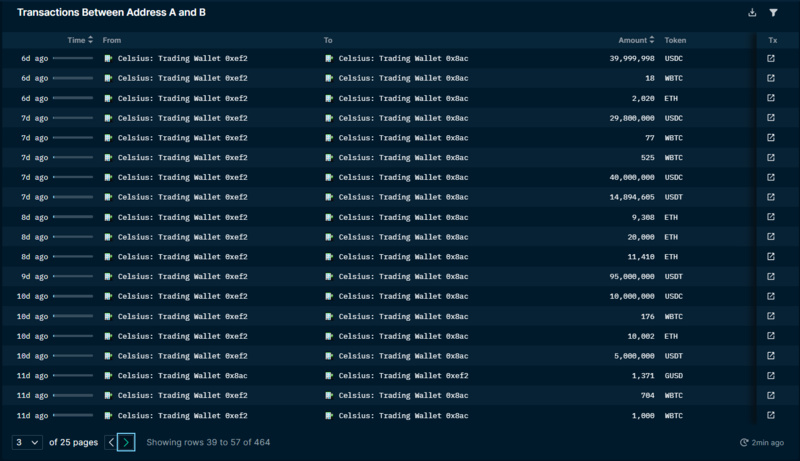
Considering market fluctuations Celsius may face liquidity problems in order to meet customers’ redemption needs. With the stETH-ETH Curve pool depleted and liquidity drying up, Celsius will not have enough liquidity to exit its stETH position. Within 6-12 months after the merger of Ethereum, stETH cannot be exchanged for ETH, and the only intermediary that can trade ETH is the secondary market. Since 409,000 stETH is deposited into Aave, and only 127,000 ETH is left in Compound , Celsius cannot "offload" the stETH on the chain without incurring slippage losses. Also, CEX has negligible liquidity and trading volume compared to Curve pools, making dumping via CEX impossible.


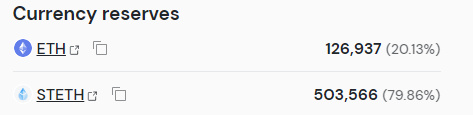
In addition, in 6 Between April 8th and 12th, Celsius borrowed USDC and USDT from Compound and Aave using wallet A , and sent funds to wallet E, presumably to cover redemptions. A total of $59.5 million in USDC and $2 million in USDT was borrowed on-chain. Wallet A also withdraws 112,500 ETH and sends it to wallet E.
To maintain a healthy loan-to-value ratio, they continually send funds from wallet D to wallet A to repay loans and replenish collateral.
June 10-12: After the Celsius platform stopped withdrawals, wallet B sent a total of 108,900 ETH to wallet F , The wallet then sent the same amount to 0xfdc8eb4815e58152c956c367323b5e08d29f0438 (the FTX deposit address), which was then transferred to 0xc098b2a3aa256d2140208c3de6543aaef5cd3a94 (the FTX address).
These funds in wallet B come from several wallets - 52,800 ETH in wallet A , 42,000 ETH in wallet F ETH, wallet & nbsp; D & nbsp; 136,000 ETH, 0x07ce9e0375497C81C603C63FFFBC03860C23F9 1400 ETH and 0xe081AB7D9E65B3E2B6FCAF2Eceb 97's 1000 ETH.
At 1-2 o’clock on June 13, wallet B also sent a total of 9000 WBTC to 0x76a05277b81b9ca6c06c9ab4136116fc53e9c9e1 (FTX deposit address). These funds all come from wallet A.
As of June 22, Wallet A is still the #1 lender of ETH (including wETH and stETH) and wBTC collateral on Aave and Compound /Borrowers, with a total collateral value of nearly $1 billion. Right now, as long as their collateral prices don't suddenly drop by 37%, their healthy ratio remains relatively strong. On Aave, the health ratio is 1.88 (meaning the price would need to drop 47% to be liquidated). Compound, on the other hand, has a P/E ratio of 1.58 (meaning that the price would need to drop 37% to be liquidated).
Whale Wallet
In addition to the above entities, we also looked at Whale wallets with a large number of stETH transactions between the 15th and narrowed down to 7 key wallets.
1. Wallet address: xd275e5cb559d6dc236a5f8002a5f0b4c8e610701 (DEX major trader)
< /p>

At 15:18 on June 3, the wallet withdrew all liquidity of 47353 stETH and 3991 ETH from the stETH-ETH Curve pool. The ratio at the time was 0.978 stETH/ETH. In less than 20 minutes, the wallet had deposited all the money in Aave to replenish the collateral. From 13:40 on June 10 to 15:54 on June 13, the wallet traded ETH and stETH multiple times, earning a net profit of 3421 stETH, which was finally deposited into its Aave loan position. There doesn’t appear to be any malicious activity here, the wallet is simply taking their liquidity out of Curve and depositing it in Aave as collateral, likely to prevent liquidations during market volatility.
2. Wallet address: 0xca2c8b7664fa4169bd85da72a968dab9b78f5882 (Token major), 0x7ccd3befb83154b99c02f4dd5aec5dd76f1ee0b2 (ETH major)< br>


< /p>
During 9-10pm on June 6, two wallets withdrew all liquidity from the stETH-ETH Curve pool: 54076 stETH/23515 ETH and 54103 stETH/23489 ETH. Both wallets still hold all stETH, at the time liquidity was removed from Curve, the stETH/ETH ratio was 0.978. It is likely that both wallets wanted to avoid illiquidity in the pool and decided to pre-emptively remove liquidity.
3. Wallet address: 0x1b2382E16268c26F5dfC814a84ae156671362B5C, 0x2E85891e813b9Bd72db0b9065414B9888D1FDFDD

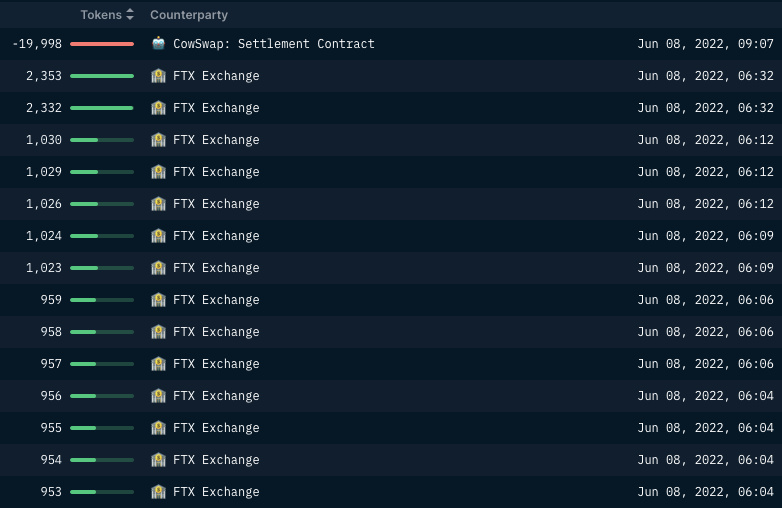
June 8 From 4:57 to 6:32 on the same day, the two wallets received 22855 stETH and 19998stETH from the FTX trading platform wallet respectively. At 7:45 on June 8th, 0x1b exchanged all 22855 stETH for 22323 ETH via Cowswap, and 0x2E exchanged 19998 stETH for 19481 wETH via CoW Protocol. Over the next two days, the exchanged ETH was sent to their FTX deposit address and the wallet was emptied. Note that both wallets added ETH from FTX and are brand new wallets.
4. Wallet address: 0xcde35b62c27d70b279cf7d0aa1212ffa9e938cef

The wallet withdrew all liquidity of 38,420 stETH and 2,706 WETH from the stETH-ETH pool at 2:42 on June 10. All stETH funds are then deposited into their Aave loan to replenish collateral. Between June 10 and 12, they began to further reduce risk by repaying the Aave loan.
5. Wallet address: 0x5f8f52ddc15990a45ba5aab85dfd9fdfae11b661

The wallet cleared all liquidity of 24607 stETH and 6689 ETH from the stETH-ETH pool at 17:23 on June 10. All stETH is still held in the wallet. Again, the behavior of the wallets doesn't mean anything suspicious, probably an unwillingness to provide liquidity knowing that the pool could drain all the ETH.
Cryptocurrency Hedging Fund - Three Arrows Capital
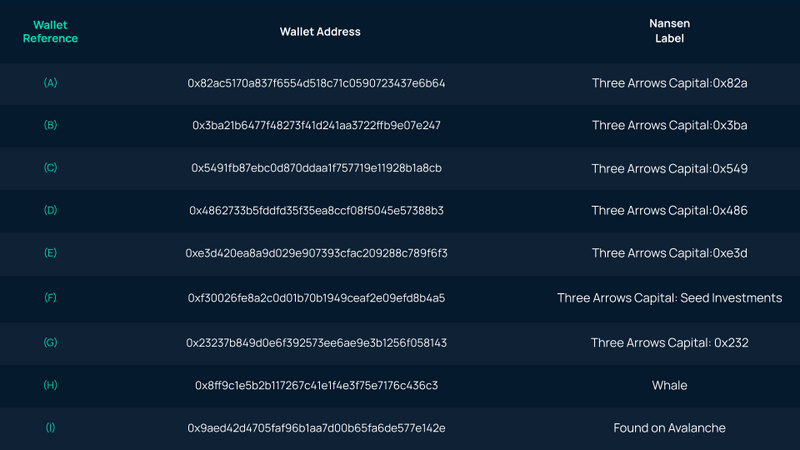
In June From 1st to June 11th, we saw a total of 18050 ETH transferred from 3AC to Deribit, most of which were delivered after June 7th. These ETH deposits into derivatives may be used as additional collateral to protect 3AC's current positions or to take new positions, thereby hedging 3AC's current portfolio.

At 1:41 on June 7, wallet A withdrawn a large sum of 29054 stETH from BlockFi , and send it directly to wallet B. Shortly after, the received 9710 stETH was deposited into Aave as collateral.


At 2:20 on the same day, 3AC became more cautious, because the wallet B used the previously deposited 9709 stETH as a pledge, and borrowed 7000 ETH from Aave. Within 5 minutes, the 7000 ETH was swiftly sent to 3AC’s FTX deposit address, possibly for sale. The trade may be used to hedge against downward pressure on ETH prices.


On June 8, perhaps the 3ACs were still quite happy with their positions. It is observed that wallet B withdraws 1785 stETH collateral from Aave, and wallet E exchanges 9400 wETH for 9652 stETH on 0x Protocol.


Shortly after the transaction, the wallet E proceeded to deposit 700.48 wETH and 9652.89 stETH into the Curve stETH centralized pool.

Interestingly, between June 8th and 9th we saw wallet D marked from Nansen 2500 ETH was received in the highly active wallet (0x962fe6f349c320417e1992443c0852b1d95060f2), and 1700 ETH was received from Deribit; 4000 of which were resent to FTX.
On June 11, the wallet E took liquidity from the Curve stETH centralized pool added on June 8, and then sent 10387.66 stETH to Wallet F, which then deposits the received 7282.4 stETH into Aave as a pledge, and borrows 4790 ETH, which is sent directly to Deribit.



On June 13th we started to see signs of panic. Wallet G starts to unwrap its wstETH and sells it via Cow Protocol for wETH. Only this wallet exchanged about 46,100 wETH for 49022 stETH in 5 transactions on Cow Protocol that day.

A large portion of these wstETH is confirmed to come from Wallet I, and between June 13th and 14th, this wallet alone will 34,600 wstETH was transferred to wallet G.

Wallet G also withdraws 675.1 steCRV liquidity from the Curve stETH pool and exchanges it for 679.9 ETH. Interestingly, wallet G also sent two large transactions to wallet H , which was labeled a "giant whale" by Nansen. steCrv Token represents the share in the Curve stETH-ETH pool.

The first of these two transactions was a transfer of 12967 ETH to H wallet at 4:11 on June 13. At around 17:35, another transaction with an amount of 33856 ETH was subsequently transferred to the same wallet H.

On June 14, 3AC actively repaid Aave's debt.
Since 8:08, Wallet D has received 14,950 ETH from FTX in 9 transactions. Of these, 4790 ETH was transferred to Wallet F at 8:17, and then at 8:19, they were transferred to Aave to repay the loan.


On that day, wallet B and wallet F also banned stETH as collateral on Aave, marking with their Aave positions closed. At 9:10, at least 88626 stETH was raised from Aave.


Throughout the morning, we observed wallets B/C/F withdrawing stETH collateral from Aave and swapping the stETH they owned (including previously withdrawn from Aave) for 0x Protocol and ETH on CoW Protocol , thereby clearing the stETH position. A large portion of this ETH was also used to repay 3AC’s loan on Aave. Subsequently, the wallet C sold the previously received ETH to DAI.
Wallet B has traded 38900 stETH to 36718 ETH in 2 transactions;
Wallet F used to trade 7284 stETH into 6981 ETH.


From June 15th, we observed that 3AC closed its ETH/stETH position by exchanging Tokens for stable coins. For example, as of June 16, Wallet B continued to sell the remaining stETH held in the wallet, totaling approximately 19.8 million USDT on 0x Protocol.



Summary
There has been a lot of talk recently about stETH "unanchoring", but the foundation of the current situation was laid during the UST crash a month ago.
Observing the main liquidity pool of stETH on Curve, it can be seen that the first major liquidity drop occurred during this period, and the stETH in the pool And the reserves of ETH are seriously out of balance.
Terra The largest protocol Anchor is the gathering place for a large number of stETH, with Terra finally crashing, the vast majority during May 7-16 Back to mainnet. On May 8th, a single entity transferred 74,700 stETH from Terra back to the mainnet via a cross-chain bridge, and sold most of it to UST, possibly to resist UST's unpegging. Later cross-chain activity was likely driven by fears of Terra crashing and stETH getting stuck, or being drained due to the weakened security of the chain.
This increases the selling pressure on stETH, which in turn may prompt many LPs in the stETH/ETHCurve pool to withdraw their liquidity, the largest being 3AC and Celsius , a total of $780 million worth of liquidity was withdrawn on May 12 (it is worth noting that although a large amount of liquidity was withdrawn from the pool in the form of stETH, neither 3AC nor Celsius was a big seller of stETH during this period, nor did not retain most of stETH). As a result, some other large players with (over)leveraged stETH/ETH positions on Aave attempted to liquidate their positions, which relied on a stETH:ETH price ratio close to 1, causing more selling pressure on stETH. Currently the main stETH Curve pool has not recovered and still maintains significantly lower liquidity and severe ETH/stETH imbalance.
During recent events, withdrawals from Curve pools have shown that many want to de-risk their investments. Big players like Celsius and 3AC were affected by the market downturn, which further exacerbated the stETH/ETH price skew. In Celsius' case, maintaining liquidity to satisfy customers' redemptions may be its top priority. Therefore, they must wean themselves off their dependence on other liquid assets while protecting their leveraged assets by paying down debt. The suspension of withdrawals is likely to help prevent a bank run while giving Celsius time to realign and manage risk in its investments.
From the on-chain data, we observe that 3AC is unlikely to cause a significant deviation between the price of stETH and the price of ETH between June 9th and 11th, and it seems that Victims of this "contagion". 3AC's lack of sound risk management, coupled with excessive leverage, can be said to be a bomb detonated by stETH's "unanchor". As previously mentioned, 3AC did not begin unwinding its stETH positions for ETH and stablecoins until June 13 and 14, most likely reducing its risk and reducing losses.
Original link
Welcome to join the official BlockBeats community:
Telegram Subscription Group: https://t.me/theblockbeats
Telegram Discussion Group: https://t.me/BlockBeats_App
Official Twitter Account: https://twitter.com/BlockBeatsAsia

 Related Articles