Can the future Clarity Act intercept stolen funds?

TL;DR
· Republican Senator Lummis claims that the intelligence-sharing pilot set up by the CLARITY Act could have stopped the $6.3 billion stolen on October 29, and that the bill failed to pass the Senate in September.
· What actually froze about $3 billion was the blacklists of stablecoin issuers such as Tether and Circle; Bitcoin and Ethereum have no such switch.
· Related tickers: BNB, BTC, ETH, USDT/USDC, and U.S. stocks Coinbase (COIN), Robinhood (HOOD).
U.S. Republican Senator Cynthia Lummis of Wyoming said on X on November 1 that after about $6.3 billion in crypto assets were stolen on October 29 and moved cross-chain within minutes, the intelligence-sharing pilot between crypto firms and federal law enforcement designed in the CLARITY Act could have stopped the stolen funds.
That claim was rebutted by Amanda Fischer, chief operating officer of the financial reform advocacy group Better Markets. A former chief of staff at the U.S. Securities and Exchange Commission, her core judgment is that CLARITY could not have saved the situation from this hack, and would instead entrench the regulatory vacuum around decentralized finance and mixers; custodial trading platforms are themselves honeypots.
The bill itself did not become law. On September 15, the Senate failed to advance the motion by 49 to 50, with four Republicans voting against and zero Democrats in favor. Formally it is not dead, but it has effectively stalled within this legislative cycle.
The timeline was extremely tight. Stolen on October 29, attributed by the FBI on October 31, posted by the bill's drafter on November 1, and the midterm elections voted on November 3. A crypto theft of rare scale was placed into the final 48 hours of the legislative window.
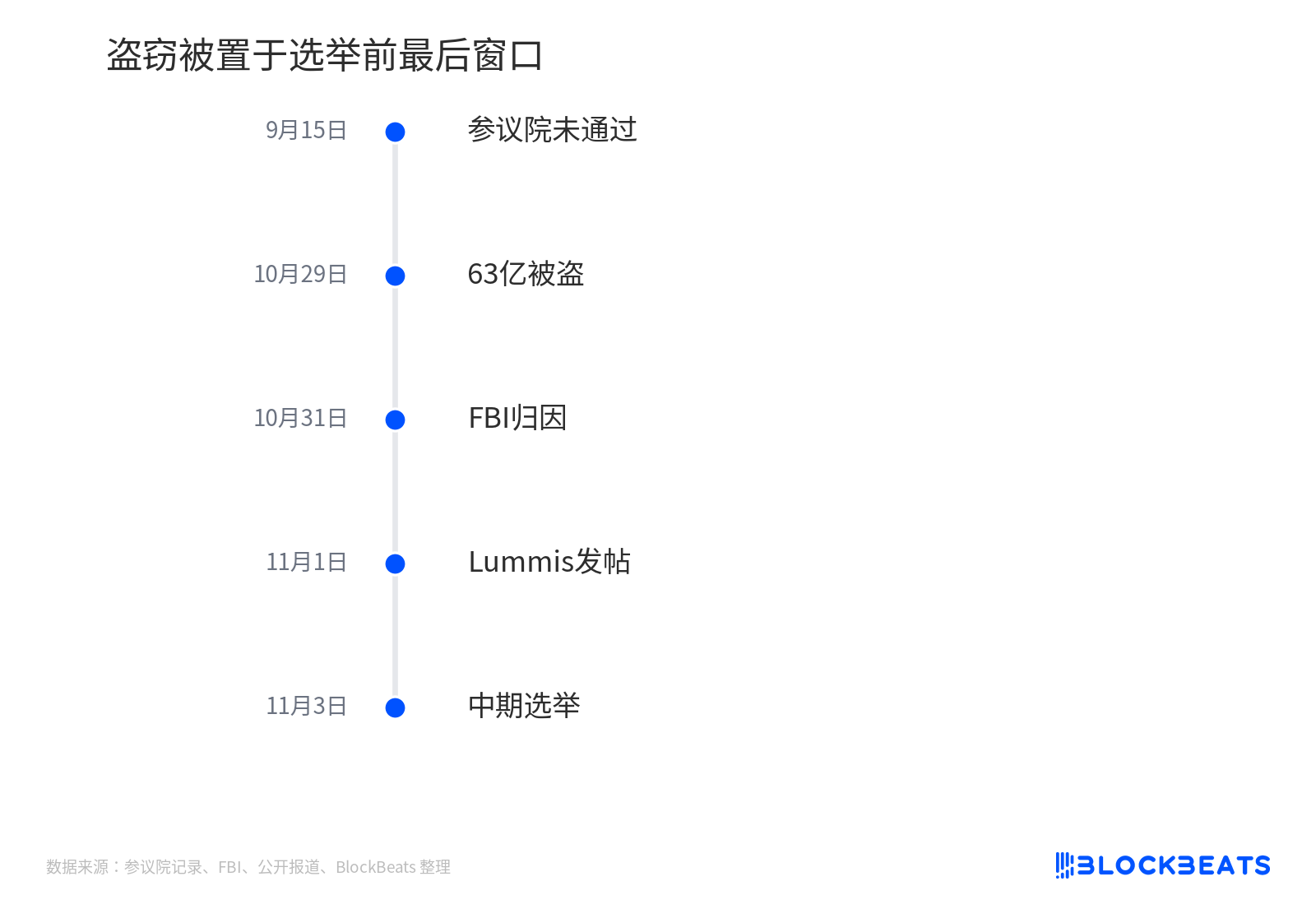
The theft was placed in the final window before the election
To judge whether Lummis's claim holds, one must first distinguish two things. Hot wallets are online fund pools that trading platforms use to cash out at any time; what was breached was the trading platform's signing path, not the Bitcoin protocol.
Issuer freezing is like a bank blacklisting an account. The issuers of USDT and USDC can lock addresses dead, while Bitcoin and Ethereum have no such switch. The question then becomes whether this theft proves the absence of a bill or the absence of a freeze key.
In 20 Minutes, $6.3 Billion Left About 10 Chains
At 20:05 UTC on October 29, attackers drained assets from Binance hot wallets in batches, covering about 10 chains, with the main transfers completed within 20 minutes. Of that, approximately $3.79 billion was in ETH and about $1.47 billion in BTC. Blockchain analytics firms Elliptic and TRM put the scale at between $6.3 billion and $6.36 billion.
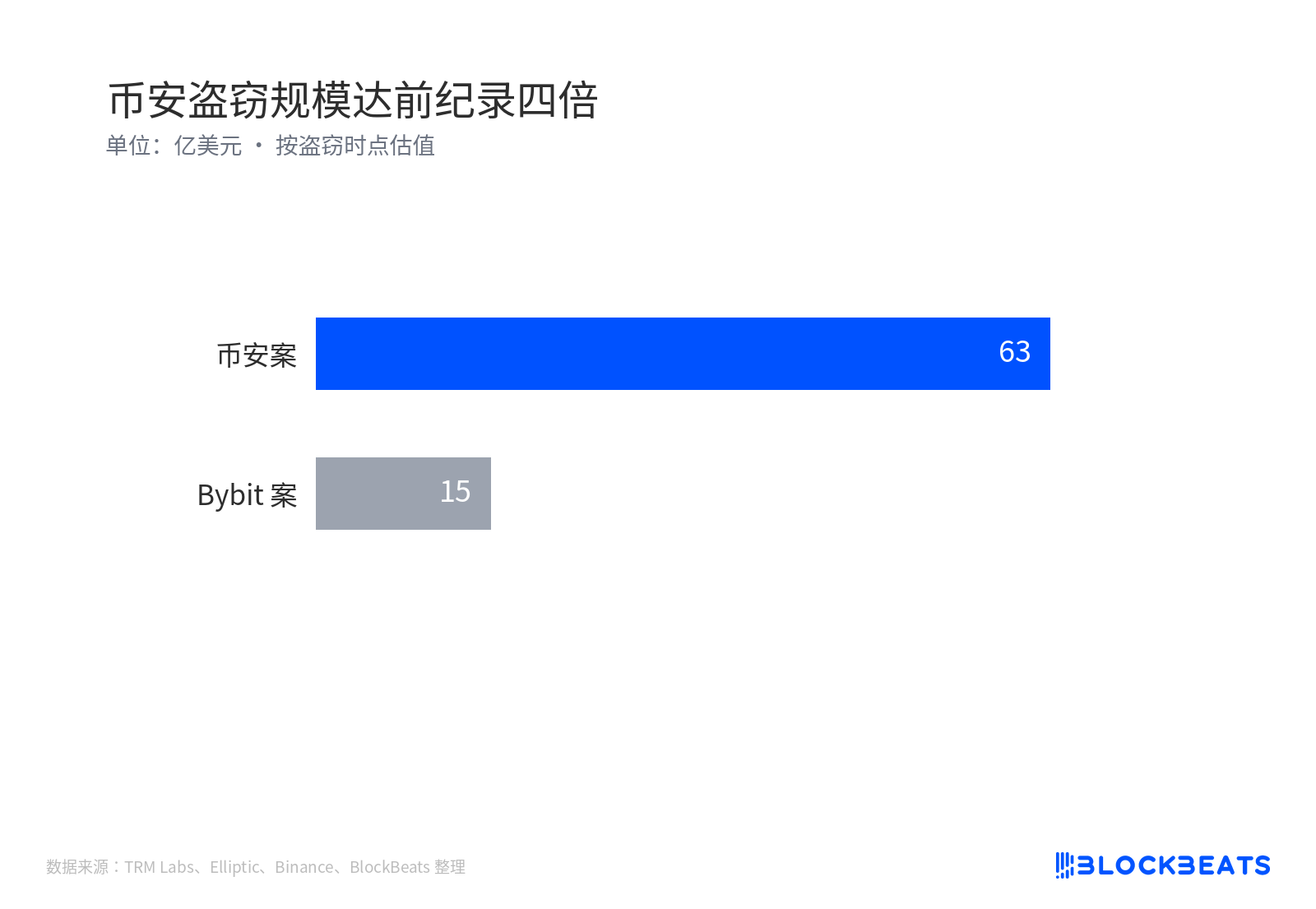
Binance heist scale reaches four times the previous record
On October 31, the FBI, the Secret Service, and the IRS Criminal Investigation division issued a joint statement attributing the theft to North Korea under the operation name TraderTraitor, part of the Lazarus system. The statement said the attackers were primarily converting the stolen funds into ETH, preparing to move them out via decentralized finance and instant exchanges, and published a list of addresses, asking the private sector to proactively block them.
The wording of this statement is worth noting. It requests blocking, not freezing. For native coins with no issuer, the only thing law enforcement can provide is a list.
The Bill Reattaches the Theft Case on the Eve of the Election
Lummis first posted a more blunt message on October 30, saying law enforcement could legally freeze with a single phone call without waiting for a court. The more widely circulated one is this post.
Fischer's rebuttal directly targets this gap. She argues that CLARITY cannot save this hack, and would instead entrench the regulatory vacuum around decentralized finance and mixers, and that custodial trading platforms are themselves honeypots. By her estimate, about half the assets were frozen, and at least $2.4 billion had already flowed out.
Market reaction provides another contrast. On October 30, Coinbase and MicroStrategy fell about 12%, Robinhood fell about 9%, BTC briefly touched $76,000 before returning to around $78,000, and Wall Street sell-side immediately called for buying the dip. Stock prices were trading on exchange security incidents and risk premiums, not being treated as a failure of Bitcoin or the dollar system.
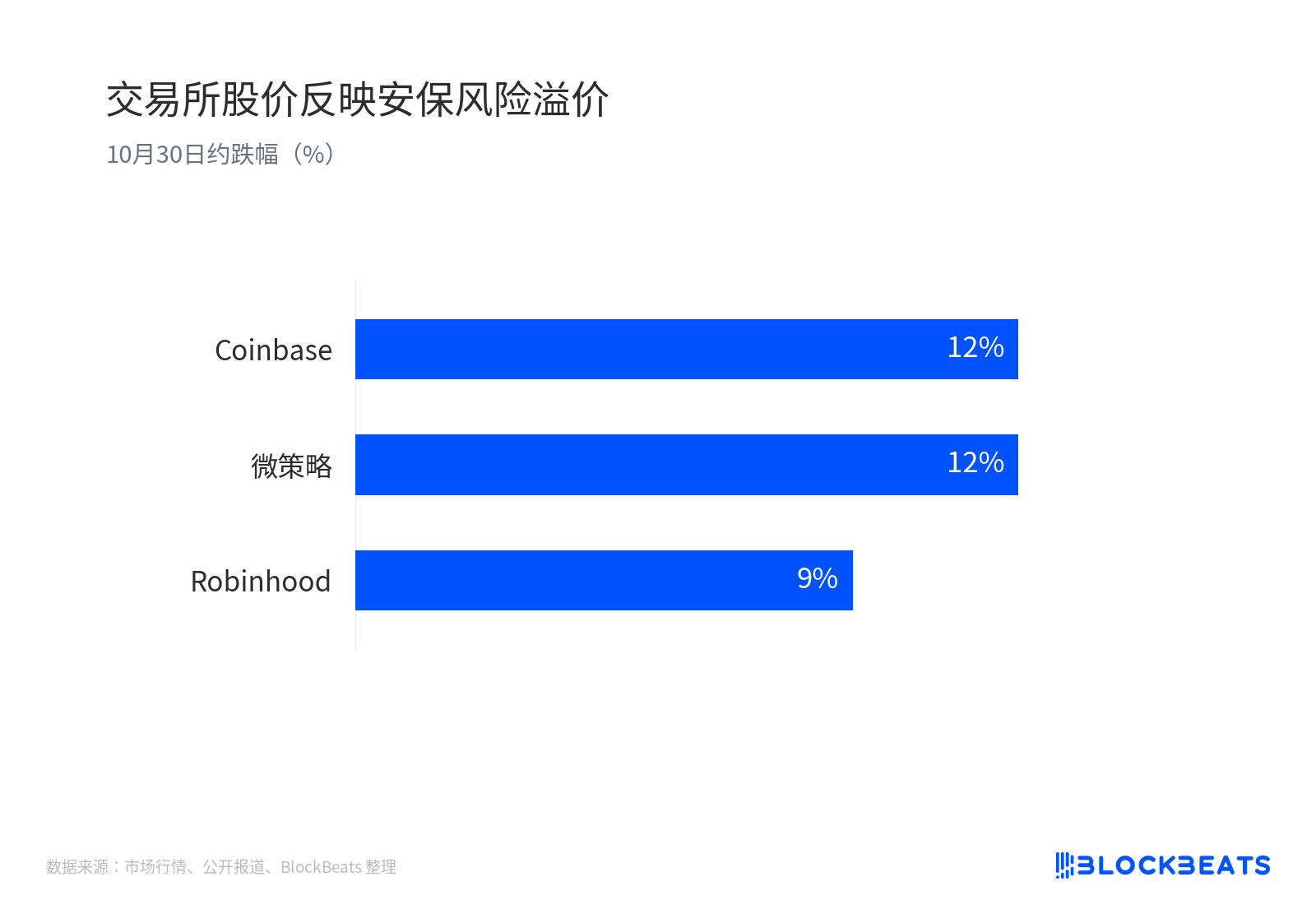
Exchange stock prices reflect security risk premiums
$3 Billion Frozen in the Issuer's Hands
The freezes did happen, and they happened outside the legislation. Tether froze over $1.5 billion, Circle about $800 million, Ripple about $200 million, and together with other issuers, the total is about $3 billion.
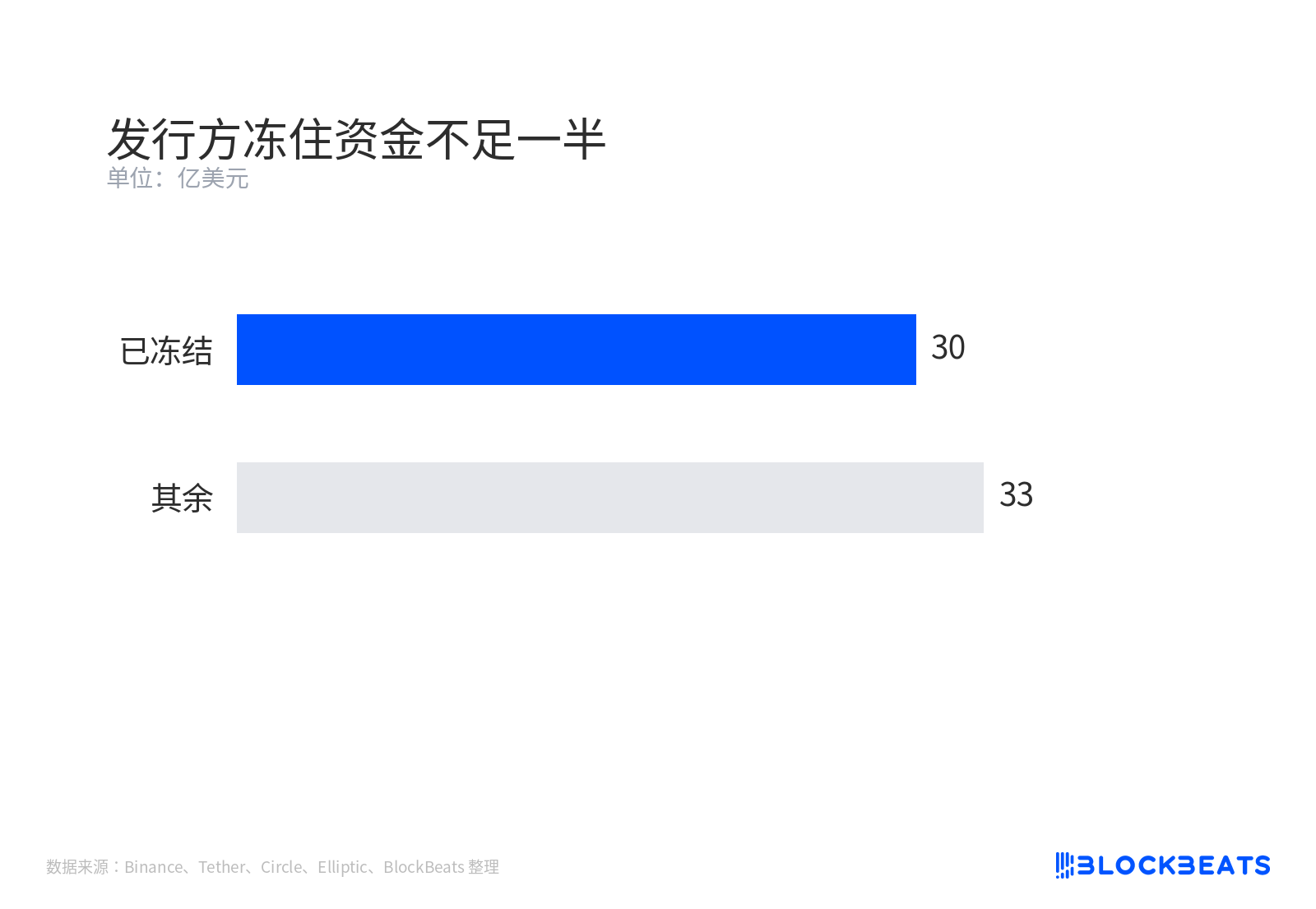
Issuers froze less than half of the funds
What was locked was basically stablecoin-form funds; the rest was mainly BTC and ETH, which have no issuer and therefore no key to blacklist.
Cross-chain bridges gave a shorter time window than case filing. Attackers completed cross-chain transfers and swaps before law enforcement agencies issued assistance requests, so by the time the list was published, the only thing that could be locked was the portion still sitting in stablecoins. The freeze radius equals the issuer's control surface, not the radius of the intelligence memorandum.
Coverage and recovery are two different things. Binance used its own corporate funds to cover about 90% to 95% of affected assets, resumed withdrawals in phases on November 1, and saw large net outflows on the first day of resumption. Customers got their money back because of the trading platform's balance sheet, not because stolen funds were recovered.
The dispute over the text also lands on this point. Patrick Wilson, general counsel of the Solana Policy Institute, rebutted that Fischer misread the provision, and that the draft safe harbor explicitly protects issuers' voluntary temporary freezes made based on a reasonable belief of illegality, without requiring a court order.
Pilots can shorten response time, but cannot change the freeze radius
The Senate's September substitute text separated the two matters. Section 10203 is a voluntary intelligence-sharing pilot led by the Treasury Department, allowing eligible companies to connect directly with federal law enforcement. Section 10305 is a private litigation safe harbor for good-faith temporary freezes; law enforcement requests must be in writing, point to specific wallets, addresses, accounts, or transactions, and do not require companies to go beyond existing legal freezing obligations.
These two sections cannot be merged into "sharing intelligence means you can freeze." The pilot improves attribution speed and the standardization of requests, while the safe harbor reduces companies' hesitation over fear of being sued. Neither changes the physical constraints on outflows in the first hour, and neither has mandatory force over cross-chain bridges and non-custodial protocols.
Several points remain unconfirmed. Whether the pilot is voluntary or mandatory, which companies it covers, whether Binance's U.S. entity is included, and whether there is a response deadline are still disputed. These three points determine how much the coordination can shorten the cross-chain window.
The numerical basis also needs to be clarified. $6.3 billion is the valuation at the time of theft, $3 billion is the amount of freezes already executed, and 90% to 95% is the proportion of customer assets covered by the trading platform; the three cannot be directly subtracted to derive how much is still in the hackers' hands.
For the bill to proceed to another vote, it must first address three questions: whether the pilot is mandatory, who it covers, and how quickly it responds. Until then, how much the next theft can be frozen still depends on the radius of the issuer's blacklist, not on how quickly Congress writes intelligence provisions.
Welcome to join the official BlockBeats community:
Telegram Subscription Group: https://t.me/theblockbeats
Telegram Discussion Group: https://t.me/BlockBeats_App
Official Twitter Account: https://twitter.com/BlockBeatsAsia