Will Celsius unstaking ETH cause stETH to decouple again?
Original Title: "Does stETH have a liquidity issue? Lido says no but not everyone's convinced"
Original Author: Tim Craig, DLNews
Translated by: Luccy, BlockBeats
Editor's Note:
On January 12th, according to on-chain analyst ai_9684xtpa, Celsius released another 14,000 ETH pledge and subsequently recharged it into Coinbase and FalconX. In addition, in response to Celsius' recent large-scale transfer of ETF, crypto researcher @0xBoboShanti studied Celsius' wallet data and pointed out that Celsius' ETH has a gap.
Related Reading: "Digging into the data behind Celsius: holding over 500,000 ETH, multiple violations exist internally"
On the other hand, Tim Craig, a DeFi reporter for DL News, believes that this behavior may lead to a decrease in stETH liquidity from the perspective of pledge extraction blocking, which may cause mass liquidation of users who use stETH for borrowing. BlockBeats has translated the original article as follows:
At the beginning of the year, the defunct cryptocurrency lending platform Celsius announced that it would withdraw the previously collateralized value of $1.6 billion in Ethereum on the blockchain.
This action immediately caused the staking withdrawal queue of Ethereum to be blocked, preventing other Ethereum stakers from executing withdrawals.
For most stakers, waiting a few days to withdraw their Ethereum may just be a minor inconvenience.
However, according to some analysts, such delays could pose significant problems for Lido and stETH. stETH is the largest Ethereum liquid staking token with a circulating value of over $23 billion USD.
"The decline in stETH liquidity is a serious issue," said Riyad Carey, an analyst at cryptocurrency research firm Kaiko, to DL News.
My concern is that due to the low liquidity and queue congestion, stETH may once again decouple from Ethereum. This could result in massive liquidations for those who have utilized the token in lending protocols.
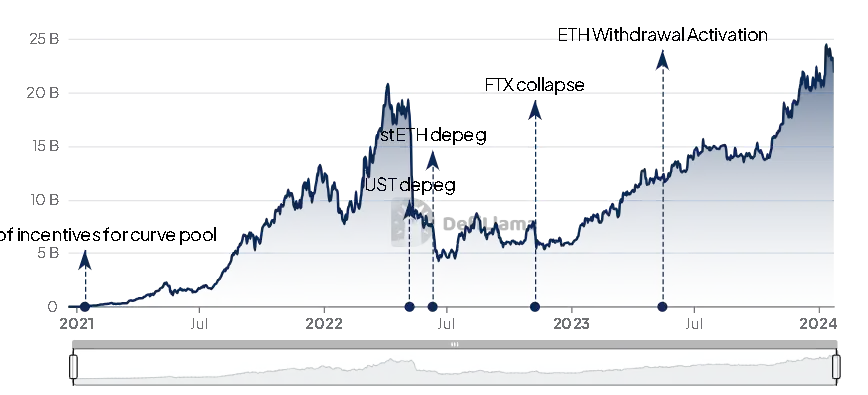
Although there was no depeg this time, many people are concerned that if the cryptocurrency market suddenly drops again, the Ethereum staking queue may quickly lengthen as investors are eager to unstake their Ethereum and cash out.
Lido insists that stETH has sufficient liquidity and has taken measures to prevent depegging from happening again.
However, as stETH becomes increasingly connected to the wider DeFi ecosystem, the threat posed by potential liquidity crises will only become more apparent.
Insufficient Liquidity
According to the stETH liquidity Dune dashboard data from Lido, there is currently approximately $274 million in liquidity in decentralized exchanges.
The protocol lead of Lido, Marin Tvrdić, stated in a recent article on X that the liquidity of stETH on centralized cryptocurrency exchanges is in the seven to eight figures.
However, Carey believes that the current liquidity of stETH is insufficient.
He said that there are over 3 billion US dollars of leveraged bets on stETH in the DeFi lending protocol Aave. If these positions suddenly need to be unwound in the context of a congested Ethereum validator exit queue, there will not be enough liquidity to support them.
Due to the validator queue being blocked, Lido is unable to immediately convert stETH to Ethereum. This means that even the exchange pool for trading between stETH and Ethereum needs to make up for this gap.
If stETH starts to deviate from its anchored price in an imbalanced demand situation, it may trigger a series of liquidations on Aave. "If any large stETH holder becomes impatient and sells off, things could get really bad," Carey said.
And Carey is not the only one who is worried.
The co-founder of stablecoin protocol Gyroscope, Ariah Klages-Mundt, stated that there is a "high probability" of depegging for stETH in the future.
"Don't be too surprised if it happens at some point. In the financial industry, you must be prepared for such things," Klages-Mundt said in a recent X article. Although not all Ethereum researchers explicitly mentioned Lido's stETH, several influencers shared similar views.
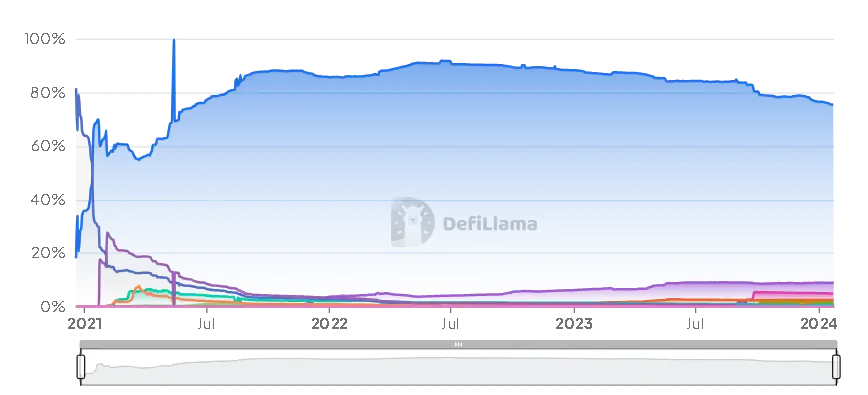
Utilizing stETH in the lending market, such as Aave, is a popular strategy to increase DeFi returns. Investors deposit stETH into Aave and borrow Ethereum, then deposit it into Lido to receive more stETH.
Repeating this cycle will compound the staking rewards on stETH, but there is also a risk that investors may be liquidated if the value of their stETH collateral relative to the borrowed Ether decreases.
Excellent Record
However, not everyone believes that the current level of liquidity in Lido is a problem.
Lido DAO's anonymous contributor Adcv told DL News that the claim of insufficient stETH liquidity in Lido's current state is "inaccurate" based on "observable on-chain evidence".
"stETH has institutional-level liquidity on both on-chain and off-chain trading venues, second-layer AMMs, and major CEXs on the mainnet," Adcv said.
In order to support his argument, Adcv pointed out Lido's excellent record in fulfilling stETH redemptions.
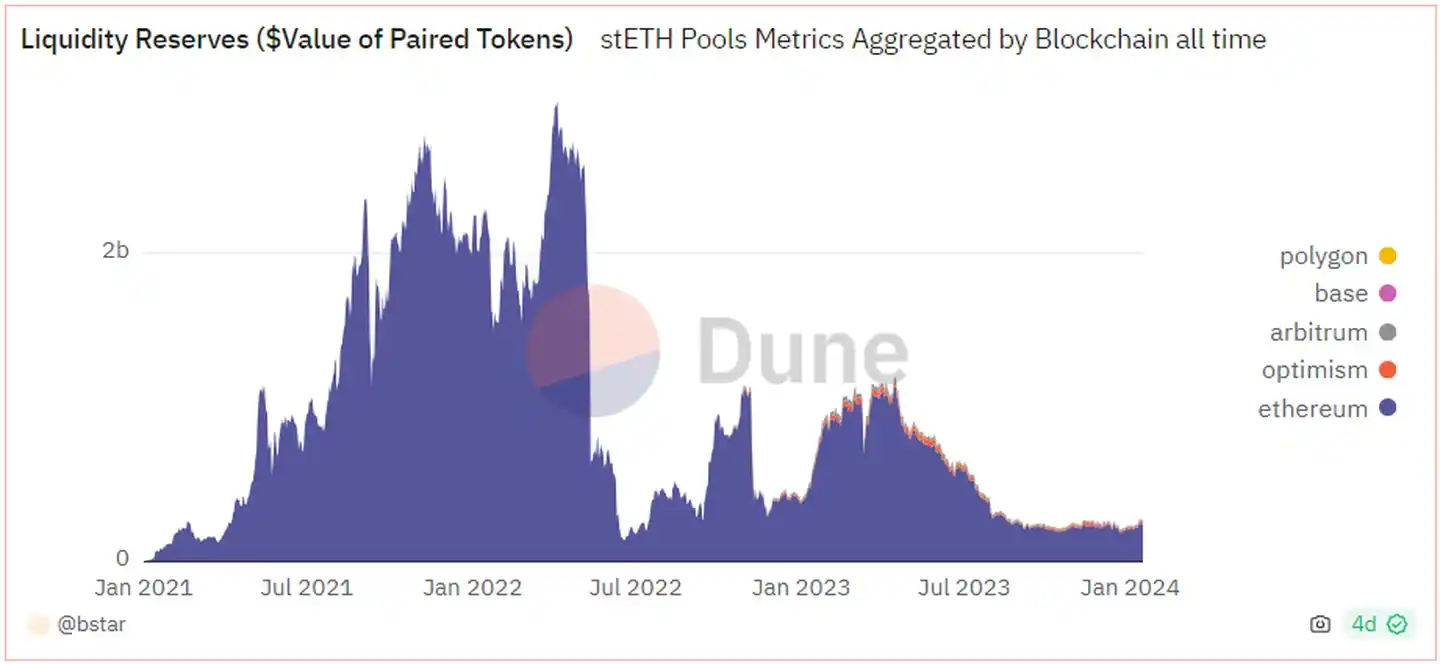
He said that since Shapella upgraded and launched withdrawals last year, less than 30,000 transactions out of the 3 million Ethereum extracted from Lido require more than 120 hours to process.
On the other hand, Aave relies on DAO service providers (such as Chaos Labs and Gauntlet) to assess the risks of allowing its users to utilize stETH.
Last November, Chaos Labs proposed that Aave could increase the supply cap of stETH deposits by 1.1 million tokens "without introducing significant risks to the protocol."
Welcome to join the official BlockBeats community:
Telegram Subscription Group: https://t.me/theblockbeats
Telegram Discussion Group: https://t.me/BlockBeats_App
Official Twitter Account: https://twitter.com/BlockBeatsAsia

 Related Articles