Combing the 5-year trend of the encrypted Token economy, how is the Token distribution iterated?
Original author: Robin D. Ji, founder of Liquifi
Original compilation: fyj, BlockBeats
This article is based on the speech of Liquifi founder Robin D.Ji on social media.
Considering launch in crypto market Token? Or award future tokens to employees and investors? We've run some analysis on the latest tokenomics benchmarks and trends to help you plan your key token decisions.

"Give me motivation and I'll give you feedback";
< /p>
Clarifying who can receive your Tokens and how they are distributed will affect Token perception and performance.
This helps identify the core team and early supporters Are there appropriate incentives in place.
Many projects have failed, This stems from core team members and early backers "dumping to the community", a situation that either just wanted to "make a quick buck" or didn't implement vesting and lock-ups to prevent early sell-offs.
So how can cryptocurrency founders and operators prevent this from happening?
For this reason, We put together a report of key benchmarks and insights on token attribution and distribution, using this data:
(b) Fundraising Strategy;
(c) Participation threshold and budget for community incentives;
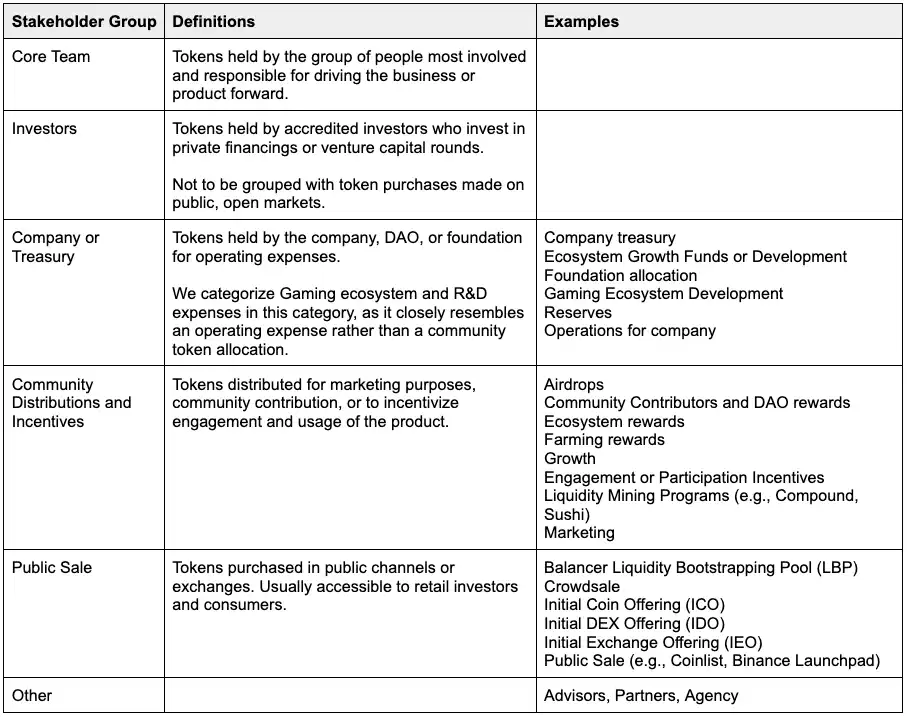
In our Before we start, some definitions and methods to understand.
There is a detailed explanation about this in the article linked at the end of the thread.
< /div>
1 / Used to plan future Token allocation benchmarks
Overall token distribution since 2021.

2 / Token distribution has changed from "public sale" to "community and ecosystem incentives"
< a href="https://twitter.com/robindavidji/status/1534553685413330950/photo/1" role="link">
The most notable difference between 2017 and 2022 is the change in token distribution from public sales to community incentives to guide and fund project development.

The project is no longer selling tokens directly on the public trading platform, but distributing tokens to obtain participation rewards (similar to Uber or Doordash giving users point rewards to motivate use).
The end result of this shift is that governance or utility tokens with no initial value end up being traded on DEXs and gaining natural price discovery as demand for these tokens increases.
Through company reserves or treasury, you can use these tokens to pay for operating expenses, or continue to use community incentives and allocation pools to fund continued participation and strengthen product value/usage.
3 / When the project raises funds from private investors, about 19% of Token will be distributed to investors
Earlier we mentioned that investors own about 11% of Token. However, this average includes projects with no investors, which increases to 19% when removed.

Not all projects raise money from investors, especially with the rise of alternatives, or even raise money at all (e.g. , ENS).
Certain types of projects, such as games or NFT projects, have used in-game assets or NFT sales to bootstrap initial development.
4 / Due to different business needs, projects need to create different Token allocations
Due to the specific needs of the industry, we have observed more "community incentives or distribution" in DeFi and games high.

DeFi projects need liquidity and capital to start, and motivating community members to guide TVL is the most common strategy.
Game projects also actively invest in early player growth and community engagement activities, as the quality of a project is largely determined by the number of players in the ecosystem.
< /p>
Infrastructure projects (such as ENS, Biconomy, Radicle, and API3) tend to allocate more Tokens to core team members and companies/Treasury funds, which may be because they do not rely on sufficient liquidity or gamers. In this case, the team is the key to providing immediate utility.
5 / Token distribution is broad, but tends to be shared among certain stakeholder groups

6 / The vesting/lock-up period for core team members is 3-4 years, with 0-12 months as an unfreezing period
The most common is the 1-year unfreezing period plus 4-year lock-in period.
Surprising design with 0 unfreeze period, but this may be due to early liquidity needs of crypto/DAO.

Other trends unlocked by the core team include:
Weighted unlocking (non-linear unlocking scheme, pre-weighted, post-weighted), this design was used in 7% of projects, and 5.7% of projects were unlocked immediately.
Investors usually have a lock-up period of 2 years, 0-12 months Thaw period;
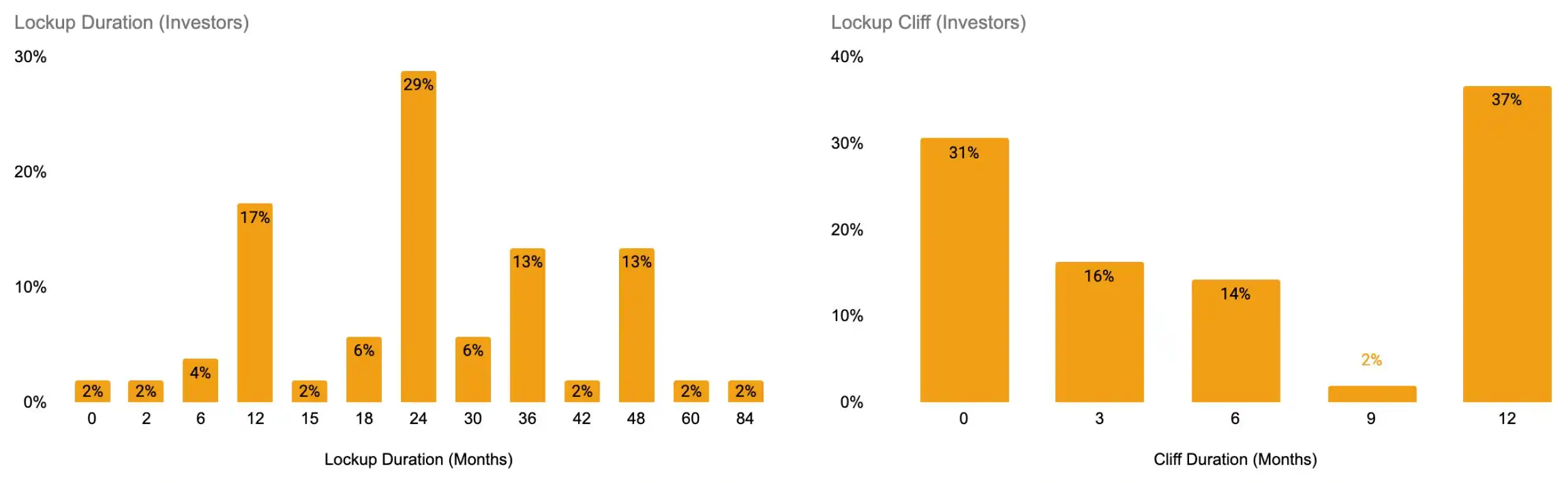
Investor lock-in helps ease selling pressure and falling prices.
Most commonly, there is a lock-up period of at least 1 year after the token is released so that neither team members nor investors sell immediately.
Conclusion
To Lauren Kudos to Stephanian and Coopahtroopa for their original excellent analysis of optimal token distribution , which inspired this essay.
Many details cannot be detailed here, please refer tofull report.
Original link
Welcome to join the official BlockBeats community:
Telegram Subscription Group: https://t.me/theblockbeats
Telegram Discussion Group: https://t.me/BlockBeats_App
Official Twitter Account: https://twitter.com/BlockBeatsAsia

 Related Articles