FIL is making great strides, what hidden information lies behind its token economy?
Original Title: "FIL is "Singing High" All the Way, What Hidden Information is Behind Its Token Economy?"
Original Author: Vik Kalghatgi
Translated by: Katie Gu, Odaily
Last week, the distributed storage network Filecoin released three major project updates (FVM, data computation, and retrieval market) for 2023. In the past week, FIL has continuously broken its own "ceiling", and the latest price of FIL has exceeded 9 USDT, with a 24-hour increase of 21.35%. Next, Odaily Star Daily will take you to understand Filecoin, including its token economics, impact on token holders, and future ecology.
Filecoin Introduction
Filecoin network was launched in October 2020, introducing an incentive layer to the IPFS protocol and enabling open data services. Today, the Filecoin network is widely known as a storage service. However, an early article summarizing the network's direction proposed a larger vision for Filecoin, including "infrastructure for storing, distributing, and transforming data."
Filecoin's "main plan" to execute this vision is to first accumulate a large amount of hardware resources (storage capacity and computing power). This is important because the only way Web3 infrastructure can reliably replace traditional cloud storage (and even compete with it) is if it can operate at a level and scale beyond current products. Although no Web3 protocol has yet achieved this, some progress has been made.
In addition, in order to promote the long-term demand for network resources (capacity, retrieval, and computing power), it is crucial to guide the network with effective data and develop software and tools to implement computation and composable services on top of the data. Ultimately, the demand for these services will become the foundation of a strong economy on the Filecoin blockchain.
Filecoin's Token economy was designed with this long-term vision in mind and helps incentivize the rapid growth and development of the network. So far, the network has committed storage capacity exceeding 16 EiB, and the explosive growth of the ecosystem has driven demand for network resources. This growth and continued success are attributed to the efforts of the Filecoin community, which is a decentralized network composed of storage clients, developers, storage providers (SPs), ecosystem partners, and Token holders.
Filecoin Token
This global digital economy requires a single effective currency for transactions. As Filecoin is a permissionless market with verifiable goods that can be encrypted, it is designed to only be traded through the local utility token Filecoin. FIL Token has multiple functions.
Pay for messages on the chain.
As collateral. Create economic incentives for long-term reliable data storage and ensure the security of subnets or shards after the blockchain and Interplanetary Consensus (IPC: Consensus Lab flagship project) take effect.
By burning to regulate shared resources (block space).
Unlike other storage networks, Filecoin Token focuses primarily on incentivizing reliable services and promoting on-chain economics. The storage market exists off-chain, but includes messages with storage cryptographic proofs anchored on-chain. Most importantly, this means that the Token can appreciate without putting undue pressure on users of the network's various services (storage, retrieval, computation, etc.), and Token holders can still benefit from FIL consumption due to increased utilization (i.e. demand for block space).
The Token Economy for Token Holders
Filecoin's Token Distribution
Filecoin's cryptographic economic structure helps ensure that the value appreciation of participants is consistent with the long-term utility of the protocol. Therefore, the initial allocation of Filecoin at the network launch is intended to support a protocol that incentivizes sustainable value creation.
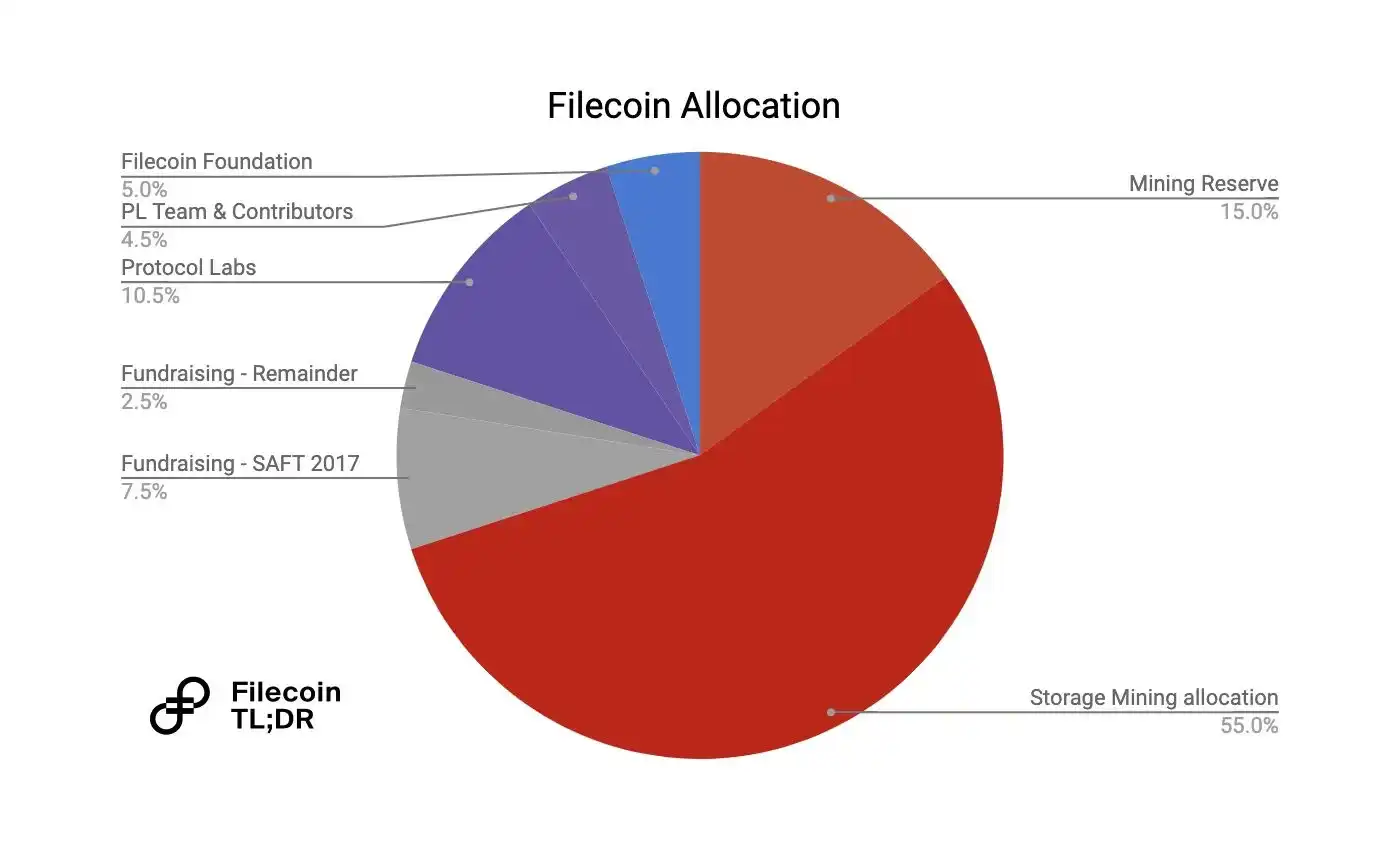
Source: Filecoin Spec
.
According to the current protocol specification, up to 20 billion FIL will be created. Among them, 70% will be allocated to storage and related services (i.e. minting tokens to reward storage providers), 20% (awarded over 6 years starting from October 2020) will be allocated to Protocol Labs and the Filecoin Foundation to support network development, adoption, and ecosystem growth. The remaining FIL will be allocated to SAFT investors, awarded starting from October 2020 with terms ranging from 6 months to 3 years.
20 billion FIL is the maximum amount that can be minted and awarded in theory. However, this may not be the final amount of FIL that enters the network's circulating supply:
As the reserve for mining, the 300 million FIL held needs to undergo protocol upgrade in order to be mined, which means the community decides how much should be released.
The growth of the network requires the use and consumption of Tokens, which reduces the available Token supply. As of the end of September 2022, approximately 520 million FIL have been minted or awarded. Of these, about 70% are in circulation, as a large amount of FIL is burned (permanently removed from circulation) due to network transaction fees, or locked as collateral to ensure network security and incentivize reliable storage. As the network matures, the Token emission rate (attribution and minting) is expected to gradually decrease, as Filecoin has a limited attribution schedule and a minting model tied to network growth.
Token
Supply: net inflow or outflow
Token The understanding and decision of the holder Token 's net inflow or outflow will help them understand the relative purchasing power of Token .
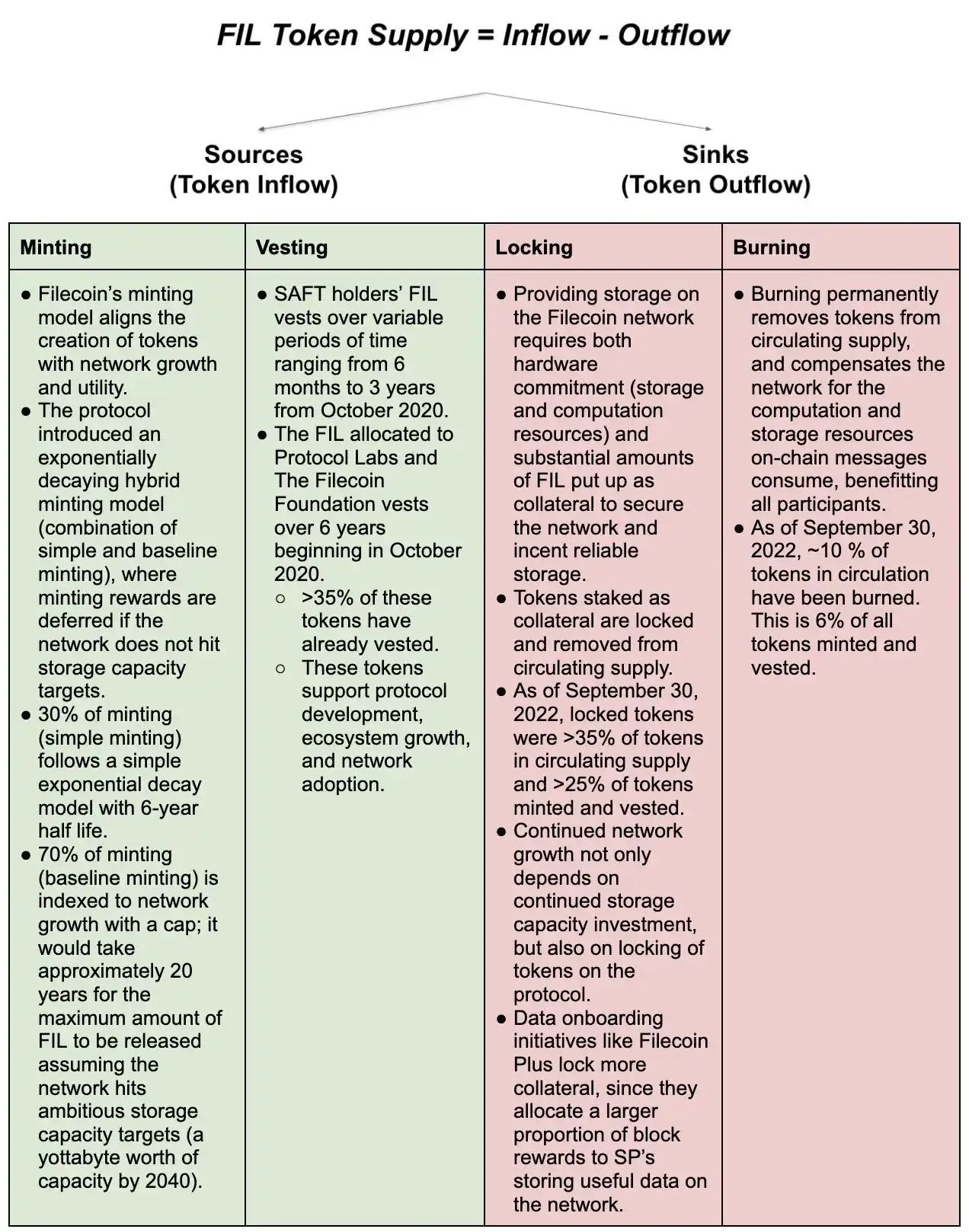
In short, casting, ownership, locking, and burning contribute to the net inflow or outflow of circulation supply in Token. Below is the evolution of Filecoin Token supply since the launch of the autonomous network.
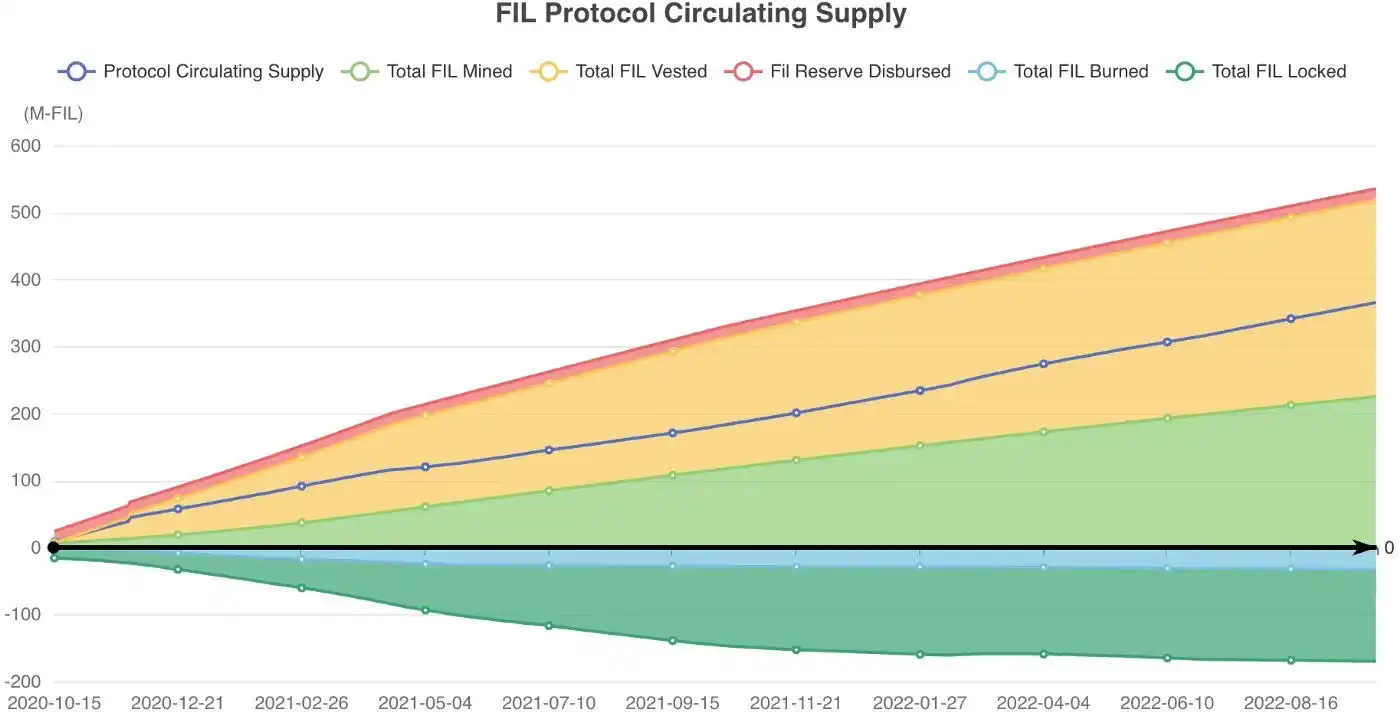
Source: Starboard Ventures. Data as of September 30, 2022. This chart represents historical data only. Due to the impact of market inputs on Filecoin's circulating supply, accurate predictions cannot be made.
Currently, the network is expanding. The ownership of Filecoin and Protocol Labs' tokens supports the development and growth of the ecosystem, while block rewards for storage providers incentivize transactions and storage capacity limits. This provides a huge opportunity for token holders to participate in the growth of the ecosystem, as they can lend money to storage providers (SPs), promote SP demand for FIL, and share the resulting network rewards. In this way, token holders can support network growth and advance the Filecoin vision while retrieving token emissions.
Filecoin Ecosystem Roadmap: Impact on Token Holders
In the Filecoin ecosystem, continuous improvements in user programmability, data logging, data retrievability, scalability, and computation will be achieved in the next 3 quarters. These measures should have a positive impact on Token holders by supporting client demands, unlocking various network use cases, and ultimately driving the use of Token. Below, we will discuss some of these important improvements and their potential economic impact.
Filecoin Virtual Machine (FVM)
Filecoin virtual machine unlocks unlimited possibilities, from programmable storage primitive systems, to cross-chain interoperability bridges, to data-centric decentralized autonomous organizations (DAO) and Layer 2 solutions. In short, this means that smart contracts and user programmability will enter Filecoin. Expected to be released in the first half of 2023, this network upgrade should have a positive impact on Token holders, as it may increase the use cases for FIL and potentially affect the "outflow" component of the circulating supply equation (FIL lock-up and burn).
FVM and Token outflow in supply
As long as there are operational or practical programs on the network, FIL Token will be consumed (burned) to compensate for the calculation and storage resources consumed by chain messages. The introduction of smart contract functionality may increase the demand for block space, leading to an increase in burned FIL Token. When network participants compete for on-chain resources, the consumption rate of this Token is controlled by the community.
Additionally, upgrading the FVM protocol can increase the amount of FIL that can be used and/or locked. Currently, most of the FIL locked on the network comes from storage providers' collateral. FVM introduces the possibility of significant capital lockups to support various smart contract applications. DeFi protocols are just a subset of applications that can leverage Filecoin's efficient proof-of-work chain, which not only increases Token consumption but also generates new use cases for locking/unlocking FIL.
The uniqueness of FVM lies in its ability to bring new momentum to the Filecoin network. While today you can sign contracts with storage providers to store your data, with FVM, you can add additional rules, automation, and composability with other services such as DeFi. As other components of the Filecoin roadmap (retrieval market, data computation, etc.) are implemented, we hope that FVM can leverage Filecoin's underlying infrastructure to facilitate the landing of more complex products, thereby promoting wider adoption of the network.
Filecoin Plus and Data Onboarding
Filecoin Plus (FIL+) is a practical solution designed to incentivize efficient usage of the Filecoin network. Due to the difficulty in algorithmically distinguishing real useful data from generated random data, FIL+ introduces a social trust layer in the network. In the FIL+ program, verified clients are granted a new resource DataCap, which they can use to transact storage with storage providers (SPs). SPs are incentivized to sign storage agreements with clients using DataCap, as FIL+ transactions increase the amount of block rewards they receive compared to regular (non-FIL+) transactions, or by submitting storage capacity to the network. To obtain these additional rewards from FIL+, storage providers offer more collateral (about 10 times that of non-FIL+ storage sectors) and lock more Tokens on the network.
So far, we have seen strong growth in data from FIL+ clients, indicating an increase in the number of effectively connected global data (Data Onboarded: matching offline and online data sets through tag connections, such as B2B or B2C data sets).
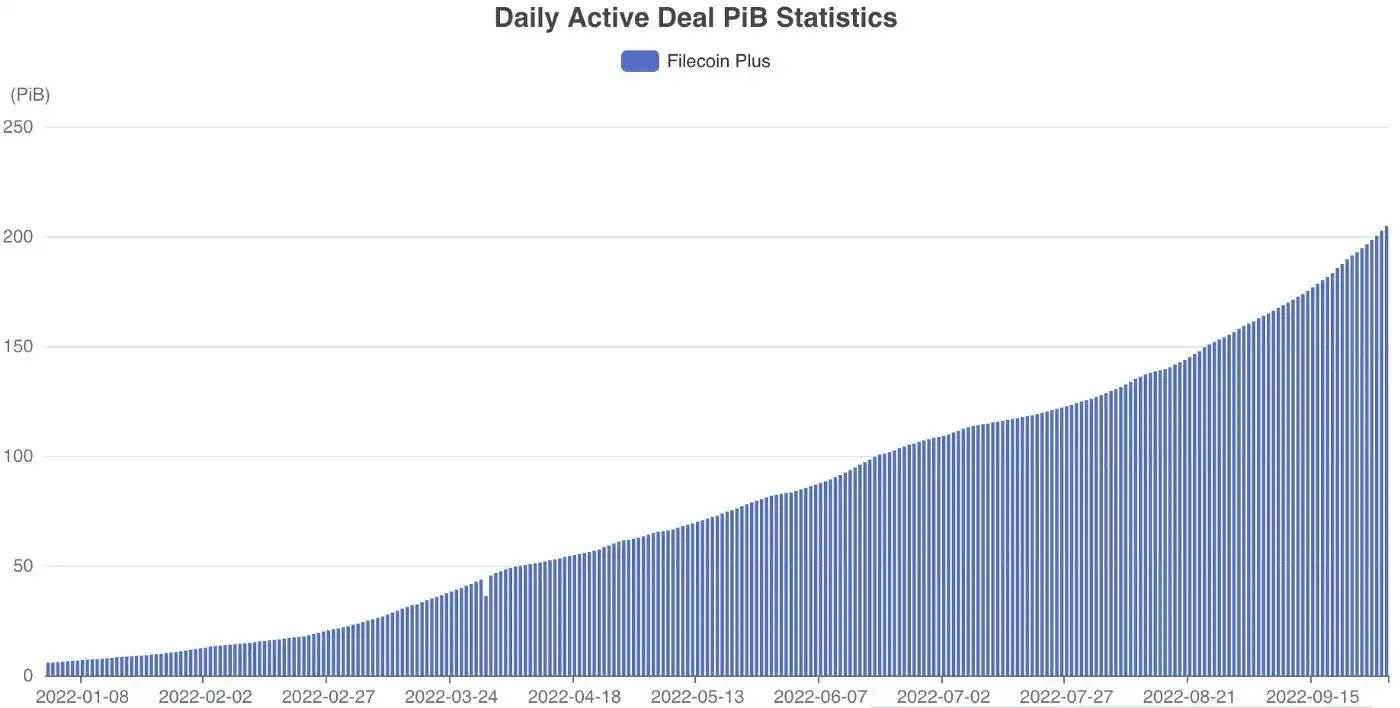
Source: Starboard Ventures. Data as of September 30, 2022.
From the perspective of the Token economy, the continued existence of this trend may increase the locked Tokens on the network and reduce the supply of circulating Tokens. More importantly, as the Filecoin network develops towards the mission of storing effective data, the consumption and utilization of Tokens will also increase.
Interplanetary Consensus Upgrade (IPC: ConsensusLab flagship project)
IPC is an upcoming network upgrade aimed at increasing the use cases that Filecoin can support, while also improving the network's scalability, throughput, and finality. It is an exciting blockchain innovation. By horizontally scaling the chain through subnets (sharding), IPC also has the potential to impact the crypto economy and may increase:
Due to the improvement of scalability and the utilization of FVM, the gas cost for users has also been reduced as the burning amount of FIL has decreased.
To ensure the security of the subnet, lock (or pledge) the FIL quantity as collateral.
Support for sharding of on-chain use cases with FIL consumption requirements that can be customized.
Summary
As a new type of data storage and application network, Filecoin's mission is to create a decentralized, efficient, and robust foundation for social information. The development of the Filecoin ecosystem, which supports this task, will have a positive impact on Token holders. The purpose of the protocol's Token economy is to reward long-term participation and contributions to the network. Community participants can increase their earnings by understanding the Token economy, especially the sources of Token inflows and outflows that support the Token economy. Looking to the future, the continued improvement of the protocol may bring new exciting use cases for the network and Token, further driving participation from Token holders and actively promoting the value proposition of this rapidly growing ecosystem.
Disclaimer: This personal opinion is for reference only and is not investment advice. DYOR.
Original article link
Welcome to join the official BlockBeats community:
Telegram Subscription Group: https://t.me/theblockbeats
Telegram Discussion Group: https://t.me/BlockBeats_App
Official Twitter Account: https://twitter.com/BlockBeatsAsia

 Related Articles