FileCoin's big upgrade to break Ethereum's dominant public chain?
原文标题:《 FileCoin 重大升级,「翻身」打破以太坊主导的公链格局? 》
Original author: Monkey Web3, Vernacular blockchain
Filecoin has been full of controversy since its birth in 2017. The support of star team and capital, as well as the strong technical support of IPFS protocol, make this decentralized storage project gain enough attention from the birth. The over-good expectation overdraws the potential of the project, and the overall downward cycle of encryption in 2022. As a result, FIL's Token performance was so poor that it was nicknamed a "dead-end project".
However, Filecoin deserves some credit for the project itself. Today, Filecoin is still worth more than $2 billion, making it the 27th largest company by market capitalization.
With the Filecoin Virtual Machine (FVM) coming online on March 14, the project development heat and market heat spread again. Will the FVM online heat be a flash in the pan, or will it bring profound impact to Filecoin?
01 What is FVM
A Filecoin Virtual Machine (FVM) is a VM on the Filecoin network and an environment for running smart contracts on the Filecoin network. FVM brings user programmability to Filecoin, unlocking the vast potential of the open data economy. Smart contracts enable users to create and enforce rules for storing and accessing data on the network. The FVM is responsible for enforcing these smart contracts and ensuring that they are executed correctly and securely.
The following concepts need to be distinguished: EVM,FEVM,FVM:
The EVM (Ethereum Virtual Machine) is the execution environment originally designed, built, and run for the Ethereum blockchain.
EVM was revolutionary because it was the first time that arbitrary code could be deployed to a blockchain and run on it. Here is a brief description. Virtual machine provides developers with an operating environment independent of the main network, but with complete system functions, which is convenient for testing and safe operation. It also facilitates the development of applications by converting the code developed by developers into the code running in the blockchain environment. This point can refer to the platform science articlesThe popular science | what is virtual machine EVM entry of the etheric fang, have why good?".
Filecoin EVM (FEVM) is the environment in which the Ethereum virtual machine (EVM) is virtualized to run on top of the Filecoin virtual machine. It will allow developers to port any existing EVM-based smart contract directly to FVM. FEVM is also fully compatible with any EVM development tool, such as Hardhat, Brownie, and Metamask, making it easy to deploy and interact with them.
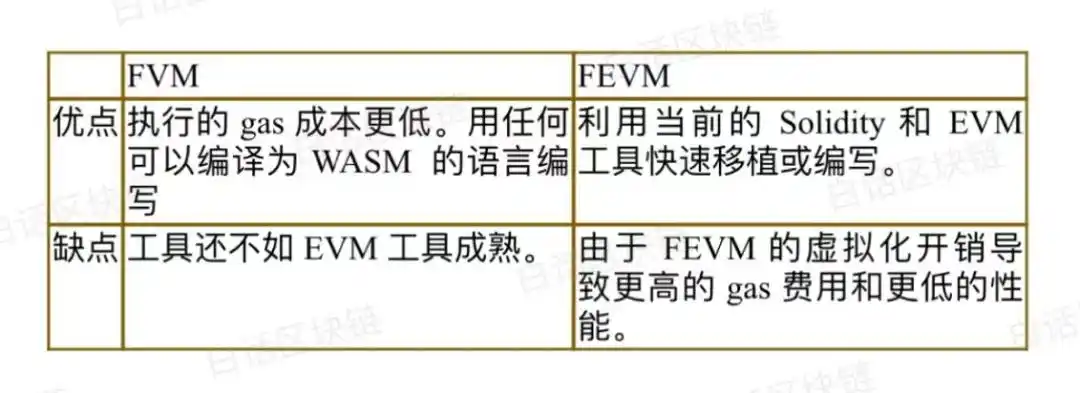
FEVM allows current Web3 developers to quickly start writing on the Filecoin blockchain, as well as using all the tools, packages, and languages they're used to, while also providing local access to the Filecoin storage exchange.
FEVM is a key step in the final plan to implement FVM.
02 Why Introduce FVM?
1. The role of FVM for Filecoin networks
The release of the FVM solidifies Filecoin as the best L1 protocol for the open data economy.
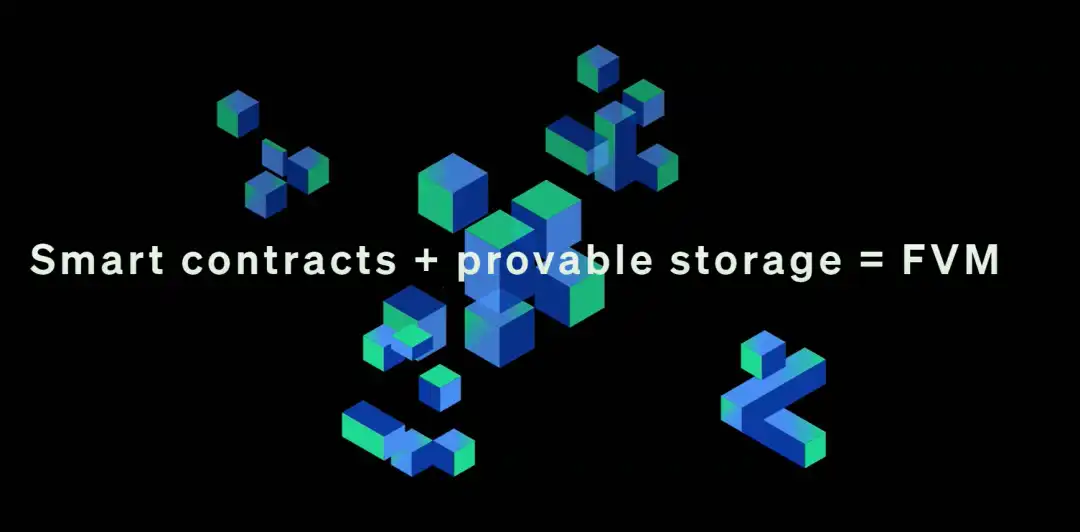
The functionality supported by Filecoin prior to FVM was limited, mostly centered around storing data, which was mostly computer-generated data that had no practical use because it could not be developed for large-scale commercial applications. And FVM= smart contract + provable storage, can easily deploy applications, develop the data economy.
As you can imagine, FVM is like opening the door to a new world for Filecoin. From 1 to 99 can be step-by-step accumulation of improvement, but from 0 to 1 is a qualitative leap, a complete transformation. Before FVM, like Bitcoin before it, it was pretty lame except as a store of value.
The introduction of FVM brings great programmability to filecoin. Analogous to the birth of Ethereum, a platform that supports smart contracts can add almost every application imaginable, while also building on filecoin's computable ability to store data.
2. What does FVM bring to developers?
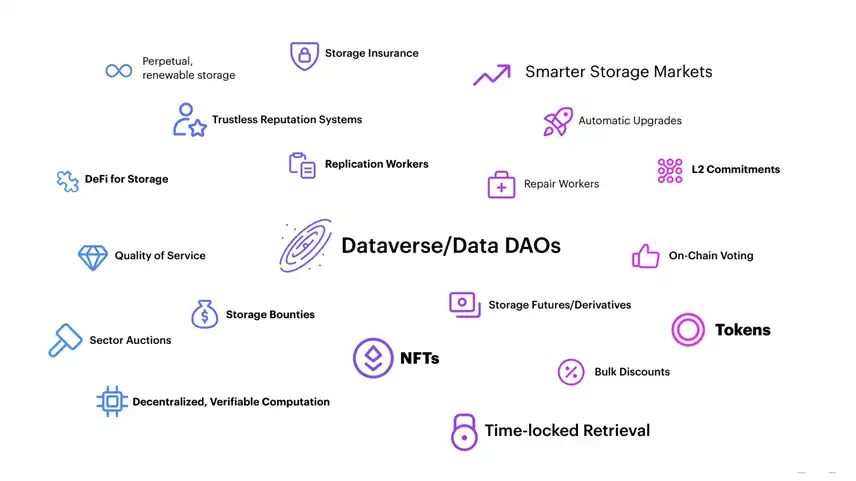
Because FVM brings smart contracts and provable storage to Filecoin, it directly opens up space for developers to project on both.
With the introduction of smart contracts, developers can develop common DeFi, GameFi, NFT applications of other public chains, and the ecosystem is expected to develop explosively; Based on Filecoin's own data storage features, more complex products that the FVM ecosystem can build include, but are not limited to:
- Data DAO
- Searchable seer/no seer accesses data
- Permanent storage contract/storage endorsement
- The undermortgage market for storage providers
- ETL pipeline (data integration pipeline that collects data from different data sources)
3. What does FVM bring to miners?
There are storage miners and retrieval miners in the filecoin project, FIL Token rewards currently mostly go to storage miners, or data storage service providers. Because in order to ensure the safe operation of the chain, so that miners in the encapsulation of data, add a lot of complex packaging process.
As a result, it is extremely difficult to store and retrieve valid data. With the intervention of FVM, which is expected to solve this problem, retrieving miners may bring in more money.
4. What potential changes will FVM bring to the current public chain pattern?
At present, there are almost no practical and effective applications on Filecoin, and its TVL ranks the bottom in the public chain. Currently, TVL is only $2,498,431, and the total lock-in volume on the whole network is $48.59b, accounting for 1/10,000 of the total lock-in volume. The TVL ratio of ETH is close to 60%.
With the introduction of FVM, the DAPP ecosystem is expected to generate an order of magnitude increase, but given Filecoin's low TPS, the Filecoin DAPP ecosystem is hardly superior to other POS chains.
More advantageous is the development of the data economy ecosystem based on verifiable storage. FVM has the potential to become the execution layer of Ethereum, storing the data generated by Ethereum applications. And become the executive layer of multiple mainstream public chain, become multi-public chain ecology cross-chain communication infrastructure.
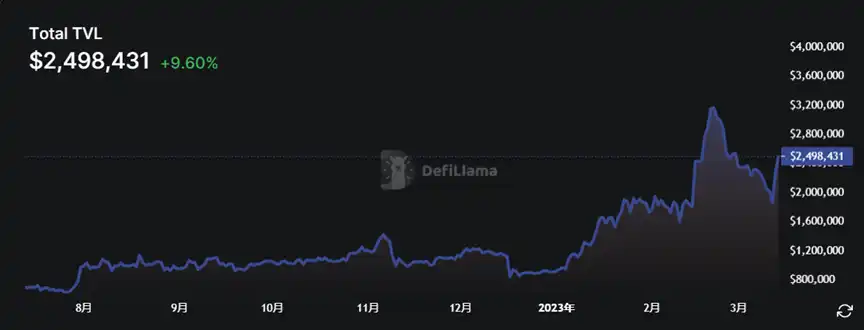
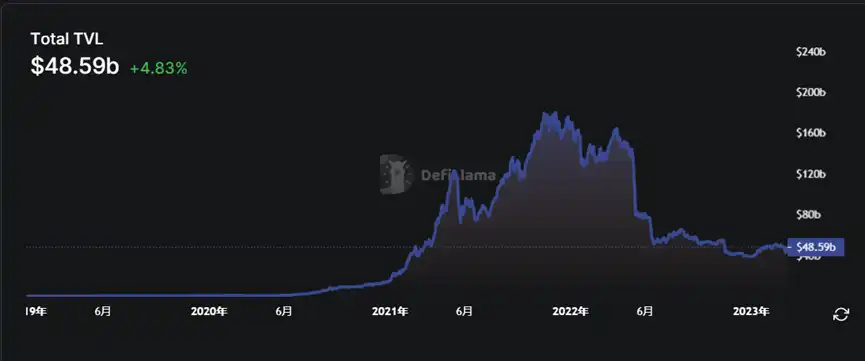
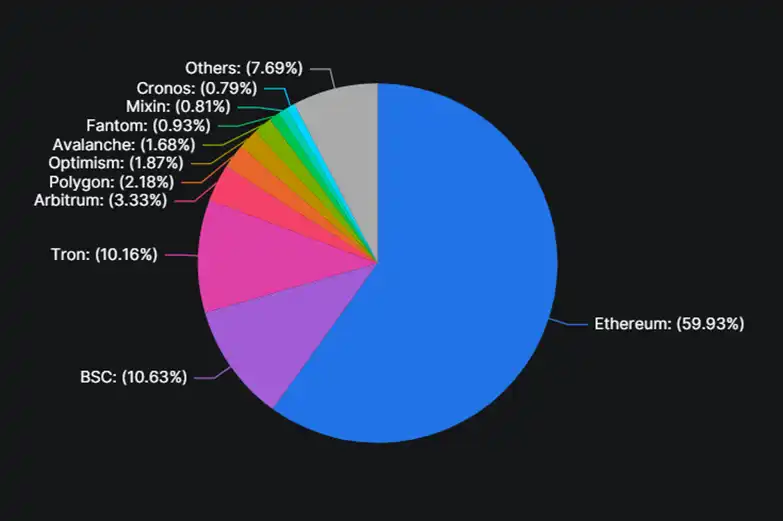
Photo: defillama
03 What applications does the FVM unlock?
1. Data DAO
Daos (decentralized autonomous organizations) are distributed entities whose ownership, governance, and decision-making processes occur transparently through on-chain activities.
Because equity in the data DAO can be tokenized, the value and utility of the data can be objectively expressed and exchanged in the marketplace for services performed or provided to the data.
Stakeholders can in turn spend tokens to incentivize the production of more raw data, such as sensor data collection, generative art, or even human tasks (transcription, translation...). To form a circular economy centered on data.
FVM makes it possible to implement all the elements of a data DAO into reality. By creating composable layers that can be grouped together to form different types of DAOs, the potential for breaking ground is enormous.
2. Permanent storage
For Filecoin participants, you can share the responsibility for ensuring that valuable data is alive. Permission-free code running autonomously on the chain guarantees continuity and updating of the storage, with no risk of modifying or changing the underlying data set due to content addressing.
Funding mechanisms and decisions can be combined with Data DAO and Staking agreements to achieve a payonce, perpetuity store mechanism.
3. Financial services
Pledge agreements can use on-chain data points (such as the lifetime of an address, cut history) to better assess risk and parameterize terms, while also allowing storage providers of all sizes to access funding.
Insurance agreements can help storage providers fund these upfront costs from contributors or spread the risk of failure across the wider community. An investor (or DAO) can generate an income stream by purchasing the above risks in exchange for recurring expenses.
4. Decentralized computing
Regrouping highly dispersed data into a central location to compute it is expensive, inefficient, and wasteful. Instead, pushing computing to the edge and coordinating its execution is a new possibility for FVM participants.
FVM participants can broker computing resources, motivate computing execution, distribute workloads among available storage providers, and prove the validity of computing results for rewards.
Storage providers can register computing networks through FVM participants. The computing client publishes the job to the participant. One mechanism would assign the work to the provider, and once performed, the provider would issue a certificate to claim a reward.
5. Enable the L2 network
By deploying commitments or interfacing participants on FVMS, a Tier 2 solution can commit its state up the chain with verifiable evidence, assign participant rewards, verify proof of fraud, and other tasks.
04 FVM Roadmap
The Filecoin Virtual Machine (FVM) is an emerging initiative that is still being developed and refined.
The 2022 milestone M 1 upgrade represents the most significant transformation of the Filecoin network since its launch. Throughout 2023, FVMS will progressively upgrade the protocol and continue to drive their programmability roadmap, migrating system functions from proprietary space to user space. The result will be a lighter, more liberal Filecoin protocol.
The milestones planned for 2023 are as follows:
· Milestone 2.2: Able to deploy Wasm participants to the main network
Developers will be able to deploy custom smart contracts written in Rust, AssemblyScript, or Go and compiled into WASM bytecode. SDKS, tutorials, and other developer materials will be widely available. This milestone requires a network upgrade.
· Milestone 3+ : Further incremental protocol refactoring to enhance programmability
A series of additional incremental protocol upgrades (in addition to nv17) move system functionality from privileged space to user space. The result will be a lighter, less opinionated base Filecoin protocol where storage markets, exchange formulation, incentives, and more are extensible, modular, and highly customizable by user-deployed actors. At this stage, you begin to develop enhanced programming capabilities, such as user-provided Crons, asynchronous invocation patterns, and so on.
Overall, the FVM roadmap will continue to be refined and optimized to achieve more efficient, safer and richer features. As FVM continues to evolve and improve, the Filecoin network will become more complete and powerful.
Original link
Welcome to join the official BlockBeats community:
Telegram Subscription Group: https://t.me/theblockbeats
Telegram Discussion Group: https://t.me/BlockBeats_App
Official Twitter Account: https://twitter.com/BlockBeatsAsia

 Related Articles