Where will miners go after Ethereum Merge?
Original source: OKLink
Ethereum is making great strides to embrace PoS, although there are still many problems to be solved before the final integration of the Ethereum mainnet, But it will be late. Miners may be the biggest "victims" of this ETH2.0 upgrade, where will they go?
1. Merge: The end of the mining industry
Ethereum’s consensus mechanism officially plans to shift from Proof of Work (POW) to Proof of Stake (POS), and it has been 4 years. The Beacon Chain of Ethereum, as the first step (Phase 0) of the ETH2.0 roadmap, is to introduce a more secure and environmentally friendly proof of rights and interests for the consensus layer of the Ethereum network, and integrate it with ETH1.0 (Merge) eventually replaces energy-intensive and increasingly centralized proof-of-work.
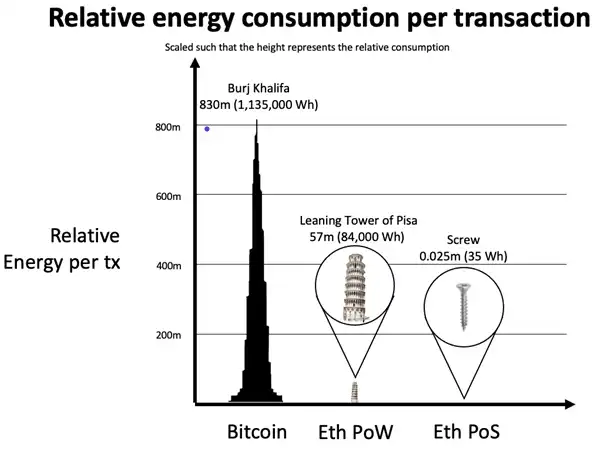
In the PoW phase of Ethereum, miners (Miners) compete for bookkeeping rights through hash collisions, giving Transaction ordering. With the adoption of proof-of-stake in Ethereum, peopleby pledging Ethereum on a new chain (beacon chain), randomly become verifiers to sort transactions in the network, thereby forming a consensus on the state of the world. After the formal integration of Ethereum, the overall energy consumption of the network will be reduced by 99%.

At present, there are more than 1.26 million Ethereum in the ETH2.0 pledge contract, accounting for 10.7% of the circulation. There are more than 400,000 addresses participating in the PoS consensus layer deposit, and each address pledges at least 32 Ethereum. Among them, there are many centralized trading platforms such as OKX, Kraken, Coinbase, ETH2.0 pledged liquidity protocol Lido, and some deep players in the market.

However, while the transition from PoW to PoS is beneficial for the industry as a whole (especially for the environment), Ethereum No more need to consume energy to keep the network safe. But at the same time, it does mark the end of the second largest Crypto ecological mining industry that carries more than 70% of Dapp.
Second, pressure from miners
The integration of Ethereum may face pressure from two aspects of miners: sudden reduction in computing power & fork.
With the increasing certainty of integration, the miners will choose to slowly withdraw from the Ethereum PoW consensus at the right time. The power may drop suddenly, and the remaining mines will have extremely high block production rights. The extremely low crime cost and considerable income will bring a devastating blow to nearly 3,000 applications on Ethereum. However, the current ETH2.0 client has already taken precautions against this - if the computing power of the entire network drops significantly, so that the security of the network is affected, the integration of Ethereum will be advanced.
The reason for the fork may be the "hard resistance" of ETH1.0 miners, that is, the block height before the difficulty bomb is turned on, the fork This chain - vowing to drain the last drop of PoW on Ethereum, which may lead to the coexistence of PoW and PoS consensus mechanisms in Ethereum for a period of time.
Once the above two situations occur, whether it is Dapp developers, users or centralized trading platforms, they should use 12 points to avoid chain loss of assets.
3. Where will miners go after Pos?
However, the general trend is that the integration of PoS and PoW will eventually come. If some miners withdraw from Ethereum mining before Merge, the computing power (hash rate) of the entire network will be reduced, and the remaining mines will be more profitable. That is, as fewer and fewer people mine, it is easier for those who stay to get ETH.
So, at present, all Ethereum PoW miners have to face such a choice:Those who have already paid back choose the opportunity to quit, and there is no hard support for paying back In the end, the fork of the head iron.
The existing mining machines of Ethereum are mainly divided into two types: graphics card mining machines and ASIC mining machines. A graphics card mining machine requires us to configure a PC to run the mining program. The performance of the graphics card determines the mining speed and computing power, and the motherboard and power supply largely determine the stability of the mining machine.
In contrast, ASIC mining machines (Application Specific Integrated Circuit) use integrated circuits (chips) as the core of computing power, and integrate specific encryption currency algorithms into the chip. Thus, the operation efficiency is greatly improved.
Obviously, miners with graphics card mining machines will have more choices and take less risk. They can choose to sell their existing mining machines before Ethereum completely turns to PoS mechanism mining to complete other computationally intensive tasks other than Crypto. In addition, graphics card mining machines can also mine other types of cryptocurrencies, such as Ethereum Classic, Ravencoin, Dogecoin, Litecoin, etc., but because these projects that use the PoW consensus have a small market value, the profit is far less than mining in Ethereum. And the price fluctuates greatly. Therefore, these graphics card mining machines have not been withdrawn yet.
Another thing to note is that once the final integration plan and code are finalized, these huge numbers of GPU mining machines with powerful computing power will migrate their computing power to other In the PoW network, the hash rate increases suddenly, which will reshuffle the original mining ecology.
Another type of miners who use high-end ASIC mining machines such as Innosilicon A11, especially for those who have entered the market soon, due to the fixed cost has been invested, highly customized If there is no one who will take over the ASIC at a high price, they may have only one way: full power until the last block before Merge.
In addition, miners who operate ASIC mining machines are most likely not to follow PoS, but to fork out a second one after the original ETH1.0 Ethereum Classic.

< /p>
We guess that some miners may not think that fusion will come in a short time, which is why the computing power has only increased slowly so far, but there is no downward trend.

ETH network average computing power
The integration on June 8th was only the integration of the first testnet (Ropsten), not the official mainnet integration. Several major testnets will be merged in a few weeks, and if all goes well, we may see the official integration of the Ethereum mainnet in Q3.
Original link
This article is from a contribution, not Representing Rhythm BlockBeats' point of view
Welcome to join the official BlockBeats community:
Telegram Subscription Group: https://t.me/theblockbeats
Telegram Discussion Group: https://t.me/BlockBeats_App
Official Twitter Account: https://twitter.com/BlockBeatsAsia

 Related Articles